Tallest Observation Wheels Around the World
Standing on solid ground and looking up at a giant wheel spinning slowly against the sky feels oddly humbling. These towering structures have become the modern equivalent of cathedral spires — landmarks that define skylines and offer perspectives most people never thought they wanted until they’re halfway up, watching their city shrink below them.
Ain Dubai
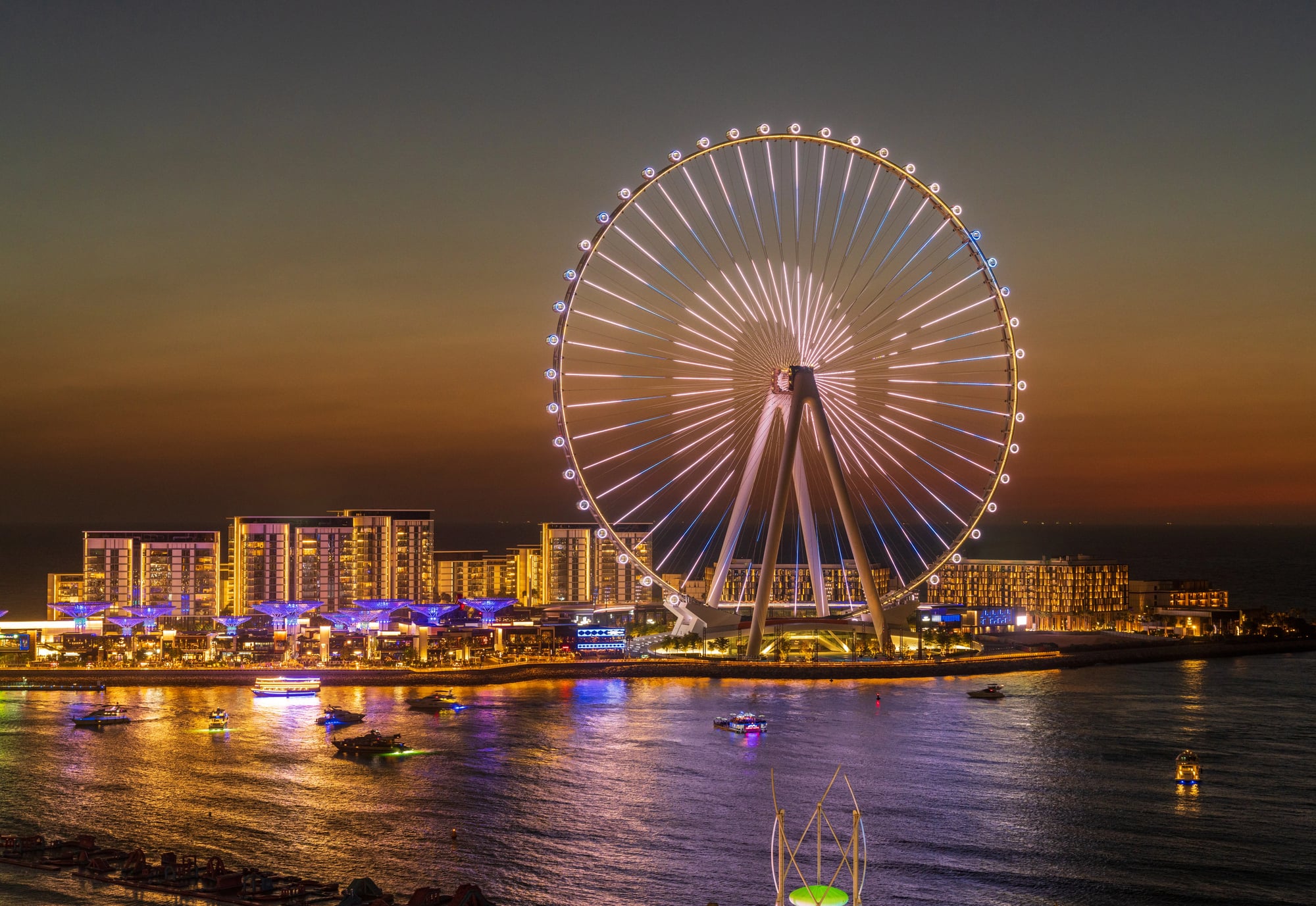
Ain Dubai doesn’t mess around. At 689 feet, it’s the tallest observation wheel on the planet, and it knows it.
The thing took eight years to build and can hold 1,750 people at once. Each rotation takes 38 minutes, which sounds excessive until you’re halfway up, watching your city shrink below you.
High Roller
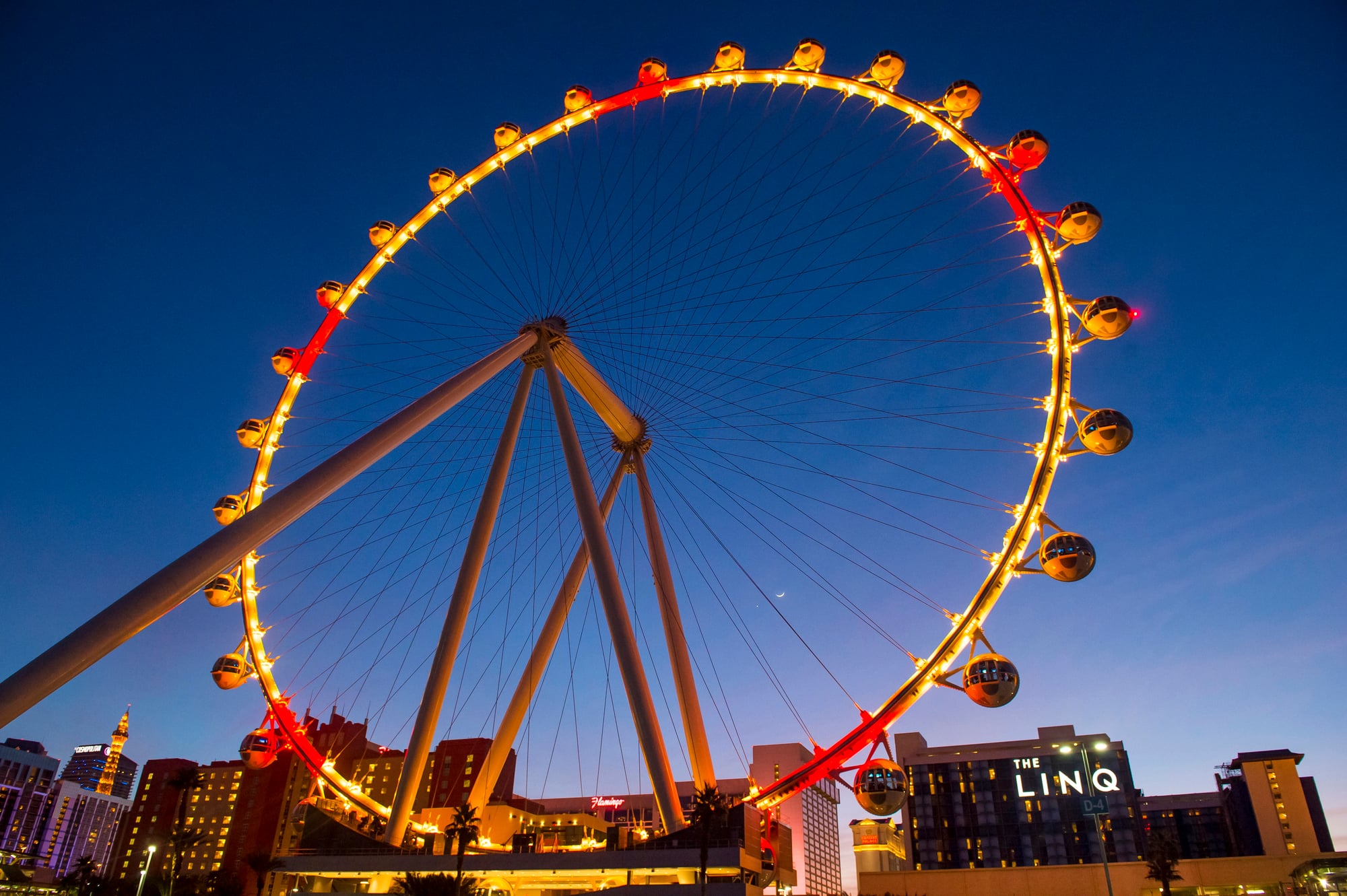
The High Roller in Las Vegas held the world record before Ain Dubai showed up, and honestly, it’s still more interesting. At 550 feet, it’s shorter but somehow more Vegas — which is to say, it tries harder.
The cabins can fit 40 people each, and yes, you can get married in one (because of course you can).
The wheel sits at the end of the Strip like a period at the end of a sentence that went on too long. It takes 30 minutes to complete one revolution, giving you plenty of time to reconsider whatever brought you to Vegas in the first place.
Singapore Flyer
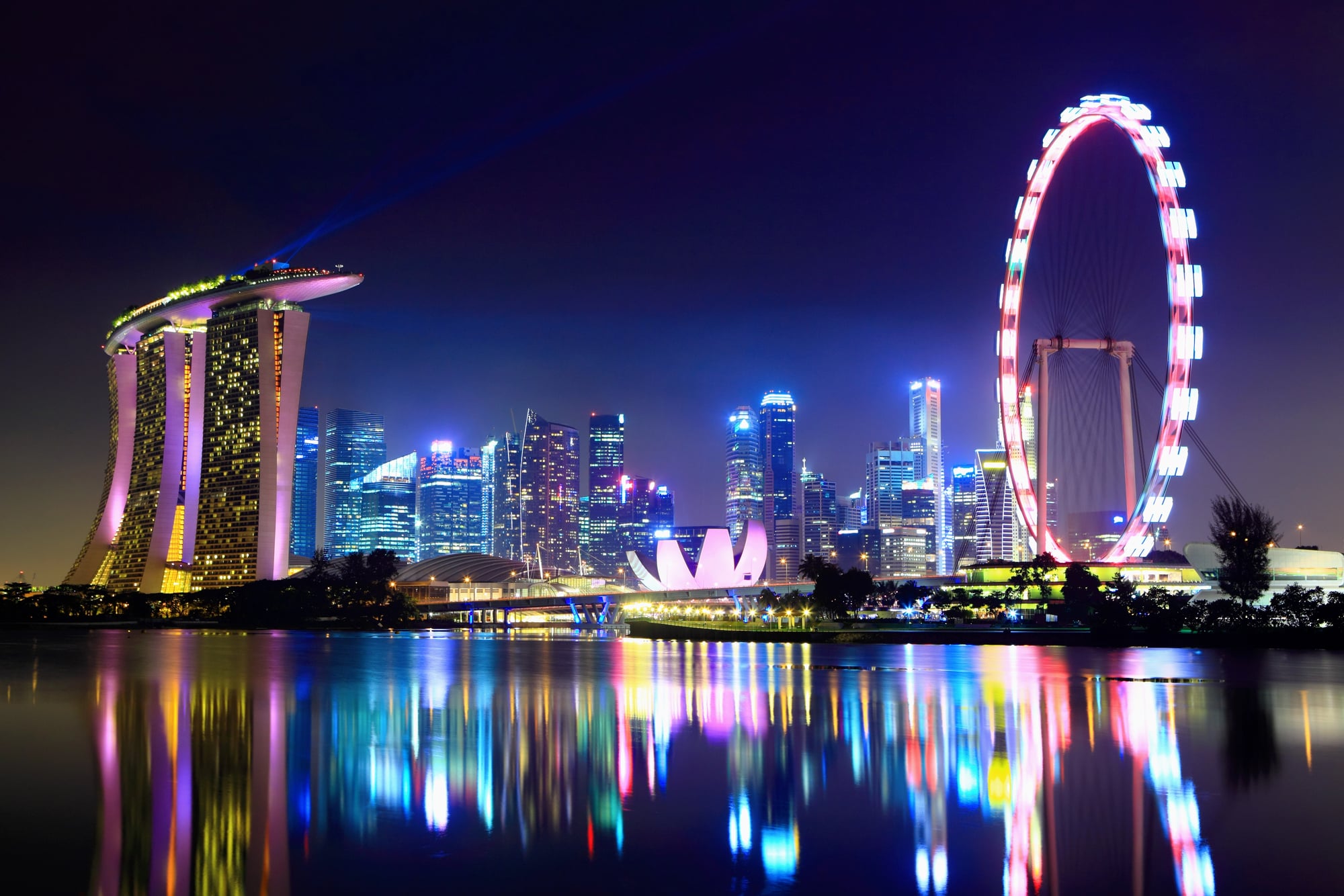
There’s something beautifully stubborn about the Singapore Flyer — it opened in 2008 at 541 feet and has been quietly doing its job ever since, even though taller wheels have claimed the spotlight. The views stretch across three countries (Singapore, Malaysia, and Indonesia), which sounds impressive until you realize Singapore is roughly the size of a large suburb anyway.
But here’s the thing about the Singapore Flyer that gets overlooked: it rotates counterclockwise, which apparently violated feng shui principles, so they actually reversed the direction of rotation in 2008.
Only in Singapore would an engineering marvel get a cosmic correction mid-operation.
London Eye
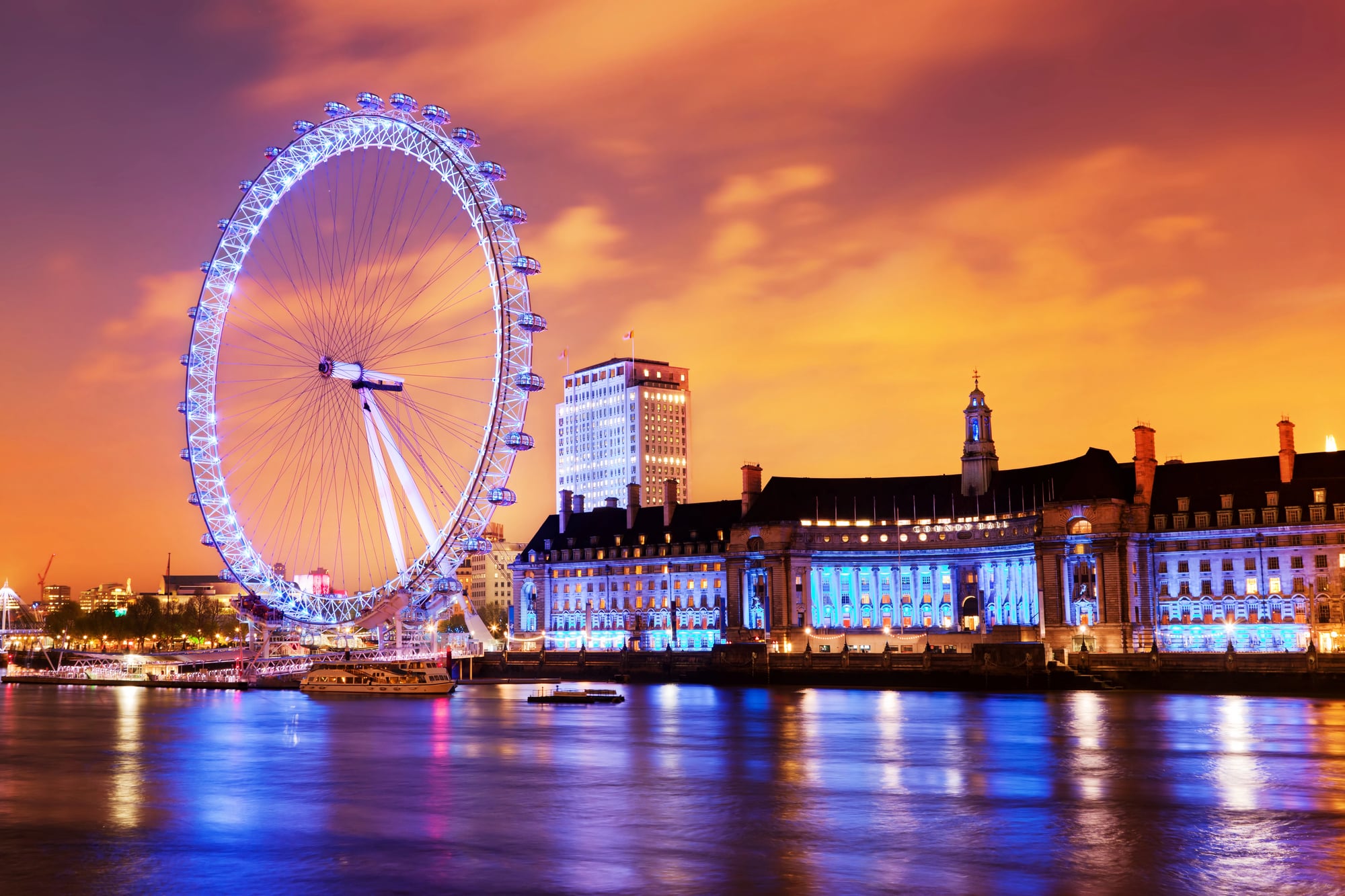
The London Eye is 443 feet of British understatement. When it opened in 2000, it was the tallest observation wheel in the world, and it carried that distinction with the same quiet confidence that London brings to everything else — no fanfare, just competence.
Each revolution takes 30 minutes, and the thing moves so slowly that it doesn’t actually stop for boarding.
You just walk on while it’s moving, which feels vaguely dangerous but turns out to be completely safe. The British have a talent for making the extraordinary feel perfectly ordinary.
Tianjin Eye
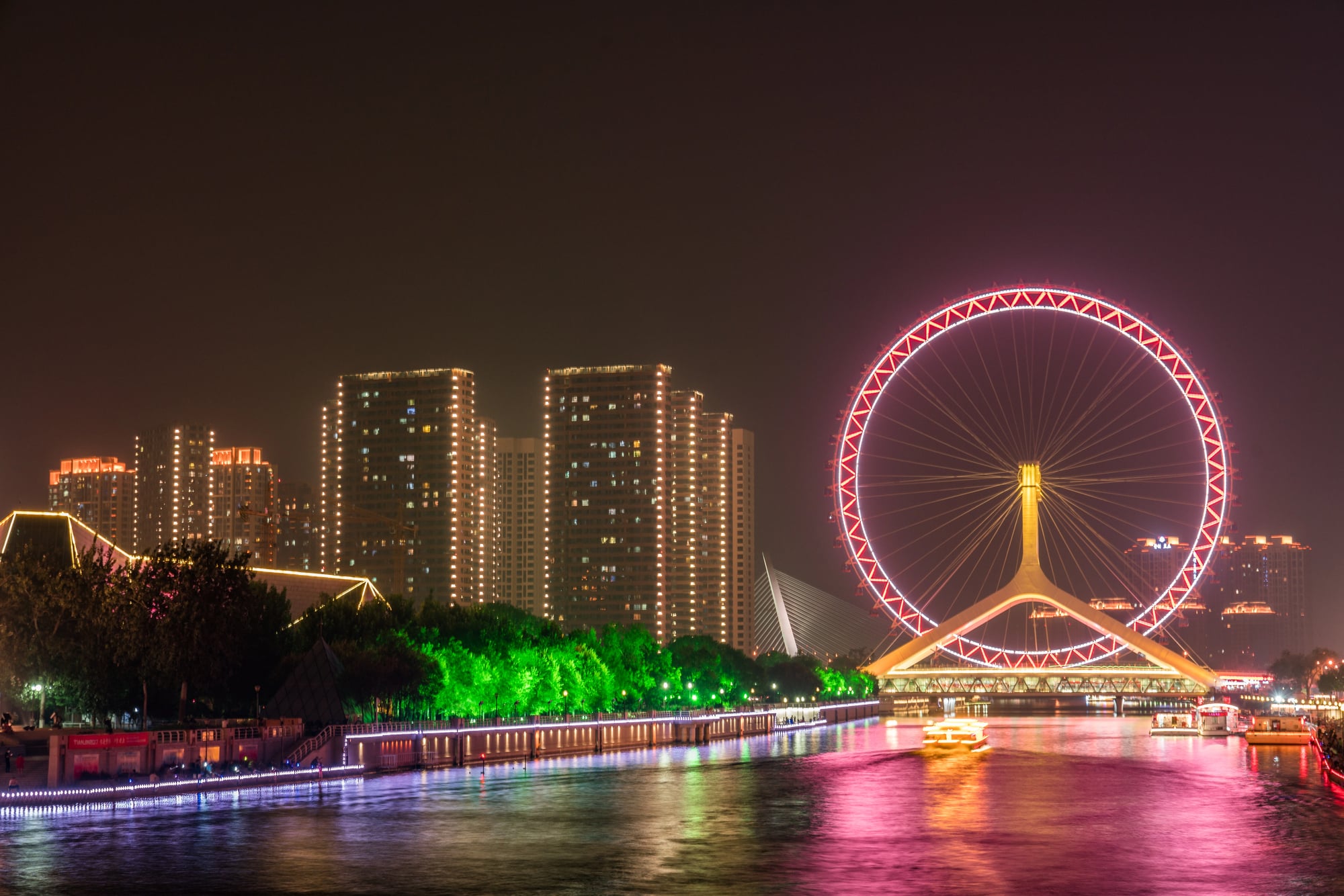
Here’s where things get genuinely weird. The Tianjin Eye sits on top of a bridge — not next to it, not near it, but literally spanning the Yongding River like someone decided bridges weren’t interesting enough on their own.
At 394 feet, it’s not the tallest wheel, but it might be the only one that doubles as infrastructure.
The engineering behind this should probably be impossible, but China built it anyway because China builds everything anyway.
So there it sits, cars driving underneath while passengers rotate overhead. Efficiency or madness — sometimes there’s no difference.
Star of Nanchang
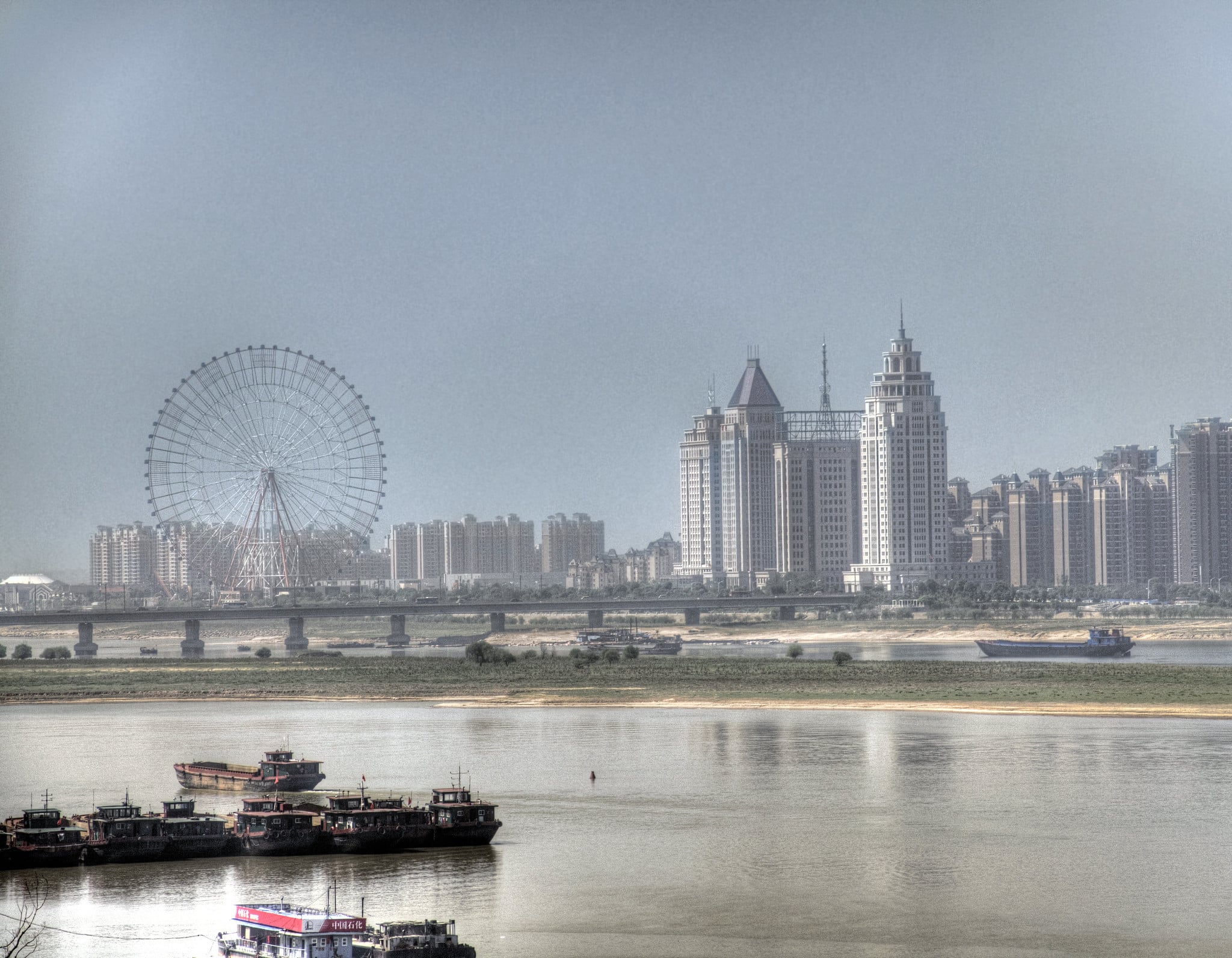
The Star of Nanchang rises 525 feet above a city that most people outside China couldn’t find on a map, and there’s something quietly magnificent about that anonymity. This isn’t a wheel built for tourists — it’s built for the people who live there, which changes everything about how it feels.
At night, the entire structure becomes a canvas for LED displays that turn the wheel into something between art installation and civic advertisement.
The Chinese have mastered the art of making infrastructure beautiful, not as an afterthought but as the primary intention.
And yet the wheel itself remains fundamentally practical: 60 air-conditioned gondolas, each holding eight people, completing a circuit every 30 minutes with the reliability of a Swiss watch.
Redhorse Osaka Wheel
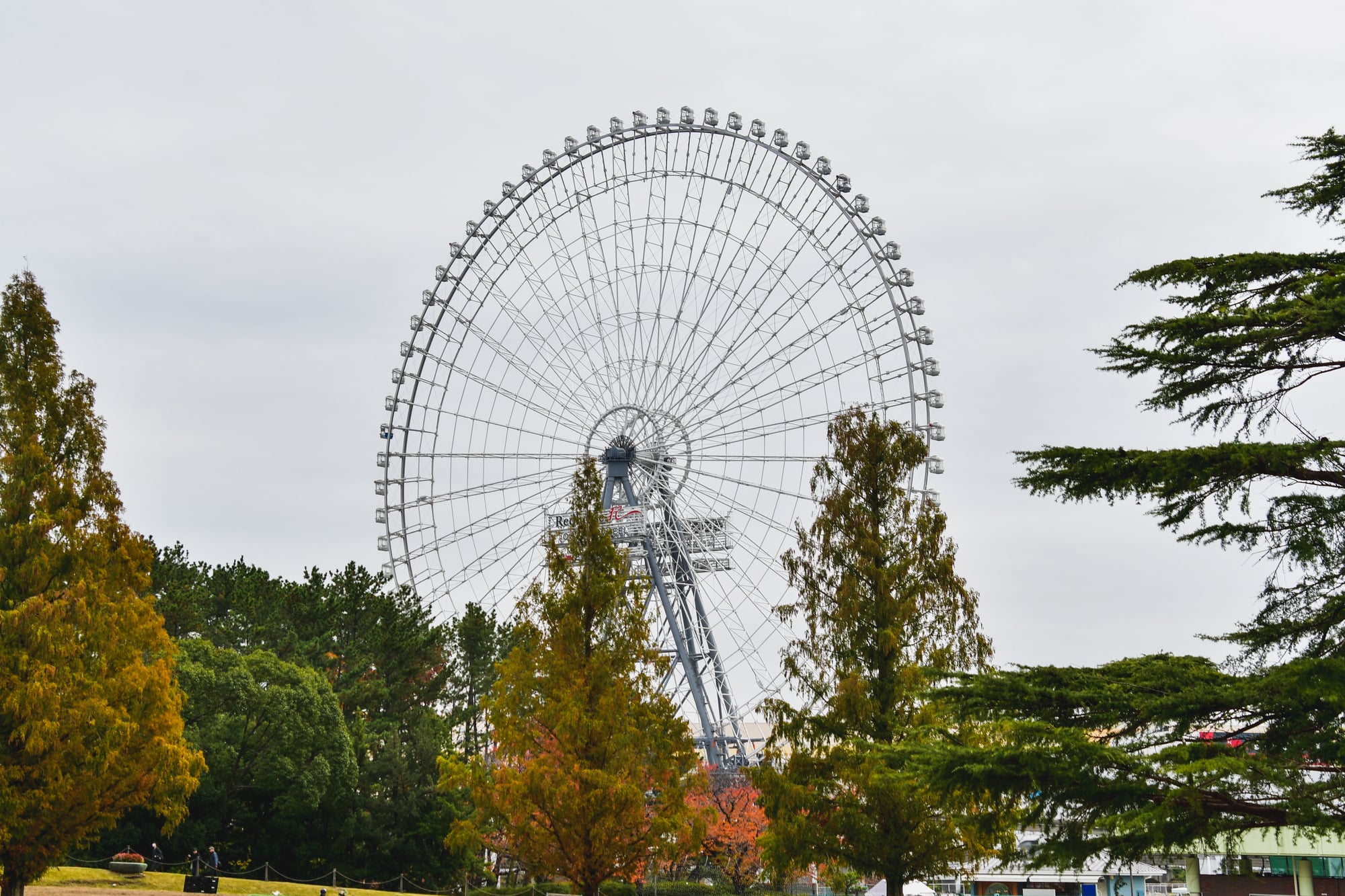
Japan approaches observation wheels the way it approaches everything else — with meticulous attention to detail and a quiet insistence that if something is worth doing, it’s worth doing perfectly. The Redhorse Osaka Wheel stands 404 feet tall and opened in 2016, which makes it relatively new but already refined in that distinctly Japanese way.
The gondolas are transparent, naturally, because Japan doesn’t believe in half-measures when it comes to views.
Each one holds eight people and includes a sound system, because apparently even Ferris wheel rides should have perfect acoustics.
Dubai Eye
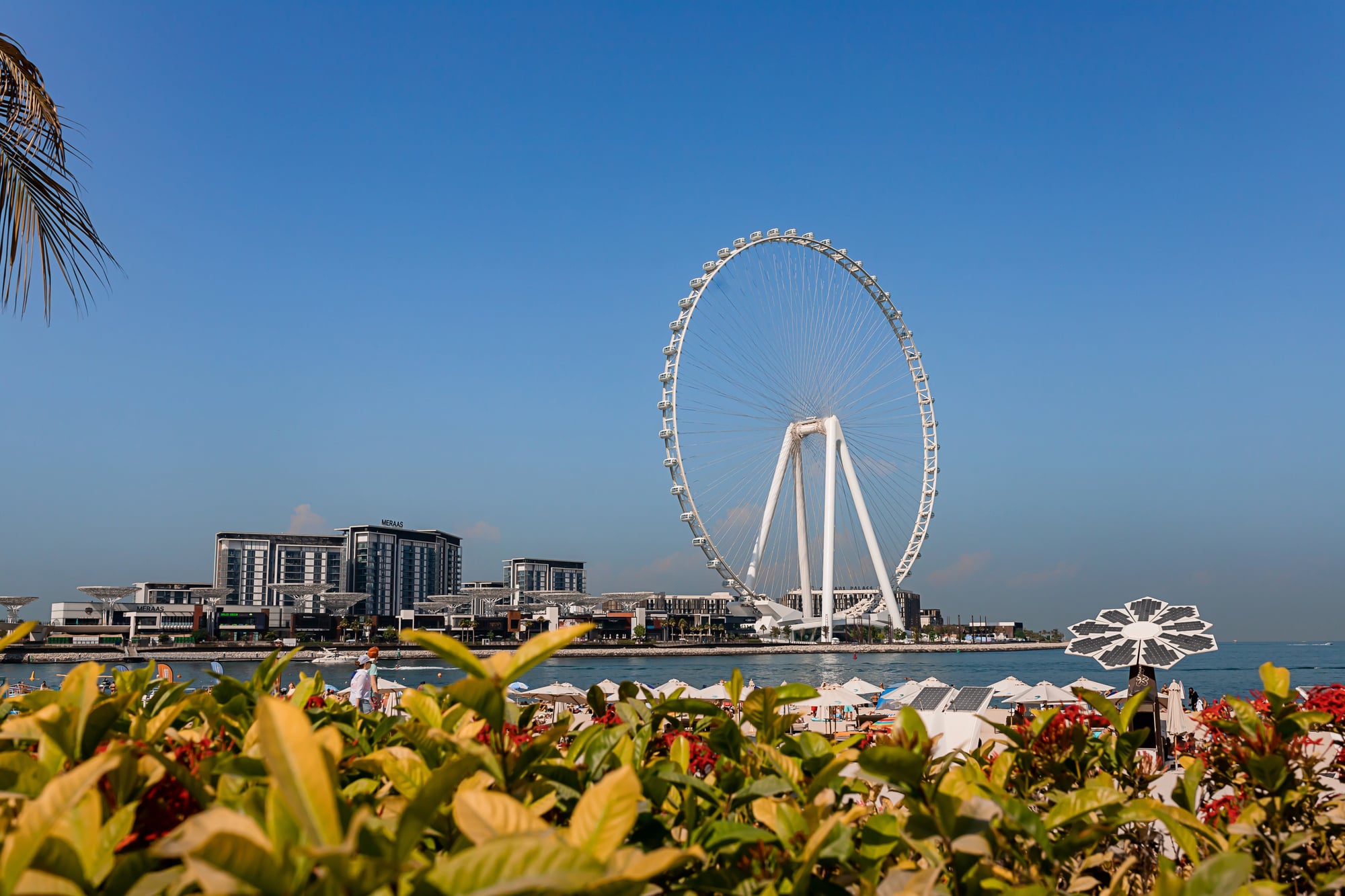
Wait — this is the same as Ain Dubai. Different name, same wheel.
Dubai has a habit of giving things multiple names, probably because one name isn’t enough to contain all that ambition.
So let’s talk about the Centennial Wheel in Chicago instead.
Centennial Wheel
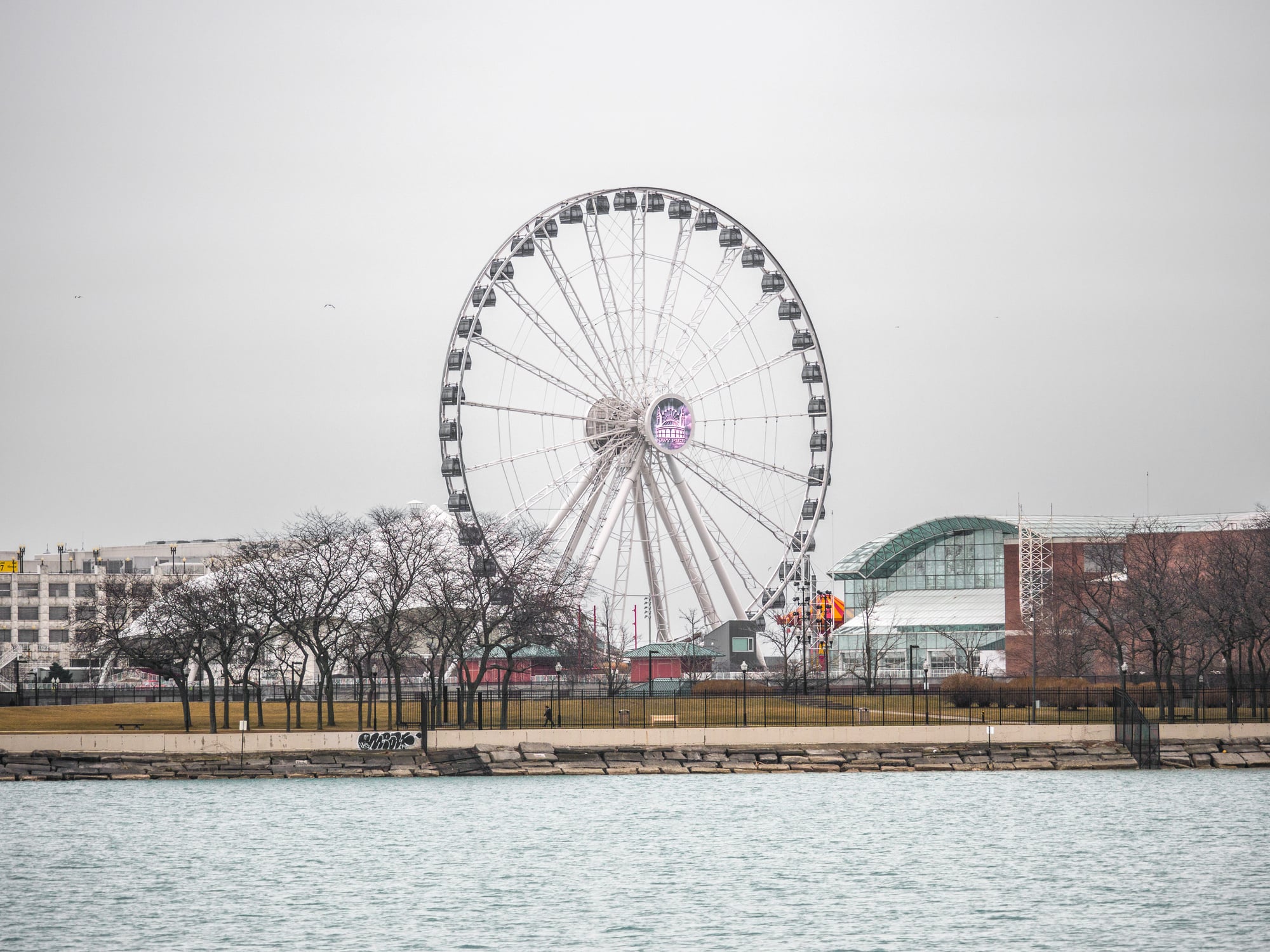
The Centennial Wheel at Navy Pier stands 196 feet tall, which makes it practically humble by modern standards. But Chicago has never needed height to make a point — the city lets its architecture speak softly and carry a big stick.
The wheel replaced an older, smaller version in 2016, and the upgrade shows.
Climate-controlled gondolas, LED lighting systems, and views that stretch across Lake Michigan toward what might as well be the edge of the world.
Colossus
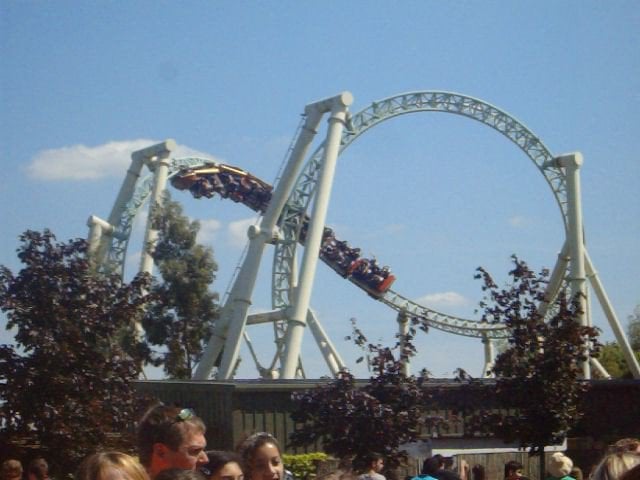
The Colossus at Thorpe Park in England reaches 200 feet and spins considerably faster than its more famous cousins. This isn’t a leisurely sightseeing experience — it’s designed to remind you that observation wheels don’t have to be gentle.
Each revolution takes about 15 minutes, which sounds reasonable until you’re strapped in and realize that “observation wheel” can be a polite way of saying “very large, very slow roller coaster.”
Smoky Mountain Wheel
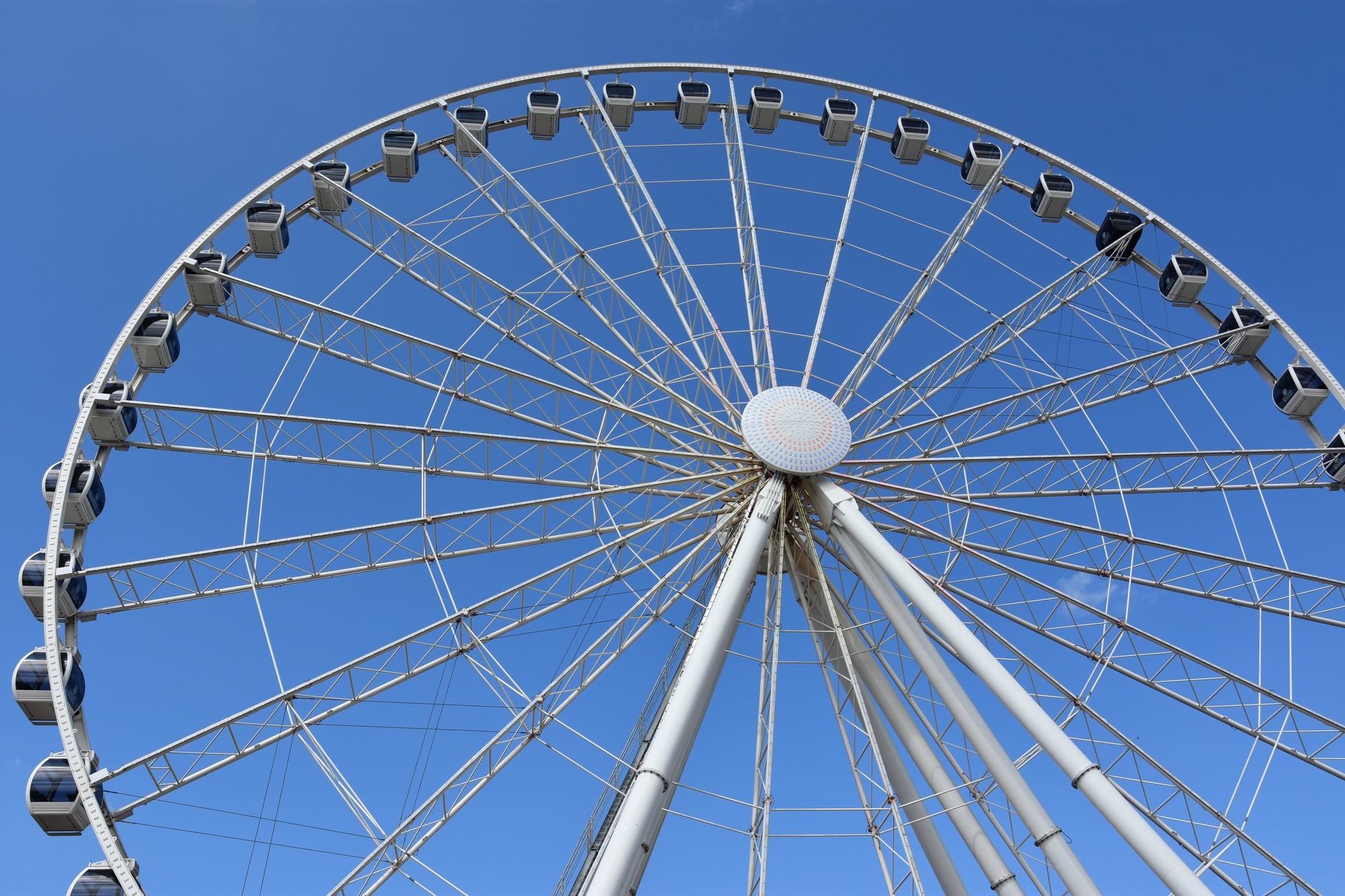
Pigeon Forge, Tennessee, might seem like an odd place for a 200-foot observation wheel, but the Smoky Mountain Wheel fits into Dolly Parton’s domain with surprising grace. The wheel offers views of mountains that have been wearing down slowly for millions of years — a nice reminder that even giant spinning wheels are temporary additions to landscapes that predate human ambition.
The gondolas are enclosed and climate-controlled, which matters more in Tennessee than you might expect.
Mountain weather changes its mind frequently.
Pacific Wheel
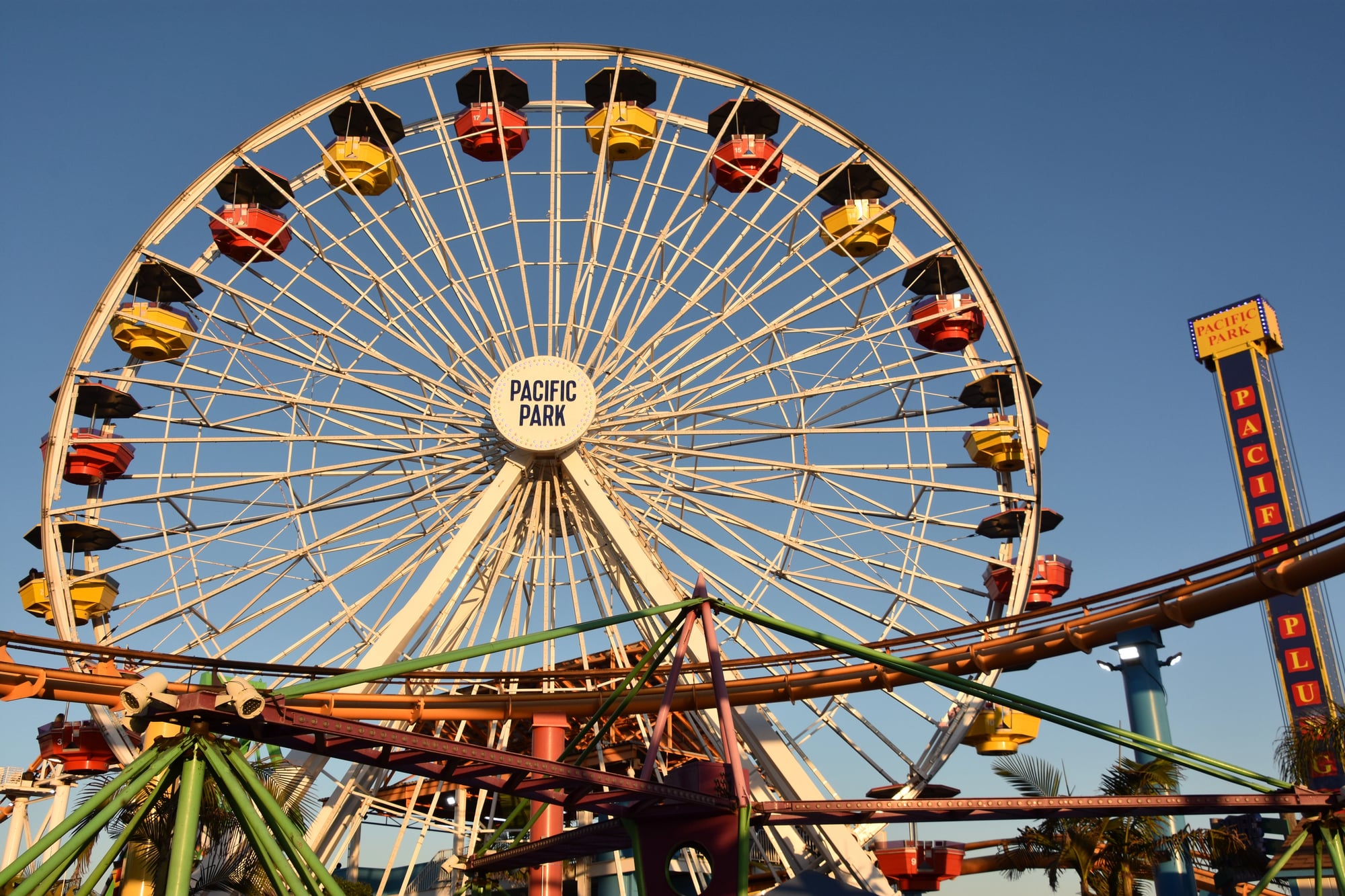
The Pacific Wheel in Santa Monica is only 130 feet tall, but it sits directly over the Pacific Ocean, which gives it an advantage that height alone can’t provide. This is the wheel you’ve seen in movies, even if you didn’t realize it — a solar-powered circle of lights spinning above the waves like California’s own North Star.
At night, the LED lights create patterns that can be seen from miles down the coast.
It’s smaller than its global cousins, but sometimes position matters more than size.
Capital Wheel
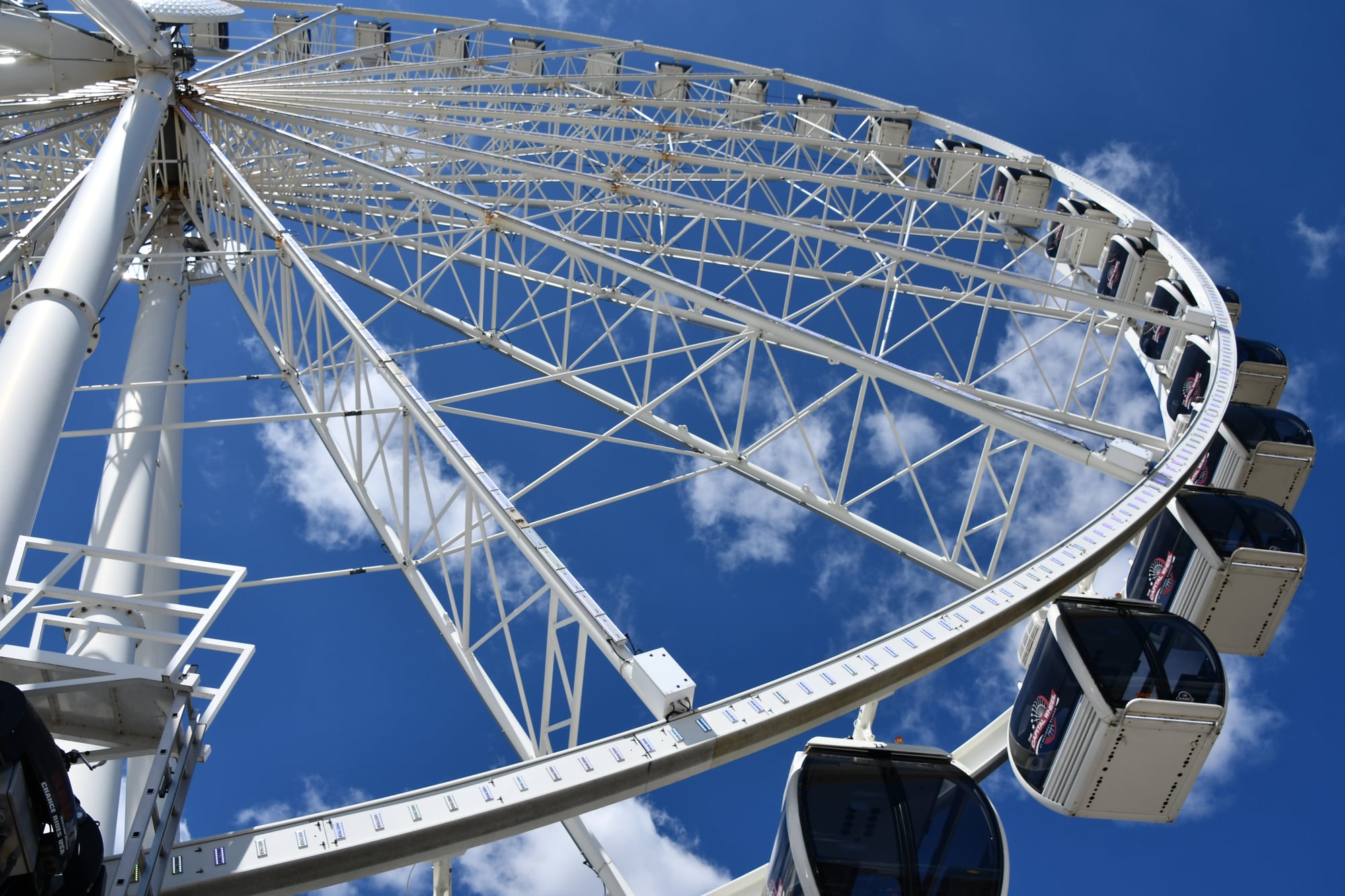
The Capital Wheel at National Harbor near Washington, D.C., stands 180 feet tall and offers views of the Potomac River and the distant monuments that define American power. Each gondola is climate-controlled and equipped with a tablet that identifies the landmarks spread below — because even leisure experiences in D.C. come with educational components.
The wheel operates year-round, which seems optimistic given D.C.’s weather patterns, but Americans have always been good at pushing through discomfort for a better view.
SkyWheel Myrtle Beach
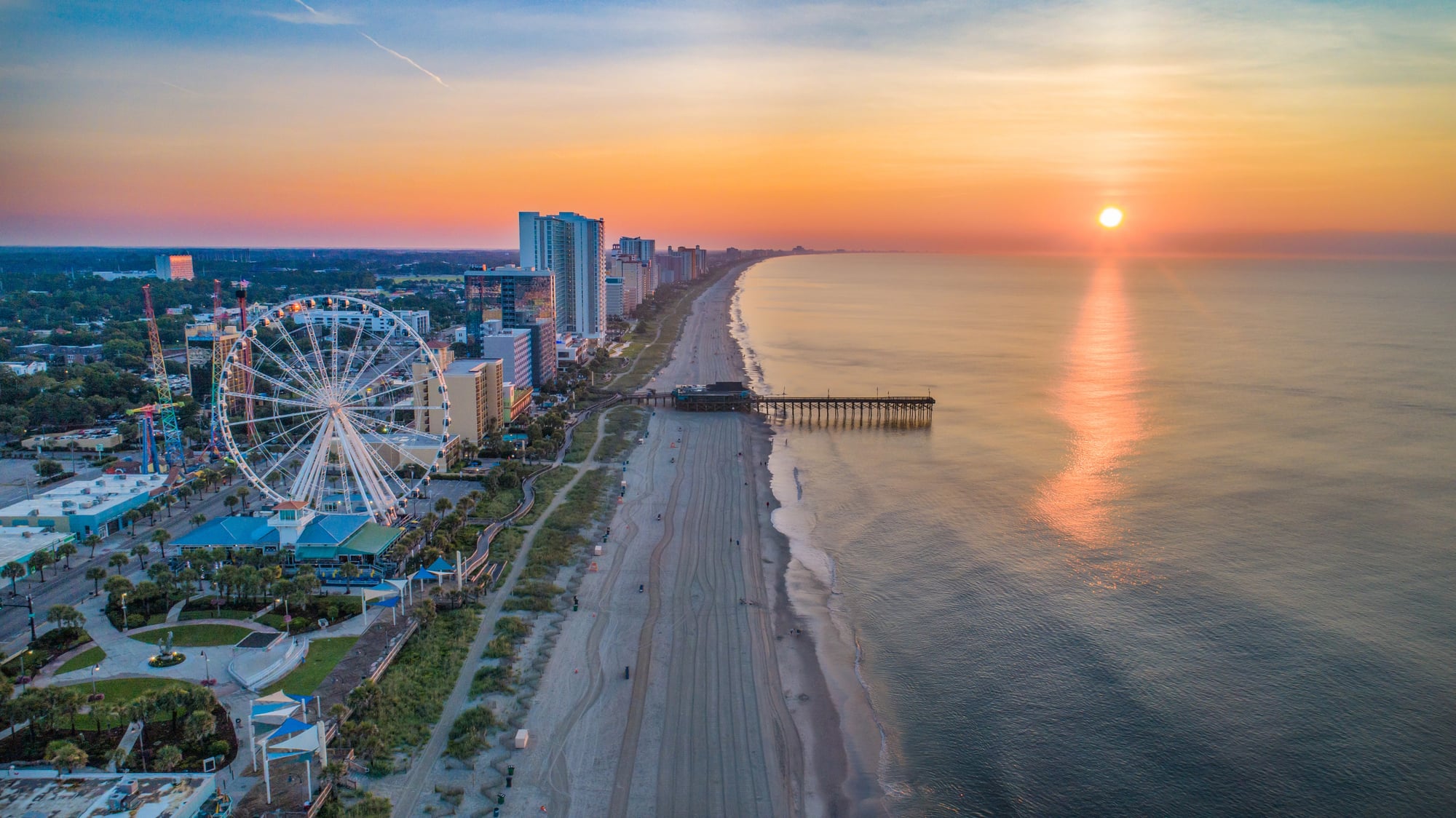
The SkyWheel in Myrtle Beach rises 187 feet above South Carolina’s coast, and it embodies everything that makes American beach towns both charming and slightly ridiculous. This is vacation infrastructure — built for people who want to see the ocean from above while eating funnel cake and wearing flip-flops.
The gondolas are enclosed and air-conditioned, which is essential when you’re dealing with Southern humidity and tourists who may have spent the day in the sun without adequate preparation.
Seattle Great Wheel
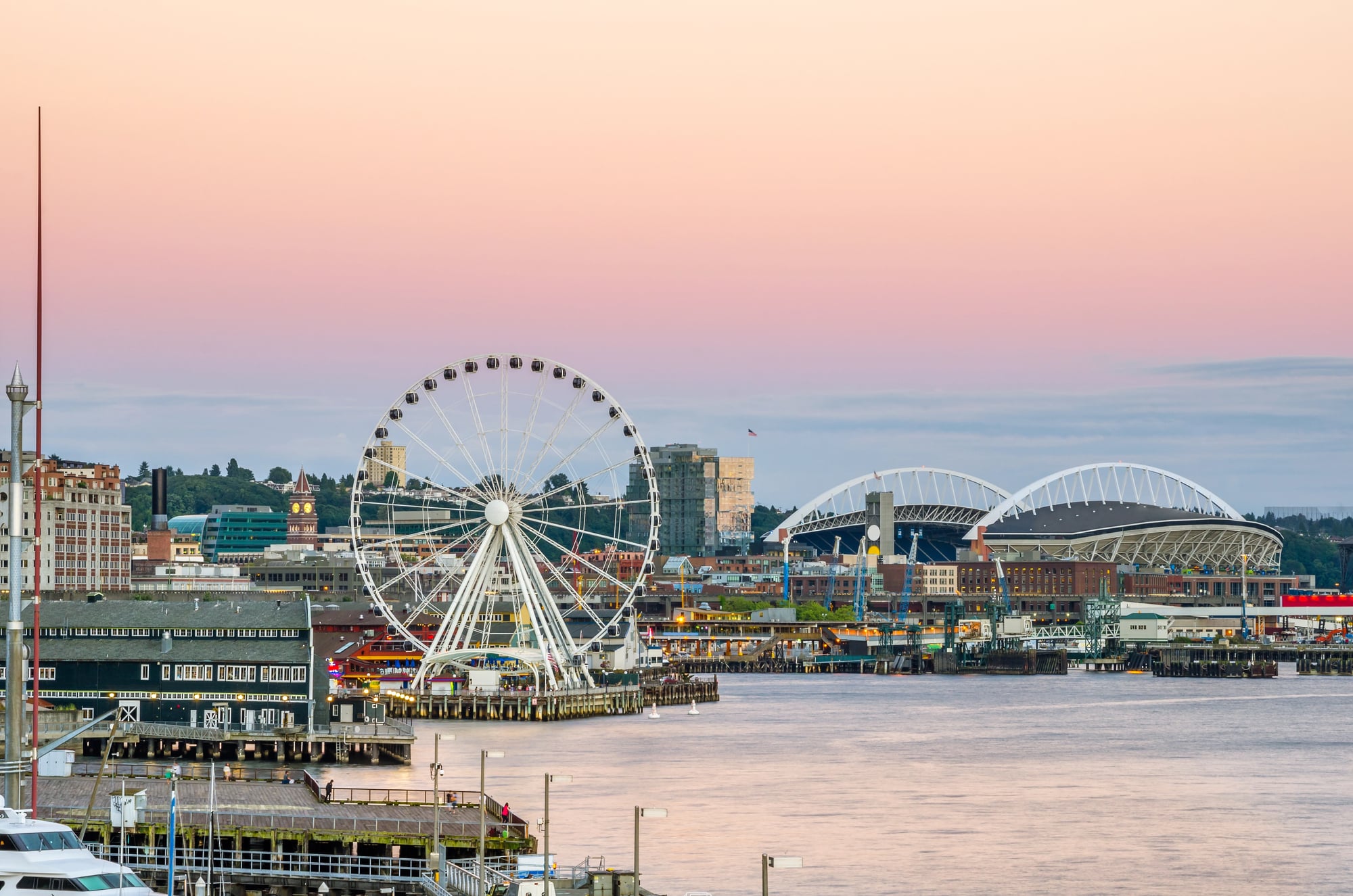
The Seattle Great Wheel stands 175 feet tall on Pier 57, putting Elliott Bay and the Olympic Mountains on display like postcards that move in real time. One gondola is painted red and sits slightly apart from the others — the VIP experience, complete with leather seats and a glass floor for people who find regular observation wheel rides insufficiently nerve-wracking.
Seattle’s weather means the wheel operates in conditions that would shut down less determined attractions.
Rain, fog, and wind are considered features, not bugs. The Pacific Northwest doesn’t believe in perfect weather, just perfect attitudes toward imperfect weather.
Views That Outlast the Ride
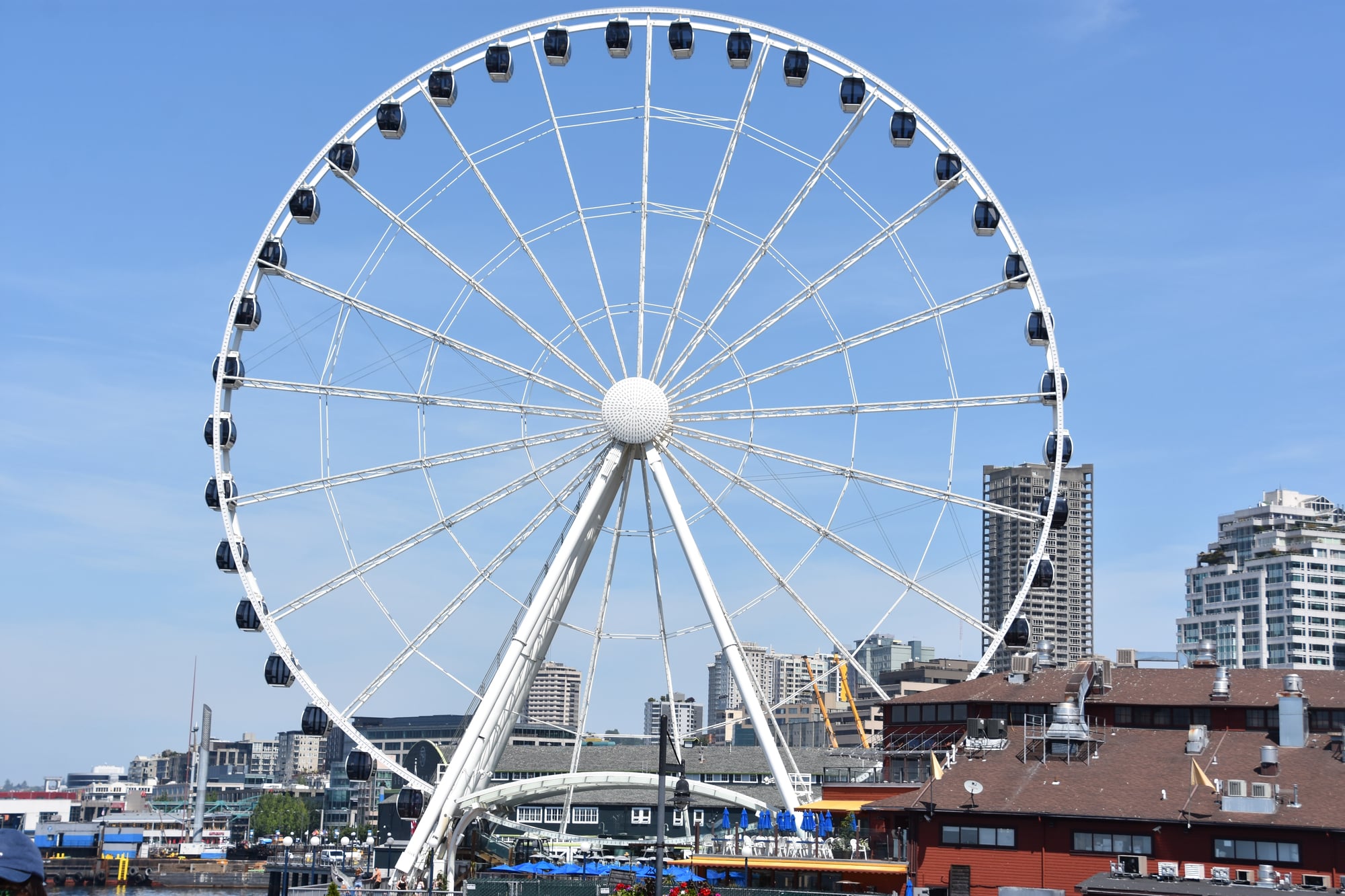
Observation wheels represent something humans have always done — climb higher to see farther — but they’ve wrapped that ancient impulse in modern engineering and marketing. The tallest ones grab headlines, but the best ones understand their cities.
They know when to be subtle and when to show off, when to prioritize views and when to prioritize experience.
Standing 800 feet above the ground in a climate-controlled capsule might not feel like exploration, but the view from up there suggests otherwise. The world looks different from above, even when you’re moving in a perfect, predictable circle.
More from Go2Tutors!

- The Romanov Crown Jewels and Their Tragic Fate
- 13 Historical Mysteries That Science Still Can’t Solve
- Famous Hoaxes That Fooled the World for Years
- 15 Child Stars with Tragic Adult Lives
- 16 Famous Jewelry Pieces in History
Like Go2Tutors’s content? Follow us on MSN.