27 Optical Illusions Built into Famous Architecture That Fool Visitors Every Day
Architecture has always been about more than shelter. The greatest builders throughout history understood something profound: what you see isn’t always what’s actually there.
They bent reality with stone and steel, creating illusions so convincing that millions of visitors walk past them every day without realizing they’ve been fooled. These aren’t accidental tricks of light or construction quirks that happened by chance.
Every false perspective, impossible angle, and visual sleight of hand was planned with surgical precision. The architects knew exactly what they were doing — and they knew you’d never see it coming.
The Parthenon
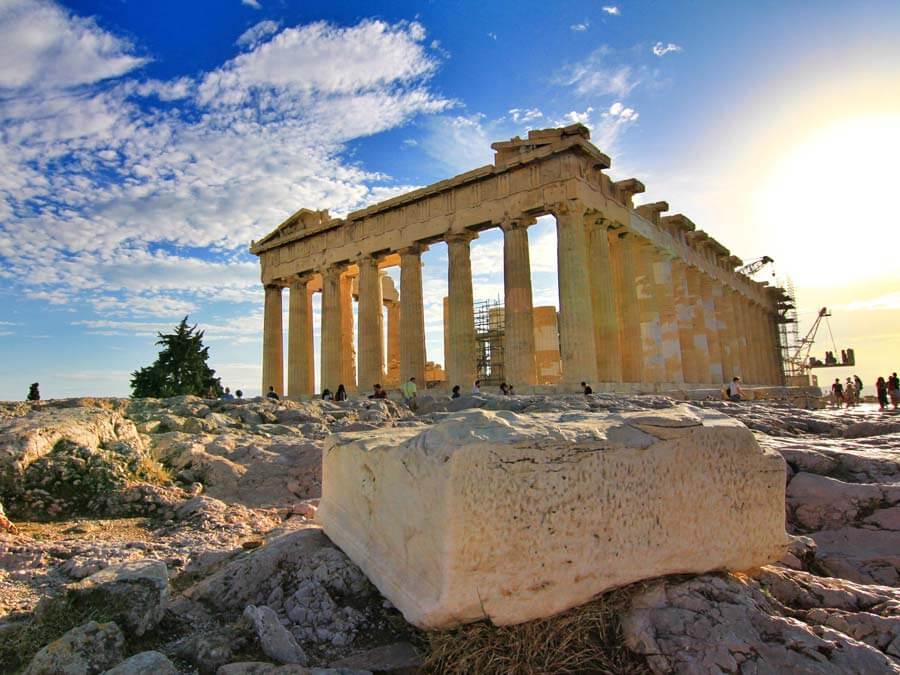
The Parthenon’s columns look perfectly straight and evenly spaced. They’re not.
Every single column bulges slightly in the middle and tilts inward by degrees so subtle that ancient Greek architects had to use mathematical calculations to get the lean exactly right. The floor isn’t level either.
It curves upward toward the center, rising about four inches from corner to middle. Your brain corrects all of this automatically, showing you the “perfect” temple that exists only in your perception.
The Leaning Tower of Pisa
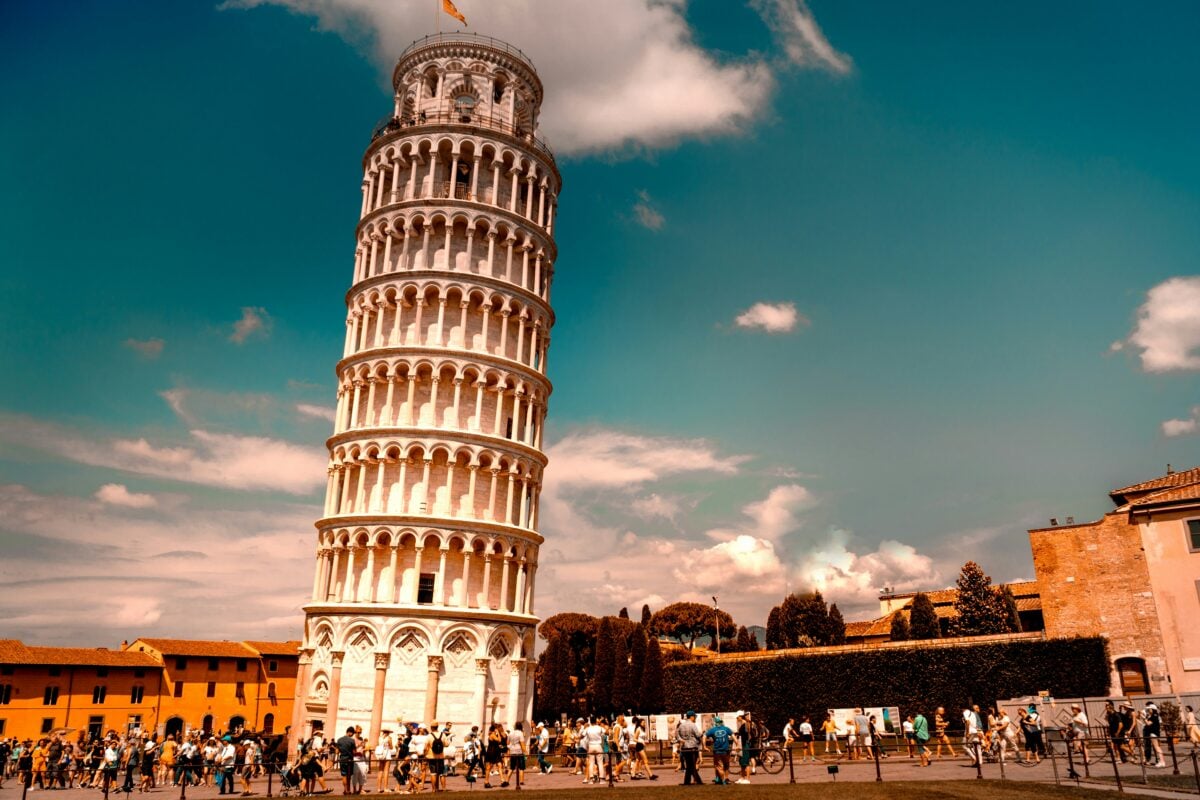
Everyone knows the tower leans, but the real illusion runs deeper than the famous tilt. The architects tried to correct the lean as they built higher, creating a tower that actually curves like a banana.
Eight floors bend in a subtle S-shape that your eyes read as a simple lean. The tower also appears to be falling faster than it actually is, thanks to a forced perspective that makes the top look further away than the 186 feet it actually measures.
Empire State Building
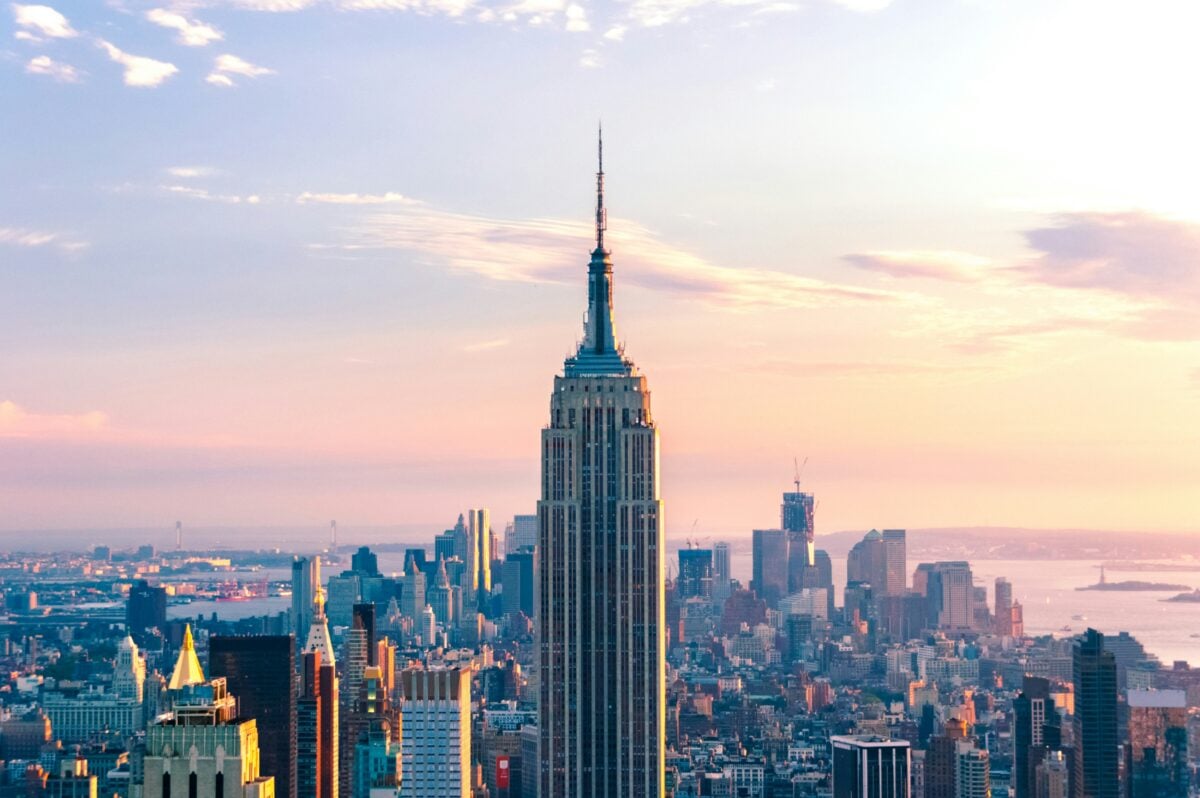
Step back far enough and the Empire State Building seems to taper gracefully from bottom to top, but this elegant silhouette is completely artificial — a carefully orchestrated deception that requires multiple setbacks at precisely calculated intervals to create the illusion of a single, sweeping form. The building doesn’t actually taper at all (each section maintains vertical walls), yet from street level it appears to flow upward like a limestone waterfall, which is exactly what the architects intended when they designed this monument to vertical ambition.
And there’s something else: the building appears taller than it actually is because your brain expects skyscrapers to have more floors than they do, so when you count windows, you systematically overestimate the height. So the “tallest building in the world” mystique stuck longer than it should have, even after taller buildings existed.
The illusion had become more powerful than reality.
St. Peter’s Basilica
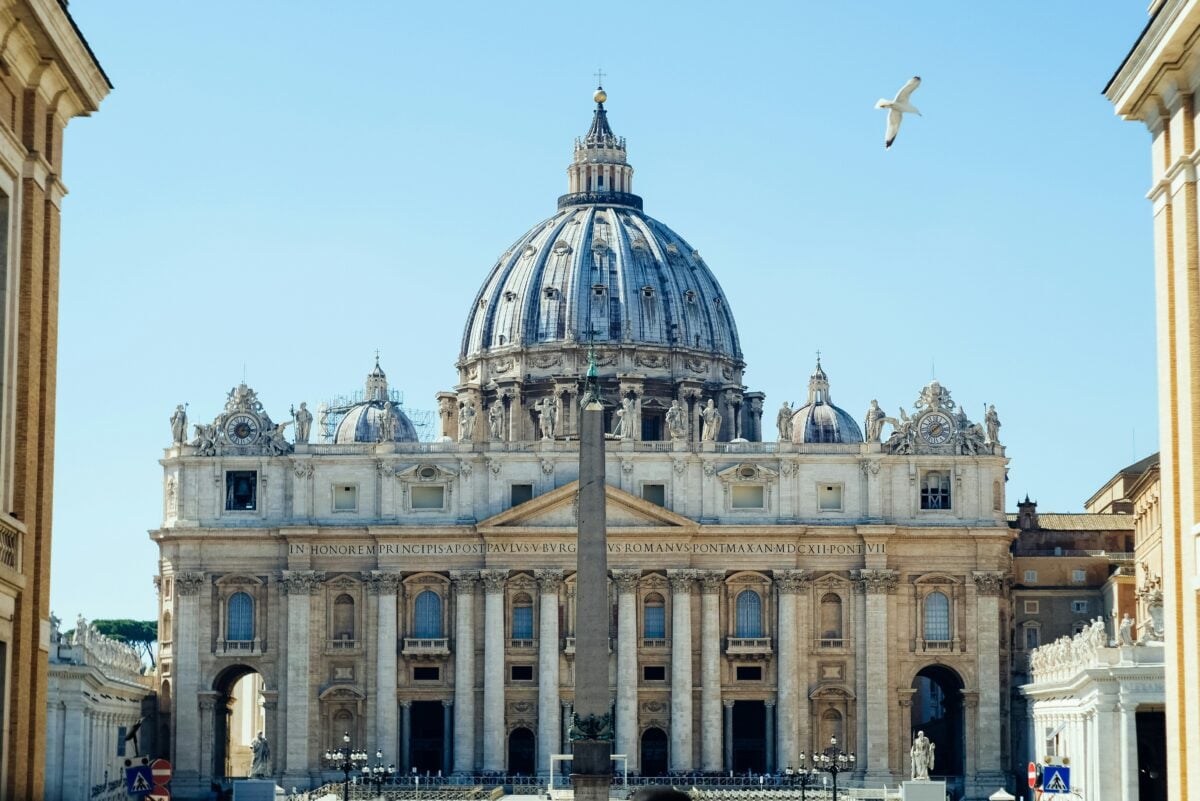
Stand in the exact center of St. Peter’s Square and something impossible happens. The four rows of columns that surround the piazza collapse into what appears to be a single row, as if someone folded space itself.
Bernini designed this optical trick with the precision of a watchmaker. The dome tells a different lie.
From the square, it looms impossibly large, filling your entire field of vision. Walk closer and it shrinks.
The dome isn’t growing smaller — your perspective is correcting itself, revealing the careful manipulation of scale that makes the distant dome appear more massive than physics should allow.
Notre-Dame Cathedral
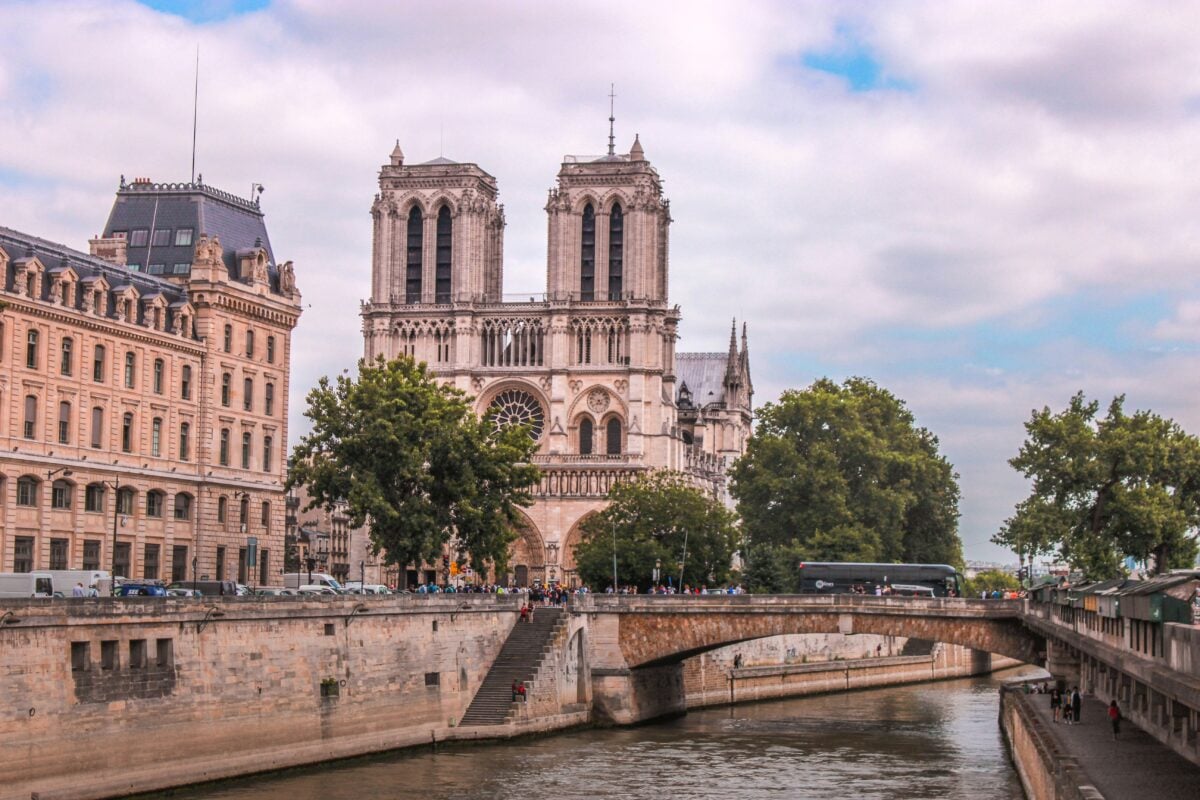
The towers frame the rose window like twin guardians, perfectly symmetrical and identical in every detail. Except they’re not identical at all — and once you know this, you’ll never unsee it.
The south tower is actually wider than the north tower, but medieval architects compensated by adjusting the proportions of windows, stones, and decorative elements so your brain reads perfect symmetry where none exists. This wasn’t a construction error.
Medieval builders understood human perception better than most modern architects do.
Taj Mahal
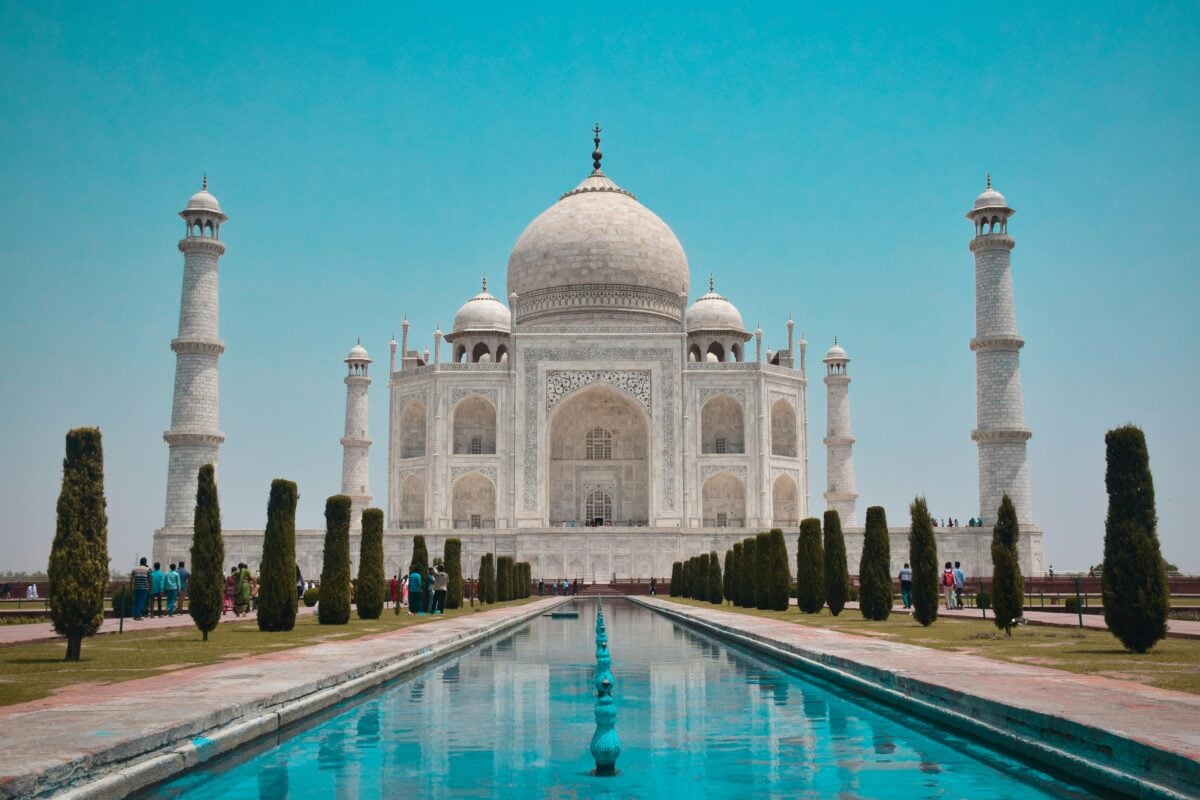
The Taj Mahal sits on its platform like a perfect white jewel, but the platform itself is an optical trick. Shah Jahan’s architects raised the tomb on a base that appears much smaller than it actually is, creating the illusion that the building floats above the ground.
The four minarets lean outward by degrees so slight that you’d need surveying equipment to detect them. If they stood truly vertical, they’d appear to lean inward due to perspective distortion.
The outward lean corrects for this, creating towers that look perfectly straight while actually tilting away from the tomb.
Sydney Opera House
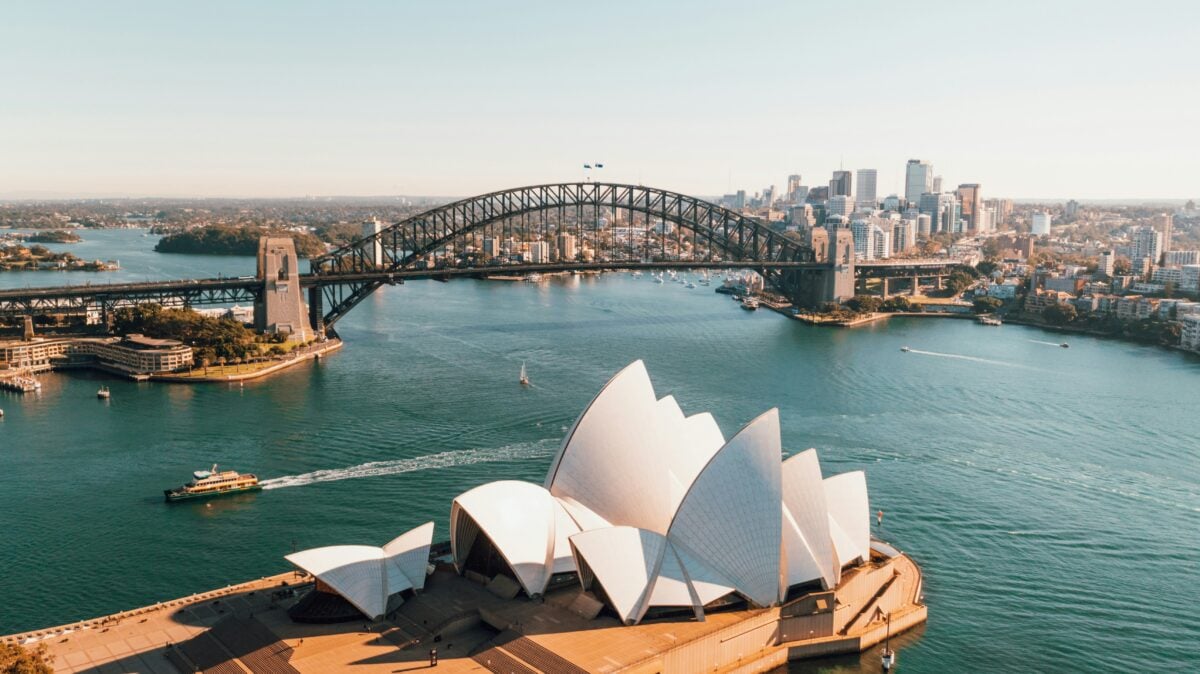
From the harbor, the Opera House shells appear to soar effortlessly upward, light as paper sails catching wind. The reality is more stubborn: each shell weighs over 1,000 tons and required a concrete rib structure so massive that it took engineers four years just to figure out how to build it (the original architect, Jørn Utzon, quit in frustration before seeing his vision completed).
But the visual effect erases all that weight, all that struggle with gravity and engineering — what you see instead is architecture that appears to defy the very forces that shaped its construction. The shells seem translucent from a distance, though they’re made of thick concrete covered in ceramic tiles that catch light like scales on some enormous fish.
Flatiron Building
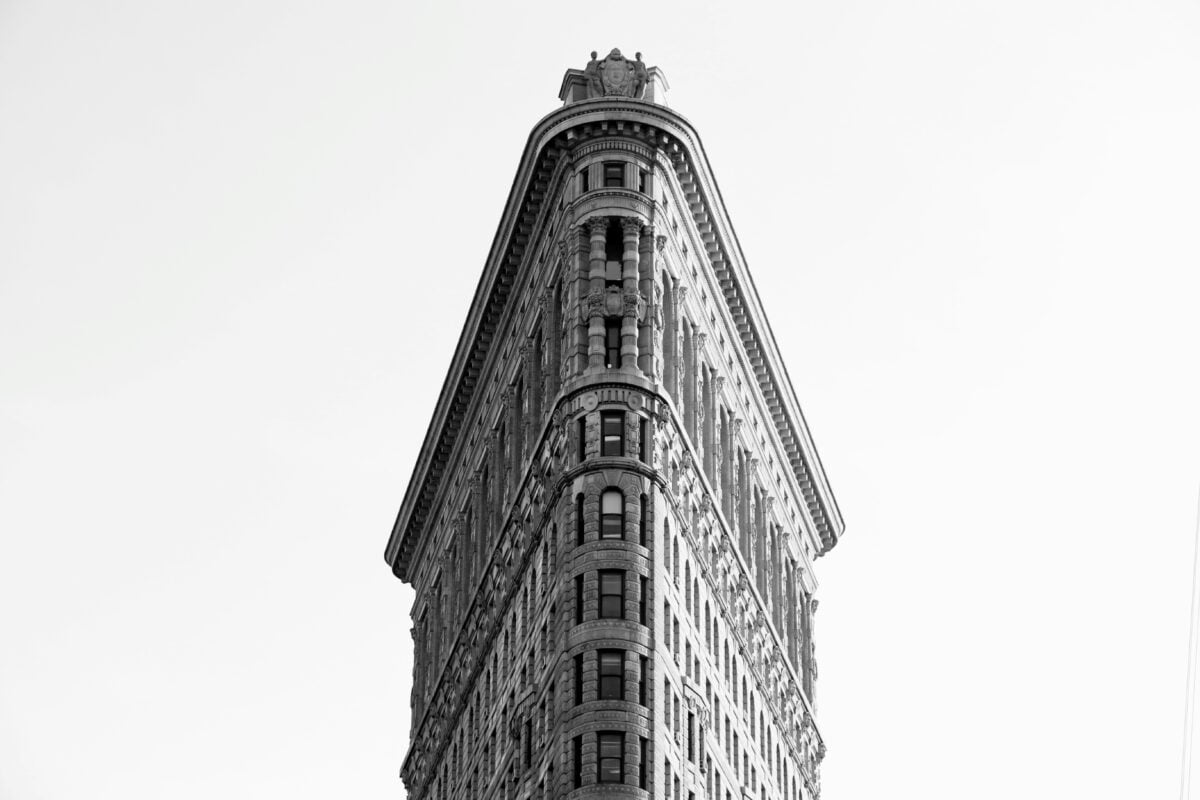
The Flatiron Building looks like a ship’s prow cutting through the intersection of Broadway and Fifth Avenue. From most angles, it appears impossibly thin — a building with no depth, like a stage flat that might tip over in a strong wind.
The illusion works because you rarely see the building from an angle that reveals its true triangular footprint. The narrow end faces the intersection, hiding the substantial width that extends down the block behind it.
Washington Monument

The Washington Monument looks like a simple white obelisk, clean and uniform from bottom to top. Look closer and you’ll notice the marble changes color about a third of the way up — a visible scar where construction stopped for 25 years during the Civil War.
But there’s another change your eyes miss entirely: the monument’s width decreases as it rises, tapering so gradually that it reads as perfectly straight. Without this taper, perspective would make the top appear narrower than the bottom.
Petronas Towers
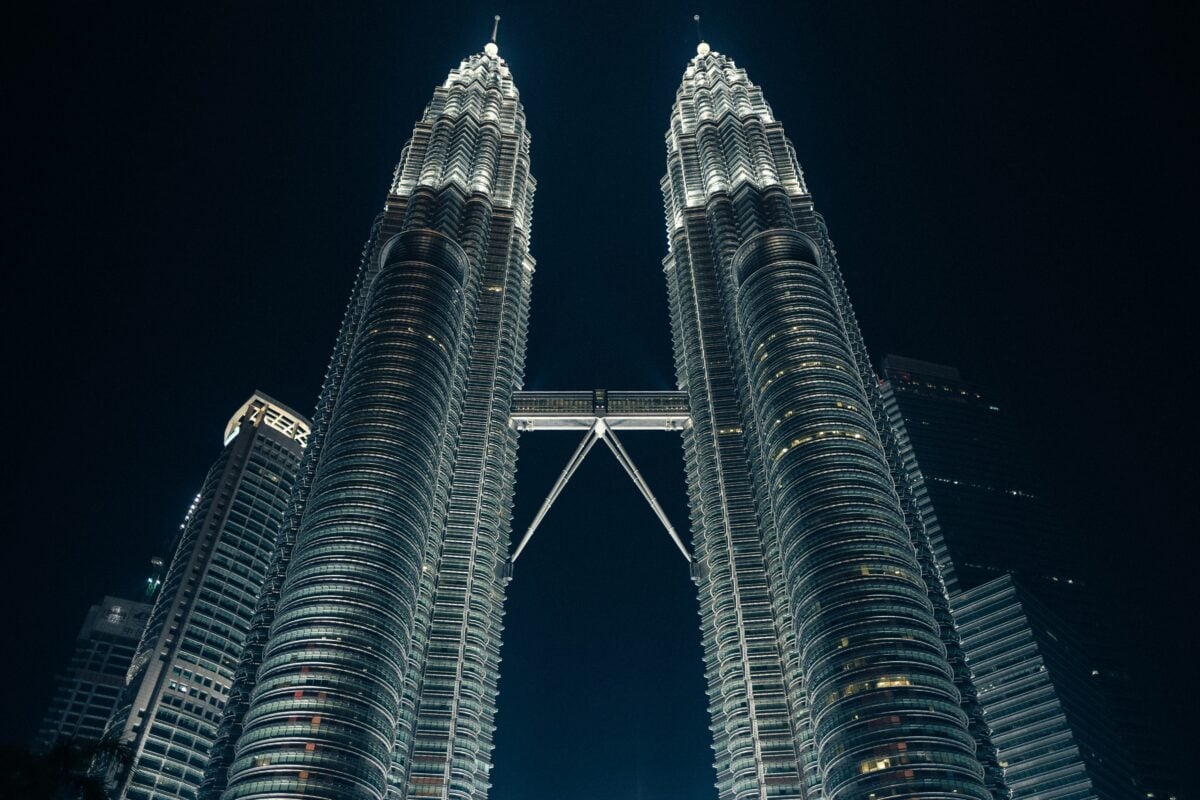
The Petronas Towers in Kuala Lumpur appear to be identical twins, perfect mirrors of each other rising 88 floors into the Malaysian sky. But architectural photography has been lying to you — these towers aren’t the same height at all, though the difference is so small (less than an inch) that it exists more in the realm of engineering precision than visual perception.
The real illusion is more ambitious: the towers appear to be made of gleaming metal, but they’re actually concrete and glass designed to mimic the look of polished steel.
CN Tower
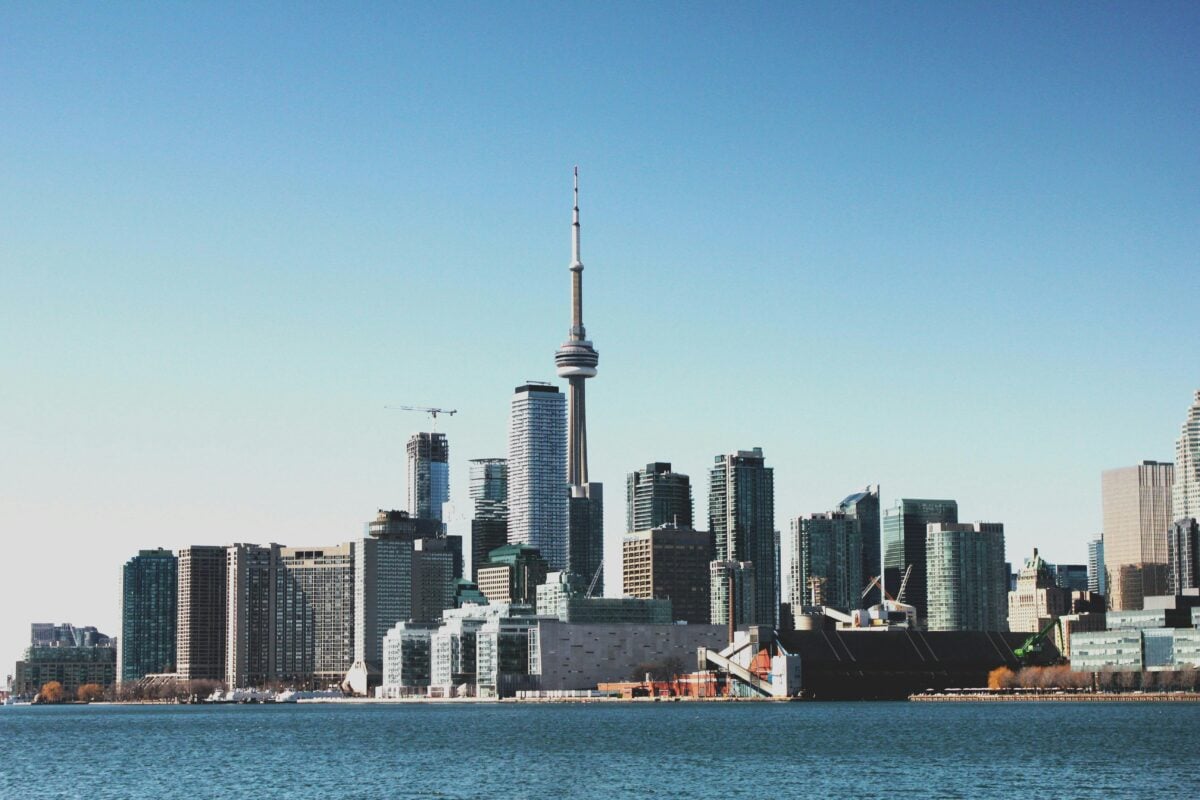
Toronto’s CN Tower commits an architectural sleight of hand that most visitors never notice: it appears to maintain the same width from bottom to top, a perfect concrete needle piercing the sky. The tower actually tapers significantly as it rises, but the rate of taper matches your eye’s perspective distortion so precisely that the changing diameter cancels out the visual effect.
From the base, looking up, you’re seeing a forced perspective in reverse — the tower getting smaller at exactly the rate your brain expects it to stay the same size.
Burj Khalifa
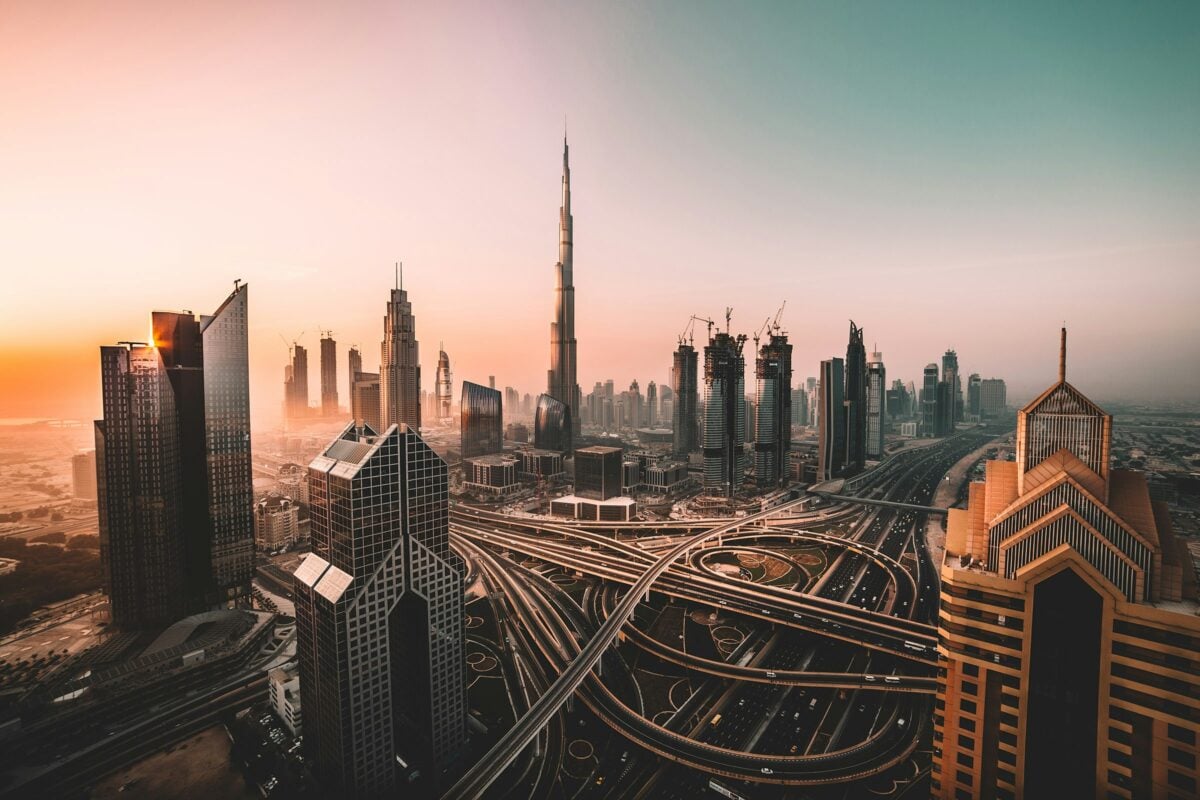
The Burj Khalifa doesn’t just look tall — it looks impossible, like someone stretched a normal building past the breaking point. This effect comes from the building’s unusual Y-shaped cross-section that hides its true bulk from every viewing angle, making it appear far more slender than its actual footprint would suggest (the building contains more floor space than most people realize, but you’d never guess from looking at it).
The setbacks that occur as the tower rises create the impression of a building that becomes more delicate with height, when in fact each section maintains massive structural strength — the visual language of fragility concealing engineering that could withstand winds that would flatten lesser buildings. And here’s the strangest part: from street level, the top disappears entirely on most days, not due to height but because of atmospheric haze that makes the building appear to fade into infinity rather than end at a specific point.
Villa Savoye
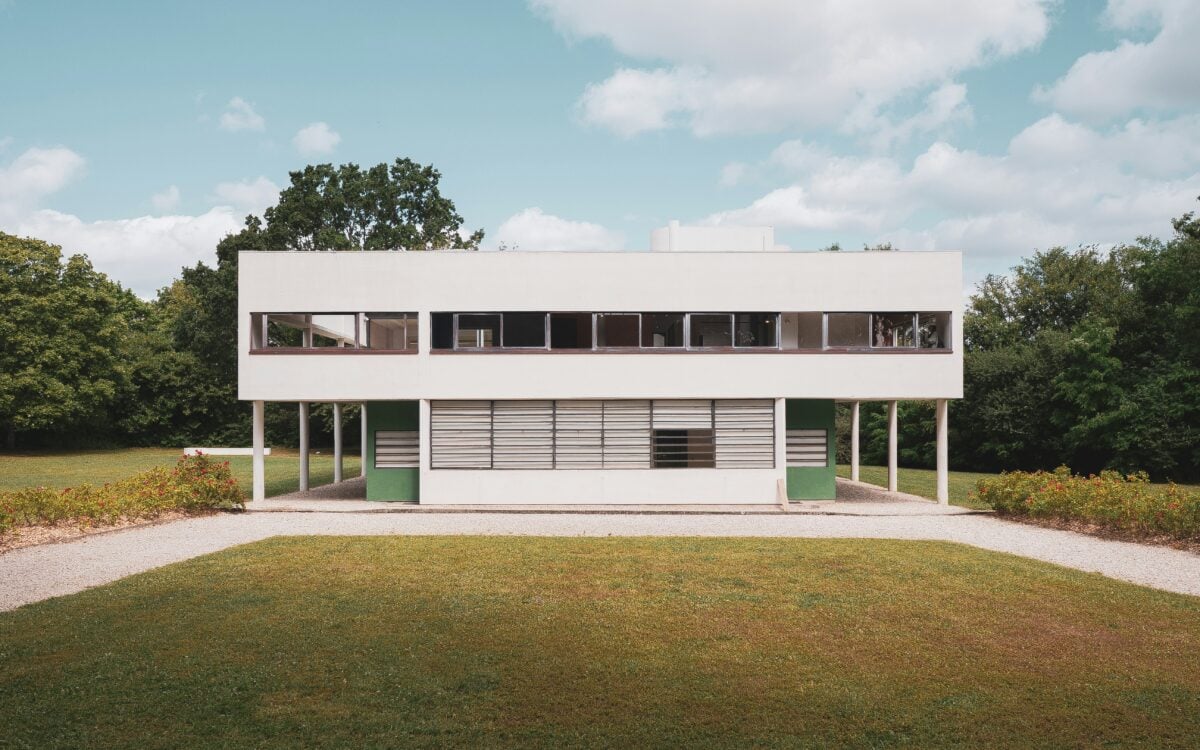
Le Corbusier’s Villa Savoye appears to float above its piloti like a white box suspended in air. The illusion is deliberate: the thin concrete columns supporting the main floor are positioned to be nearly invisible from most viewing angles, creating a building that seems to defy gravity.
The horizontal windows wrap around corners without interruption, erasing the visual boundaries that would normally define a building’s structure. Your brain struggles to understand how the walls support themselves.
Fallingwater
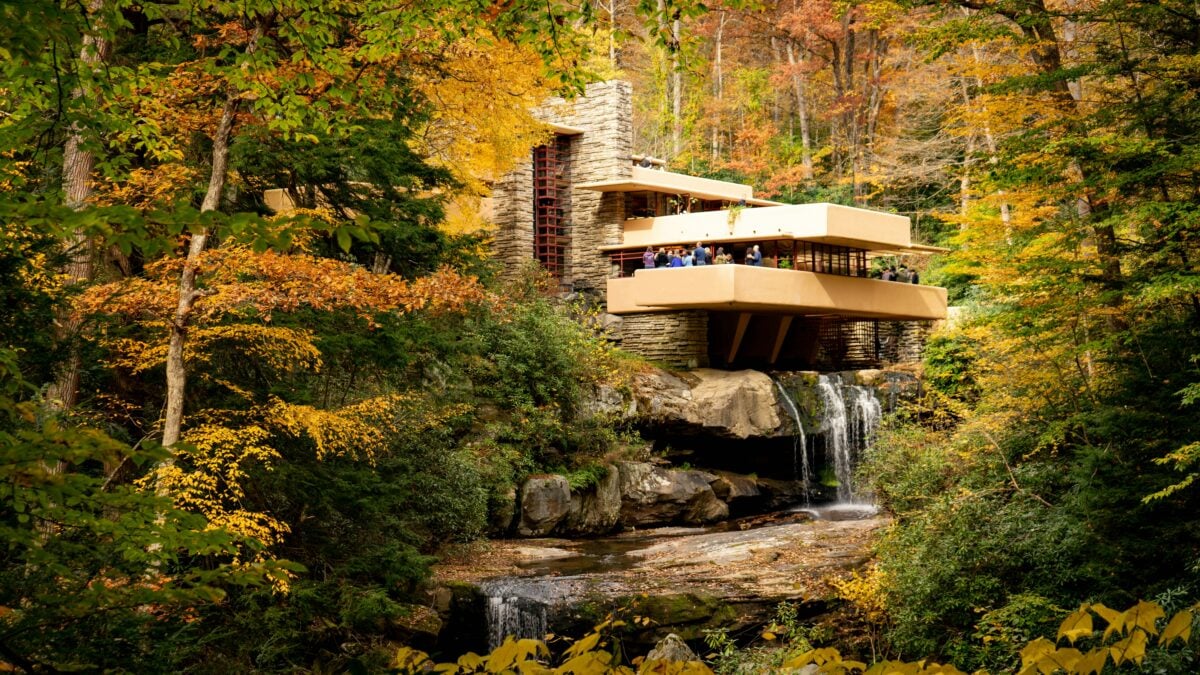
Fallingwater doesn’t just sit beside the waterfall — it grows from it, concrete ledges cantilevering over the stream as if they’d always been part of the landscape. Frank Lloyd Wright designed the house to make this integration appear effortless, hiding the massive steel reinforcement that actually holds those terraces in the air.
The horizontal lines of the house echo the rock ledges beneath, making it nearly impossible to see where nature ends and architecture begins.
Casa Batlló
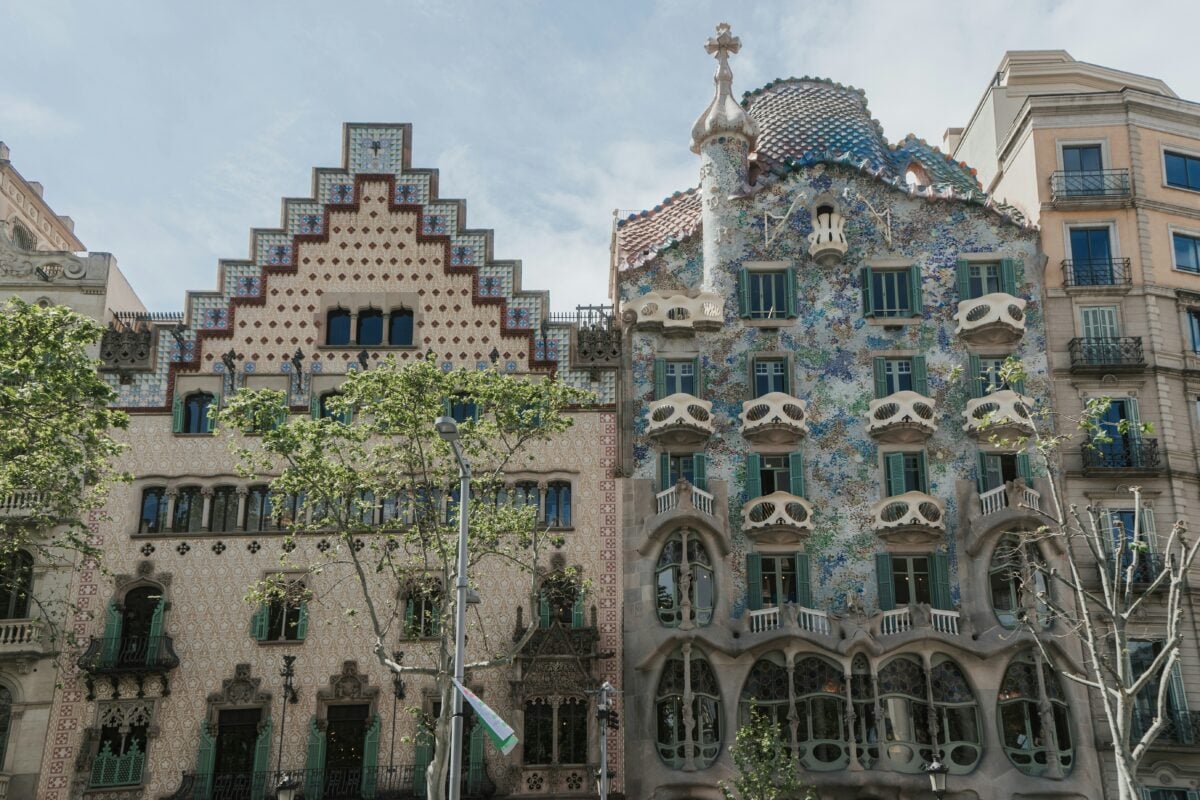
Gaudí turned a Barcelona apartment building into something that appears to undulate like ocean waves, though every surface is actually solid stone and ceramic. The facade ripples and flows, creating the impression of movement where none exists.
The building seems to have no straight lines, yet it was constructed using conventional building techniques. Gaudí simply understood how to make rigid materials appear fluid.
Sagrada Familia
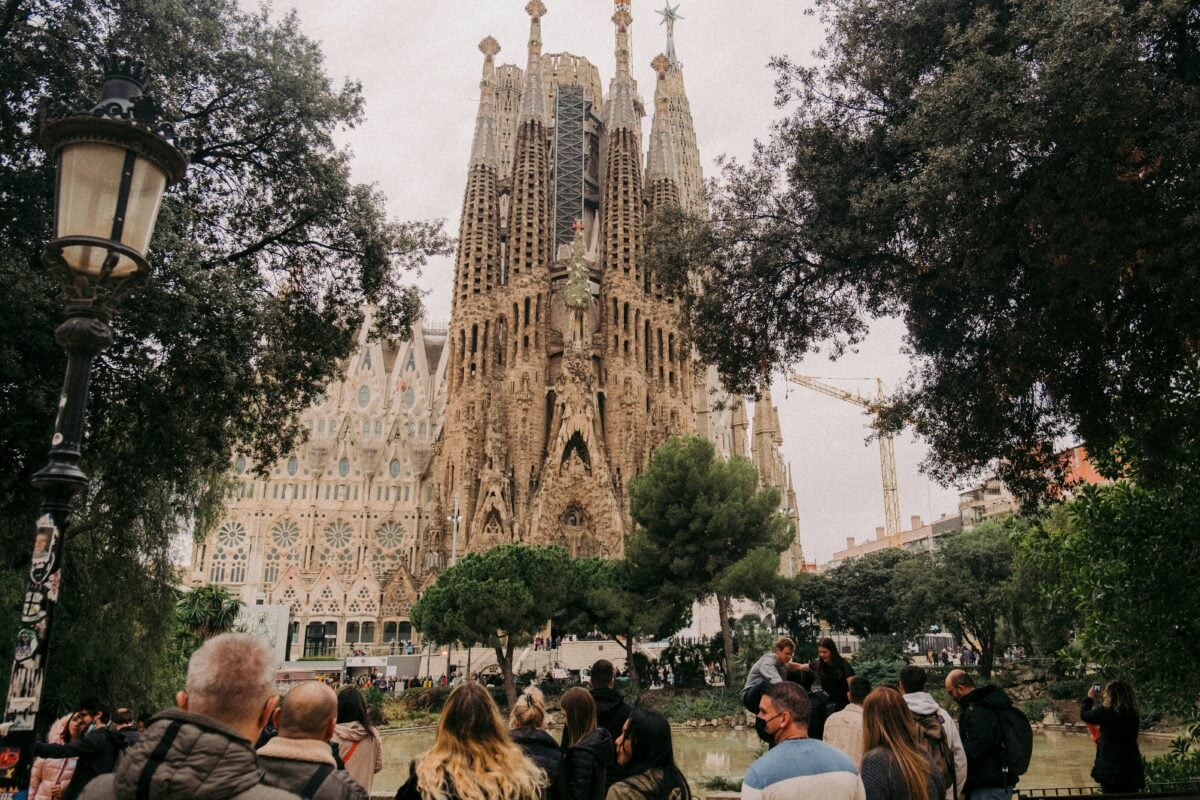
The Sagrada Familia’s towers appear to grow like plants, twisting skyward with organic curves that look impossible to construct from stone. Gaudí based his design on mathematical principles found in nature, creating architecture that follows the same structural logic as trees and bones.
The interior columns branch and split like a forest canopy, supporting massive stone vaults that appear to float weightlessly above the nave.
Hearst Tower
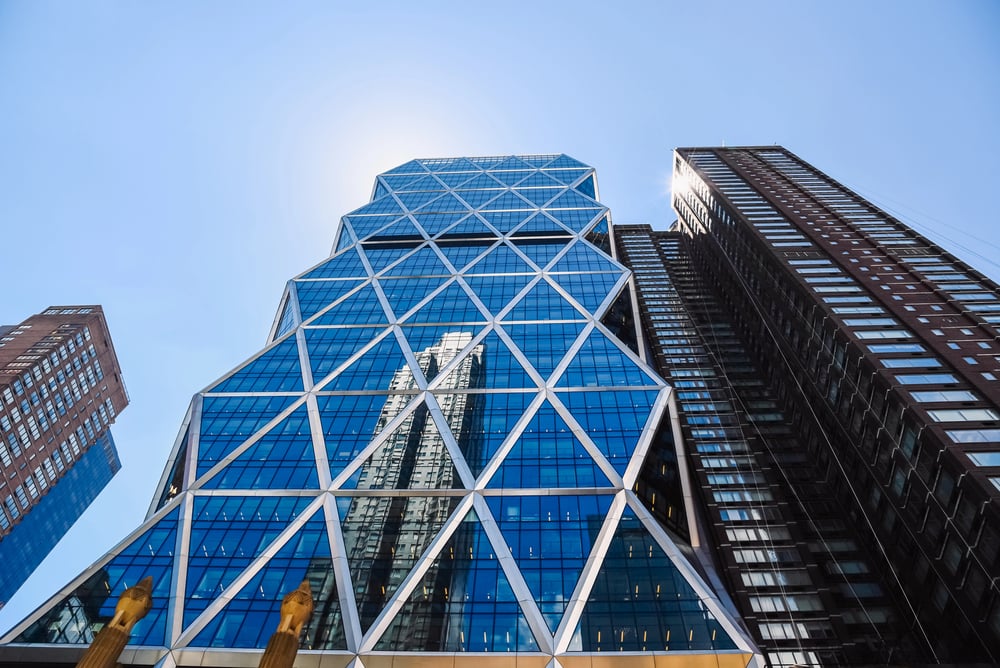
Norman Foster’s Hearst Tower in New York performs a neat trick: a contemporary glass tower appears to grow directly from a 1920s stone base, as if the old building had sprouted a crystal growth. The transition between old and new is so seamless that many visitors assume the stone base was always meant to support the glass tower above.
The diamond-pattern steel frame creates the illusion of transparency while actually providing more structural strength than conventional vertical columns.
Milwaukee Art Museum
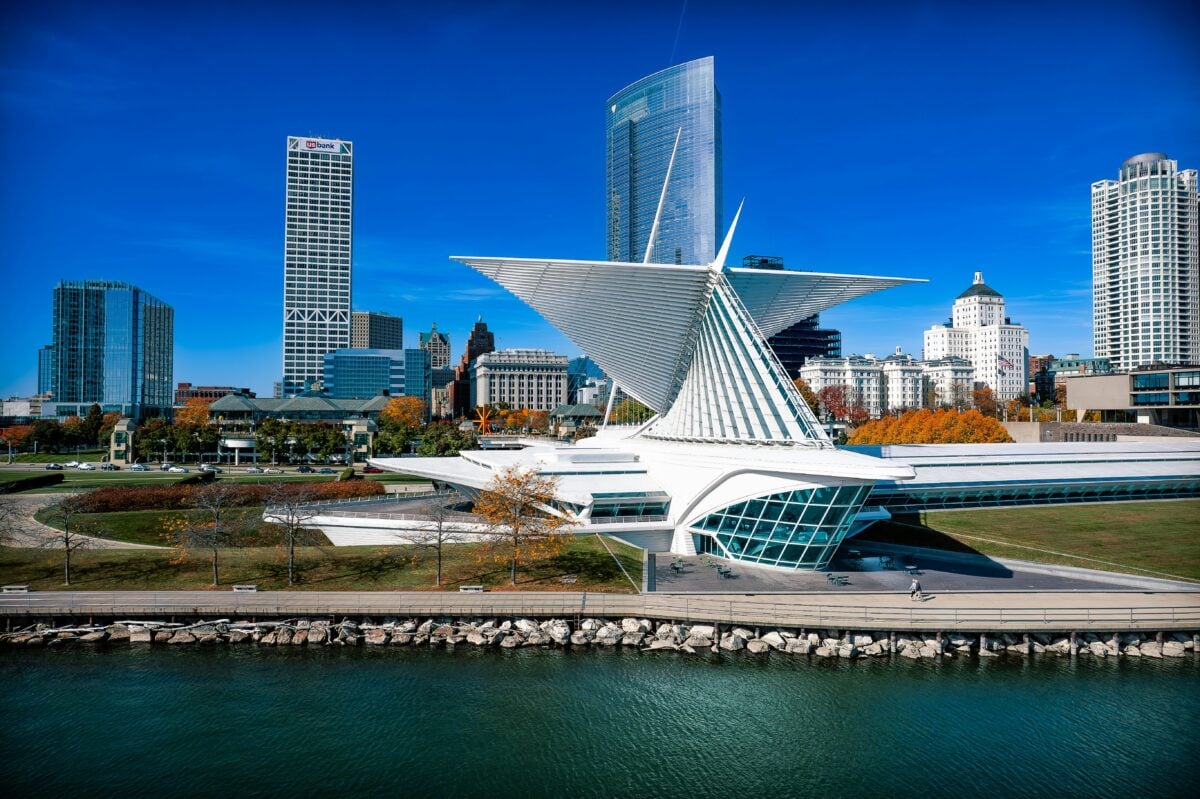
Santiago Calatrava’s Milwaukee Art Museum extension opens and closes like a giant bird, its movable sunscreen creating wings that span 217 feet. When the wings are folded, the building appears static and conventional. When they open, the entire structure seems to come alive.
The transformation happens slowly enough that you might miss it if you’re not paying attention, but fast enough to seem almost magical when you do notice.
Guggenheim Bilbao
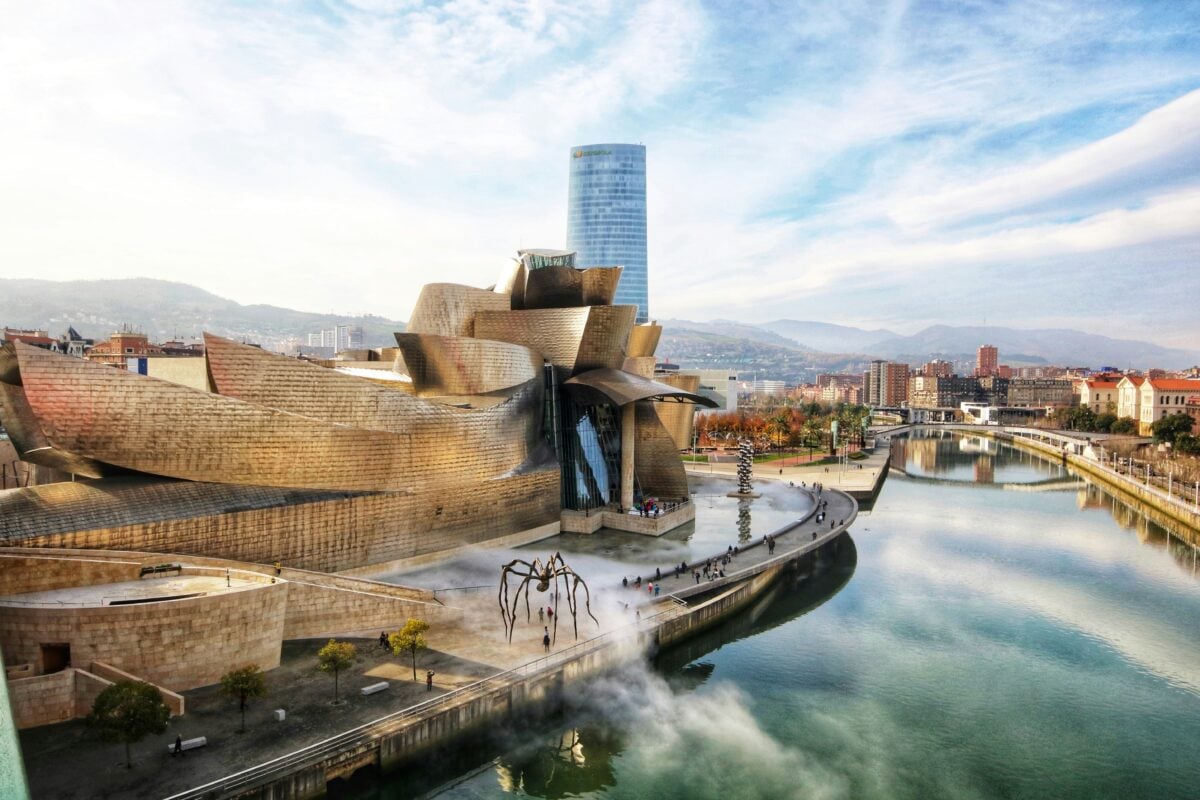
Frank Gehry’s Guggenheim Bilbao appears to be made of flowing metal ribbons, but the titanium skin is actually composed of thousands of individual panels, each one flat and geometric. The curves you see are an illusion created by the way these flat surfaces catch and reflect light.
The building changes appearance throughout the day as the sun moves, sometimes looking like molten metal, other times like fabric blowing in the wind.
Disney Concert Hall
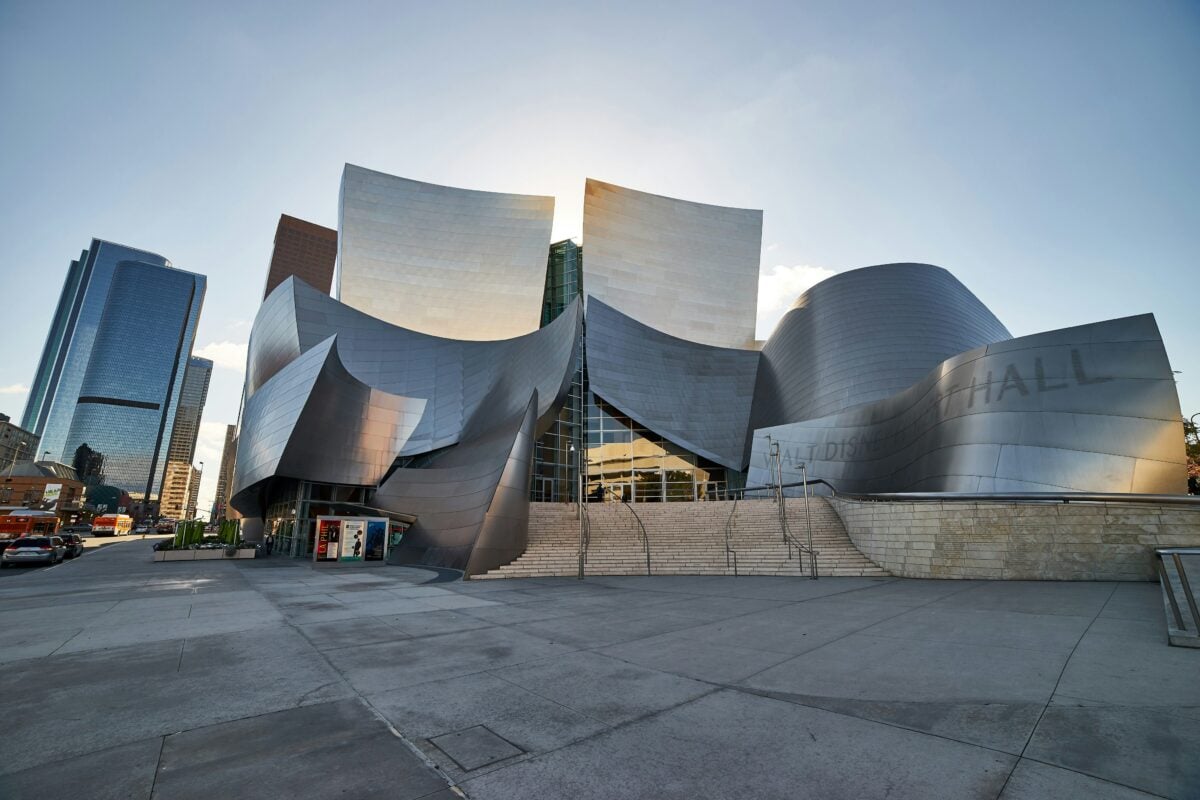
Gehry’s Disney Concert Hall in Los Angeles appears to be constructed from sheets of metallic fabric, draped and folded into impossible curves. Like Bilbao, the flowing surfaces are actually composed of flat stainless steel panels that create the illusion of continuous curves through careful positioning and reflective properties.
The building’s skin reflects the surrounding cityscape in ways that make it appear transparent and solid simultaneously.
Gherkin (30 St Mary Axe)
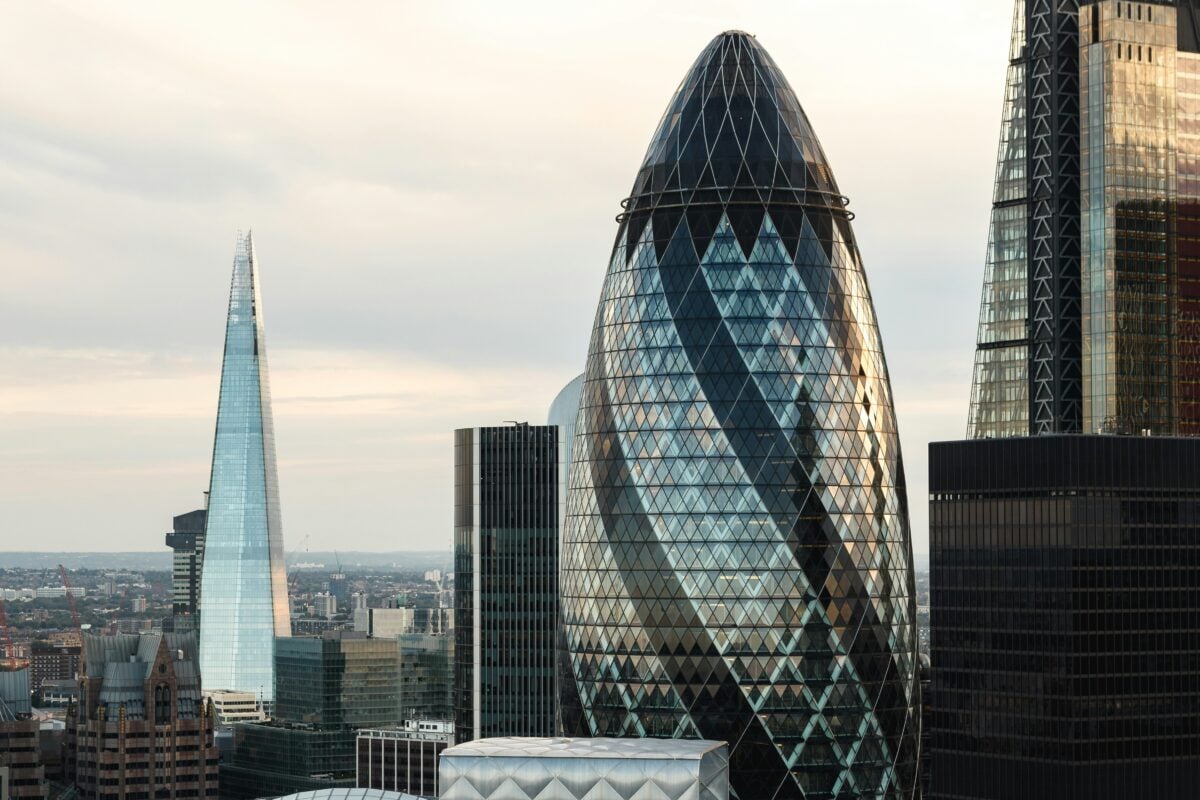
London’s Gherkin appears to twist as it rises, creating a spiral effect that suggests the entire building is rotating around its central axis. The building doesn’t actually spiral at all — it’s the pattern of windows and the slight curve of each floor that creates this optical illusion.
From street level, the building appears much more dramatic and twisted than it actually is, thanks to foreshortening that compresses the visual information into a more dynamic form.
One World Trade Center
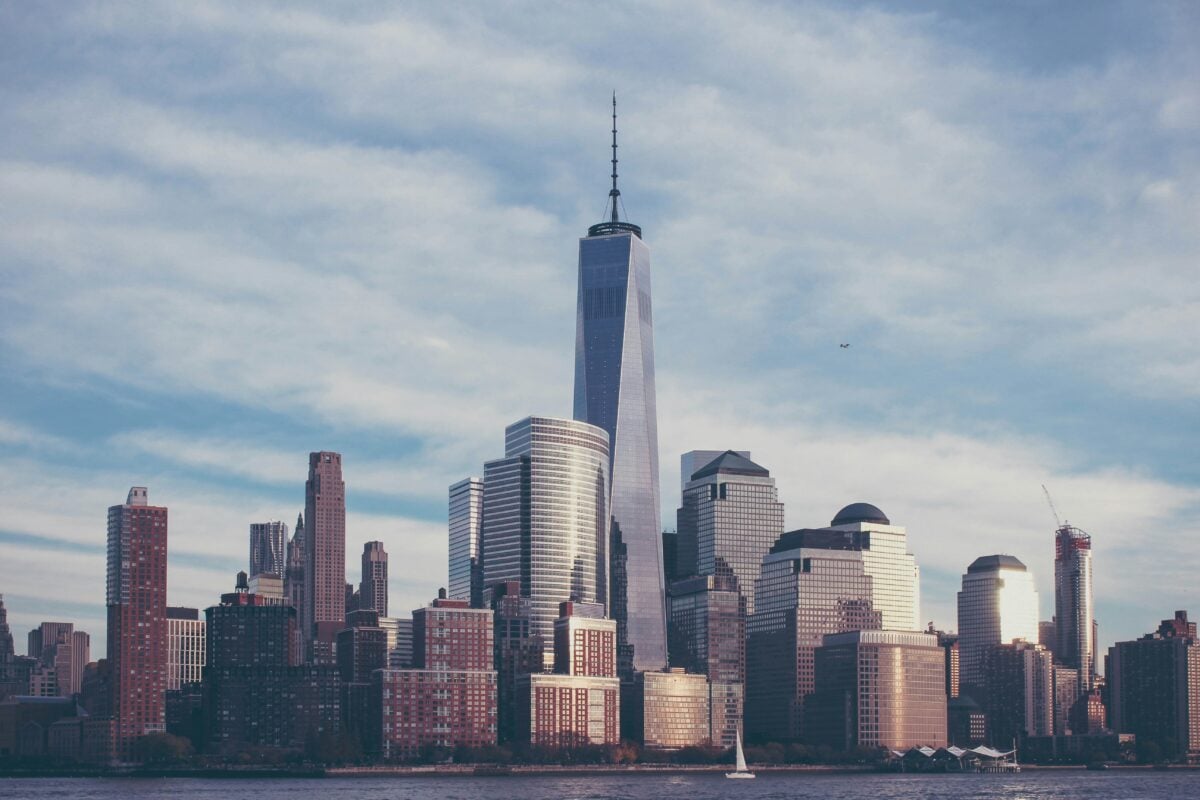
One World Trade Center in New York creates the illusion of a building that changes shape as you move around it, shifting from square to octagon depending on your viewing angle. This chamfered form makes the building appear to twist and transform, though it actually maintains the same geometric relationship to its base throughout its height.
The reflective glass skin amplifies this effect, creating a building that seems to dematerialize and reform as clouds and sky reflect across its surfaces.
Lotus Temple
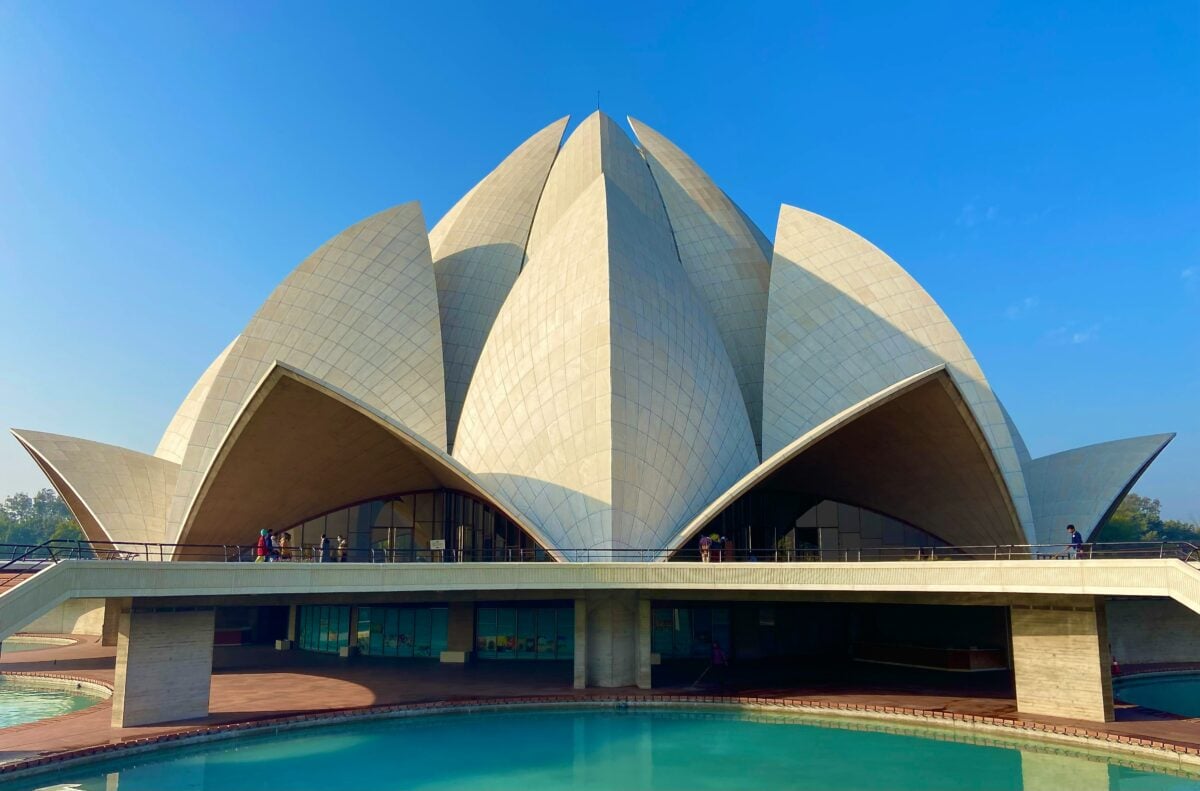
The Lotus Temple in New Delhi appears to be a flower made of white marble, its 27 petals unfolding in perfect symmetry. The illusion is so convincing that many visitors expect the petals to be separate elements that could open and close.
In reality, the entire structure is a complex concrete shell covered in marble cladding, designed to maintain structural integrity while creating the visual impression of delicate, organic forms.
Atomium
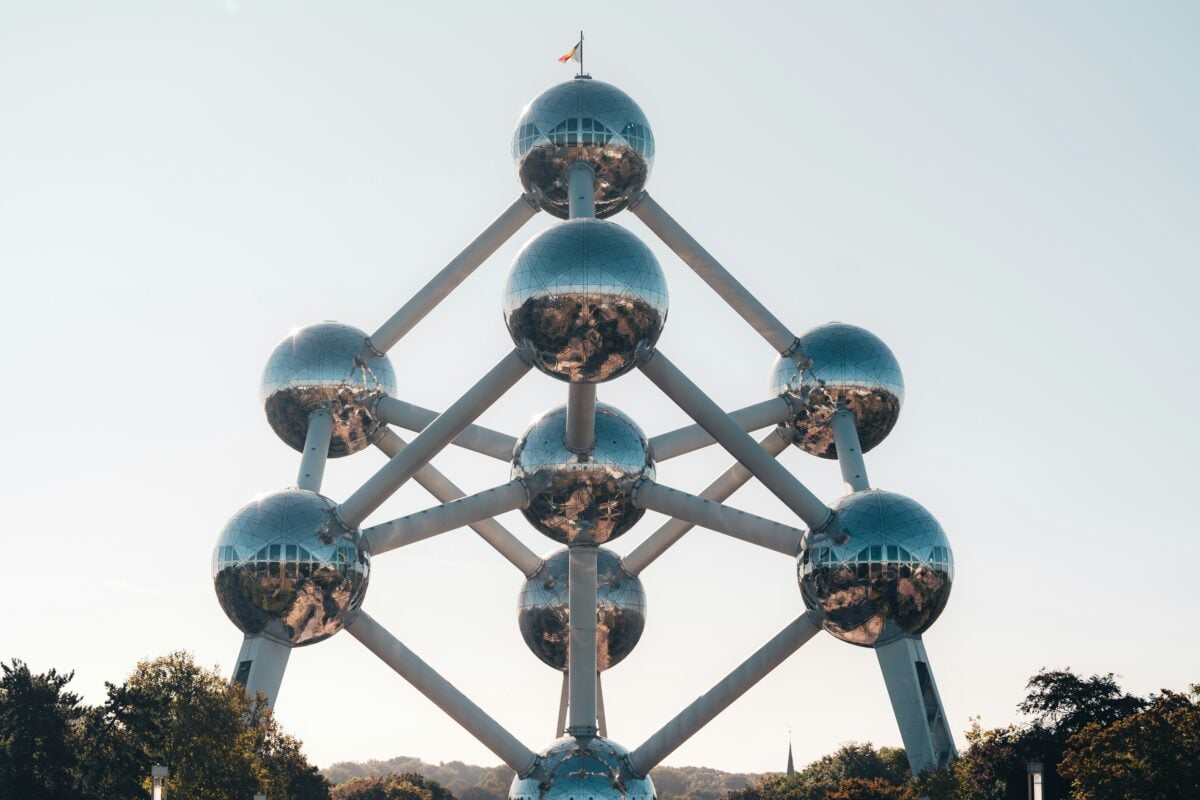
Brussels’ Atomium appears to be a molecule magnified 165 billion times, nine spheres connected by tubes that seem too thin to support the weight they’re carrying. The structure looks like it should collapse under its own weight, but the apparent fragility is an optical illusion.
The connecting tubes are actually substantial steel structures, much larger in diameter than they appear from ground level. Perspective makes them look impossibly slender.
Space Needle
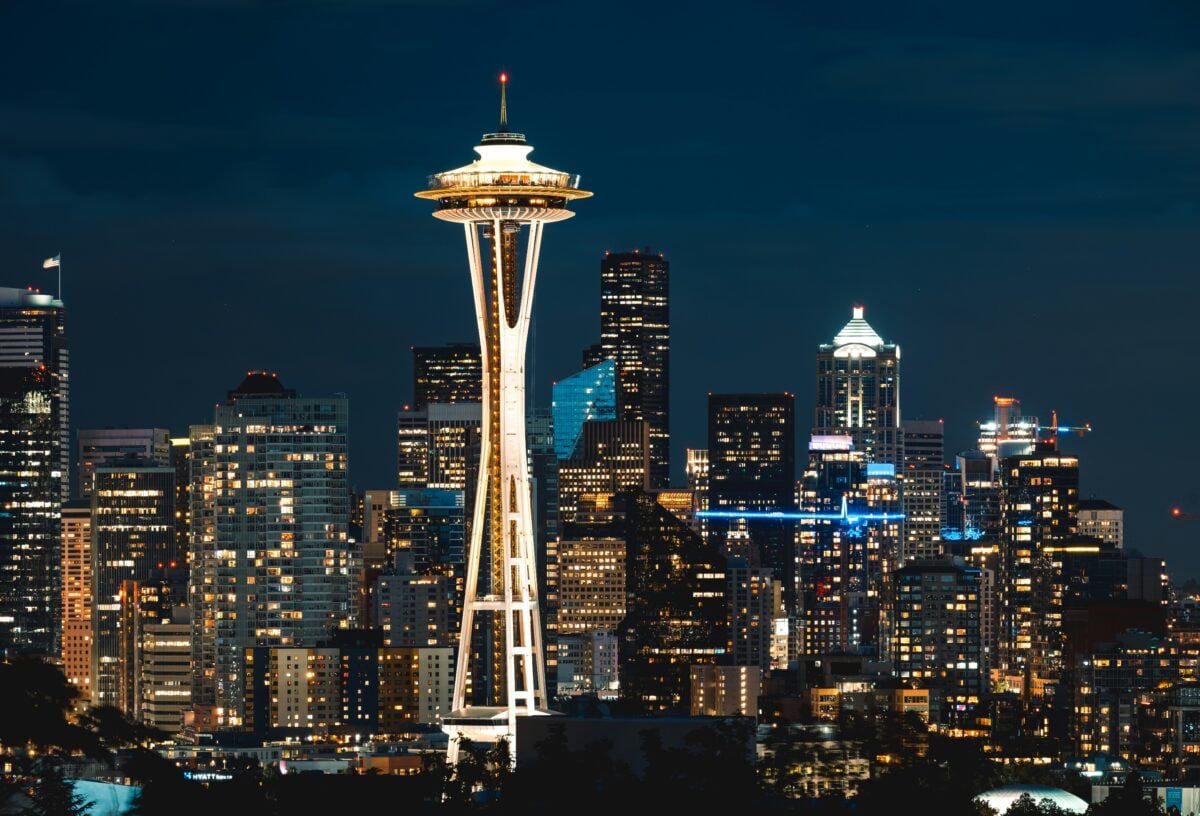
Seattle’s Space Needle creates the illusion of a flying saucer that has just landed atop a concrete stem. The top-heavy proportions look structurally impossible — no building should be able to balance that much weight on such a narrow base.
The illusion works because the foundation extends much deeper underground than the visible structure suggests, creating a hidden anchor that makes the impossible balance actually work.
Marina Bay Sands
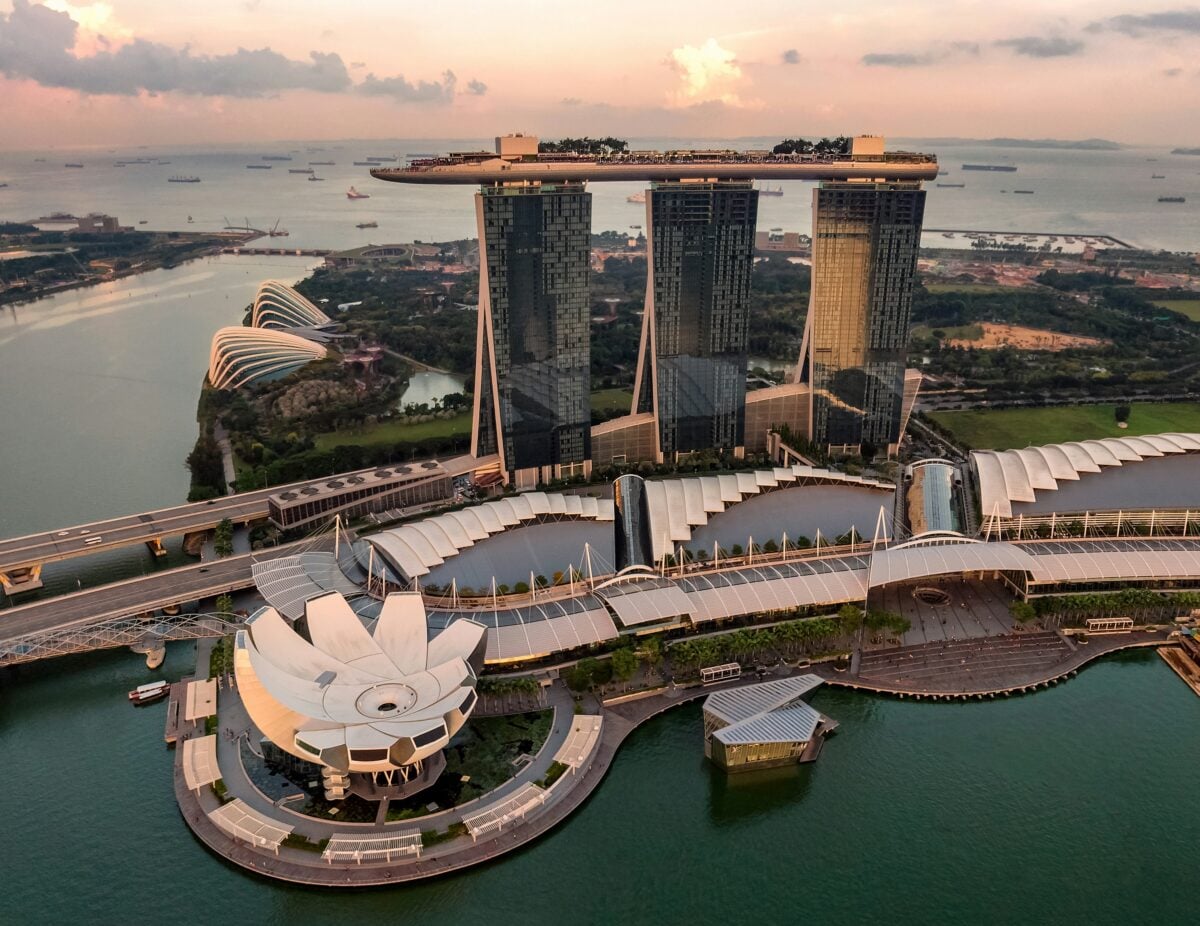
The three towers of Marina Bay Sands in Singapore support what appears to be a ship floating 200 meters above the ground. The infinity pool on the roof reinforces this illusion, creating the visual impression that the entire structure defies gravity.
The cantilever that extends beyond the tower supports is real, but carefully hidden structural elements make it much more stable than it appears.
Gateway Arch
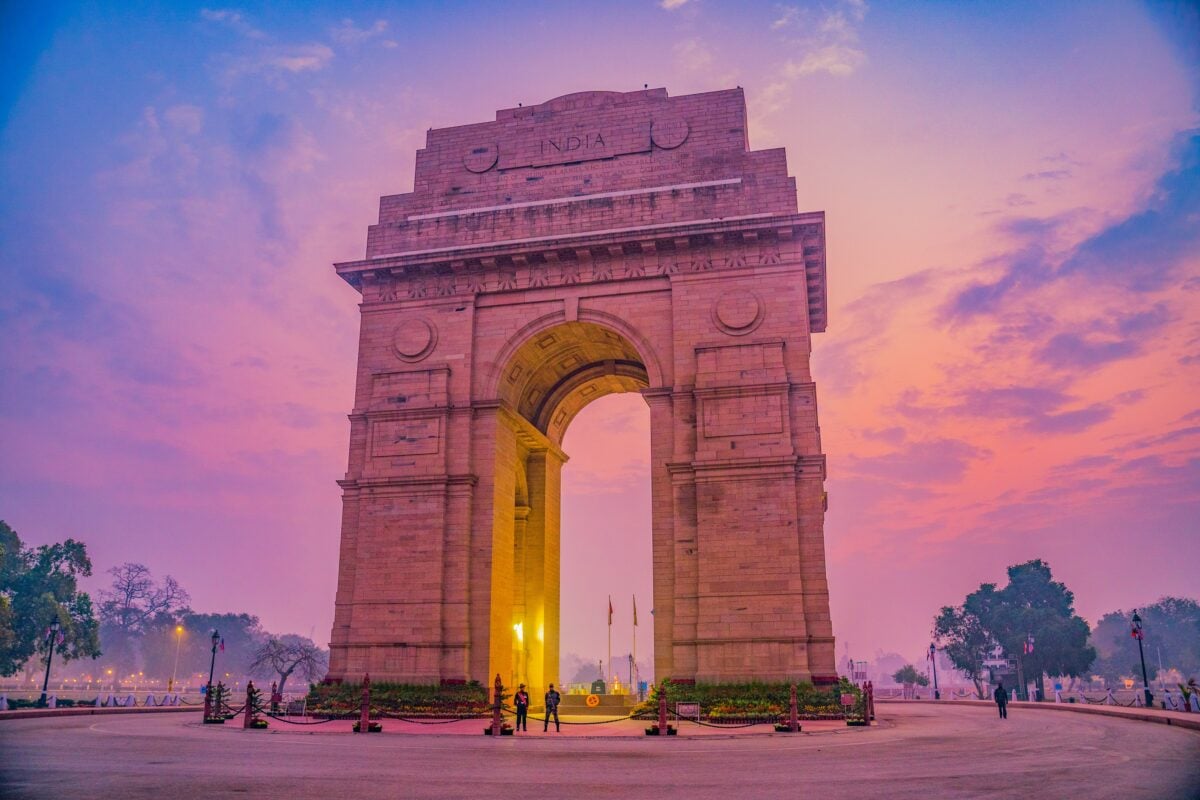
St. Louis’s Gateway Arch appears to be a simple geometric curve, but walking beneath it reveals an optical puzzle. The arch looks symmetrical from a distance, but up close, the legs seem to lean inward at impossible angles, creating the impression that the entire structure might collapse.
The 630-foot span creates perspective distortions that make the arch appear both larger and more precarious than its engineering would suggest.
Turning Torso
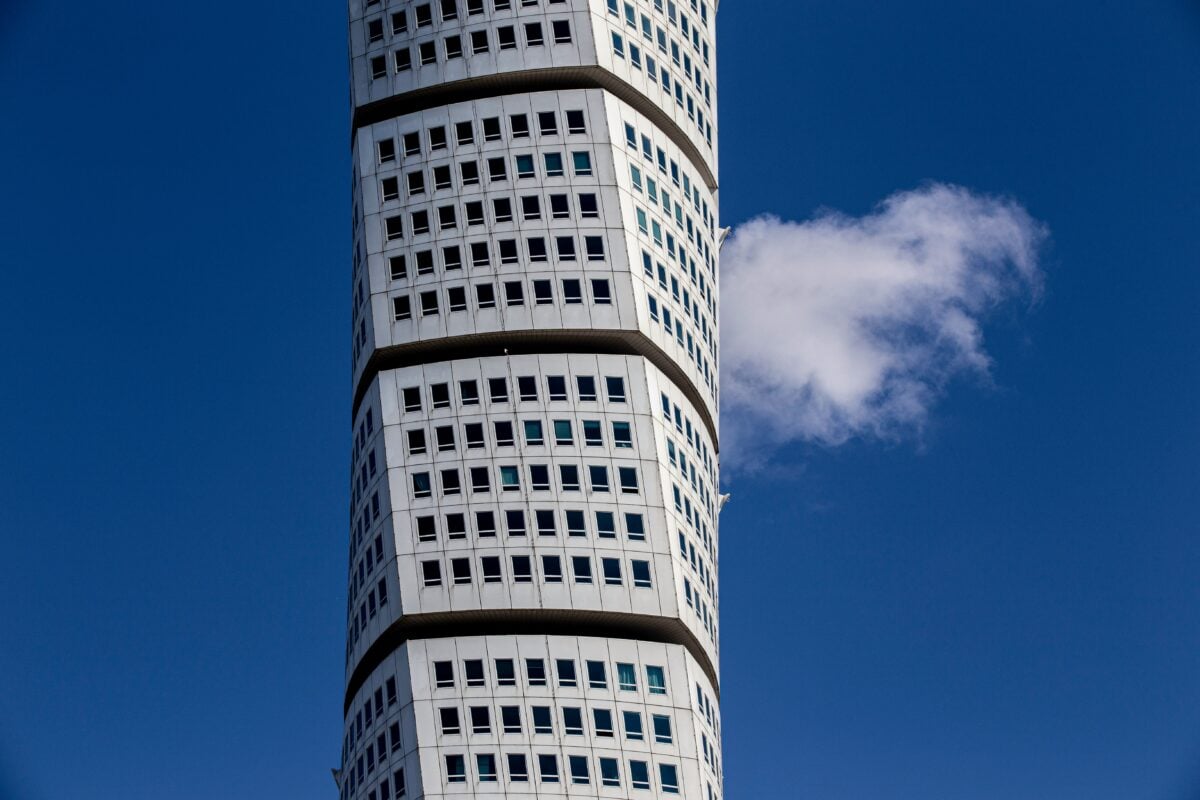
Malmö’s Turning Torso appears to twist 90 degrees from bottom to top, creating a building that looks like it was wrung out like a dishrag and then frozen in place. The rotation is real, but the visual effect exaggerates the actual twist, making the building appear to turn much more dramatically than its structure actually does.
Each floor is rotated slightly relative to the one below, but the cumulative effect creates an illusion of continuous spiraling that’s more dramatic than the mathematics would suggest.
The Art of Architectural Deception
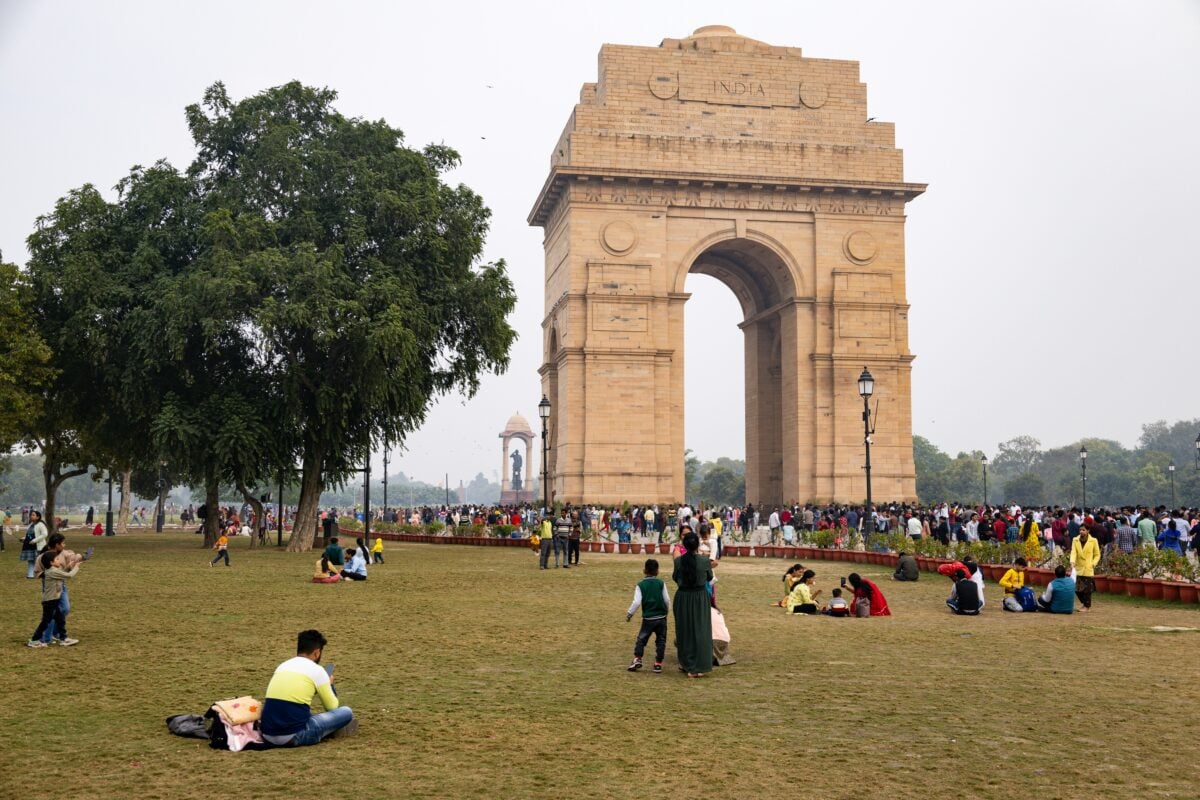
These buildings prove that the greatest architecture isn’t just about creating shelter or even beauty — it’s about understanding exactly how human perception works and then exploiting those mechanisms to create experiences that exist nowhere except in the space between your eyes and your brain. Every forced perspective, impossible angle, and visual contradiction represents centuries of accumulated knowledge about the gap between what exists and what we see.
The architects who designed these illusions understood something most of us never consider: reality is far more negotiable than it appears.
More from Go2Tutors!

- The Romanov Crown Jewels and Their Tragic Fate
- 13 Historical Mysteries That Science Still Can’t Solve
- Famous Hoaxes That Fooled the World for Years
- 15 Child Stars with Tragic Adult Lives
- 16 Famous Jewelry Pieces in History
Like Go2Tutors’s content? Follow us on MSN.