34 Old Cameras Sitting in Closets Collectors Pay For
Somewhere in a lot of attics sits an old camera nobody has picked up in decades, tucked into its original leather case and largely forgotten. Film photography’s decline made most of these obsolete for daily use, but it never made them worthless.
Collectors, working photographers chasing analog looks, and design enthusiasts have kept a steady market alive for well-preserved vintage cameras. Value always depends heavily on condition, working order, and whether original accessories survived alongside the body, so any estimate is a starting point rather than a guarantee.
Kodak Brownie Hawkeye
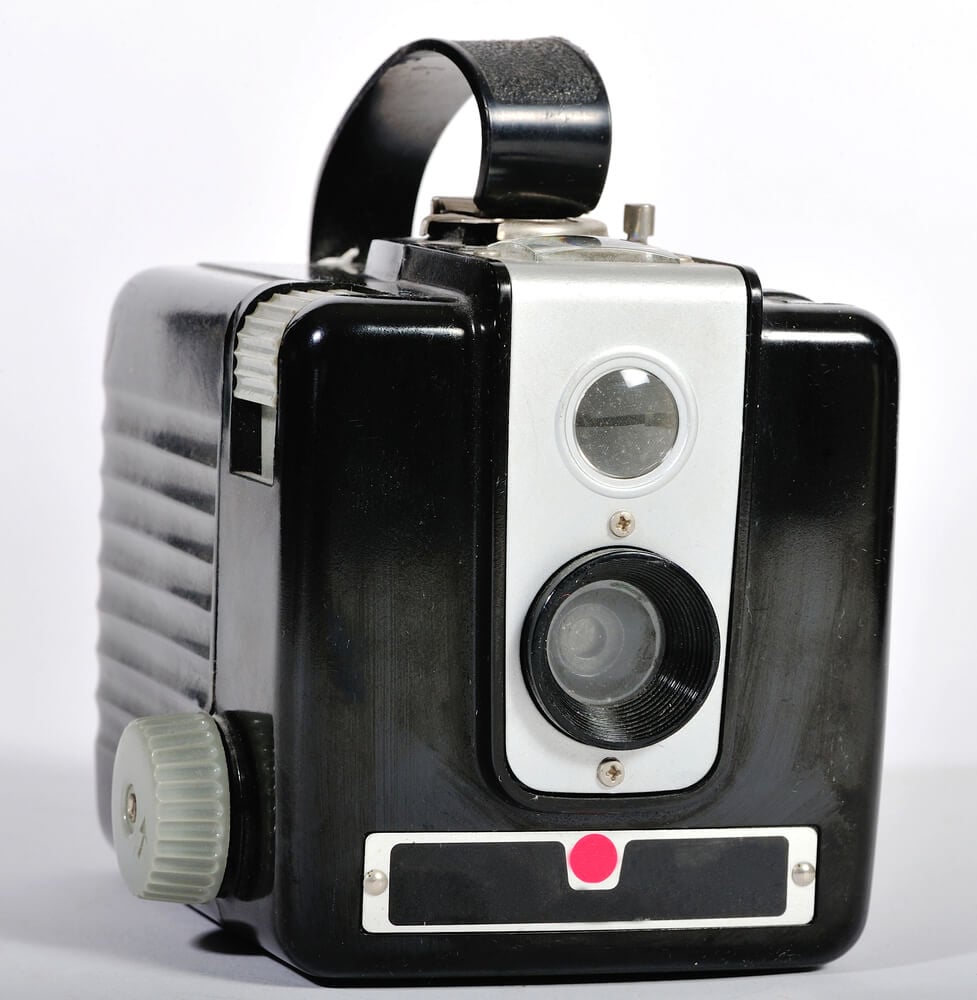
Introduced in 1950, this simple box camera with a Bakelite body became one of the most widely owned cameras in American history, putting photography within reach of nearly any household. Its boxy, art-deco-influenced design has made it a favorite among collectors who display them as much as shoot with them.
Clean examples in working condition are common finds but still hold steady interest from casual collectors.
Kodak Duaflex
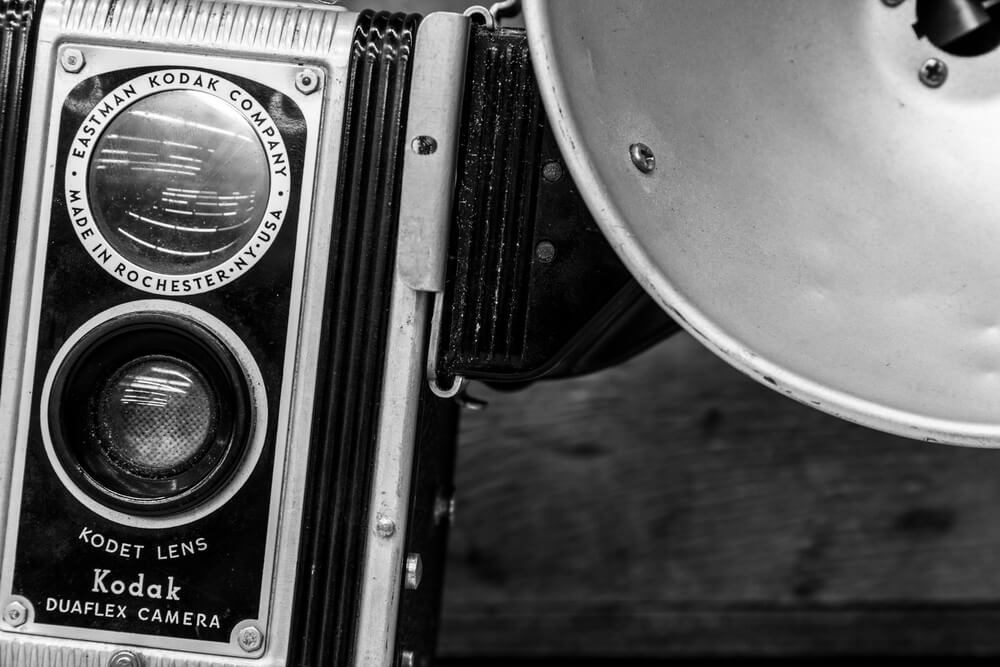
A twin-lens box camera aimed at the consumer market in the 1940s and 1950s, the Duaflex offered a waist-level viewfinder that made it feel more advanced than it actually was. It used 620 roll film, a format Kodak discontinued decades ago, which adds novelty appeal for buyers even though the camera itself is mechanically simple.
Complete examples with the original case tend to draw more interest than the body alone.
Polaroid SX-70
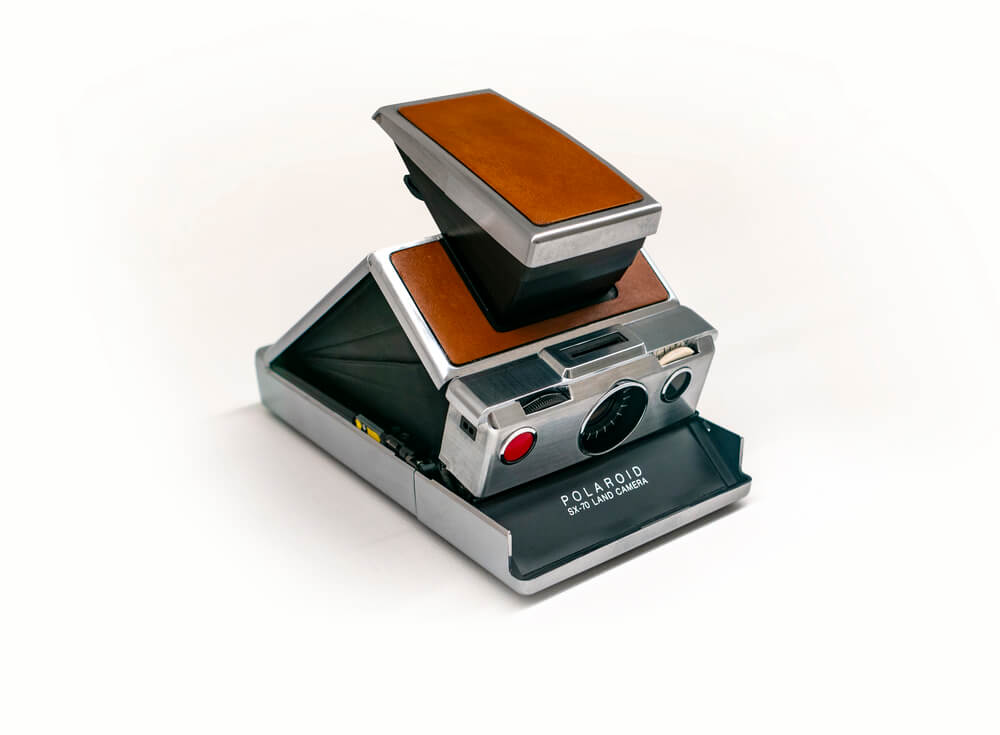
Released in 1972, the SX-70 was a folding single-lens reflex instant camera with genuinely advanced engineering for its time, ejecting self-developing prints seconds after each shot. Its brushed metal and leather-look body has made it one of the most recognizable cameras of the twentieth century.
Working examples, especially the rarer Sonar autofocus models, remain sought after by both collectors and instant film enthusiasts.
Polaroid Land Camera 100 Series
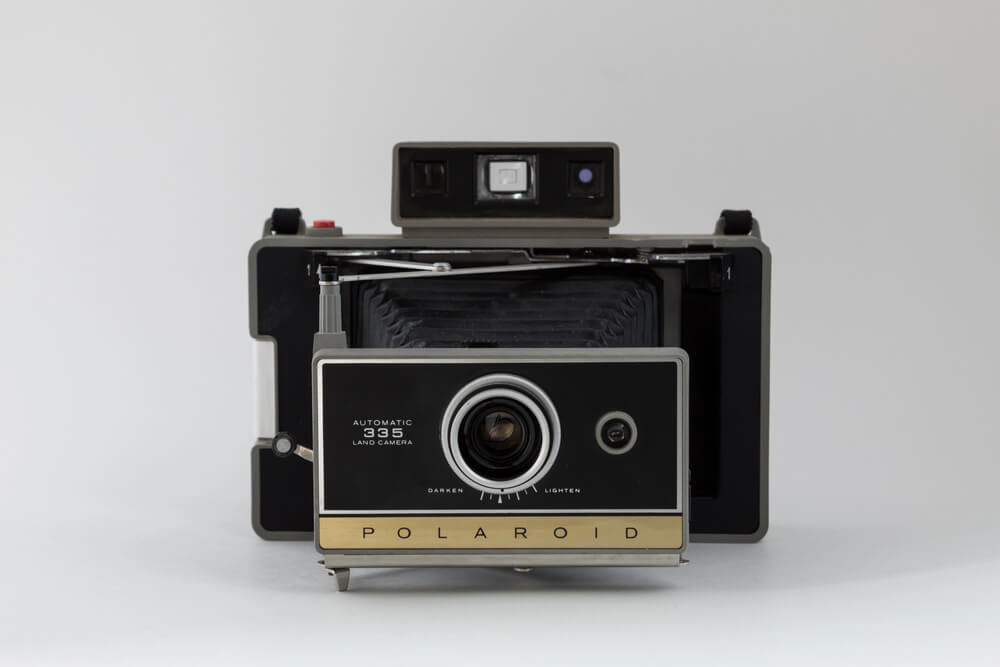
Named for Polaroid founder Edwin Land, these bellows-folding instant cameras from the 1960s used peel-apart film and a distinctive folding design that made them portable for their era. They’re less flashy than the later SX-70 but appeal to collectors interested in the earlier era of instant photography.
Working examples require film formats that are no longer in standard production, which limits practical use but not collector interest.
Argus C3
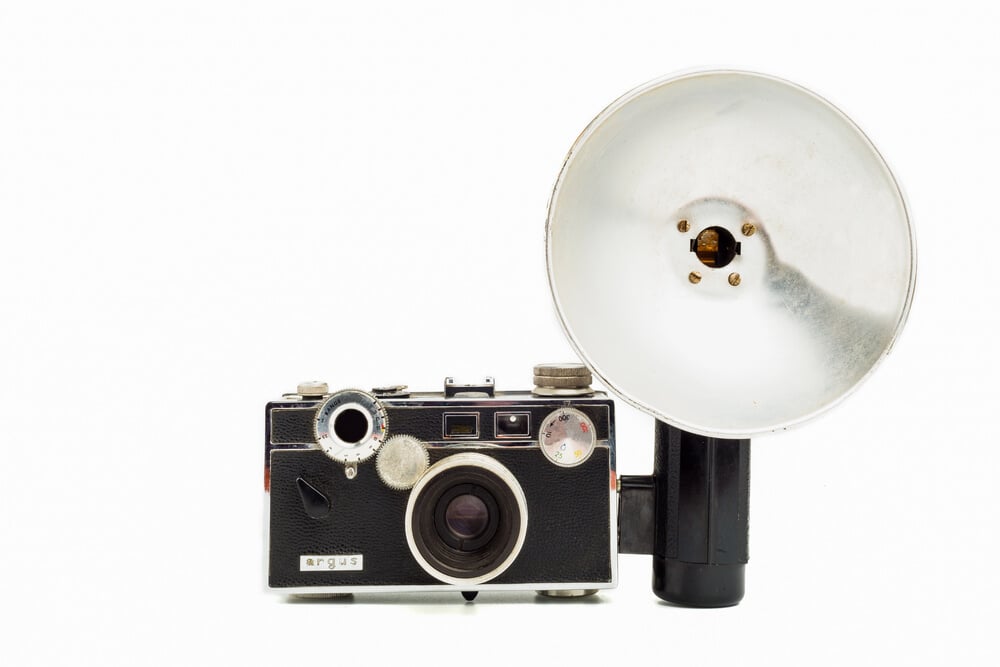
Nicknamed “The Brick” for its heavy, rectangular Bakelite body, the Argus C3 was one of the best-selling 35mm cameras in American history after its 1939 release. Its rangefinder design and interchangeable lenses made it a genuine workhorse for amateur photographers for decades.
Because so many survived, individual examples are common, but well-preserved sets with original lenses and cases still find buyers.
Canon AE-1
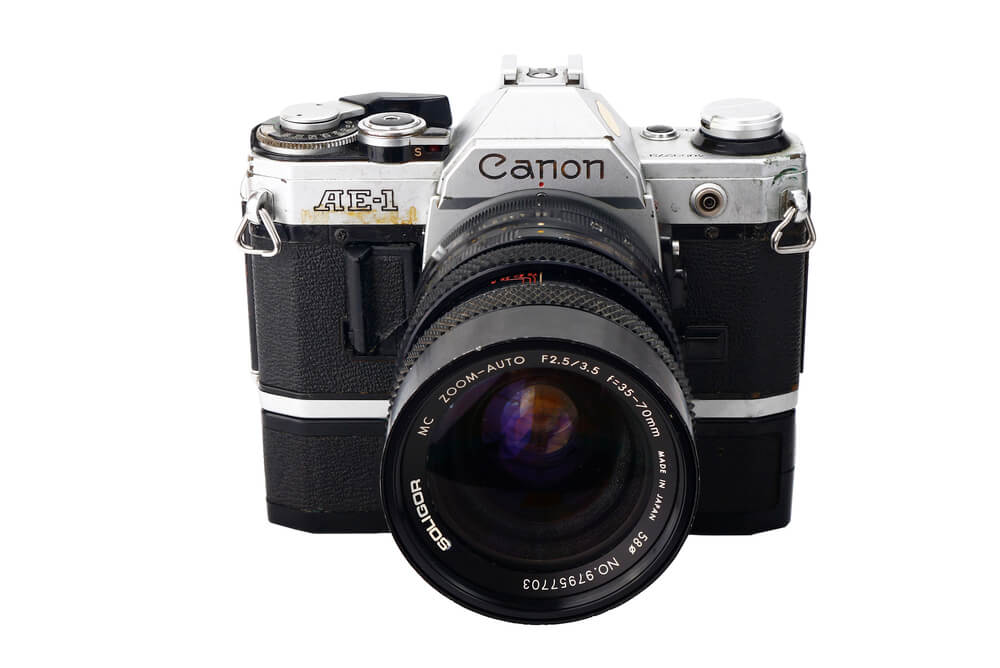
Released in 1976, the AE-1 was one of the first cameras to use a built-in microprocessor, and its aggressive marketing helped make it one of the best-selling SLRs of all time. Its shutter-priority automatic exposure made serious photography more approachable for amateurs.
Working bodies remain popular with film photography enthusiasts today, which keeps demand steady.
Nikon F
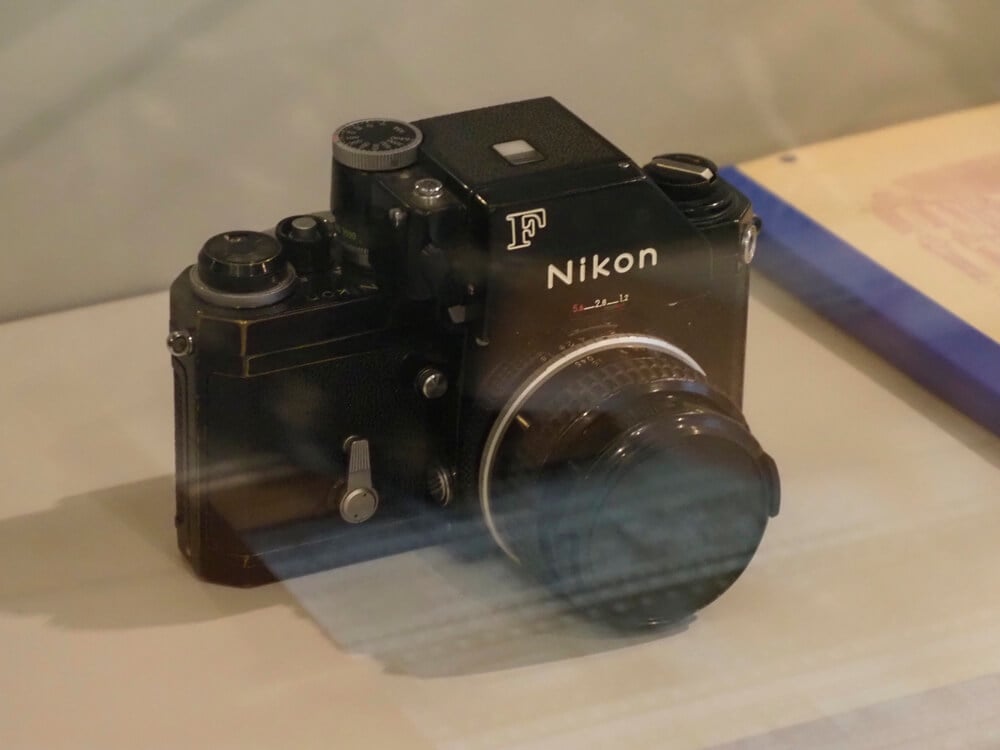
Introduced in 1959, the Nikon F was the camera that established Nikon’s reputation among professional photographers, thanks to its modular design and rugged build. It was widely used by photojournalists, including during conflicts covered by major news outlets.
Complete kits with original lenses and prisms can draw serious interest from collectors focused on professional-grade equipment.
Pentax K1000
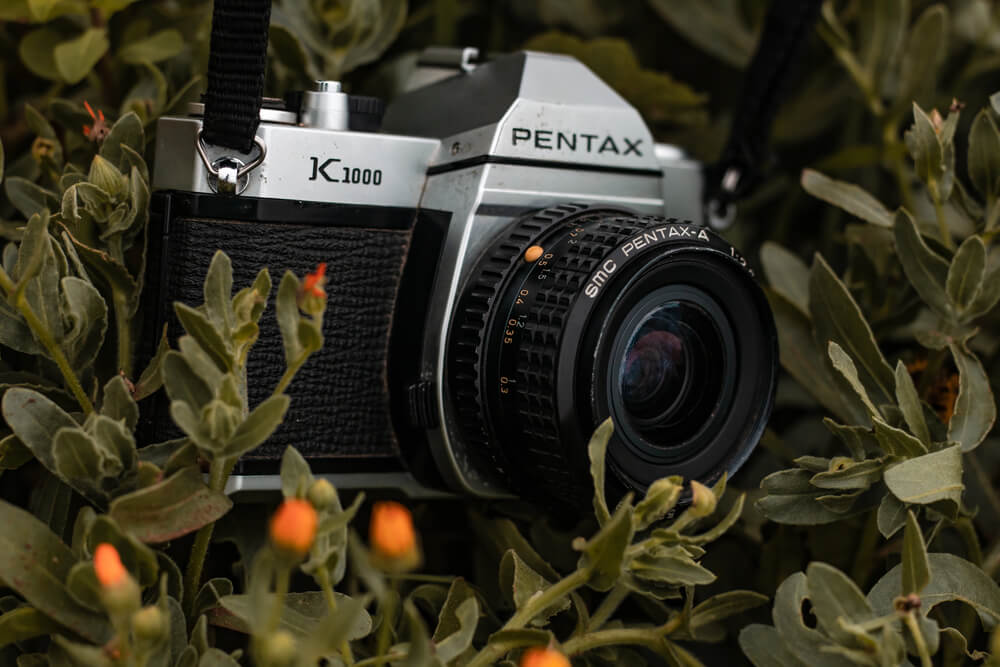
A fully mechanical, manual-exposure SLR introduced in the 1970s, the K1000 became a staple of photography classrooms for decades because of its simplicity and durability. Its lack of automation was considered a feature rather than a flaw, since it forced students to learn exposure fundamentals.
Working examples remain popular among both students and collectors of manual-era cameras.
Minolta X-700
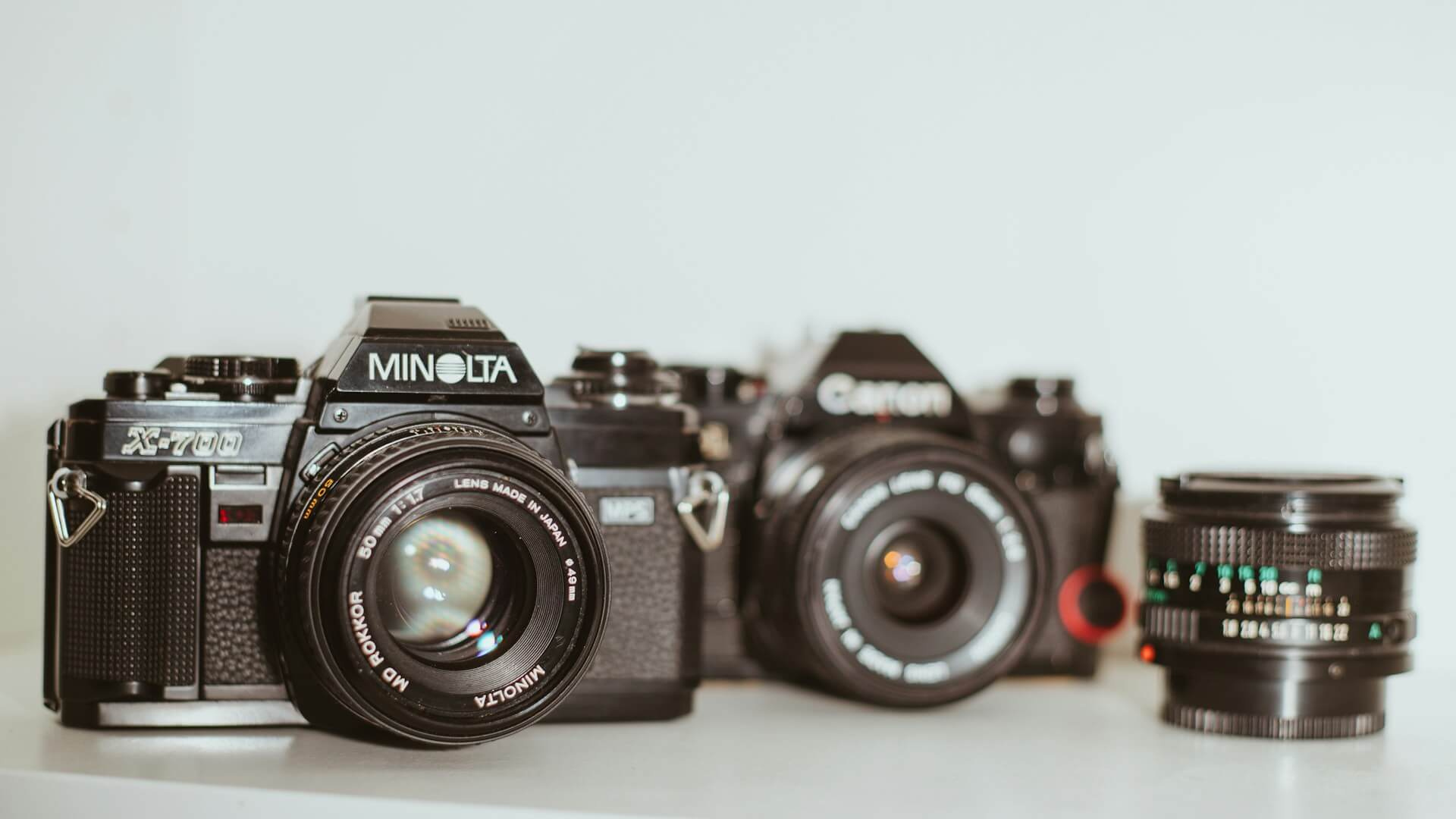
Released in 1981, the X-700 was Minolta’s flagship SLR of its era, offering program automatic exposure alongside full manual control. It’s regarded by many film photographers as one of the more reliable and affordable entry points into vintage SLR shooting today.
Clean, working examples with an original lens attached hold consistent appeal.
Olympus OM-1
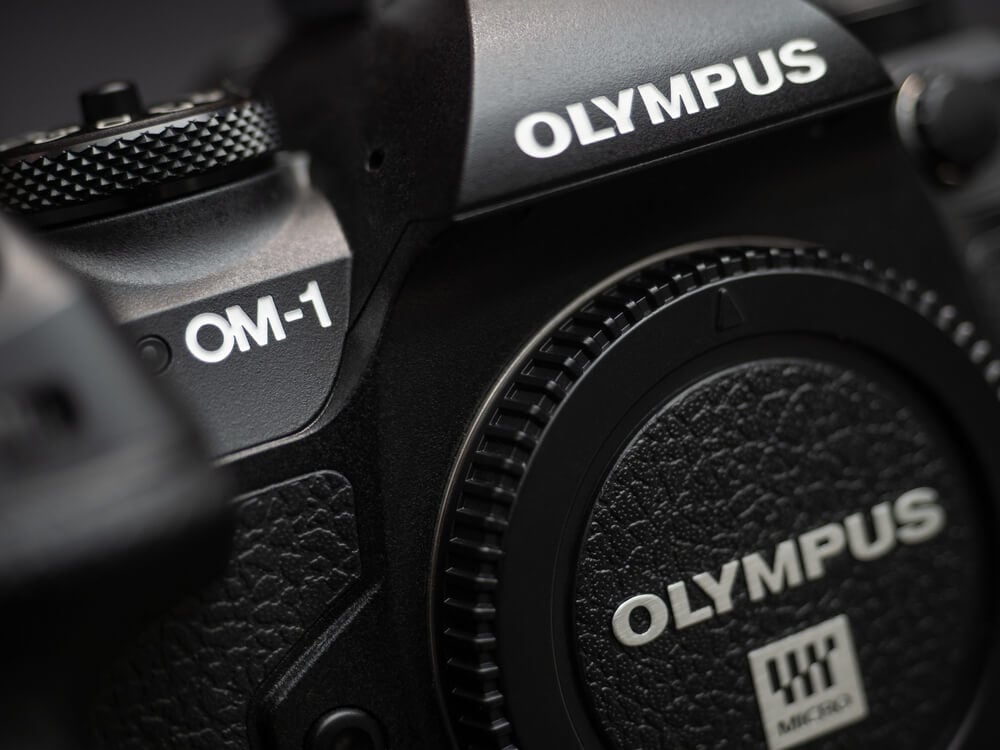
Introduced in 1972, the OM-1 was notable for its compact size relative to other SLRs of the era, a deliberate design choice that influenced smaller camera bodies for years afterward. It was popular among photographers who wanted professional capability without the bulk of larger systems.
Working examples in good condition remain a favorite entry point for collectors of the OM system.
Leica M3
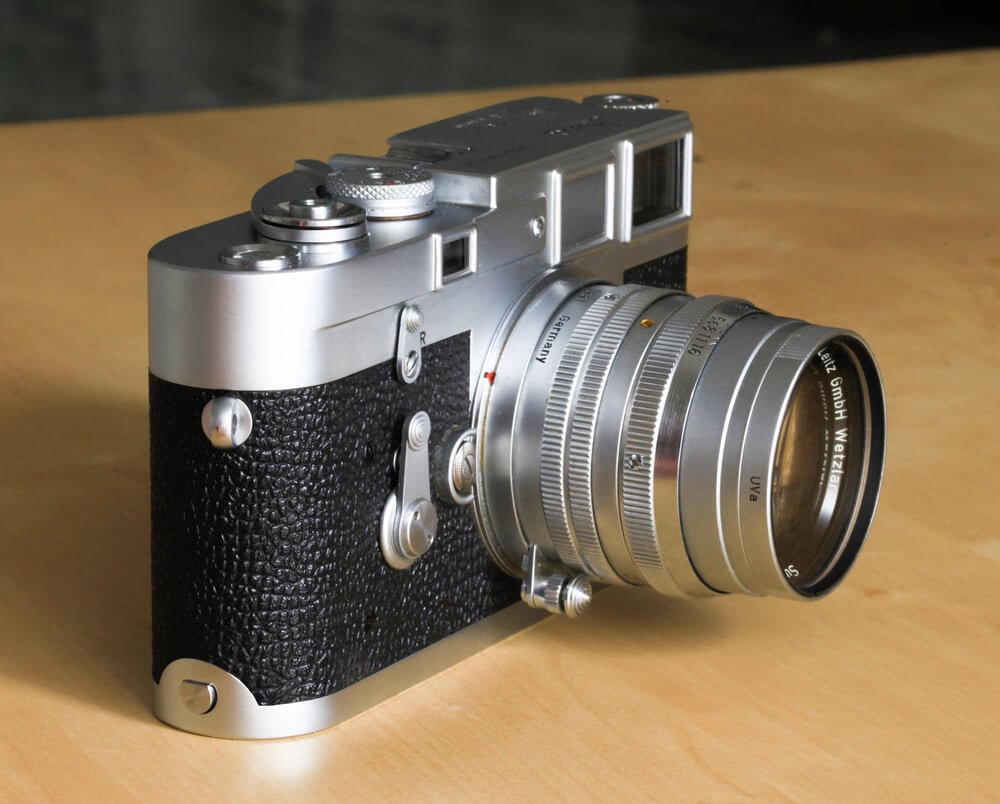
Released in 1954, the M3 introduced Leica’s bayonet lens mount and is widely regarded by collectors as one of the finest rangefinder cameras ever built. Its build quality and mechanical precision have kept it desirable among both working photographers and collectors decades after production ended.
Well-preserved examples, particularly with early serial numbers, can command serious prices among Leica specialists.
Leica IIIf
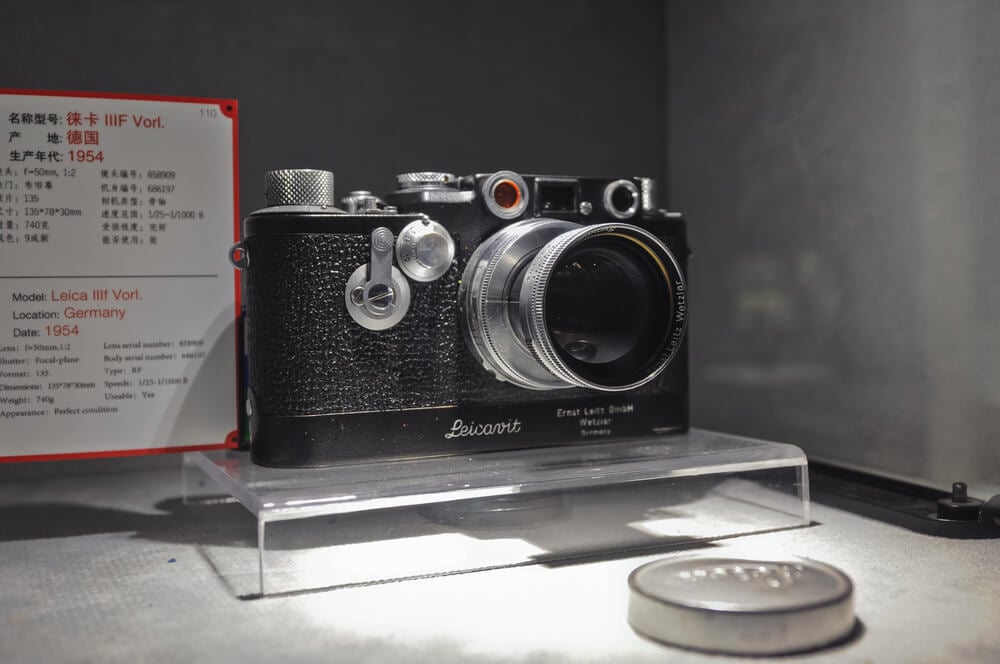
A screw-mount rangefinder produced through the 1950s, the IIIf represented the refinement of Leica’s earlier prewar designs before the M-series bayonet mount took over. Its compact, all-metal construction has aged well both mechanically and visually.
Leica’s reputation for quality keeps demand for well-maintained IIIf bodies consistently strong.
Rolleiflex 2.8F
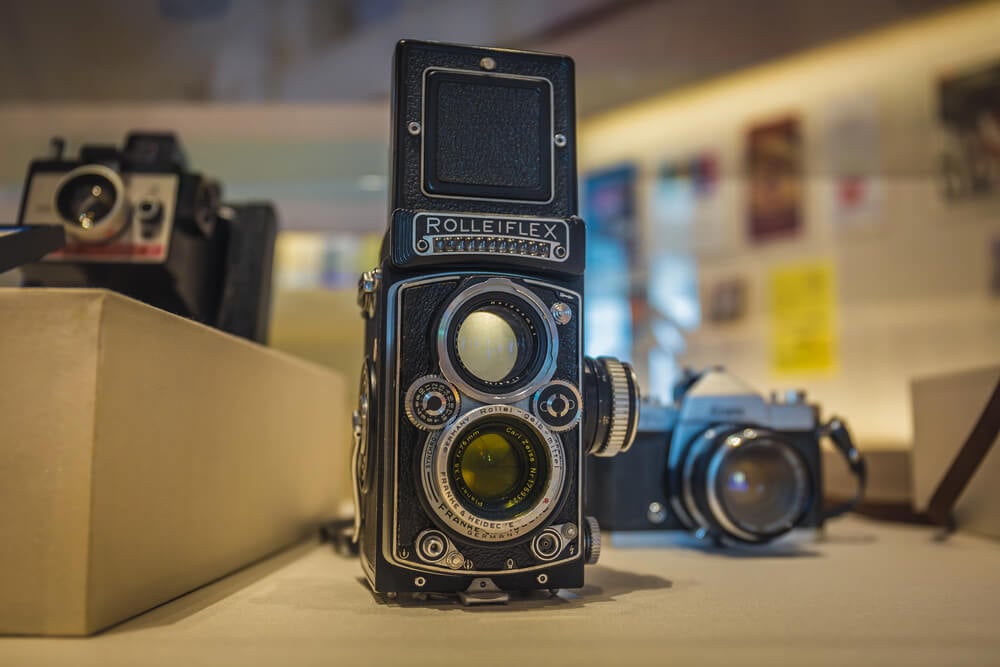
A twin-lens reflex camera produced from the late 1950s, the 2.8F is considered one of the finest medium-format cameras ever built, prized for its Zeiss or Schneider lenses and mechanical precision. Its waist-level viewfinder and square format gave it a distinctive shooting style favored by portrait and fashion photographers.
Well-maintained examples remain among the more valuable finds in any camera collection.
Yashica Mat-124G
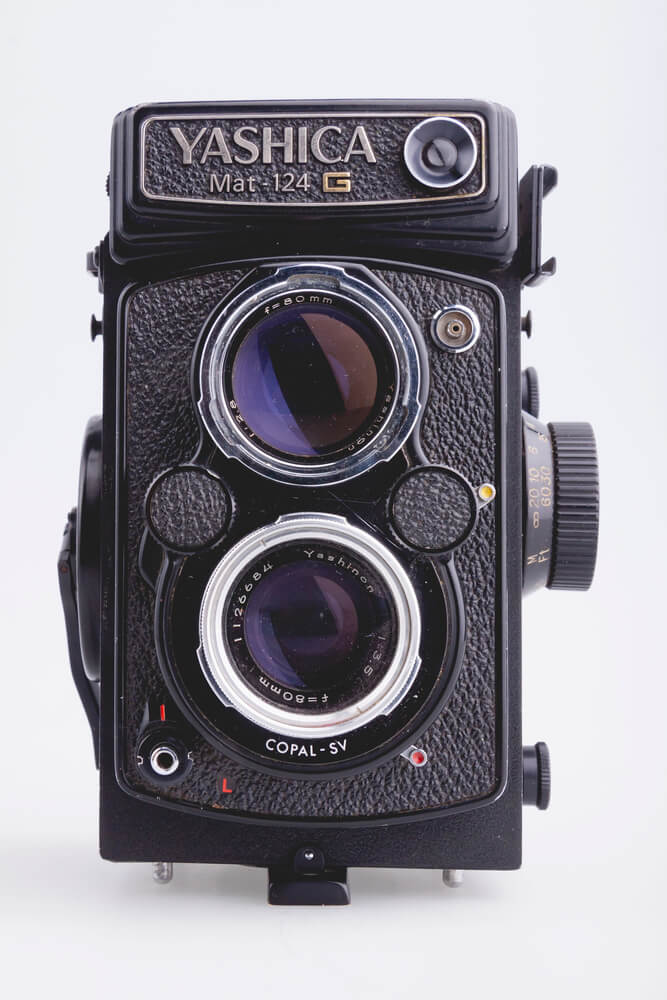
A more affordable twin-lens reflex camera from the 1970s, the Mat-124G offered medium-format image quality at a fraction of the cost of a Rolleiflex. It became a popular entry point for photographers wanting to try the format without the higher price tag of the premium brands.
Working examples remain a favorite among film photographers today, keeping demand relatively strong.
Hasselblad 500C
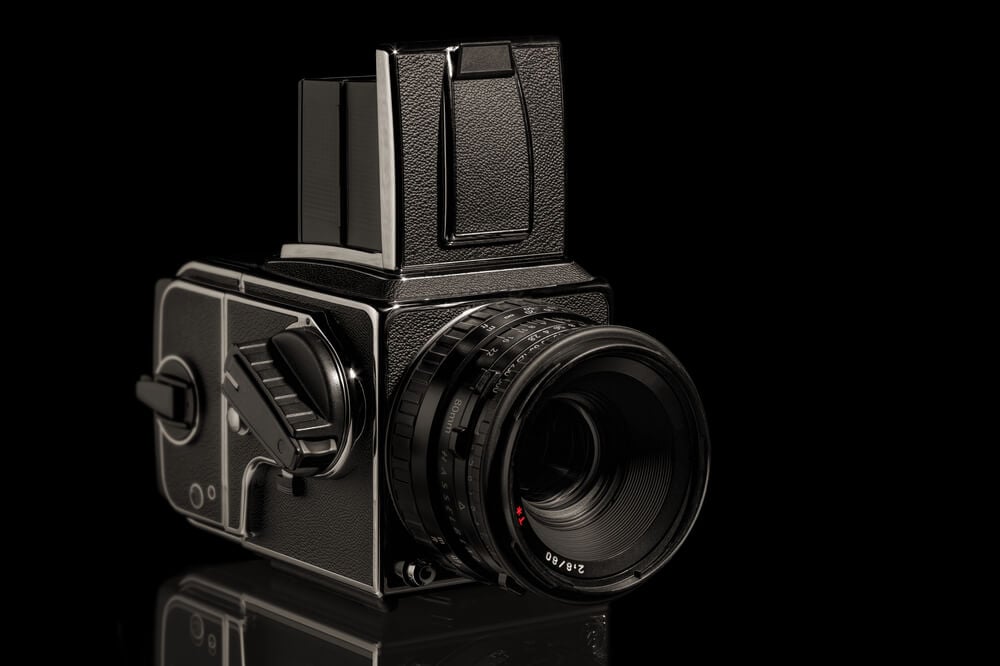
Introduced in 1957, the 500C established the modular medium-format system that made Hasselblad a favorite of professional and even space-program photographers. Its interchangeable backs, lenses, and viewfinders made it endlessly adaptable for different kinds of work.
Complete, working systems remain among the most valuable vintage camera setups a collector can find.
Contax II
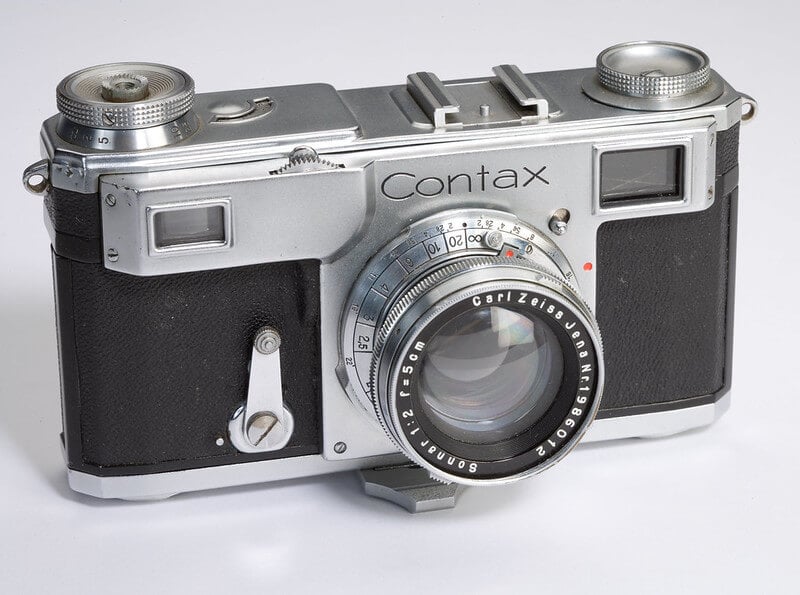
Released in the 1930s, the Contax II was a technically advanced rangefinder for its era, competing directly with Leica on build quality and optical performance. Its bayonet lens mount was ahead of its time.
Surviving examples in working order appeal specifically to collectors focused on prewar camera engineering.
Zeiss Ikon Contessa
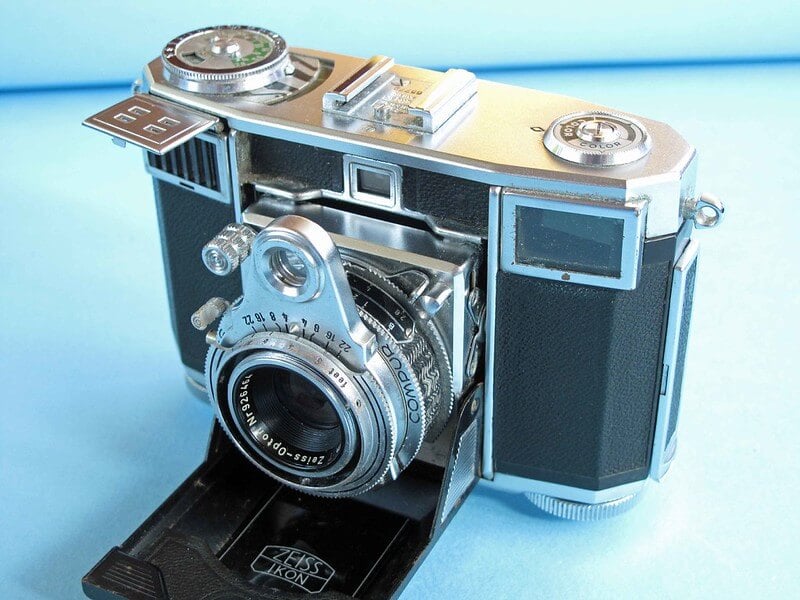
A compact folding rangefinder produced in the 1950s, the Contessa combined quality Zeiss optics with a design meant for portability. Its folding bellows construction let it collapse to pocket size when not in use.
Working examples with intact bellows, which are prone to pinholes over time, draw the most collector interest.
Kodak Retina IIa
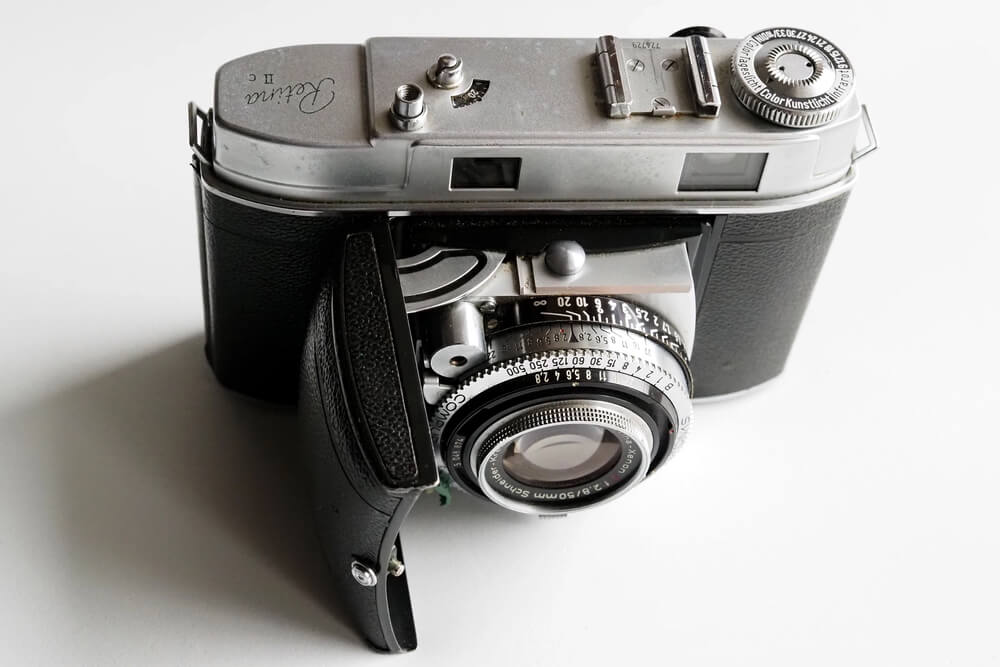
A German-built folding 35mm camera sold under the Kodak name in the early 1950s, the Retina IIa combined compact size with genuinely capable optics. Its folding design made it an early example of a “pocketable” quality camera.
Working examples with clean, undamaged bellows remain the most desirable to buyers.
Voigtländer Bessa
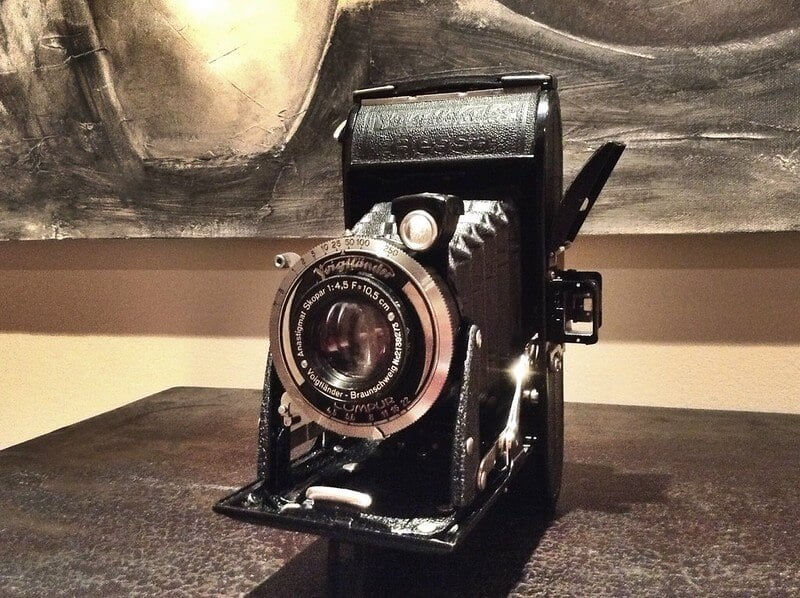
A line of folding and later rangefinder cameras produced across decades, the Bessa name covers both vintage folding models and a modern rangefinder revival line. Collectors specifically seek out the older folding versions for their mechanical charm and compact build.
Condition of the bellows and shutter mechanism heavily determines what a given example is worth.
Minox Subminiature Camera
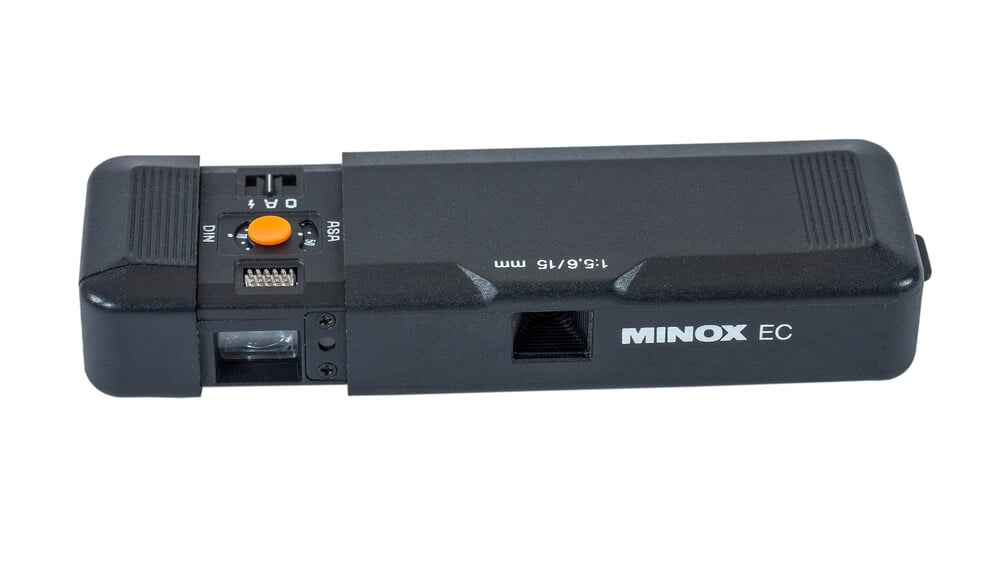
Famous for its association with spy fiction, the Minox produced genuinely tiny cameras small enough to conceal in a palm, using a specialized film format. Despite the espionage reputation, most were sold to hobbyists interested in novelty photography.
Complete kits with the original case and chain remain the most collectible configuration.
Kodak Instamatic
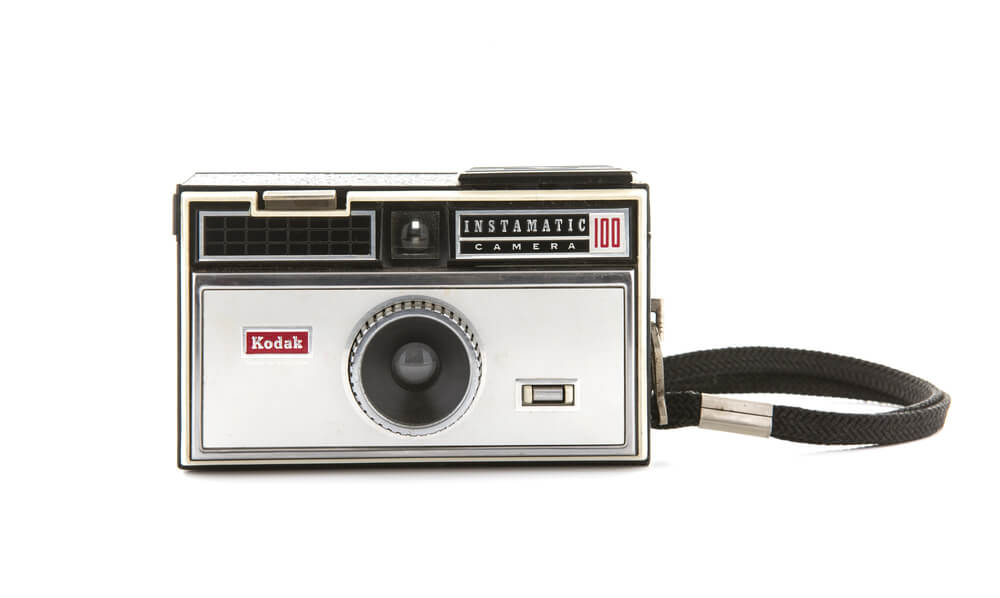
Introduced in 1963, the Instamatic line used simple drop-in cartridge film that eliminated the need to thread film manually, making it enormously popular with casual users. Its ease of use helped it become one of the best-selling camera lines in history.
Most examples are common, but boxed sets with original accessories still attract casual collectors.
Nikon FE2
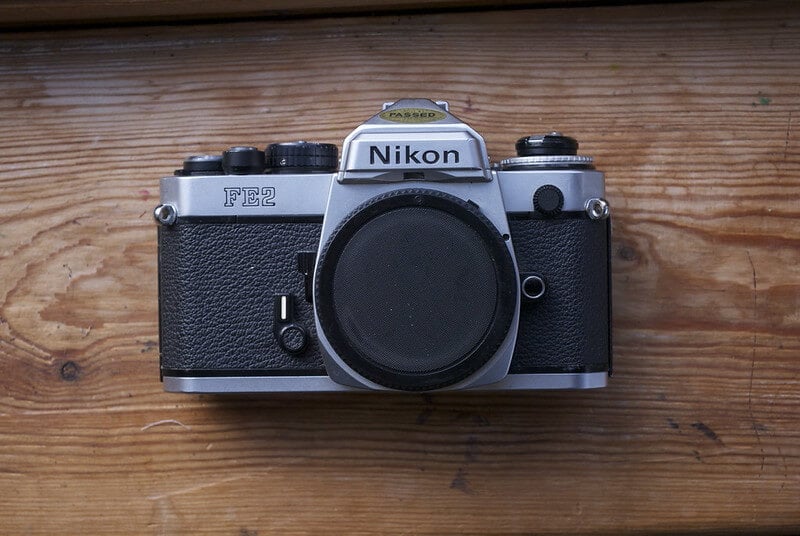
Released in 1983, the FE2 combined aperture-priority automation with a reliable mechanical build, making it a favorite among photographers who wanted some automation without giving up manual control entirely. It’s often cited by film photographers as one of the more dependable vintage Nikon bodies still usable today.
Working examples with an original lens remain steadily desirable.
Canon A-1
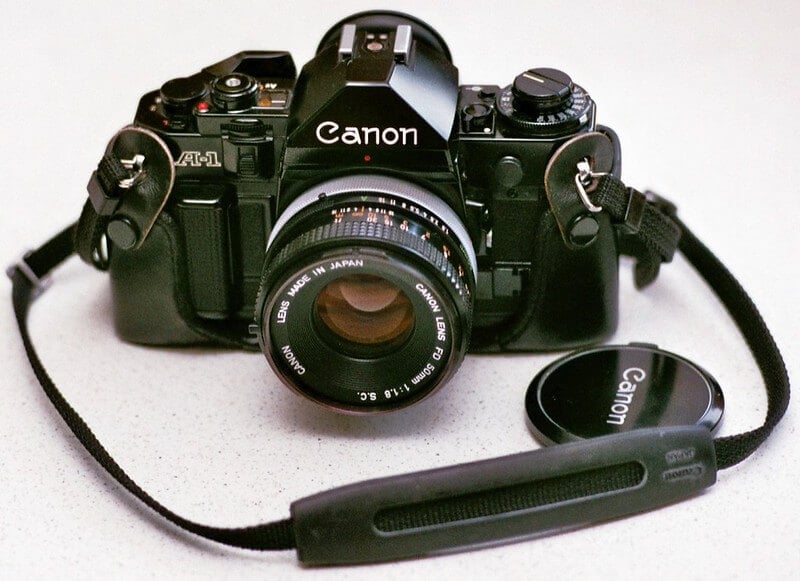
Introduced in 1978, the A-1 was among the first SLRs to offer multiple automatic exposure modes controlled through a single electronic system, a genuine technical leap for its era. Its distinctive digital readout in the viewfinder set it apart visually from earlier mechanical cameras.
Working examples remain popular with collectors interested in the transition from mechanical to electronic camera design.
Mamiya RB67
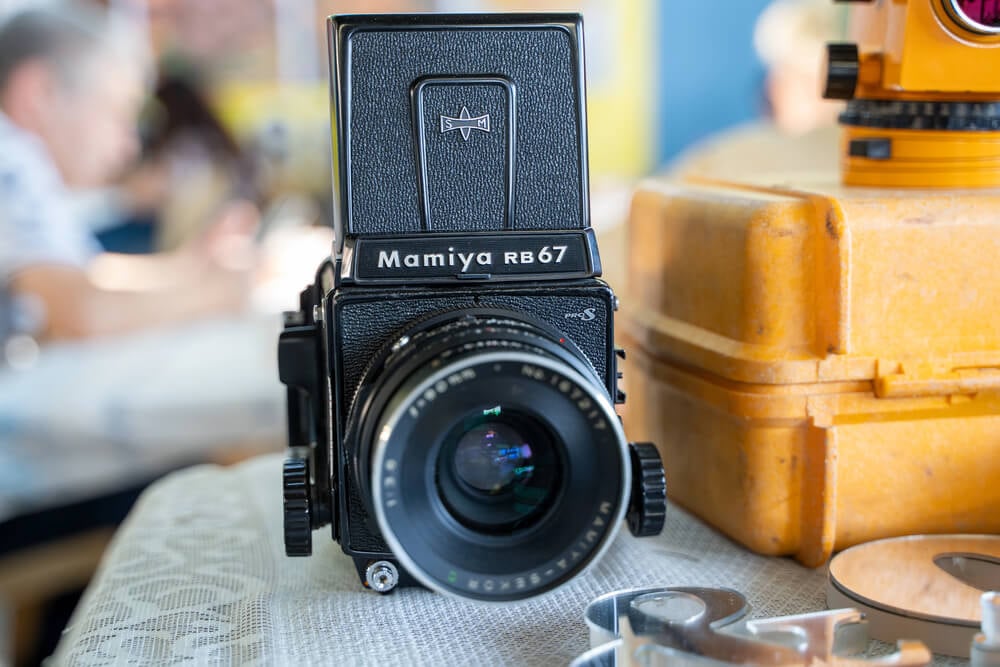
A large, boxy medium-format camera introduced in 1982, the RB67 was built specifically for studio work, with a rotating back that let photographers switch between portrait and landscape orientation without turning the camera. Its size made it impractical for casual use but excellent for controlled studio sessions.
Complete kits with multiple lenses and backs can be genuinely valuable to working photographers today.
Bronica S2
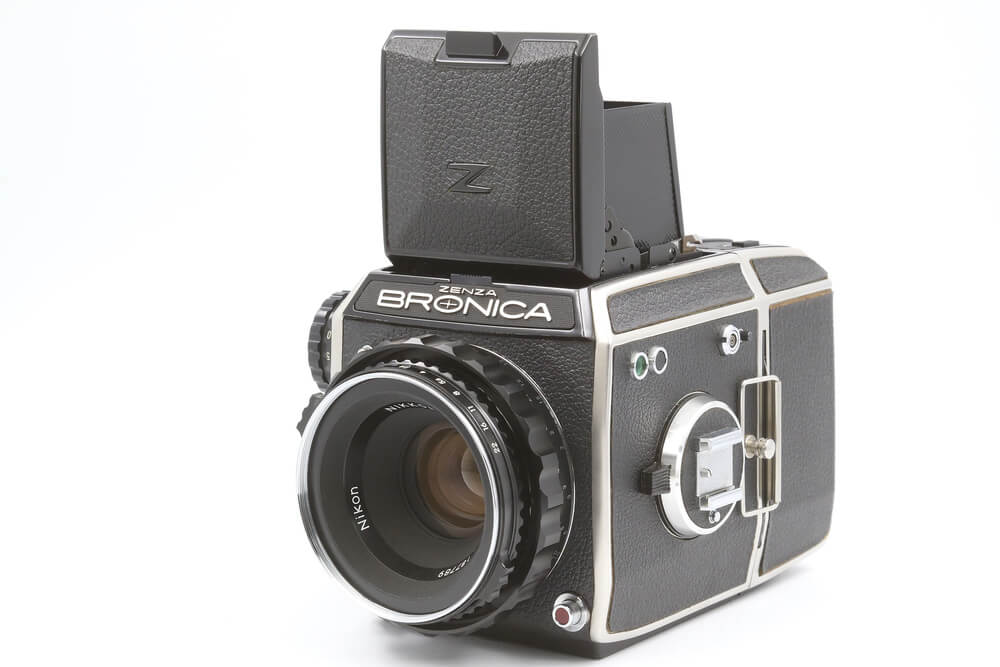
A Japanese medium-format SLR from the early 1960s, the S2 offered interchangeable lenses and backs at a lower price point than comparable Hasselblad systems. It was aimed squarely at photographers who wanted medium-format flexibility without the premium cost.
Complete, working examples remain a solid find for collectors focused on mid-century medium format.
Graflex Speed Graphic
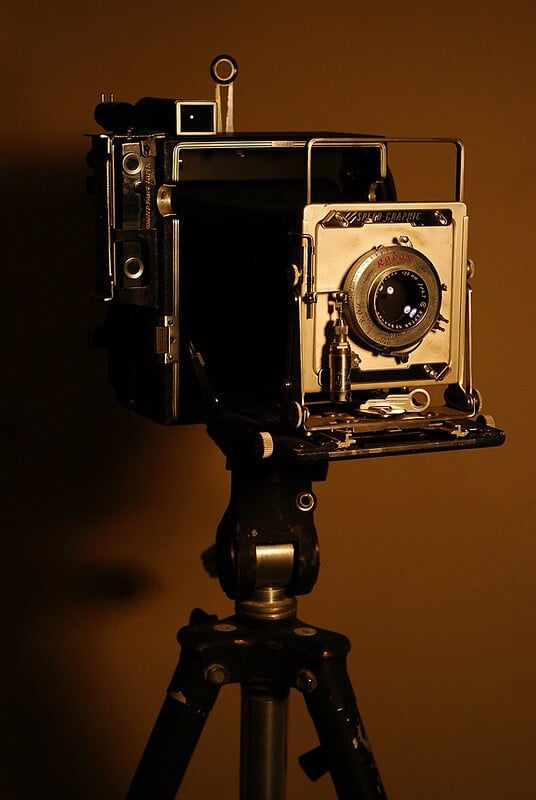
A large-format press camera used by news photographers for much of the early to mid-twentieth century, the Speed Graphic is closely associated with the look of mid-century photojournalism. Its use of large sheet film gave images a level of detail unmatched by smaller formats of the era.
Well-preserved examples with an intact bellows and shutter remain popular with large-format collectors.
Kodak Box Brownie No. 2
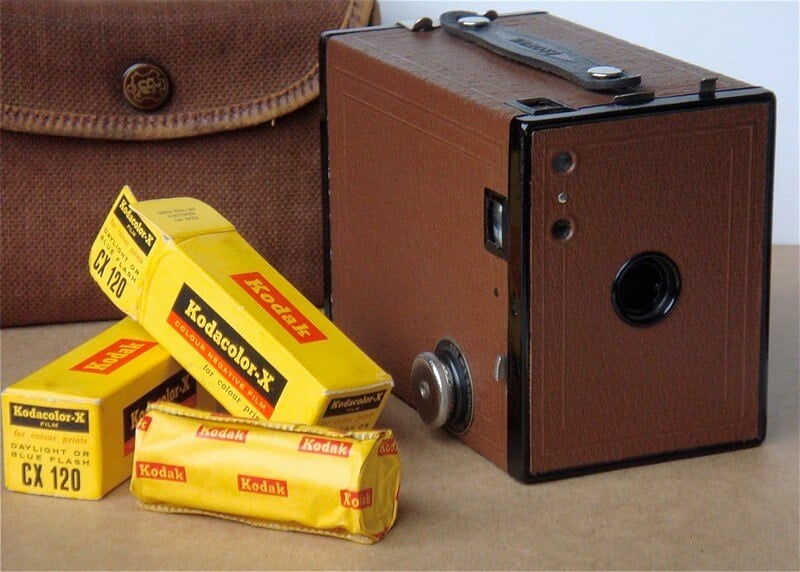
First produced in 1901, the Box Brownie No. 2 helped establish amateur photography as a mass hobby rather than a specialist pursuit. Its simple cardboard-and-metal construction made it inexpensive to manufacture and easy to use.
Because so many were made, individual examples are common, but especially early or well-preserved units still draw interest from collectors of photographic history.
Konica C35
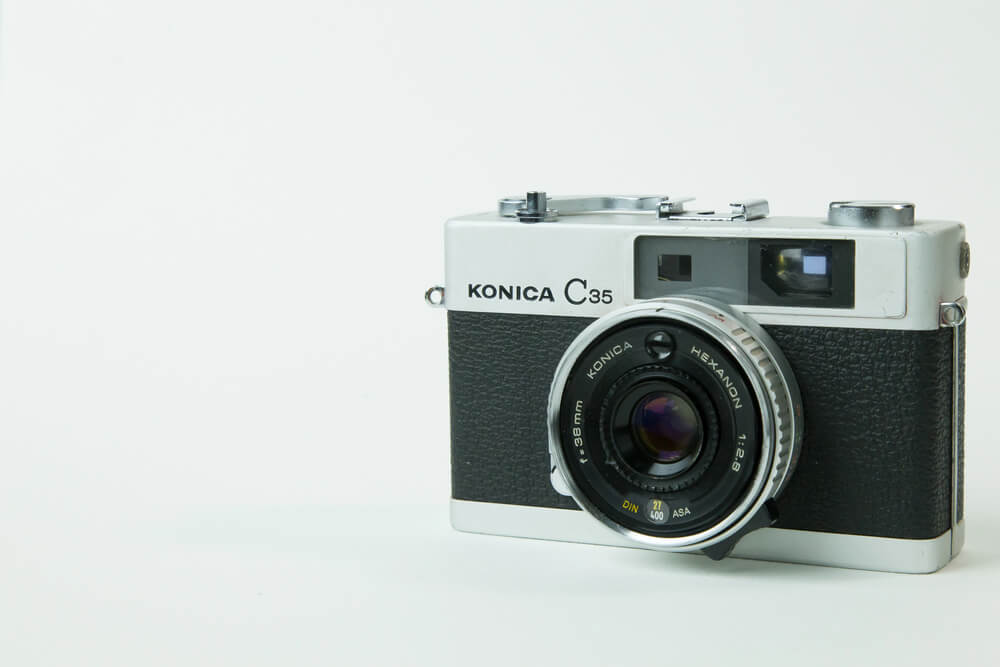
A compact 35mm rangefinder from the early 1970s, the C35 was marketed as one of the smallest fully automatic cameras available at the time. Its compact size and reliable metering made it a popular travel camera for its era.
Working examples remain a favorite among collectors drawn to compact vintage rangefinders.
Ricoh KR-5
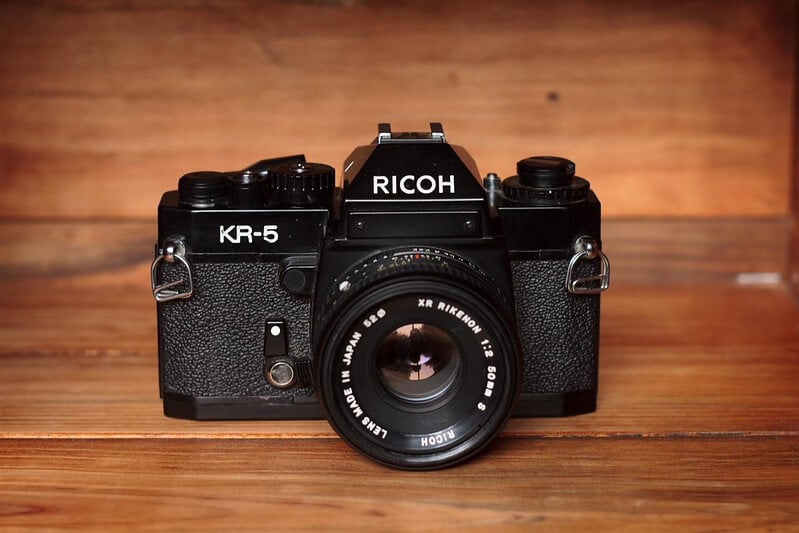
An entry-level SLR from the 1980s, the KR-5 was often sold as a student or beginner camera thanks to its simple manual controls and compatible lens mount. It doesn’t carry the prestige of premium brands, but its low cost of entry has made it a popular first camera for people getting into film photography today.
Working examples remain modestly but consistently sought after.
Zenit E
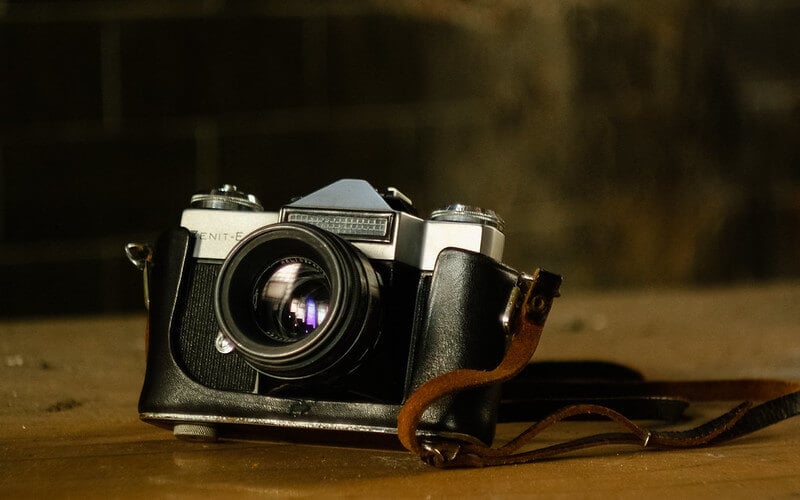
A Soviet-manufactured SLR produced in enormous numbers starting in the 1960s, the Zenit E is notable both for its rugged, all-metal build and its status as one of the most widely produced cameras of the era. Its industrial design and Cold War-era origin give it a distinct appeal to collectors interested in that history.
Working examples are relatively common but still draw interest for their build quality and backstory.
Kodak Signet 35
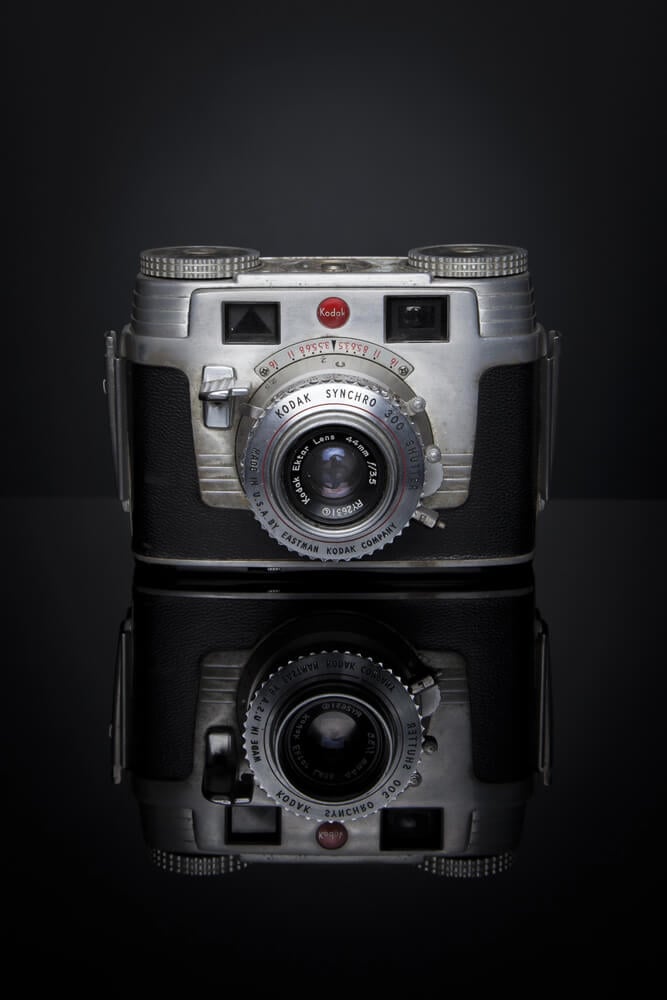
Produced in the 1950s, the Signet 35 was a rangefinder aimed at serious amateur photographers who wanted quality optics in a more compact American-made body. Its cast aluminum construction gave it a solid, substantial feel uncommon among cameras at its price point.
Working examples in good cosmetic condition remain a niche but steady collector interest.
Polaroid Land Camera Model J66
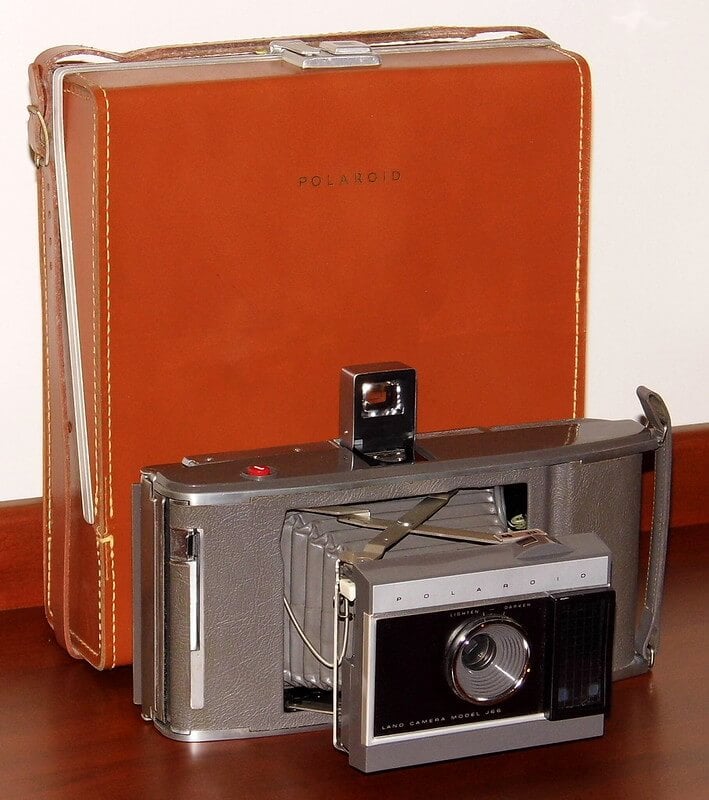
An early Polaroid instant camera from the late 1950s, the J66 represents the format’s formative years before the folding SX-70 design took over. Its simple, boxy construction reflects the earlier state of instant photography technology.
It’s less commonly sought after than later Polaroid models but still draws interest from collectors focused on the format’s history.
Asahi Pentax Spotmatic
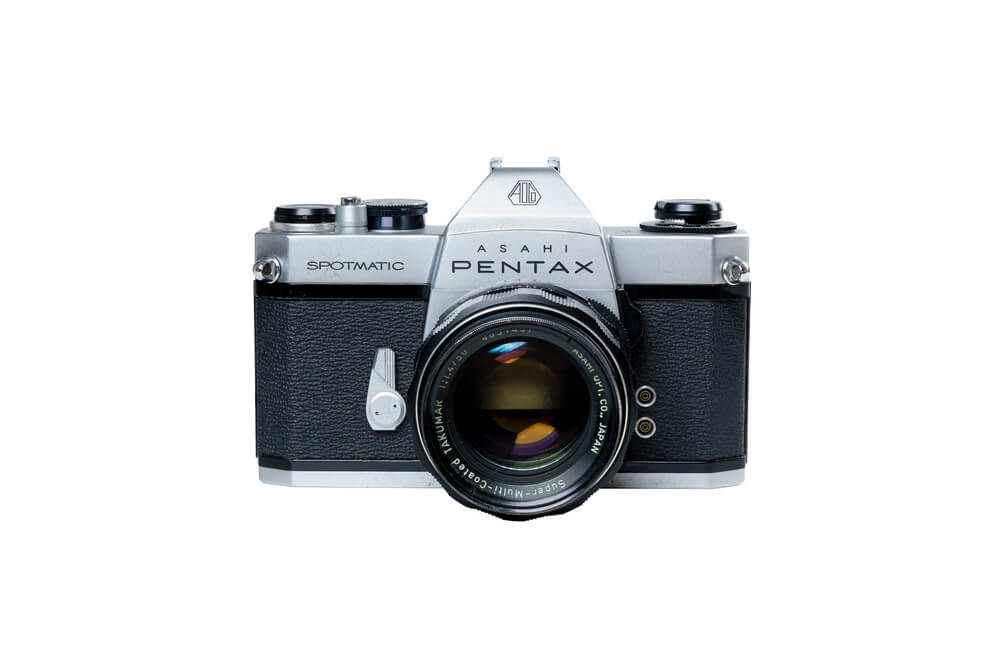
Introduced in the early 1960s, the Spotmatic was among the first SLRs to popularize through-the-lens metering, a feature that changed how amateur photographers judged exposure. Its screw-mount lens system connected it to a wide range of affordable optics.
Working examples remain popular with collectors and film shooters interested in early metering technology.
Yashica Electro 35
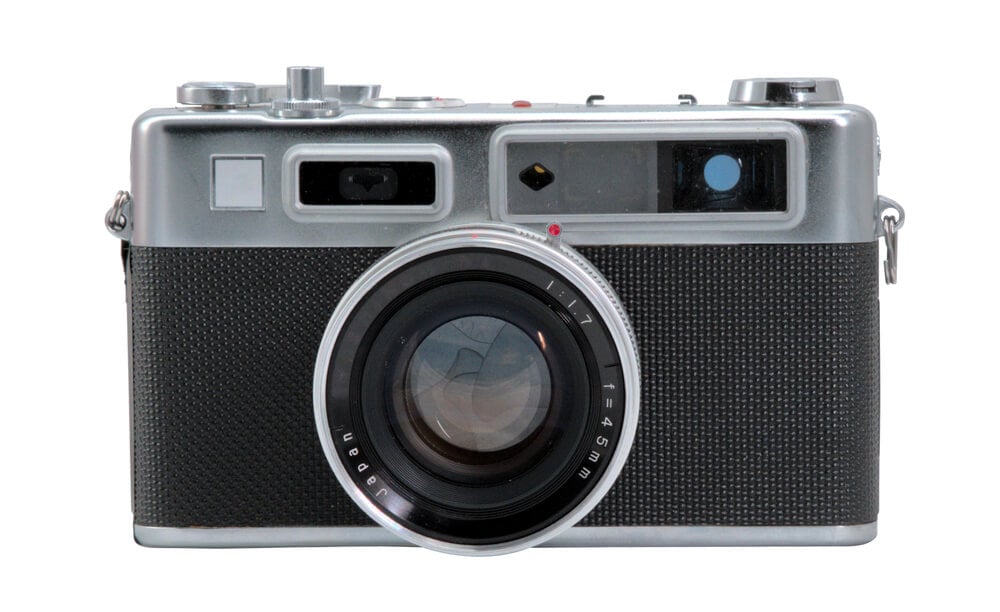
Released in the mid-1960s, the Electro 35 used an early electronic shutter system to automate exposure, a notable technical step for a rangefinder of its era. Its bright viewfinder and relatively large aperture lens made it popular for low-light shooting.
Working examples remain a reliable, moderately priced entry point for collectors interested in vintage rangefinders.
The Weight of a Box You Almost Threw Out
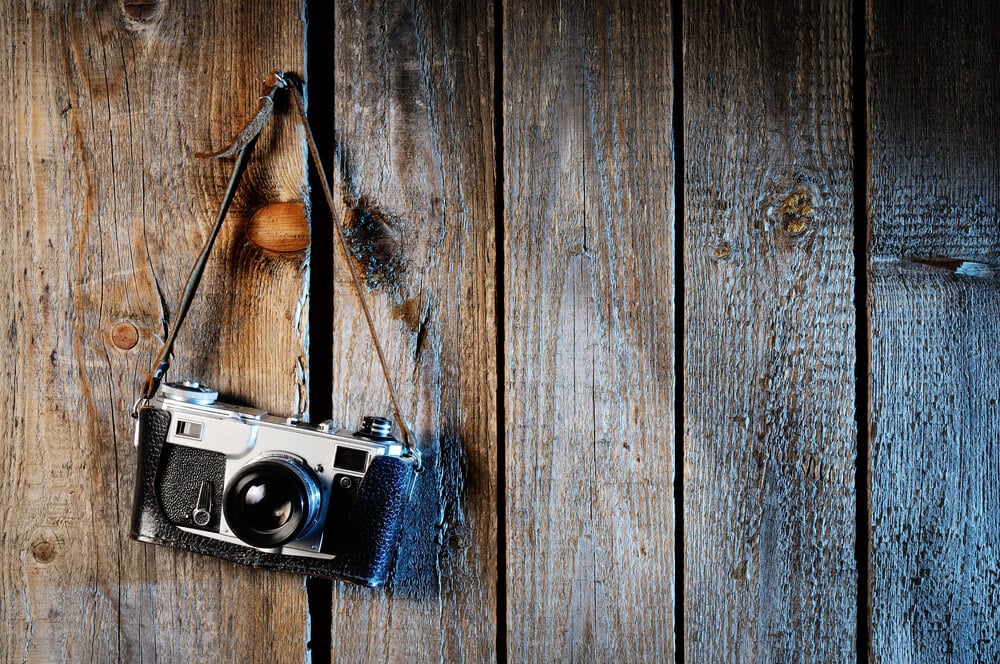
None of these cameras were built to be collectible; they were built to be used, which is exactly what gives the surviving examples their character. Scratches, worn leatherette, and a slightly sticky shutter are evidence of a life the camera actually lived, not flaws to be apologized for.
What separates a forgotten closet find from a genuine sale isn’t luck so much as attention: knowing the model, checking whether the mechanism still works, and understanding that the case and manual sitting next to it might matter as much as the camera itself.
More from Go2Tutors!

- The Romanov Crown Jewels and Their Tragic Fate
- 13 Historical Mysteries That Science Still Can’t Solve
- Famous Hoaxes That Fooled the World for Years
- 15 Child Stars with Tragic Adult Lives
- 16 Famous Jewelry Pieces in History
Like Go2Tutors’s content? Follow us on MSN.