17 Strange IQ Experiments From the Past
The history of intelligence testing reads like a collection of cautionary tales. From fabricated family studies to mass military screenings that shaped immigration policy, early IQ experiments often reflected the biases and questionable ethics of their time. What started as Alfred Binet’s well-intentioned effort to help struggling French schoolchildren quickly evolved into something far more complex and controversial.
These historical experiments reveal how scientific methods can go astray when mixed with social prejudices and political agendas. Here is a list of 17 strange IQ experiments from the past that shaped how we think about intelligence testing today.
Henry Goddard’s Kallikak Family Study
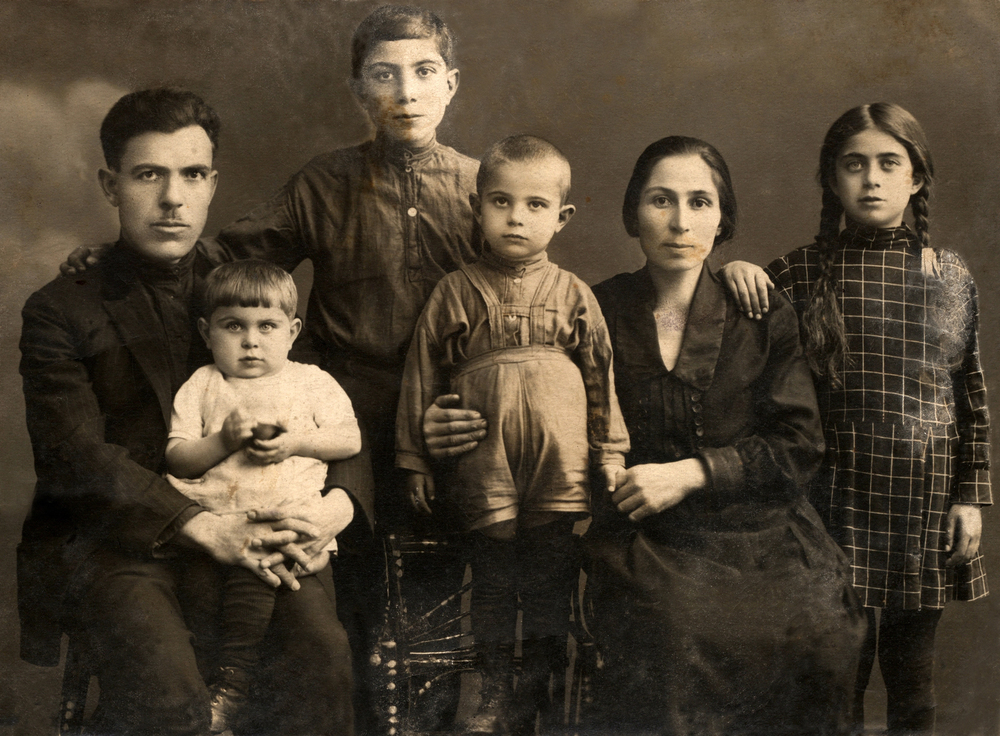
Henry Goddard’s 1912 study of the ‘Kallikak family’ became one of the most infamous pieces of psychological research ever published. Goddard claimed he’d traced two family lines from a single Revolutionary War soldier — one from his relationship with a ‘feeble-minded’ barmaid, another from his marriage to a ‘respectable’ Quaker woman.
The results seemed too perfect to be true. They were.
Ellis Island Intelligence Testing
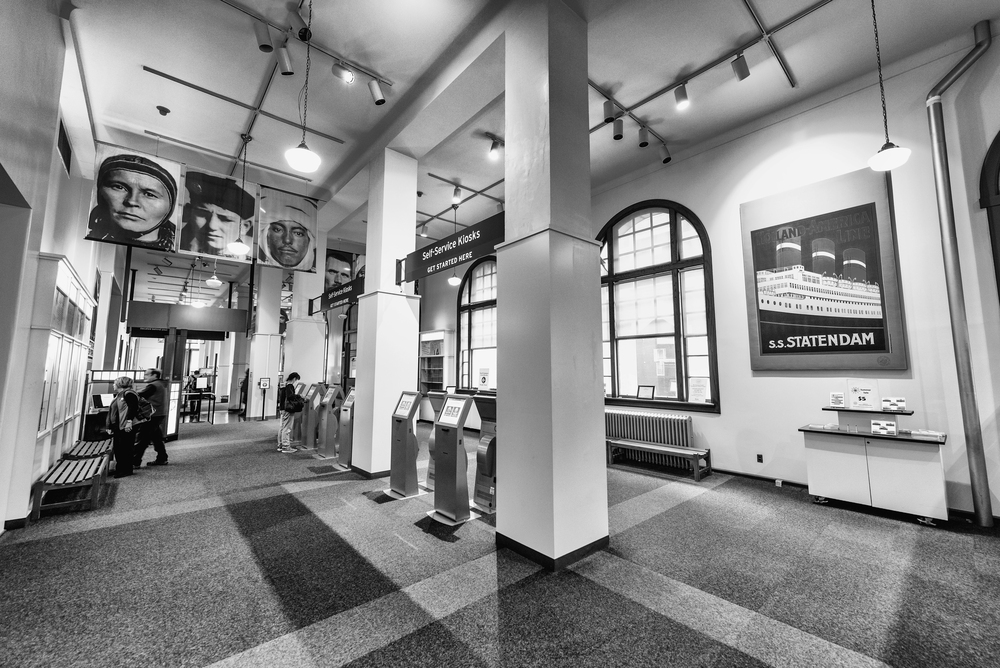
In 1913, Goddard was invited to Ellis Island to help detect ‘morons’ in the immigrant population using intelligence tests. The results were staggering — and deeply troubling.
Goddard claimed that 83% of Jews, 80% of Hungarians, 79% of Italians, and 87% of Russians who took his tests were ‘feeble-minded’. These wildly inflated numbers influenced immigration policy for decades, despite obvious cultural and language biases in the testing methods.
Terman’s Meddling with His Subjects
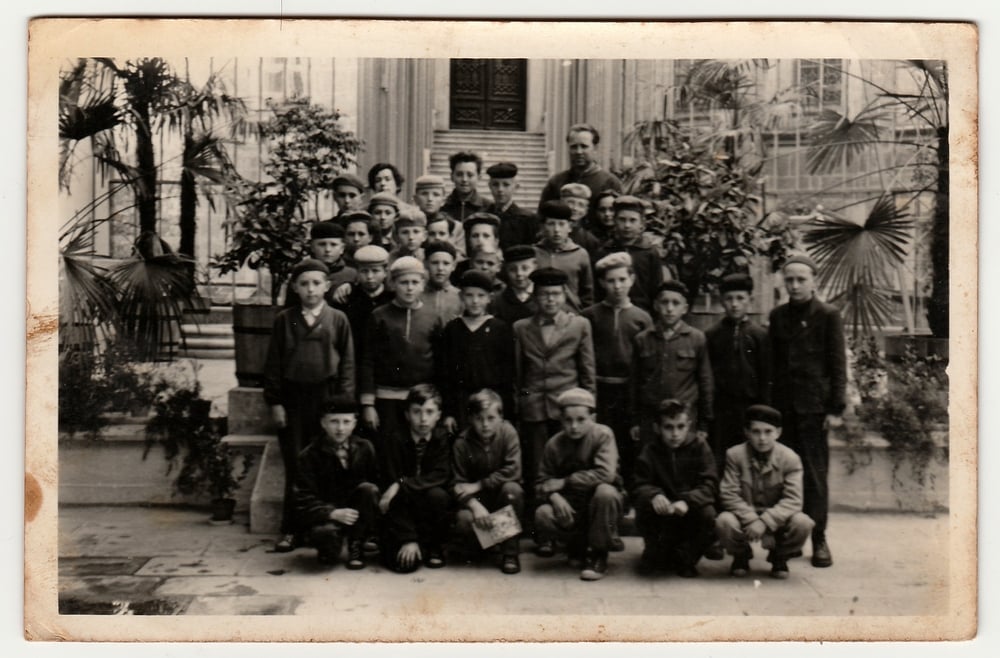
Lewis Terman’s longitudinal study of gifted children was groundbreaking, yet his methods were ethically questionable by today’s standards. Terman actively meddled in his subjects’ lives — writing letters of recommendation, giving advice, helping some get into college.
This interference completely compromised the scientific integrity of his research. Terman became ‘mentor, confidant, guidance counselor and sometimes guardian angel’ to the group he always called ‘my gifted children’, making it impossible to determine natural outcomes versus researcher influence.
Army Alpha and Beta Mass Testing
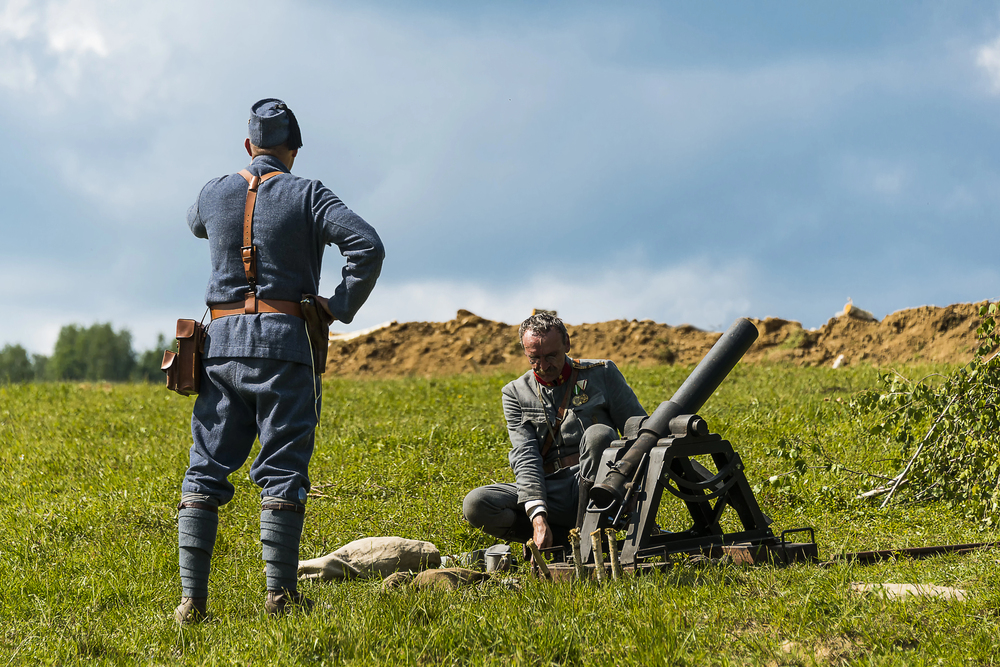
During World War I, psychologists administered intelligence tests to 1,726,966 military recruits in what became the first mass psychological testing program in history. One striking finding? Around half of the Army recruits tested at or below the level of ‘moron’.
The tests were administered in massive groups of up to 200 men at a time — often in chaotic conditions that bore little resemblance to proper testing environments.
Goddard’s Moron Classification System
At a 1910 meeting, Goddard proposed definitions for classifying intellectual disability based on IQ scores: ‘moron’ for those with an IQ of 51-70, ‘imbecile’ for 26-50, and ‘idiot’ for 0-25. He’d actually coined the term ‘moron’ from the Greek word for ‘foolish’.
According to Goddard, morons were ‘unfit for society and should be removed from society either through institutionalization, sterilization, or both’. This classification system became standard for decades — influencing countless lives.
Retouched Photographs in Research
A photographic expert from the Smithsonian Institution discovered that some of the Kallikak family photographs in Goddard’s books were retouched to give them a more disturbing appearance. The manipulation was so obvious it raised serious questions about scientific fraud.
These doctored images were used to support claims about the hereditary nature of ‘feeble-mindedness’ — and influenced policy decisions for years.
Francis Galton’s Sensory Measurements
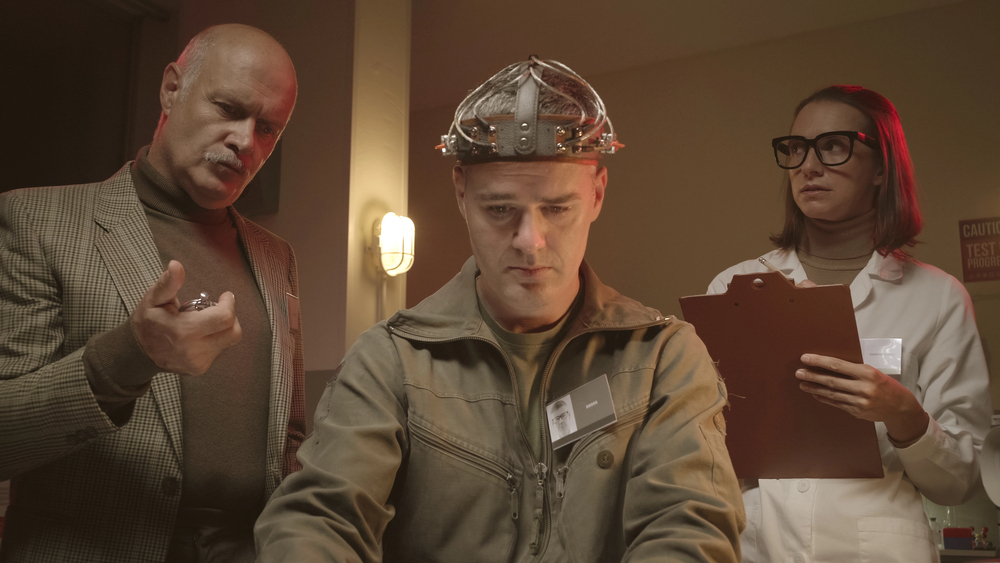
Sir Francis Galton, one of the earliest intelligence researchers, believed that mental traits could be quantified through sensory measurements like reaction times and sensory acuity. His approach was completely backwards by modern standards.
Galton thought people with sharper senses were more intelligent — leading to bizarre testing scenarios where researchers measured everything from grip strength to the ability to distinguish between different weights.
The Stanford-Binet 50-Minute Revolution

In 1916, Terman released his Stanford-Binet test with the bold claim that his ‘little exam, which a child could complete in a mere 50 minutes, was about to revolutionize what students learned and how they thought of themselves’. The speed and apparent simplicity of the test led to its widespread adoption without proper validation.
Schools across America began tracking students based on a single 50-minute assessment — fundamentally changing educational opportunities for millions of children.
Hermann Ebbinghaus’s Nonsense Syllables
Hermann Ebbinghaus developed experimental methods using nonsense syllables to measure learning and forgetting over time. While innovative, his approach involved having subjects memorize meaningless combinations of letters for hours on end.
Ebbinghaus himself served as the primary test subject — memorizing thousands of nonsense syllables to map the ‘forgetting curve’. This obsessive self-experimentation became a template for early cognitive research.
Institutionalized Children as Test Subjects
Goddard conducted extensive research on children at the Vineland Training School for Feeble-Minded Boys and Girls, using institutionalized children as test subjects without proper consent procedures. Researchers paged through ‘cold, clinical records of children’ and studied ‘photographs of children in well-kept dresses and neatly pressed suits lined up on benches’.
These children had no advocates — and no way to refuse participation in experiments that would determine their futures.
The Search for Criminal Intelligence

Early researchers obsessed over finding connections between intelligence and criminal behavior. Some psychologists used IQ tests to make psychiatric decisions regarding whether an individual should receive a diagnosis such as depression or mania.
The circular reasoning was stunning. Researchers would test prisoners, find lower scores, then claim this proved criminals were less intelligent, while ignoring factors like education, poverty, and cultural bias.
Mass Sterilization Based on Test Results

The most horrifying application of early IQ testing was its use to justify forced sterilization programs. Though the US eugenics movement lost momentum in the 1940s due to Nazi Germany’s horrors, advocates continued their work.
By the 1960s, around 65,000 individuals had been sterilized. These life-altering decisions were often based on single test scores from culturally biased instruments.
Terman’s Eugenic Vision

Terman and other ‘intelligence-testers’ wanted to test every child and adult to determine their place in society. They envisioned a ‘meritocracy’ where IQ scores would dictate education, jobs, and social status.
People with scores under 75 would be institutionalized and discouraged or prevented from having children. This wasn’t subtle discrimination. It was a comprehensive plan to restructure society based on test performance.
The Army’s Racial Hierarchy Claims

Army testing data was used to create racial hierarchies, with eugenicists claiming that ‘the average Russian has a mental age of 11.34; the Italian, 11.01; the Pole, 10.74’ and ‘The Negro lies at the bottom of the scale with an average mental age 10.41’. These findings became ‘a rallying point for eugenicists who predicted doom and lamented declining intelligence, caused by unconstrained breeding of the poor and feeble-minded’.
The data directly influenced the Immigration Restriction Act of 1924.
Cube Counting Under Time Pressure

The Army Beta test included bizarre tasks like cube analysis, where recruits had to count cubes in increasingly complex three-dimensional models within strict time limits. Test subjects had just 2 minutes and 30 seconds to analyze models ranging from simple 2-cube structures to complex 50-cube arrangements.
The frantic pace and spatial reasoning demands bore little resemblance to any real-world military or civilian tasks.
Individual Examinations for ‘Failures’

Soldiers who failed both the Army Alpha and Beta tests were subjected to individual examinations using the Stanford-Binet and other assessment tools. Over 83,000 individual examinations were conducted.
This led to 7,800 men being recommended for immediate discharge and 10,014 being assigned to labor battalions. These one-on-one sessions often lasted hours and determined whether men would serve their country or be sent home in shame.
The Demonstration and Mime Method

Army Beta administrators used ‘demonstration charts and mime to convey instructions to foreign-speaking and illiterate examinees’. Picture massive groups of confused immigrants and illiterate recruits trying to follow pantomimed instructions for complex cognitive tasks.
Administrators would have demonstrators trace mazes with crayons or point to missing elements in pictures while shouting commands like ‘Fix it, fix it!’ The chaos and cultural confusion made meaningful assessment nearly impossible.
When Science Reflects Society

The strange IQ experiments of the past serve as powerful reminders that scientific research never exists in a vacuum. Early IQ test research was used to justify US-based sterilization policies and Nazi Germany extermination practices, showing how supposedly objective measurements can become tools of oppression.
Even today, some continue to use IQ tests beyond the scope of their scientific capabilities. These historical experiments teach us that the real measure of any scientific tool isn’t just whether it works, but how society chooses to use it. The legacy of these strange studies reminds us to approach intelligence testing with both scientific rigor and ethical awareness.
More from Go2Tutors!

- The Romanov Crown Jewels and Their Tragic Fate
- 13 Historical Mysteries That Science Still Can’t Solve
- Famous Hoaxes That Fooled the World for Years
- 15 Child Stars with Tragic Adult Lives
- 16 Famous Jewelry Pieces in History
Like Go2Tutors’s content? Follow us on MSN.