Actors who refused iconic roles in protest
Hollywood is built on ambition, but sometimes principles matter more than paychecks. Throughout cinema history, several actors have turned their backs on what would become legendary roles, not because of scheduling conflicts or creative differences, but as acts of protest or moral conviction.
These decisions often came at great personal cost, with some actors sacrificing career-defining opportunities to stay true to their beliefs. Here are the stories of performers who chose conscience over stardom.
Jack Nicholson and The Godfather

— Photo by PopularImages
Jack Nicholson turned down the role of Michael Corleone in The Godfather because he thought ‘Italians should play Italians’ and he had no business playing the character. This wasn’t just about authenticity for Nicholson—it was about representation and cultural integrity in Hollywood. The role ultimately went to Al Pacino, launching him into superstardom. Nicholson’s principled stand reflected his belief that certain characters should be portrayed by actors who shared their cultural background, a progressive stance that was ahead of its time in 1972.
Matthew Modine’s Anti-War Stance

— Photo by PopularImages
Matthew Modine was originally considered for the role of Maverick, ultimately played by Tom Cruise, but Modine passed on the film because of his anti-war politics. Instead, Modine took the lead role of Joker in Full Metal Jacket, Stanley Kubrick’s devastating attack on American military culture and the Vietnam War. Modine viewed Top Gun as military propaganda designed to recruit young people into the armed forces. His decision to star in Kubrick’s anti-war masterpiece instead demonstrated his commitment to using cinema as a vehicle for his political beliefs rather than simply entertainment.
Zendaya’s Respectful Withdrawal

The Spider-Man star dropped out of the biopic role due to respect for the late singer’s family, who were notably opposed to the movie being made in the first place. There was also backlash against Zendaya, a light-skinned mixed actor, portraying Aaliyah, so it really was for the best that Z parted ways with the project. Zendaya’s decision to step away from the Aaliyah biopic showed her understanding of both family wishes and community concerns about casting choices. Her withdrawal reflected a growing awareness in Hollywood about representation and the importance of honoring the wishes of deceased artists’ families.
Jim Carrey’s Violence Awakening

In 2013’s Kick-Ass 2, Jim Carrey played a character called Colonel Stars and Stripes. It was a violent movie, and it turned out to be too violent for Carrey, who condemned the film in the wake of the horrific Sandy Hook mass shooting. He took to Twitter to say: ‘I did Kick-Ass 2 a month b4 Sandy Hook and now in all good conscience I cannot support that level of violence.’ While Carrey had already filmed the movie, his refusal to promote it represented a powerful protest against screen violence. His public condemnation of the film’s content showed how real-world tragedies can shift an actor’s perspective on their work.
George C. Scott’s Award Rebellion

George C. Scott also famously rejected his Best Actor Oscar for the 1970 film Patton. Yet unlike Brando, whose snub caught the Academy by surprise, Scott had actually been saying he wouldn’t accept an Oscar for years. Scott later said he would send the Oscar back if it was sent to him. Scott’s principled stance against competitive awards in acting reflected his belief that artistic performance shouldn’t be treated like a sporting event. His description of the ceremony as ‘a two-hour meat parade, a public display with contrived suspense for economic reasons’ became legendary.
Marlon Brando’s Native American Protest
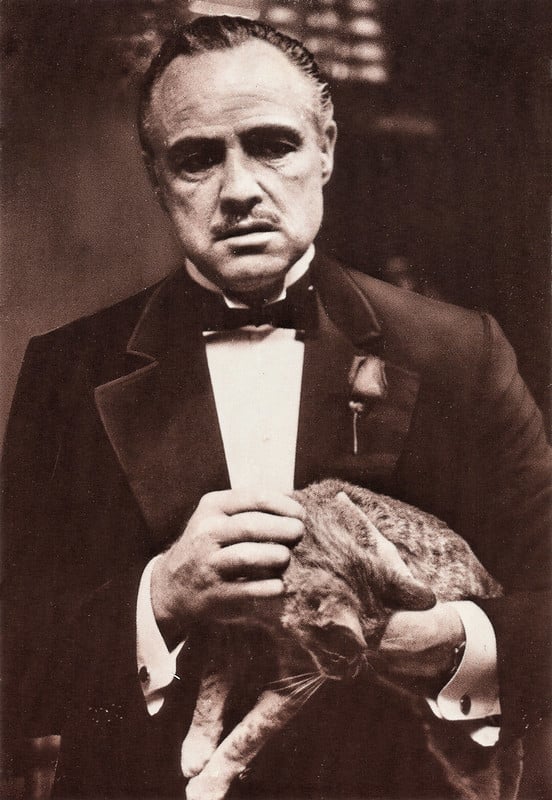
One of the most famous examples of an actor refusing an award was Marlon Brando when he refused to be present for his Best Actor Oscar win for his role in The Godfather. Instead of attending, Brando sent Native American actress Sacheen Littlefeather to collect the award, citing Hollywood’s treatment of Native Americans as his reason for refusing it. Brando’s protest brought national attention to Native American rights and Hollywood’s problematic portrayal of indigenous peoples. The moment became one of the most politically charged in Oscar history, with John Wayne threatening Littlefeather and having to be restrained by security guards.
James Cromwell’s Succession Conditions

When James Cromwell was offered the part of Logan Roy’s brother Ewan in Succession, he had a few conditions, the most important being that Ewan would be ideologically opposed to everything Logan Roy and his company stood for. He lambasted Logan for lowering the public discourse, cheapening culture, climate change denial and more. Cromwell’s insistence on playing a character who reflected his own progressive values showed how established actors can use their leverage to ensure their roles align with their beliefs. His character became a moral compass within the show’s corrupt media empire.
Dudley Nichols’ Writers’ Strike Stand

— Photo by MidoSemsem
Screenwriter Dudley Nichols did this when he became the first person to decline an Oscar for the 1935 film, The Informer. Nichols boycotted the Oscars to protest the Academy’s refusal to acknowledge the Screen Writer’s Guild, among other unions. Nichols unprecedentedly refused the award, stating that it was due to a writer’s strike, and the Academy’s failure to acknowledge the Screen Writers’ Guild. His protest was directly tied to labor rights and union recognition in Hollywood, making it one of the earliest examples of using award ceremonies as platforms for political activism.
Contemporary Conscience Stands

— Photo by rajastills
An open letter from a group that calls itself Film Workers for Palestine had amassed more than 4,000 signatures as of Wednesday, with a slew of Hollywood stars and filmmakers pledging not to work with Israeli film institutions that have been ‘implicated in genocide and apartheid against the Palestinian people.’ Modern actors like Emma Stone, Joaquin Phoenix, Rooney Mara, Andrew Garfield and others continue this tradition of protest through their career choices. Their collective refusal to work with certain institutions demonstrates how contemporary performers use their platform for political activism.
When Principles Shaped Cinema History

These acts of protest reveal something profound about the relationship between art and conscience. While some actors prioritized career advancement, these performers chose to use their influence as a form of activism. Their decisions didn’t just affect their own trajectories—they helped shape conversations about representation, violence, labor rights, and political responsibility in entertainment. The roles they refused often went to other actors who became icons, but their principled stands created a different kind of legacy that resonates far beyond box office success.
More from Go2Tutors!

- 16 Historical Figures Who Were Nothing Like You Think
- 12 Things Sold in the 80s That Are Now Illegal
- 15 VHS Tapes That Could Be Worth Thousands
- 17 Historical “What Ifs” That Would Have Changed Everything
- 18 TV Shows That Vanished Without a Finale
Like Go2Tutors’s content? Follow us on MSN.