15 Forgotten Heroes Who Invented Essential Tools
Plenty of inventors became household names. Thomas Edison, Alexander Graham Bell, and Henry Ford get all the credit in history books.
But what about the people who created the everyday items we use without a second thought? The folks who invented windshield wipers, safety pins, and traffic lights often faded into obscurity despite changing the world in practical, tangible ways. These inventors didn’t just dream up fancy gadgets for the wealthy.
They solved real problems that affected ordinary people every single day. Here is a list of 15 forgotten heroes who invented essential tools that shaped modern life.
Mary Anderson

During a snowy visit to New York in 1902, Mary Anderson watched the trolley driver struggle with a basic problem—he kept stopping the vehicle to wipe snow off the windshield by hand. The Alabama real estate developer sketched out a better solution when she got home: a lever inside the vehicle that controlled a rubber blade on the outside, letting drivers clear their windshields without leaving their seats.
Anderson received her patent in 1903, but manufacturers rejected it as impractical and potentially distracting to drivers. She died in 1953 having never profited from windshield wipers, which became standard equipment on every car by the 1920s.
Garrett Morgan

After witnessing workers trapped in a smoke-filled tunnel beneath Lake Erie in 1916, Garrett Morgan rushed to the scene with his safety hood invention that featured tubes hanging down to ground level where cleaner air could be found. Morgan and volunteers wearing the hoods rescued 32 men from what seemed like certain death, and his invention became the blueprint for gas masks used in World War I.
After seeing a horrific collision between a car and horse-drawn carriage, he invented the three-position traffic signal in 1923, adding the crucial yellow warning light between stop and go, which General Electric bought for $40,000. Beyond these safety innovations, Morgan created a hair straightening product that launched his own successful business, founded a newspaper called the Cleveland Call, and advocated for civil rights throughout his life.
Walter Hunt

Desperate to pay off a $15 debt in 1849, Walter Hunt twisted a piece of wire in his hands while brainstorming ideas and created the safety pin, complete with a clasp covering the sharp point and a spring mechanism to hold it closed. Hunt sold the patent rights for just $400 to quickly settle his debt, never seeing another cent despite the device becoming ubiquitous.
Hunt had also created the first functional lockstitch sewing machine back in 1833, years before Elias Howe’s famous patent, but supposedly didn’t pursue manufacturing it because his daughter warned it would put seamstresses out of work. He died in poverty in 1859, having invented dozens of items including an early repeating rifle, a fountain pen, and a knife sharpener.
Elijah McCoy

Born to parents who escaped slavery via the Underground Railroad, Elijah McCoy studied mechanical engineering in Scotland before returning to Michigan, where racial discrimination meant the trained engineer could only find work as a railroad fireman and oiler. The job required stopping trains every few miles to manually lubricate the engine parts, so McCoy invented an automatic lubricator in 1872 that dripped oil exactly where needed while trains stayed in motion.
Railroad companies across North America adopted his device, but imitators flooded the market with inferior copies, leading engineers to request the genuine article by name and allegedly coining the phrase ‘the real McCoy.’ By his death in 1929, McCoy held 57 patents, most related to lubrication systems for heavy machinery.
Joseph Glidden

A farmer in DeKalb, Illinois, Joseph Glidden saw a basic wire fencing design at a county fair in 1873 and immediately thought of improvements, using a coffee mill to create barbs that he twisted onto a double strand of wire to hold them firmly in place. His design proved cheaper, stronger, and more durable than previous attempts at barbed wire, and Glidden patented his creation in 1874 before partnering with a hardware dealer to manufacture it.
The timing was perfect—western expansion was in full swing, and ranchers desperately needed affordable fencing for vast stretches of land where wood was scarce. Within six years, more than 80 million pounds of Glidden’s barbed wire had been sold, making him one of the richest men in America, though his invention sparked fierce range wars between cattlemen and homesteaders.
Margaret Knight

Working at a paper bag factory in Springfield, Massachusetts, Margaret Knight noticed that machine-made bags were weak envelope-style designs that couldn’t stand upright or hold much weight, so she spent months developing a machine that could create flat-bottomed bags similar to modern grocery bags. When Knight applied for a patent in 1868, a man named Charles Annan tried to steal her design and claim it as his own, but Knight took him to court and won after presenting detailed drawings and testimonies from witnesses.
She received her patent in 1870 and founded the Eastern Paper Bag Company, though she never managed the business directly and lived on royalties instead. Knight held around 27 patents during her lifetime and was called ‘the woman Edison’ by admirers, yet her contributions to everyday convenience remain largely unknown.
Susan Hibbard

Creating a practical feather duster might not sound revolutionary, but Susan Hibbard’s 1876 patent represented something bigger—she had to fight her own husband in court to secure ownership of her invention after he tried to claim it as his. Hibbard wasn’t alone, as many male relatives routinely stole inventions from women who were either unaware of patent law or socially pressured to hand over their creations.
Her legal victory encouraged other female inventors to stand up for their rights while the feather duster itself became a household staple, turning discarded turkey feathers into an effective cleaning tool. Hibbard’s fight for recognition mattered just as much as her invention, proving that women could challenge the system and win even when the odds seemed impossibly stacked against them.
Whitcomb Judson

The zipper didn’t spring into existence fully formed—Whitcomb Judson spent years developing predecessors to the modern fastener, patenting his ‘clasp locker’ in 1893 and an improved version called the ‘Judson C-Curity Fastener’ in 1913. Both designs had serious flaws as they jammed, came apart unexpectedly, and frustrated users more than they helped.
Judson marketed his inventions aggressively but never achieved commercial success, dying in 1909 years before Gideon Sundback perfected the design in 1913 that became the zipper we use today. Every jacket, backpack, and pair of jeans with a zipper owes something to Judson’s stubborn persistence despite repeated failures.
Amanda Theodosia Jones

Long before Amanda Jones invented an improved oil burner in 1880, she had already established herself as an inventor and author, with her early work focused on food preservation earning her two patents before she attempted to create a better method for heating furnaces. Jones represents a fascinating figure—a woman operating in the male-dominated worlds of both literature and invention during the late 1800s.
Unlike many female inventors of her era, she managed to earn recognition during her lifetime rather than posthumously, and her oil burner improved the efficiency and safety of home heating systems. Jones proved that women could excel in technical fields if given the opportunity, paving the way for future generations of female engineers and inventors.
Henry Phillips

Every household has Phillips head screwdrivers, but few people know about Henry Phillips himself, who invented the cross-shaped screw head in 1932 and received his patent in 1936 to solve a specific problem in automobile manufacturing. The Phillips screw was designed to ‘cam out’ or slip free when a certain torque was reached, preventing over-tightening that could damage materials—a feature that made it perfect for assembly lines where workers needed to install screws quickly.
Phillips struggled to convince manufacturers to adopt his design until the American Screw Company agreed to produce it, and the invention eventually revolutionized manufacturing processes across nearly every industry imaginable. Despite the Phillips name appearing on millions of tools, the man behind it remains obscure.
Granville Woods

An African American inventor and electrical engineer, Granville Woods held over 50 patents but never received the recognition he deserved, with his most important invention being the induction telegraph system in 1887 that allowed moving trains to communicate with stations and each other. This dramatically improved railroad safety by reducing collisions and coordination problems, and Woods also invented an improved air brake system and an automatic circuit breaker.
Thomas Edison twice tried to sue Woods for patent infringement and lost both times, leading Edison to eventually offer Woods a job at his company, which Woods declined. He continued working independently though financial struggles plagued him throughout his life, and he died in poverty in 1910 with his contributions to electrical engineering and transportation largely forgotten.
Dietrich Nikolaus Winkel
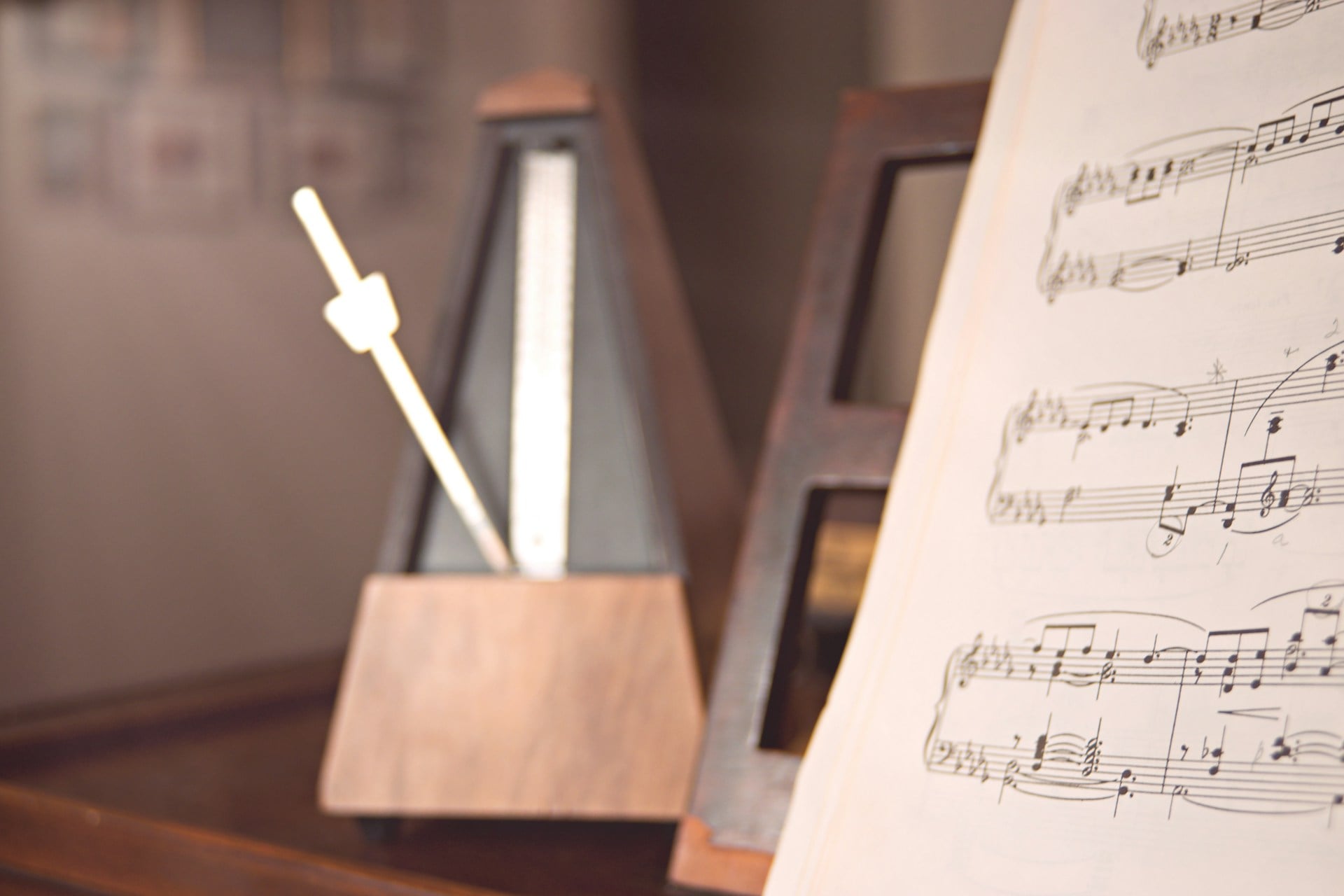
Musicians worldwide depend on metronomes, but few could name Dietrich Nikolaus Winkel as their inventor—the Dutch clockmaker created his ‘musical chronometer’ in 1814, featuring a pendulum that could be adjusted to different speeds using a sliding weight. Winkel never received proper credit during his lifetime because Johann Nepomuk Maelzel copied the design and began selling it under his own name, with Maelzel’s marketing so successful that people called it the ‘Maelzel Metronome’ for decades.
Beethoven became the first composer to use metronome markings in his music, cementing the device’s importance in musical notation. Justice came slowly—historians eventually recognized Winkel as the true inventor, though Maelzel’s name still appears in music history books far more frequently.
Tabitha Babbitt

According to historical accounts, Tabitha Babbitt is credited with inventing the circular saw around 1810 after watching men use traditional two-person saws, though this claim remains attributed rather than definitively verified. She allegedly belonged to a Shaker community in Massachusetts and noticed that half of each sawing motion was wasted effort—the saw only cut in one direction—so she reportedly attached a circular blade to a spinning wheel.
Her invention would have revolutionized woodworking and construction, making it possible to cut lumber faster and with fewer workers, though as a Shaker she wouldn’t have pursued a patent or personal profit. The circular saw became standard equipment in sawmills and construction sites, though Babbitt’s contribution remains a matter of historical debate.
Johan Petter Johansson
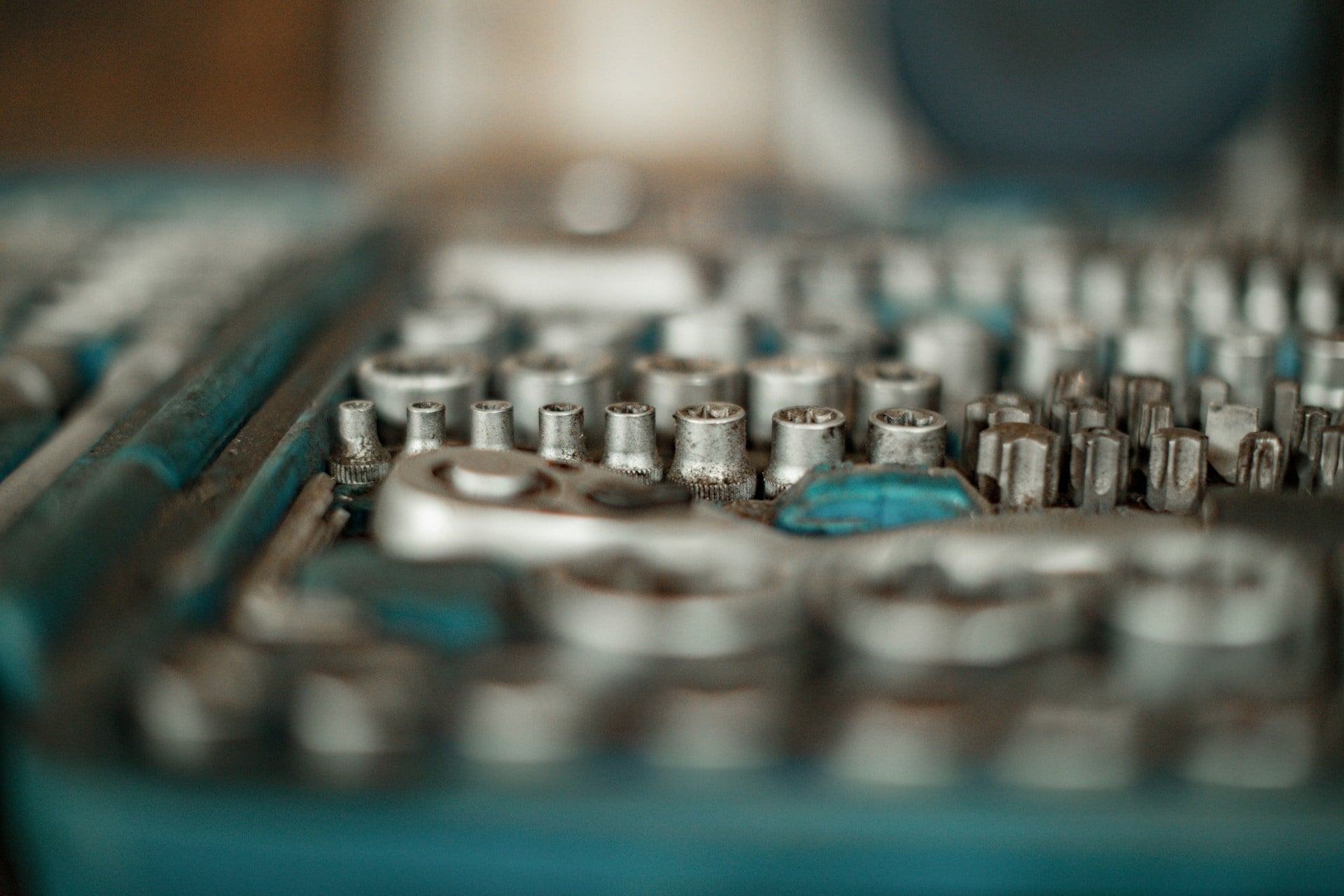
The adjustable wrench might seem simple, but it solved a significant problem for workers who previously needed dozens of fixed-size wrenches—Swedish inventor Johan Petter Johansson patented the modern adjustable wrench in 1891, featuring a sliding jaw that could be adjusted to fit various nut and bolt sizes. His design became known as the ‘Swedish wrench’ or ‘Bahco wrench’ after his company, and Johansson’s innovation improved upon earlier adjustable wrench designs with better precision and durability.
The adjustable wrench became an essential tool for mechanics, plumbers, and anyone working with machinery, with its versatility making it a staple in toolboxes worldwide. Yet Johansson’s name rarely comes up in discussions about tool innovation, despite his invention improving everyday life in practical ways that fancy gadgets simply couldn’t match.
Peter Cooper

Peter Cooper patented one of the first modern adhesives, a fish glue that paved the way for today’s synthetic glues—while ancient civilizations used natural sticky substances, Cooper’s work brought adhesive technology into the industrial age. His innovation made it possible to manufacture products more efficiently and repair items that would otherwise be discarded, though Cooper was also a successful industrialist and philanthropist who founded The Cooper Union for the Advancement of Science and Art in New York City.
His adhesive invention gets overshadowed by his other accomplishments, particularly his work with railroads and his presidential campaign in 1876. Yet every time someone uses glue to fix something or create something new, they benefit from Cooper’s groundbreaking work in developing reliable, mass-producible adhesives.
The Legacy Lives On

These inventors changed daily life without seeking fame or fortune, with many dying poor despite creating products that made others wealthy. Some faced discrimination based on race or gender that prevented them from receiving proper recognition during their lifetimes, yet their inventions prove that necessity truly is the mother of invention.
Most of these tools emerged from observing everyday problems and thinking ‘there must be a better way’—the safety pin came from financial desperation, the windshield wiper from a frustrating snowy visit, and barbed wire from attending a county fair. Modern life would look drastically different without their contributions, yet their names remain absent from textbooks and popular culture, and these forgotten heroes deserve to be remembered not just for what they invented, but for their persistence in pursuing solutions despite facing seemingly insurmountable obstacles.
More from Go2Tutors!

- The Romanov Crown Jewels and Their Tragic Fate
- 17 Halloween Costumes Once Considered Taboo
- Famous Hoaxes That Fooled the World for Years
- 15 Child Stars with Tragic Adult Lives
- 16 Famous Jewelry Pieces in History
Like Go2Tutors’s content? Follow us on MSN.