Airports with the Most Extreme Runways
Flying into an airport should feel routine, but some landing strips around the world turn every arrival into a white-knuckle experience. These airports exist in places where geography refuses to cooperate, forcing engineers to build runways on mountainsides, tiny islands, and clifftops that seem better suited for eagles than aircraft.
Pilots train for years to master these approaches, and passengers often grip their armrests a little tighter when the destination appears on their boarding pass. Let’s look at the airports where landing feels more like an adventure than a simple arrival.
Paro International Airport

Bhutan’s only international airport sits in a valley surrounded by peaks that reach 18,000 feet into the sky. Pilots must navigate through a narrow corridor between mountains, making sharp turns at low altitude before finally spotting the runway.
Only a handful of pilots worldwide have certification to land here, and flights only operate during daylight hours with good visibility. The approach requires following a river through the valley while avoiding the terrain on all sides, and passengers can often see traditional Bhutanese homes perched on hillsides at eye level during descent.
Tenzing-Hillary Airport
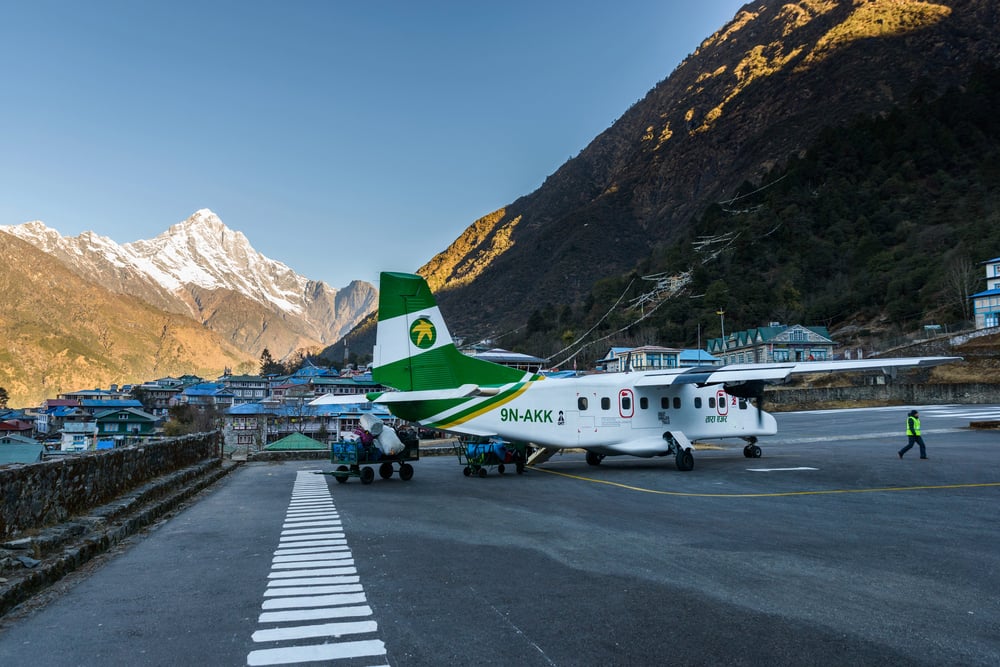
Perched at 9,334 feet in the Himalayas, this airport serves as the gateway to Mount Everest and pushes aircraft to their limits. The runway measures just 1,729 feet long and ends with a sheer drop into a valley thousands of feet below, giving pilots exactly one chance to get the landing right.
The thin air at this altitude reduces engine power and lift, making takeoffs particularly challenging as planes accelerate toward the cliff edge. Weather changes rapidly in the mountains, and flights often get canceled when clouds roll in without warning.
Princess Juliana International Airport

Beach lovers on the Caribbean island of St. Maarten get an unexpected thrill when jumbo jets descend directly over their heads at Maho Beach. The runway starts just beyond the sand, and aircraft approach so low that sunbathers can feel the heat from the engines and the roar rattles through their chests.
A fence separates the beach from the runway, but jet blast during takeoffs has knocked people off their feet and even caused injuries. Despite the danger, tourists flock to the beach specifically to experience the incredible sight of massive aircraft passing overhead at what feels like touching distance.
Courchevel Altiport
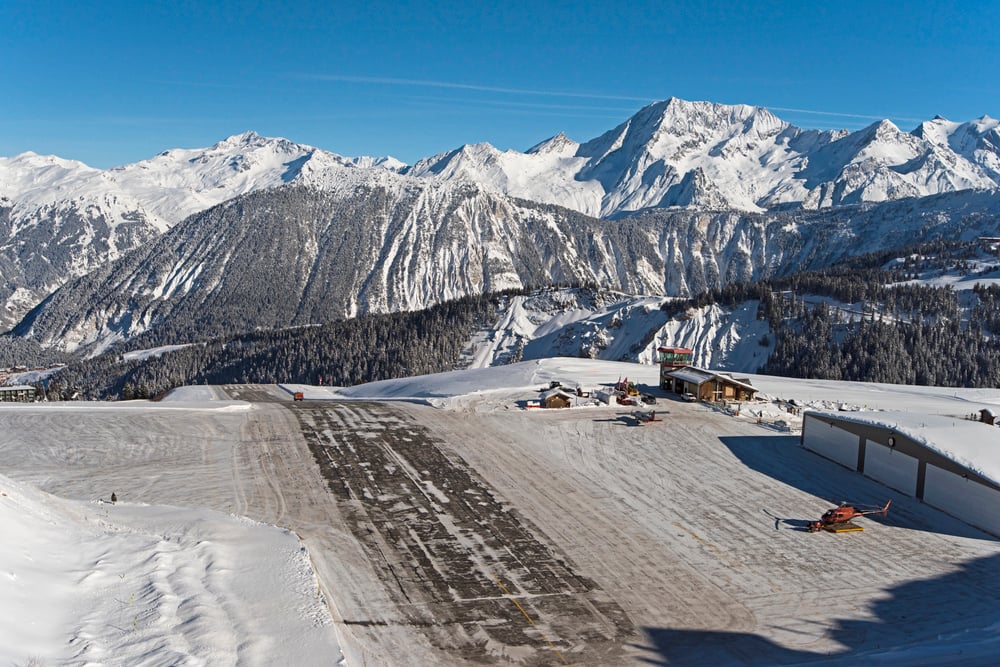
This French Alps airport caters to skiers with deep pockets and nerves of steel, featuring a runway that slopes upward at a shocking 18.5 percent grade. The short landing strip measures only 1,722 feet and has no go-around option because mountains surround it on all sides.
Pilots must land uphill and take off downhill regardless of wind direction, using gravity as both friend and foe. The middle section of the runway actually disappears from view during approach because of the severe slope, requiring pilots to aim for a spot they temporarily cannot see.
Gibraltar International Airport

Cars and pedestrians must stop and wait when planes land here because the runway literally crosses the territory’s main road. Winston Churchill Avenue cuts directly through the landing strip, complete with traffic lights and crossing gates like a railroad intersection.
The runway extends into the Bay of Gibraltar on both ends, built on reclaimed land because the tiny territory had nowhere else to put it. Strong crosswinds from the Mediterranean can make landings tricky, and the nearby Rock of Gibraltar creates unpredictable wind patterns.
Barra Airport
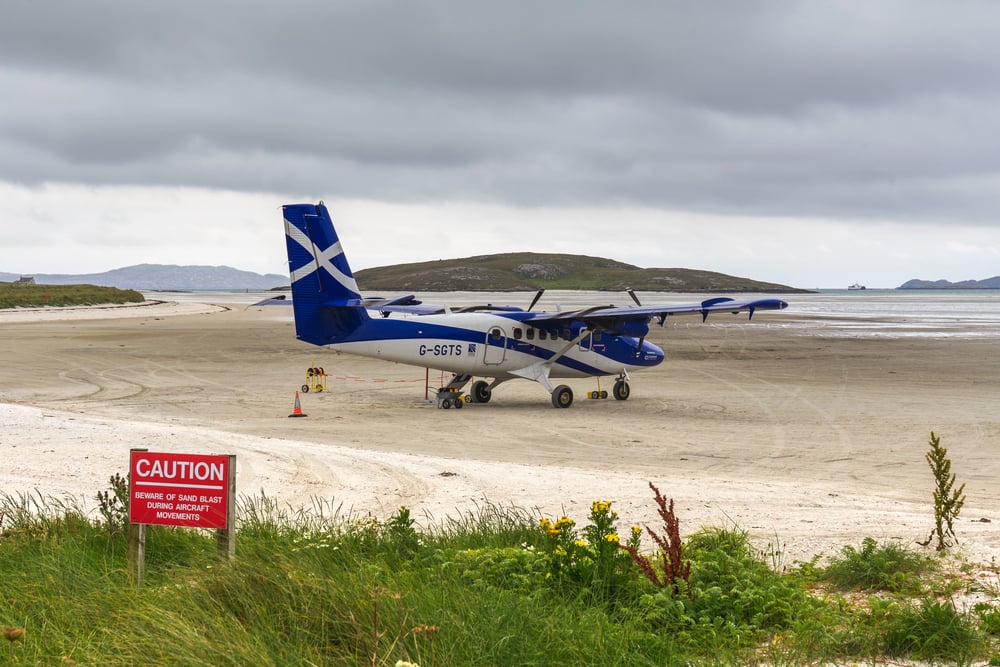
Scotland’s Barra Airport becomes invisible twice a day when the tide comes in and covers the runway with seawater. The beach serves triple duty as landing strip, parking area, and public beach, with flights scheduled around the tide tables published months in advance.
Pilots land on hard-packed sand marked by wooden poles, and airport staff must check for beachcombers and remove any debris before each arrival. This remains the only airport in the world where flight schedules depend on the moon’s gravitational pull on the ocean.
Madeira Airport

Engineers extended this Portuguese island runway by building a massive bridge structure supported by 180 columns because sheer cliffs prevented traditional expansion. The original short runway witnessed several accidents before authorities decided to lengthen it by literally building out over the ocean.
Winds funnel through the mountains surrounding the airport, and pilots often encounter severe turbulence and windshear during approach. The runway extension won a prestigious engineering award for its innovative design, though passengers probably care more about its safety improvements.
Ice Runway

Antarctica’s main supply airport consists of nothing more than groomed ice strong enough to support massive military cargo planes. Crews must constantly monitor the ice thickness and surface conditions, relocating the entire runway when cracks develop or the ice becomes unstable.
The runway effectively disappears each summer when warmer temperatures weaken the ice, then gets rebuilt in a slightly different location when winter returns. Pilots face whiteout conditions, extreme cold that affects aircraft systems, and the knowledge that the nearest alternate airport sits thousands of miles away.
Matekane Air Strip

Lesotho’s Matekane Air Strip ends with a 2,000-foot drop off a cliff edge, and pilots use this fact as part of their takeoff procedure. Aircraft accelerate down the short runway and simply drive off the cliff, dropping into the gorge below while building up speed and lift.
The dramatic descent continues for several seconds before planes level out and begin climbing, creating a stomach-dropping experience for passengers. The airport serves a remote lodge, and guests quickly learn that both arrival and departure will provide unforgettable moments.
Narsarsuaq Airport
Greenland’s Narsarsuaq Airport requires pilots to thread the needle between glaciers and icebergs while dodging unpredictable Arctic weather. The runway sits at the end of a fjord surrounded by ice caps, and approaching aircraft must fly low over the water before making a sharp turn to line up with the landing strip.
Icebergs floating in the fjord create navigation hazards, and fog can roll in within minutes, stranding aircraft until conditions improve. The airport originally served as a U.S. military base during World War II, chosen for its strategic location rather than its flying characteristics.
Toncontin International Airport

Honduras positioned this airport in a valley surrounded by mountains, forcing pilots to make a dramatic last-minute turn and steep descent before touching down. The approach requires flying close to mountainsides and residential neighborhoods, with homes visible just below the flight path.
The runway measures only 7,096 feet long with a significant slope, and it ends near a cliff that drops into a neighborhood. Several accidents over the years led to enhanced training requirements, and many airlines now restrict operations to their most experienced crews.
Congonhas Airport

Brazil’s Congonhas Airport sits in the heart of São Paulo, hemmed in by skyscrapers, highways, and millions of people with no room for expansion. Heavy rain creates dangerous conditions on the relatively short runway, and a tragic accident in 2007 killed nearly 200 people when a plane couldn’t stop.
The airport handles incredible traffic volume despite its limitations, and pilots must execute precise approaches to avoid the urban sprawl on all sides. Authorities considered closing the facility after the accident but ultimately decided the city’s economy depended too heavily on its convenient downtown location.
Svalbard Airport
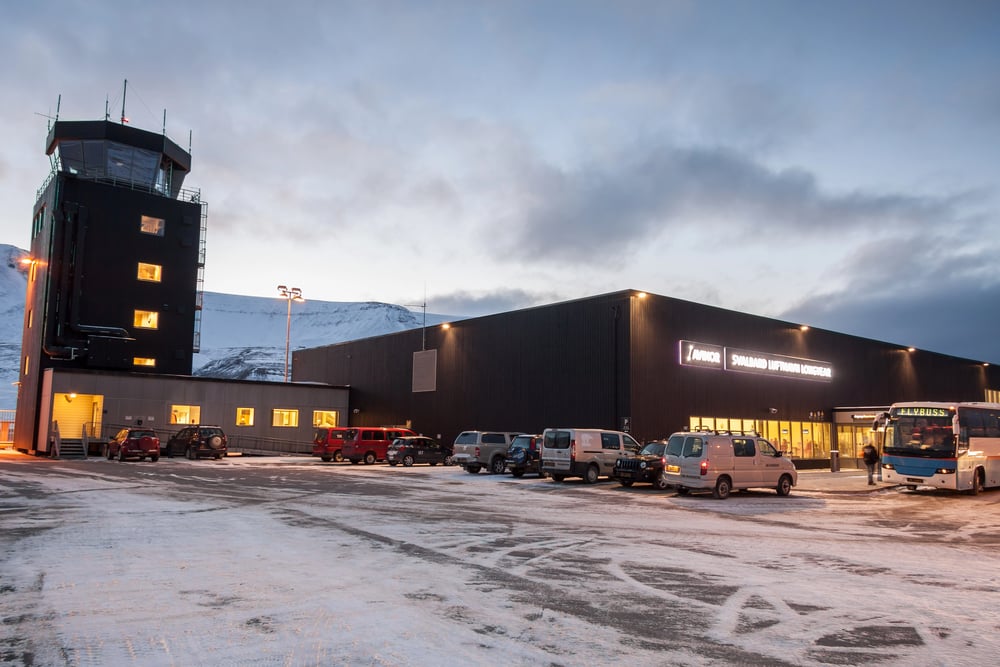
The northernmost public airport in the world battles permafrost that shifts beneath the runway, requiring constant maintenance and monitoring. Engineers built the runway on a layer of insulation to prevent the heat from aircraft and buildings from melting the frozen ground underneath.
Polar bears occasionally wander onto the runway, and airport staff must chase them away before flights can land. Extreme cold affects everything from fuel systems to hydraulics, and winter brings months of total darkness that complicate operations.
Gisborne Airport

New Zealand’s Gisborne Airport features a railway line that crosses directly through the middle of the runway, creating a unique coordination challenge. Trains must stop and wait for aircraft, and planes must hold if a train is approaching the crossing.
The scheduling requires precise timing between air traffic controllers and railway dispatchers to ensure nobody ends up in the intersection simultaneously. The situation developed because both the airport and railway existed before anyone thought through the implications of their paths crossing.
Kansai International Airport

Japan built this entire airport on an artificial island in Osaka Bay, sinking massive amounts of material into the ocean to create a foundation. The island has sunk more than expected over the decades, requiring ongoing engineering efforts to keep the runways level and functional.
Typhoons and rough seas constantly batter the structures, and engineers designed special flexible connections between the terminal and the island to accommodate movement. The project cost over $20 billion and required innovative solutions to problems nobody had encountered before.
McMurdo Station and the Pegasus Runway
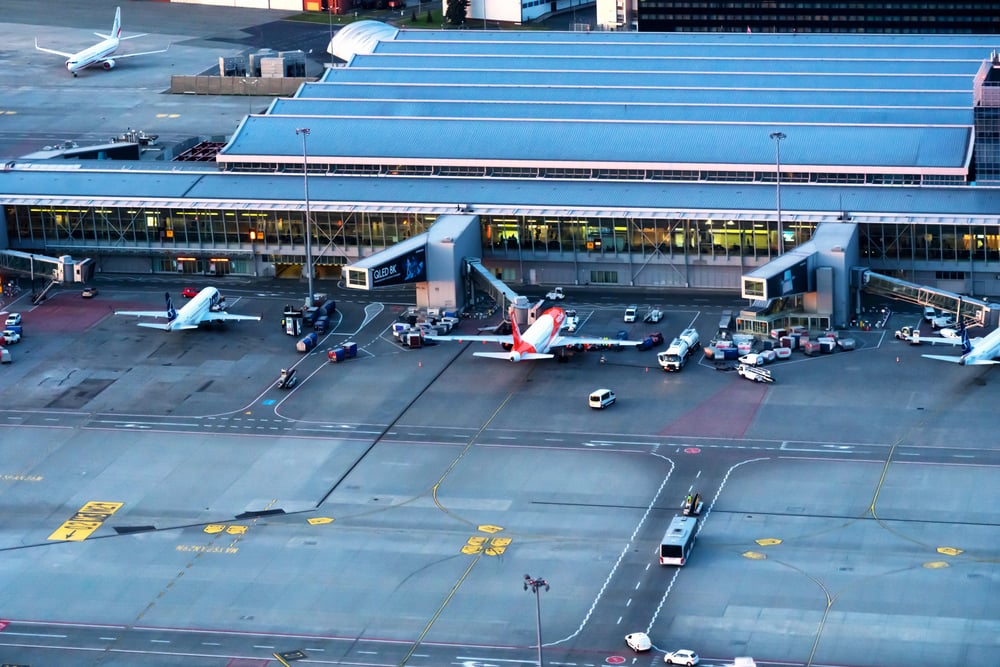
Down at the edge of our planet, a runway made only of frozen ground supports the heaviest military planes on Earth. Two miles it spans, needed since thin air down there means wings need more room to work.
Snow drifts back across the surface almost as fast as crews can remove it. Vision plays tricks under the pale sky where everything looks smooth and level.
Scientists wait for deliveries that arrive only while this icy path stays open through the short warm stretch.
Teniente Vidal Airfield
At Teniente Vidal Airfield, Chilean pilots face some of the harshest skies anywhere above ground. Blasts of wind often rip past 100 mph without warning.
Built on a slab of frozen water, the landing strip moves slightly when temperatures rise or fall. Far from cities or hospitals, even small breakdowns can spiral fast into danger.
Help is hard to reach if something goes wrong mid-flight. Military aviators are the only ones who land here after long drills meant for survival-level flying.
Each trip demands full readiness – no exceptions.
Where Runways Meet Reality

High up, down low, tucked into cliffs – airports show up where you least expect. Human stubbornness takes flight when roads stop and travel must go on.
Not logic, but need pushes planes onto strips carved from rock, ice, or mountain edges. Tourism pulls flights to remote spots.
Trade demands access. Science needs entry points.
So wheels touch ground where it feels wrong. Wind howls, slopes tilt sharply, fog rolls in fast – and still the flights arrive.
No backup routes exist for those who live there. A smooth field far away sounds good mid-descent.
Yet each touchdown, shaky or steady, beats the odds just a little more. Geography fights back.
The weather disagrees. Still, metal meets earth again and again.
More from Go2Tutors!

- The Romanov Crown Jewels and Their Tragic Fate
- 13 Historical Mysteries That Science Still Can’t Solve
- Famous Hoaxes That Fooled the World for Years
- 15 Child Stars with Tragic Adult Lives
- 16 Famous Jewelry Pieces in History
Like Go2Tutors’s content? Follow us on MSN.