Animals that Migrate the Longest Distances
Something feels almost impossible about what these animals do each year. They leave familiar territory and travel thousands of miles through hostile conditions, guided by instincts humans barely understand.
Some cross entire oceans. Others traverse continents. And many won’t survive the journey.
But they keep doing it, generation after generation, following routes their ancestors traced long before humans existed. The distances some of these creatures cover make intercontinental flights look modest.
Arctic Tern: The Record Holder

The Arctic tern holds the migration record, and it’s not even close. These small seabirds travel roughly 44,000 miles each year, flying from Arctic breeding grounds to Antarctic feeding areas and back again.
That’s nearly twice the circumference of Earth. They experience more daylight than any other creature on the planet because they chase summer at both poles.
An Arctic tern that lives 30 years will fly enough distance to reach the moon and back. They do this while weighing about as much as a stick of butter.
The journey takes them across every ocean. They ride wind currents, rarely flapping their wings, conserving energy for the months-long expedition.
Young terns make this journey without parents to guide them—they just know where to go.
Bar-tailed Godwit: The Non-Stop Champion
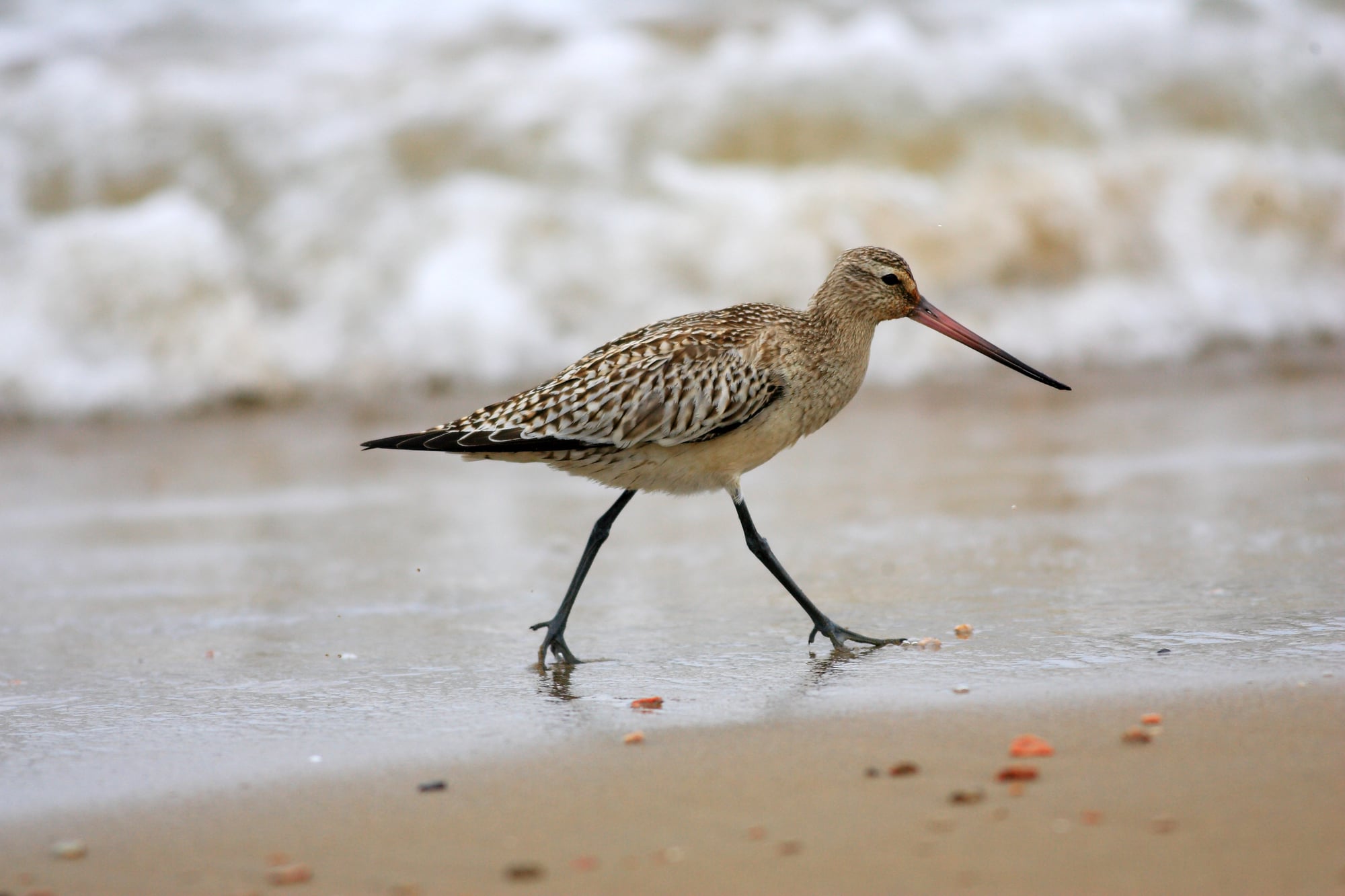
In 2020, a bar-tailed godwit named 4BBRW flew from Alaska to New Zealand without stopping. The journey took 11 days and covered 7,500 miles over open ocean.
No food. No water. No rest.
These birds shrink their internal organs before departure to reduce weight. Their liver, kidneys, and digestive system literally get smaller so they can carry more fat for fuel.
After landing, their organs grow back to normal size. They can’t swim, so stopping means death.
Evolution turned them into long-distance flying machines that do what should be physiologically impossible. Males make the journey first, followed by females, then juveniles who have never made the trip somehow find their way to the exact same beaches their parents use.
Gray Whale: Coastal Wanderer

Gray whales travel about 12,000 miles round trip between Arctic feeding grounds and Mexican breeding lagoons. They stick close to shore, which means you can sometimes watch them migrate past California beaches.
Mothers with newborn calves face the toughest challenge. The babies drink 50 gallons of milk daily and gain weight fast, but they still struggle in cold northern waters.
The mothers don’t eat for months while nursing, burning through fat reserves accumulated during summer feeding.
These whales remember the route. Scientists have tracked individuals using the same migration paths year after year, stopping at the same resting spots.
They’re teaching their calves a map that gets passed down through generations.
Humpback Whale: Singer of the Deep

Humpback whales migrate up to 5,000 miles between cold feeding waters and warm breeding areas. But distance doesn’t tell the whole story.
These animals barely eat for months while breeding and giving birth in tropical waters.
Males sing complex songs that can last 20 minutes and travel for miles underwater. Each population has its own song that changes slightly each year, like a slow-evolving cultural tradition.
Scientists still don’t fully understand why they sing, though it probably relates to mating.
The whales navigate using Earth’s magnetic field, following underwater highways marked by geological features. They know where they’re going even in the darkest depths.
Leatherback Sea Turtle: Ocean Crosser

Leatherback sea turtles regularly swim 10,000 miles or more, crossing entire ocean basins to reach nesting beaches. They’re the largest turtles on Earth and can dive deeper than 4,000 feet.
Females return to the same beach where they hatched decades earlier. How they remember and navigate back to one specific stretch of sand remains mysterious.
Their hatchlings will eventually do the same thing, finding their way back after years spent wandering the open ocean.
They eat mostly jellyfish, which means they need to consume massive quantities to maintain their size. A single leatherback can eat its body weight in jellyfish daily during peak feeding season.
Sooty Shearwater: Figure-Eight Flyer

Sooty shearwaters fly a figure-eight pattern across the Pacific Ocean, covering about 40,000 miles annually. They breed in New Zealand during the southern summer, then fly to feeding grounds in the North Pacific for the northern summer.
This route takes advantage of food availability in both hemispheres. They’re essentially chasing endless summer like the Arctic tern, but they do it over one ocean basin instead of pole to pole.
These birds can live 30 years or more, meaning the most experienced individuals have flown more than a million miles. They spend most of their lives at sea, coming to land only to breed.
Northern Elephant Seal: Deep Diver

Northern elephant seals migrate up to 13,000 miles annually between breeding beaches in California and Mexico and feeding grounds in the North Pacific. But they also dive repeatedly to depths exceeding 5,000 feet, adding vertical miles to their horizontal journey.
Males and females take different routes and target different prey. They spend eight months at sea, barely surfacing, living in near-total darkness.
During this time, they sleep while diving, resting half their brain at a time.
When they return to beaches to breed and molt, they fast completely for weeks. Bulls fight for territory and mating rights, sometimes going three months without eating.
Caribou: Land Migration Giants

Some caribou herds in Alaska and Canada travel over 3,000 miles annually between winter and summer ranges. The Porcupine caribou herd crosses mountain ranges, rivers, and tundra in one of the longest land migrations on Earth.
Pregnant females lead the migration to calving grounds. They time their arrival so calves are born when vegetation starts growing, giving newborns the best chance at survival.
The timing has to be perfect, and climate change is disrupting these ancient patterns.
Wolves, bears, and other predators follow the herds, picking off weak or young animals. The migration functions as a moving ecosystem, with dozens of species depending on caribou movements.
Monarch Butterfly: Generational Journey
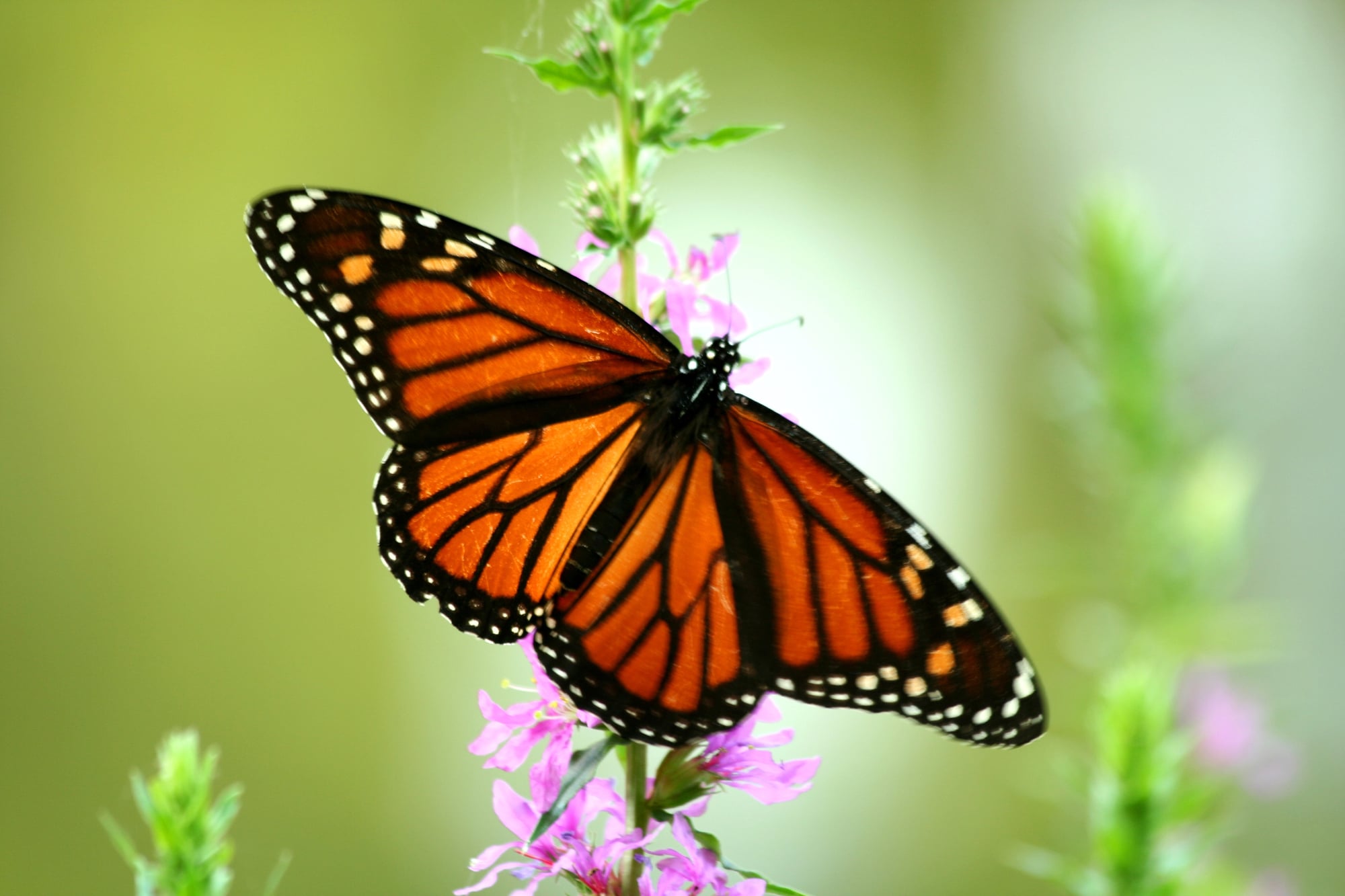
Monarch butterflies travel up to 3,000 miles from Canada to Mexico, which seems impossible for an insect that weighs half a gram. The journey takes multiple generations, making it unique among migrations.
No single butterfly completes the full round trip. The generation that flies south lives eight times longer than summer monarchs, surviving up to eight months to make the journey and overwinter in Mexican forests.
Their great-great-grandchildren will return north the following year.
They navigate using the sun’s position and Earth’s magnetic field. Scientists only discovered the Mexican overwintering sites in 1975, even though millions of butterflies had been using them for millennia.
Globe Skimmer Dragonfly: Insect Ocean Crosser

Globe skimmer dragonflies migrate roughly 11,000 miles across the Indian Ocean, island-hopping between Asia and Africa. This means these tiny insects can cross hundreds of miles of open water.
Like monarchs, no individual completes the journey. The migration spans multiple generations, with each cohort advancing the route.
They follow monsoon patterns, timing their movements to take advantage of seasonal winds and rain that creates breeding habitat.
They’re among the most widespread insects on Earth, found on every continent except Antarctica. Their ability to disperse across oceans explains how they colonized even remote islands.
Salmon: Swimming Against the Current

Pacific salmon migrate from ocean feeding grounds back to the exact stream where they were born, sometimes traveling hundreds of miles inland. They stop eating when they enter fresh water and rely entirely on stored energy.
The journey upstream requires tremendous effort. They leap up waterfalls, fight strong currents, and avoid predators ranging from bears to eagles.
Their bodies deteriorate during the journey as they burn through muscle tissue for fuel.
After spawning, they die. Their decomposing bodies fertilize the streams and forests, feeding the ecosystem that will nourish their offspring.
It’s a one-way trip that sustains entire regions.
Wildebeest: The Great Circular Route

Over a million wildebeest migrate in a circular route through Tanzania and Kenya, covering about 1,000 miles annually. This isn’t the longest migration by distance, but the sheer number of animals makes it spectacular.
They follow the rains, moving to areas where grass is growing. River crossings become bottlenecks where crocodiles wait, and many wildebeest drown or get trampled in the chaos.
Predators follow the herds, and the migration supports lions, hyenas, leopards, and wild dogs.
This migration has happened for millennia, shaping the Serengeti ecosystem. Without the wildebeest, the entire savanna would look different.
Christmas Island Red Crab: Synchronized March
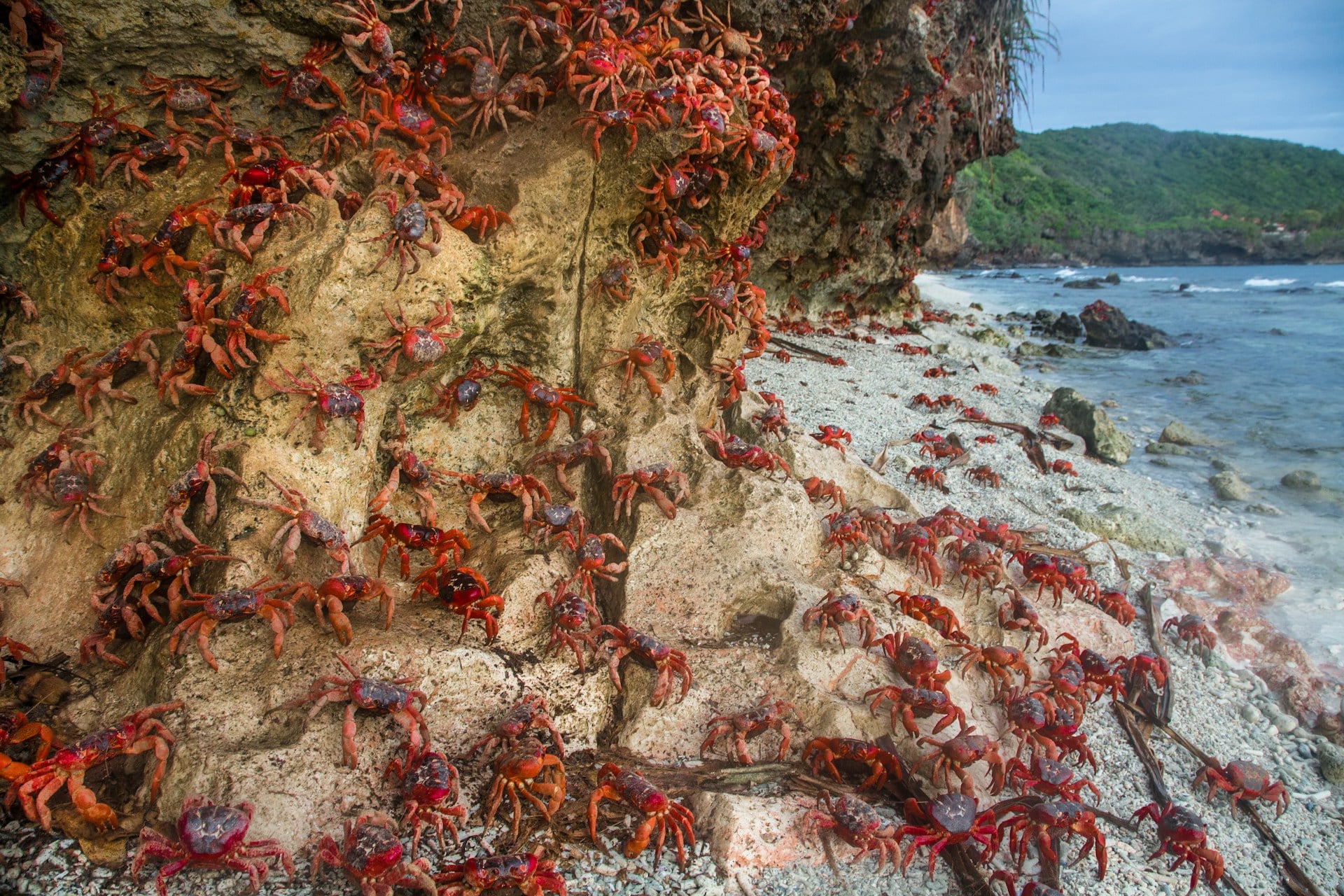
Christmas Island red crabs live in forests but must migrate to the ocean to breed. About 50 million crabs make this journey, turning roads red and creating one of nature’s most bizarre spectacles.
They time their migration to the lunar cycle, arriving at the coast during high tide to release eggs into the ocean. Males go first to dig burrows, followed by females who mate and then return to the forest.
The males stay longer, mating multiple times.
Baby crabs hatch in the ocean and spend weeks as larvae before coming ashore. Only a tiny fraction survive, but enough make it that the population remains stable.
The timing has to be exact, and the crabs know when to move even though they’ve never made the journey before.
The Map Inside

Something pushes creatures to cross vast distances, facing harsh risks along the way. How genes mix with training from elders and signals in nature remains partly unknown, though researchers keep digging deeper.
Birds can sense Earth’s invisible pull. Instead of sunlight, some navigate using star patterns at night.
Smell leads certain creatures home, like salmon finding where they began. Without help, young ones move forward, driven by inner cues people cannot fully understand.
Out here, power doesn’t sit where we think it does. Creatures move freely, slipping past fences humans call lines on maps, tracing paths older than cities ever dreamed of being.
What guides them – instinct shaped by endless time – is sharper than any machine we’ve stacked with parts and wires.
Still they move, even as forests vanish, weather shifts, winds change direction. Yet old pathways grow harder to follow.
Heat alters where meals can be found along the way. Roads and buildings cut through long-used trails.
Journeys shaped across countless generations now meet dangers that outpace nature’s slow adjustments.
More from Go2Tutors!

- The Romanov Crown Jewels and Their Tragic Fate
- 13 Historical Mysteries That Science Still Can’t Solve
- Famous Hoaxes That Fooled the World for Years
- 15 Child Stars with Tragic Adult Lives
- 16 Famous Jewelry Pieces in History
Like Go2Tutors’s content? Follow us on MSN.



