Architectural Styles That Are No Longer Popular
There’s something strange about standing in front of a building and feeling like you’ve stepped into a different era — not because the structure is old, but because no one would build it that way today. Architecture has always moved in cycles.
Styles rise, take over skylines, and then quietly fall out of favor as tastes shift, materials change, or the cultural moment that produced them passes. Some of these styles left behind beautiful buildings worth preserving.
Others left behind structures most cities wish they could quietly tear down. Here’s a look at the styles that had their moment — and then lost it.
Brutalism

Brutalism had a logic to it. The idea was honesty — raw concrete, exposed structure, no decorative facade pretending the building was something it wasn’t.
Between the 1950s and 1980s, it became the go-to style for universities, government offices, and social housing across Europe and North America. Then people had to live and work inside it.
The same concrete that looked bold in photographs turned gray and stained in real weather. The buildings felt cold, unwelcoming, and often poorly lit.
Critics called them oppressive. The public largely agreed.
Most cities that tore down their brutalist housing projects replaced them with something warmer, more human in scale. Some brutalist structures — like Boston City Hall or the Barbican in London — have found second lives as cult favorites, but the style itself isn’t coming back in any mainstream sense.
Googie Architecture

If you’ve ever pulled into an old roadside diner and noticed a roofline that angles upward like a rocket about to launch, you’ve seen Googie. It was America’s mid-century answer to the Space Age — swooping curves, dramatic overhangs, neon signs, and an overall aesthetic that said “the future is here and it’s open 24 hours.”
It was inseparable from car culture and optimism. Gas stations, coffee shops, bowling alleys, and motels embraced it through the 1950s and 60s.
When the cultural mood shifted and minimalism started winning, Googie looked garish and dated almost overnight. Most of the buildings from that era have been demolished.
The handful that survive are treated as novelties.
Postmodern Architecture
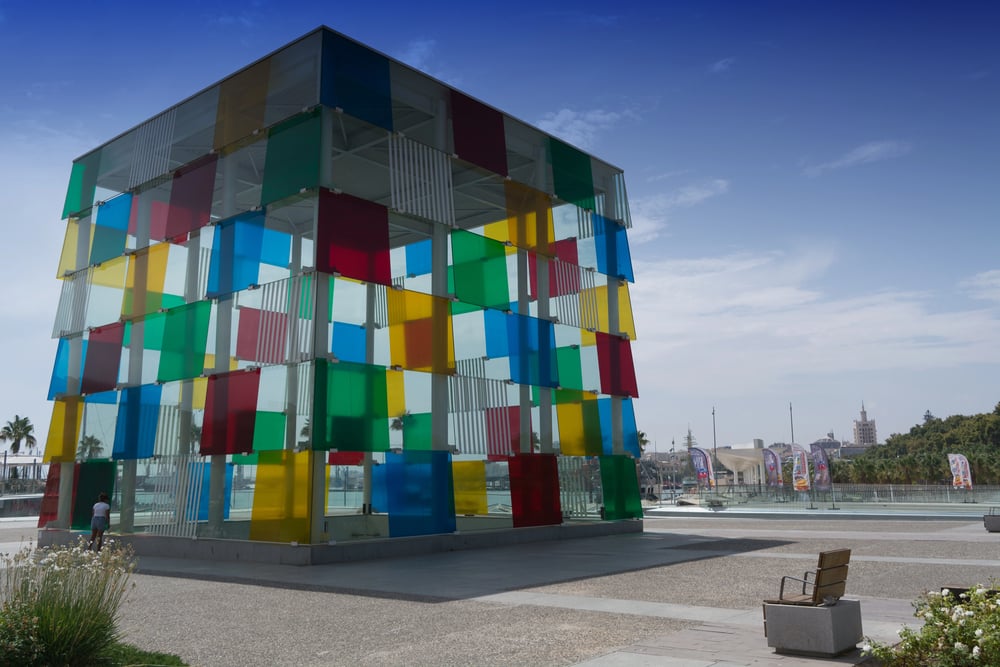
Postmodernism arrived in the 1970s as a direct reaction to the austerity of modernism. Where modernism said strip everything away, postmodernism said bring it all back — historical references, ornamentation, color, irony.
Buildings started sprouting classical columns that served no structural purpose, giant arches, and facades that seemed to wink at you. Philip Johnson’s AT&T Building in New York (now 550 Madison) was the flashpoint.
The Chippendale top on a glass skyscraper was either brilliant or absurd, depending on who you asked. By the 1990s, postmodernism had collapsed under its own weight.
The irony wore thin. The ornamental gestures started feeling cheap rather than clever. Today it occupies an awkward middle ground — too recent to be historic, too dated to feel current.
Soviet Constructivism
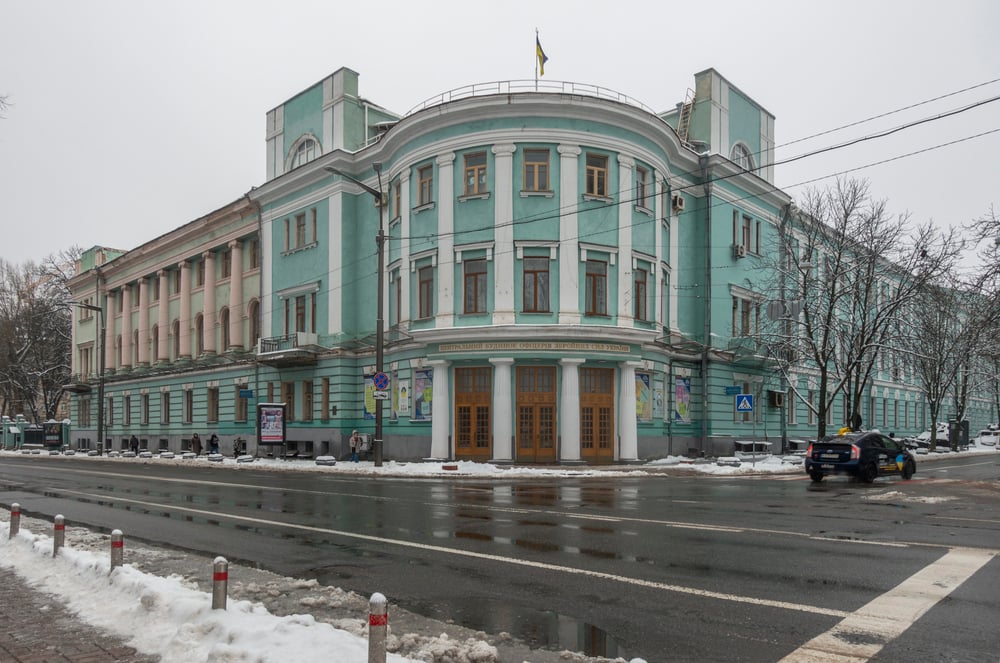
Constructivism was short-lived but striking. It emerged in the early Soviet Union during the 1920s, built around the idea that architecture should serve the revolution — geometric, industrial, stripped of any bourgeois decoration.
Buildings like the Rusakov Workers’ Club in Moscow had a sculptural, almost aggressive quality. Stalin didn’t like it.
By the 1930s, he pushed Soviet architecture toward a grandiose classical style now called Stalinist architecture, and Constructivism was effectively buried. It had maybe a decade of real influence.
Outside Russia, it informed later modernist movements, but as a practice it was extinguished rather than gradually fading.
Streamline Moderne

A cousin of Art Deco, Streamline Moderne took the aerodynamic shapes being applied to cars and trains in the 1930s and applied them to buildings. Horizontal lines, rounded corners, porthole windows, smooth surfaces — the whole vocabulary of speed translated into structures that didn’t move.
It was a Depression-era style in many ways, projecting optimism and forward motion at a time when both were in short supply. By the postwar period, the streamlining had started to feel theatrical, and modernism offered a cleaner language for the same underlying ideas.
Most Streamline buildings that survive are now protected as examples of a very specific moment in American design.
New Formalism

New Formalism was popular in the 1960s, particularly for civic and cultural buildings in the United States. It brought back classical symmetry and formal grandeur without directly copying historical styles — think of Lincoln Center in New York or the Los Angeles Music Center.
These were serious, imposing buildings meant to communicate that culture mattered. The style fell out of fashion fairly quickly.
Critics found it cold and monumental without being warm or welcoming. It represented a kind of institutional confidence that started feeling out of step as architecture moved toward more accessible, contextual approaches.
The buildings still stand, but nobody is designing in this mode anymore.
Tudor Revival

For a few decades in the late 19th and early 20th centuries, wealthy homeowners in Britain and America couldn’t get enough fake half-timbering. Tudor Revival borrowed the exposed wood framing and steeply pitched roofs of genuine Tudor buildings — the kind from the 1400s and 1500s — and applied them to suburban houses in 1910.
The results ranged from charming to absurd. You’d get decorative timbers that had no structural role at all, just painted onto stucco to evoke a history the building didn’t have.
Modernism made this kind of historical cosplay seem dishonest and silly. Tudor Revival houses still exist all over English-speaking suburbs, but the style stopped being built in any volume after the 1930s.
Metabolist Architecture

Japan in the 1960s produced one of the most visionary — and unrealized — architectural movements of the 20th century. Metabolism proposed that buildings should work like living organisms, with modular cells that could be replaced or expanded as the city grew and changed.
Structures would be permanent cores with replaceable capsule-like pods attached. The Nakagin Capsule Tower in Tokyo was the most famous example.
In practice, the capsules were never replaced as intended — the whole idea relied on a flexibility that the economics of construction couldn’t support. The style produced a handful of remarkable buildings and a lot of unrealized blueprints.
The Nakagin Tower itself was demolished in 2022. Metabolism remains hugely influential on architects today, but as a living practice it dissolved in the 1970s.
International Style

The International Style is both everywhere and nowhere. Its influence shaped so much of what gets built that it’s hard to see it clearly, but the pure form — the white cuboid building with flat roof and ribbon windows that Le Corbusier and the Bauhaus promoted in the 1920s — has been abandoned even by architects who revere it.
The style was idealistic. The idea was that good design should transcend culture and geography, that a well-designed building should look the same in Paris or Bombay.
That turned out to be both its strength and the reason it fell apart. By ignoring local climate, materials, and context, International Style buildings often aged poorly and felt alienating.
What followed — regionalism, critical regionalism, contextualism — was largely a correction to its excesses.
Art Nouveau

Out of nowhere, Art Nouveau swept through cities just after 1900, restless and vivid. Structures began bending into soft waves, blooming with leafy patterns, tangled lines crawling across facades.
Think of Hector Guimard’s Paris Metro stops – those curling frames in moss-colored metal shaped like stems reaching skyward. Few designs from that time stick in memory quite like them.
Back-breaking work and high costs marked its making, leaving it exposed when money troubles struck in the 1900s. Even so, people began turning away from lavish designs just as this one thrived on extravagance.
Sharp edges and open spaces came along, drawing a line under everything it stood for. By the time anyone cared to save them, most structures had already been torn down during postwar rebuilds.
Now, those still standing get treated like rare finds.
Deconstructivism

Though rooted more in theory than mass appeal, deconstructivism shaped several iconic late-1900s structures – like Gehry’s Guggenheim in Bilbao, Libeskind’s Berlin museum for Jewish history, and early designs by Zaha Hadid. Instead of balance or wholeness, the approach leaned into broken forms, deliberate clashes.
From chaos came form. Not peace, but tension guided the lines. Order gave way to surprise.
Starting small meant growth stalled early on. Moving through a city made of broken shapes and leaning walls often felt confusing, even frustrating.
For special structures like museums or theaters, that confusion sometimes added meaning. Elsewhere, though, the approach clearly fell short.
With time, many designers shifted toward softer forms, letting sharp edges fade. Their later work showed calm instead of a clash.
High-Tech Architecture

Outside began the pipes. During the seventies, some architects thought showing what held buildings up could feel truthful, almost thrilling.
Take Paris’s Pompidou Centre – its skeleton and veins run across the front, painted bright. Escalators twist upward in glass tubes. Ducts snake along walls in blue, air routes marked in yellow, water paths in green.
What usually hides inside now stands clear, like a sketch come to life. For a time, it really did feel exciting.
Yet those structures demanded endless upkeep, while their visible pipes and wires wore down, looking less cool, more worn out. Over time, pieces of the look trickled into office towers – skylit lobbies here, bare girders there – though never quite capturing that raw honesty of flipped interiors.
A sharp turn in design, it held strong for roughly two decades before fading like an echo. Then silence.
Egyptian Revival

Strange fascination gripped the West with Egypt’s built world. Following Napoleon’s arrival there during 1798, echoes of ancient forms began showing up far beyond its borders.
Across Europe and later North America, buildings started wearing Pharaonic signs. Obelisks rose beside city streets, sloped stone walls framed solemn spaces. Cemeteries leaned into the look most fully. Lotus-shaped pillars held up roofs where needed. Glyph-like carvings traced across surfaces quietly. Temples for money and temples for prayer borrowed similar lines.
A gate at the Grove Street Cemetery in New Haven still stands much like it did long ago. Yet the design never really served a practical purpose – more about meaning.
Shapes from ancient Egypt hinted at lasting presence and secrets hidden deep, so they suited tombs just fine but felt out of place elsewhere. When people stopped finding it fresh, the look slipped away fast, lingering only where symbols mattered most: among brotherhood halls and stone burial houses.
When Buildings Last Beyond Their Time

It strikes you how often old styles circle around again. A strong crowd still stands by Brutalist forms.
Where Metabolism once dreamed, today’s builders borrow its rhythm for eco-friendly modules. You spot Art Nouveau flourishes tucked into modern rooms.
Ends seldom close in architecture – more often, they curl like paper in flame. Out of favor now, those designs weren’t flawed.
A time shaped each one, tightly – when the era shifted, so did their relevance. Leaving them aside isn’t such a poor outcome.
Pass by several, stand near them awhile, and slowly they stop feeling like leftovers. They feel instead like notes passed forward – same concerns etched into brick and steel: how should walls meet sidewalks, serve neighborhoods, shelter lives within?
Answers varied back then. Nothing more.
More from Go2Tutors!

- The Romanov Crown Jewels and Their Tragic Fate
- 13 Historical Mysteries That Science Still Can’t Solve
- Famous Hoaxes That Fooled the World for Years
- 15 Child Stars with Tragic Adult Lives
- 16 Famous Jewelry Pieces in History
Like Go2Tutors’s content? Follow us on MSN.