Art Techniques Lost to History
History has the annoying tendency to forget things.
Whole civilizations produced works that continue to amaze us today, perfected methods that took generations to master, and then the knowledge simply disappeared.
Sometimes the craftspeople just took their secrets to the grave, sometimes records were destroyed by war, and sometimes materials became scarce.
What’s left are structures, artwork, and artifacts that are difficult for contemporary specialists to recreate despite our sophisticated technology.
These fifteen artistic methods have been lost to time.
Damascus Steel

The legendary blades of Damascus steel could supposedly cut through silk scarves as they fell through the air and maintain their edges after cleaving through stone or metal.
These swords, forged primarily between 300 and 1750 AD, featured distinctive wavy patterns and were made from wootz steel imported from southern India.
The technique disappeared by the early 1800s, likely because the specific ore deposits containing crucial trace elements like vanadium, chromium, and manganese ran dry.
Modern metallurgists spent decades trying to recreate the exact microstructure, and in 1998 researcher J.D.
Verhoeven replicated the patterned microstructure of wootz steel, though the full historical Damascus technique remains partially debated.
Roman Concrete

The Romans built structures over 2,000 years ago that still stand today, while modern concrete often crumbles after just a few decades.
The Pantheon’s massive unreinforced dome, dedicated in 128 AD, remains intact without any steel support—something no modern engineer would attempt.
The secret lay in their mixing process called hot mixing, where quicklime was combined with volcanic ash, creating lime clasts throughout the concrete.
These clasts gave the material self-healing properties—when water seeped into cracks, the lime dissolved and recrystallized, filling gaps up to 0.6 millimeters wide.
Researchers Admir Masic and Linda Seymour co-led an MIT study published in January 2023 that confirmed this self-healing mechanism, but the concrete industry remains resistant to change due to cost concerns.
Like Go2Tutors’s content? Follow us on MSN.
Egg Tempera Painting

Before oil paints came in convenient tubes, artists mixed egg yolks with pigments to create luminous, long-lasting colors.
This technique dominated European painting until the Renaissance, producing works that remain vibrant centuries later.
The process required grinding pigments by hand, mixing them with fresh egg yolk, and applying them in thin layers that dried within minutes.
Artists abandoned tempera because it demanded meticulous planning and offered no room for error—once applied, you couldn’t blend or adjust colors the way you could with oils.
However, the technique never fully disappeared—icon painters, especially in Orthodox traditions, continued using it into the present.
Contemporary artists are rediscovering tempera’s unique qualities, finding that its quick-drying nature forces a more deliberate approach to painting.
True Fresco

Michelangelo’s Sistine Chapel ceiling showcases true fresco (buon fresco) at its finest—painting directly onto wet plaster so pigments bond permanently with the wall itself.
Artists had to work in sections called giornate, completing each area before the plaster dried, which gave them maybe eight hours per section.
This technique largely disappeared because it’s unforgiving and requires extraordinary skill and confidence.
You can’t erase mistakes or paint over them later.
Modern artists attempting fresco face the additional challenge that few plasterers understand the precise consistency needed, and the chemical composition of modern lime differs from historical varieties.
Gold Leafing

Medieval manuscripts and religious art glowed with real gold leaf so thin that 250,000 sheets stacked together would measure just one inch (approximately 0.1 micrometers or 100 nanometers per sheet).
Craftspeople hammered gold into these incredibly thin sheets, then applied them using techniques requiring monk-like patience and steady hands.
The practice declined because gold is expensive and the application process is tedious—a single breath can send sheets floating away.
Artisans working with gold leaf today must learn through apprenticeship because the technique involves subtle hand movements and pressure that can’t be adequately described in writing.
Like Go2Tutors’s content? Follow us on MSN.
Encaustic Painting

The ancient Greeks and Romans painted with hot beeswax mixed with pigments, creating luminous works with incredible depth and texture.
Fayum mummy portraits from circa 100 BCE to 250 CE, painted using encaustic, still display remarkable color saturation.
The technique faded because it’s messy, requires heating equipment, and poses fire hazards.
Artists heat the wax, apply it quickly before it cools, and then reheat the surface to fuse layers together.
Contemporary practitioners love encaustic for its sensory qualities—the smell of beeswax alone attracts some artists—and because it allows embedding objects directly into the surface.
Scrimshaw

Sailors on whaling ships spent months at sea engraving intricate designs onto whale bones and teeth, creating an art form that combined incredible detail with maritime themes.
This craft flourished during the 19th century (beginning around 1817) when whaling was a major industry, peaking in the mid-1800s.
The technique nearly disappeared as whaling declined and regulations banned the sale of whale ivory.
Modern scrimshaw artists use alternative materials like bone, antler, and synthetic ivory, adapting traditional methods to contemporary ethics while preserving the engraving techniques that sailors perfected during endless ocean voyages.
Medieval Manuscript Illumination

Creating vibrant blue pigment from lapis lazuli (which produced ultramarine blue that cost more than gold in some periods) or applying impossibly thin gold leaf to parchment required recipes passed down through families and guilds.
These closely guarded secrets died with their practitioners.
Modern calligraphers analyzing medieval manuscripts with spectrographic analysis have spent decades identifying mineral compositions and experimenting with historical preparation methods.
The process revealed surprising sophistication—manuscript makers understood chemistry in ways that seem almost alchemical, grinding minerals to precise particle sizes and mixing them with binders whose recipes varied by region and era.
Like Go2Tutors’s content? Follow us on MSN.
Kintsugi

Japanese artisans developed this technique of repairing broken ceramics with lacquer mixed with gold powder, making repaired pieces more beautiful than before they shattered.
The practice embodies the philosophy that breakage and repair are part of an object’s history rather than something to disguise.
The traditional lacquer used is urushi, tree sap from the lacquer tree (Toxicodendron vernicifluum), not rice-based lacquer.
Fewer young Japanese people pursue this craft each year because it requires decades of apprenticeship to master lacquer work.
Third-generation practitioners like Muneaki Shimode continue the tradition, but the lengthy training period and specialized knowledge make it increasingly rare as modern lifestyles offer quicker career paths.
Lost Wax Bronze Casting
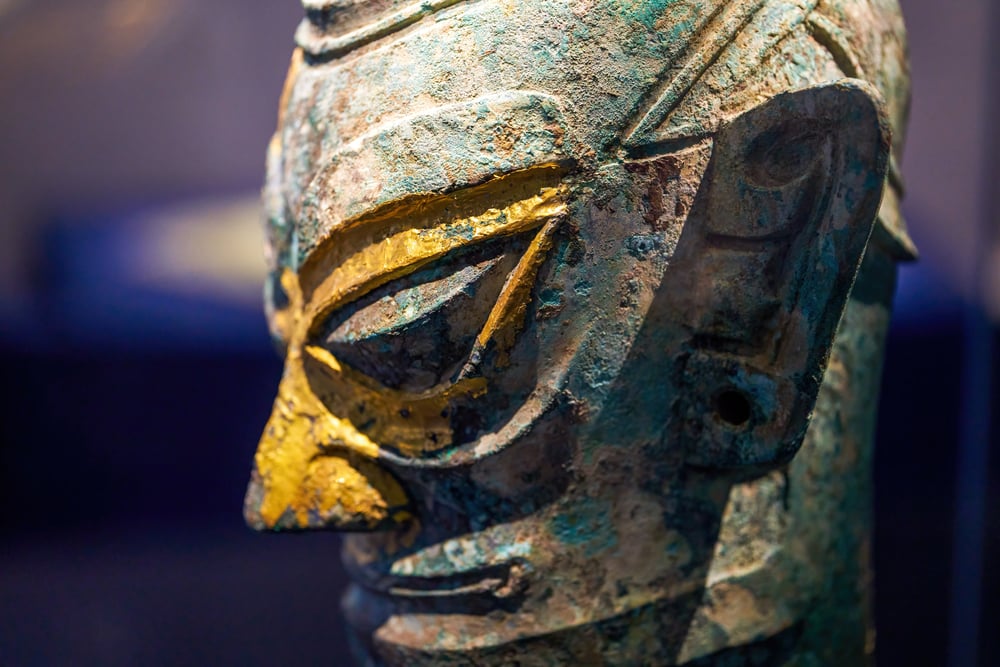
This ancient technique, dating back to Mesopotamia and Egypt around 3,000 BCE, was revived and refined by Italian foundries during the Renaissance, who developed sophisticated methods for casting bronze sculptures using wax models that melted away during the process.
The Fonderia Artistica Battaglia Milano, Italy’s oldest bronze foundry, survived wars and a century of social upheaval while maintaining these traditional methods.
The technique involves creating a wax model, encasing it in a ceramic shell, melting out the wax, and pouring molten bronze into the cavity.
Modern foundries still use lost wax casting, but few employ the exact traditional procedures that old Italian masters developed through generations of experimentation and refinement.
Metalpoint Drawing

Renaissance artists like Leonardo da Vinci and Albrecht Dürer drew with silver, gold, or copper styluses on specially prepared surfaces, creating delicate lines of incredible precision.
This technique produced drawings with subtle tonal variations impossible to achieve with graphite.
The practice largely disappeared after the Renaissance because it’s unforgiving—you can’t erase metalpoint marks.
Digital microscopy now allows contemporary artists to study historical metalpoint works in unprecedented detail, revealing exactly how masters achieved their effects.
Modern preparation compounds for the drawing surface have improved durability, making this delicate medium accessible to artists willing to embrace its permanence.
Like Go2Tutors’s content? Follow us on MSN.
Pattern Welding

European blacksmiths during the Middle Ages folded and twisted different types of steel together to create blades with distinctive patterns and superior strength.
This technique, which had been used earlier by the Celts and Vikings (circa 200 BCE to 900 CE), emerged in medieval Europe as an attempt to replicate Damascus steel after Crusaders encountered Middle Eastern blades.
The process involved heating narrow strips of iron and steel, hammering them together, folding the metal repeatedly, and forging it into blades.
Pattern welding increased blade strength but never quite matched true Damascus steel.
The technique faded as better steel production methods emerged, though modern bladesmiths have revived it as an art form rather than a practical necessity.
Turkish Marbling
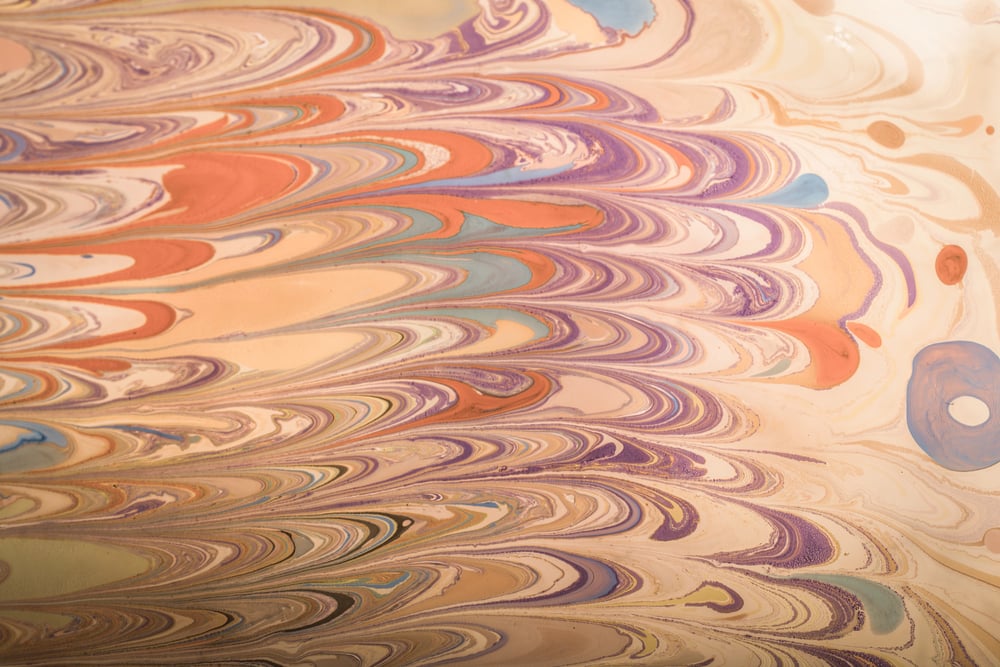
Ottoman artists floated paints on thickened water, creating swirling patterns that they transferred onto paper in designs impossible to replicate exactly.
Each marbled sheet was unique, with the unpredictability being part of the art’s appeal.
The technique, known as Ebru, developed in Central Asia in the 15th century and reached Ottoman Turkey by the 1600s, eventually spreading throughout Europe where it adorned book covers and decorative papers.
Traditional marbling requires preparing the water bath with precise consistency, mixing paints with ox gall to help them float, and developing an intuitive sense of how colors will interact.
Contemporary artists are reviving marbling for fashion, ceramics, and large-scale installations, embracing the chaos that perfectionists find challenging.
Natural Pigment Production

Artists once ground their own colors from minerals, plants, and insects, understanding chemistry in practical rather than scientific terms.
The knowledge of which rocks produced which colors, how finely to grind them, and what binders worked best was accumulated over centuries.
Synthetic pigments replaced natural ones because they’re cheaper, more consistent, and less likely to be poisonous.
Digital spectroscopy now allows researchers to analyze historical pigments and recreate authentic formulations.
Companies like Kremer Pigments (based in Germany and founded in 1977) sell hand-ground natural colors to artists seeking historical accuracy in restoration work or wanting to experience the tactile connection between raw materials and finished paintings.
Like Go2Tutors’s content? Follow us on MSN.
Japanese Sword Polishing

This craft, considered distinct from sword making itself, involves up to ten to twelve main grades of progressively finer stones applied in specific sequences.
When metallurgists analyzed historical Japanese blades, they discovered the polishing process actually alters the metal’s surface structure at a microscopic level, creating optical effects that enhance aesthetic properties.
This knowledge took contemporary practitioners years to rediscover through trial and error.
The technique transforms a functional weapon into an object of contemplation, with the polish revealing the subtle patterns in the steel and the distinct line (hamon) between different metal zones in the blade created by differential hardening.
The Thread Between Past and Present
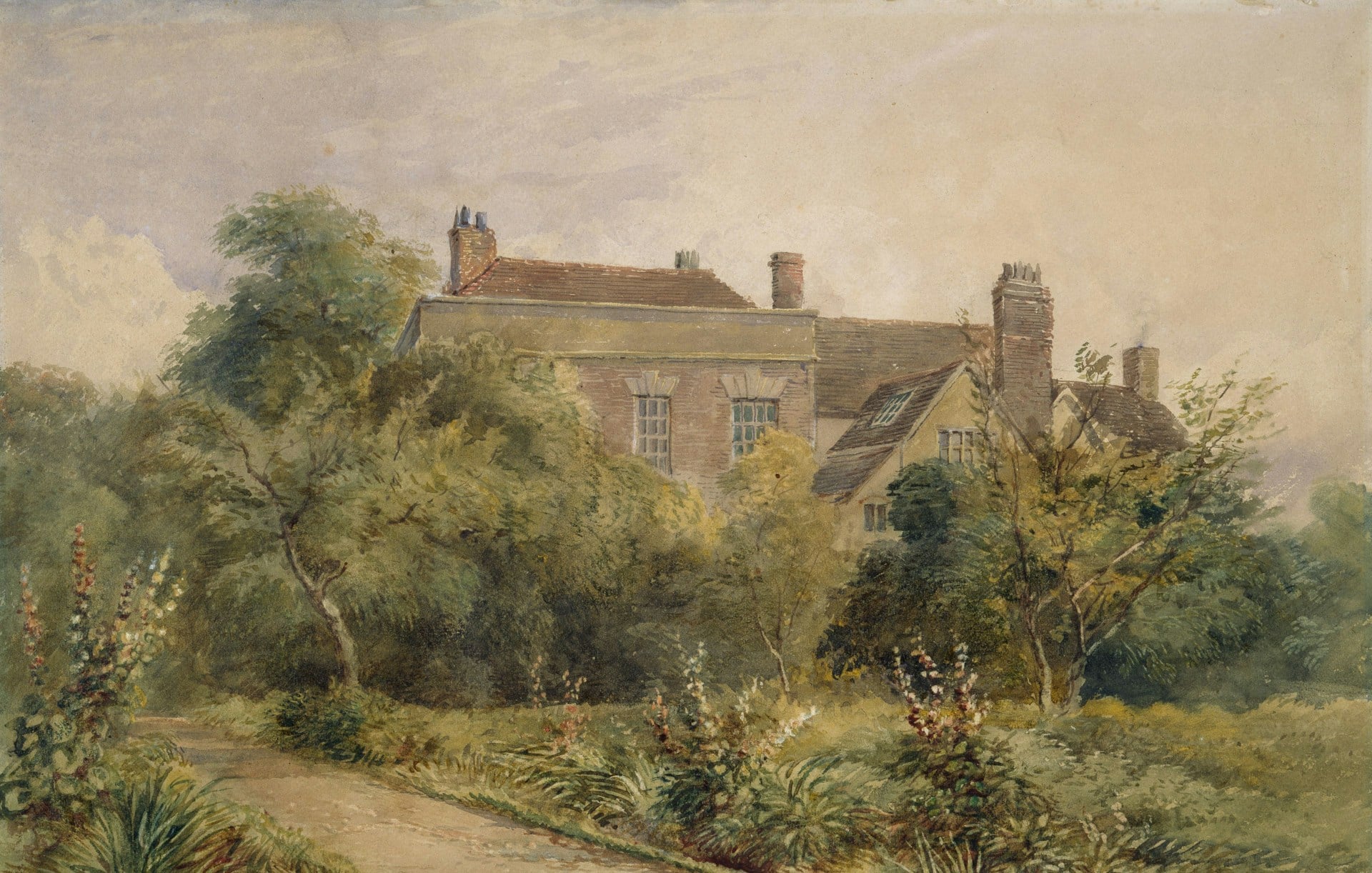
We are reminded that progress isn’t always linear by these lost techniques.
Sometimes we give up on methods not because we’ve discovered something better, but rather because we’ve run out of patience, materials have vanished, or financial constraints force us to use less expensive alternatives.
In addition to conserving history, the craftspeople reviving these crafts are reclaiming methods of production that encourage more methodical, slower creative processes.
Techniques that take years to master and cannot be hurried are revolutionary in our age of instant results and digital shortcuts.
If we are willing to listen, the past can teach us valuable lessons.
More from Go2Tutors!

- The Romanov Crown Jewels and Their Tragic Fate
- 17 Halloween Costumes Once Considered Taboo
- Famous Hoaxes That Fooled the World for Years
- 15 Child Stars with Tragic Adult Lives
- 16 Famous Jewelry Pieces in History
Like Go2Tutors’s content? Follow us on MSN.



