Biggest Airplanes Ever Made
When you stand beneath a jumbo jet at an airport, the size hits you. But some aircraft make even the biggest commercial planes look modest.
Engineers have pushed the boundaries of what can fly, building machines that seem to defy logic. These giants serve different purposes—moving cargo, carrying passengers, or simply proving what’s possible when ambition meets physics.
Let’s explore the largest airplanes ever built and the feats of engineering behind them.
Antonov An-225 Mriya

This Ukrainian cargo plane held the title for the heaviest aircraft ever built. At 640 tons maximum takeoff weight, nothing else came close.
The An-225 could haul payloads that other aircraft couldn’t touch—space shuttle components, industrial equipment, emergency supplies. It had six engines and a wingspan that stretched over 290 feet.
The plane was destroyed during the 2022 conflict in Ukraine, ending its remarkable service history. Before that, it flew missions worldwide, often as the only aircraft capable of handling certain oversized cargo.
Engineers designed it specifically to transport Soviet space program components, including the Buran spacecraft. Only one was ever completed, making it irreplaceable.
Stratolaunch
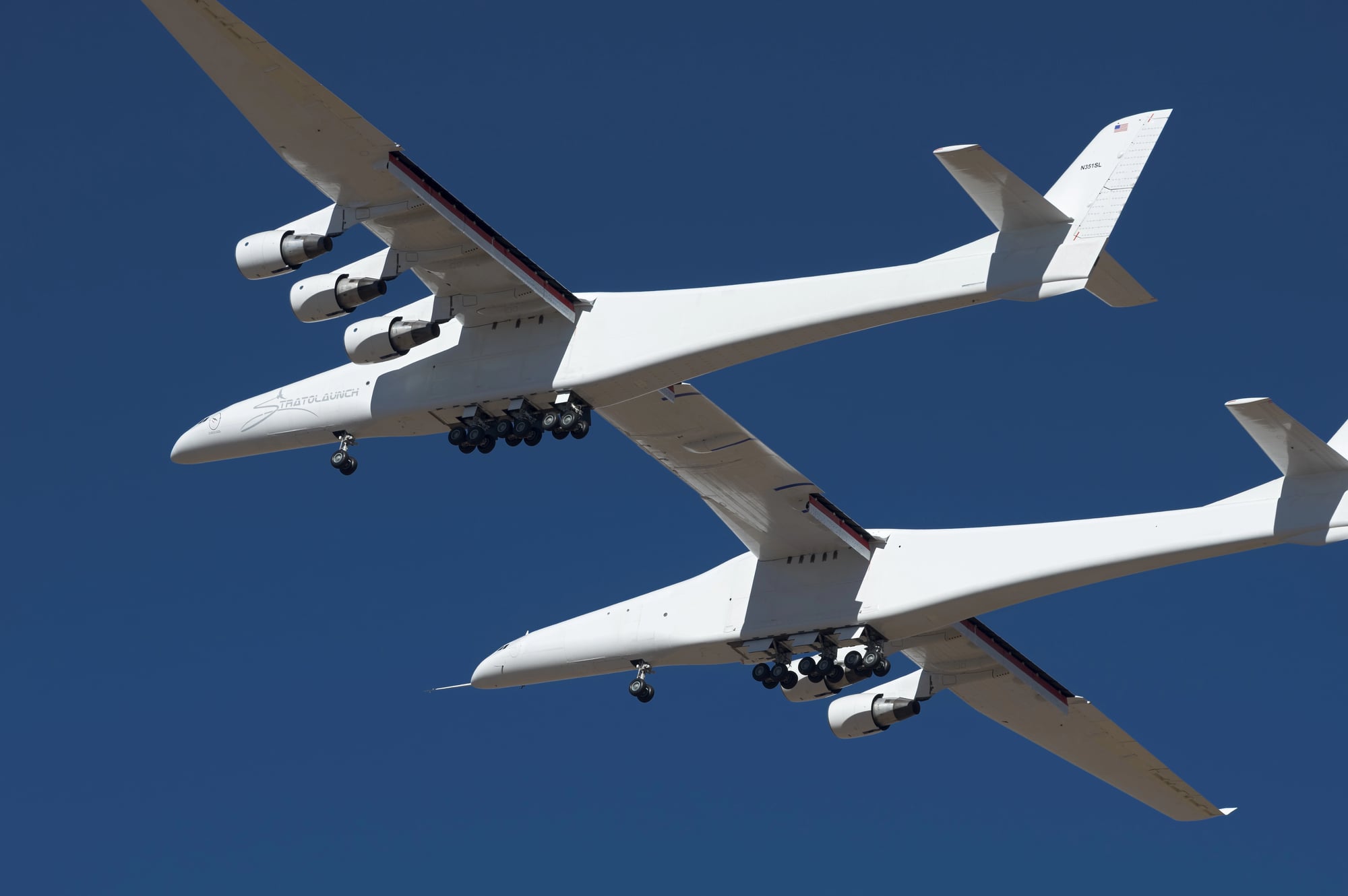
If you measure by wingspan alone, Stratolaunch wins. This aircraft stretches 385 feet from tip to tip—wider than a football field.
Two separate fuselages connect to a massive central wing section, creating a design unlike anything else in the sky.
Stratolaunch carries rockets to high altitude, then releases them for launch into space. This approach offers advantages over traditional ground launches, including flexibility in launch locations and reduced atmospheric drag.
The aircraft completed its first flight in 2019 and continues development for commercial space operations.
Airbus A380

The A380 is the largest passenger aircraft ever built, with two full-length decks running the entire length of the fuselage. Airlines can configure it to carry over 800 passengers, though most opt for more comfortable layouts with around 500 seats.
Its size created challenges. Many airports needed infrastructure upgrades—bigger gates, reinforced taxiways, specialized ground equipment. Emirates became the largest operator, but the economics proved tricky.
Airbus stopped production in 2021 after selling fewer than 300 units, as airlines preferred smaller, more flexible twin-engine planes that could fill more routes profitably.
Hughes H-4 Hercules
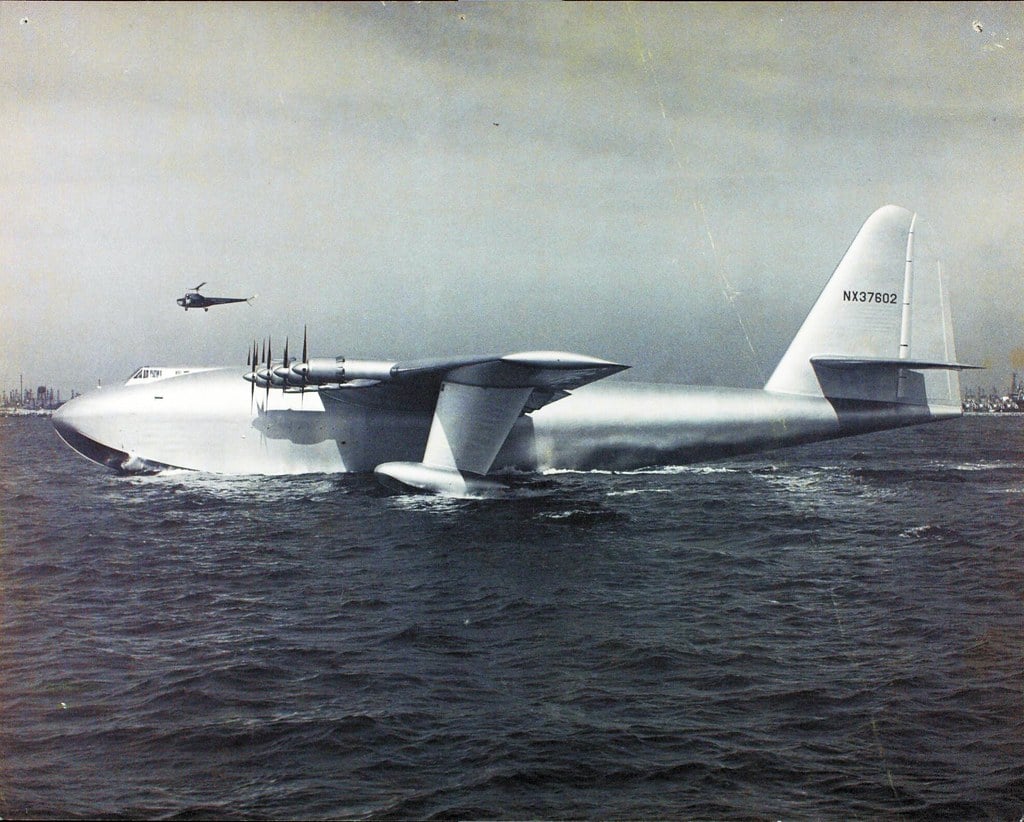
People call it the Spruce Goose, though it was actually made of birch. Howard Hughes designed this massive flying boat during World War II to carry troops and equipment across the Atlantic.
The wingspan measured 320 feet—a record that stood for decades.The plane flew exactly once in 1947 at 70 feet altitude over Long Beach Harbor.
Critics called it a waste of resources, but the engineering achievements were real. Building something that large from wood required innovations in construction techniques and materials.
The aircraft now sits in a museum in Oregon as a monument to ambition exceeding practical need.
Antonov An-124 Ruslan
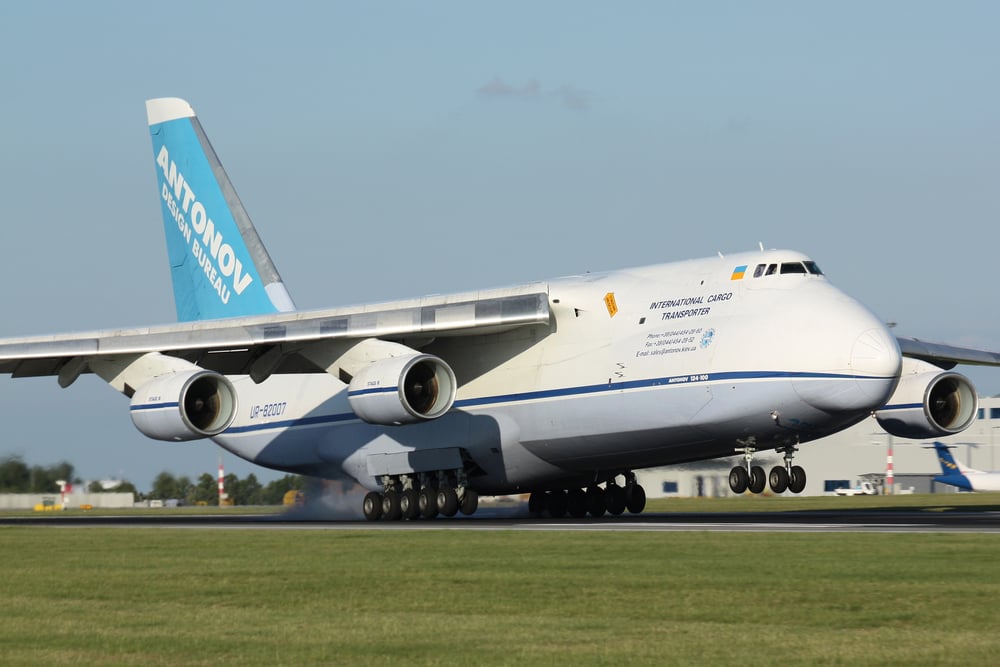
This Soviet-era cargo plane still serves military and commercial operators worldwide. At 405 tons maximum takeoff weight, it ranks among the largest aircraft flying today.
The An-124 can carry tanks, helicopters, and other oversized equipment. Its nose and tail open, allowing drive-through loading of vehicles.
Commercial cargo companies lease An-124s for specialized jobs—moving oil equipment, delivering emergency aid, and transporting factory machinery. The plane offers capabilities that standard cargo aircraft can’t match.
Lockheed C-5 Galaxy

The U.S. military’s largest transport aircraft remains in service after more than 50 years. The C-5 can carry two M1 Abrams tanks or six Apache helicopters in its cavernous cargo bay.
It features nose and tail loading plus a kneeling landing gear system for easier loading. Early versions suffered wing cracks and structural problems, but later upgrades improved reliability.
The Galaxy became essential for rapid military deployments, capable of intercontinental missions with massive loads. Modern variants remain in active service.
Scaled Composites Model 351 Stratolaunch

This specific version refers to the production aircraft commissioned by Paul Allen. The twin-fuselage design came from Burt Rutan’s experimental aircraft team.
It uses components from two Boeing 747s for fuselages and engines, reducing development costs and time. Six 747 engines provide the power needed to carry rocket payloads up to 500,000 pounds.
he design allows a central mounting point for rockets released at altitude.
Boeing 747

The 747 changed air travel when it entered service in 1970. At the time, it was twice the size of any other commercial aircraft.
The distinctive hump-shaped upper deck made it instantly recognizable. It served as Air Force One, hauled cargo worldwide, and carried millions of passengers.
Production ran for over 50 years, ending in 2023. Its size allowed nonstop flights between distant cities that previously required connections.
Convair XC-99

This experimental cargo plane from the late 1940s took wings, engines, and tail from the B-36 bomber and added a double-deck fuselage. It could carry 100,000 pounds of cargo or 400 troops.
Only one XC-99 was built. The Air Force used it during the Korean War, proving the concept of large military transports.
The design influenced later cargo aircraft, even though it remained a one-off prototype.
Airbus Beluga XL

Airbus needed a way to transport aircraft components between factories. Standard cargo planes couldn’t handle wing sections or fuselage segments.
The Beluga XL—a modified A330 with a whale-like upper fuselage—solved the problem. The cargo bay measures over 23 feet in diameter, allowing two A350 wings at once.
The plane emphasizes volume over weight and is key for Airbus’s internal supply chain.
Boeing Dreamlifter
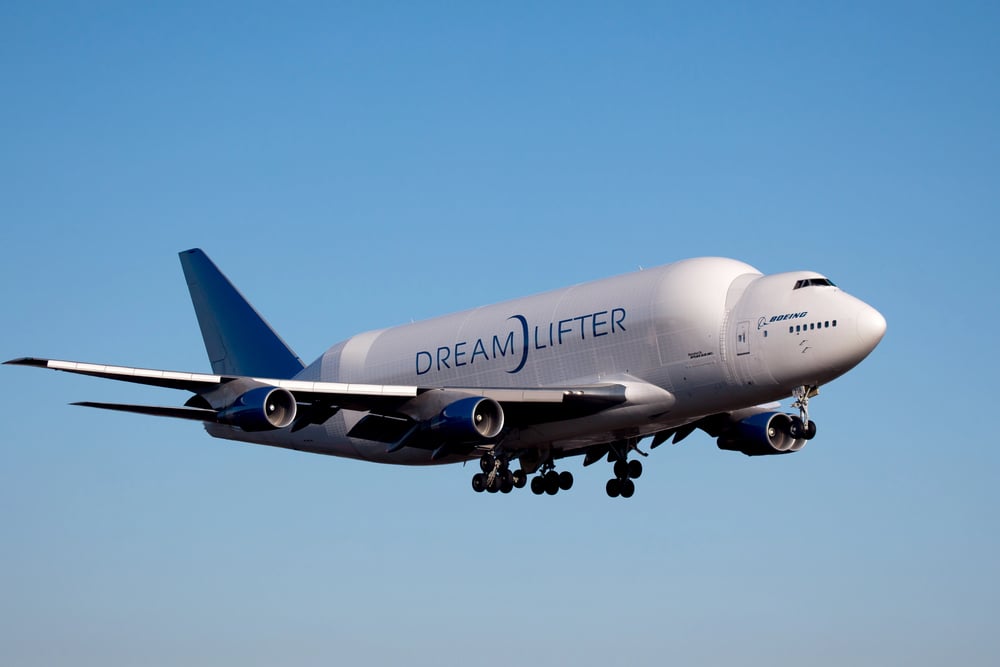
To transport 787 Dreamliner parts worldwide, Boeing converted four 747 freighters into Dreamlifters. A hinged tail section allows access to an oversized cargo bay three times larger than a standard 747 freighter.
The plane carries wings, fuselage sections, and other major assemblies, enabling frequent flights to keep production lines moving. Its bulbous upper fuselage may look ungainly, but it performs a critical function.
Boeing 777X

This plane combines size with advanced technology. It features the longest wingspan of any twin-engine commercial aircraft at 235 feet. Wingtips fold upward after landing to fit standard airport gates.
The 777X carries up to 426 passengers depending on configuration. It replaces aging 747s and 777s, offering similar capacity with better fuel efficiency.
It represents the current limit of twin-engine commercial aircraft design.
Tupolev ANT-20

This Soviet propaganda plane from the 1930s carried its own printing press and radio station. Eight engines powered it, six on the wings and two in push-pull configuration above the fuselage.
It could carry 64 passengers or serve as a mobile broadcasting center. The plane crashed in 1935 during a stunt, killing all aboard.
Only one was built, showcasing Soviet engineering ambitions of the era.
When Size Becomes Its Own Challenge

Building giant aircraft is impressive, but practical challenges are immense. Weight grows exponentially, requiring stronger structures, longer runways, bigger gates, and specialized equipment.
Fuel costs are astronomical. The future probably won’t see much larger aircraft.
Advances in engine efficiency and materials make smaller planes more capable and economical. But these giants proved what’s possible when engineers prioritize size over cost, expanding our understanding of what can fly.
More from Go2Tutors!

- The Romanov Crown Jewels and Their Tragic Fate
- 13 Historical Mysteries That Science Still Can’t Solve
- Famous Hoaxes That Fooled the World for Years
- 15 Child Stars with Tragic Adult Lives
- 16 Famous Jewelry Pieces in History
Like Go2Tutors’s content? Follow us on MSN.



