Biggest Machines Built by Humans
When it comes to building things, humans don’t do anything halfway. We’ve constructed machines so massive they make skyscrapers look like toys, devices so powerful they can move mountains or smash atoms into oblivion.
These engineering marvels exist for wildly different purposes—some dig for coal, others search for the secrets of the universe, and a few just need to carry really, really heavy stuff from point A to point B. Here is a list of 14 of the biggest machines ever built by humans.
Large Hadron Collider

The Large Hadron Collider is the largest particle accelerator ever built, which is a bit ironic since it was designed to study the tiniest things imaginable—subatomic particles. This machine sits about 328 feet underground near Geneva, Switzerland, and stretches 17 miles in circumference.
Scientists use it to smash particles together at nearly the speed of light, and it’s already helped confirm the existence of the Higgs boson, the particle that explains why matter has mass. There are even plans for a newer version that would be four times bigger.
Bagger 293

If you need to move a mountain, this is your machine. The Bagger 293 is a bucket-wheel excavator that holds the title of heaviest land vehicle on Earth, weighing in at a staggering 31.3 million pounds.
Standing 315 feet tall and stretching 738 feet long, it can move around 240,000 cubic meters of earth in a single day. Built by TAKRAF in Germany, this beast is primarily used in open-pit coal mining operations to strip away layers of earth and expose the coal deposits below.
Prelude FLNG

Floating off the coast of Australia is the world’s largest floating structure—a natural gas platform that took over 260,000 tons of steel to build. The Prelude FLNG measures 1,601 feet long and 243 feet wide, making it longer than the Empire State Building is tall.
Shell, KOGAS, and Inpex built this $12.6 billion facility to extract and process natural gas about 120 miles offshore. To put its size in perspective, it displaces about three times more water than a Nimitz-class aircraft carrier.
F60 Overburden Conveyor Bridge
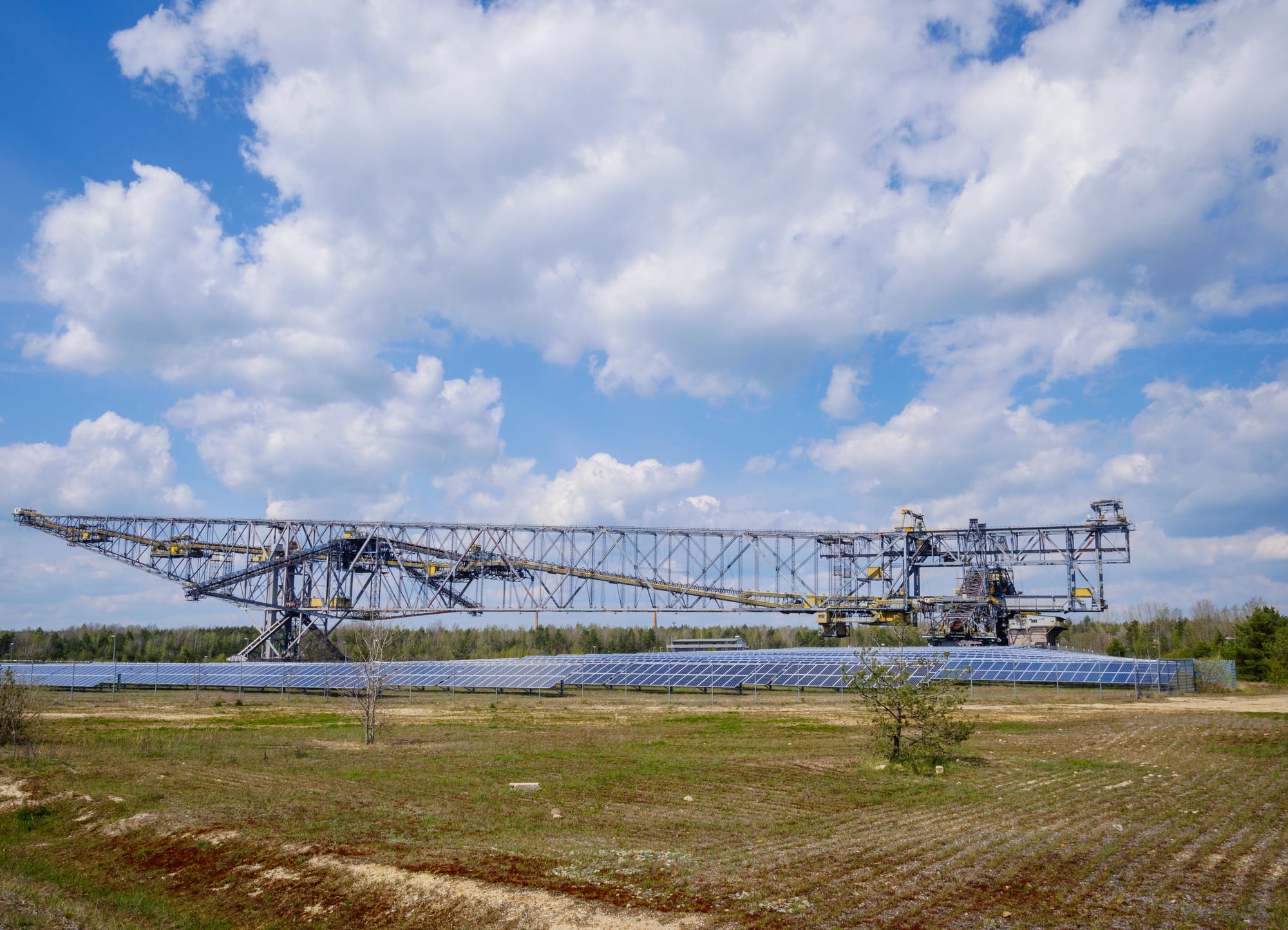
Germany really knows how to build big mining equipment. The F60 is the largest movable machine on Earth, stretching 1,647 feet long, 787 feet wide, and standing 262 feet tall.
Locals call it the ‘lying Eiffel Tower’ because it’s longer than that famous landmark. Built in the early 1990s by VEB TAKRAF Lauchhammer, this conveyor bridge was used in lignite coal mining to transport overburden—the dirt and rock sitting on top of coal seams.
Seawise Giant

This ship holds the record for the longest vessel ever built, and it went by more names than a secret agent—Seawise Giant, Happy Giant, Jahre Viking, Knock Nevis, and finally Mont. At 1,504 feet long, it was so massive that it couldn’t fit through the English Channel, the Suez Canal, or the Panama Canal.
The ship was severely damaged and sunk in shallow waters during the Iran-Iraq War but was salvaged and returned to service. It ended its career as a floating storage unit before being scrapped in 2010.
NASA Crawler-Transporter
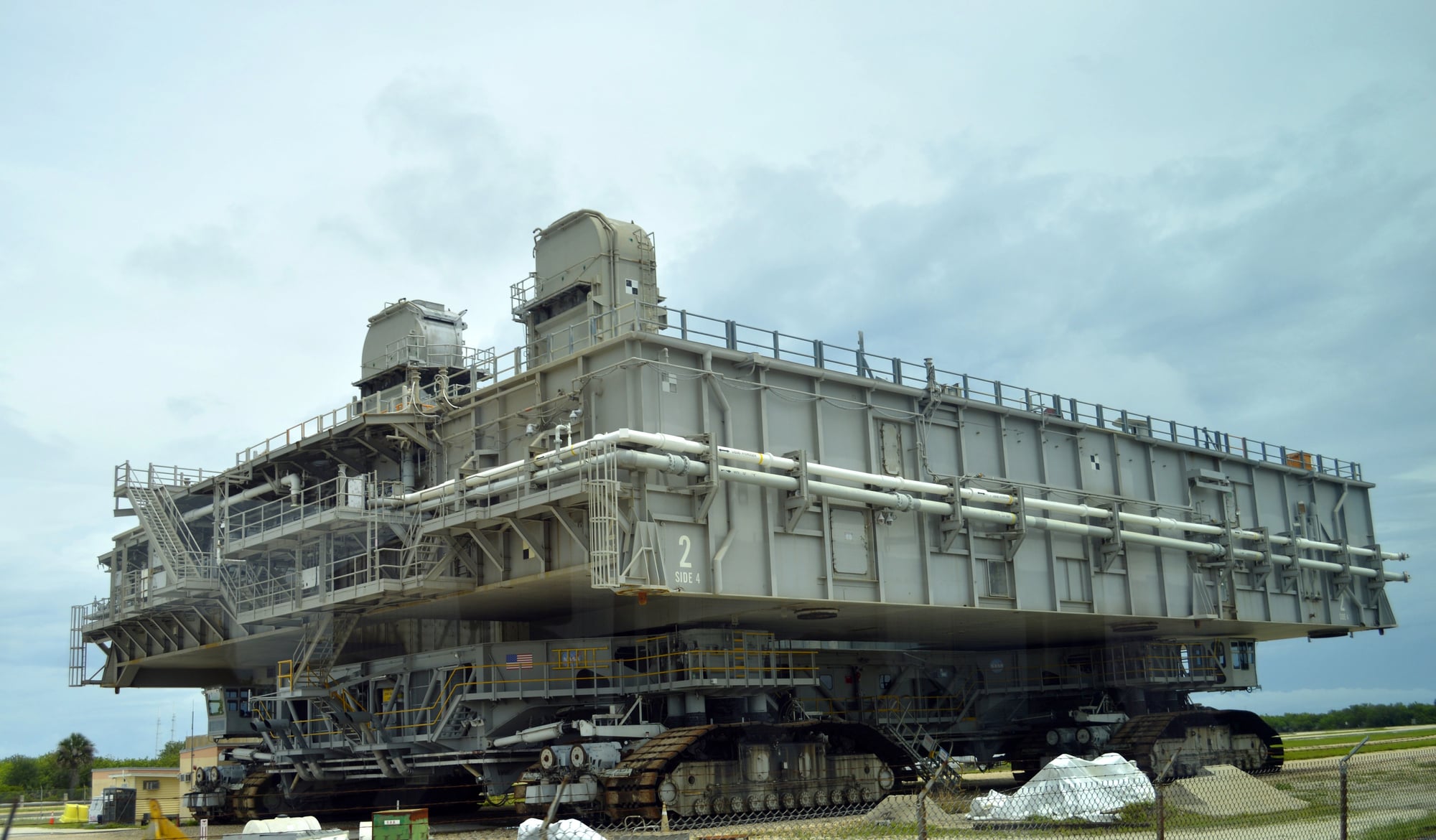
When you need to move a rocket to its launch pad, you call in the Crawler-Transporter. NASA built two of these machines in the 1960s, and they’ve carried every Saturn V rocket, Space Shuttle, and now the Space Launch System to the launch pad at Kennedy Space Center.
Each crawler weighs about 6.5 million pounds and moves on eight tank-like treads. They can only travel at 1 mile per hour when loaded, but when your cargo is a 6-million-pound rocket, you don’t rush things.
Big Bertha

Seattle’s Big Bertha was the world’s largest tunnel boring machine when it began work on the Alaskan Way Viaduct replacement tunnel in 2013. Built by Hitachi Zosen in Japan, this beast measured 300 feet long, weighed 6,900 tons, and had a cutting face 57.5 feet in diameter.
The project hit some snags—including a two-year delay after the machine struck a forgotten steel pipe underground—but Big Bertha eventually completed the 2-mile tunnel in 2017.
Bagger 288

Before the Bagger 293 came along, its predecessor was among the heaviest land vehicles ever built. The Bagger 288 was built by Krupp, and construction took about 10 years at a cost of around $100 million.
It weighs about 13,500 tons and measures 738 feet long and 315 feet tall. Twelve enormous caterpillar tracks propel this machine at the blistering speed of about 33 feet per minute.
Taisun Gantry Crane

The Taisun crane doesn’t just hold one Guinness World Record for lifting—it holds three. Located at the Yantai Raffles Shipyard in China, this gantry crane has completed lifts of 20,133 metric tons, 17,100 metric tons, and 14,000 metric tons.
It was specifically designed to install massive integrated modules onto ship hulls and is particularly useful in building semi-submersible drilling platforms. When you need to lift something that weighs as much as 4,000 cars, this is the crane you call.
Stratolaunch
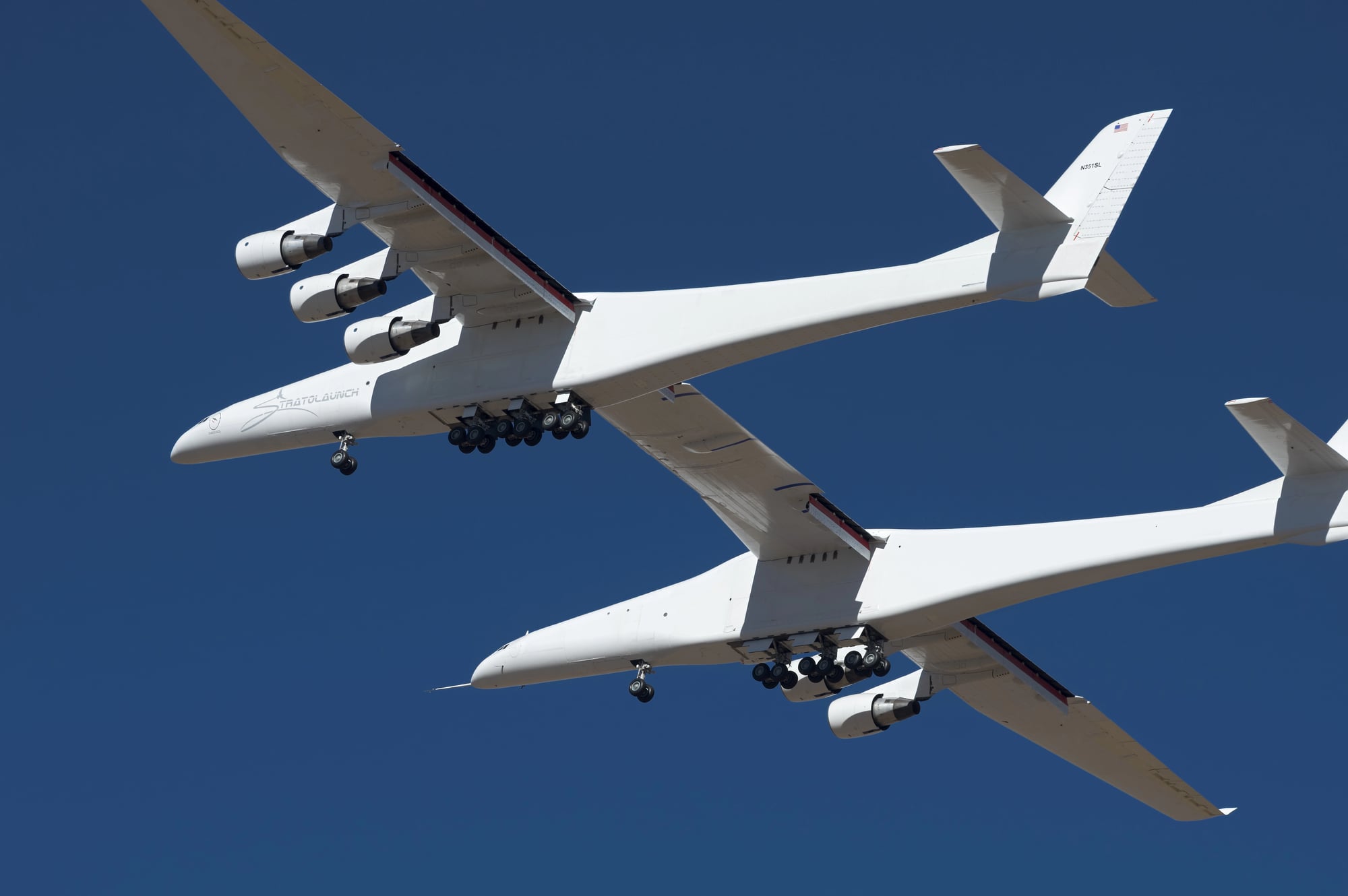
The late Microsoft co-founder Paul Allen dreamed of making space more accessible, and the Stratolaunch aircraft was his answer. This plane has the largest wingspan of any aircraft ever built at 385 feet—wider than an NFL playing field.
It weighs 500,000 pounds empty and stands about 50 feet tall. The aircraft is designed to carry rockets to high altitude and release them for launch into low Earth orbit, essentially turning a plane into a mobile launch platform.
LeTourneau L-2350
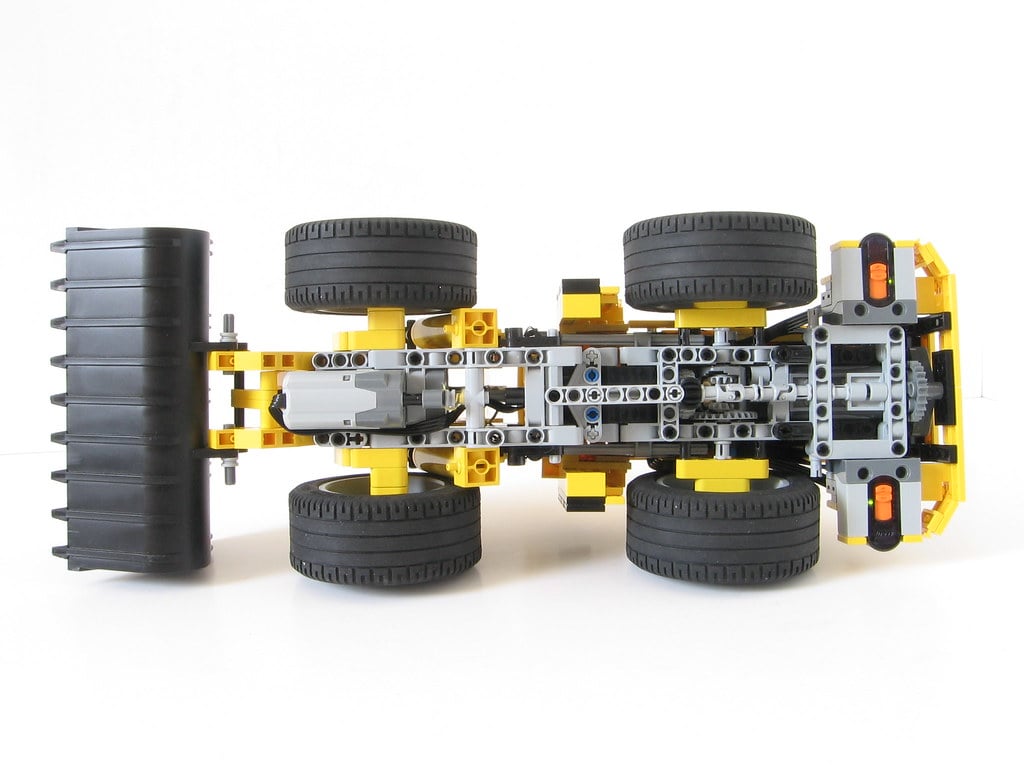
According to the Guinness World Records, this is the biggest earthmover ever built. The L-2350 wheel loader can lift 80 tons of material to a height of 24 feet, which is roughly equivalent to scooping up a dozen cars and holding them above a two-story building.
Its tires alone stand 13 feet tall and 5 feet wide. The bucket can hold as much material as five standard dump trucks, making this machine a favorite in large-scale mining operations.
FAST Radio Telescope

China’s Five-hundred-meter Aperture Spherical Telescope, or FAST, is the world’s largest filled-aperture radio telescope. The dish spans 1,640 feet across, roughly the size of 30 soccer pitches, and sits in a natural depression in Guizhou Province.
It took five years to build and required the relocation of about 9,000 residents from nearby villages to ensure radio silence. Scientists use FAST to study pulsars, search for signs of extraterrestrial intelligence, and map hydrogen gas in distant galaxies.
Schwerer Gustav
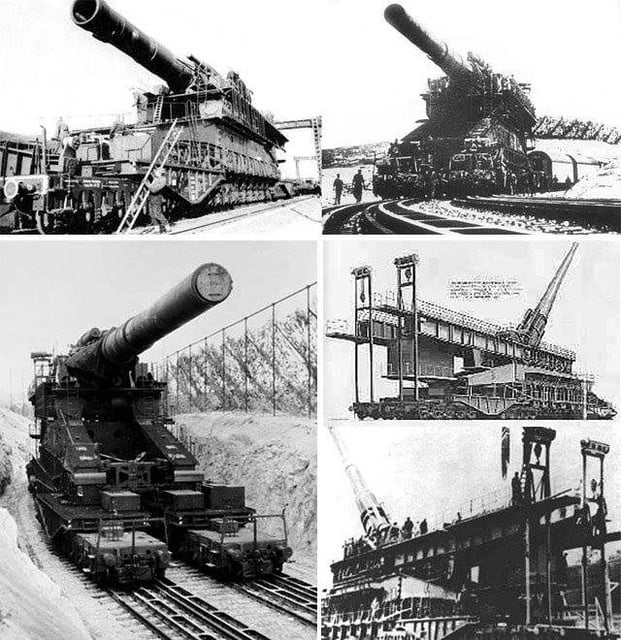
This World War II-era railway gun was one of the largest weapons ever built. The German military created it to destroy the fortifications of France’s Maginot Line, and it required a specially built railway track just to move it into position.
The gun weighed about 1,350 tons and fired shells that were 31 inches in diameter—each shell weighed several tons. It could launch these massive rounds up to 29 miles depending on shell type, with a muzzle velocity of about 2,690 feet per second.
Belaz 75710

When you need to haul 450 tons of rock and earth, you need the Belaz 75710. This dump truck from Belarus is the largest in the world, powered by two 16-cylinder diesel engines producing 2,300 horsepower each and a combined 13,738 pounds of torque.
That’s more power than seventeen heavy-duty pickup trucks put together. The truck’s tires are over 13 feet tall, and the bed can hold enough material to fill a small house.
Giants That Shaped Our World

These machines represent more than just impressive statistics—they’re solutions to problems that once seemed impossible. The Large Hadron Collider unlocked secrets of particle physics, while the Crawler-Transporters helped put humans on the moon.
Mining excavators like the Bagger series made coal extraction efficient enough to power entire nations, and tunnel borers like Big Bertha transformed urban infrastructure. Today, these giants continue to shape everything from our energy supply to our understanding of the cosmos, proving that when humans set their minds to building something big, there’s really no limit.
More from Go2Tutors!

- The Romanov Crown Jewels and Their Tragic Fate
- 13 Historical Mysteries That Science Still Can’t Solve
- Famous Hoaxes That Fooled the World for Years
- 15 Child Stars with Tragic Adult Lives
- 16 Famous Jewelry Pieces in History
Like Go2Tutors’s content? Follow us on MSN.