Brand Mascots with Forgotten Backstories
You see them everywhere. On cereal boxes at breakfast.
In commercials during your favorite shows. Walking around at sporting events in oversized foam costumes.
Brand mascots become so familiar that they fade into the background of daily life. But behind those cheerful faces and catchy slogans, many of these characters carry stories that would surprise you—stories their parent companies would rather you forget.
The Michelin Man Started as Nightmare Fuel

The Michelin Man, known as Bibendum, first appeared in 1898. He wasn’t the friendly, marshmallow-like figure you recognize today.
Early versions showed him as a towering stack of tires with a menacing expression, often depicted puffing cig and drinking champagne while crushing competitors. The original French advertisements portrayed him as intimidating and almost aggressive.
His famous tagline “Nunc est bibendum” translates to “Now is the time to drink”—a reference to the way Michelin tires “drank up” obstacles on the road. Over the decades, designers softened his appearance repeatedly, removing the cig, smoothing out the angry features, and eventually transforming him into the cuddly character families recognize today.
Mr. Peanut Actually Died

In 2020, Planters killed off Mr. Peanut in a Super Bowl commercial stunt. The 104-year-old mascot sacrificed himself to save actors Wesley Snipes and Matt Walsh, plunging from a cliff in a company vehicle.
Social media erupted with mock obituaries and genuine confusion. Planters held a funeral during the big game, complete with celebrity mourners.
Then they resurrected him as “Baby Nut,” a bizarre infant version that confused and disturbed many viewers. The campaign backfired spectacularly.
People found the death exploitative and the rebirth creepy. Within months, Planters aged Baby Nut into “Peanut Jr.,” then quietly returned him to his original adult form.
The company never acknowledged the failure directly, but the speed of the reversal spoke volumes.
Tony the Tiger Beat Out Three Other Big Cats
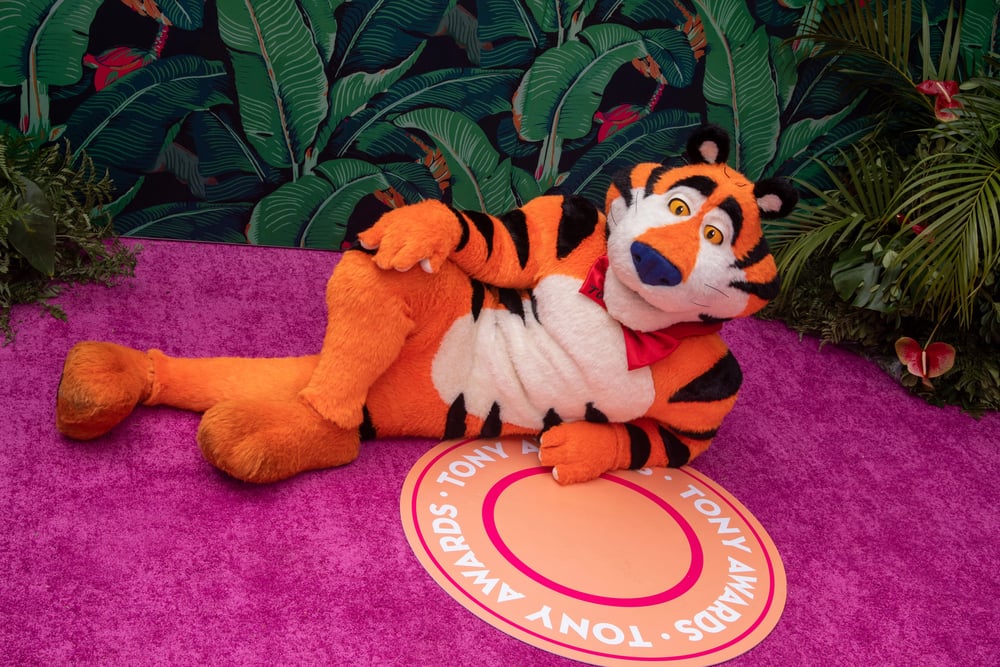
When Kellogg’s launched Sugar Frosted Flakes in 1952, four different animal mascots competed for the job. Tony the Tiger faced off against Katy the Kangaroo, Elmo the Elephant, and Newt the Gnu.
All four appeared on early cereal boxes and in advertisements. Children sent in votes for their favorites.
Tony won by a landslide, and Kellogg’s quietly retired the other three. Katy, Elmo, and Newt vanished from boxes within a year, becoming footnotes in cereal history.
Tony’s voice actor, Thurl Ravenscroft, provided that distinctive baritone “They’re grrreat!” for more than five decades. He never received on-screen credit for the role, despite it becoming one of the most recognizable voices in advertising history.
The Trix Rabbit Never Wins

For over six decades, the Trix Rabbit has tried to eat Trix cereal. Children always stop him with the tagline “Silly rabbit, Trix are for kids!”
This premise seems innocent until you consider what it teaches. The rabbit represents adults who want something designed for children—and the message is that adult desires for simple pleasures deserve mockery and denial.
General Mills held two national votes allowing kids to decide if the rabbit should finally taste Trix. He won both times, in 1976 and 1980.
The commercials showed him eating cereal, achieving his dream. Then subsequent advertisements reset the status quo, returning him to his perpetual state of deprivation.
The rabbit’s struggle continues today, making him possibly the most tragic figure in advertising history.
Cap’n Crunch Isn’t Really a Captain

Internet sleuths noticed something odd about Cap’n Crunch’s uniform in 2013. His sleeves display three stripes, not the four stripes that Navy captains wear.
According to military insignia standards, three stripes indicate the rank of commander. Food blogger and naval history enthusiast John over at FoodBeast pointed this out, and the story went viral.
Quaker Oats never issued a correction or explanation. The Cap’n keeps his title and his three stripes.
Some fans theorize he captains a civilian vessel, which doesn’t require Navy rank. Others suggest he promoted himself, which fits his maverick personality.
Either way, thousands of children grew up respecting the authority of a mascot who misrepresents his credentials.
Ronald McDonald Went into Hiding

McDonald’s drastically reduced Ronald McDonald’s public appearances after 2016. The decision followed a wave of creepy clown sightings across America that terrified communities.
People dressed as menacing clowns appeared in woods, near schools, and on dark streets, sometimes carrying weapons. The phenomenon triggered widespread coulrophobia—fear of clowns.
McDonald’s never officially retired Ronald, but he essentially disappeared from advertising and restaurants. The company shifted marketing focus to food imagery and away from character-driven campaigns.
Birthday party appearances became rare. The once-ubiquitous mascot now exists primarily in older promotional materials and as a cautionary tale about cultural timing.
The Noid Inspired Real Violence

In 1986, Domino’s introduced the Noid, a villainous mascot representing everything that could go wrong with pizza delivery. The “Avoid the Noid” campaign became hugely popular.
The red-suited gremlin sabotaged pizzas and delayed deliveries in commercials, while Domino’s positioned itself as the hero defeating him. Then Kenneth Lamar Noid walked into a Domino’s in Georgia in 1989.
Believing the company created the mascot to mock him personally, he held two employees hostage for five hours, demanding money and a pizza. Police eventually talked him down.
The incident made national news. Domino’s quietly phased out the Noid shortly after, though they’ve attempted brief comebacks in recent years.
The mascot’s association with that traumatic event never fully faded.
Colonel Sanders Regretted Selling His Recipe

Harland Sanders sold Kentucky Fried Chicken in 1964 for two million dollars—worth about $20 million today. He remained the company’s public face but lost control over the food.
This ate at him for the rest of his life. He openly criticized KFC’s gravy, calling it “wallpaper paste” in interviews.
He said the new recipes weren’t fit to serve. Sanders owned a restaurant in Kentucky where he served his original recipes, competing directly against the company bearing his name and face.
He sued KFC for libel after they opened a restaurant called “Colonel Sanders’ Dinner House” without his permission. The case settled, with KFC paying him and changing the restaurant’s name.
Sanders died in 1980, still bitter about what had become of his legacy. The company continues using his image to sell food he wouldn’t eat.
The California Raisins Almost Weren’t Raisins

The California Raisin Advisory Board faced a crisis in the mid-1980s. Raisin sales had plummeted.
Focus groups revealed that people found raisins unappetizing—dried, wrinkled, and associated with elderly people. The board hired an advertising agency that proposed something radical: animated raisins performing Motown songs.
The claymation characters debuted in 1986, singing “I Heard It Through the Grapevine.” The commercial became a cultural phenomenon.
The California Raisins released albums, appeared on merchandise, and starred in their own television specials. They even earned an Emmy nomination.
The campaign increased raisin sales by 20% in just two years. But the success contained a problem.
Children loved the characters but didn’t connect them with actual raisins. They wanted the toys and watched the shows without ever buying the product.
When the novelty faded in the early 1990s, sales dropped back to previous levels. The board disbanded in 1994, unable to justify the marketing costs.
Speedy Alka-Seltzer Had a Darker Twin

Speedy Alka-Seltzer, the cheerful tablet with arms and legs, first appeared in 1951. His stop-motion commercials showed him diving into water glasses and providing instant relief.
Parents found him endearing. Children found him funny.
He seemed perfect. What most people don’t know: Speedy had a counterpart named Sinky.
Internal company documents reveal that designers created Sinky to represent the lingering discomfort that Alka-Seltzer supposedly eliminated. Sinky appeared in early storyboards as a drooping, sad figure—the “before” to Speedy’s “after.”
Marketing teams decided Sinky was too depressing and scrapped him before any commercials aired. Speedy went on to become one of advertising’s most enduring characters while his rejected twin exists only in archived sketches.
The Energizer Bunny Started as Copyright Revenge

Duracell created a television campaign in 1973 featuring a pink mechanical bunny powering through various tasks. The ads showed Duracell batteries outlasting competitors.
The bunny became synonymous with the brand. Then Duracell made a critical error: they didn’t trademark the bunny properly in the United States.
Energizer saw an opportunity. In 1989, they launched their own pink bunny campaign, featuring a nearly identical rabbit that interrupted other fake commercials.
The Energizer Bunny became even more popular than Duracell’s version. Legal battles ensued.
Duracell maintained trademark rights in some countries, while Energizer owned the bunny in the U.S. market. The situation created bizarre international complications.
Outside the United States, Duracell still uses their bunny in advertisements. American audiences associate the pink rabbit with Energizer and might not realize a competing version exists elsewhere.
It’s one of the strangest intellectual property disputes in advertising history.
Aunt Jemima and Uncle Ben Represented Painful Stereotypes

Both Aunt Jemima and Uncle Ben originated from racist archetypes. Aunt Jemima, created in 1889, was based on the “mammy” stereotype—a subservient Black woman who happily cooked for white families.
The character appeared in minstrel shows before becoming a brand mascot. Early advertisements featured actresses in exaggerated costumes reinforcing demeaning racial caricatures.
Uncle Ben, launched in 1946, referenced how white Southerners called older Black men “uncle” to avoid using respectful titles like “mister.” The original image showed a Black man in a servant’s role.
Both brands operated for over a century before companies finally acknowledged the problematic origins. Quaker Oats retired Aunt Jemima in 2020, rebranding as Pearl Milling Company.
Mars followed suit with Uncle Ben’s, shortening the name to Ben’s Original and removing the portrait. The changes came after decades of criticism and protests.
The companies framed the decisions as responses to calls for racial justice, but many asked why it took so long.
The Kool-Aid Man Destroys Property Without Consequences

The Kool-Aid Man’s catchphrase “Oh yeah!” accompanies him crashing through walls in nearly every commercial. He demolishes brick, drywall, and wooden fences to deliver flavored drinks to children.
The structural damage appears extensive. Repairs would cost thousands of dollars.
Yet no one in these advertisements ever addresses the destruction. This creates an interesting precedent in advertising.
The mascot commits repeated property crimes while portrayed as a hero. Children watching don’t see consequences for destructive behavior.
The Kool-Aid Man’s actions would result in arrest and civil lawsuits in reality. Instead, kids cheer his arrival.
Parents presumably deal with the aftermath off-screen, filing insurance claims and hiring contractors while their children enjoy artificially colored beverages. The mascot’s design adds another layer of strangeness.
He’s a sentient pitcher containing the product he serves. This implies he fills himself with Kool-Aid, raises philosophical questions about self-awareness, and suggests a disturbing relationship between container and contents.
Deep analysis of the Kool-Aid Man leads nowhere good.
Why These Stories Disappear

Companies control their mascots’ narratives carefully. Public relations teams manage image, scrub negative associations, and present sanitized versions of brand history.
When a mascot’s backstory becomes inconvenient—too violent, too controversial, too weird—it gets quietly edited out of official materials. You won’t find McDonald’s emphasizing Ronald’s retreat from public life on their corporate website.
Planters don’t highlight their mascot murder experiment in annual reports. These stories survive through news archives, consumer memories, and internet documentation.
They remind you that marketing creates carefully constructed illusions, and sometimes those illusions crack.
The Characters Behind the Characters

Real people voiced, performed, and embodied these mascots. Thurl Ravenscroft spent half a century as Tony the Tiger without recognition.
Actors wore hot, heavy costumes at promotional events for minimum wage. Voice performers signed contracts preventing them from discussing their work.
The humans behind the characters rarely shared in the financial success their performances generated. Some performers developed deep connections with their roles despite the anonymity.
They took pride in bringing joy to children, even while companies treated them as replaceable. When mascots got redesigned or retired, the performers lost work without compensation for their years of service.
Their contributions vanished along with the characters they portrayed.
What Stays When Everything Changes

Mascots show the times they came from. Back then, the Michelin Man acted tough – fit right into a cutthroat business world.
The Trix Rabbit never getting his cereal? That echoes old ideas on kids versus grown-ups.
Lately, backlash over Aunt Jemima and Uncle Ben shows how deep outdated images ran in ads. Those faces stick in your mind from when you were little – part of the times, part of the culture.
Chances are, one character from fast-food ads or cereal boxes pops into view – the tune that played, the line they always said, how it pushed you to beg for that thing.
That bond wasn’t accidental – it was planned all along. What brands don’t show uncovers the gears beneath the sparkle, laying out how business moves and social shifts built the icons you once believed without question.
Stories That Refuse to Stay Buried

The web keeps every little thing. Mistakes in ads that’d vanish back then stick around today – saved in online corners.
There’s always a person who recalls the old version, grabs a snap of the removed post, or passes along the canceled ad clip. Brands aren’t able to wipe out their character’s past like they used to.
This causes friction between how companies see themselves and what people remember. Yet brands aim for clean, steady stories.
Meanwhile, customers crave realness – and owning up to old errors. That mismatch shows most clearly in the way firms deal with mascot histories full of baggage – typically by staying silent, assuming silence equals forgetting, pushing ahead with whichever story fits today’s sales pitch.
More from Go2Tutors!

- The Romanov Crown Jewels and Their Tragic Fate
- 13 Historical Mysteries That Science Still Can’t Solve
- Famous Hoaxes That Fooled the World for Years
- 15 Child Stars with Tragic Adult Lives
- 16 Famous Jewelry Pieces in History
Like Go2Tutors’s content? Follow us on MSN.



