Bridges That Hold World Records
Bridges connect more than just land. They bring people together, make travel easier, and sometimes become famous for pushing the limits of what engineers thought was possible.
Some bridges stand out not just for their beauty or usefulness, but because they’ve broken records that put them in the history books. Let’s take a look at some of the most impressive bridges around the world that have earned their place as record holders.
Danyang-Kunshan Grand Bridge

This monster of a bridge stretches across China for over 102 miles, making it the longest bridge in the world. It took four years and 10,000 workers to build this engineering wonder that connects Shanghai and Nanjing.
The bridge runs mostly over rice paddies and water, staying low to the ground for most of its length. When it opened in 2011, it changed how people traveled between major Chinese cities, cutting hours off what used to be a much longer journey.
Millau Viaduct

France’s Millau Viaduct holds the record for the tallest bridge pier in the world, standing at 804 feet. The bridge deck itself sits 890 feet above the valley floor at its highest point.
Designed by British architect Norman Foster, this cable-stayed bridge looks like it’s floating through the clouds in southern France. Drivers crossing it get views that make the journey just as memorable as the destination.
Akashi Kaikyo Bridge

Japan’s Akashi Kaikyo Bridge has the longest central span of any suspension bridge on Earth at 6,532 feet. The bridge connects the city of Kobe to Awaji Island across a stretch of water known for earthquakes and harsh storms.
Engineers built it to withstand winds up to 180 miles per hour and earthquakes measuring 8.5 on the Richter scale. It took 10 years to complete and used enough wire cable to circle the Earth seven times.
Beipanjiang Bridge

The Beipanjiang Bridge in China holds the title for the highest bridge deck above ground or water. It towers 1,854 feet above the Beipan River, which is taller than most of the world’s skyscrapers.
Looking down from this bridge feels like staring into an abyss. The bridge cut travel time between Xuanwei and Shuicheng from over four hours down to just one hour when it opened in 2016.
Russky Bridge
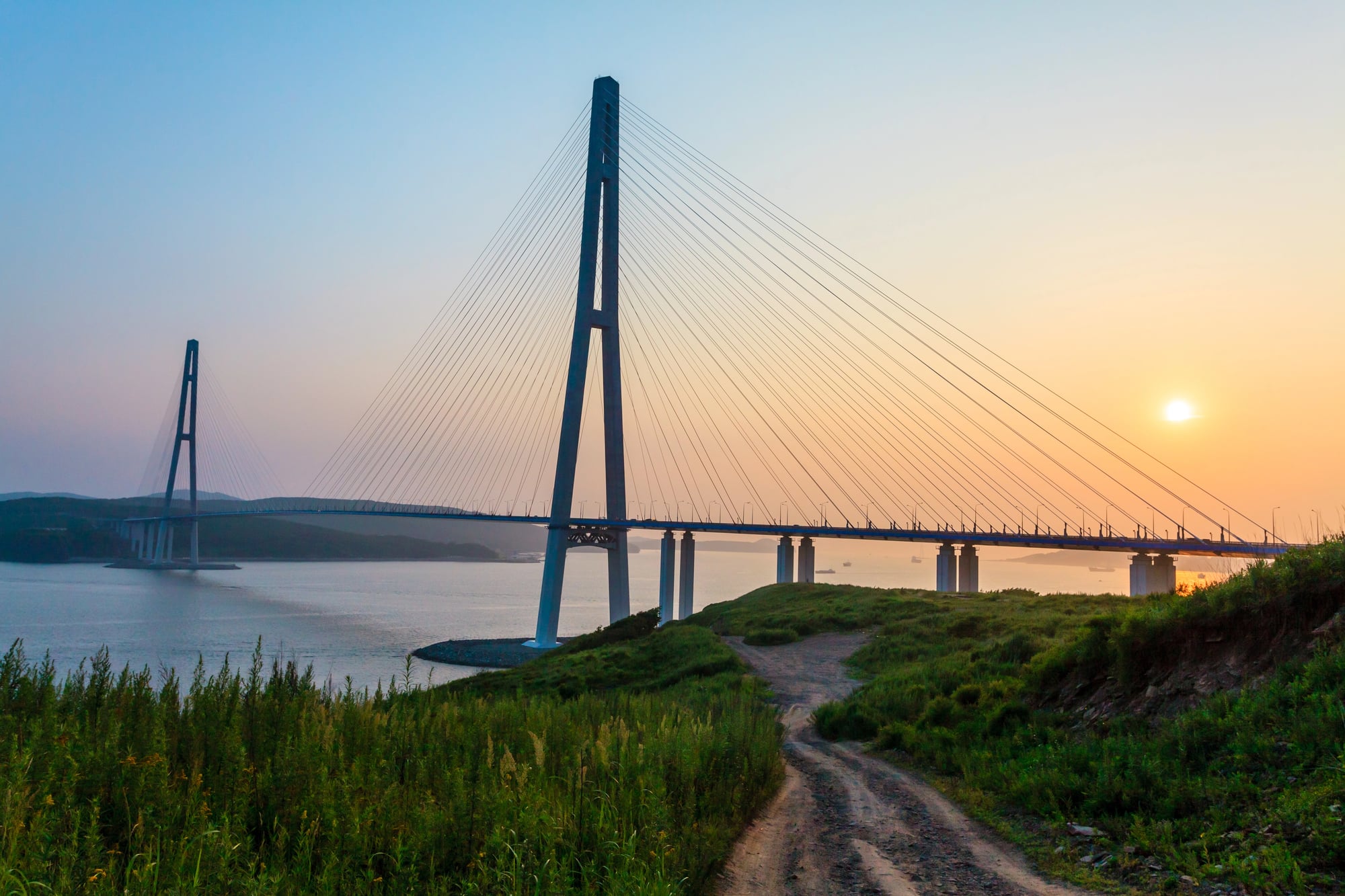
Russia’s Russky Bridge has the longest cable-stayed span in the world at 3,622 feet. It connects Vladivostok to Russky Island across the Eastern Bosphorus strait.
The bridge’s two massive towers stand 1,053 feet tall, making them visible from miles away. Russia built this bridge in preparation for hosting an international summit, finishing the entire project in just five years despite the harsh climate and difficult construction conditions.
Pontchartrain Causeway

The Lake Pontchartrain Causeway in Louisiana runs for nearly 24 miles, making it the longest continuous bridge over water in the world. This bridge is so long that for an eight-mile stretch, drivers can’t see land in any direction.
Two parallel spans make up the causeway, with the older section built in 1956 and the newer one added in 1969. Thousands of commuters use it daily to cross the lake between New Orleans and the north shore.
Chaotianmen Bridge

China’s Chaotianmen Bridge in Chongqing is the world’s longest arch bridge with a main span of 1,811 feet. The steel arch rises above the Yangtze River, connecting two parts of the city that were previously linked only by ferry.
This bridge handles both vehicle traffic and a light rail system, making it incredibly busy throughout the day. The arch design means no supports interrupt the river below, allowing large ships to pass through freely.
Royal Gorge Bridge

Colorado’s Royal Gorge Bridge held the record as the world’s highest suspension bridge for 75 years. It sits 955 feet above the Arkansas River in a narrow canyon with steep rock walls on both sides.
Originally built as a tourist attraction in 1929, the bridge still draws visitors who want to experience the thrill of crossing such a dramatic gap. The wooden planks of the deck and the swaying motion make it an unforgettable walk for anyone brave enough to try it.
Tianjin Grand Bridge

The Tianjin Grand Bridge in China stretches for 70 miles as part of the Beijing-Shanghai High-Speed Railway. It’s the second-longest bridge in the world and carries trains traveling at speeds up to 186 miles per hour.
The bridge crosses rivers, roads, and railways without a single intersection at ground level. Building it required careful planning to ensure that high-speed trains could run safely while regular life continued below.
Hong Kong-Zhuhai-Macau Bridge

This bridge system includes the world’s longest sea crossing, stretching 34 miles across the Pearl River Delta. It combines bridges, tunnels, and artificial islands to connect Hong Kong with Macau and mainland China.
The underwater tunnel section alone runs for four miles, dipping below the surface to let ships pass overhead. The project took nine years to complete and required specially designed materials to withstand typhoons and salt water corrosion.
Øresund Bridge

The Øresund Bridge connects Denmark and Sweden across the strait between Copenhagen and Malmö. It holds the record as the longest combined road and rail bridge in Europe at just under five miles.
The bridge turns into a tunnel partway across to avoid interfering with air traffic at Copenhagen Airport. This clever design lets planes land safely while trains and cars continue their journey beneath the sea.
Sunshine Skyway Bridge

Florida’s Sunshine Skyway Bridge features the longest cable-stayed concrete span in the Western Hemisphere at 1,200 feet. The bright yellow cables and tall central pylon have become icons of the Tampa Bay area.
Engineers designed protective barriers around the support columns after a cargo ship crashed into the old bridge in 1980, causing part of it to collapse. The new bridge opened in 1987 with safety features that can withstand impacts from the largest ships.
Vasco da Gama Bridge

Portugal’s Vasco da Gama Bridge runs for 7.6 miles, making it the longest bridge in Europe. It crosses the Tagus River near Lisbon and was built to handle traffic that the older 25 de Abril Bridge could no longer manage alone.
The bridge opened in 1998 on the 500th anniversary of Vasco da Gama’s discovery of the sea route to India. Its design accounts for the curvature of the Earth, as the towers had to be positioned slightly farther apart at the top than at the base.
Zhangjiajie Glass Bridge
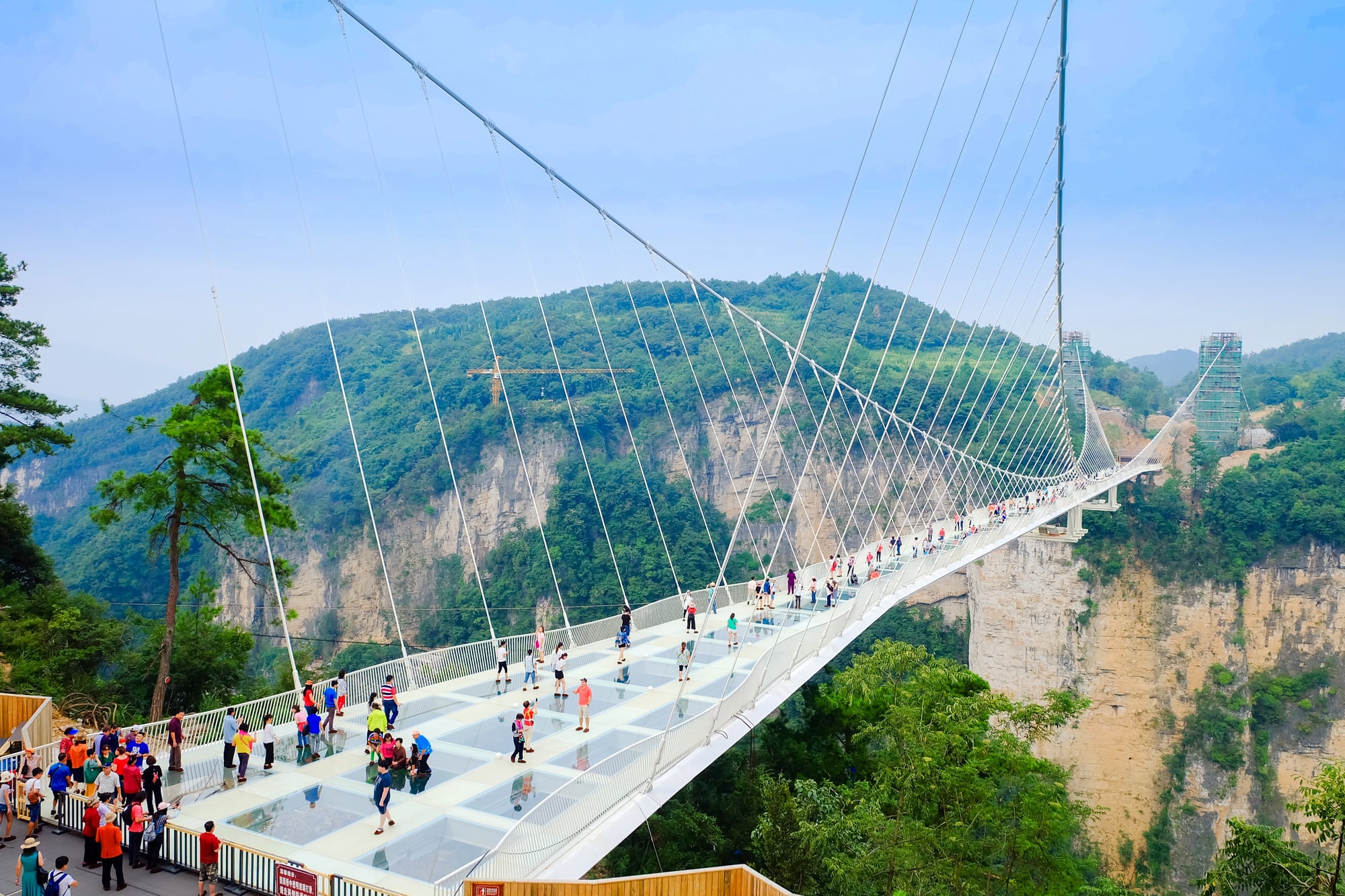
China’s Zhangjiajie Glass Bridge is the world’s longest and highest glass-bottomed bridge at 1,410 feet long and 980 feet high. It spans a canyon in Zhangjiajie National Forest Park, the same place that inspired the floating mountains in the movie Avatar.
Walking across the transparent floor gives visitors a clear view straight down to the canyon floor below. The bridge can hold up to 800 people at once, though many visitors find themselves frozen in place when they look down.
Gateshead Millennium Bridge
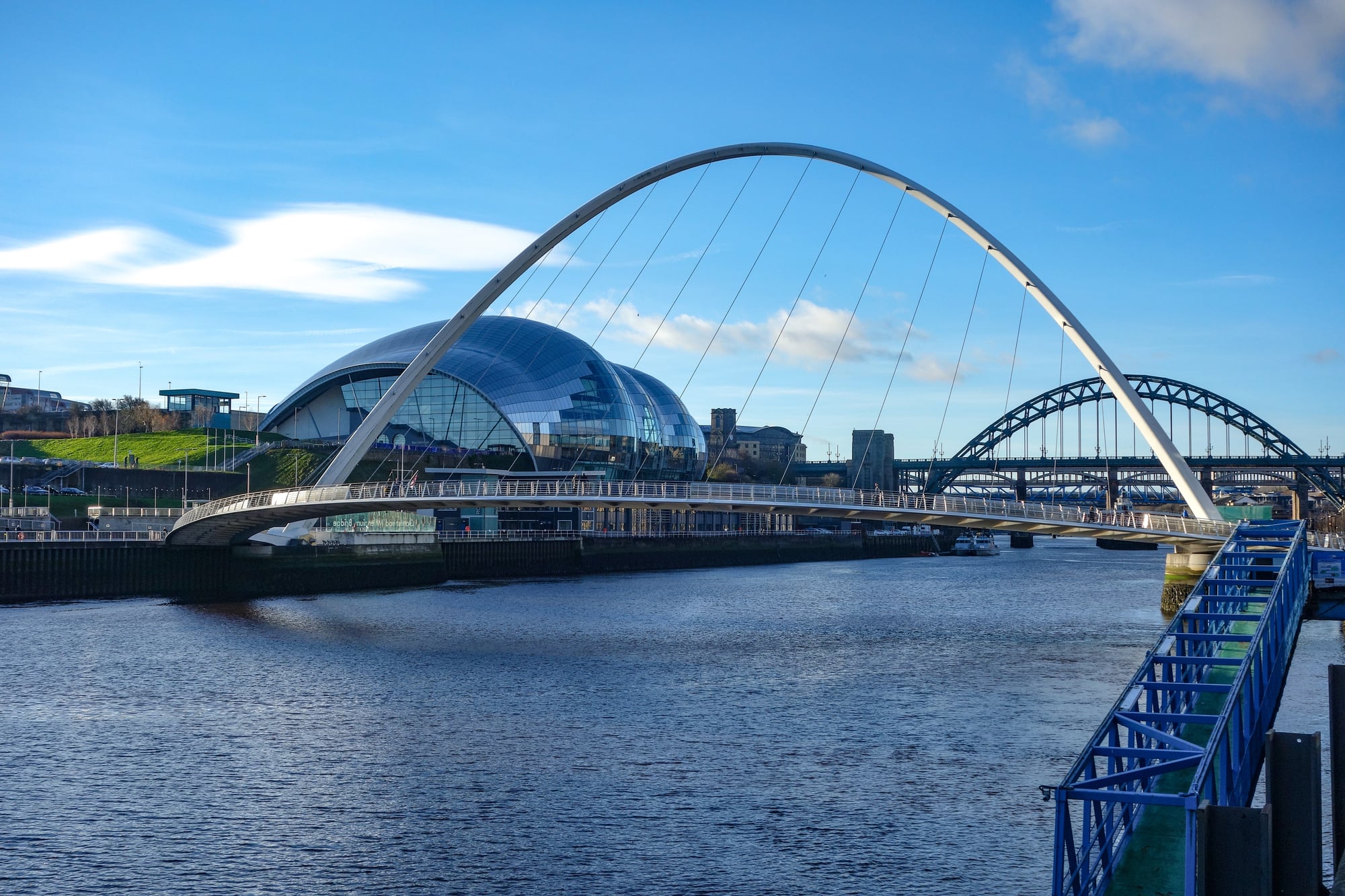
England’s Gateshead Millennium Bridge is the world’s first and only tilting bridge. It rotates to let ships pass underneath, earning it the nickname ‘Blinking Eye Bridge’ because of how it looks when it opens.
The entire bridge tilts upward in just four minutes using a system of motors and counterweights. This innovative design won multiple architecture awards and has become a symbol of the revitalized Gateshead Quays area.
Hangzhou Bay Bridge

The Hangzhou Bay Bridge in China was the world’s longest trans-oceanic bridge when it opened in 2008 at 22 miles long. It crosses one of the most dangerous bays in the world, where tidal forces create massive waves and strong currents.
Engineers built an S-curve into the bridge to prevent drivers from getting hypnotized by the endless straight road, which can cause accidents. The bridge cut the driving distance between Shanghai and Ningbo by 75 miles.
Sidu River Bridge

High above a steep valley, China’s Sidu River Bridge stretches 3,000 feet from tower to tower – the farthest span of any suspension bridge in such terrain. To begin building, teams fired rockets carrying guide lines across the chasm since normal tools like cranes could not reach.
Helicopters were out of the question too, thanks to unpredictable winds and sharp cliff walls. Once completed in 2009, visitors flocked to see its dizzying drop below.
Bang Na Expressway

Stretching 34 miles, Thailand’s Bang Na Expressway ranks among the planet’s longest elevated roads. Built entirely on pillars, it functions like a giant bridge carrying six lanes over Bangkok’s busy surface streets.
Even though it never crosses a river or sea, its height helps bypass the frequent flood zones around the city when rains come hard. During construction, this project poured more concrete than any earlier build had ever used before.
Engineering Achievements That Inspire

Impossible tasks? Not really. Some bridges stretch so far they look like dreams made real.
One after another, each tackled hurdles others thought unbeatable – wide gaps, dizzying drops, storms that never quit. Distance means less now because someone figured out how to leap across it.
Heights once considered too risky are crossed quietly every day. Weather tries its worst, yet these structures hold firm.
People move where they could not before, simply because builders refused to accept limits. Solutions appear where effort meets imagination.
More from Go2Tutors!

- The Romanov Crown Jewels and Their Tragic Fate
- 13 Historical Mysteries That Science Still Can’t Solve
- Famous Hoaxes That Fooled the World for Years
- 15 Child Stars with Tragic Adult Lives
- 16 Famous Jewelry Pieces in History
Like Go2Tutors’s content? Follow us on MSN.