Caves With Stunning Natural Features
Standing at the entrance to a massive cave system, you realize how small you are. The darkness ahead swallows your flashlight beam. Water drips somewhere in the distance.
Cool air rushes past your face. Underground worlds exist beneath our feet—vast chambers decorated with formations that took millions of years to create.
These aren’t just empty spaces in rock. They’re galleries of natural art, forged by water, time, and chemistry.
Some glow with bioluminescent creatures. Others sparkle with crystals the size of telephone poles.
A few contain entire ecosystems that never see sunlight. The best caves transform your understanding of what landscapes can be.
Waitomo’s Glowworm Galaxy
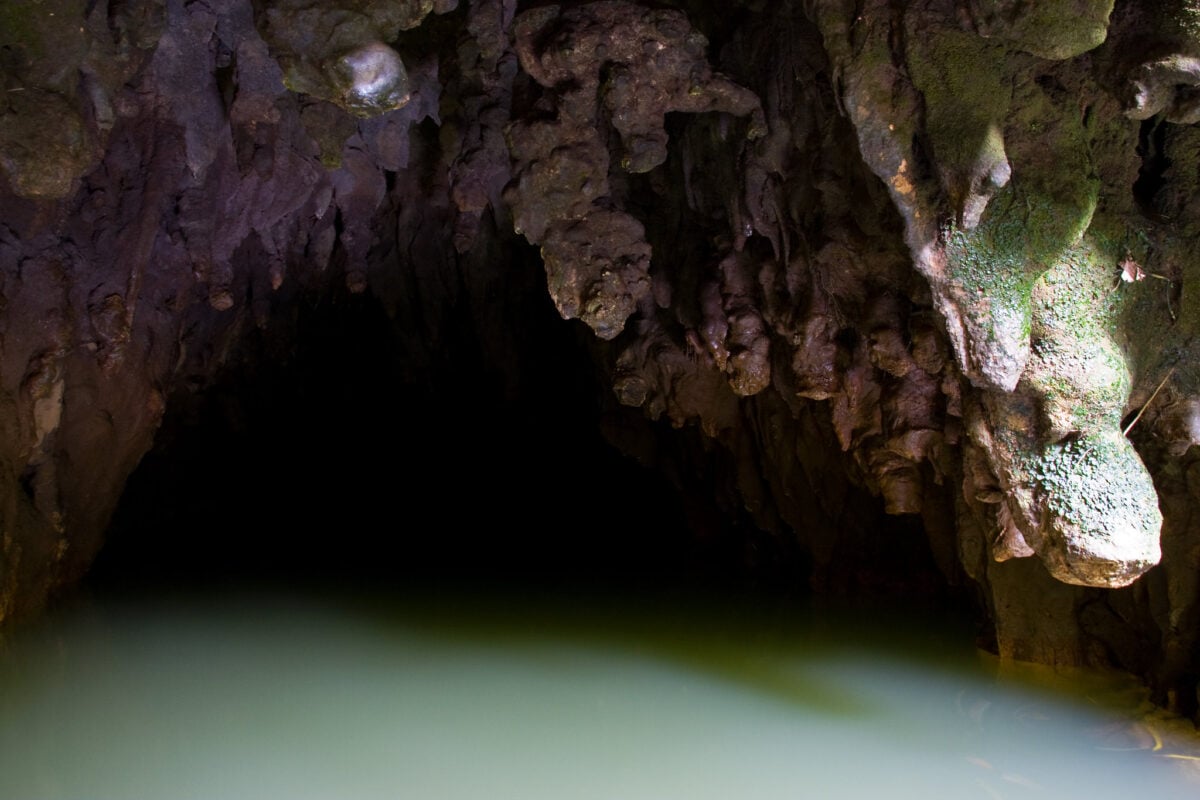
The Waitomo Caves in New Zealand host thousands of glowworms that illuminate the ceiling like stars. You drift through the darkness on a boat, looking up at what appears to be a perfect recreation of the night sky.
But these aren’t stars—they’re Arachnocampa luminosa larvae hanging from limestone, producing bioluminescent light to attract prey. The glowworms create sticky threads that dangle down, trapping insects drawn to their glow.
The darker the cave, the brighter they shine. Complete silence makes the experience even more surreal.
Your boat glides through black water while this living constellation sparkles above. The effect is so convincing that your brain struggles to accept you’re underground rather than floating through space.
Eisriesenwelt’s Frozen Architecture
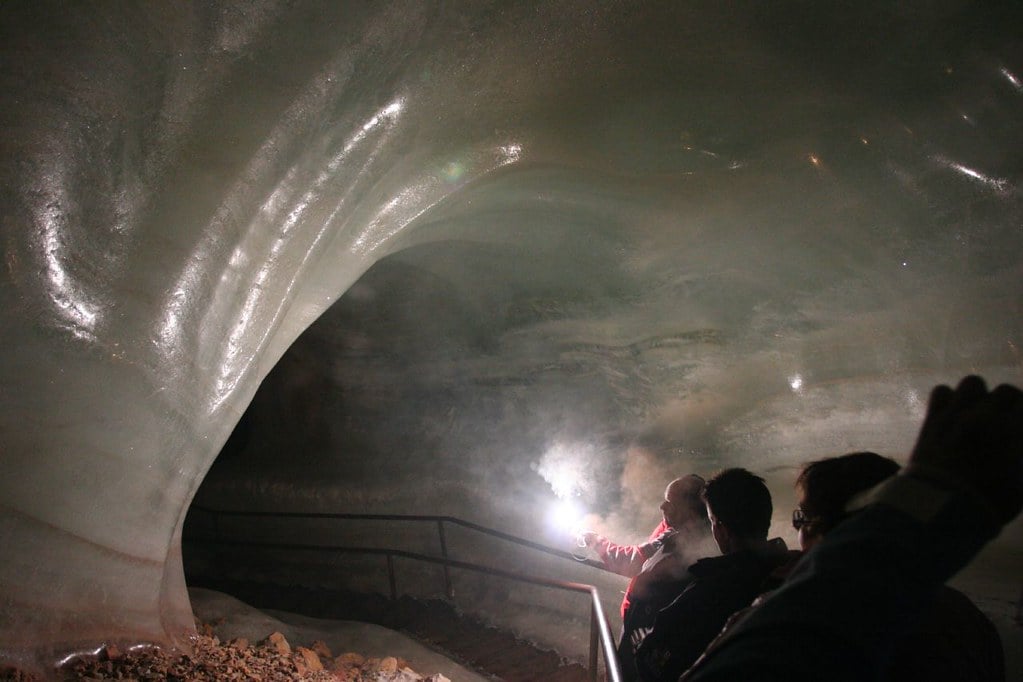
Inside Austria’s Eisriesenwelt, ice formations replace the typical cave decorations. The name means “World of the Ice Giants,” and the system extends over 26 miles, making it the largest ice cave on Earth.
Winter winds blow snow inside, where it freezes into massive sculptures that persist year-round. Ice curtains cascade down walls.
Frozen waterfalls suspend mid-flow. Columns of ice stretch from floor to ceiling.
The temperature stays below freezing even in summer, preserving these formations. Every year they change slightly as new ice forms and old ice sublimates.
Visitors climb through this frozen underworld wearing warm clothing, their breath visible in the beam of their headlamps.
Son Doong’s Internal Weather System
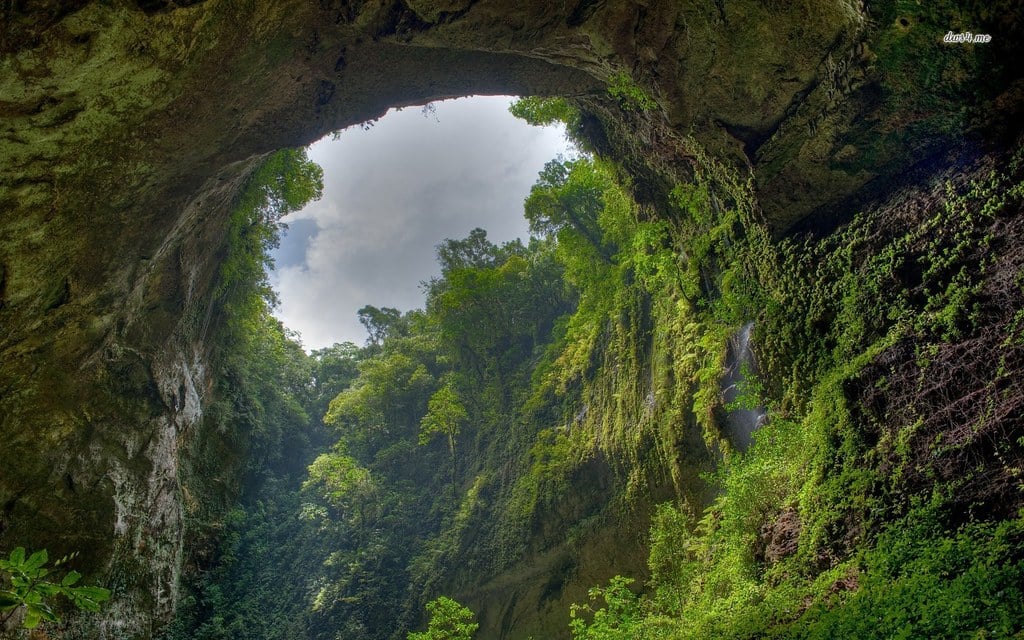
Vietnam’s Son Doong Cave contains passages so large they create their own weather. Clouds form near the ceiling. Rain falls inside specific chambers.
The main passage reaches 650 feet high and 500 feet wide—big enough to fit a New York City block of 40-story buildings. The jungle grows inside where the ceiling collapsed millions of years ago, creating what cavers call “dolines.”
Trees reach 100 feet tall, fed by sunlight streaming through the openings. A river flows through the cave year-round.
Stalagmites grow to 260 feet tall, some of the largest in the world. The scale distorts your sense of proportion.
What looks like a short walk turns into an hour-long trek across boulders the size of houses.
Carlsbad’s Big Room
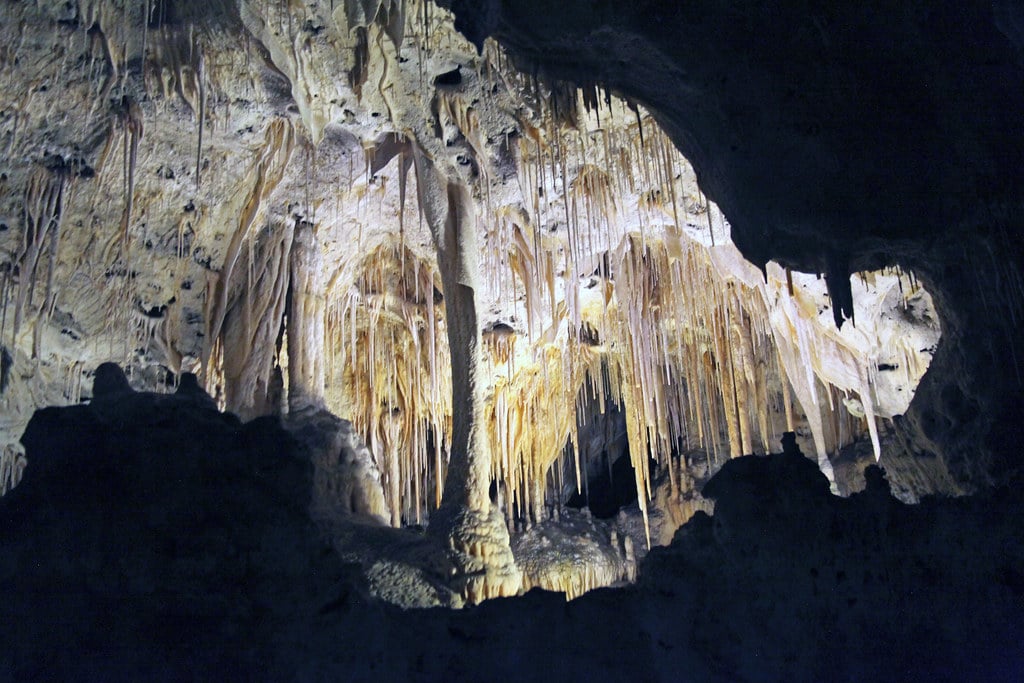
Carlsbad Caverns in New Mexico contains the Big Room, one of the largest accessible cave chambers in North America. It covers 357,000 square feet—about eight football fields. The ceiling soars 255 feet overhead in places.
Formations crowd every surface. Soda straws hang in clusters.
Flowstone cascades down walls in frozen waves. Column forests create natural pillars.
The chamber formed over millions of years as sulfuric acid dissolved the limestone, leaving behind this cathedral-like space. You can walk the entire perimeter on paved trails, though it takes over an hour.
Every turn reveals new formations, and the sheer volume of decorated rock overwhelms your ability to process it all.
Phraya Nakhon’s Temple Pavilion
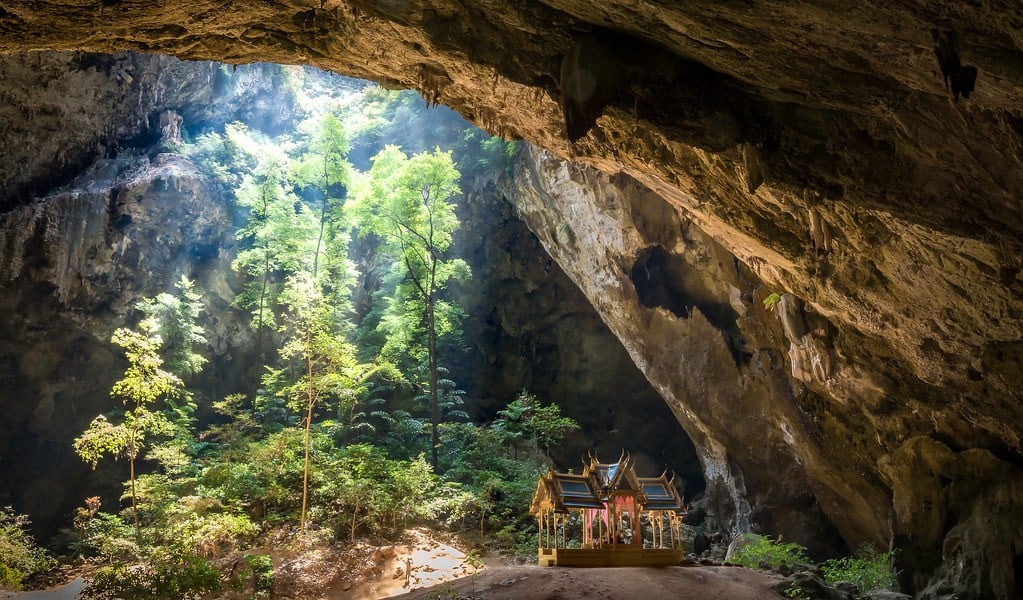
Inside Phraya Nakhon Cave in Thailand, sunlight streams through a collapsed roof section, illuminating a golden pavilion built in 1890 for King Rama V. The cave contains two main chambers connected by a passage.
The morning sun hits the pavilion for just a few hours, creating a spotlight effect that feels almost staged. The contrast between natural formation and human architecture creates an otherworldly scene.
Stalactites hang around the ornate wooden structure. Tree roots penetrate through cracks in the ceiling.
Birds nest in the upper reaches. The cave has become a pilgrimage site, though reaching it requires a steep climb up a hillside.
The timing matters—arrive too early or too late, and you miss the perfect lighting that makes photographs look unreal.
Lechuguilla’s Pristine Passages
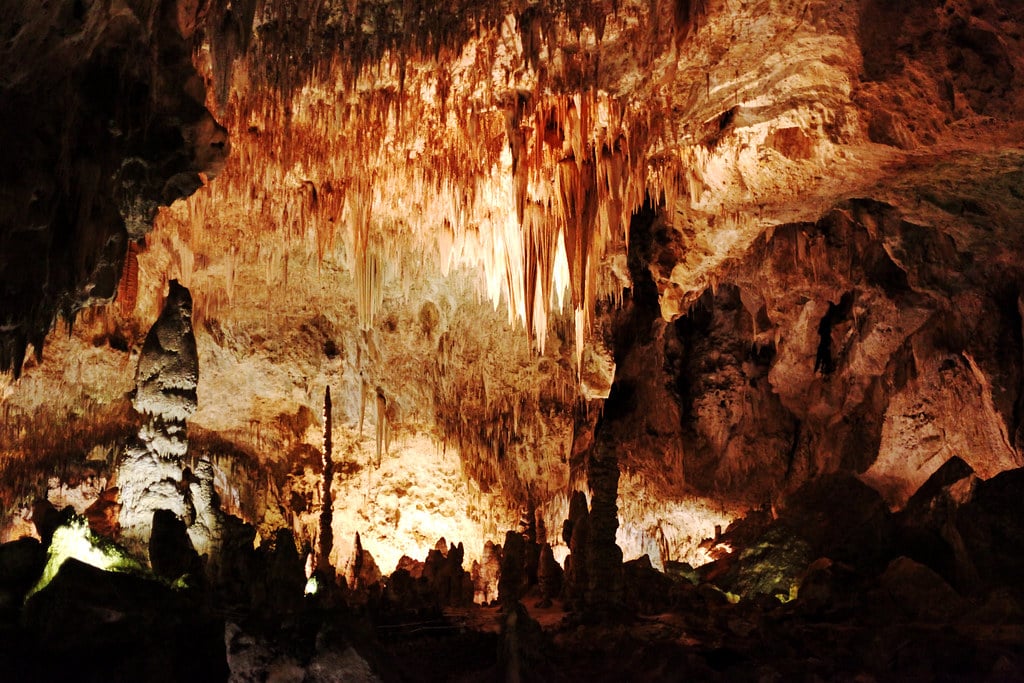
Lechuguilla Cave in New Mexico remained sealed until 1986, preserving formations in near-perfect condition. The system extends over 150 miles, making it one of the longest caves in the United States.
More importantly, it contains formations found nowhere else. Hydromagnesite “balloons” float impossibly thin, defying expectations of what minerals can do.
Sulfur deposits coat walls in yellow. Gypsum chandeliers hang so delicately that air currents from your breathing could destroy them.
Access is strictly limited to scientific research and survey teams. Most people will never see these formations in person, which keeps them safe from the oils and bacteria that humans inevitably leave behind.
Reed Flute’s Colorful Lighting
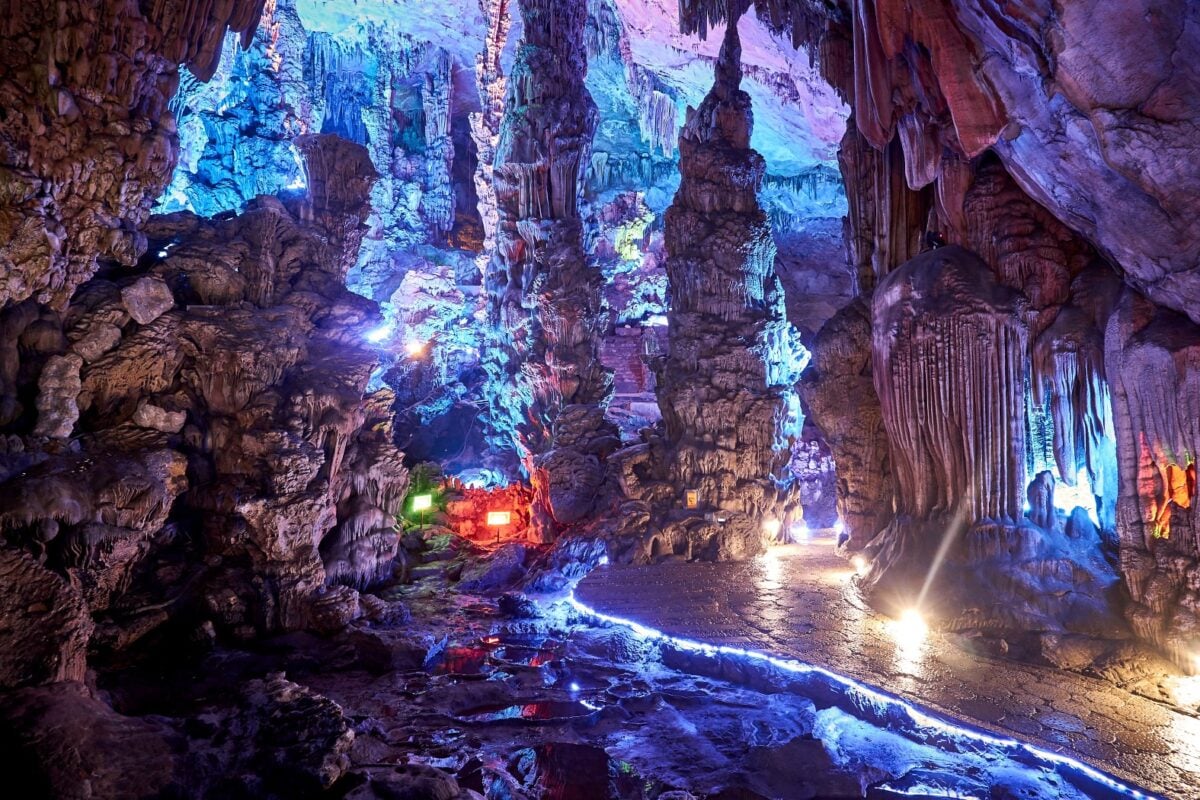
Reed Flute Cave in China has been a tourist attraction for over 1,200 years, with ink inscriptions dating back to the Tang Dynasty. The cave gets its name from reeds growing outside that people once used to make flutes.
Modern lighting transforms the natural formations into a technicolor wonderland. Artificial lights in blues, greens, reds, and purples illuminate the stalactites, stalagmites, and rock formations.
Some purists argue that this detracts from natural beauty. Others find the colored lighting creates an entirely different experience—less scientific, more fantastical. The formations themselves earned poetic names like “Crystal Palace” and “Dragon Pagoda.”
During the high tourist season, the cave fills with visitors following a carefully designed path that showcases the most dramatic views.
Marble Cathedral’s Water-Carved Beauty
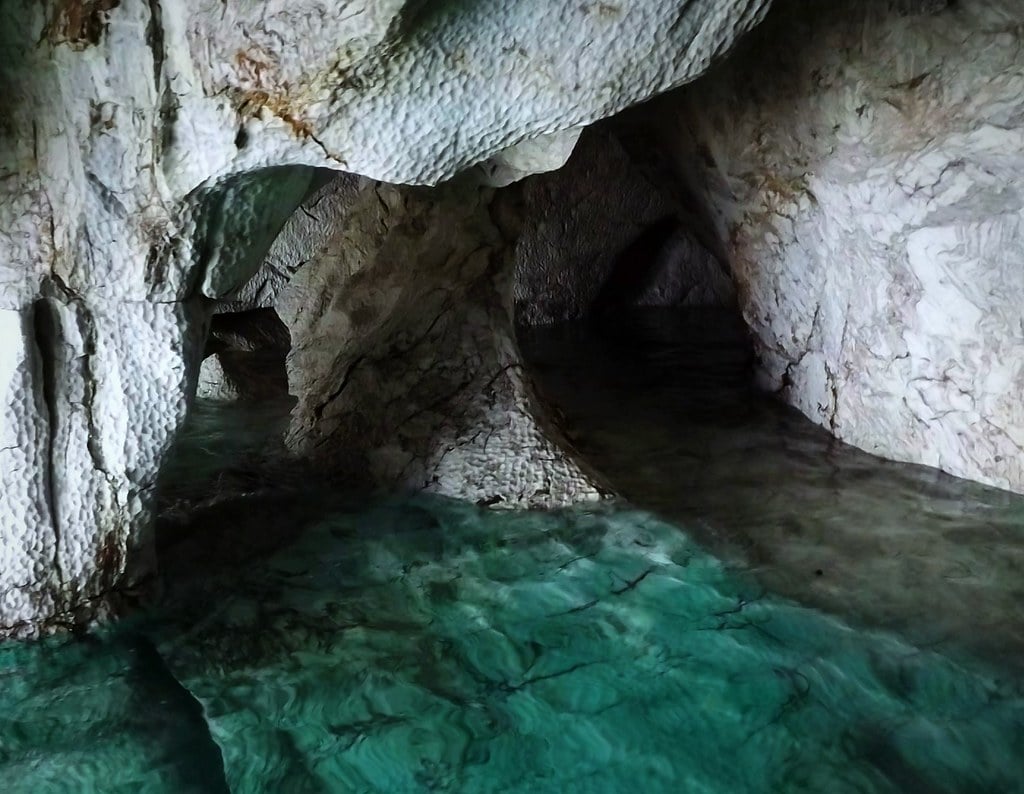
The Marble Caves in Patagonia, Chile, aren’t technically caves but caverns carved by wave action into marble cliffs. Turquoise water from Lago General Carrera reflects onto the smooth marble walls, creating swirling patterns of blue and white.
The marble took 6,000 years to form these smooth, flowing shapes. You explore by kayak or small boat, paddling through narrow passages where the walls seem to glow.
The water color changes based on season and weather—sometimes deep blue, other times pale turquoise or green. The marble veining creates natural abstract art on every surface.
Sunlight filtering through the water casts dancing patterns on the ceiling. The whole experience feels more like floating through a sculpture than exploring a geological formation.
Fingal’s Geometric Columns
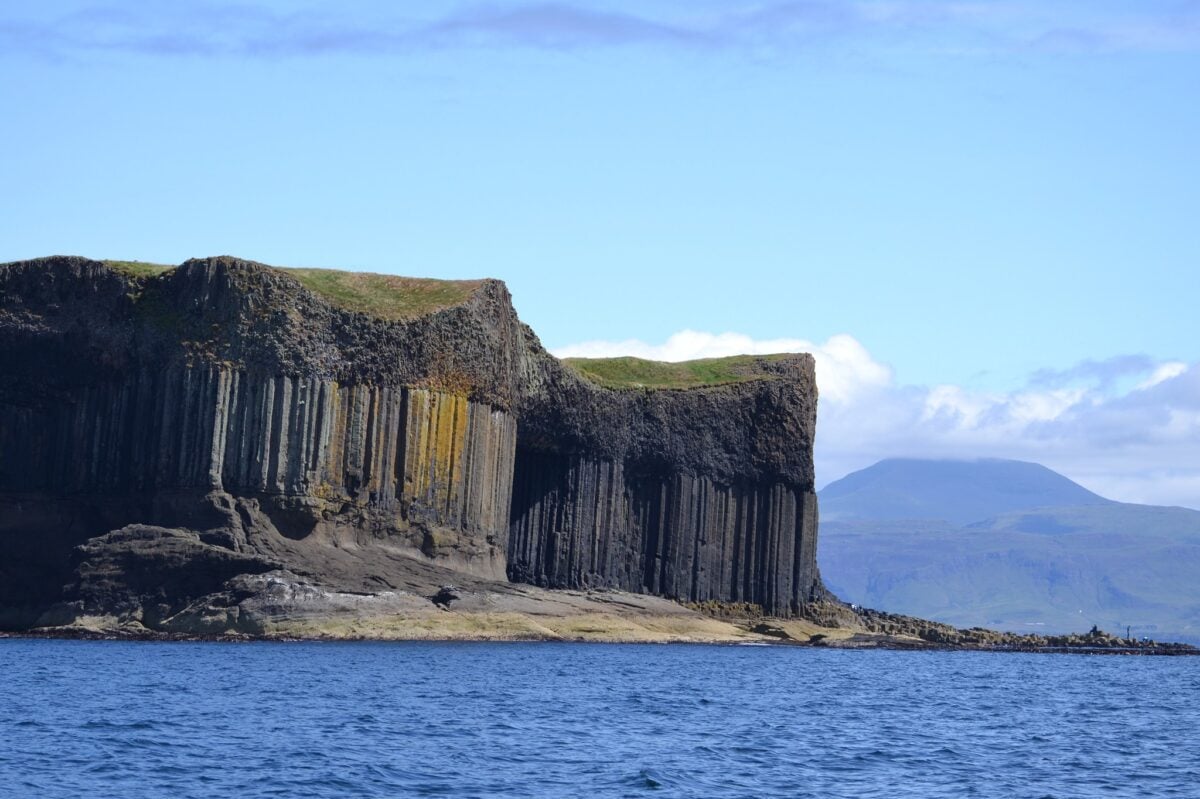
Fingal’s Cave in Scotland was formed from hexagonal basalt columns created by ancient lava flows. When magma cooled slowly, it contracted and fractured into these regular geometric shapes.
The result looks almost artificial—too perfect to be natural. The cave opening faces the sea, allowing waves to surge inside during storms.
The acoustics amplify the sound of crashing water into a natural organ. Composer Felix Mendelssohn visited in 1829 and later wrote “The Hebrides Overture” inspired by the experience.
The cave appears in legends and literature, including as inspiration for Jules Verne’s “Journey to the Center of the Earth.” Standing at the entrance, watching waves rush into this geometric chamber, you understand why artists and writers found it so captivating.
Škocjan’s Underground Canyon
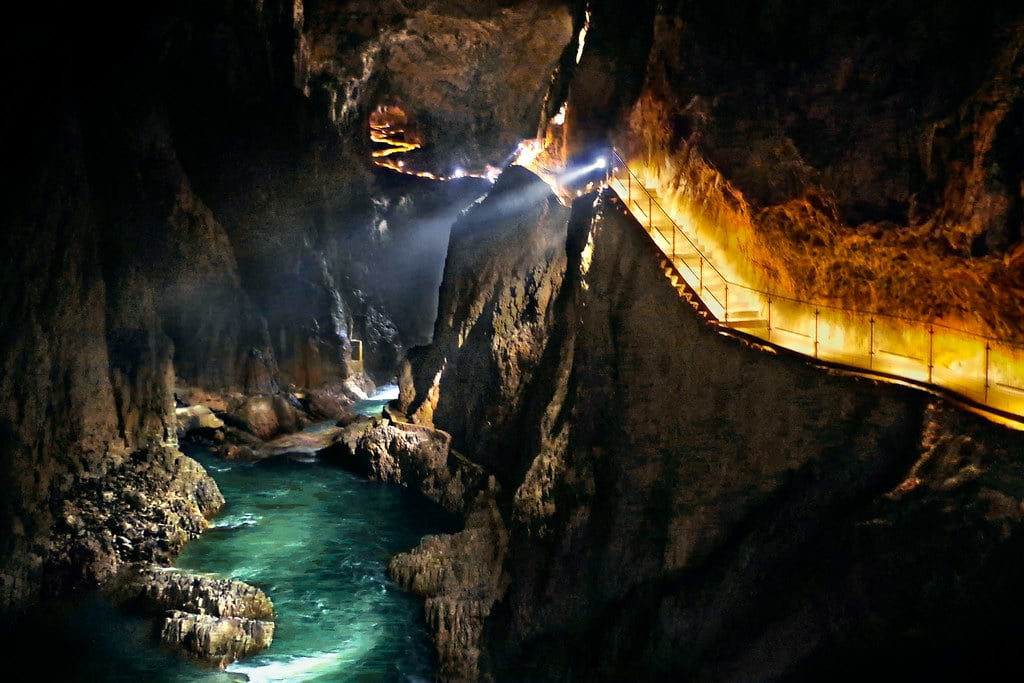
Slovenia’s Škocjan Caves contain a massive underground canyon where the Reka River disappears into the Earth. The canyon reaches 450 feet deep and over 300 feet wide in places.
A bridge suspended 150 feet above the river provides stomach-dropping views into the chasm. The river roars through the passage, especially during spring runoff.
In the Silent Cave section, the water calms, and formations dominate—massive stalagmites, flowstone, and draperies. The contrast between the violent, noisy river passage and the quiet decorated chambers creates two completely different experiences in the same system.
The caves influenced Dante’s description of the underworld in “The Divine Comedy.” That literary connection makes sense when you stand on the bridge, looking down into the darkness while water thunders far below.
Mammoth Cave’s Endless Passages
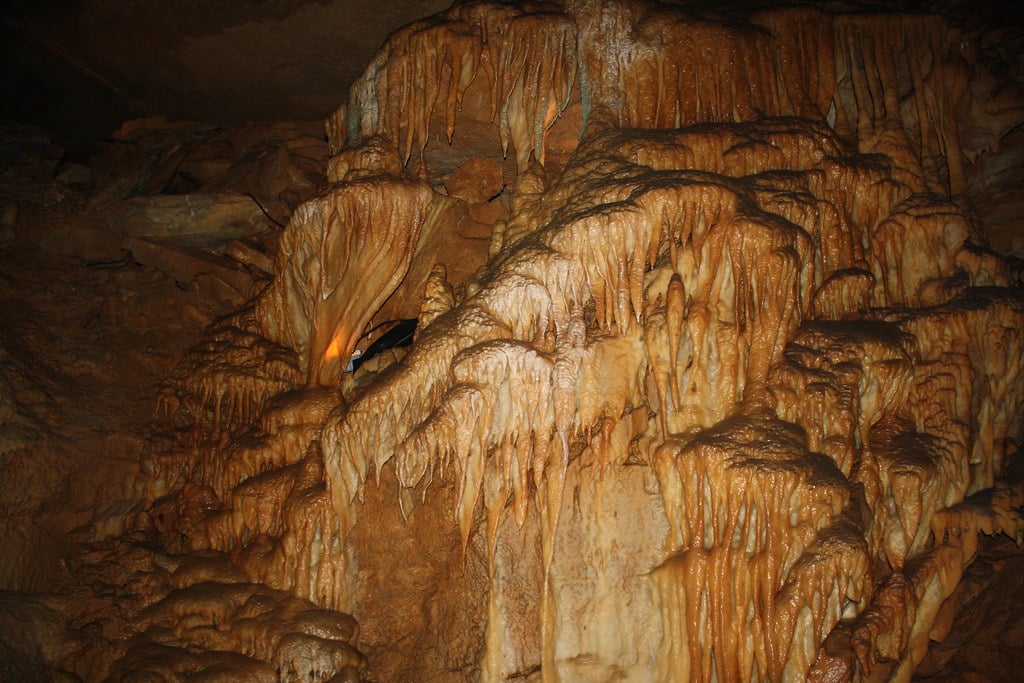
Mammoth Cave in Kentucky holds the record as the world’s longest known cave system, with over 400 miles mapped so far. New passages get discovered regularly.
The cave formed in a thick limestone layer, creating a complex three-dimensional maze of passages stacked on multiple levels. Some passages are wide avenues you can walk through upright.
Others require crawling through tight squeezes. Certain sections contain spectacular formations.
Others are relatively plain but geologically significant. The sheer scope overwhelms comprehension—400 miles of passage, and surveyors estimate they’ve explored maybe half of the total system.
You could spend your entire life exploring and still not see everything.
Blue Grotto’s Underwater Light Show
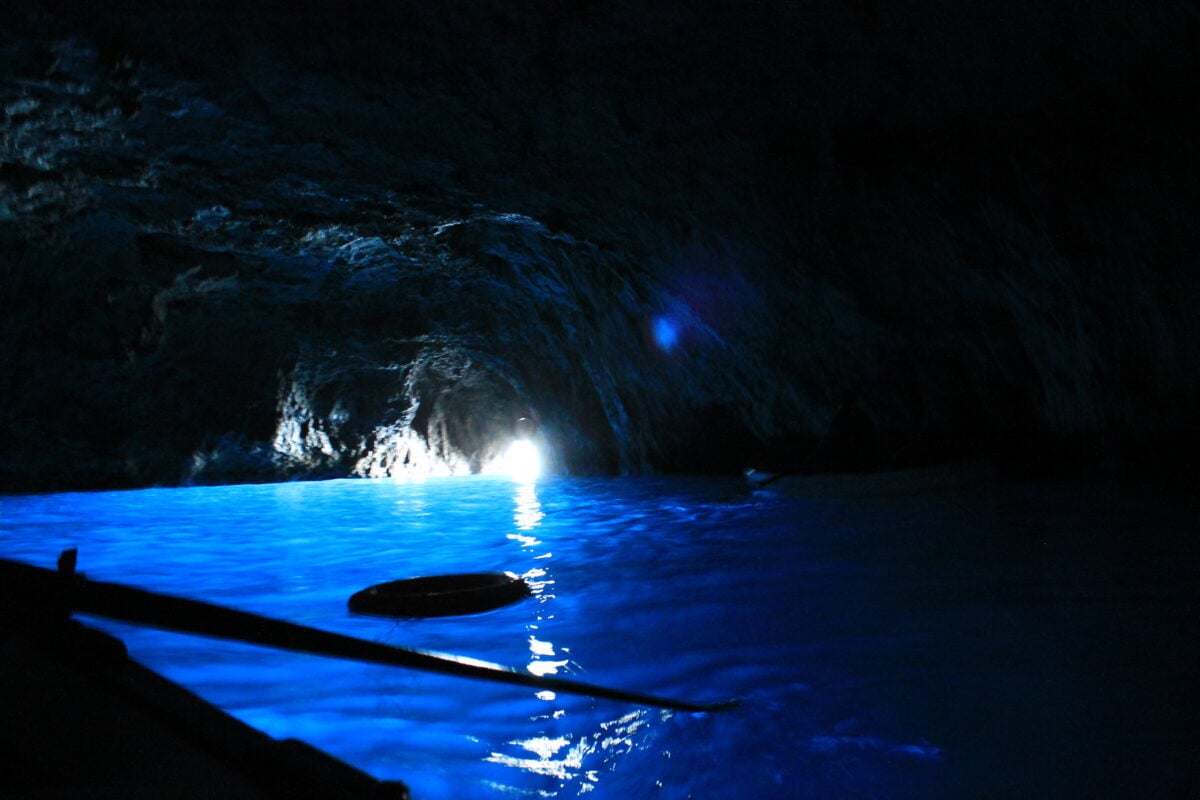
The Blue Grotto in Capri, Italy, showcases how light transforms a simple sea cave into something magical. A small entrance sits just above the waterline.
You enter by lying flat in a rowboat as the boatman pulls the vessel through the narrow opening using a chain mounted to the wall. Inside, sunlight filters through underwater openings, creating an electric blue glow that fills the chamber.
The water appears to emit light rather than reflect it. White objects dipped in the water glow silver.
The effect lasts only during certain times of day when the sun angle is right. Romans used the cave as a private swimming area, and you can see the remains of ancient statues that once decorated the interior.
Waitomo’s Ruakuri Natural Entrance
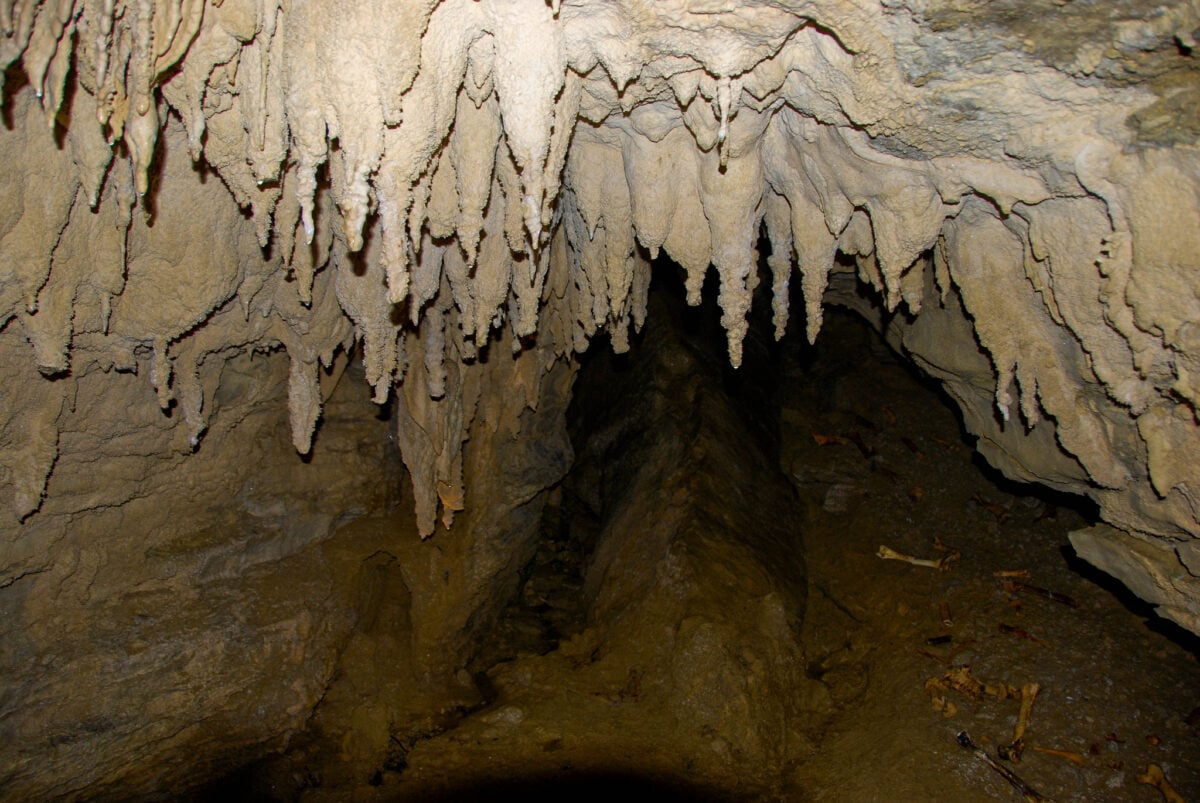
While Waitomo’s glowworms get most of the attention, the Ruakuri Cave in the same area offers something different—a dramatic spiral entrance built to avoid disturbing a sacred Māori burial site at the original opening. The 50-foot spiral tunnel delivers you into passages decorated with both limestone formations and more glowworms.
The cave name means “den of dogs” in Māori, named after wild dogs that once lived near the entrance. Unlike the boat tour through the glowworm cave, Ruakuri lets you walk through larger passages, getting closer to the formations.
Underground waterfalls flow through some sections. The combination of human engineering (the spiral entrance) and natural beauty creates a unique entry experience that prepares you for the grandeur ahead.
Crystal Cave’s Giant Selenite
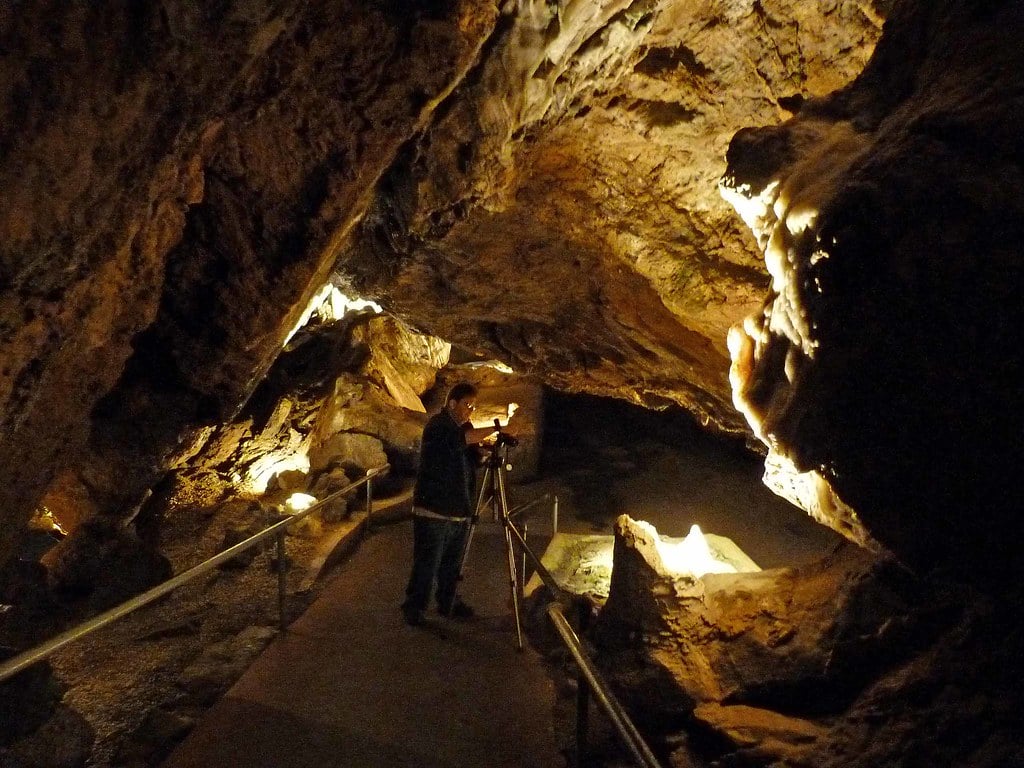
Down in Naica, Mexico, lies a cave full of giant crystals – the biggest found on Earth. Some stretch as far as 39 feet, tipping the scales at 55 tons.
Heated by molten rock beneath, hot water rich in minerals filled the space where these selenite forms took shape. Without shifts in heat or supply, growth carried on steadily for nearly half a million years.
Inside, the air hits 136 degrees, soaked with thick moisture, so hot that bodies fail fast unless wrapped in cooling gear. Though shielded, people manage just ten minutes – heat drags them down regardless.
A mining crew once drained the space to enter, yet rising water sealed it shut again. What lies within might vanish from living eyes forever, surviving only through images hard to believe.
These formations play tricks on sight – vast clear spires jutting sideways and upward, forming a grove of stone colossi where light bends strangely.
Where Darkness Holds Beauty
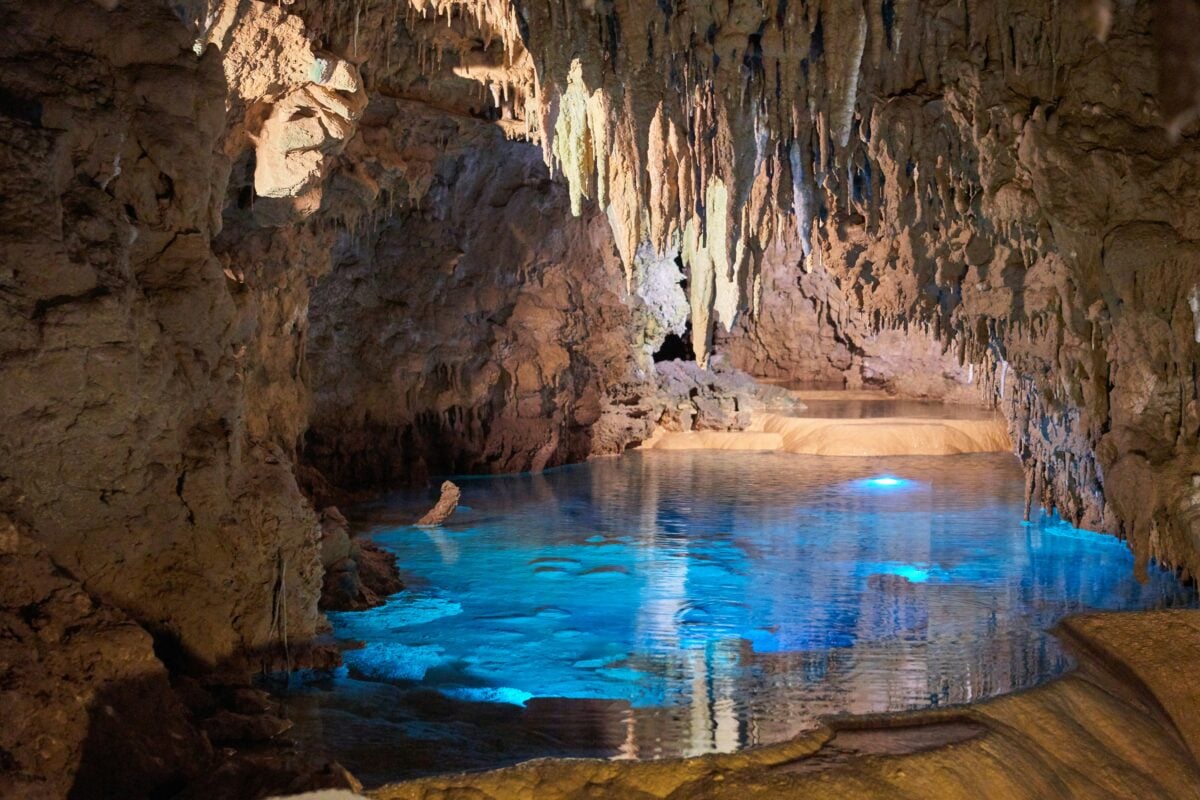
Imagine peering beneath the surface. Hidden below, where light barely reaches, quiet making happens.
Each crystal builds itself piece by piece. Stone reshapes not in bursts but through a steady trickle.
What looks still is quietly alive. Down here, life survives where almost nothing else could.
Formed over ages beyond counting, these caverns hold shapes fragile enough to vanish from one wrong move. A single drip shapes stone over centuries without applause.
Darkness held these chambers long before anyone arrived to see them. Time moves differently where light never reaches.
Life up above feels fleeting when measured against such stillness. Each step forward echoes like a question into the deep quiet.
What seems solid today might shift in another thousand years. The weight of ages sits easily here, unhurried.
People come and go while rock keeps its slow rhythm. Standing inside one of these spaces changes how you think about now.
After leaving, the world outside appears less fixed than it did before.
More from Go2Tutors!

- The Romanov Crown Jewels and Their Tragic Fate
- 13 Historical Mysteries That Science Still Can’t Solve
- Famous Hoaxes That Fooled the World for Years
- 15 Child Stars with Tragic Adult Lives
- 16 Famous Jewelry Pieces in History
Like Go2Tutors’s content? Follow us on MSN.