Classic Video Consoles That Marked New Eras
The history of video game consoles reads like a wild ride through technological innovation, corporate battles, and cultural shifts that transformed entertainment forever. These machines didn’t just let people play games at home—they fundamentally changed how we interact with technology and each other.
Here is a list of 15 classic video consoles that marked new eras in gaming history.
Magnavox Odyssey
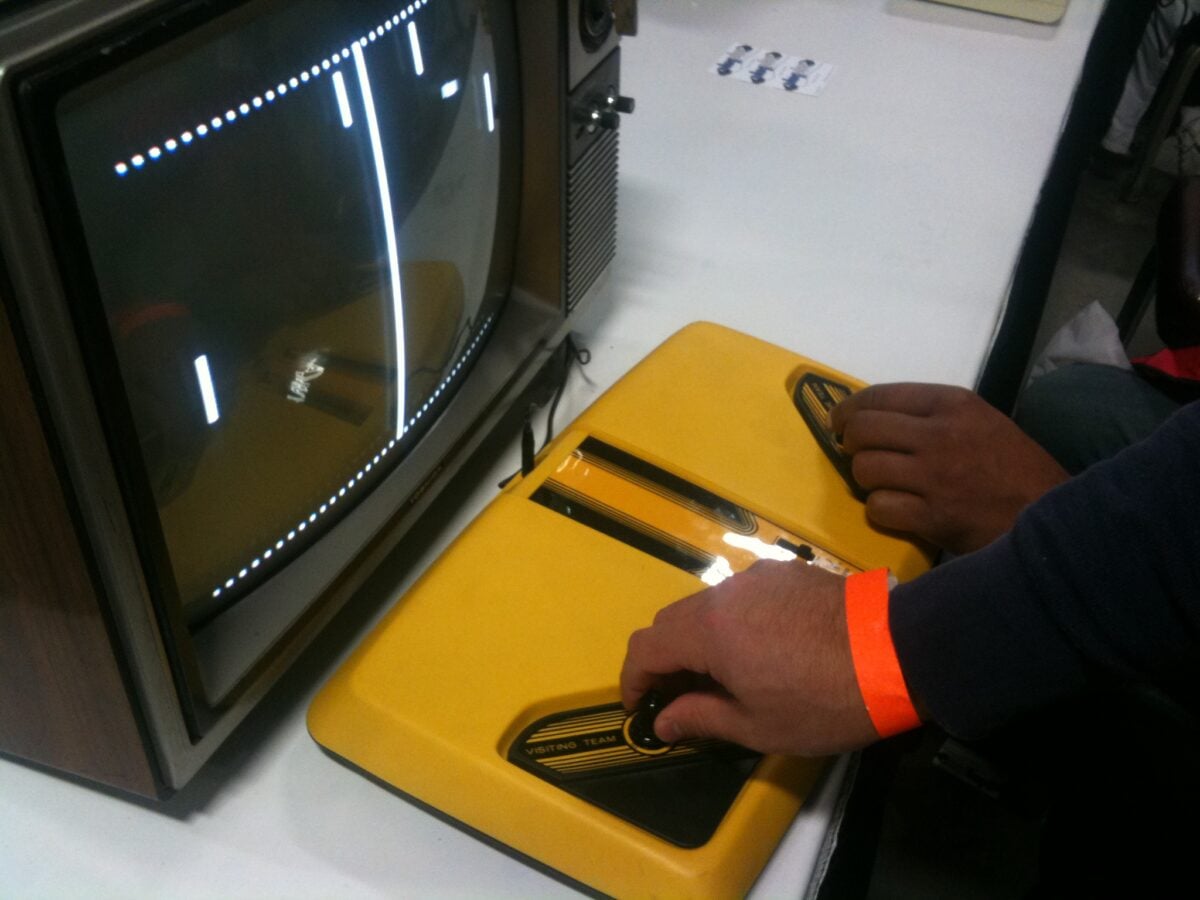
The first home video game console arrived in 1972 when Magnavox released the Odyssey, originally conceived by Ralph Baer in 1966. This brown box of a machine was primitive by any standard, producing only black and white graphics that required players to stick plastic overlays on their TV screens for color.
Games were hardwired into the console rather than stored on cartridges, and it came packaged with a board game. Despite its limitations, the Odyssey proved that people wanted to play games in their living rooms, setting the stage for everything that followed.
Atari 2600

Released in September 1977 as the Atari Video Computer System, the Atari 2600 popularized microprocessor-based hardware and games stored on swappable ROM cartridges. This was the console that made home gaming a genuine phenomenon rather than a curiosity.
The release of Space Invaders as a licensed game helped Atari sell over a million systems in 1980, nearly doubling the install base to over 2 million. By 1982, roughly 10 million consoles had been sold in the United States.
The 2600’s success created the foundation for the entire home console industry, proving that families would invest in gaming hardware and build libraries of software.
Like Go2Tutors’s content? Follow us on MSN.
ColecoVision

The ColecoVision was based around a Zilog Z80 CPU and became one of the most recognizable consoles of the early 1980s. It offered slightly better graphics than the competing Atari 2600, which allowed it to deliver exceptional ports of arcade classics.
ColecoVision provided the first home version of Nintendo’s Donkey Kong and Sega’s Zaxxon. While it didn’t achieve the same massive sales as Atari, the ColecoVision showed that technical improvements could attract consumers who wanted arcade experiences at home.
Nintendo Entertainment System

The NES is the platform that single-handedly saved the gaming industry while simultaneously making video games a pop-cultural phenomenon. After the devastating video game crash of 1983 wiped out much of the American market, Nintendo approached retailers cautiously with a console disguised as an entertainment system rather than a toy.
The NES revitalized the industry with groundbreaking titles like Super Mario Bros. and The Legend of Zelda, with sales reaching roughly 62 million units.
Nintendo’s strict licensing model with third-party developers prevented the market flooding that had caused the crash, and the company created franchises that remain cultural touchstones decades later.
Sega Master System

Sega’s attempt to compete with the NES launched in 1985 and sold approximately 13 million units. While it offered compelling games and technical capabilities, its sales paled compared to Nintendo’s dominance in North America. The Master System was an 8-bit third-generation home video game console originally remodeled from the Sega Mark III in Japan.
However, the system found more success in Europe and Brazil, where it competed more effectively against Nintendo and remained in production for years after being discontinued elsewhere.
Like Go2Tutors’s content? Follow us on MSN.
Sega Genesis

Sega released the Genesis in 1988 in Japan as the Mega Drive, and in 1989 in North America, with the 16-bit console becoming Sega’s most successful hardware ever. The Genesis directly challenged Nintendo’s dominance with aggressive marketing that positioned it as the cooler, more mature option.
The release of Sonic the Hedgehog in 1991 finally created a character for Sega whose popularity could rival Nintendo’s Mario. Sega also tried to push hardware faster than the competition with add-ons like the Sega CD to take advantage of new CD technology that allowed for more storage space and full-motion video.
The Genesis proved that Nintendo wasn’t invincible and kicked off the console wars that would define the industry for decades.
Super Nintendo Entertainment System

Super Nintendo built on the success of the original Nintendo by providing better graphics and sound thanks to a 16-bit internal processor, with over 40 million units sold between 1990 and 2003. Nintendo’s response to the Genesis arrived later but delivered exceptional first-party titles that showcased what 16-bit hardware could accomplish.
The game library included Donkey Kong Country, with the most realistic graphics of any console game up to that point, and Star Fox. The SNES represented Nintendo at its creative peak, with games that pushed storytelling, music, and gameplay design forward in ways that still impress today.
Sony PlayStation
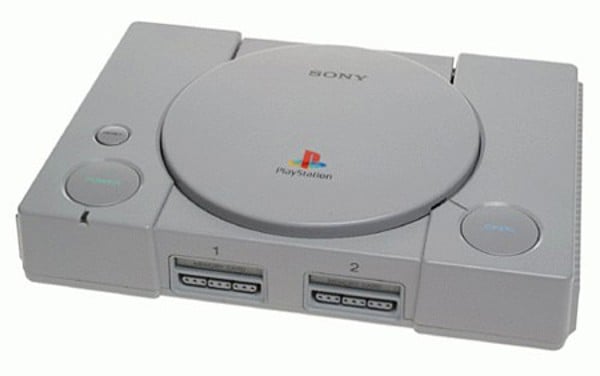
The PlayStation changed everything when Sony used CDs, powerful hardware, and a focus on 3D games to catapult to the top of the gaming world, with massive sales of over 102 million units demonstrating Sony’s dominance. Originally developed as a collaboration with Nintendo, the PlayStation project evolved into a standalone console after the partnership dissolved. T
he shift to CD-ROMs allowed for much larger games with full soundtracks and cinematic cutscenes. The PlayStation’s library included groundbreaking titles like Final Fantasy VII, Metal Gear Solid, and Crash Bandicoot.
Sony proved that a newcomer could enter the console market and immediately dominate, fundamentally reshaping the competitive landscape.
Like Go2Tutors’s content? Follow us on MSN.
Nintendo 64

Nintendo’s entry into the 3D arena featured iconic titles like Super Mario 64 and Ocarina of Time, selling approximately 34 million units. While Nintendo stuck with cartridges instead of CDs, the N64 delivered some of the most influential 3D games ever made.
The console’s controller introduced the analog stick to mainstream gaming, which became standard for navigating 3D spaces. Games like GoldenEye 007 proved that console first-person shooters could work brilliantly with the right design, and the four controller ports made the N64 the ultimate party console for multiplayer gaming.
Sega Dreamcast

The Dreamcast launched in North America on September 9, 1999, at a price of $199, selling more than 225,132 units in 24 hours and earning $98.4 million. The Dreamcast was the first of the sixth generation of video game consoles and featured a built-in modem for online gaming.
Reviewers have celebrated the Dreamcast as one of the greatest consoles, considered ahead of its time for pioneering concepts such as online play and downloadable content. Despite its innovations and games like Soul Calibur and Shenmue, the Dreamcast couldn’t compete with the PlayStation 2’s momentum.
Sega discontinued the hardware in 2001 and exited the console business entirely, ending an era.
PlayStation 2

Released in 2000, the PlayStation 2 would go on to become the best-selling console of all time, with over 155 million units sold. The PS2’s built-in DVD player made it an attractive purchase even for non-gamers at a time when DVD players were still expensive standalone devices.
Sony’s massive library of games covered every genre imaginable, from niche Japanese role-playing games to blockbuster action titles. The PS2 dominated its generation so thoroughly that it remained in production for over a decade, receiving new games even after its successors launched.
Like Go2Tutors’s content? Follow us on MSN.
Xbox

For years Microsoft had marketed successful single games like Flight Simulator, but it did not introduce a general game system until 2001. Attempting to dominate the industry with its longer narratives, enhanced controllers, better graphics, and processing capabilities, the disc-driven Xbox was a smash hit.
The console’s built-in hard drive and Ethernet port positioned it perfectly for online gaming through Xbox Live, which became the gold standard for console online services. Games like Halo established Microsoft as a serious player in the console market and created franchises that would define the brand for years.
Nintendo Wii

The Wii was released on November 19, 2006, in North America, emphasizing new forms of interaction through its wireless controller, the Wii Remote, which featured motion-tracking controls. At $249, it was cheaper than the Xbox 360 and PlayStation 3, which retailed at $299 and $499 respectively, and it came with Wii Sports, a paragon of casual gaming.
The Wii revolutionized gaming with its motion controls, attracting a wider audience and selling over 102 million units. Nintendo changed the game by ignoring the graphics arms race and focusing on accessibility and fun, bringing gaming to grandparents, fitness enthusiasts, and people who had never touched a controller before.
PlayStation 4

The PlayStation 4 family launched in 2013, with Sony focusing heavily on its first-party developers and console exclusives as key selling points. As of September 2023, the PlayStation 4 had sold an estimated 117 million units. Sony’s emphasis on games over multimedia features gave it a massive advantage after Microsoft stumbled with the Xbox One’s launch.
The PS4 delivered consistent exclusive titles that justified the hardware purchase, from Uncharted 4 to The Last of Us Part II. It proved that focusing on what gamers actually wanted—great games—was still the winning formula.
Like Go2Tutors’s content? Follow us on MSN.
Nintendo Switch

The Nintendo Switch has become the console to beat in the modern era, combining the touchscreen of the DS and the sensor technology of the Wii with the ability to shift between a home console and a handheld device. The Switch was designed to address many of the hardware and marketing faults around the Wii U’s launch and has become one of the company’s fastest-selling consoles after the Wii.
With titles including Breath of the Wild, Metroid Dread, and Animal Crossing: New Horizons, the Switch pushed the industry forward not by centimeters but by kilometers. Nintendo proved once again that innovation in how we play matters just as much as raw processing power.
The Hardware Arms Race Continues

Both the PlayStation 5 and Xbox Series X have demonstrated what the new era is all about, with the best graphics, sound design, load speed, and narrative potential yet. These ninth-generation consoles launched in 2020 amid global supply shortages, yet they represent genuine leaps forward in technology.
Ultra-fast solid-state drives have eliminated loading screens that plagued gaming for decades, while ray tracing brings film-quality lighting to real-time graphics. The work that has gone into reinventing both the Xbox and PlayStation controllers showcases the advancements taking place in the industry.
As cloud gaming, virtual reality, and artificial intelligence continue developing, these consoles show that dedicated gaming hardware still has plenty of room to evolve and surprise us with what’s possible when technology serves creativity.
More from Go2Tutors!

- 16 Historical Figures Who Were Nothing Like You Think
- 12 Things Sold in the 80s That Are Now Illegal
- 15 VHS Tapes That Could Be Worth Thousands
- 17 Historical “What Ifs” That Would Have Changed Everything
- 18 TV Shows That Vanished Without a Finale
Like Go2Tutors’s content? Follow us on MSN.