Court Cases That Overturned Laws People Thought Would Stand Forever
The law feels permanent until it isn’t. Marble courthouses and leather-bound statutes give the impression of something carved in stone, unchangeable as gravity. But legal history tells a different story — one where seemingly rock-solid precedents crumble overnight, where laws that governed generations suddenly become footnotes in constitutional textbooks.
These weren’t minor adjustments or technical corrections. These were seismic shifts that rewrote the rules millions of people lived by, often in ways no one saw coming. The cases that follow didn’t just change legal theory; they changed lives, upended expectations, and proved that even the most entrenched legal principles can vanish with a single court decision.
Brown v. Board of Education

Plessy v. Ferguson had been settled law for nearly sixty years. Separate but equal wasn’t just a legal doctrine — it was the foundation of an entire social order. Then Brown came along and demolished it in a single decision.
The ruling didn’t just overturn precedent; it declared that separate could never be equal. Schools across the South that had operated under the same legal framework since Reconstruction suddenly found their entire system unconstitutional. What seemed like an immutable fact of American life disappeared overnight.
Miranda v. Arizona

Police had been questioning suspects without warnings for as long as there had been police departments. The idea that officers needed to recite a script before asking questions would have seemed absurd to previous generations of law enforcement — like requiring a formal announcement before making an arrest.
And yet Miranda didn’t just change procedure; it fundamentally altered the relationship between suspects and the state (creating what became known as Miranda rights, though the case itself never used that term). So what had been standard police work for over a century suddenly became a constitutional violation. The familiar warning that follows arrests — “You have the right to remain silent” — traces directly back to this single case that nobody saw coming.
Loving v. Virginia

The Racial Integrity Act wasn’t some obscure statute gathering dust in legal libraries. It was actively enforced law in Virginia and fifteen other states, backed by centuries of tradition and what many considered natural order. Interracial marriage bans had survived challenges for decades because courts treated them as obviously constitutional.
Then the Supreme Court looked at these laws — laws that had defined marriage in much of America since before the Civil War — and found them so fundamentally flawed that they violated both equal protection and due process. States that had built entire legal frameworks around racial classifications in marriage watched those frameworks collapse in a single afternoon. The decision was unanimous, which somehow made it even more startling: nine justices agreed that what sixteen states considered basic law was actually unconstitutional.
Gideon v. Wainwright

Defendants had been representing themselves in court since the beginning of the American legal system. If you couldn’t afford a lawyer, you argued your own case or went without representation — that was simply how criminal justice worked, had always worked, and seemed destined to work forever.
The Supreme Court took one look at this centuries-old practice and declared it a violation of the Sixth Amendment. Suddenly, every state needed to provide attorneys for indigent defendants, not just in capital cases but in all felony prosecutions. Public defender offices sprang up across the country almost overnight, funded by state governments that had never considered legal representation a constitutional requirement.
Roe v. Wade

Abortion restrictions weren’t controversial legal territory in 1973. They were standard state law, backed by medical associations and enforced without serious constitutional challenge. Most states had regulated or prohibited abortion for over a century, and these laws seemed as permanent as any in the books.
The Court’s discovery of a constitutional right to privacy that protected reproductive choices caught legal observers off guard. States that had prohibited abortion since statehood suddenly found their laws invalid. The decision created a new constitutional framework around reproductive rights that existed nowhere in previous jurisprudence.
Lawrence v. Texas

Sodomy laws were older than the Constitution itself. Thirteen states still enforced these statutes in 2003, treating certain private intimate conduct as criminal behavior — just as American law had done since colonial times. The laws seemed bulletproof because they had survived every previous constitutional challenge and carried the weight of centuries.
But Lawrence didn’t just strike down these laws; it declared them fundamentally incompatible with constitutional liberty. The Court found that what had been criminal behavior for hundreds of years was actually protected private conduct. States that had prosecuted people under these laws for generations watched their authority to regulate intimate relationships simply evaporate.
Citizens United v. FEC

Campaign finance law seemed settled after decades of reform efforts. The McCain-Feingold Act had restricted corporate political spending for years, building on regulations that stretched back to the early 1900s. Corporate political contributions had been limited or prohibited in various forms since the Tillman Act of 1907.
Then Citizens United reframed corporate spending as protected speech under the First Amendment. What had been illegal political activity became a constitutional right. The decision didn’t just change election law; it treated restrictions that had existed for over a century as violations of corporate free speech rights that previous courts had never recognized.
New York Times Co. v. Sullivan
Libel law was straightforward before Sullivan: publish false statements that damage someone’s reputation, and face potential legal consequences. The standards were clear, the precedents were solid, and the principle seemed unshakeable. Truth was a defense, but the burden of proof often fell on defendants to prove their statements were accurate.
Sullivan flipped this framework entirely for public figures. The Court created a new standard — “actual malice” — that made it nearly impossible for public officials to win libel cases. What had been settled tort law for centuries suddenly required proof of intentional falsehood or reckless disregard for truth. Newspapers that had operated under the constant threat of libel suits found themselves with unprecedented protection.
Mapp v. Ohio
The exclusionary rule wasn’t universal law in 1961. States could use illegally obtained evidence in court if they chose to — roughly half of them did exactly that, and nothing in federal constitutional law prevented it. The Fourth Amendment applied to federal cases, but states maintained their own standards for evidence and searches.
Mapp changed this by applying the exclusionary rule to all state courts through the Fourteenth Amendment. Evidence obtained through illegal searches became inadmissible everywhere, not just in federal court. Police departments across the country had to completely revise their procedures because tactics that had been legal under state law suddenly violated federal constitutional requirements.
West Coast Hotel Co. v. Parrish

The Lochner era had dominated constitutional law for thirty-two years. Courts routinely struck down labor regulations as violations of economic liberty, treating minimum wage laws, maximum hour requirements, and workplace safety rules as unconstitutional interference with freedom of contract. This wasn’t radical judicial activism — it was established constitutional doctrine.
Parrish demolished this entire framework by upholding a state minimum wage law and explicitly overruling previous cases that had prohibited such regulations. The decision marked the end of an era where economic regulations were presumptively unconstitutional. Legislatures that had seen their labor laws struck down repeatedly suddenly found constitutional room to regulate working conditions, wages, and hours.
Kelo v. City of New London

Eminent domain had clear boundaries for two centuries: governments could take private property for public use, but not for private development. The “public use” requirement seemed like an obvious limitation on government power, one that protected property owners from having their land seized for private benefit.
Then Kelo expanded “public use” to include economic development that might benefit the public. Property that had been safe from condemnation as long as it wasn’t needed for roads, schools, or other obvious public projects suddenly became vulnerable to seizure for shopping centers, office buildings, or any development that promised economic benefits.
District of Columbia v. Heller
Gun control advocates and opponents had argued for decades about what the Second Amendment actually protected. But the legal consensus among courts was fairly clear: the amendment protected a collective right related to militia service, not an individual right to bear arms. This interpretation had guided gun regulations for generations.
Heller scrapped this framework entirely, finding an individual constitutional right to possess firearms unconnected to militia service. Gun laws that had been constitutional under the collective rights interpretation suddenly faced strict constitutional scrutiny. The decision didn’t just change Second Amendment law — it discovered a constitutional right that most legal scholars thought didn’t exist.
Obergefell v. Hodges

Marriage between one man and one woman wasn’t just tradition in 2015 — it was the law in thirteen states and had been the legal definition of marriage since the founding of the republic. The Defense of Marriage Act had reinforced this definition at the federal level, and most courts had upheld traditional marriage laws against constitutional challenge.
Obergefell found a constitutional right to gender-neutral marriage in the Due Process and Equal Protection Clauses. States that had prohibited such marriages through constitutional amendments — often passed by overwhelming majorities — watched those amendments become unenforceable overnight. The decision created a constitutional right that had never existed in American law and overturned marriage statutes in more than half the country.
Griswold v. Connecticut
Connecticut’s ban on contraceptives wasn’t an anomaly — it was part of a broader legal tradition that gave states wide authority to regulate moral behavior. The Comstock Laws and similar statutes had restricted birth control for decades, and courts had generally upheld these regulations as legitimate exercises of state police power.
Griswold discovered a constitutional right to privacy that protected contraceptive use by married couples. The decision created a new constitutional framework around reproductive privacy that existed nowhere in previous case law. States that had regulated contraceptives as part of their moral authority found that authority sharply limited by a privacy right the Court located in the “penumbras” of other constitutional guarantees.
Shelby County v. Holder

The Voting Rights Act had been constitutional bedrock since 1965. Its preclearance requirements — which required certain states to get federal approval before changing voting procedures — had survived multiple reauthorizations and court challenges. Congress had renewed these provisions as recently as 2006 with overwhelming bipartisan support.
Shelby County struck down the coverage formula that determined which jurisdictions needed federal approval for voting changes. The Court found that the formula relied on outdated data and that preclearance requirements, while once necessary, were no longer justified by current conditions. States that had operated under federal oversight for nearly fifty years suddenly regained full control over their voting procedures.
The Weight of Precedent
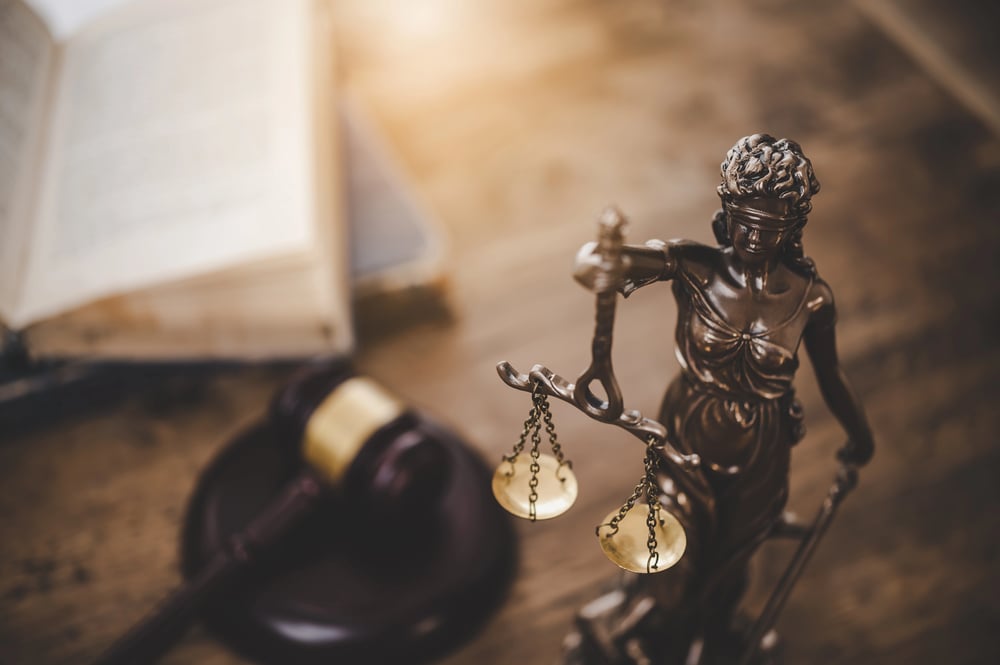
These decisions share something beyond their dramatic reversals of established law. They reveal how legal certainty can be an illusion, how precedents that seem unshakeable can crumble when examined through a different constitutional lens. The law that governs your daily life — from the warnings police must give to the marriages your state recognizes — rests on foundations that proved less solid than anyone imagined.
But perhaps that’s the point. Constitutional law evolves not despite its apparent permanence, but because of the tension between stability and justice, between settled expectations and changing understanding of fundamental rights. The cases that overturn “eternal” laws don’t just change legal doctrine — they remind us that even the most entrenched legal principles remain subject to reexamination, revision, and occasionally, complete reversal.
More from Go2Tutors!

- The Romanov Crown Jewels and Their Tragic Fate
- 13 Historical Mysteries That Science Still Can’t Solve
- Famous Hoaxes That Fooled the World for Years
- 15 Child Stars with Tragic Adult Lives
- 16 Famous Jewelry Pieces in History
Like Go2Tutors’s content? Follow us on MSN.