Curious Facts About Old Libraries
Walking into an ancient library feels different from entering any other building. The air smells of aged paper and wood polish.
Light filters through tall windows onto reading tables that have held thousands of books over centuries. These spaces hold more than just collections of texts—they contain stories about how people have preserved and shared knowledge across generations.
Some of what happened in these buildings seems almost impossible to believe.
Chained Books Were Normal for Centuries

Many medieval libraries chained their books directly to the shelves. This wasn’t paranoia—books cost as much as houses back then.
A single illuminated manuscript could take years to produce and required materials like vellum, gold leaf, and expensive pigments. The chains were long enough to let you take a book off the shelf and read it at a nearby desk, but not long enough to walk out the door.
You can still see these chains attached to books in places like the Hereford Cathedral library in England.
The Library of Alexandria Had a Piracy Problem
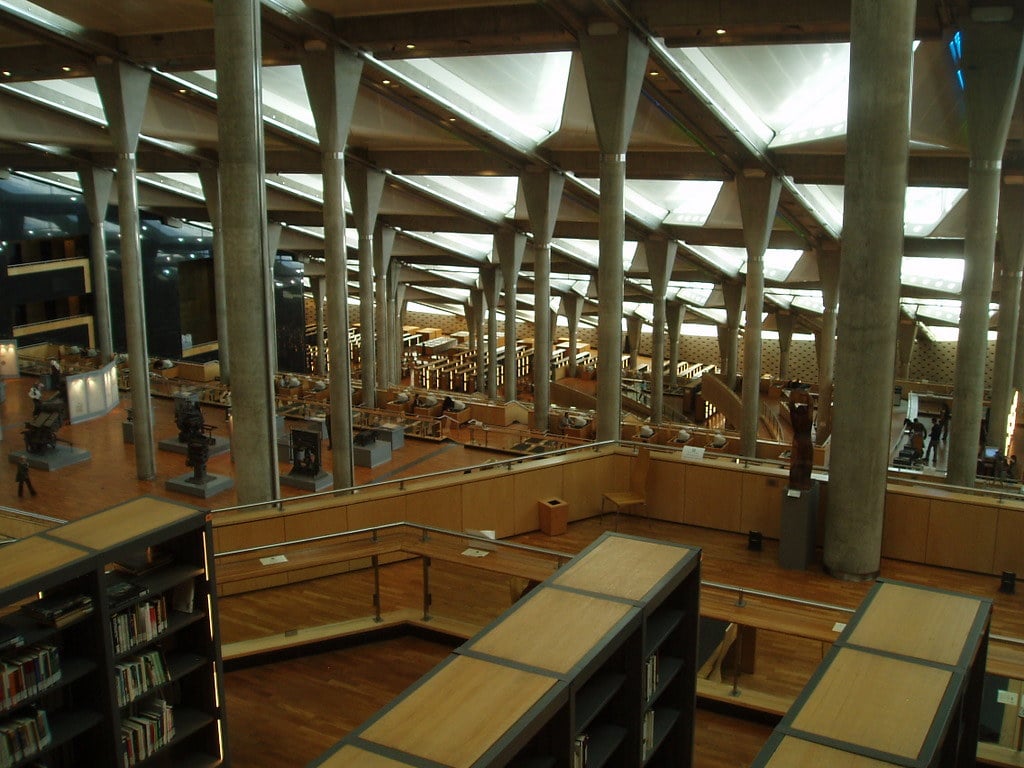
The famous Library of Alexandria didn’t just wait for books to arrive. Ships docking in Alexandria’s harbor had to surrender any scrolls on board.
Scribes made copies, and then the library kept the originals and gave the copies back to the ship owners. When Athens loaned Alexandria precious original scrolls by Sophocles, Aeschylus, and Euripides, the library paid a huge deposit as security.
Then they kept the originals anyway and told Athens to keep the deposit. Book theft on an institutional scale.
Librarians Used to Test for Witchcraft

During the 16th and 17th centuries, some European library positions required taking oaths that you weren’t practicing witchcraft. The fear was that witches might use the rare texts in the collection for dark magic.
Applicants sometimes had to prove they could recite prayers in Latin or demonstrate their religious devotion before being allowed near certain books. The Basel University Library kept some texts in a special locked area called the “poison cabinet” where only approved scholars could access potentially dangerous knowledge.
The Vatican Library Was Closed for Centuries

Pope Nicholas V founded the Vatican Library in 1451, but it quickly became one of the most restricted institutions in Europe. For several hundred years, almost nobody got in.
Even Catholic clergy needed special permission that could take years to obtain. When Napoleon’s troops occupied Rome in 1798, French scholars were shocked to discover manuscripts that hadn’t been seen by outsiders in over three centuries.
The library didn’t become reasonably accessible to researchers until the late 1800s.
Ancient Libraries Had Sophisticated Cataloging Systems
The Library of Alexandria created what might be the first comprehensive library catalog around 250 BCE. A scholar named Callimachus compiled the “Pinakes”—a 120-volume catalog that listed works by author, title, and subject. It included the first lines of each text and biographical information about authors.
This system was so advanced that most libraries didn’t create anything comparable until the Renaissance, over 1,700 years later.
Some Libraries Charged by the Letter

Medieval monastic libraries sometimes charged fees based on how many letters appeared in the texts you wanted to copy. Scribes would count every character, and the price went up accordingly.
This meant abbreviations became extremely valuable. Whole systems of shorthand developed just to reduce copying costs.
Some monks became experts at cramming as many words as possible onto a single page using tiny script and minimal margins.
The Bodleian Library Had Its Own Court System

Oxford’s Bodleian Library established its own court in 1610 to handle disputes and punish theft. The library could fine people, ban them from the university, or even have them imprisoned.
The court operated independently from both university and city authorities. Thomas Bodley, who refounded the library, was so obsessive about its rules that he banned all plays and poetry from the collection because he considered them frivolous.
Shakespeare’s works weren’t allowed in until long after Bodley died.
Clay Tablets Were Accidentally Preserved by Fire

The ancient library at Nineveh, built by the Assyrian king Ashurbanipal around 650 BCE, contained over 30,000 clay tablets. When the city burned during an invasion in 612 BCE, the fire actually baked the tablets hard and preserved them.
Without that destruction, the tablets probably would have crumbled to dust centuries ago. Archaeologists found them in the 1800s, still readable after 2,500 years, teaching us the Epic of Gilgamesh and countless other texts that would otherwise be lost.
Libraries Once Banned Certain Reading Positions
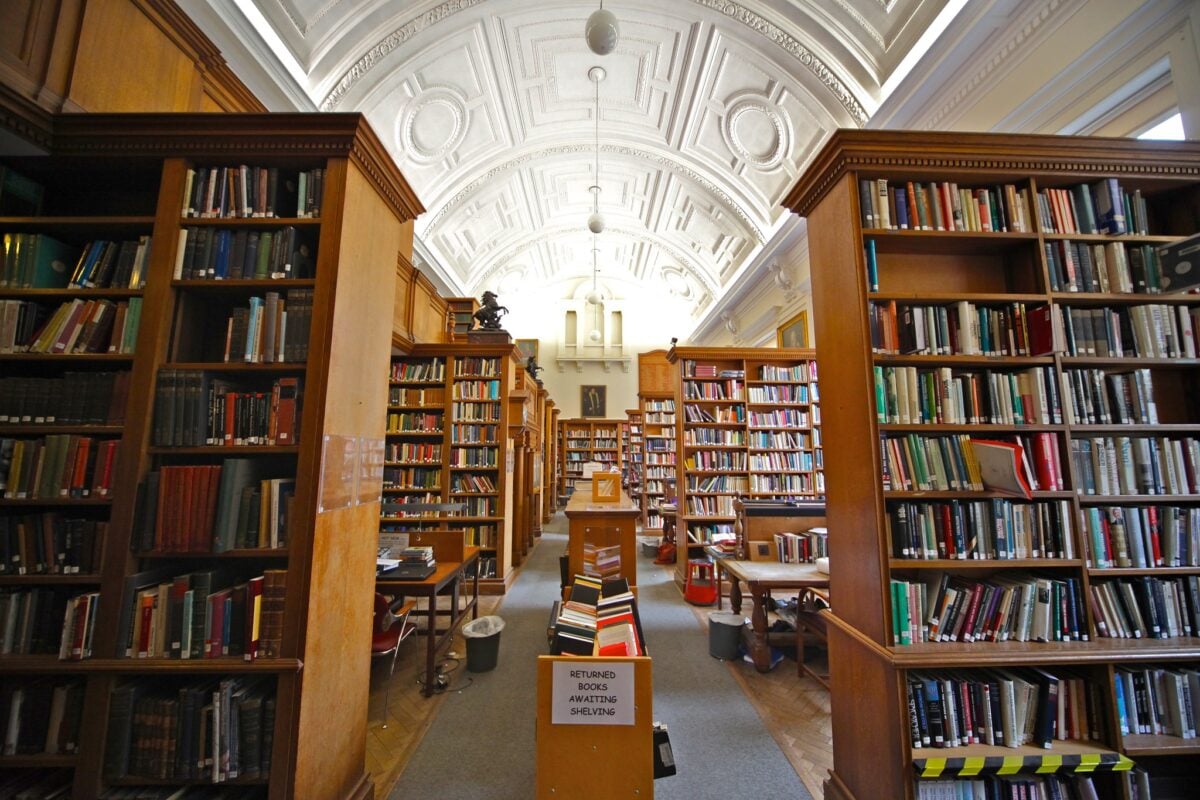
Some 18th-century library rules specified exactly how you had to sit while reading. You couldn’t put your feet up, lean back, or read lying down.
The Trinity College Library in Dublin actually had monitors who walked around making sure people maintained proper posture. The reasoning was partly about showing respect for the books and partly about preventing damage—if you fell asleep and dropped a book, you could break the binding or tear pages.
The Oldest Known Library Belonged to a Woman
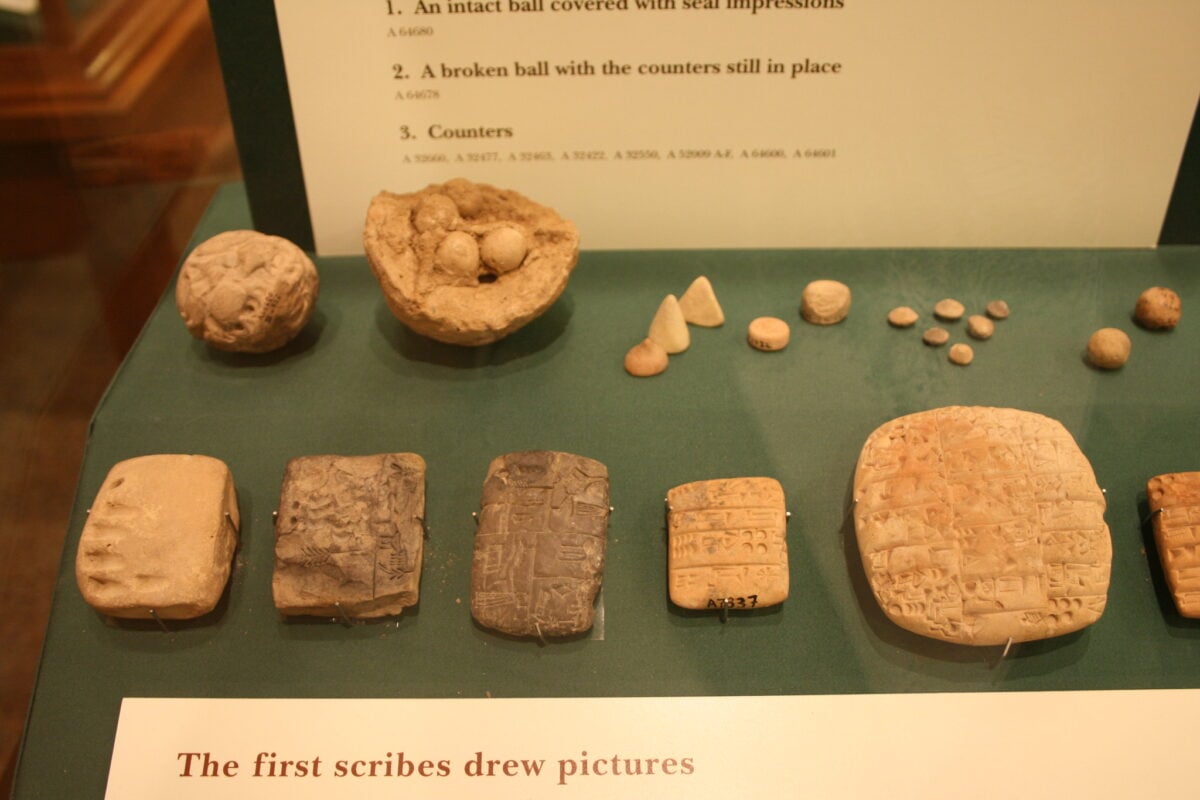
Archaeologists discovered what might be the earliest known private library in ancient Mesopotamia. It belonged to a woman named Ninshatapada, who lived around 2400 BCE.
She was a priestess and owned dozens of clay tablets covering mathematics, astronomy, and religious texts. This challenges old assumptions about who had access to education and written knowledge in ancient societies.
Her collection was carefully organized and labeled, suggesting she used it regularly for study and reference.
Some Libraries Grew Their Own Binding Materials

Monastery libraries in medieval Europe often maintained gardens specifically for growing plants used in bookmaking. Flax for linen thread, oak trees for galls used in iron ink, and specific flowers for dyes all required cultivation.
Some monasteries spent as much effort on these gardens as on their food crops. The Abbey of St. Gall in Switzerland kept detailed records of which plants went into which books, creating an early form of material sourcing documentation.
Readers Had to Wear Gloves—But Not Always

The white glove rule you might associate with old libraries is actually fairly recent. For centuries, librarians preferred bare hands because gloves reduced your sensitivity and made you more likely to tear delicate pages.
But in the 20th century, some institutions insisted on gloves, mainly for show. Modern conservation science has swung back—most rare book libraries now prefer clean, dry bare hands over gloves for handling most materials.
Gloves are mainly for photographs and metal objects.
A Library Survived Two World Wars Underground
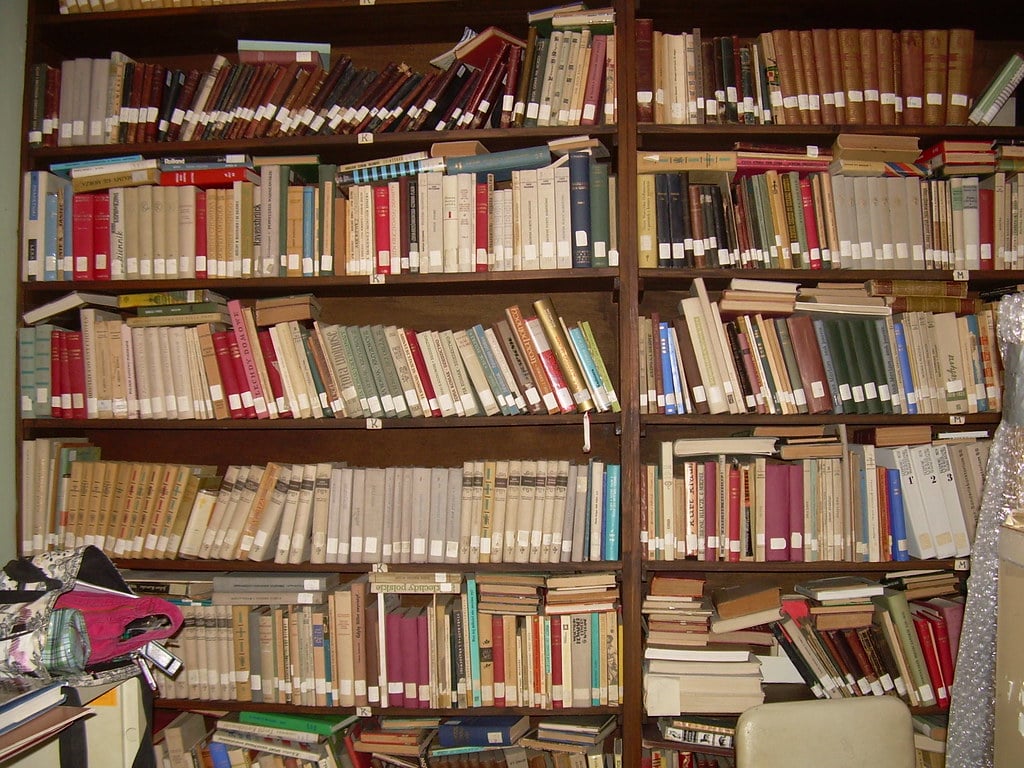
The National Library of Poland hid its most valuable manuscripts in an underground vault before World War II. The Germans occupied Warsaw and searched everywhere for the collection, which included medieval texts and rare first editions.
Library staff had created fake records showing the books had been moved to other cities. The real vault stayed hidden for six years.
When the war ended, librarians opened it up and found everything intact—protected by several feet of concrete and the courage of people who refused to reveal its location even under interrogation.
The First Mobile Library Traveled by Camel

In the 1920s, a librarian in Mongolia named Sukhe Bator organized the first known mobile library using a caravan of camels. The animals carried books across the Gobi Desert to nomadic communities that had no access to written materials.
Each camel could carry about 200 books, and the caravan traveled year-round despite extreme temperatures. The program lasted for decades and inspired similar mobile libraries in other countries, though most eventually switched to trucks and vans rather than continuing with livestock.
Whispers Echo Through History

Find the sweet spot inside certain ancient library reading halls – speak softly, almost silently – and your voice zips across to another precise location far off, yet fades everywhere around it. Blame the layout. Arched roofs plus rounded surfaces shape what sound experts name “whispering zones.”
The U.S. Capitol’s main library features one. Same goes for the historic reading chamber at the British Museum.
Some architects never meant to make these happen – yet when they did, folks started using them on purpose. Whispers aimed just right could travel across a busy room instead of fading out.
These quiet messages formed hidden links between people without leaving any trace.
When Books Remember Being Trees

Open an old book – sometimes you’ll see ghostly streaks where timber used to stretch, quiet hints of trunks ground down. In damp air, brittle sheets warp slowly, curling much like branches did when rooted.
Keepers catch edges folding tight, resembling growth circles, as if paper recalls its past life. Rooms full of pressed leaves feel strange, neither breathing nor gone. Even now, forests sneak inside through ink and spine.
More from Go2Tutors!

- The Romanov Crown Jewels and Their Tragic Fate
- 13 Historical Mysteries That Science Still Can’t Solve
- Famous Hoaxes That Fooled the World for Years
- 15 Child Stars with Tragic Adult Lives
- 16 Famous Jewelry Pieces in History
Like Go2Tutors’s content? Follow us on MSN.