Fruits Banned from Import Around the World
Walking through a farmers market in Southeast Asia feels like stepping into another world. The colors dazzle you.
The textures surprise you. And then there’s the smell.
Some fruits you encounter on your travels will never make it back home with you, and that has nothing to do with customs limits on your luggage. Governments around the world have decided that certain fruits pose risks too big to ignore.
The Jamaican National Fruit You Can’t Bring Fresh

Ackee holds a special place in Jamaican cuisine. The bright red pods split open when ripe, revealing yellow flesh that tastes buttery and mild.
Jamaicans have been eating it for breakfast with saltfish for generations. But the United States banned fresh ackee imports back in 1973, and that ban remains in place today.
The reason comes down to a toxin called hypoglycin A. Unripe ackee contains dangerous levels of this compound in all its parts.
When someone eats unripe ackee, their blood sugar can drop suddenly and severely. The condition has a name in Jamaica: Jamaican vomiting sickness.
In serious cases, people fall into comas or die. The fruit only becomes safe when it ripens completely and splits open naturally on the tree.
Even then, the seeds and the red membrane around them stay poisonous. Processing plants that want to export canned or frozen ackee to America must prove they’ve removed every trace of toxic material.
The FDA keeps a “Green List” of approved manufacturers who’ve demonstrated they can do this safely. Everyone else gets detained at the border.
Fresh ackee will never clear US customs. The risk that an unripe fruit slips through is too high.
Americans who want to try this Jamaican staple have to settle for canned versions or book a flight to Kingston.
When Purple Fruit Threatened White Pines

Blackcurrants used to thrive in American gardens. New York state alone produced millions of quarts of these purple berries in the early 1900s.
Then the lumber industry noticed something alarming. White pine trees were dying from a fungal disease called white pine blister rust, and blackcurrant bushes were spreading.
The fungus needs two hosts to complete its life cycle. It can’t jump from pine to pine on its own.
Instead, it infects blackcurrant bushes first, then travels to nearby pine trees where it causes those characteristic yellow swellings on the bark. The disease spreads through the air for up to 900 feet, killing pines that formed the backbone of America’s timber industry.
The federal government banned blackcurrant cultivation nationwide in 1911. They went further than just preventing new plantings.
Government crews walked through orchards spraying herbicides to destroy every blackcurrant bush they could find. The campaign worked, but it also erased blackcurrants from American memory.
The federal ban was lifted in 1966 when scientists developed disease-resistant varieties, but individual states kept their own restrictions for decades. New York didn’t allow blackcurrants again until 2003.
Some states still maintain bans today. Most Americans have never tasted a blackcurrant, while Europeans consume them by the ton in juices and jams.
The Queen of Fruits That Required Radiation

Mangosteen earned its nickname through taste alone. The white flesh inside tastes like a mix of peach, strawberry, and citrus, with a texture similar to lychee.
Thailand and other Southeast Asian countries grow mangosteens in abundance, but American grocery stores rarely stock them fresh. The United States banned mangosteen imports for decades because of concerns about Asian fruit flies.
These pests can devastate agricultural crops if they establish themselves in a new region. Mangosteens were thought to harbor fruit fly larvae that could hitch a ride into American orchards.
The ban eased in 2007, but with strict conditions. Every mangosteen entering the country must be irradiated first.
The process exposes the fruit to ionizing radiation that kills or sterilizes any pests hiding inside. Some mangosteens sold in America now come from domestic growers in Florida and Puerto Rico, bypassing the import restrictions entirely.
Even with the lifted ban, fresh mangosteens remain uncommon in American stores. The irradiation requirement adds cost and complexity.
Most people in the United States have never encountered this purple fruit that much of Asia considers royalty.
The King Nobody Wants on Their Bus

Durian inspires strong reactions. People either crave its creamy, custard-like flesh or find the smell unbearable.
The odor has been compared to raw sewage, rotting onions, and gym socks left in a locker for weeks. One Australian university evacuated its library in 2018 when students mistook the smell of durian for a gas leak.
Singapore, Thailand, and other Southeast Asian countries don’t ban durian outright, but they do restrict where you can bring it. Hotels prohibit durians in rooms because the smell lingers for days, even after thorough cleaning.
Public transportation systems post signs showing crossed-out durians alongside cigarettes and weapons. Airlines refuse to allow durians in cabins.
The restrictions make practical sense. Trapping dozens of people in an enclosed space with a durian creates an unpleasant experience for everyone except the person eating it.
The fruit’s smell spreads through ventilation systems and seeps into fabrics. Even frozen durian retains enough odor to cause problems.
Despite these limitations, durian remains enormously popular throughout Asia. Markets sell it fresh, frozen, and processed into everything from ice cream to pastries.
The restrictions simply mean you eat it at home or in designated outdoor areas, not in places where others can’t escape the aroma.
The Scaly Fruit That Can’t Cross Borders
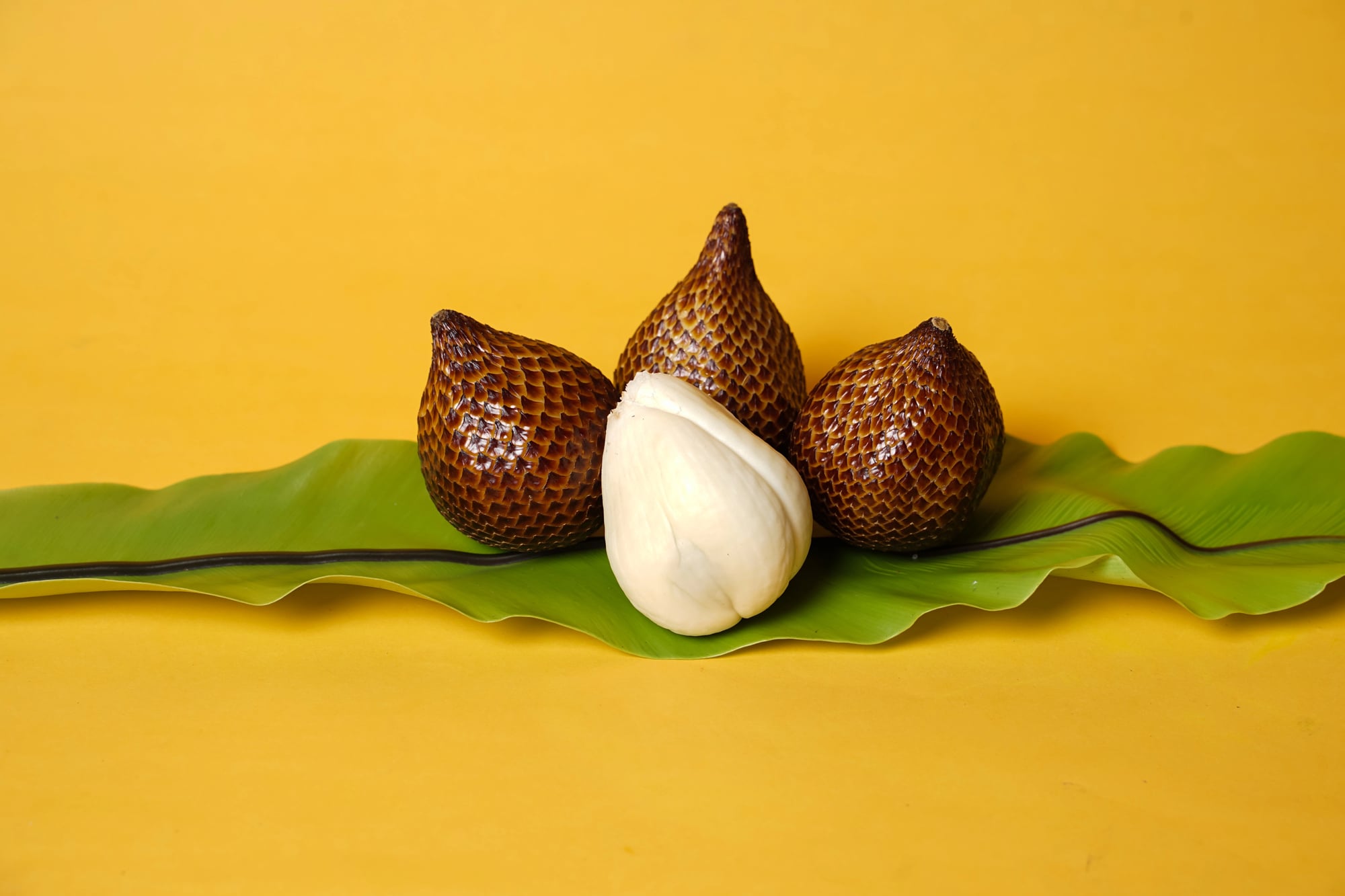
Snake fruit gets its name from the reddish-brown scales covering its skin. The texture really does look reptilian.
Inside, the flesh tastes like a combination of pineapple, apple, and durian, with a crunchy bite. Street vendors in Thailand and Indonesia sell it by the bagful.
The United States Food and Drug Administration bans fresh snake fruit imports. The concern centers on agricultural pests that might be present on or inside the fruit.
Snake fruit grows in tropical regions that host insects and diseases foreign to American agriculture. Introducing these pests could damage domestic crops.
You might occasionally find snake fruit at Asian markets in America, but these come from approved sources that meet specific treatment requirements. The supply remains limited because of the extensive testing and certification needed to import them legally.
Travelers returning from Bali often talk about snake fruit with an almost mythical reverence. They describe becoming addicted to the sweet-sour flavor during their trip.
But they can’t bring any home, and they can’t find it reliably in American stores.
When Small Changes Make Big Differences

Dragon fruit looks like something from a fantasy novel. The bright pink or yellow skin has green scale-like appendages.
The flesh inside is white or deep magenta, dotted with tiny black seeds. It tastes mild and slightly sweet, nothing like its dramatic appearance suggests.
Some dragon fruit varieties face import restrictions in the United States because of pest concerns. Ecuador must get special permits and inspections before shipping dragon fruit to America.
The requirement exists to prevent foreign agricultural pests from entering the country. Growers in California, Florida, and Hawaii now cultivate dragon fruit domestically, reducing reliance on imports.
The fruit has gained popularity in American supermarkets over the past decade. But the import restrictions mean that certain varieties or sources remain off-limits.
The regulations reflect a broader pattern. Many tropical fruits face scrutiny at American borders not because they’re inherently dangerous, but because they might carry hitchhikers that could devastate local farms.
The Citrus That Looks Like Fingers

Buddha’s hand resembles a yellow hand with elongated fingers reaching upward. The fruit consists entirely of peel and pith, with no juice or flesh inside.
It gives off a strong lemon fragrance and gets used for zesting, flavoring, or simply filling a room with citrus scent. Several American states ban Buddha’s hand entirely.
Arizona, Florida, Georgia, Louisiana, Texas, and Hawaii prohibit it because of concerns about plant diseases. The unusual shape of the fruit creates multiple crevices where spores or pests could hide.
Agricultural inspectors worry these hidden threats could spread to domestic citrus crops. States with major citrus industries take these precautions seriously.
Florida’s orange groves and California’s lemon orchards represent billions in economic value. A disease outbreak could wipe out entire harvests.
Buddha’s hand might look harmless, but officials can’t take chances. Specialty stores in other states sometimes stock Buddha’s hand, often sourced from approved California growers.
The fruit remains more of a curiosity than a staple ingredient in American cooking.
The Chocolate-Flavored Imposter

Black sapote tastes remarkably like chocolate pudding. The flesh turns dark brown when ripe and has a creamy, custard-like consistency.
People use it in desserts and smoothies, enjoying the chocolate flavor without any actual chocolate. Mexico can’t export fresh black sapote to the United States.
Import regulations focus on preventing pests that threaten domestic crops. Black sapote grows in tropical regions where agricultural pests differ significantly from those in temperate zones.
Farmers in Florida and Hawaii have started growing black sapote domestically. These locally grown fruits don’t face the same restrictions as imports.
But supplies remain limited, and most Americans have never encountered this unusual tropical fruit. The import ban protects American agriculture while limiting access to interesting fruits from other regions.
It creates a strange situation where you could theoretically buy black sapote grown in Florida but not black sapote grown just across the border in Mexico.
The Berry That Tricks Your Tongue
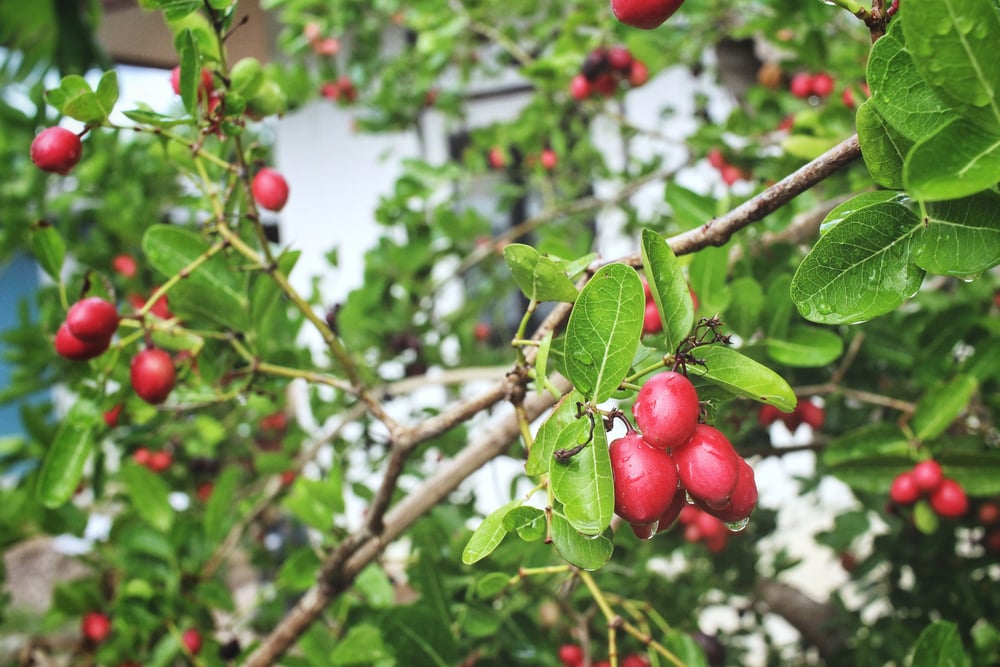
Miracle berry contains a protein called miraculin that binds to taste receptors on your tongue. After eating one, sour foods taste sweet for about an hour.
Lemons taste like lemonade. Vinegar tastes like apple juice.
The effect feels genuinely strange. The United States banned miraculin as a food additive in the 1970s.
Speculation suggests the sugar industry lobbied against it, worried that a natural sweetness enhancer might cut into profits. The FDA classified miraculin as an additive rather than a food, which subjected it to different regulations.
You can still buy whole miracle berries or powdered versions in America. The ban only applies to using miraculin as an additive in processed foods.
People host “flavor-tripping parties” where everyone eats miracle berries then samples various sour foods. The regulatory distinction seems arbitrary.
If you can buy the whole berry, why not allow extracted miraculin in foods? The answer lies in decades-old decisions that haven’t been revisited.
When Politics Determines Produce

Trade restrictions on fruits sometimes have nothing to do with safety. China banned Taiwanese pomelos in 2022 after a US official visited Taiwan.
The ban served as political retaliation, not agricultural protection. The fruits themselves posed no health or pest risks.
Cambodia recently banned Thai fruits and vegetables in response to political tensions. Farmers with ripening mangosteen orchards suddenly lost their biggest export market.
The fruit turned black on the trees while growers scrambled to find other buyers. These bans demonstrate how international relations affect what appears in markets.
A perfectly safe fruit becomes contraband overnight because of diplomatic disputes. The bans hurt farmers and consumers while accomplishing little beyond making a political statement.
Food has always been entangled with politics and power. But modern trade restrictions can shut down entire industries with the stroke of a pen.
Farmers plant orchards that take years to mature, then watch their harvest become worthless when borders close.
The Real Reasons Behind the Rules
Most fruit import bans exist to protect domestic agriculture from pests and diseases. Inspectors don’t want to risk letting in an insect or fungus that could devastate local crops.
The consequences of a single infected fruit slipping through could be catastrophic. Agricultural scientists examine fruits for specific pests associated with their regions of origin.
They look for fruit flies, moths, fungal spores, and bacterial diseases. Even dried fruits face scrutiny because some pests survive the drying process.
Some bans last for decades, long after scientists develop better testing methods. The blackcurrant ban persisted for more than half a century despite new disease-resistant varieties becoming available.
Bureaucratic inertia keeps restrictions in place even when the original justification weakens. Other times, bans lift when new technologies provide solutions.
Irradiation now allows previously banned fruits to enter countries safely. The process kills pests without affecting the fruit’s edibility.
This technology has opened borders to fruits that were once completely prohibited.
The Hidden Cost of Protection

Agricultural protection makes economic sense. Preventing pest outbreaks protects farming jobs and food supplies.
But these rules also limit culinary diversity and cultural exchange. Americans miss out on fruits that much of the world enjoys regularly.
The restrictions hit immigrant communities especially hard. Someone from Jamaica can’t share fresh ackee with their American-born children.
A Thai family in Los Angeles can’t easily find the snake fruit they grew up eating. These food connections to home cultures get severed by import rules.
Domestic cultivation offers a partial solution. Florida grows ackee that’s processed safely.
California produces dragon fruit. Hawaii cultivates black sapote.
But domestic production can’t replicate the full range of varieties available in fruits’ native regions. The cost of fruit bans extends beyond economics into identity and memory.
Food carries culture. When you can’t access the fruits of your homeland, you lose a piece of connection to where you came from.
Borderless Appetites

Stand in a modern supermarket and you’re looking at the result of thousands of agricultural decisions and trade agreements. Each fruit on display has passed through layers of inspections and regulations.
What’s missing from the shelves tells its own story about risk, politics, and the price of protection. The mangosteen sitting in the produce section survived radiation.
The blackcurrant juice came from Europe, not a local orchard. The durian is frozen solid because nobody wants to smell it fresh.
These fruits bear the marks of the systems that govern their movement across borders. Your appetite doesn’t recognize international boundaries, but your access to fruits does.
You develop tastes for what’s available, not necessarily what’s best. Generations grow up never knowing certain flavors exist.
The forbidden fruits stay forbidden, except in memories and stories from distant markets.
More from Go2Tutors!

- The Romanov Crown Jewels and Their Tragic Fate
- 13 Historical Mysteries That Science Still Can’t Solve
- Famous Hoaxes That Fooled the World for Years
- 15 Child Stars with Tragic Adult Lives
- 16 Famous Jewelry Pieces in History
Like Go2Tutors’s content? Follow us on MSN.