Everyday Words With Strange Origins
The English language is full of surprises. Words we use without a second thought often have backstories that sound more like fairy tales than linguistic history.
Some come from ancient misunderstandings, others from forgotten cultural practices, and a few from people whose names just happened to stick around. The connections between modern meanings and original roots can be downright weird.
Here is a list of everyday words with origins that’ll make you look at them differently.
Muscle

Every time you flex, you’re technically showing off your ‘little mice.’ The word muscle comes from the Latin musculus, which literally translates to ‘little mouse.’
Ancient Romans thought the movement of muscles under the skin looked like tiny mice scurrying around beneath the surface. It’s a bit creepy when you think about it, but also oddly accurate if you watch your forearm while opening and closing your fist.
Salary

Getting paid used to involve something much more valuable than paper money. The word salary traces back to the Latin salarium, which means ‘salt money.’
Roman soldiers were sometimes paid in salt or given an allowance to buy it, since salt was crucial for preserving food before refrigeration existed. That’s where we also get the phrase ‘worth your salt’—it literally meant you earned your keep.
Sandwich
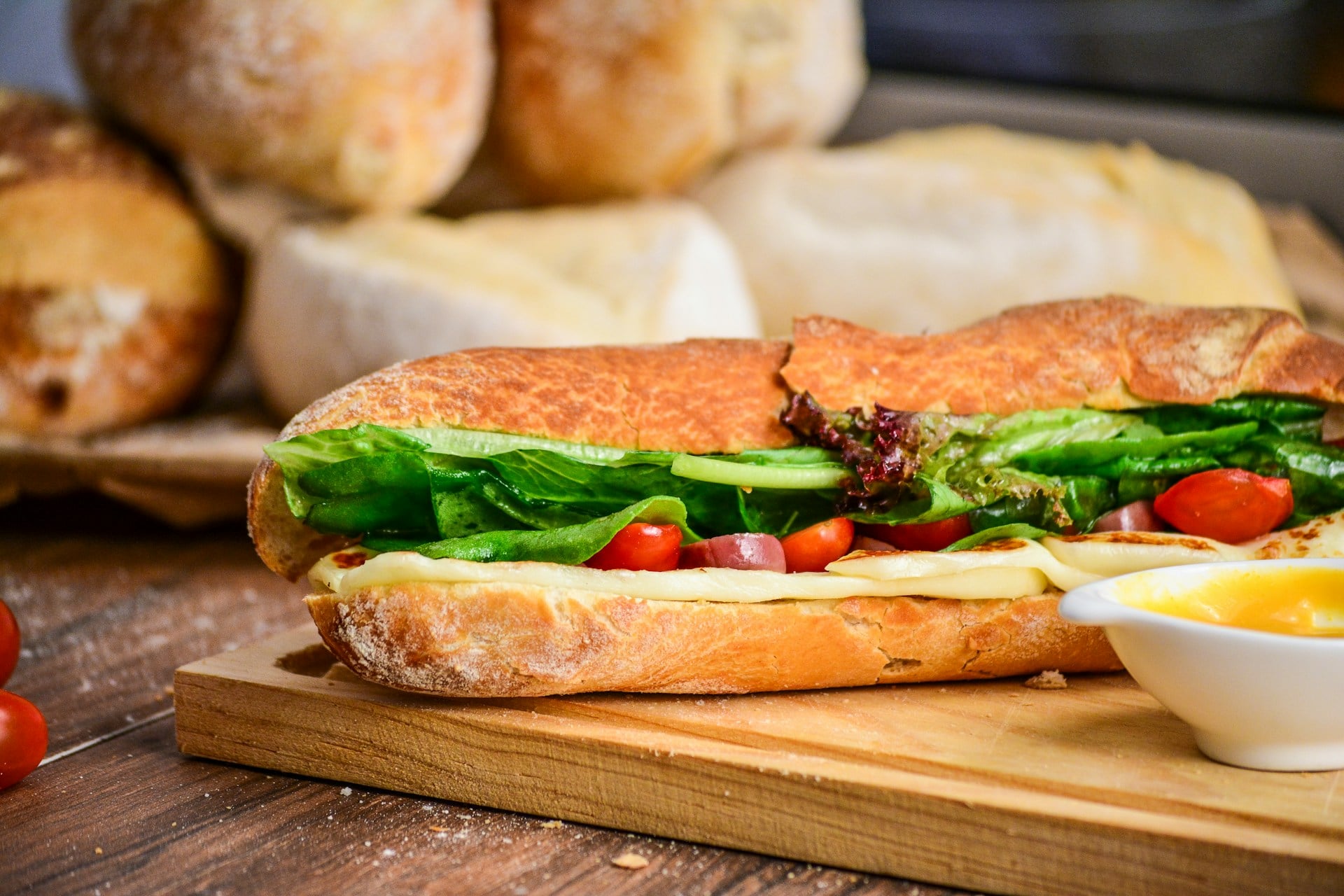
This one’s named after an actual person, the 4th Earl of Sandwich. The story goes that this 18th-century English nobleman was so absorbed in gambling that he didn’t want to leave the table for a meal, so he asked for meat between two slices of bread.
Other gamblers started requesting ‘the same as Sandwich,’ and eventually just ‘a sandwich.’ Some historians argue he was actually just really busy with political work, which sounds more respectable but less fun.
Tragedy

Greek theater gives us this oddly specific origin. Tragedy comes from the Greek word tragodia, which breaks down to ‘goat song.’
Nobody’s completely sure why goats got tangled up with sad plays, but theories include goats being sacrificed to the gods during performances, given as prizes in acting competitions, or actors dressing up in goatskins to play satyrs. Whatever the reason, ancient Greeks definitely associated theatrical misfortune with goats.
Clue

This word has a direct line to Greek mythology. Clue comes from the Old English clew, meaning ‘a round of thread or yarn.’
It references the myth of Theseus, who used a round of thread given by Ariadne to find his way out of the Labyrinth after killing the Minotaur. He literally followed the thread back to the entrance. Over time, anything that helped solve a mystery became a clue.
Quarantine

Nobody enjoys being quarantined, but at least the original timeframe had a reason behind it. The word comes from the Italian quaranta giorni, meaning ‘forty days.’
During the 14th-century Black Death, Venetian authorities made ships arriving in port wait forty days before anyone could come ashore. The goal was to see if plague symptoms developed. Originally it was thirty days, called a ‘trentine,’ but they bumped it up to forty for extra safety.
Tulip

These spring flowers got their name from a case of mistaken identity. Tulip derives from the Turkish word tülbent and the Persian dulband, both meaning ‘turban.’
Europeans thought the flower’s shape resembled a turban, though some linguists think the confusion came from a misunderstanding when Turks described what people wore in their hair rather than the flower itself. Either way, the association stuck.
Ketchup

America’s favorite condiment has surprisingly Asian roots. The word likely traces back to the 17th-century Chinese term kôe-chiap, which referred to a fermented fish sauce with spices—nothing like the tomato-based version we squeeze on fries today.
The earliest English recording shows up in 1690 spelled as ‘Catchup.’ The sauce traveled through Southeast Asia and eventually got transformed into the sweet tomato condiment when it reached Western tables.
Disaster

Bad luck used to be blamed on the cosmos. Disaster comes from the Italian disastro, literally meaning ‘ill-starred’—dis (bad) plus astro (star).
When something went terribly wrong, people figured the planets must have been in an unfavorable position. The idea that celestial bodies controlled earthly fate was common in ancient times, and apparently, some planetary alignments were thought to bring nothing but trouble.
Shampoo

This bathroom staple started as something completely different. Shampoo comes from the Hindi word meaning ‘to press, knead, or soothe,’ derived from the Sanskrit root chapati.
It originally referred to any kind of massage or pressing motion. The definition shifted to mean ‘wash the hair’ in 1860, and only in the 1950s did it expand to include washing carpets and upholstery.
Nice

Calling someone nice used to be an insult. The word traces back to the Latin nescius, meaning ‘ignorant’ or ‘not knowing.’
When it entered English in the late 13th century through Old French, it described someone foolish or silly. Over time, it got applied to people who were overdressed in a ridiculous way, then to people who were elegantly dressed, and eventually morphed into the positive compliment we know today.
Companion

This word paints a heartwarming picture of friendship. Companion comes from Old French compaignon, which literally breaks down to com (with) and panis (bread)—someone ‘with whom one eats bread.’
Sharing a meal has always been a sign of trust and connection, and the word captures that ancient understanding that breaking bread together creates bonds between people.
Sinister

Left-handed people got a raw deal in ancient Rome. Sinister is simply the Latin word for ‘of the left.’
Since most people were right-handed, left-handedness was considered unlucky or even untrustworthy. Over centuries, the word shifted from just meaning ‘left’ to carrying all the negative associations Romans attached to it—evil, threatening, ominous. Meanwhile, the Latin word for right, dexter, gave us dexterity, meaning skillful.
Whiskey

This spirited drink has a philosophical name. Whiskey comes from the Gaelic uisgebeatha, which translates to ‘water of life.’
The phrase traveled from Irish and Scottish Gaelic into English, getting shortened and anglicized along the way. The name suggests ancient Celtic cultures saw distilled spirits as having special, almost medicinal properties—which, given how cold and damp those regions can be, makes some sense.
Checkmate

Chess players have been declaring royal doom for centuries. Checkmate comes from the Persian phrase shāh māt, meaning ‘the king is helpless’ or possibly ‘the king is dead’ after passing through Arabic, where māta means ‘dead.’
Some scholars debate the exact translation since the king in chess doesn’t actually die, just gets trapped. Either way, Persian chess masters gave us the ultimate victory cry.
Jumbo

Before this became a common adjective, it was an elephant’s name. Jumbo was a massive elephant who traveled with P.T. Barnum’s circus in the 1880s.
Standing ten feet tall and weighing over six tons, this elephant was unusually large even by elephant standards. The name became so associated with extraordinary size that jumbo eventually became the go-to word for anything bigger than normal—from shrimp to jets.
From Ancient Rome to Your Daily Vocabulary

These words show how language evolves through culture, accident, and pure human creativity. What started as Roman soldiers buying salt or ancient Greeks watching muscles twitch has become embedded in everyday speech.
The next time you reach for the ketchup or complain about a deadline, remember that language carries centuries of strange decisions, mistranslations, and forgotten stories. Words are time capsules, and English is full of them.
More from Go2Tutors!

- The Romanov Crown Jewels and Their Tragic Fate
- 13 Historical Mysteries That Science Still Can’t Solve
- Famous Hoaxes That Fooled the World for Years
- 15 Child Stars with Tragic Adult Lives
- 16 Famous Jewelry Pieces in History
Like Go2Tutors’s content? Follow us on MSN.



