Facts About the Golden Gate Bridge’s Construction
Most people see the Golden Gate Bridge as a photo opportunity or a backdrop for their San Francisco vacation. But the story of how workers actually built this thing reads more like a high-stakes adventure than an engineering project.
Steel cables stretched across open water, men dangling hundreds of feet above crashing waves, and a timeline that pushed everyone involved to their absolute limits. The bridge didn’t just appear because someone had a good idea.
It took years of political fights, financial schemes during the Depression, and construction methods that had never been tried at this scale. Every piece of it required solving problems that didn’t have obvious answers.
A Bridge Nobody Wanted to Fund

The idea kicked around for decades before anyone took it seriously. People talked about connecting San Francisco to Marin County as early as the 1870s, but everyone assumed it couldn’t be done.
The Golden Gate strait was too wide, too deep, and too temperamental. Ferries worked fine anyway.
Joseph Strauss, the engineer who eventually led the project, spent years trying to convince anyone who would listen. Banks wouldn’t touch it.
The military worried about ships hitting it. Environmental groups hated the idea.
Strauss had to convince voters to personally back the bonds because no private investors wanted the risk. The Money Came from Regular People.
The Money Came from Regular People

The Bridge and Highway District formed in 1928 and asked voters in six counties to back $35 million in bonds in 1930. This was during the Depression.
People were broke. But somehow, enough of them believed in the project to make it happen.
They put up their homes, farms, and businesses as collateral. That $35 million in 1933 would be around $600 million today.
Imagine asking your neighbors to personally guarantee a billion-dollar infrastructure project. But they did it.
They Started with the South Tower

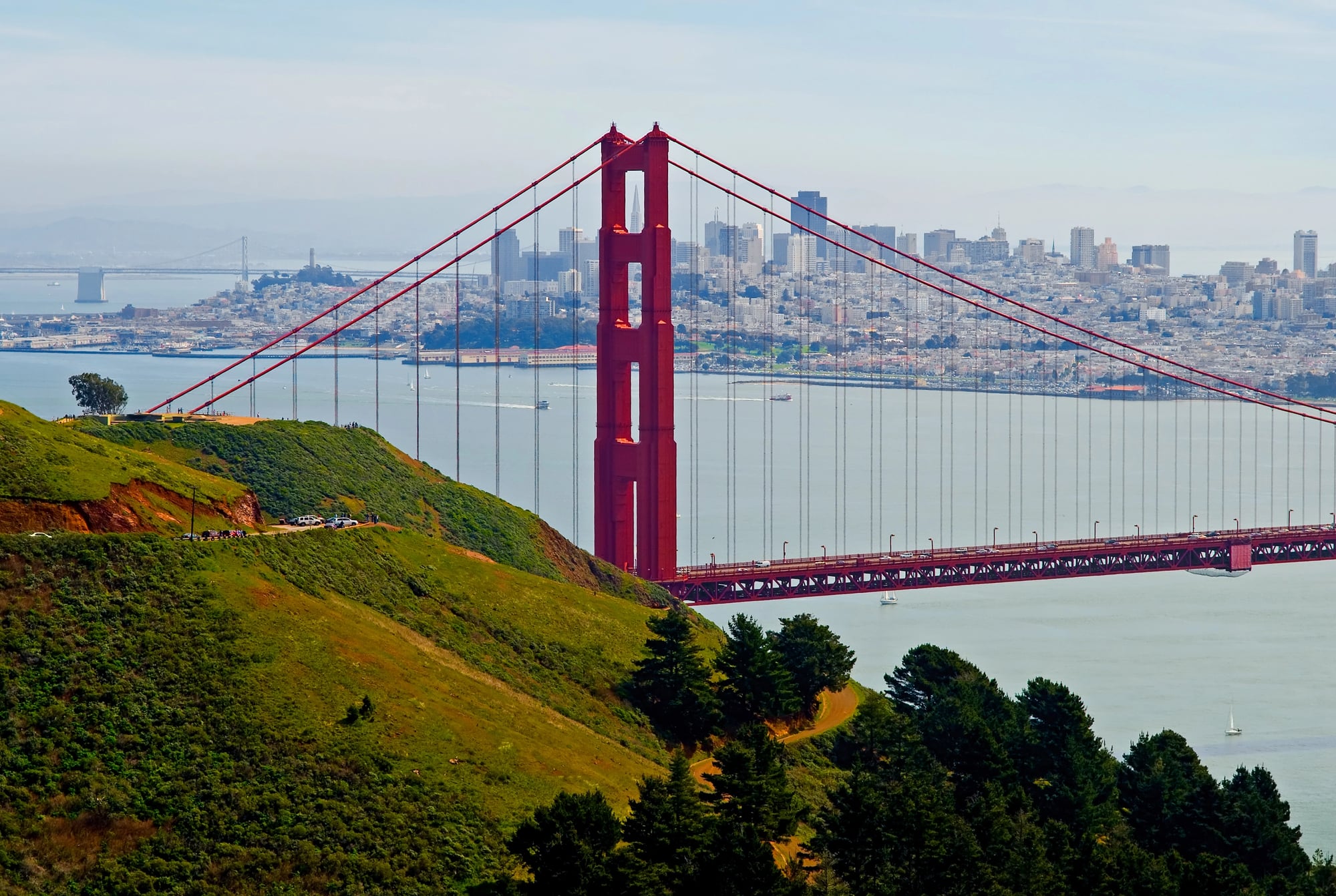
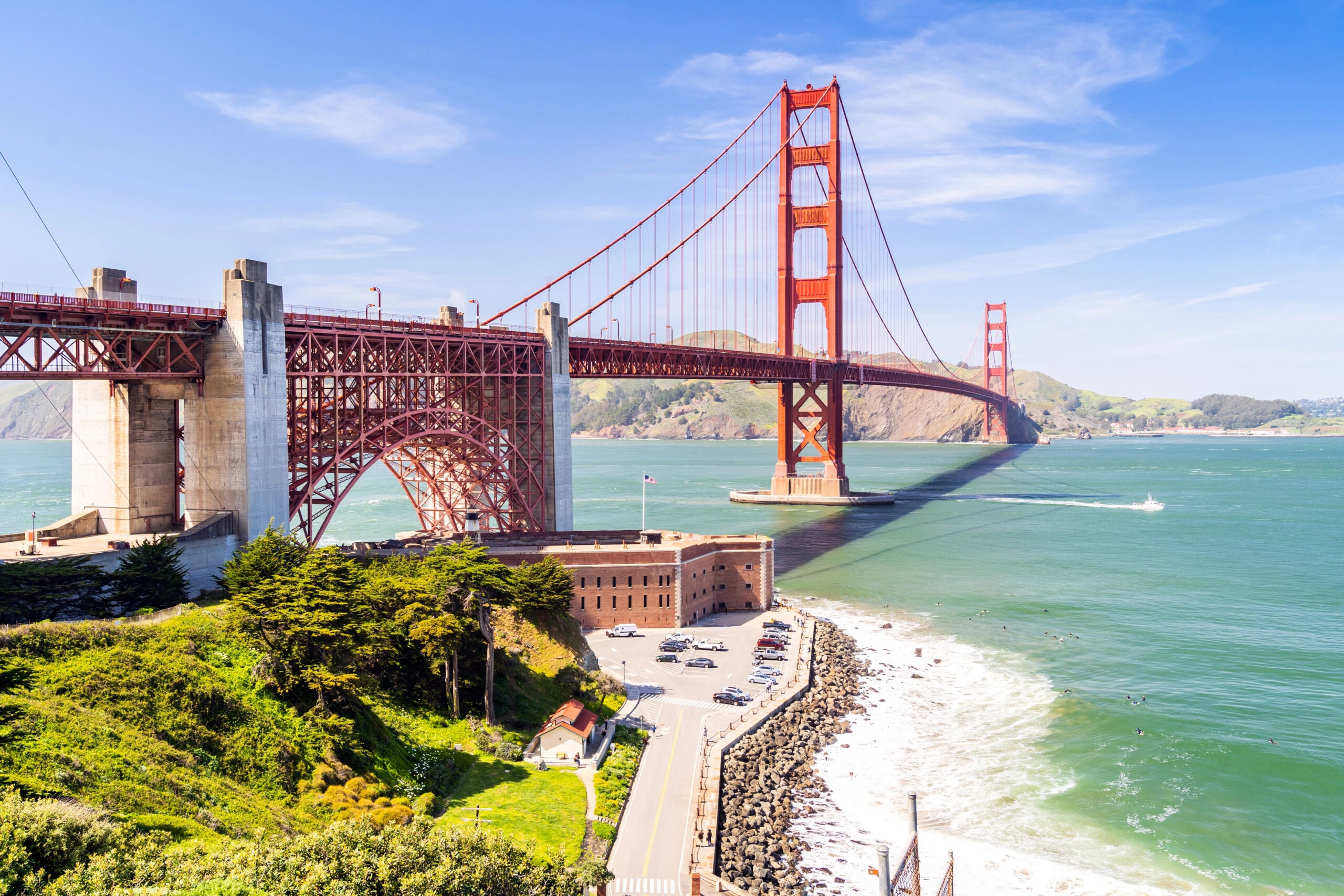
Construction began on January 5, 1933. The south tower went up first because it sat on bedrock relatively close to shore.
Workers had to excavate a massive pit, which meant fighting tides twice a day. They built a concrete fender around the site to keep water out, but the currents kept trying to reclaim the space.
The tower itself stands 746 feet tall, rising about 500 feet above the roadway. Each leg required thousands of tons of concrete and steel.
Workers poured concrete in sections, letting each cure before adding the next. The process took months just for one tower.
The North Tower Was Worse

The north tower presented an entirely different problem. It had to sit 1,125 feet from shore in water 110 feet deep with tides that could reach 7 knots.
Nobody had built anything like this in the open ocean before. Workers constructed a massive fender to protect the site from waves and ship collisions.
The fender alone cost more than many bridges of that era. Inside it, divers worked in pitch-black water, feeling their way along the ocean floor to prepare the foundation.
Some days the current was so strong they couldn’t go down at all. The Safety Net Changed Everything.
The Safety Net Changed Everything

Construction superintendent Russell Cone insisted on installing a safety net below the work area. This was unusual.
Most projects accepted that some workers would fall and die. Cone didn’t accept that.
The net cost $130,000 and stretched across the entire construction zone. It saved 19 men during the project.
Those 19 workers formed a club called the Halfway to Hell Club because they’d fallen halfway to certain death and survived. Ten Men Died Anyway.
Ten Men Died Anyway
On February 17, 1937, a scaffold carrying twelve men broke loose and crashed through the safety net. Ten died instantly.
Two survived. The accident happened because someone hadn’t properly secured the scaffold.
It was late in the project. Everyone was tired and pushing to finish.
The net that had saved 19 men couldn’t save these twelve because the falling scaffold tore through it. The Cables Are Thicker Than You Think.
The Cables Are Thicker Than You Think

Each of the two main cables measures 36.5 inches in diameter. That’s taller than a three-year-old child.
Inside each cable are 27,572 individual wires bundled together. If you laid all those wires end to end, they’d stretch about 80,000 miles—enough to circle the Earth more than three times.
Workers spun these cables by hand, using a technique that involved pulling individual wires back and forth across the span. They started from one tower, went to the other, came back, and repeated the process 27,572 times per cable.
This took six months and nine days. The Paint Never Stops.
The Paint Never Stops
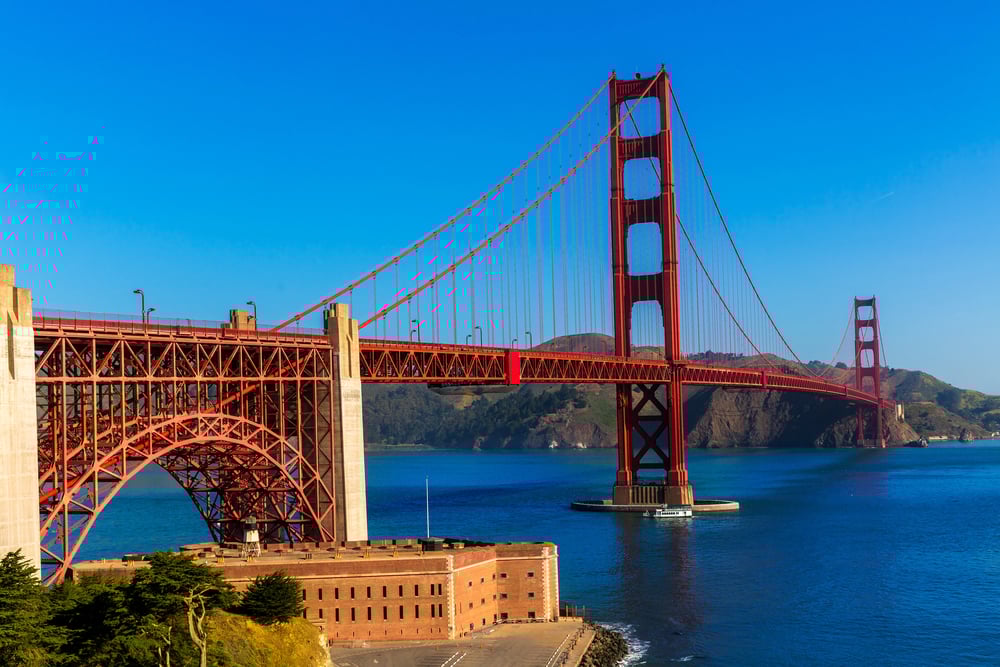
The bridge’s distinctive International Orange color wasn’t originally meant to be permanent. The Navy wanted black with yellow stripes.
The Air Force wanted something that would be visible to pilots. Consulting architect Irving Morrow suggested the orange-red primer color they were already using.
That color requires constant maintenance. The bridge has a crew that handles targeted painting and touch-ups year-round.
The salt air and fog corrode the steel constantly. Keeping the protective coating intact is an ongoing job.
It Opened Ahead of Schedule

The bridge opened to pedestrians on May 27, 1937. About 200,000 people walked across that first day.
The next day, President Roosevelt pressed a telegraph key in Washington, D.C., officially opening the bridge to vehicles. The entire project took four years and four months.
Strauss had estimated just over four years. In an era when major infrastructure projects routinely ran over schedule and budget, finishing early seems almost impossible.
But the pressure to complete it was intense. Jobs were scarce.
Everyone wanted this symbol of progress finished. The Deck Can Move.
The Deck Can Move

The bridge was designed to flex. Engineers knew it had to handle wind, earthquakes, and the weight of traffic.
Under extreme conditions, the deck can swing up to 27 feet sideways. It can rise and fall 10 feet with temperature changes.
The towers can sway 15 feet at the top. In 1951, winds hit 69 miles per hour and the bridge swayed so much that officials closed it.
The same thing happened in 1983. Both times, the bridge handled the stress fine.
It did exactly what the engineers designed it to do. The Foghorns Still Work.
The Foghorns Still Work
Two foghorns sit under the deck at the middle of the span. They’ve been there since the bridge opened.
When fog rolls in thick enough to reduce visibility, these horns blast every 30 seconds. Each horn produces a different tone—one low, one mid-range—so sailors can tell where they are relative to the bridge.
Modern ships have GPS and radar. The foghorns aren’t strictly necessary anymore.
But they’re so iconic that getting rid of them would cause a riot. Tourists complain when the horns blast.
Locals would complain more if they didn’t. It Wasn’t the Longest for Long.
It Wasn’t the Longest for Long
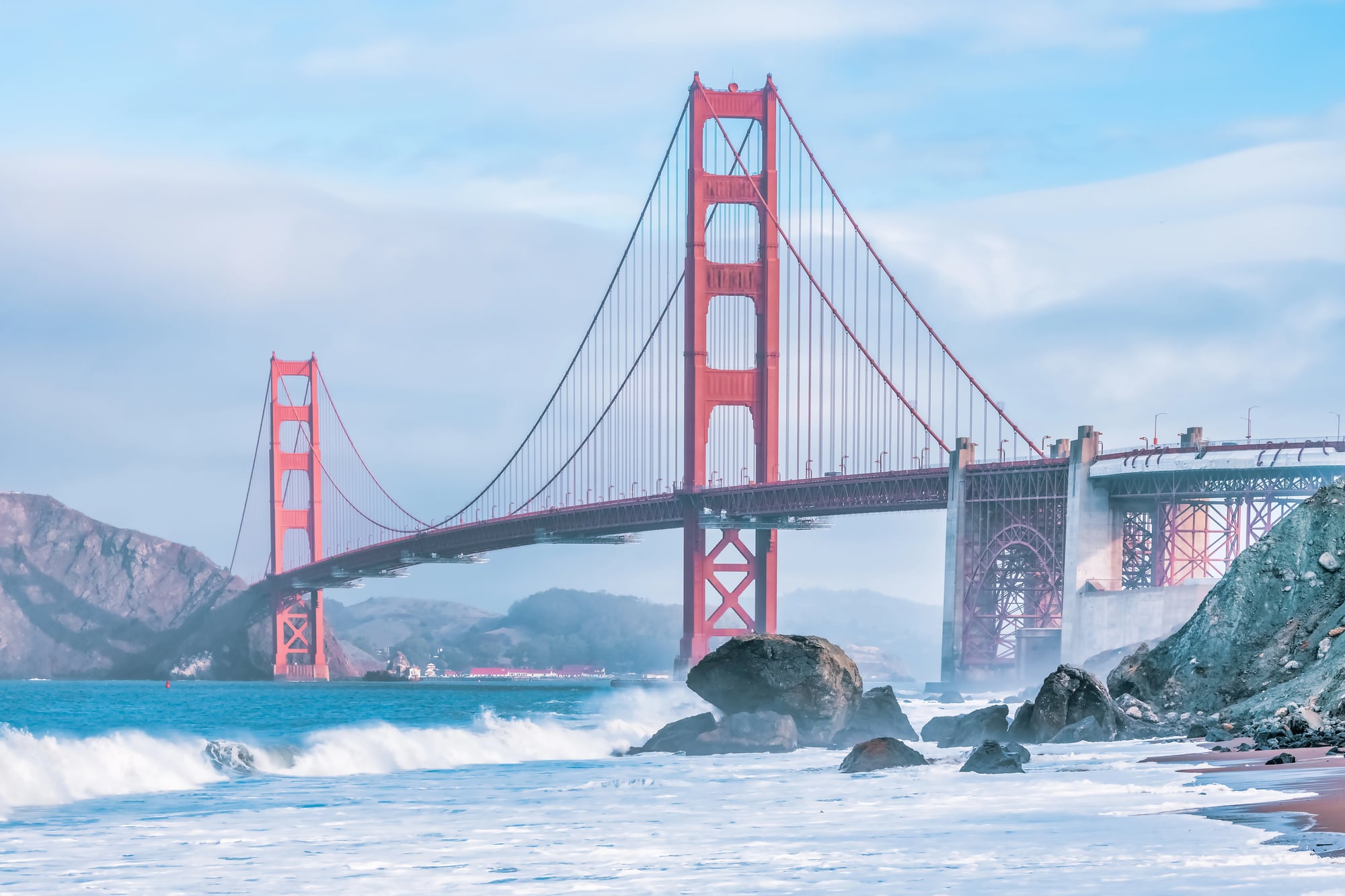
When it opened, the Golden Gate Bridge had the longest main span in the world at 4,200 feet. It held that record for 27 years until the Verrazano-Narrows Bridge in New York beat it by 60 feet in 1964.
Today, it doesn’t crack the top twenty for longest suspension bridges. The current record holder in China has a main span of 6,637 feet.
But none of those newer bridges have the same cultural impact. The Golden Gate Bridge became an icon because of where it is and what it represents, not because of any record it held.
Strauss Died the Year After It Opened
Joseph Strauss campaigned for the bridge for nearly two decades before construction started. He fought off critics, secured funding, and pushed the project through despite constant opposition.
The stress aged him badly. He died of a stroke on May 16, 1938, one year and eleven days after the bridge opened.
He was 68 years old. His statue stands at the south end of the bridge, facing away from the span he spent his life creating.
Still Standing Against the Odds

The bridge has survived earthquakes, including the major 1989 Loma Prieta quake. It has handled countless storms and millions of vehicles.
Engineers retrofit and reinforce it periodically, but the basic structure hasn’t changed since 1937. People said it couldn’t be built.
They said it wouldn’t last. They were wrong on both counts.
The bridge stands because the people who built it refused to accept that some things were impossible. They just figured out how to do it anyway.
Where Steel Meets Sky
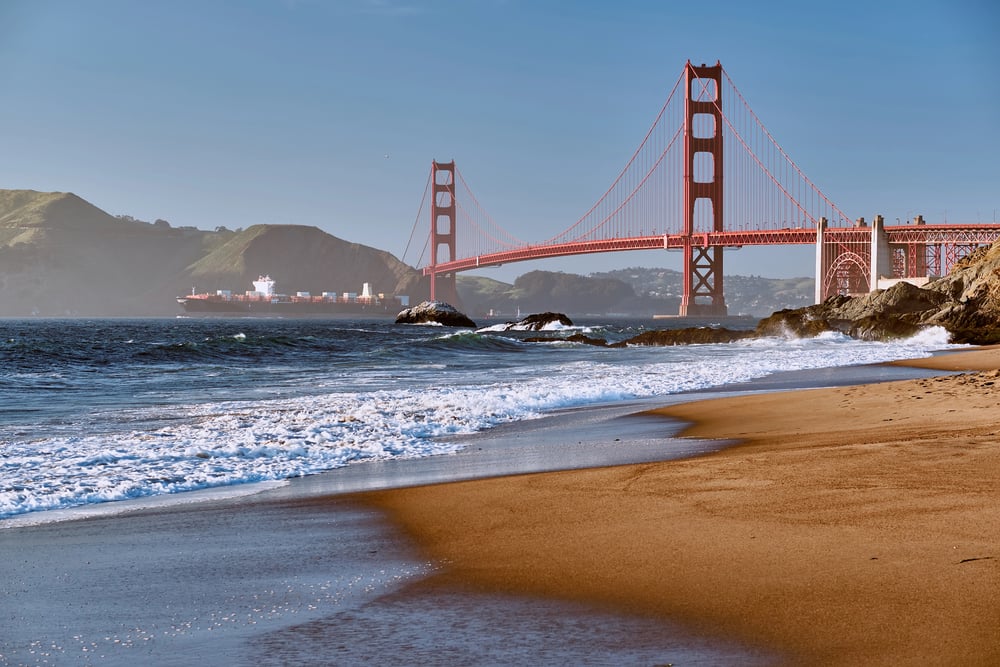
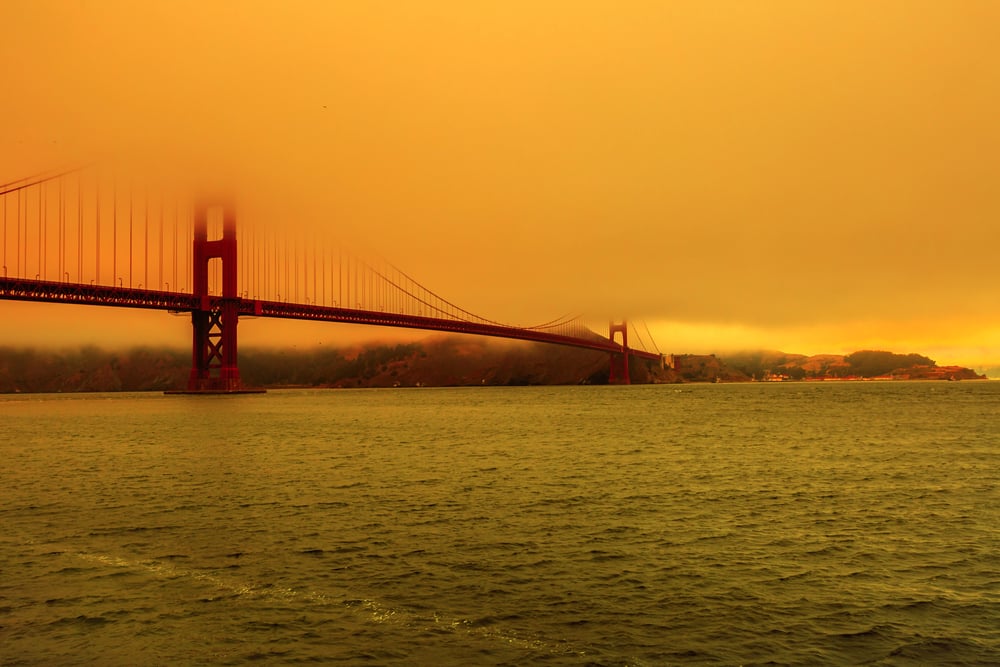
There’s something about seeing a massive structure suspended in fog, half-visible, that makes it feel more like a natural feature than a human creation. The bridge has become so connected to its environment that imagining the strait without it seems wrong now.
That’s what happens when people build something that works. It stops being just an engineering achievement and becomes part of the landscape, part of the story of a place.
The Golden Gate Bridge isn’t just a way to get from San Francisco to Marin County. It’s proof that sometimes the impossible things are just the ones nobody’s figured out yet.
More from Go2Tutors!

- The Romanov Crown Jewels and Their Tragic Fate
- 13 Historical Mysteries That Science Still Can’t Solve
- Famous Hoaxes That Fooled the World for Years
- 15 Child Stars with Tragic Adult Lives
- 16 Famous Jewelry Pieces in History
Like Go2Tutors’s content? Follow us on MSN.



