Famous Brushstrokes from American Painters
American art has given the world some of the most recognizable and powerful images ever created. From sweeping landscapes to bold abstract expressions, the brushstrokes of American painters have shaped how people see and understand art.
These artists didn’t just put paint on canvas. They created entire movements, challenged traditions, and left marks that still influence creators today.
Let’s look at the brushstrokes that changed everything and the artists who made them happen.
Grant Wood’s precise rural lines
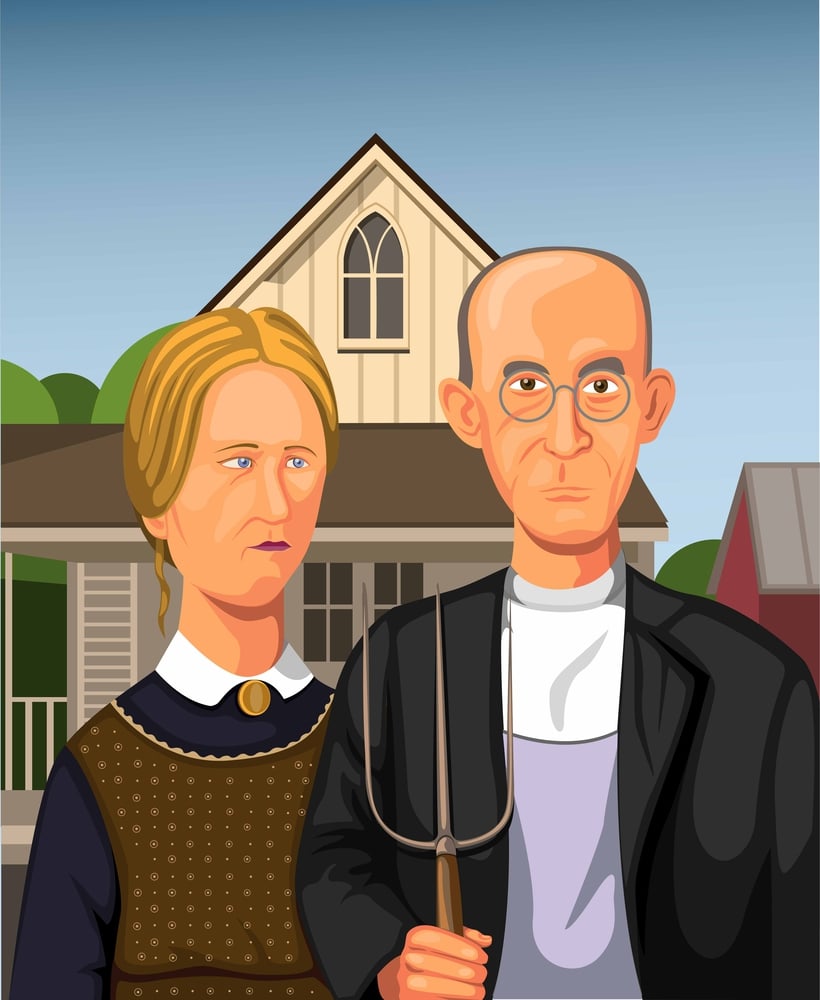
Grant Wood painted “American Gothic” with strokes so controlled and deliberate that every detail feels intentional. His technique involved layering thin glazes of oil paint to create smooth, almost porcelain-like surfaces.
The painting shows a farmer and his daughter standing in front of a Gothic-style house, and Wood’s tight brushwork makes their stern faces unforgettable. He borrowed techniques from Flemish Renaissance painters, which gave his work a crisp, clean quality that made ordinary Midwestern life look both noble and slightly unsettling.
Jackson Pollock’s drip technique
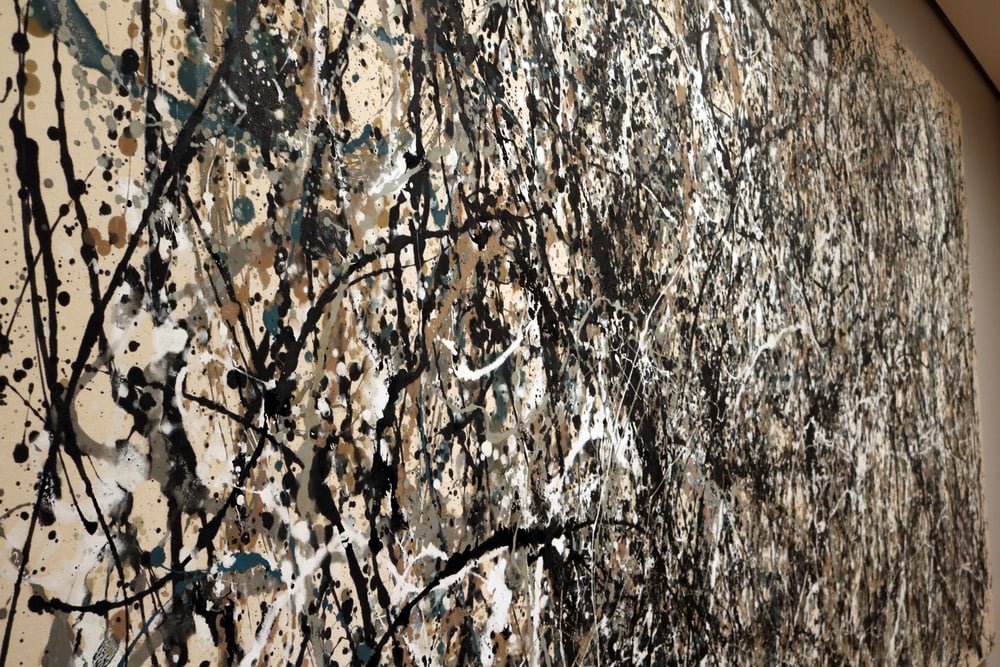
Pollock threw away his brushes and poured paint directly onto canvases laid flat on the floor. His drip paintings from the late 1940s and early 1950s used house paint, sticks, and pure physical movement to create webs of color.
“Number 1A, 1948” shows his method at its peak, with layers of splattered paint building up rhythm and energy. Critics called it chaos, but Pollock insisted every drip was controlled, and modern analysis proves he was right about the mathematical patterns in his work.
Edward Hopper’s stark light and shadow

Hopper used his brush to carve out loneliness in American cities and towns. His painting “Nighthawks” features smooth, almost flat areas of color that create harsh divisions between light and dark.
He applied paint in thin layers that eliminated visible brushstrokes in many areas, making his scenes feel frozen in time. The technique stripped away warmth and left behind something cold and isolating, which was exactly his point.
Winslow Homer’s wild seascapes
Homer’s ocean paintings from his later years show brushstrokes full of violence and movement. He worked quickly with loaded brushes, letting the paint’s texture mimic crashing waves and spray.
“The Gulf Stream” demonstrates his ability to make water feel dangerous through thick, gestural marks that seem to move on the canvas. His late watercolors became even looser, with wet paint inking into wet paint to capture the Atlantic coast’s raw power.
Georgia O’Keeffe’s smooth flower petals
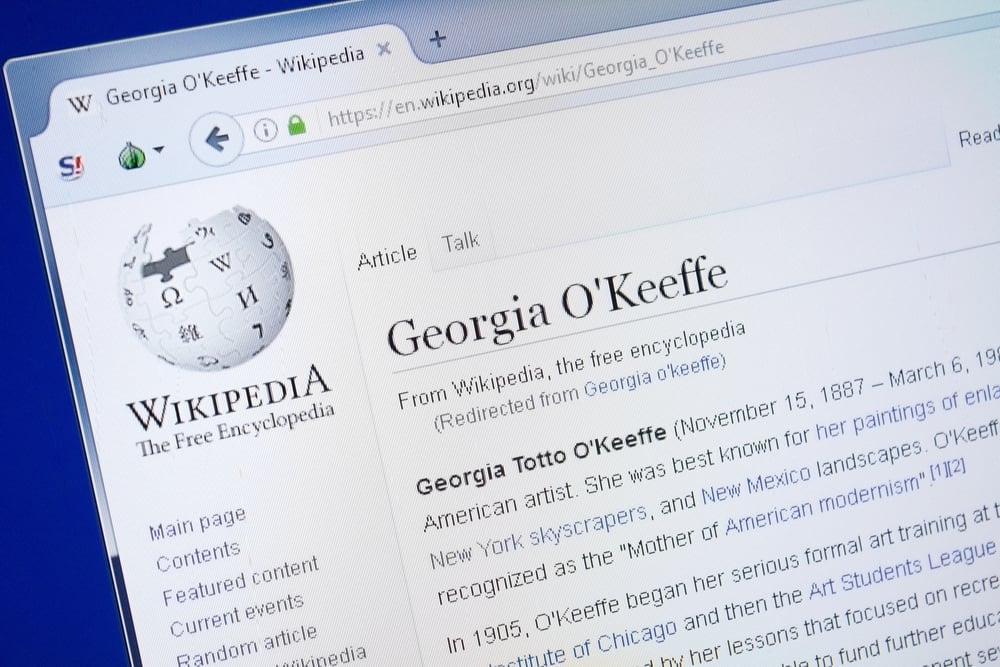
O’Keeffe’s flower paintings feature brushwork so smooth it almost disappears. She blended colors with incredible patience, creating soft transitions that make petals seem to glow from within.
“Black Iris” shows her technique of building up thin layers and then carefully smoothing them until individual strokes vanish. The result makes viewers feel like they’re looking at something almost too intimate, which caused plenty of controversy when her work first appeared.
Thomas Hart Benton’s rhythmic curves

Benton painted America with swooping, muscular brushstrokes that made everything look like it was in motion. His murals used curved lines that flowed from one element to the next, creating a sense of constant energy.
“Palisades” shows how he could make even static landscapes seem to undulate and breathe. He applied paint with confidence, rarely going back to correct or smooth, which gave his work a raw, immediate quality.
John Singer Sargent’s virtuoso portraits

Sargent could capture fabric, skin, and light with seemingly effortless brushwork. His portrait “Madame X” demonstrates strokes that are both precise and loose, defining form with the minimum marks necessary.
He painted wet into wet, letting colors mix on the canvas rather than on his palette. Watching him work, people said he seemed to attack the canvas, but the results looked completely natural.
Andrew Wyeth’s dry brush technique

Wyeth developed a method using dry brush on paper that created almost photographic detail. His painting “Christina’s World” shows this technique in the textures of the grass and the weathered wood of the distant buildings.
He would load very little paint on his brush and drag it across rough paper, letting the texture show through. The method took enormous patience but created effects no other technique could match.
Mark Rothko’s layered color fields
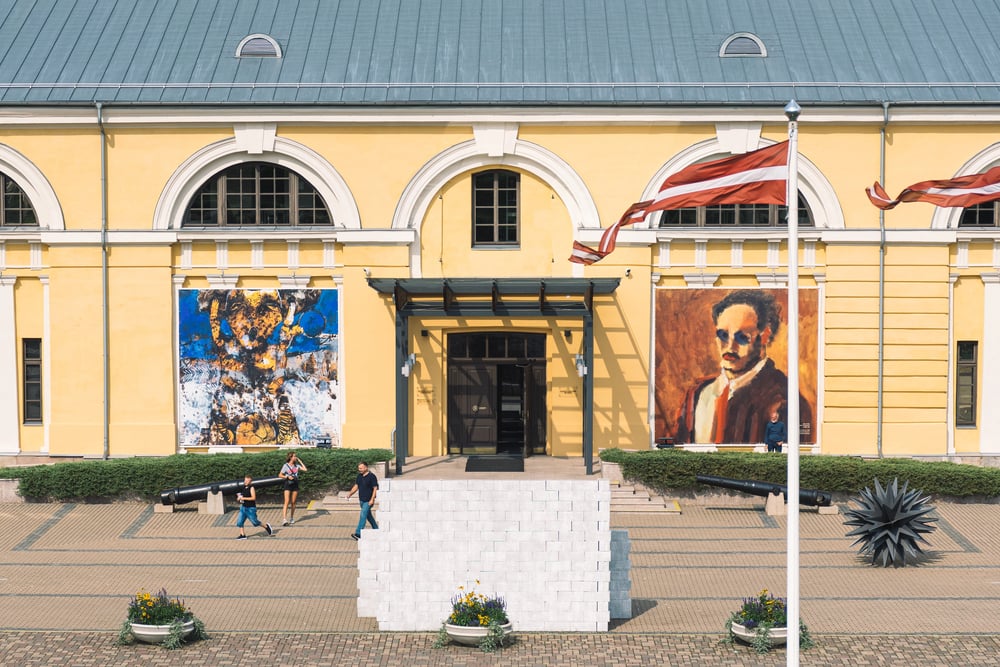
Rothko’s mature work used thin washes of paint applied in multiple layers to create glowing rectangles of color. He worked on an unsized canvas, letting the paint soak in rather than sit on top.
“Orange, Red, Yellow” shows how his technique created edges that seem to vibrate and float. Each layer modified the ones beneath it, creating depth that makes his simple shapes feel infinite.
Willem de Kooning’s violent gesture
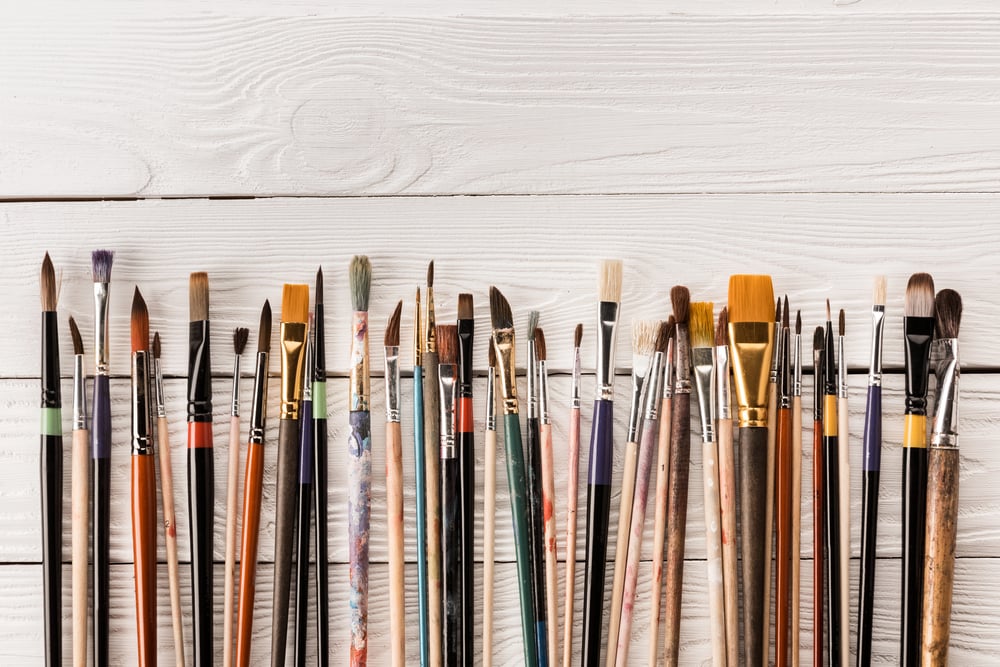
De Kooning’s “Woman” series features aggressive, slashing brushstrokes that build up thick layers of paint. He would scrape down areas and repaint them dozens of times, leaving ghost images beneath the surface.
His technique combined drawing and painting, with charcoal marks visible through layers of oil paint. The resulting images feel both beautiful and disturbing, which perfectly matched his vision of modern life.
Mary Cassatt’s tender impressionist touch

Cassatt brought French Impressionism to American subjects with soft, broken brushstrokes. Her painting “The Child’s Bath” uses short, visible strokes that capture light on water and fabric.
She applied paint with delicate precision, particularly when painting children and mothers. The technique created intimacy without sentimentality, showing domestic life as worthy of serious artistic attention.
Jasper Johns’s encaustic flags

Johns revived the ancient technique of encaustic painting, mixing pigment with hot wax for his famous flag paintings. The wax allowed him to build up rich, textured surfaces with visible brushstrokes preserved in the cooled medium.
“Flag” from 1954 shows how the technique created a surface that was both painting and object. Newspaper and fabric collaged beneath the wax added another layer of meaning to his already loaded imagery.
Helen Frankenthaler’s soak-stain method

Frankenthaler poured thinned paint onto unprimed canvas, letting it soak in like watercolor on a giant scale. Her painting “Mountains and Sea” pioneered this technique, creating soft, cloud-like forms without visible brushstrokes.
She worked on the floor like Pollock but sought beauty rather than energy. The method influenced an entire generation of color field painters who followed her lead.
Charles Demuth’s precise modernist lines
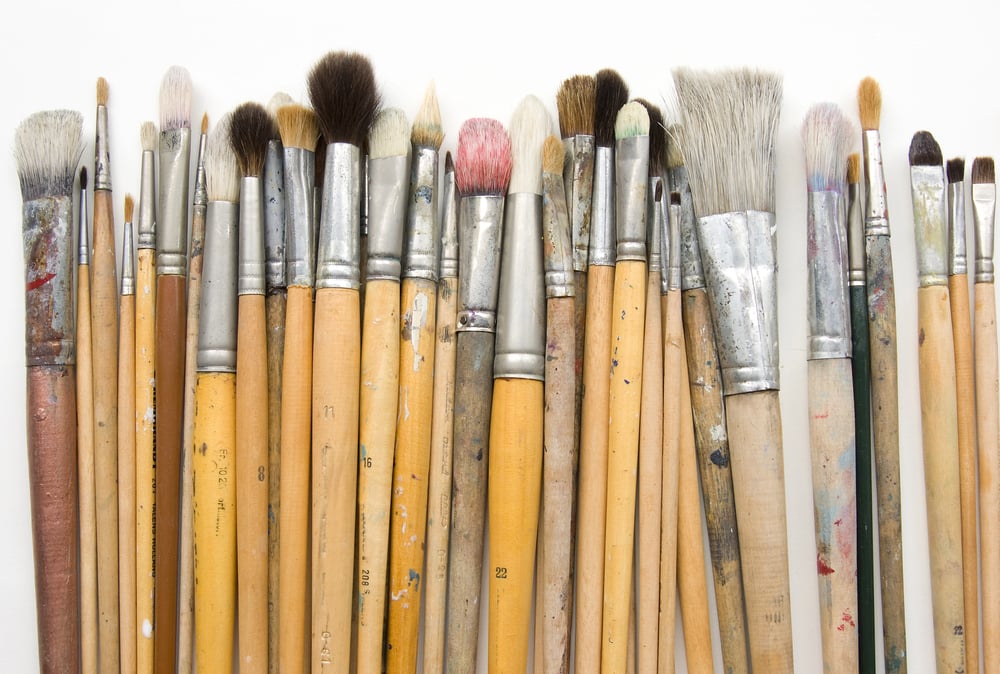
Demuth combined the precision of illustration with modernist fragmentation in works like “I Saw the Figure 5 in Gold.” His brushwork was controlled and deliberate, with hard edges and flat areas of color.
He built up surfaces with careful glazing that created both transparency and solidity. The technique allowed him to capture the speed and energy of modern America while maintaining complete control.
Cy Twombly’s scribbled poetry
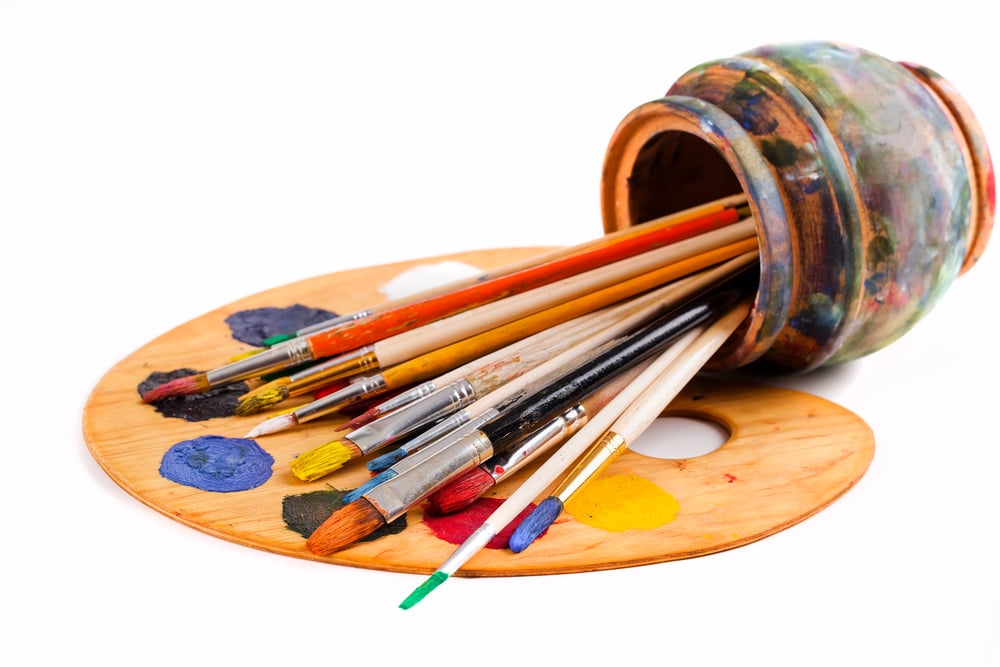
Twombly’s paintings feature brushstrokes that look like handwriting, scribbles, and scratches all combined. His “Blackboard” series uses paint applied with a freedom that seems almost childlike but carries deep meaning.
He would write, erase, scratch, and layer, creating surfaces that recorded every gesture. The technique made his canvases feel like palimpsests where history and emotion accumulated over time.
Stuart Davis’s jazz-inspired geometry
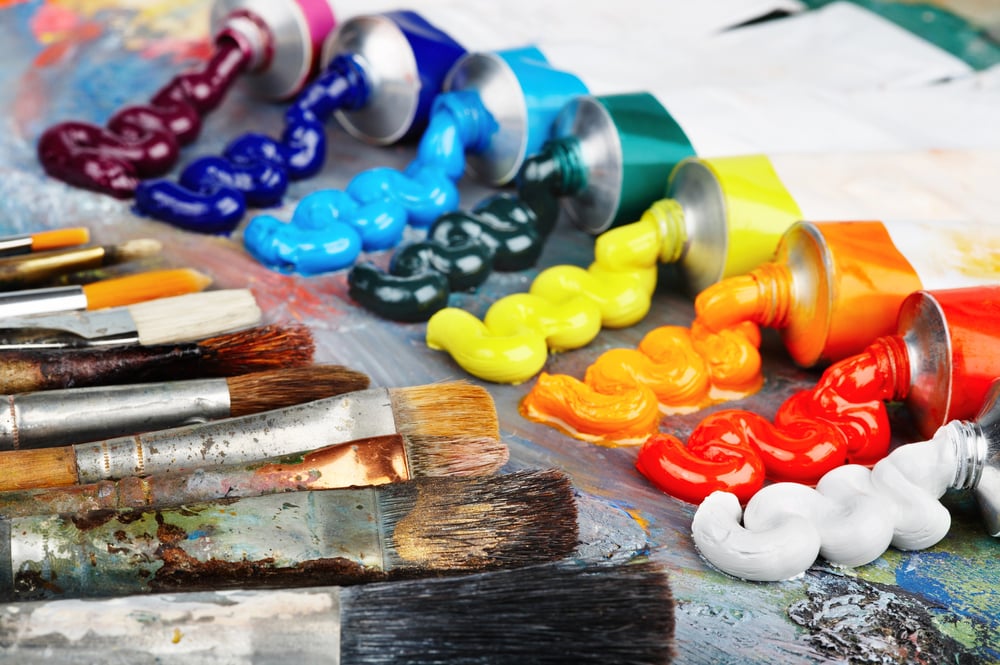
Davis painted with flat, bright colors and sharp edges that captured the rhythm of jazz music. His work “Swing Landscape” uses simplified shapes and bold brushwork that seems to bounce and syncopate across the canvas.
He applied paint in flat areas with clean boundaries, avoiding traditional modeling and shading. The technique created visual equivalents to the music he loved, proving painting could swing just like a saxophone.
Morris Louis Pour Paintings

From high up, Louis poured thinned paint onto slanted canvas, guided by gravity’s pull. Instead of brushes, he allowed liquid color to spread freely across the surface.
In “Beta Lambda,” hues drift like mist, untethered from solid ground. Stripes emerge where pigments pool and inked into soft layers.
The absence of visible strokes shifts attention wholly toward chromatic presence. Color becomes the subject, not gesture or trace.
Robert Rauschenberg combines painting with objects

On top of canvas, Rauschenberg fixed everyday things – then brushed color across and beside them. Instead of keeping images flat, he let a taxidermied eagle break through into real space, alongside torn headlines stuck down with glue.
Paint came in thick waves or thin washes, depending on whether he wanted harmony or tension among the parts. Rather than choose between forms, he forced painting to hold sculpture inside it, so neither label fit cleanly anymore.
Here’s where paint meets path today

Paint doesn’t lie when it sits thick on canvas or vanishes into smoothness. One might drag color like a storm, another could whisper it gently across the surface.
Some artists plan every motion, others let hands move without thinking – yet both reach clarity. Modern painters return again and again to those older moves, pulling pieces forward, twisting them slightly.
A single mark can shift how eyes understand light, shape, distance – not by showing more, but by being exactly placed.
More from Go2Tutors!

- The Romanov Crown Jewels and Their Tragic Fate
- 13 Historical Mysteries That Science Still Can’t Solve
- Famous Hoaxes That Fooled the World for Years
- 15 Child Stars with Tragic Adult Lives
- 16 Famous Jewelry Pieces in History
Like Go2Tutors’s content? Follow us on MSN.