Famous Puzzles That Challenged Generations
Some puzzles stick around for a reason. They frustrate you, keep you awake at night, and somehow make you feel both stupid and determined at the same time.
The best ones transcend their original purpose and become cultural touchstones—objects that grandparents pass down to grandchildren, problems that mathematicians obsess over for decades, riddles that philosophers argue about in journals. These aren’t just games.
They’re tests of patience, logic, and creativity that reveal something about how your brain works when pushed to its limits.
The Rubik’s Cube
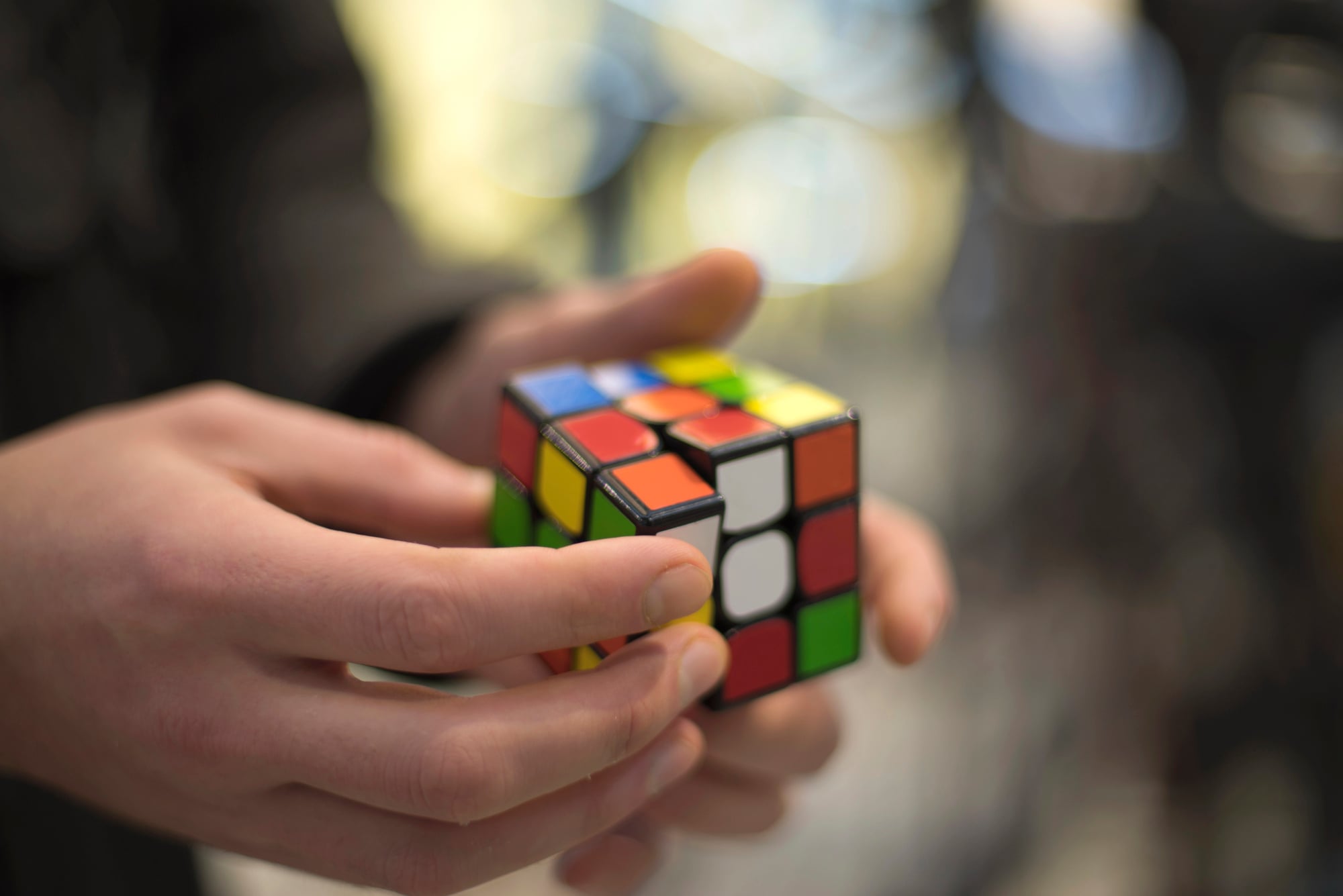
Ernő Rubik created his cube in 1974, and it took him a month to solve his own invention. That should tell you something.
The puzzle exploded in the 1980s, selling hundreds of millions of copies and spawning an entire subculture of speedsolvers who can now complete it in under five seconds. The cube works because it’s deceptively simple.
Six faces, six colors, and you just need to line them up. Except there are 43 quintillion possible configurations, and only one solution.
Most people give up after scrambling it once. The determined ones learn algorithms—sequences of moves that flip specific pieces without disturbing others.
These patterns have names like “sexy move” and “sledgehammer,” and memorizing them feels like learning a secret language. What makes the Rubik’s Cube endure is that it bridges the gap between a toy and a serious mathematical object.
Kids play with it. Computer scientists study its group theory implications.
Everyone else just wants to solve it once to prove they can.
The Tower of Hanoi
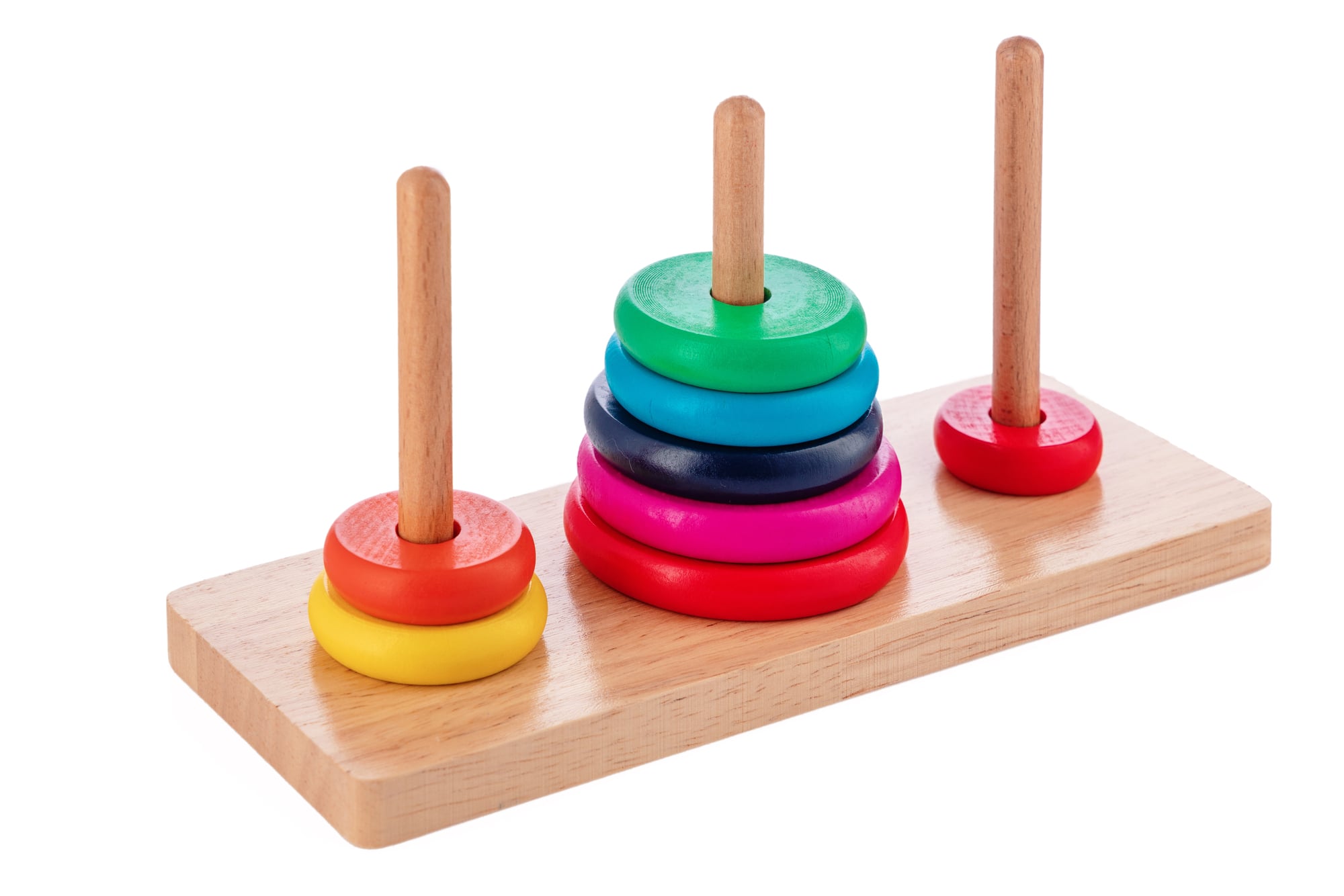
This one comes from 1883, invented by French mathematician Édouard Lucas. Three pegs, a stack of disks in decreasing size, and one rule: move the entire stack to another peg, one disk at a time, never placing a larger disk on a smaller one.
The minimum number of moves required follows a clear pattern: 2^n – 1, where n equals the number of disks. Three disks? Seven moves.
Four disks? Fifteen. Eight disks? Two hundred fifty-five. The math is elegant, but executing it requires thinking several steps ahead—a skill that frustrates people who prefer to figure things out as they go.
Lucas wrapped the puzzle in a legend about monks in a temple moving 64 golden disks, with the world ending when they finish. At one move per second, that would take about 585 billion years, so humanity has some time left.
The Four Color Theorem

You have a map. You want to color it so that no two adjacent regions share the same color.
What’s the minimum number of colors you need? This question tormented mathematicians for over a century.
Francis Guthrie proposed in 1852 that four colors would always be enough. It seemed obvious.
Proving it wasn’t. Mathematicians tried for decades, producing false proofs and discovering deeper questions about graph theory along the way. Kenneth Appel and Wolfgang Haken finally cracked it in 1976, but their proof required a computer to check thousands of individual cases.
Many mathematicians felt uneasy about a proof that no human could verify by hand. The debate about whether computer-assisted proofs “count” continues today, making this puzzle as much about philosophy as mathematics.
Sam Loyd’s 15 Puzzle
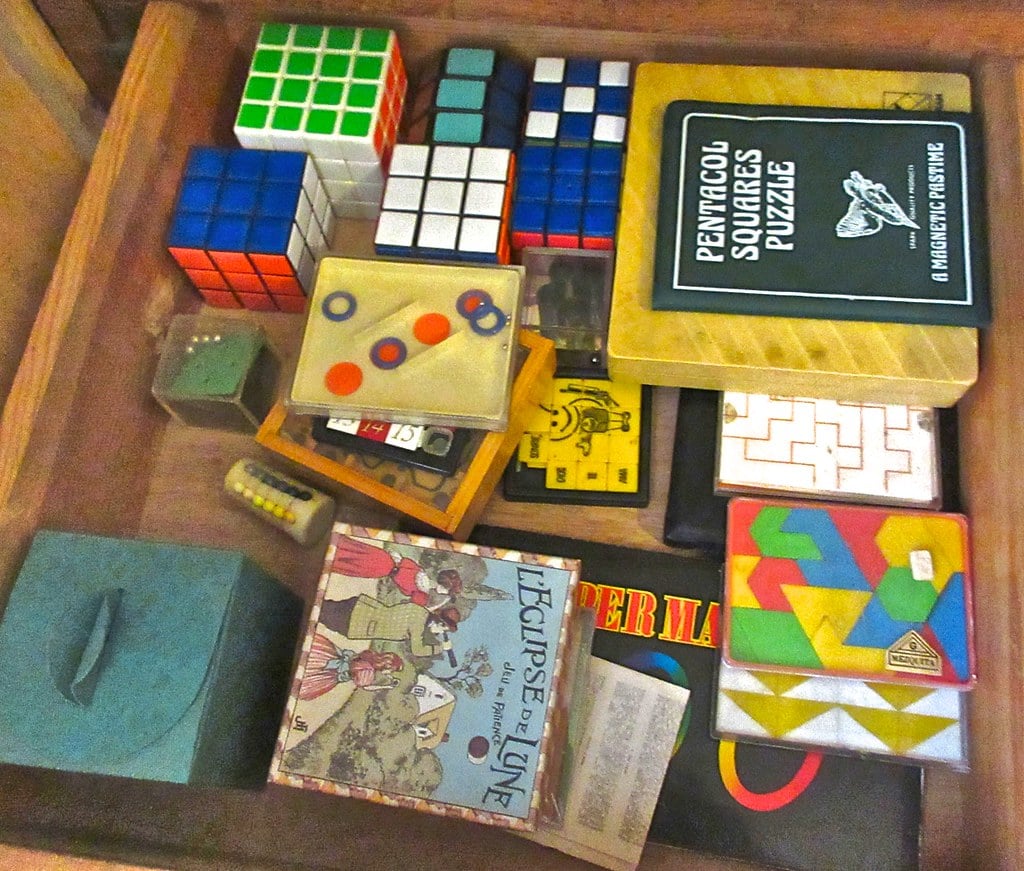
The 15 Puzzle caused a nationwide mania in the 1880s. A 4×4 grid holds fifteen numbered tiles and one empty space.
Slide the tiles around until they’re in order—1 through 15, reading left to right, top to bottom. Simple enough.
Except Sam Loyd offered a cash prize for solving a version where the 14 and 15 tiles started in swapped positions. People spent hours, days, weeks attempting it.
They never succeeded. They couldn’t. The puzzle was mathematically impossible from that starting configuration.
Loyd knew this. He was a trickster who understood that the best puzzles aren’t always the solvable ones. Sometimes the real puzzle is figuring out when to stop trying.
The Riddle of the Sphinx
“What walks on four legs in the morning, two legs at noon, and three legs in the evening?” The Sphinx asked this riddle to travelers approaching Thebes, devouring anyone who answered incorrectly.
Oedipus solved it: a human, who crawls as a baby, walks upright as an adult, and uses a cane in old age. The answer seems obvious now, but riddles lose their power once you know the solution.
The Sphinx’s riddle endures because it captures something about the human condition—how we change over time, growing stronger and then weaker, with each stage bringing its own challenges. The story itself functions as a puzzle.
Oedipus solves the riddle but fails to solve the larger mystery of his own identity, leading to tragedy. Sometimes answering one question just reveals harder ones underneath.
The Bridges of Königsberg

Could you walk through the city of Königsberg, crossing each of its seven bridges exactly once and return to your starting point? Local residents tried for years.
None succeeded. Leonhard Euler proved in 1736 that the task was impossible.
He abstracted the problem into graph theory—representing land masses as points and bridges as lines connecting them. A path that crosses each bridge once requires the graph to have exactly zero or two points with an odd number of connections.
Königsberg had four such points, making the walk impossible. Euler didn’t just solve a puzzle. He invented an entire branch of mathematics.
The bridges are gone now, destroyed in World War II, but the problem lives on in textbooks and computer science courses worldwide.
Martin Gardner’s Puzzle Columns
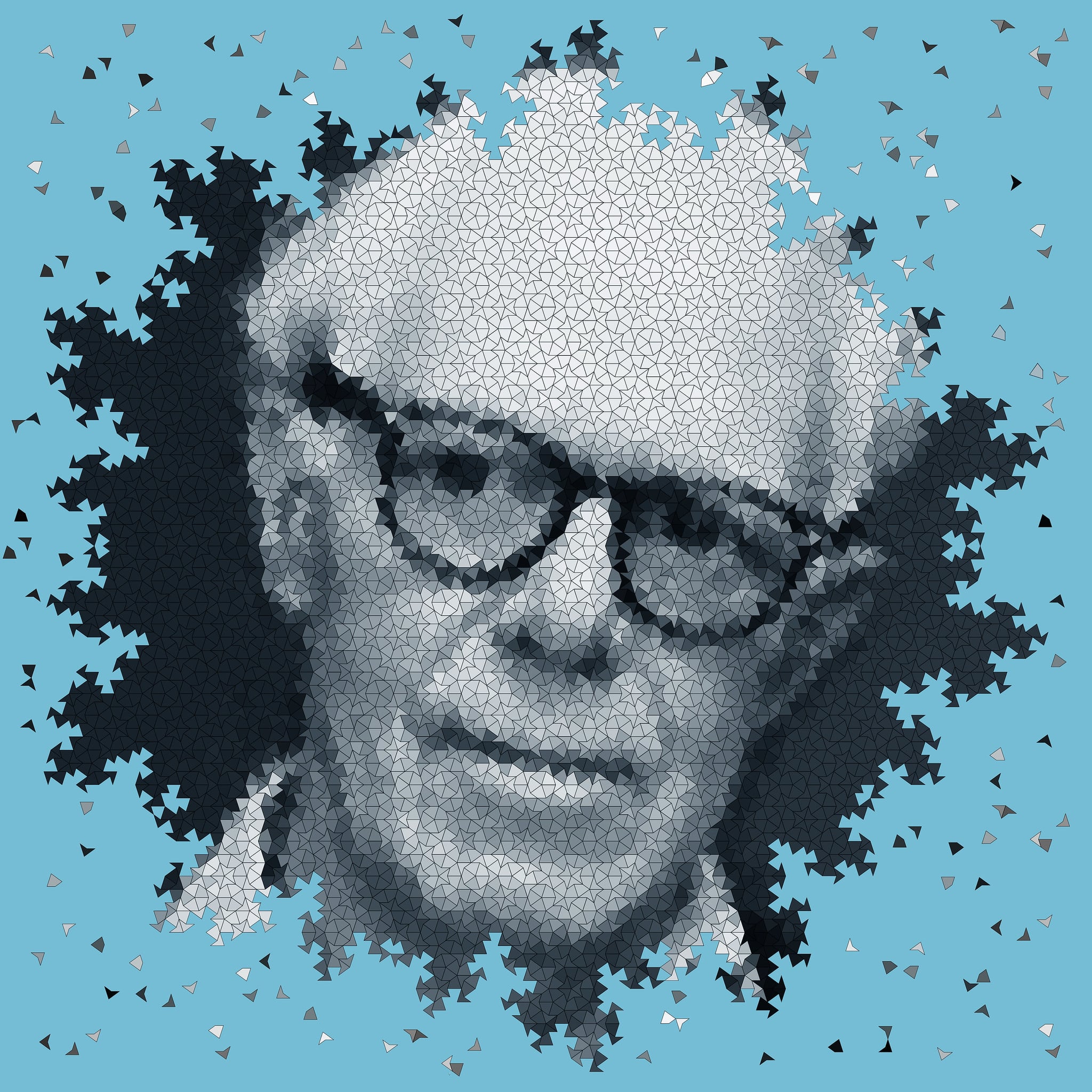
For 25 years, Martin Gardner wrote the “Mathematical Games” column in Scientific American, introducing millions of readers to puzzles that stretched their brains in unexpected directions. He didn’t invent most of these puzzles, but he curated and presented them with such clarity that they reached a massive audience.
Gardner gave us Hexaflexagons, Conway’s Game of Life, and the Unexpected Hanging Paradox. His columns made math feel playful rather than intimidating.
Readers would spend entire weekends working on his problems, then eagerly await next month’s column for solutions and new challenges. The puzzles varied wildly in difficulty.
Some you could solve in minutes. Others stumped professional mathematicians.
Gardner understood that the best puzzle collections need both types—easy wins to build confidence, hard problems to provide genuine challenge.
The Prisoner’s Dilemma

Two prisoners sit in separate cells. Interrogators offer each the same deal: betray the other, and you go free while your partner serves three years.
If both betray each other, you each serve two years. If both stay silent, you each serve one year.
What do you do? The rational choice seems to be betrayal—it guarantees you won’t serve the maximum sentence.
But if you both think that way, you both end up worse off than if you’d cooperated. This puzzle, formalized in 1950 by Merrill Flood and Melvin Drescher, appears simple but reveals deep truths about cooperation, trust, and rational decision-making.
Economists use it to model trade relationships. Biologists use it to explain evolutionary cooperation.
Philosophers use it to probe the nature of ethics. It’s a puzzle that keeps generating new questions rather than settling old ones.
Sudoku
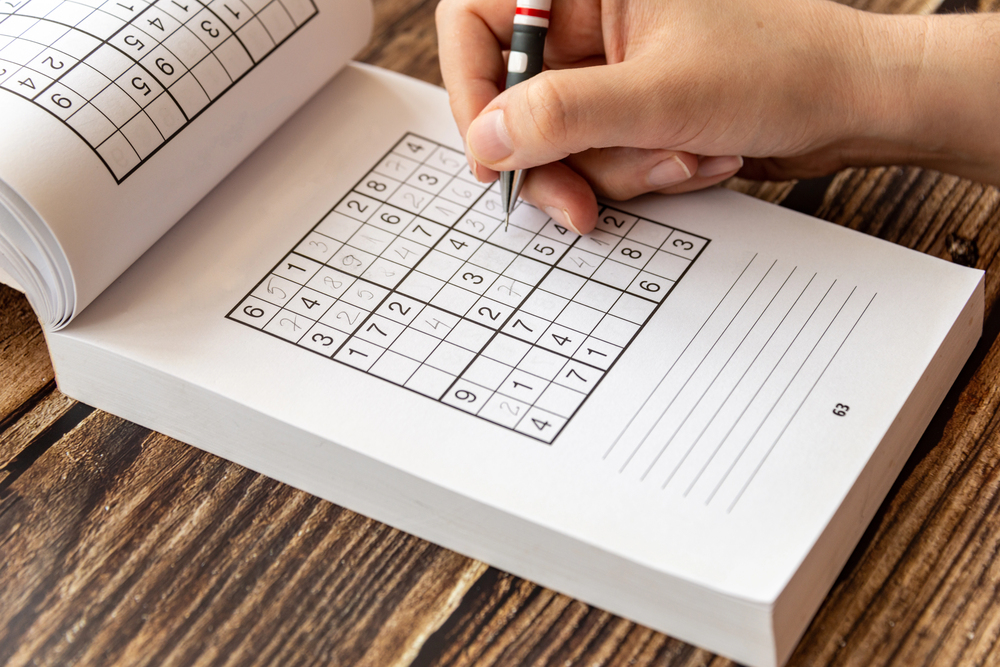
The modern Sudoku grid appeared in 1979 in Dell Magazines under the name “Number Place.” It exploded in popularity after appearing in Japanese puzzle magazines in the 1980s, eventually spreading worldwide in the 2000s.
The rules are dead simple: fill a 9×9 grid so each row, column, and 3×3 box contains the digits 1 through 9 exactly once. No math required—just logic and patience.
You can solve Sudoku with any nine symbols. The numbers are arbitrary.
What makes Sudoku addictive is the way it creates a flow state. Each solved cell gives you information to solve others.
You build momentum. The puzzle starts feeling impossible and gradually yields to your deductions.
That moment when the last few cells fall into place delivers a small but genuine dopamine hit that keeps people coming back.
The Monty Hall Problem

You’re on a game show. Three doors hide two goats and one car.
You pick Door 1. The host, who knows what’s behind each door, opens Door 3 to reveal a goat. He asks if you want to switch to Door 2.
Should you switch? Most people say it doesn’t matter—it’s 50-50 now. But switching actually doubles your chances of winning the car.
When Marilyn vos Savant explained this in her column in 1990, thousands of readers wrote in to tell her she was wrong. Many had PhDs. They were all incorrect.
The counterintuitive answer stems from the host’s knowledge—by deliberately showing you a goat, he provides information that changes the probability. This puzzle infuriates people because it violates their intuition about probability.
Even after understanding the explanation, many still feel like it should be 50-50. The gap between logical proof and gut feeling makes this one of the most argued-about puzzles in modern times.
Tangrams

Seven flat shapes—five triangles, one square, one parallelogram—can be arranged into thousands of different figures. This Chinese puzzle has existed for centuries, possibly dating back to the Song Dynasty, though its exact origins remain unclear.
The challenge seems straightforward: arrange all seven pieces to match a silhouette. No overlapping, no gaps.
But the number of possible arrangements makes trial and error impractical. You need to visualize how the pieces interact, how rotating one piece creates space for another.
Tangrams became a worldwide craze in the early 1800s, spreading from China to Europe and America. Napoleon supposedly enjoyed them during his exile.
Edgar Allan Poe owned a set. The puzzle works because it’s infinitely replayable—once you solve one configuration, there are always more to attempt.
Crossword Puzzles
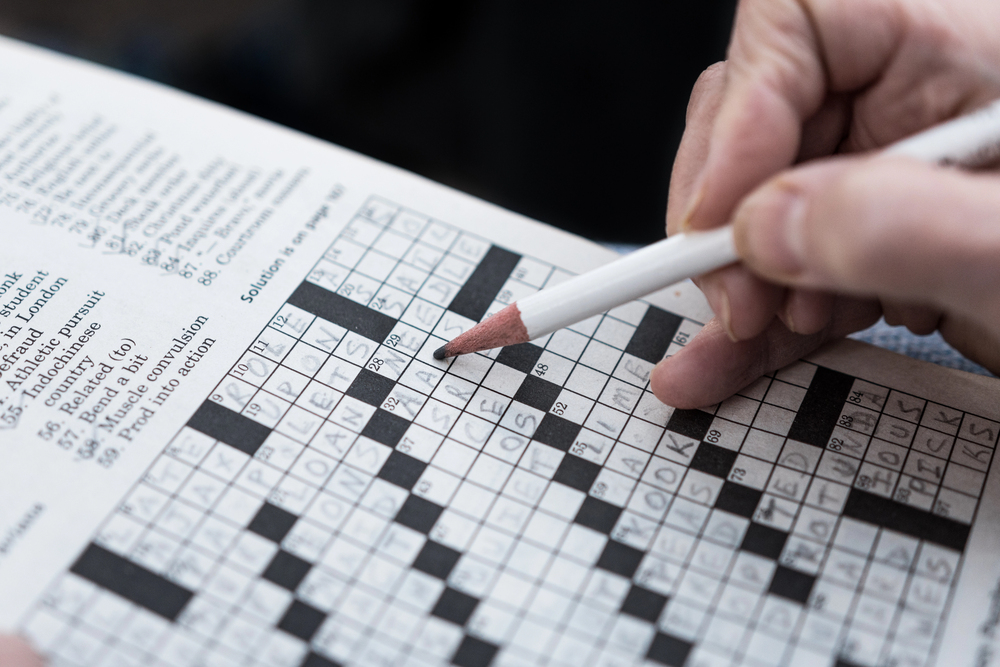
Arthur Wynne put out the earliest crossword in the New York World back in 1913. He named it a “word-cross puzzle,” yet it didn’t resemble today’s versions – it had a diamond form instead of being boxed.
While current ones are squared off, his original took on a lozenge-like shape. The format changed fast.
In the 1920s, puzzles became a nationwide craze. Folks worked them out on commutes, over morning coffee, between work tasks.
The New York Times ignored these games till ’42 – thought they weren’t classy enough. Still, pressure from fans made them switch sides.
What keeps crosswords around isn’t flashiness – it’s how they adjust to your level. The weekday ones in the Times welcome new solvers.
By Saturday, even sharp minds struggle. Puzzle makers tuck jokes, pop culture nods, or tricky phrasing into hints, so solving takes smarts plus clever twists.
A solid puzzle acts like a chat with its creator – a slow back-and-forth where you sync up to their way of seeing things.
When the Puzzle Becomes Part of You
You keep these brain teasers in your mind way past the first try. That Rubik’s Cube? Still messy on your shelf, untouched since last time.
Maps catch your eye – you start noticing how colors never touch if they’re the same shade. When choices come up, that Prisoner’s Dilemma sneaks into your thoughts instead.
The coolest brain teasers aren’t about keeping your fingers busy – they grab your thoughts, spark fresh connections in your head, so you start viewing challenges from another angle. These puzzles stick around through time, not due to being impossible, yet because cracking them shifts how you think.
Over time, you turn into someone who faces tough situations and wonders: could there be a path forward?
More from Go2Tutors!
- The Romanov Crown Jewels and Their Tragic Fate
- 13 Historical Mysteries That Science Still Can’t Solve
- Famous Hoaxes That Fooled the World for Years
- 15 Child Stars with Tragic Adult Lives
- 16 Famous Jewelry Pieces in History
Like Go2Tutors’s content? Follow us on MSN.



