First Video Games Ever Made
The debate about which video game came first depends on how you define a video game. Some people count lab experiments that nobody outside a university ever saw.
Others only count games that regular people could actually play. The truth is that video games emerged gradually through the 1950s and 1960s, with different inventors working on similar ideas without knowing about each other.
Each contribution added something new to what would eventually become the gaming industry we know today.
Tennis for Two Appeared on an Oscilloscope

William Higinbotham created Tennis for Two in 1958 at Brookhaven National Laboratory in New York. He built it to entertain visitors during the lab’s annual public exhibition.
The game displayed a side view of a tennis court on an oscilloscope screen, which is the same kind of monitor scientists used to visualize electrical signals. Players turned a knob to adjust the angle of their shot and pressed a button to hit the virtual tennis back and forth across a net.
The game even simulated gravity, so your trajectory mattered. Higinbotham never patented the invention because he created it as a government employee, and he didn’t think it was particularly groundbreaking at the time.
He was wrong about that.
Spacewar! Took Over MIT

Steve Russell and other programmers at MIT created Spacewar! in 1962 on a DEC PDP-1 computer. The game featured two spaceships fighting in the gravity well of a star.
Each ship could rotate, thrust forward, and fire missiles at the opponent. If you flew too close to the star, gravity would pull you in and you’d lose.
The game spread to other universities and research labs that had PDP-1 computers. Programmers modified and improved it, adding features like hyperspace jumps and different star masses.
Spacewar! influenced countless later games and proved that computers could create engaging entertainment, not just crunch numbers. The problem was that only a handful of institutions owned the computers needed to play it.
The Magnavox Odyssey Entered Living Rooms
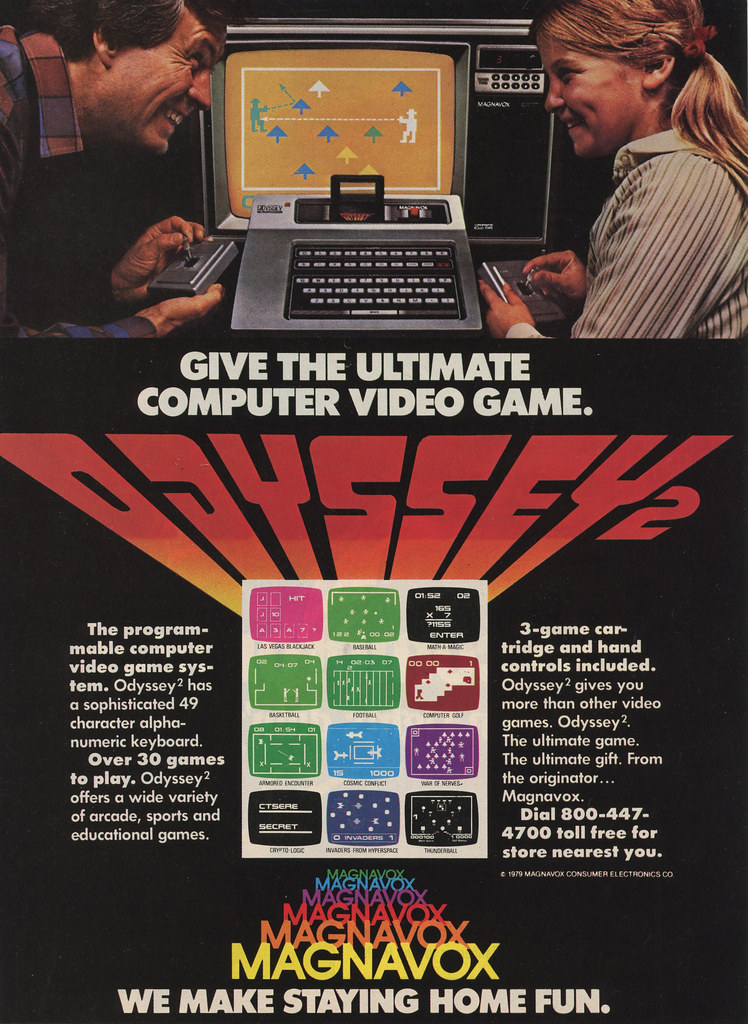
Ralph Baer spent years developing the first home video game console while working at Sanders Associates. The Magnavox Odyssey hit stores in 1972, bringing video games into people’s homes for the first time.
The console used plastic overlays that you taped to your television screen to create different game backgrounds, since the console itself could only display simple white rectangles and dots. The system came with dice, cards, and other physical game pieces that you used while playing certain games.
You moved controllers to control the on-screen elements, creating primitive versions of tennis, hockey, and other sports. Magnavox sold about 350,000 units, which sounds small now but proved that consumers wanted to play games on their televisions.
The company made one major mistake though—they advertised it as only working with Magnavox televisions, which scared off potential buyers who owned other brands.
Computer Space Landed in Bars
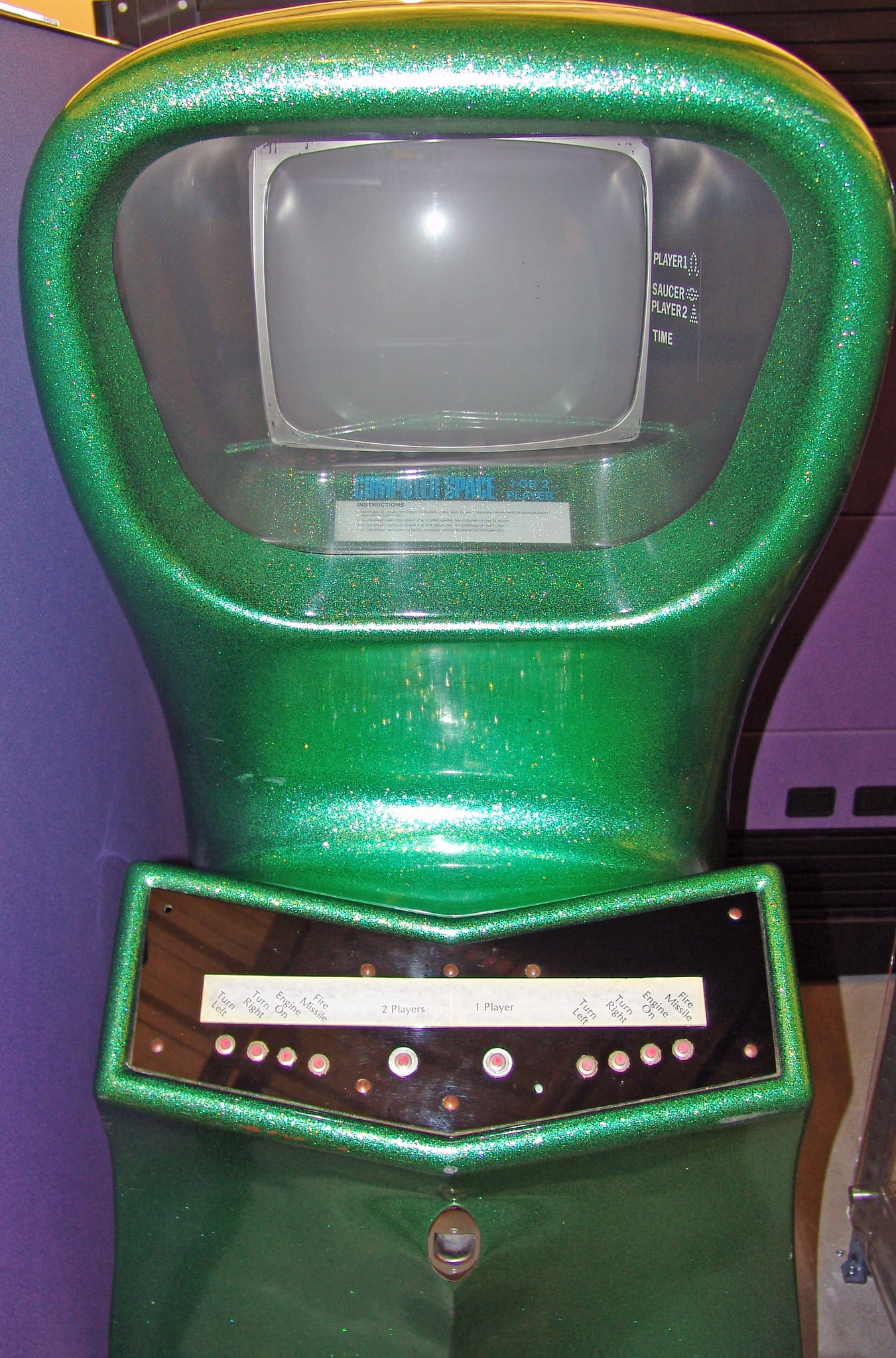
Nolan Bushnell and Ted Dabney created Computer Space in 1971, the first commercially sold coin-operated video game. They based it heavily on Spacewar! but simplified the controls for arcade play.
The game came in a distinctive fiberglass cabinet that looked like something from a science fiction movie. Computer Space flopped.
The controls confused casual players who just wanted simple fun after a few drinks. But the attempt taught Bushnell and Dabney valuable lessons about what arcade players actually wanted.
They took that knowledge and founded Atari the next year.
Pong Changed Everything
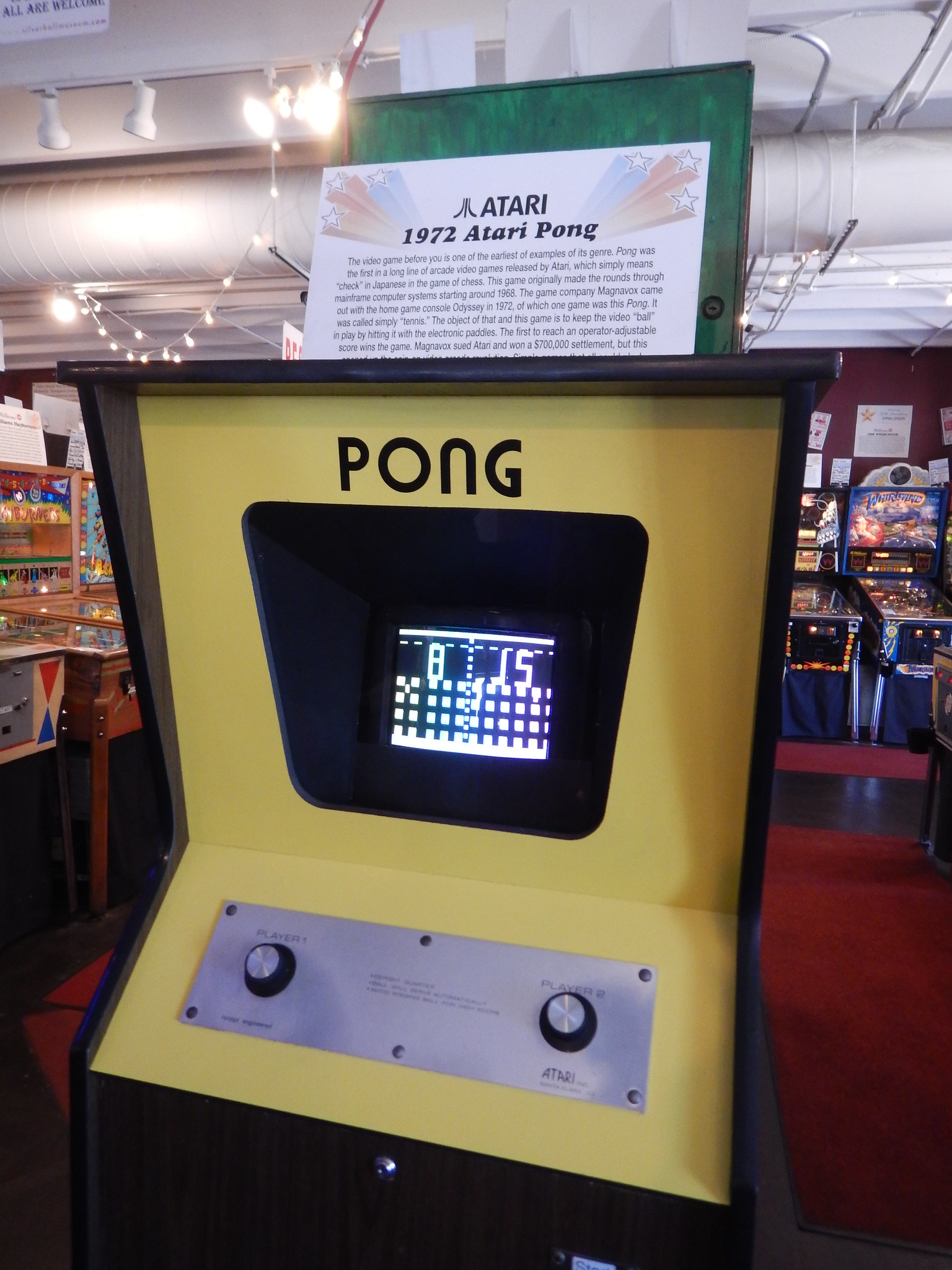
Atari released Pong in 1972, and this simple tennis game succeeded where Computer Space failed. The gameplay was instantly understandable—you moved a paddle up and down to hit an orb back and forth.
Anyone could figure it out in seconds. The first Pong machine went into a bar in Sunnyvale, California.
Within two weeks, it broke down because the coin mechanism was jammed with quarters. Bar owners started calling Atari begging for more machines.
The game’s success proved that video games could be a serious business, not just a novelty. Pong machines appeared in bars, bowling alleys, and restaurants across the country.
The Oregon Trail Taught While It Entertained

Don Rawitsch, Bill Heinemann, and Paul Dillenberger created The Oregon Trail in 1971 to teach students about pioneer life. The text-based game ran on a mainframe computer and challenged players to manage resources while traveling west in a covered wagon.
You made decisions about when to rest, how much food to buy, and whether to ford rivers or wait for ferries. Your party members could get dysentery, break their legs, or die from snakebites.
The game was brutally difficult and killed off your family members with alarming frequency. Schools embraced it because it made history lessons memorable.
Kids who played it in the 1970s and 1980s still remember watching their digital families succumb to various frontier disasters.
Maze War Pioneered First-Person Perspective

Steve Colley, Greg Thompson, and Howard Palmer created Maze War in 1973 at NASA’s Ames Research Center. The game displayed a first-person view as you wandered through a maze, hunting other players.
When you saw another player, you could shoot them. The game ran on multiple computers connected over a network, making it one of the earliest multiplayer experiences.
Players at different terminals could compete against each other in real-time. The first-person perspective and networked multiplayer would eventually become standard features in gaming, but in 1973, these concepts were almost unimaginably advanced.
Gran Trak 10 Put You Behind the Wheel

Atari released Gran Trak 10 in 1974, one of the first racing games. It featured a steering wheel, four-position gear shifter, and gas and brake pedals.
The top-down view showed your car navigating a race track, and you competed against the clock rather than other racers. The game used actual driving controls instead of abstract joysticks or buttons, making the experience feel more realistic.
Atari manufactured about 10,000 units, but a production mistake made each machine cost more to build than it earned in quarters. Despite losing money, Gran Trak 10 proved that arcade games could simulate real-world activities in engaging ways.
Colossal Cave Adventure Created Interactive Fiction
Will Crowther wrote Colossal Cave Adventure in 1976, creating the text adventure genre. The game described locations and situations in words, and you typed commands like “go north” or “take lamp” to interact with the world.
Don Woods later expanded the game with more puzzles and fantasy elements. Adventure inspired countless text-based games and influenced graphic adventures that came later.
The game proved that storytelling and puzzles could work together in interactive entertainment, even without graphics.
Breakout Refined the Pong Formula
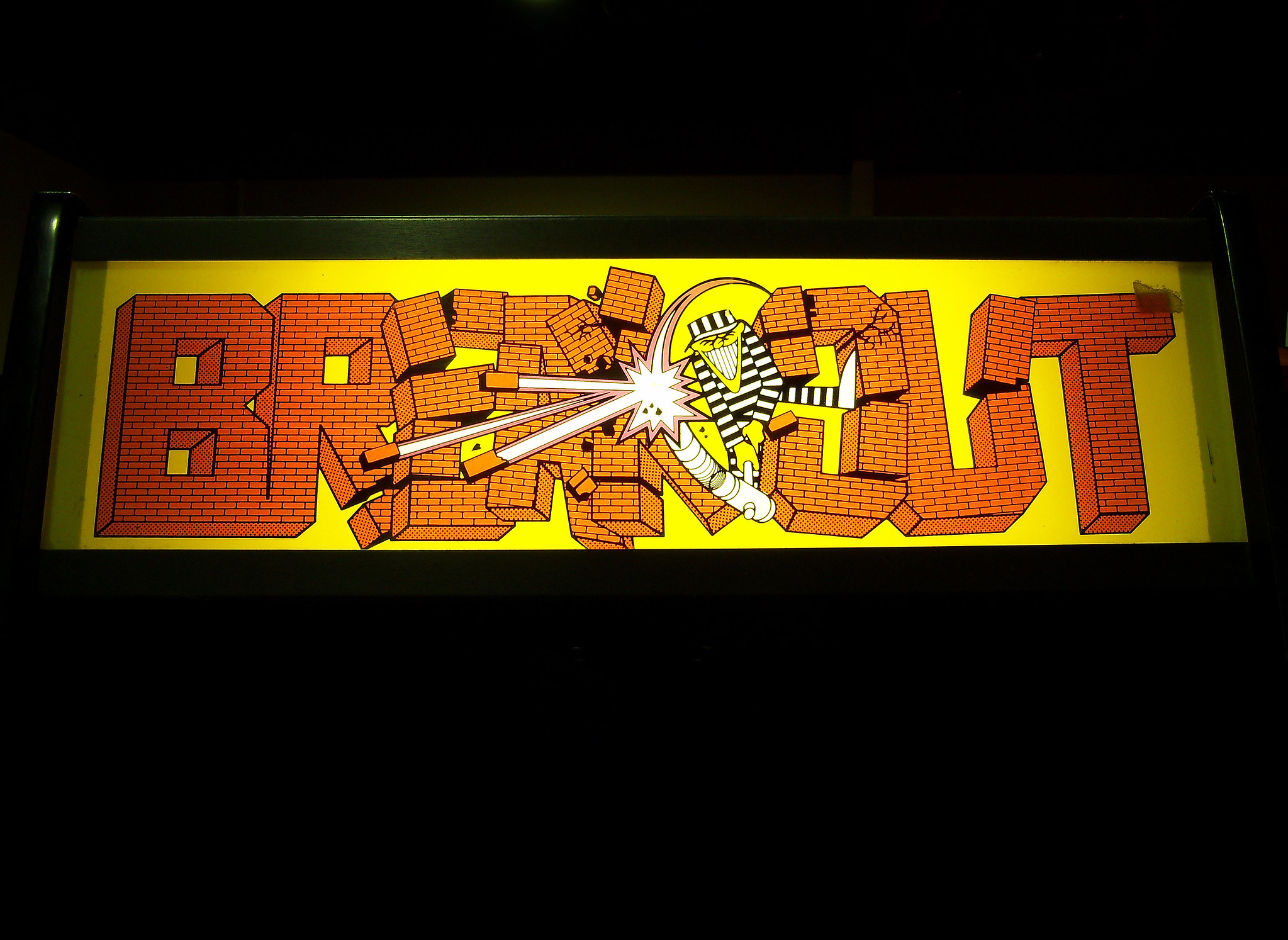
Atari released Breakout in 1976, designed by Nolan Bushnell and Steve Bristow. Steve Jobs and Steve Wozniak built the prototype in just four days, though Jobs took most of the credit and payment.
The game had you bouncing a projectile off a paddle to destroy rows of bricks at the top of the screen. Each brick you destroyed disappeared, and you got points.
Break through all the bricks and you won. The simple concept created an addictive loop of destruction and progression.
Breakout became one of the most influential arcade games and spawned countless variations and clones.
Zork Expanded Interactive Worlds
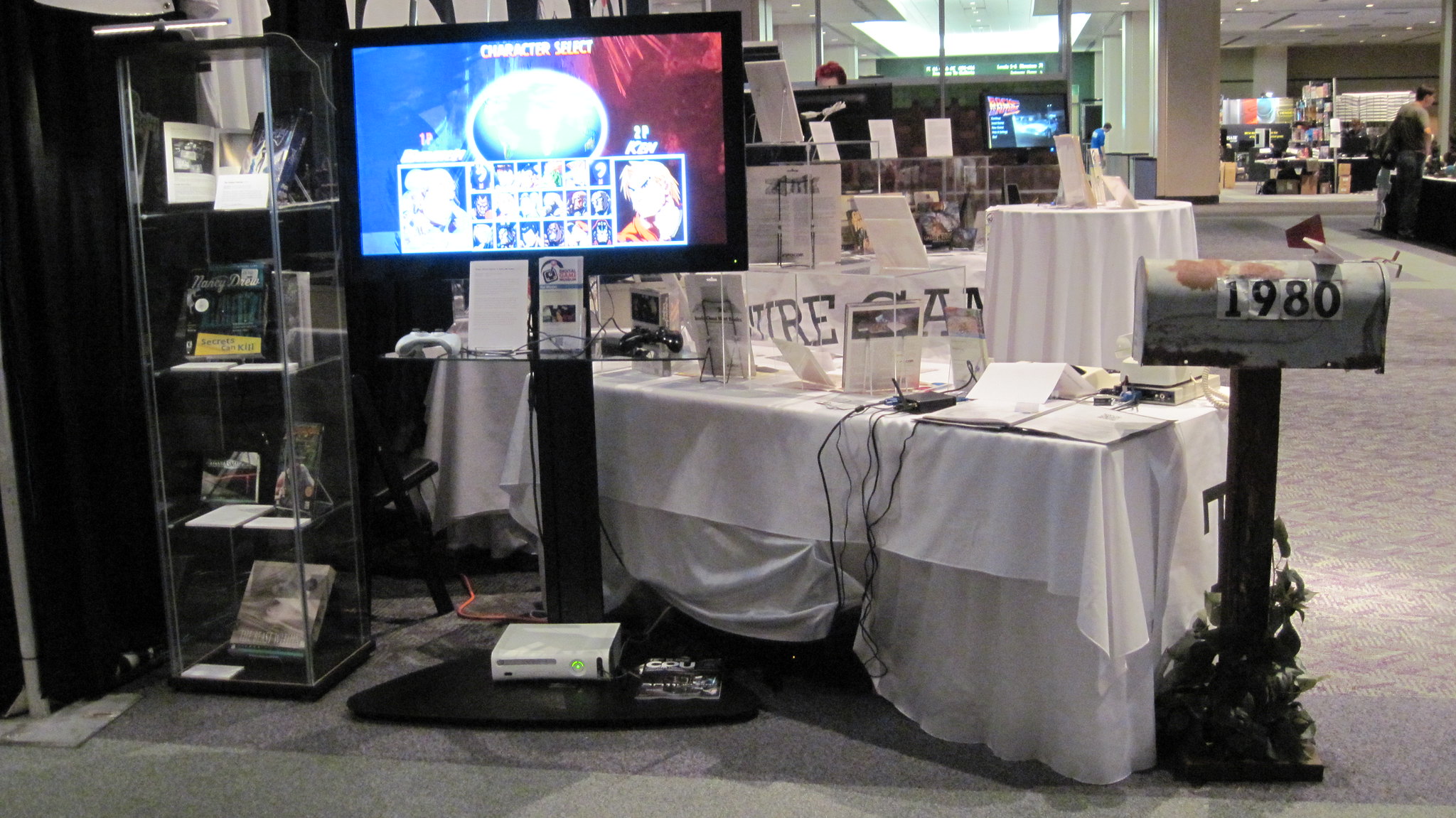
Tim Anderson, Marc Blank, Bruce Daniels, and Dave Lebling created Zork at MIT in 1977. The text adventure game featured a huge world to explore, full of puzzles, treasures, and danger.
The parser understood more complex commands than earlier games, letting you type sentences like “put the lamp in the trophy case.” The game featured humor and clever writing that made reading descriptions enjoyable rather than tedious.
Commercial versions later split Zork into three separate games because early home computers couldn’t handle the original’s size. Zork showed that text-based games could create expansive, detailed worlds limited only by the writers’ imagination.
Space Invaders Started the Golden Age
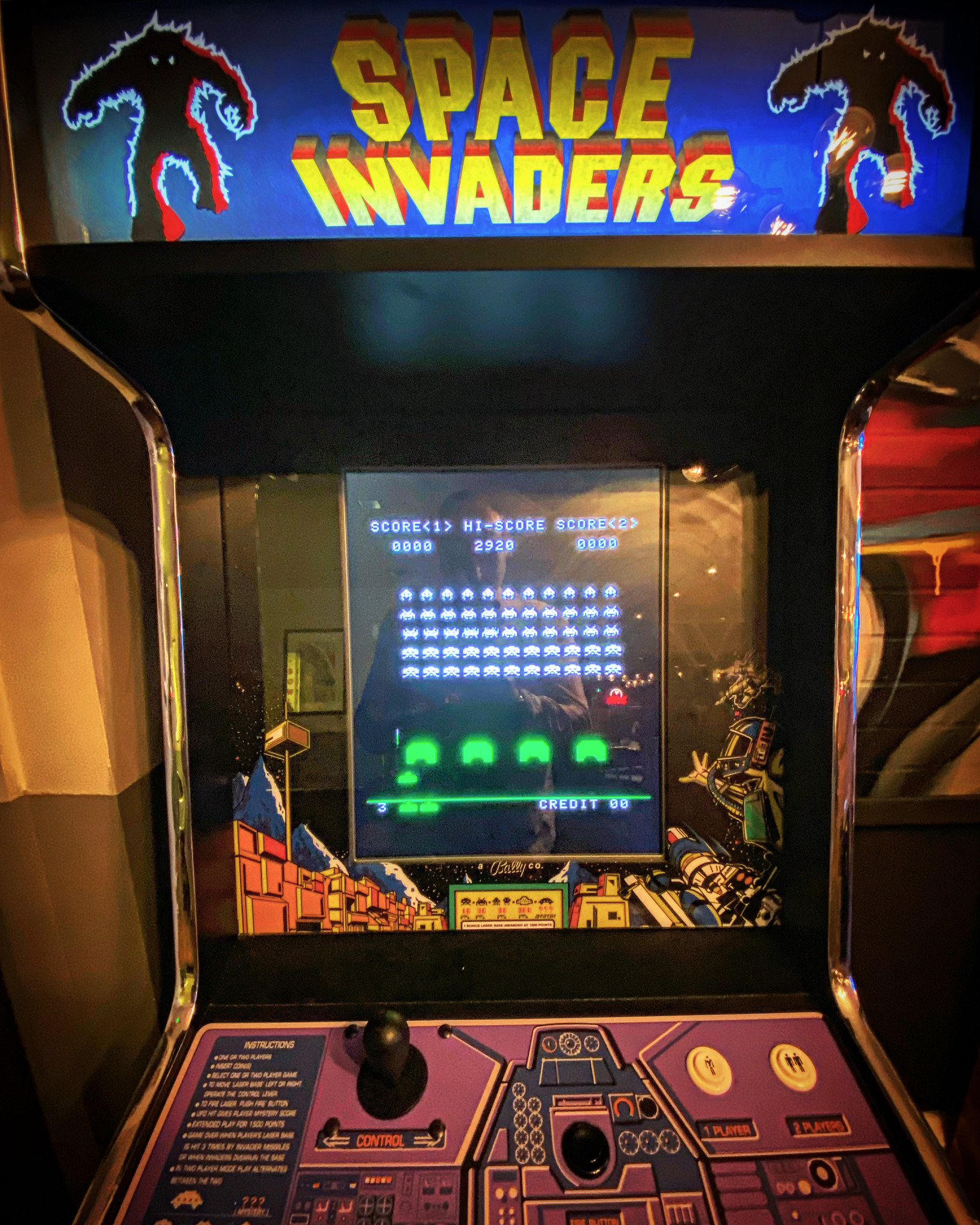
Tomohiro Nishikado created Space Invaders for Taito in 1978. The game had you controlling a laser cannon at the bottom of the screen, shooting at rows of descending aliens.
The aliens moved faster as you destroyed them, increasing the tension. You could hide behind shields that gradually eroded from enemy fire.
The game created a cultural phenomenon in Japan, reportedly causing a shortage of 100-yen coins. When it reached America in 1980, it sparked the golden age of arcade games.
Space Invaders proved that video games could generate massive profits and become part of popular culture rather than just a niche hobby.
Asteroids Added Physics and Strategy
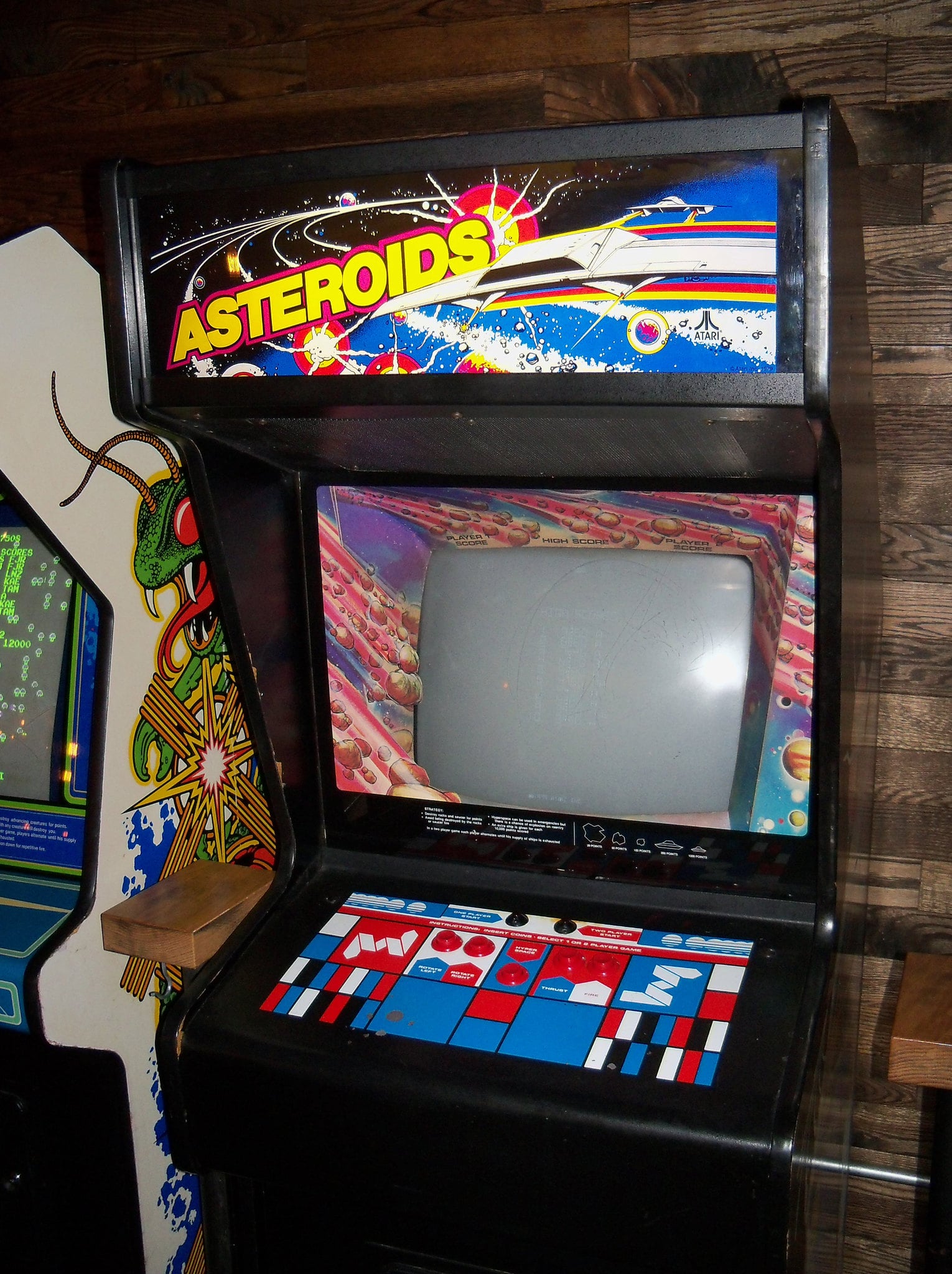
Atari released Asteroids in 1979, designed by Lyle Rains and Ed Logg. You controlled a triangular ship floating in space, surrounded by asteroids.
Shooting an asteroid split it into smaller pieces, which kept splitting until you destroyed them completely. A saucer occasionally appeared to shoot at you, adding another threat.
The game used vector graphics instead of raster images, giving it a distinctive clean look with sharp lines. Your ship obeyed inertia—thrust in one direction and you kept drifting that way until you counteracted it.
This physics-based movement added depth to the gameplay. Asteroids became one of the most popular arcade games of its era and one of Atari’s biggest successes.
Pac-Man Brought Gaming to Everyone

Pac-Man came together in 1980 under Toru Iwatani at Namco, shaped with everyday players in mind, not just hardcore gamers. Wandering through twisty paths, the round hero snacked on tiny dots but had to dodge four bright ghosts.
For brief moments, special large pellets flipped control – now the hunter became prey. Out of nowhere, Pac-Man slipped into everyday life, showing up everywhere.
Merchandise popped up, then a TV show followed, along with music on the radio. Lots of women got involved, shifting who showed up at arcades.
Without any fighting, just munching and running, it felt friendly – drawing in those turned off by lasers and explosions.
Games Were No Longer Experiments

Fun came first in those old games – realism never mattered. What stood out was how they felt to play, not whether they mirrored life.
Looks and plots took a back seat simply because machines could not handle much. Designers leaned into simplicity, letting rules shape the experience instead.
What makes these old games hold up is how solid they are underneath. Look past the blocky visuals and there’s clever thinking around difficulty, feedback, slow build-up.
Back then, designers weren’t copying – they were testing, probing, discovering step-by shaky step. Everything after owes something to those rough but bold first tries.
More from Go2Tutors!

- The Romanov Crown Jewels and Their Tragic Fate
- 13 Historical Mysteries That Science Still Can’t Solve
- Famous Hoaxes That Fooled the World for Years
- 15 Child Stars with Tragic Adult Lives
- 16 Famous Jewelry Pieces in History
Like Go2Tutors’s content? Follow us on MSN.