Fun and Surprising Facts About Famous Numbers
Numbers surround everything you do. You check the time, count your steps, calculate tips, and measure ingredients without thinking twice about the deeper stories these digits carry.
But behind every familiar number lies something unexpected — a hidden connection, an ancient mystery, or a mathematical quirk that changes how you see the world around you.
Zero
Zero didn’t exist for most of human history. Ancient Romans had no symbol for nothing, which made their math needlessly complicated.
Try multiplying MCMLIV by VIII without losing your mind. The concept arrived from India around the 5th century, and it terrified European mathematicians for centuries.
They called it “dangerous” because it broke their neat little systems. Zero divided by anything equals zero, but anything divided by zero breaks mathematics entirely.
One
Here’s something that will mess with your head: mathematicians argue about whether one is actually a prime number. (It’s not, but the reasoning gets weird fast.)
One is the loneliest number, sure, but it’s also the only positive integer that is neither prime nor composite, and it’s unique in that multiplying it by itself produces the same result (1×1=1).
In binary code — the language computers speak — everything reduces to ones and zeros. Your entire digital life, from this sentence to your favorite song, is just an elaborate pattern of ones and zeros arranged in different sequences.
Two
Two carries the weight of duality in almost every culture that ever existed, and there’s something both comforting and unsettling about how perfectly it divides the world into opposing pairs — day and night, good and evil, left and right, hot and cold. It’s the first prime number (unless you count mathematicians who insist that one deserves the title, but they’re wrong), and it’s the only even prime number, which makes it something of a mathematical unicorn.
But here’s where things get interesting: two is also the base of binary systems, which means that every complex calculation your smartphone performs, every pixel on your screen, every character in every text message you send, ultimately comes down to patterns of two digits switching back and forth. And yet.
So simple, so fundamental, and yet two refuses to behave like other numbers — it’s the only number where addition and multiplication produce consecutive results: 2+2=4, 2×2=4. Which is saying something.
Three
Three lives in that sweet spot where chaos becomes pattern. Watch a child learn to walk — two legs create an unstable wobble, but add a third point of contact and suddenly there’s balance.
Triangles are the strongest shapes in architecture. Stories work in three acts.
Fairy tales give you three wishes, three bears, three little pigs. The number shows up in mathematics as the first odd prime, but it also appears in the natural world with stubborn frequency.
Cloverleaves grow in threes. Primary colors come in threes.
Even your inner ear uses three semicircular canals to keep you upright.
Four
Four doesn’t mess around. It builds squares, cubes, and stable foundations.
Everything reliable comes in fours — seasons, cardinal directions, wheels on a car that actually stays upright. But four also carries an edge of superstition that reveals something uncomfortable about human psychology.
In many East Asian cultures, the number is considered unlucky because it sounds like the word for death. Buildings skip the fourth floor.
Phone numbers avoid it. The fear runs so deep that it has a name: tetraphobia.
Five
Your body taught you to count in fives before you knew what counting meant, and every time you make a tally mark or group objects by fives, you’re following a pattern that connects you to the fundamental architecture of human experience (five fingers, five toes, five senses — though that last one is debatable since we actually have more like twenty-one different sensory systems, but five is the number that stuck). Pentacles and pentagrams appear in religious and mystical traditions across completely separate cultures, which suggests that five carries some kind of universal significance that goes deeper than coincidence.
But here’s the thing that makes five truly strange: it’s the number of Platonic solids (perfect three-dimensional shapes), it’s the number of notes in a pentatonic scale (which somehow sounds “right” to human ears regardless of cultural background), and it’s the number that defines the golden ratio when you start doing the math behind Fibonacci sequences.
And yet — five is also prime, which means it refuses to be divided evenly by anything except itself and one. Stubborn.
Six
Six perfects itself. Mathematically speaking, it’s the smallest “perfect number” — meaning the sum of its divisors (1, 2, and 3) equals the number itself.
The next perfect number is 28, then 496, then 8,128. They get rare fast.
Six also builds the natural world more than any other number. Snowflakes crystallize in six-pointed patterns.
Benzene rings have six carbon atoms. Bees build hexagonal honeycomb cells because six-sided shapes use the least amount of material for the maximum storage space.
Seven
Seven refuses to behave rationally, and humans have been obsessed with it for millennia. It’s prime, so it won’t divide evenly into anything useful.
It’s the largest number that fits comfortably in human working memory without grouping. Ancient cultures noticed seven heavenly bodies with the unaided eye and built their calendars around seven-day weeks.
The number shows up everywhere you look once you start paying attention. Seven wonders of the world.
Seven seas. Seven deadly sins.
Seven colors in a rainbow. Seven notes in a musical scale before the pattern repeats.
Eight
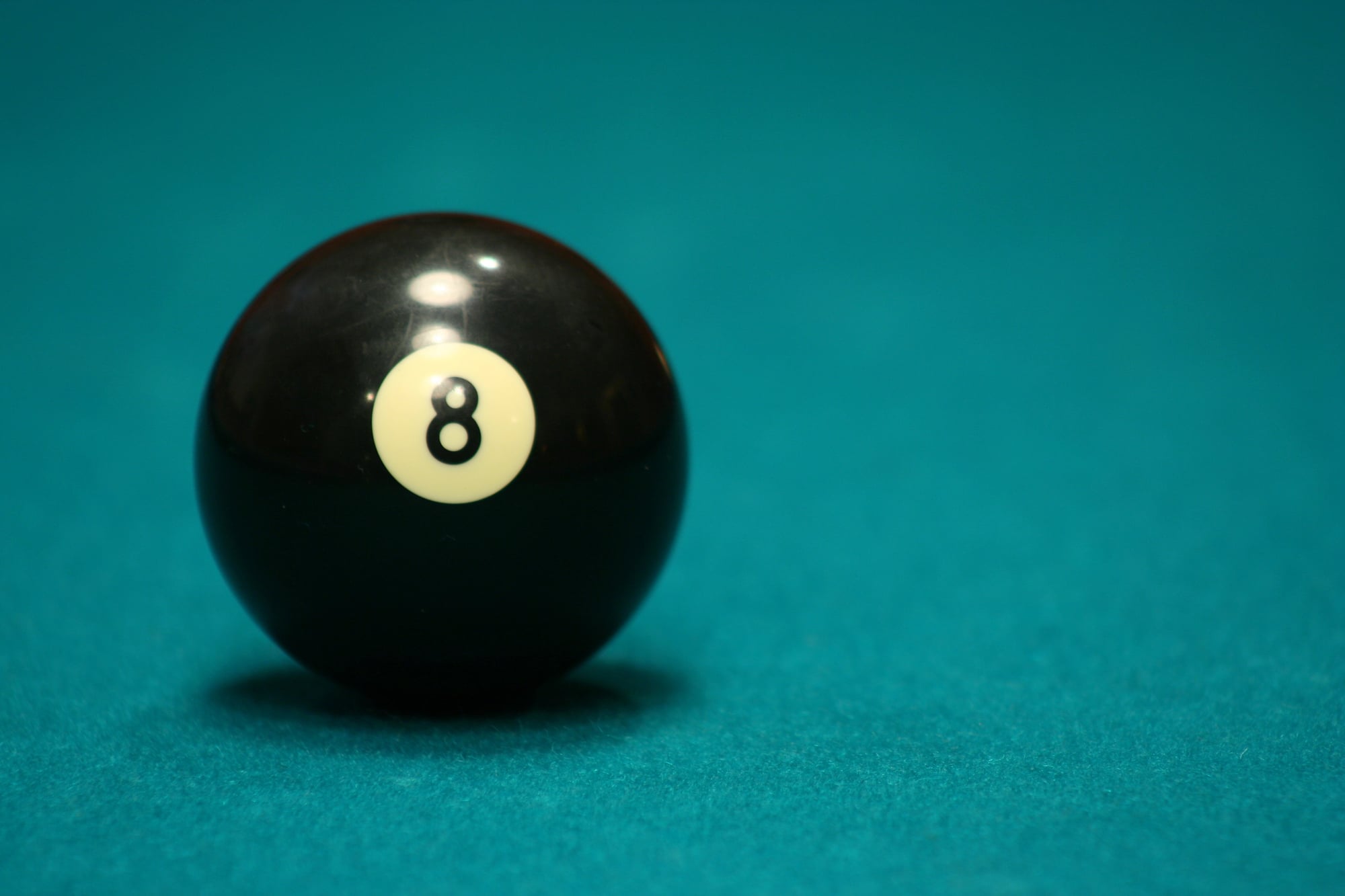
Eight flips on its side and becomes infinity, which tells you something about how this number operates in the human imagination — it’s where finite counting starts reaching toward something endless and incomprehensible. In Chinese culture, eight represents prosperity and good fortune to such an extreme degree that people pay extra money for phone numbers, license plates, and addresses containing multiple eights (the Beijing Olympics opened on 8/8/08 at 8:08 PM for exactly this reason).
But eight also marks the point where our natural counting ability breaks down; while most people can instantly recognize quantities up to four or five without actually counting, eight requires conscious mathematical effort. Which makes sense, maybe.
So eight exists in this strange space between the countable and the infinite, between luck and labor, between what feels natural and what requires work to understand.
Nine
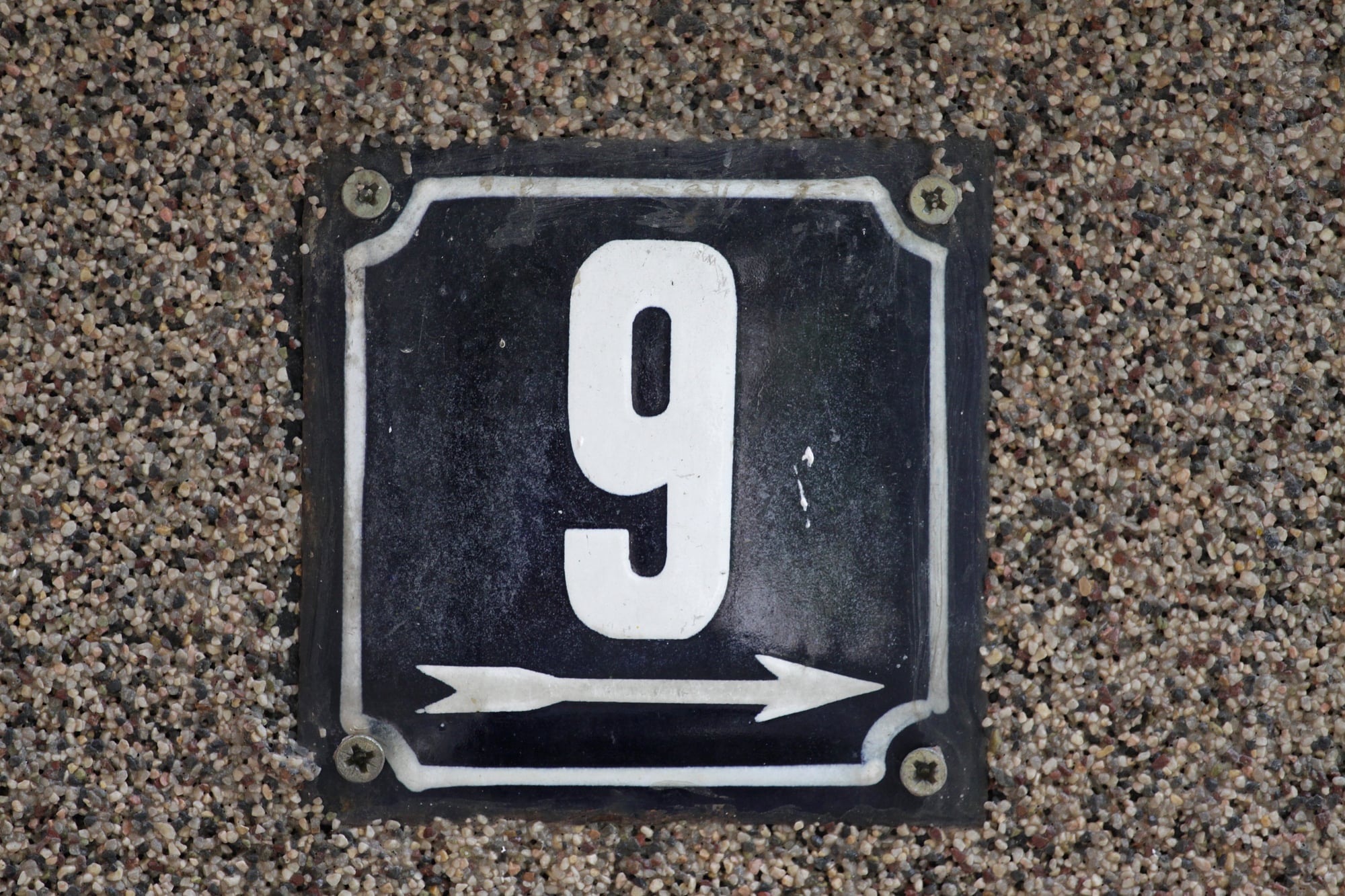
Nine is where single-digit math gets strange. Any number multiplied by nine produces digits that add up to nine when you keep adding them together.
Try it: 9 × 847 = 7623, and 7+6+2+3 = 18, and 1+8 = 9. This works every single time, no exceptions.
The number also marks completion in many traditions. Nine months of pregnancy.
Nine circles of hell in Dante’s Inferno. Nine lives for cats.
It’s the largest single digit before you start over with two-digit combinations.
Ten

Ten built civilization. Humans have ten fingers, so we created decimal systems that organize everything from currency to measurement.
But ten isn’t special mathematically — it’s just convenient for creatures with our particular anatomy. Other cultures used different base systems.
Mayans counted in twenties (fingers and toes). Babylonians used base sixty, which is why we still divide hours into sixty minutes and circles into 360 degrees.
Eleven
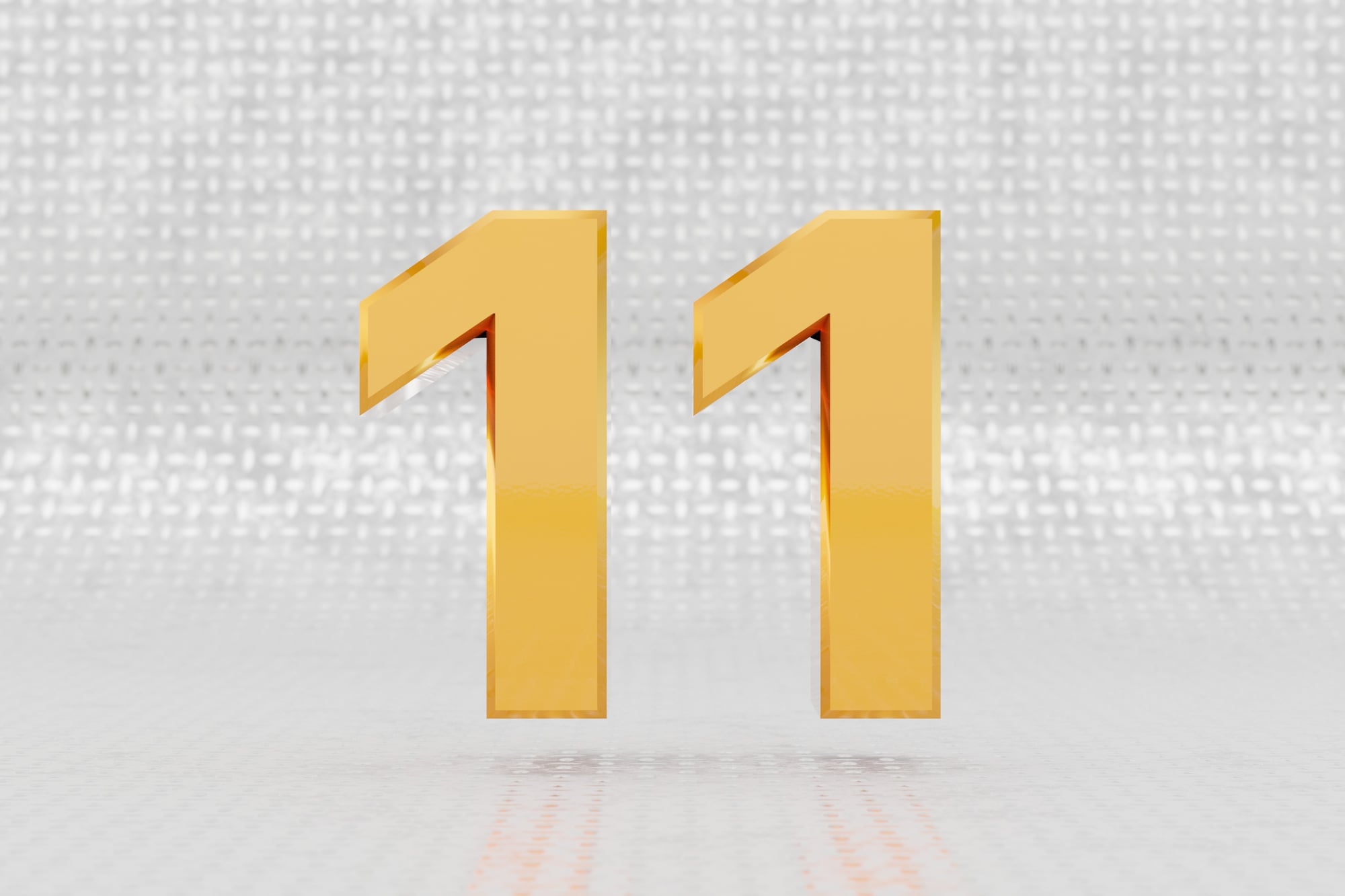
Eleven is the first number that sounds like what it is — “eleven” comes from Old English meaning “one left over” after counting to ten. It’s prime, it’s palindromic when written in numerals, and it multiplies in patterns that feel almost musical.
The number also marks things that go beyond the expected set of ten. Spinal Tap’s amplifiers go to eleven.
Football teams field eleven players. It’s one more than complete, one step past what feels natural.
Thirteen
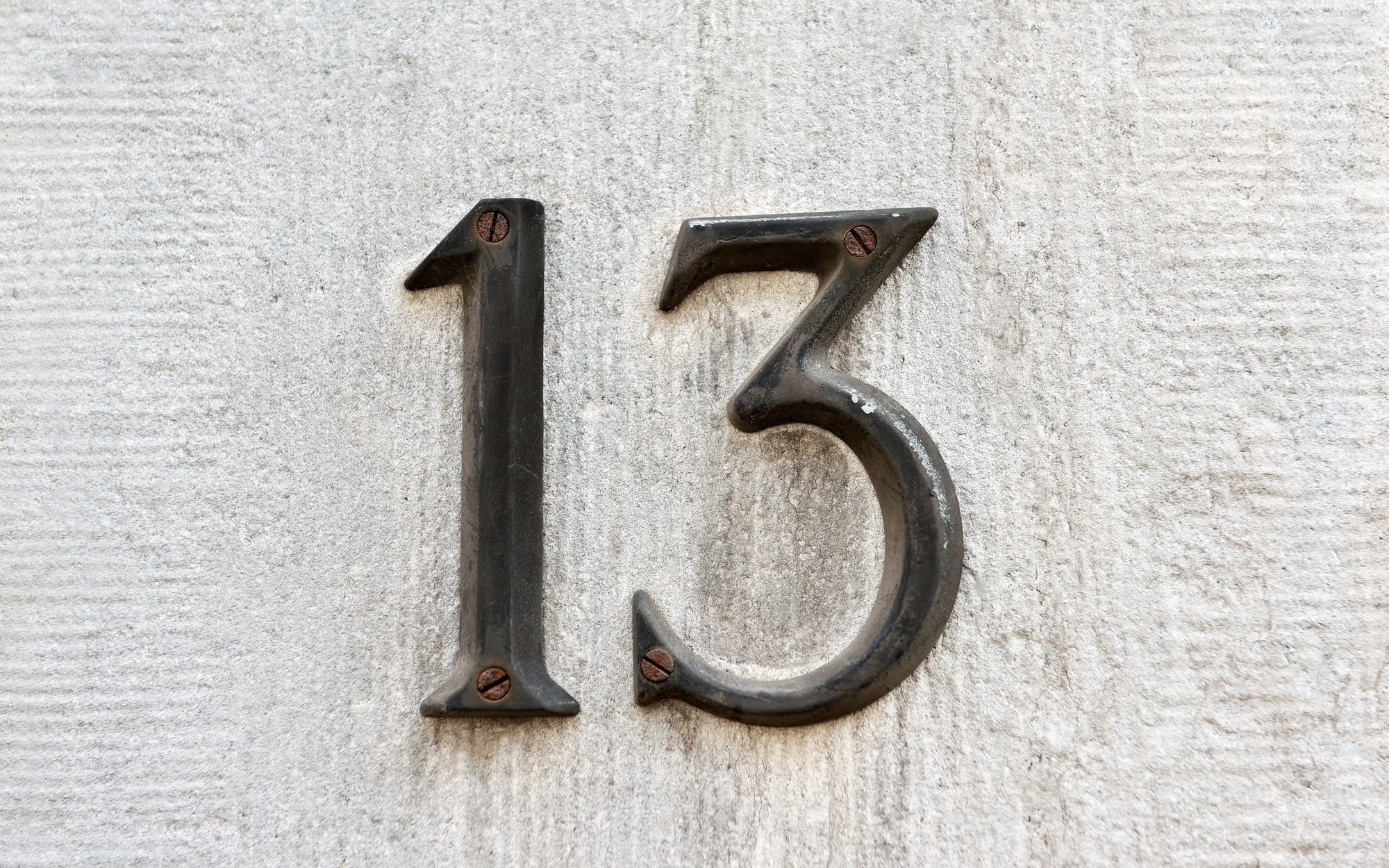
Thirteen gets blamed for more bad luck than any number deserves, but the superstition has real consequences — many buildings skip the thirteenth floor, airlines avoid row thirteen, and some people plan their lives around avoiding Friday the thirteenth. The fear has a name: triskaidekaphobia.
But thirteen is just another prime number doing its mathematical job. It’s unlucky only because humans decided it was, and that decision shapes architecture, travel, and commerce in ways that would seem completely insane to someone from a culture that never developed the superstition.
The Pattern Behind the Numbers

Numbers aren’t just symbols — they’re the language your brain uses to make sense of everything from music to architecture to the way time moves forward. Each one carries centuries of human observation, cultural weight, and mathematical discovery.
The next time you glance at a clock or count your change, remember that you’re participating in one of the oldest conversations humanity has ever had with the universe.
More from Go2Tutors!

- The Romanov Crown Jewels and Their Tragic Fate
- 13 Historical Mysteries That Science Still Can’t Solve
- Famous Hoaxes That Fooled the World for Years
- 15 Child Stars with Tragic Adult Lives
- 16 Famous Jewelry Pieces in History
Like Go2Tutors’s content? Follow us on MSN.