Game Show Upsets No One Expected
A prize might change everything if luck lines up just right. Focus sharpens when bright lights hit, questions flash across screens, fingers hover near buzzers – then one wrong move shifts the entire mood.
A silence falls where laughter lived seconds before. That moment sticks, even after the screen goes dark.
Here’s when things got so odd, even the crew doubted what they were seeing. Sit down – some of these tales sound made up, yet somehow happened.
Ken Jennings Loses After Long Run

Week after week, Ken Jennings stood on the ‘Jeopardy!’ stage turning rivals into mere footnotes. More than two and a half million dollars piled up while his reputation grew legs and walked far beyond quiz circles.
Yet everything stopped cold one evening in late 2004 when Nancy Zerg solved a Final Jeopardy question that tripped him up. That single answer ended what had seemed unbreakable.
People reacted as if something fundamental had shifted – enough for newspapers and networks to pick up the story. A game show result, aired midweek, somehow echoed past living rooms across the country.
A ‘Weakest Link’ Contestant Voting Off The Strongest Player

Strategy shaped every move on ‘The Weakest Link’. When players saw someone too strong, they removed them.
So the sharpest mind rarely reached the last stage. Some standout rounds showed groups cutting their highest scorer first.
That left space for others – less accurate but still standing – to take control. Like a team benching its star performer, then wondering why victory slipped away.
‘Who Wants To Be A Millionaire’ And The Coughing Scandal

A tale unlike any other unfolds here. Back in 2001, on Britain’s ‘Who Wants to Be a Millionaire’, Charles Ingram claimed the £1 million jackpot – yet victory came through whispers, not knowledge.
Hidden among viewers, an ally used timed coughs to guide each choice. Later, while editing footage, staff caught the pattern buried in sound recordings.
Justice followed; guilt was confirmed for all three. Strange enough to bend reality, it later lived again onstage, then on screen.
A Child Outscoring Adults On Are You Smarter Than A 5th Grader

Funny how a kid could rattle off state capitals while grown-ups stared blankly. One wrong turn in Alaska’s location, plus an adult stumped by fourth-grade fractions.
Some episodes leaned into it – children calmly naming planets, adults sweating through colonial dates. A twelve-year-old once corrected a guest on photosynthesis, voice steady, no drama.
Viewers at home paused their snacks, reached for phones, typed queries they thought they’d known years ago. Laughter came easy until silence followed, thick and telling.
Not mockery exactly, just facts laid bare under bright lights and studio applause. Questions meant for fifth graders became quiet wake-up calls by 8:30 PM.
No one said much when a nine-year-old aced constitutional amendments cold. Answers searched later filled search bars like small confessions.
It wasn’t about smarts – it was memory, attention, what got kept or tossed along the way.
Bob Barker’s Final Price Is Right Appearance Takes An Unexpected Turn

Barker stayed on ‘The Price Is Right’ for three and a half decades, then stepped down in 2007 expecting something polished and warm. But a woman playing that day guessed too high each time she tried, while someone else gave the wheel such a forceful spin it whipped around close to doing an entire loop past $1.
Laughter rose through the crowd; Bob just smiled like he’d known this sort of thing would happen all along. That last show wound up livelier than anything written out beforehand might’ve felt.
A bit of mess, turns out, can honor a legacy better than order ever could.
‘Deal Or No Deal’ Contestant Refusing A $1 Million Offer

Back in 2008, Jessica Robinson stood on stage during ‘Deal or No Deal,’ eyes locked on the last two cases. Instead of taking the banker’s check for $561,000, she waved it off – gut feeling pulling her forward.
Her chosen case, held close like a secret, flipped open to reveal just five dollars. A silence dropped over the room, thick and sudden, exactly what TV crews dread capturing live.
People watching from couches argued for days after: does boldness win hearts, or is holding back more thrilling?
Last Time We Played, Nobody Guessed What Most People Said
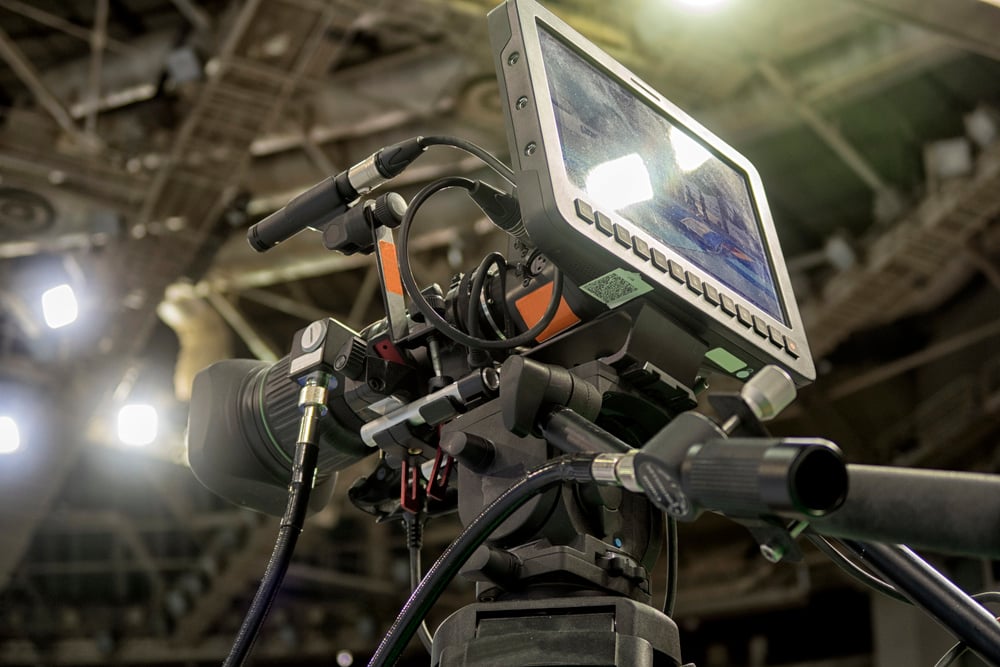
That answer sat right at number one too. Still walked away empty handed.
Funny how that works – right there, yet miles apart.
One Wrong Guess Can Ruin Everything, Even After Getting The Top Answer Right

Sometimes a player says something obvious – something most people would say – and it does not count. That stings more when it happens near the end.
A lead disappears fast if each follow-up response misses the list entirely. The math might justify it, yet it hits like bad luck.
Scoring high means nothing if the next three replies draw blanks. Victory slips away despite doing exactly what the game rewards just seconds before.
A ‘Survivor’ Contestant Quitting Near The Finale

‘Survivor’ is not technically a game show in the traditional studio sense, but it shares the same competitive structure and prize format, so it earns its place here. In season 23, a contestant named Cowboy Rick quit just before the final tribal council, walking away from a real shot at the $1 million prize.
The producers, the remaining contestants, and the viewing audience were all visibly thrown. Quitting that close to the finish line is the kind of decision that people still bring up when the show comes on.
‘Press Your Luck’ And Michael Larson

In 1984, a man named Michael Larson studied recorded episodes of ‘Press Your Luck’ and memorized the patterns of the board’s randomizer, which was not actually random. He used that knowledge to win $110,237 in two episodes, which remains one of the largest single-day winnings in game show history at the time.
CBS investigated him extensively and eventually concluded that he had not technically broken any rules. The producers changed the board’s programming immediately afterward, quietly closing the gap that Larson had walked right through.
A Perfect ‘Wheel Of Fortune’ Solve With One Letter

Most ‘Wheel of Fortune’ players need several letters before they can even begin to guess the full phrase. In 2010, a contestant named Caitlin Burke solved a long puzzle after only one letter had been revealed, correctly identifying the phrase ‘I’ve got a good feeling about this.’
The audience gasped, the hosts struggled to contain their surprise, and the clip circulated online for years as one of the most improbable moments the show had ever produced. It was either extraordinary intuition or the best-timed guess in the show’s history.
‘Jeopardy!’ Players Finishing With Negative Scores
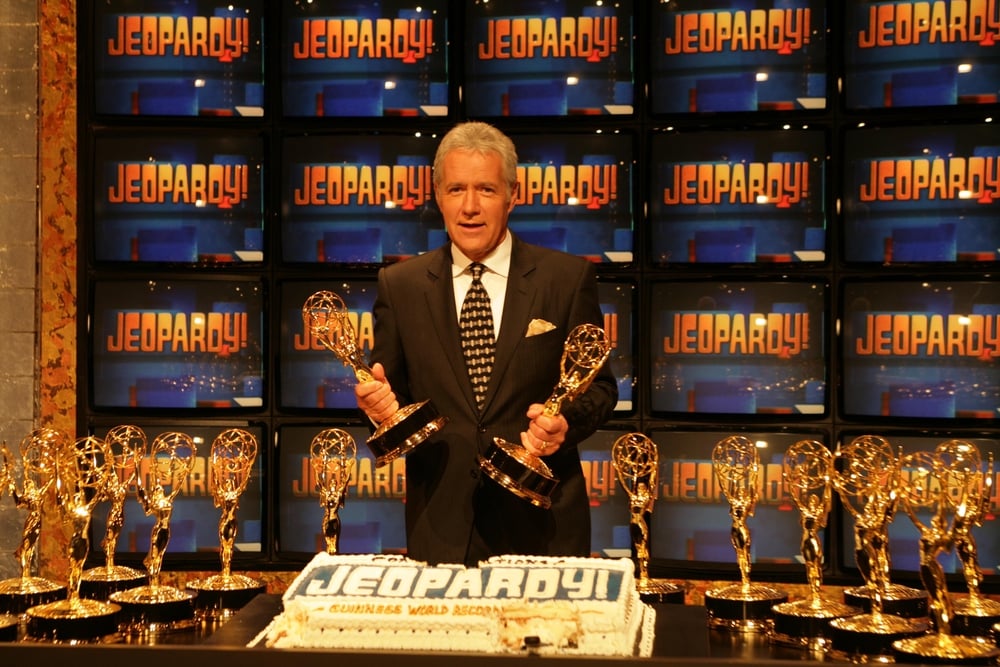
‘Jeopardy!’ allows contestants to bet on Daily Doubles and Final Jeopardy, which means a bad round can leave a player owing the game money rather than earning it. Episodes have aired where two out of three contestants ended the final round with negative scores, meaning only one person could advance regardless of how the numbers looked.
The rules state that a player needs at least one dollar to play Final Jeopardy, so those players simply sit out the last round and watch. It is a brutal and oddly fascinating way to exit a game show.
A ‘Millionaire’ Contestant Using Every Lifeline On The First Question

The lifelines on ‘Who Wants to Be a Millionaire’ were designed as emergency tools for genuinely difficult questions. Using all three on the opening question, which is traditionally the easiest one in the game, was not something producers had planned for in their runbook.
It happened more than once across different versions of the show, with contestants either overwhelmed by nerves or genuinely uncertain about questions that most of the studio audience already knew. The host’s expression in those moments tends to say everything that good manners would not allow.
A Team Winning ‘The Amazing Race’ Despite Multiple Penalties

‘The Amazing Race’ has seen teams take on time penalties for skipping tasks or breaking rules, and those penalties usually end a team’s chances. In season 17, a team absorbed a significant time penalty late in the race and still crossed the finish line before their competitors, winning the entire competition.
It worked out because the other teams made their own costly mistakes at the wrong time. Winning a race despite a deliberate slowdown is the kind of outcome that makes the show feel genuinely unpredictable.
‘Card Sharks’ And The Miscounted Deck

‘Card Sharks’ is built on probability. Contestants make predictions about whether the next card will be higher or lower, and experienced players learn to read the odds based on what has already been played.
In one memorable episode, a production error led to a card appearing twice in the deck, which threw off every probability-based strategy the contestant had been building for the previous 20 minutes. It was a rare instance where the game itself failed before the player did.
A ‘Supermarket Sweep’ Team Grabbing Everything But The Big Items

‘Supermarket Sweep’ rewarded contestants who loaded their carts with the most expensive products, and every experienced viewer knew that meant grabbing large cuts of meat and high-end coffee. One team, in a now-legendary episode, spent their entire sweep grabbing individually priced small items while their competitors loaded up on products that cost ten times as much per unit.
They lost by a margin that was almost architectural in its size. The clip still surfaces online whenever someone wants to illustrate the difference between effort and strategy.
‘The $25,000 Pyramid’ And The Impossible Blank

‘The $25,000 Pyramid’ required contestants to give word clues to their partner, guiding them toward a correct answer within a time limit. The show produced one of its most talked-about moments when a celebrity partner gave increasingly obvious clues for a common word and their contestant simply could not get there, even as the studio audience visibly mouthed the answer.
The pair lost the round with seconds to spare, missing out on the top prize over a word that most third graders would have had in under five seconds. It was painful, funny, and absolutely riveting television all at once.
When The Game Fights Back

Game shows tend to follow a predictable rhythm: someone wins, someone loses, the host smiles, everyone goes home. But the moments that people actually remember are the ones where the format broke down, a contestant made a decision that defied all logic, or the game itself produced an outcome nobody had scripted.
These upsets are not just entertaining, they are a reminder that no amount of preparation fully accounts for what happens under studio lights with a clock ticking and a nation watching. That tension is exactly why people keep tuning in.
More from Go2Tutors!

- The Romanov Crown Jewels and Their Tragic Fate
- 13 Historical Mysteries That Science Still Can’t Solve
- Famous Hoaxes That Fooled the World for Years
- 15 Child Stars with Tragic Adult Lives
- 16 Famous Jewelry Pieces in History
Like Go2Tutors’s content? Follow us on MSN.