Heaviest Things Lifted by One Person
Throughout history, humans have been fascinated by feats of extraordinary strength. From ancient tales of Hercules to modern-day strongman competitions, the ability to lift massive weights has captivated our collective imagination. These demonstrations of raw power push the boundaries of human physical capability and often defy what medical science considers possible.
Here is a list of 16 of the most incredible weight-lifting accomplishments ever achieved by individuals—showcasing both official records and legendary feats of strength.
Hafthor Björnsson’s Deadlift
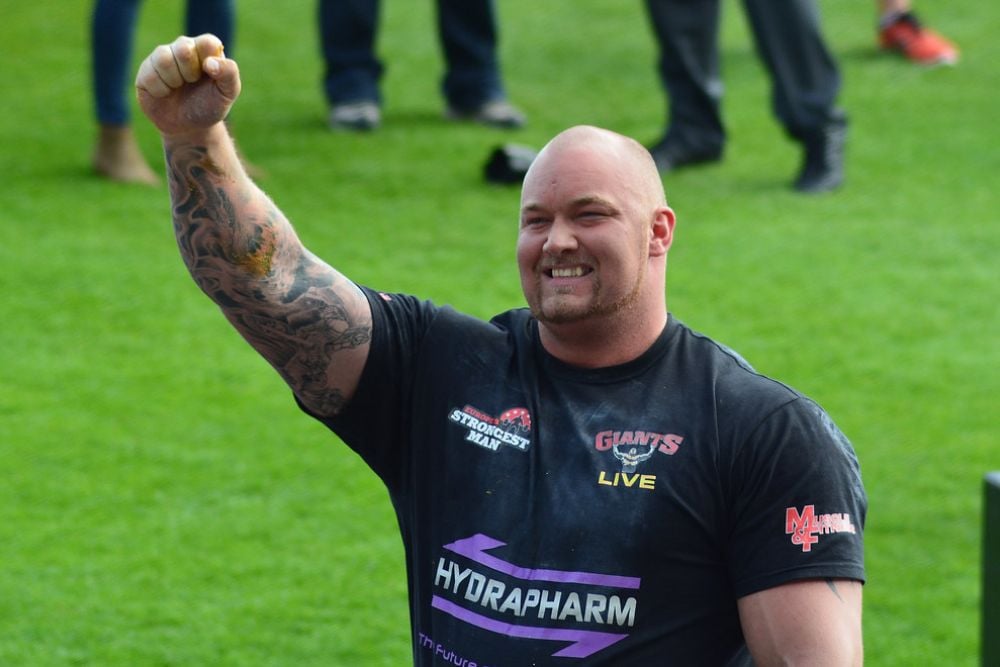
In May 2020, Icelandic strongman Hafthor Björnsson—better known to many as “The Mountain” from Game of Thrones—deadlifted an astounding 1,104 pounds (501 kg). This wasn’t just any gym accomplishment; it broke a world record that many thought would stand for decades.
Björnsson performed the lift in his personal gym due to pandemic restrictions—yet it was properly verified with calibrated weights and official judges watching via video link. His massive 6’9″ frame shook visibly during the attempt, with blood vessels bulging across his face as he hoisted the tremendous barbell just high enough to lock out his hips and knees.
“I could’ve done more,” he claimed afterward, though medical experts noted he’d pushed dangerously close to what the human spine can theoretically withstand without catastrophic injury.
Brian Shaw’s Vehicle Pull

American strongman Brian Shaw managed to pull a semi-truck weighing approximately 17 tons (34,000 pounds) using nothing but a harness and raw strength. The 2013 feat—performed in Colorado’s thin air—required Shaw to generate enough initial force to overcome the vehicle’s immense static inertia.
His massive 440-pound frame leaned at a nearly 45-degree angle against the harness as he dug his specially designed shoes into the asphalt. Shaw’s heart rate reportedly spiked to dangerous levels during the effort—hitting 210 beats per minute.
“Imagine trying to move a building that’s fighting you every inch,” Shaw explained afterward. “Your body just starts shutting down functions it doesn’t immediately need, and everything narrows to just moving forward one more step.”
Like Go2Tutors’s content? Follow us on MSN.
Eddie Hall’s Circus Dumbbell
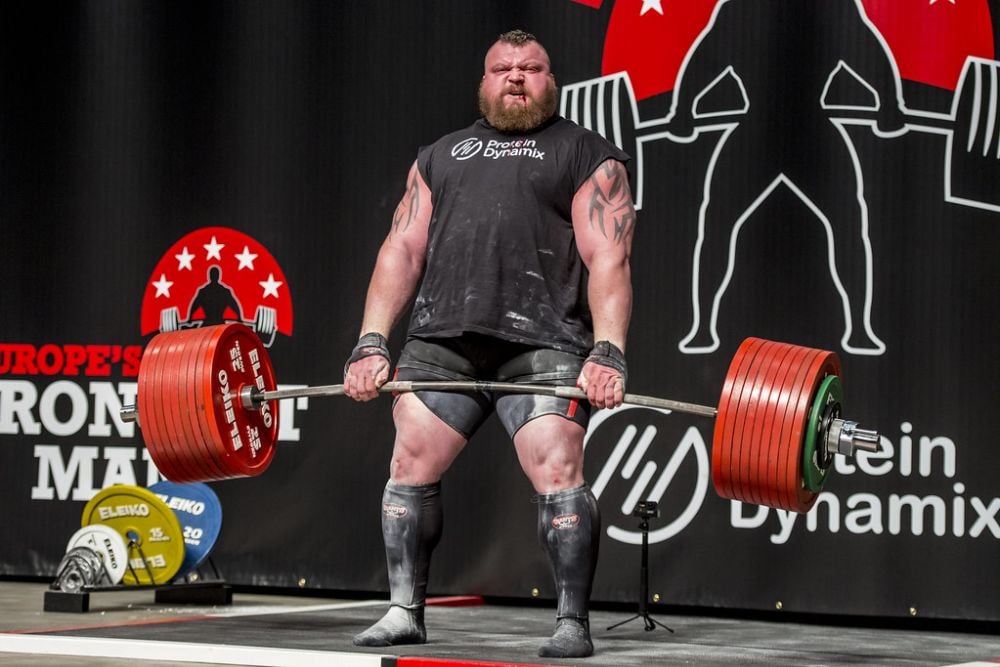
British strongman Eddie Hall—nicknamed “The Beast”—clean and pressed a massive 216-pound (98 kg) circus dumbbell in 2016, setting a world record that still stands. Unlike standard gym dumbbells, circus dumbbells feature thick, unwieldy handles that make them notoriously difficult to control.
Hall had to explosively drive the awkward weight from the ground to his shoulder, then stabilize it before pressing it overhead with one arm. During the lift, observers noted how the blood vessels in Hall’s face appeared ready to burst—a condition medical professionals warned could lead to a potential stroke or an aneurysm.
“It’s not just about strength,” Hall noted. “Your body has to coordinate dozens of stabilizing muscles simultaneously while your primary movers are at maximum output—like trying to thread a needle during an earthquake.”
Louis Cyr’s Platform Lift
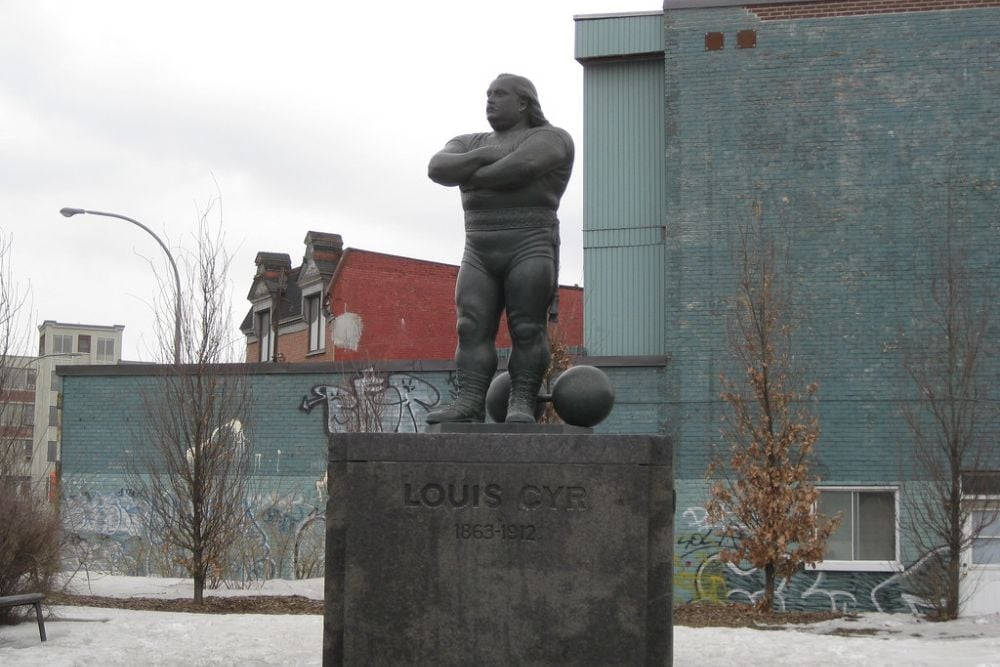
Canadian strongman Louis Cyr reportedly performed a backlift of 4,337 pounds (1,967 kg) in 1895—a feat that remains unmatched in the century-plus since. Using a specialized platform that distributed weight across his shoulders and back, Cyr managed to elevate the massive load several inches off the ground.
Though modern verification standards didn’t exist then, multiple reliable witnesses documented the achievement—including medical doctors who expressed astonishment at Cyr’s structural integrity. Contemporary physicians have suggested that such a lift would generate spinal compression forces that should theoretically crush vertebrae.
Cyr’s 5’8″, 365-pound frame somehow withstood pressures that modern sports medicine considers potentially fatal—suggesting either extraordinary skeletal density or biomechanical advantages science still doesn’t fully understand.
Žydrūnas Savickas’ Log Press
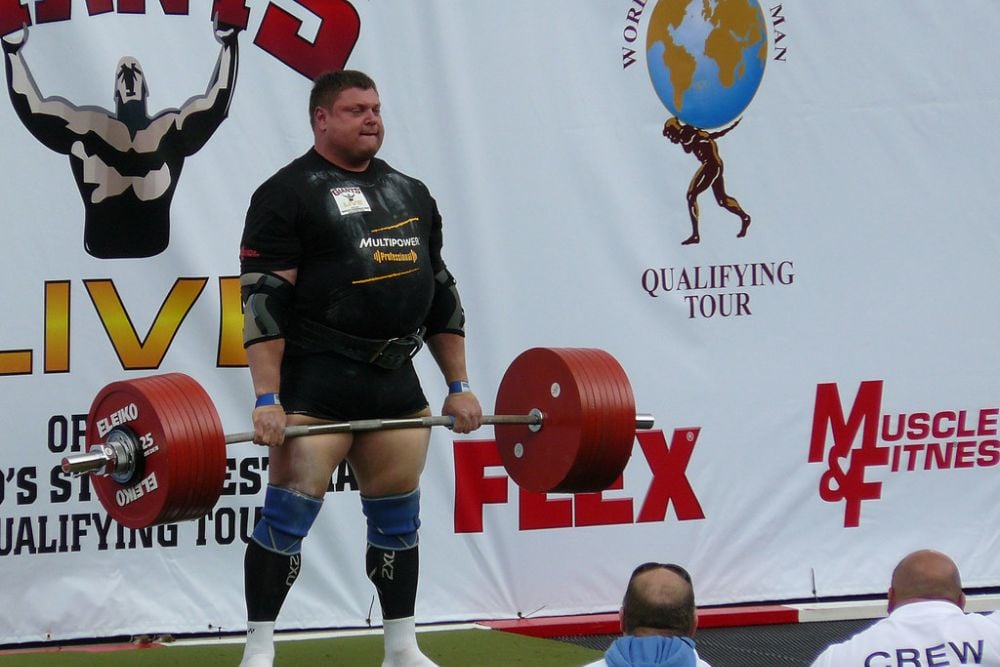
Lithuanian strongman Žydrūnas Savickas pressed a 228-pound (103.5 kg) wooden log overhead in 2015—a record that showcases explosive power coupled with perfect technique. Unlike a standard barbell, the 12-inch diameter log requires a completely different pressing mechanism and extraordinary shoulder mobility.
During the lift, Savickas had to roll the unwieldy implement up his torso before driving it overhead to full lockout. “The log wants to roll backward or forward constantly,” Savickas explained.
“Your entire core becomes a fighting, stabilizing unit while your shoulders and triceps push against weight that’s actively trying to crash down onto you.” Medical imaging later revealed that Savickas has developed unusual bone density in his shoulders and upper spine—adaptations from decades of supporting such extreme loads.
Like Go2Tutors’s content? Follow us on MSN.
Paul Anderson’s Backlift

American Olympic gold medalist Paul Anderson performed perhaps the heaviest lift in human history—a backlift allegedly supporting 6,270 pounds (2,844 kg) in 1957. The feat involved Anderson positioning himself under a wooden platform loaded with massive concrete blocks and car parts.
Though not officially verified by modern standards, multiple witnesses—including engineers who calculated the weights—attested to the accomplishment. Anderson’s unique physique—featuring a 59-inch chest and tree-trunk legs packed onto a 5’9″ frame—created a structural foundation that distributed the load remarkably effectively.
“The weight felt alive on my back,” Anderson wrote later. “Not like dead metal, but like a living thing trying to crush me into the earth.” Medical experts have suggested his extraordinary leg strength—he could squat over 1,200 pounds—created the foundation necessary for such an otherworldly feat.
Mariusz Pudzianowski’s Tire Flip

Polish strongman Mariusz Pudzianowski flipped a tractor tire weighing 1,400 pounds (635 kg) five consecutive times in just 45 seconds during the 2008 World’s Strongest Man competition. Each flip required Pudzianowski to generate explosive hip drive from a biomechanically disadvantaged position—essentially performing a deadlift that transitions into an awkward push-press.
His heart rate reportedly exceeded 200 beats per minute during the effort, while his oxygen consumption reached levels typically seen only in elite sprint cyclists. “The first flip isn’t the hardest,” Pudzianowski revealed afterward.
“It’s the third and fourth when your lungs are burning and your grip starts failing—that’s when you learn what you’re really made of.” Sports physiologists noted that Pudzianowski’s exceptional recovery capacity between efforts—likely tied to unusual mitochondrial density—enabled this repeated maximal output.
Mark Henry’s Concrete Block Lift

Professional wrestler and former Olympic weightlifter Mark Henry lifted a concrete cube weighing 925 pounds (420 kg) at the 2006 Arnold Strongman Classic. The awkward implement offered no handles—just rough concrete surfaces that shredded the skin on contact.
Henry had to wrap his massive arms around the block and generate upward force through an extremely inefficient mechanical position. During the lift, observers noted Henry’s quadriceps visibly trembling as blood vessels across his neck and forehead engorged to concerning dimensions.
“People think it’s just about being strong,” Henry explained later. “But lifting something shaped like that requires solving a physics problem while your body is screaming at you to stop.”
Medical professionals noted that such extreme efforts can temporarily elevate blood pressure to levels that would be considered a hypertensive crisis requiring emergency intervention in normal circumstances.
Like Go2Tutors’s content? Follow us on MSN.
Vasyl Virastyuk’s Overhead Stone

Ukrainian strongman Vasyl Virastyuk lifted and pressed a natural stone weighing 582 pounds (264 kg) overhead during a 2007 strongman competition in Ukraine. Unlike balanced barbells or dumbbells, the asymmetrical stone featured an awkward, uneven surface that constantly shifted its center of gravity.
Virastyuk had to first lift the unwieldy object to his chest—a movement that tore the skin from his forearms—before pressing it overhead to full lockout. “Each stone has its own personality,” Virastyuk noted afterward. “This one fought me every inch of the way up.”
Sports medicine experts observed that such irregular objects create unpredictable stress points throughout the musculoskeletal system, forcing stabilizer muscles to fire at maximum capacity while primary movers generate peak force—a combination that creates injury risk far exceeding standard weighted implements.
Jón Páll Sigmarsson’s Car Lift
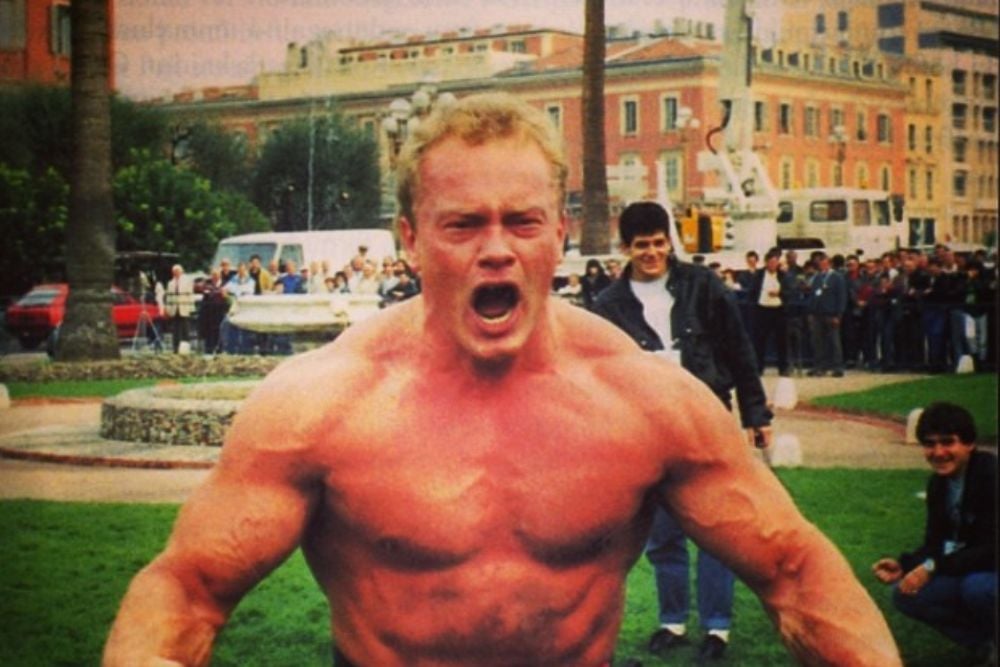
Icelandic strongman Jón Páll Sigmarsson lifted the rear end of a car weighing approximately 1,550 pounds (700 kg) in 1987, holding it for nearly 10 seconds while the vehicle’s front wheels remained on the ground. The lift required not just raw strength but extraordinary grip endurance—as his hands had to maintain contact with the smooth, awkward undercarriage of the vehicle.
During the effort, witnesses reported seeing Sigmarsson’s neck veins distend to alarming dimensions while the muscles in his forearms appeared ready to tear through the skin. “There is no reason to be alive if you can’t do deadlift,” became Sigmarsson’s famous quote—though tragically, his pursuit of strength may have contributed to his early death at age 32 from a congenital heart condition exacerbated by extreme exertion.
Andy Bolton’s First 1,000-Pound Deadlift

British powerlifter Andy Bolton became the first human to officially deadlift 1,000 pounds (453.6 kg) in 2006—a threshold many strength experts had considered potentially beyond human capability. The historic lift, performed at a sanctioned powerlifting competition with calibrated weights, required such extreme force generation that blood began to trickle from Bolton’s nose midway through the attempt.
His 6’3″, 370-pound frame appeared to compress visibly under the strain as blood pressure readings taken immediately afterward showed numbers that would typically warrant emergency medical intervention. “Everything goes silent just before the weight breaks the floor,” Bolton described.
“Then your body starts a civil war—half saying drop it, the other half refusing to quit.” Medical imaging later revealed that Bolton had developed bone spurs and thickened vertebral structures—adaptations from years of supporting such massive loads.
Like Go2Tutors’s content? Follow us on MSN.
Magnus Ver Magnusson’s Refrigerator Carry
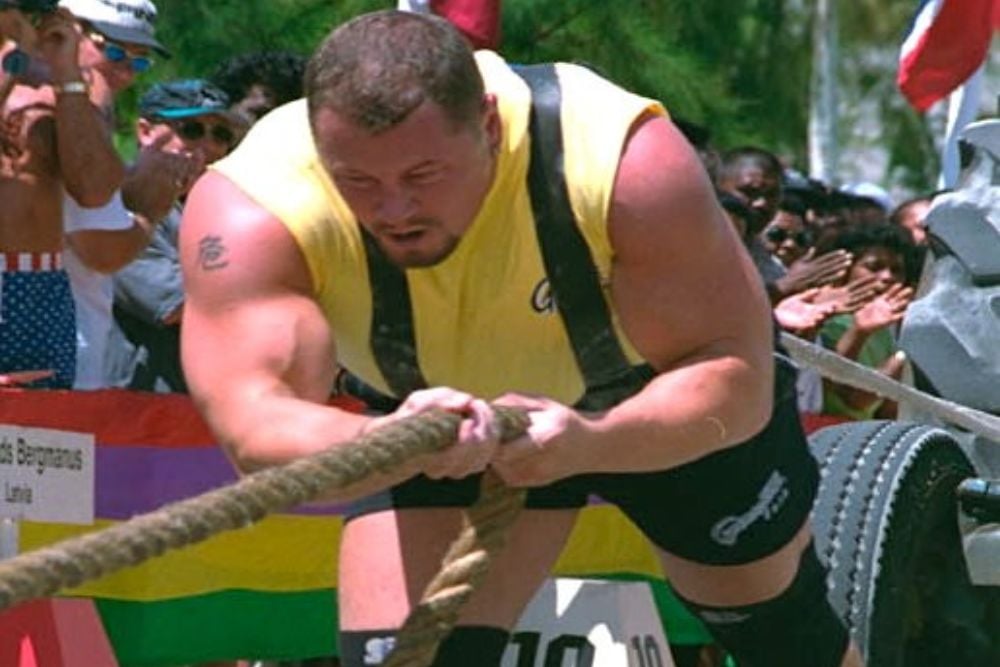
Icelandic strongman Magnus Ver Magnusson carried a 985-pound (447 kg) refrigerator for 65 feet during the 1995 World’s Strongest Man competition. The awkward implement, carried using a specialized frame harness, created crushing pressure across Magnusson’s shoulders, spine, and hips.
His breathing became severely restricted under the load—each step requiring coordinated effort between hundreds of stabilizing muscles while oxygen demand soared to levels typically seen only in elite sprint athletes. “Your body starts emergency shutdown procedures after about 20 seconds,” Magnusson explained later.
“Vision narrows, hearing dims—everything focuses on just the next step without dropping.” Sports physiologists noted that such extreme loads create potentially dangerous spikes in intracranial pressure as blood gets trapped in the upper body—a condition that can lead to retinal damage or even stroke in extreme cases.
Bill Kazmaier’s Atlas Stone

American strongman Bill Kazmaier lifted a 525-pound (238 kg) concrete Atlas Stone from the ground and placed it atop a 5-foot platform in 1988—at the time, considered nearly impossible for a single individual. The stone’s perfectly spherical shape offered no handles or gripping points, forcing Kazmaier to bear the crushing weight against his chest while fighting its tendency to roll away.
During the lift, observers noted how Kazmaier’s massive arms appeared inadequate to encircle the stone’s circumference—a problem he solved through extraordinary finger and forearm strength. “It’s like trying to bear-hug a car while climbing stairs,” Kazmaier described afterward.
Medical professionals noted that such lifts create dangerous pressure against the internal organs and diaphragm, temporarily impeding normal respiratory and circulatory function.
Hermann Görner’s One-Handed Deadlift

German strongman Hermann Görner set an astonishing record in 1920 by one-handed deadlifting 727 pounds (330 kg)—a feat that remains unmatched over a century later. Using a thick-handled barbell and an overhand grip, Görner generated enough force through a single arm to elevate a weight that most modern strongmen would struggle to lift using both hands.
Contemporary accounts describe how Görner’s right arm—his lifting arm—had developed such extraordinary musculature that it appeared to belong to a different person than his left. “The human hand was not designed to support such loads,” noted one physician who examined Görner.
The asymmetrical stress likely created unique skeletal adaptations, as modern medical understanding suggests such one-sided loading would typically create severe spinal imbalances and potential nerve impingement.
Like Go2Tutors’s content? Follow us on MSN.
Gregg Ernst’s Vehicle Lift

Canadian strongman Gregg Ernst lifted two automobiles weighing a combined 5,340 pounds (2,422 kg) in 1993—a feat officially recognized by Guinness World Records. Using a specialized platform that distributed weight across his shoulders and back, Ernst elevated the vehicles several inches off the ground and held them long enough for official verification.
During the lift, witnesses reported seeing Ernst’s face turn alarming shades of purple as blood pressure spiked to potentially dangerous levels. “Everything starts to go dark around the edges,” Ernst recalled later.
“Your body is essentially telling you that what you’re doing might kill you.” Medical experts have noted that such extreme spinal loading approaches the theoretical crushing strength of human vertebrae—suggesting Ernst likely possessed rare structural adaptations that allowed his skeletal system to withstand forces that would seriously injure most individuals.
Thomas Topham’s Platform Lift

In one of history’s earliest documented feats of extraordinary strength, English strongman Thomas Topham performed a platform lift supporting three hogsheads of water weighing approximately 1,836 pounds (833 kg) in 1741. Using a chain harness that distributed weight across his shoulders and upper back, Topham elevated the massive liquid-filled containers several inches off the ground—a feat witnessed and documented by numerous credible sources, including physicians of the era.
What makes this achievement particularly remarkable is that Topham performed it without the benefit of modern nutrition, training methodologies, or performance enhancement. His 5’10” frame, described as “possessing exceptional bone thickness,” somehow withstood compressive forces that contemporary medical understanding would consider potentially crippling—suggesting either extraordinary natural genetic advantages or adaptations science still doesn’t fully comprehend.
Beyond Human Limits
These sixteen remarkable feats demonstrate the extraordinary capabilities hidden within the human frame when pushed to absolute limits. Each of these achievements required not just raw strength but courage to attempt lifts that medical science often considers potentially catastrophic.
Modern research into these extreme athletes reveals fascinating adaptations—from increased bone density to unusual muscle fiber composition—that help explain how such performances become possible. While most of us will never approach these superhuman capacities, these records provide a glimpse into the outer boundaries of human physical potential.
They stand as a testament to what becomes possible when genetic potential meets decades of specialized training and indomitable mental fortitude.
Like Go2Tutors’s content? Follow us on MSN.
More from Go2Tutors!

- 18 Unexpectedly Valuable Collectibles You Might Have Lying Around
- 15 Things Every Teenager in the ’70s Did That Teens Today Wouldn’t Understand
- 15 Strange Things People Have Tried to Ban (And Failed)
- 15 Inventions That Were Immediately Banned After Being Created
- 20 Actors Who Were Almost Cast in Iconic Roles
Like Go2Tutors’s content? Follow us on MSN.



