History’s Best Kept Secrets
History books tell us about the wars, the kings, and the great discoveries. But the real story often hides in the margins — in the deliberate omissions, the classified files, and the inconvenient truths that powerful people would rather forget.
These aren’t conspiracy theories or wild speculation. They’re documented facts that somehow never made it into the standard narrative, buried under decades of bureaucracy, embarrassment, or simple neglect.
The Lost Colony of Roanoke’s Real Fate
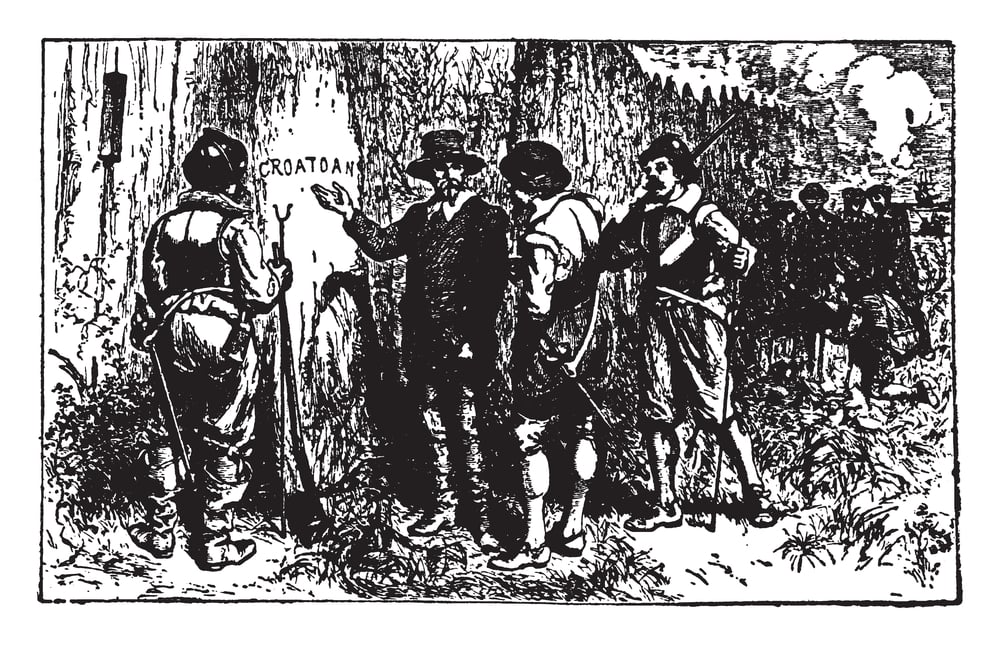
The 115 colonists didn’t vanish into thin air in 1587. They integrated with the Croatoan tribe on Hatteras Island, exactly as their leader John White had arranged as a backup plan.
Archaeological evidence from the 1990s uncovered European artifacts mixed with Native American settlements on Hatteras, and DNA analysis of local families shows clear English ancestry dating to the late 1500s.
But (and here’s where the story gets interesting) the Virginia Company had investors to satisfy back in London, and admitting that English colonists had “gone native” rather than establishing a profitable settlement would have been financial harm. So they manufactured a mystery instead — one that’s persisted for over 400 years because it’s more marketable than the mundane truth that desperate people made practical choices to survive.
The word “CROATOAN” carved into the palisade wasn’t a cryptic message. It was a forwarding address.
Operation Paperclip’s Moral Compromise

NASA’s greatest triumph rests on a foundation most Americans would find nauseating: the systematic recruitment of Nazi rocket scientists immediately after World War II. Werner von Braun, the man who put Americans on the moon, had previously designed the V-2 rockets that killed thousands of civilians in London and Antwerp.
His rockets were built by concentration camp prisoners at Mittelwerk, where an estimated 20,000 people died from exhaustion, starvation, and executions.
The U.S. government knew all of this. They just decided von Braun’s expertise was more valuable than justice for his victims.
Over 1,600 Nazi scientists, engineers, and technicians were quietly relocated to America, given new identities, and handed prestigious positions in the space program. The paperwork was classified for decades.
Every moon landing footage you’ve ever seen carries this weight. The rockets that symbolized American ingenuity were designed by a man who once used enslaved labor to rain death on Allied cities.
The Bone Wars’ Academic Savagery
Paleontology’s golden age was actually a vicious personal war between two men who destroyed more dinosaur fossils than they preserved. Othniel Marsh of Yale and Edward Cope of Philadelphia spent the late 1800s trying to ruin each other’s careers with a vindictiveness that would make modern academic feuds look like gentle disagreements.
They hired spies to infiltrate each other’s dig sites. They bribed railroad workers to misdirect fossil shipments.
Cope once stole an entire train car full of Marsh’s specimens and had it rerouted to Philadelphia. Marsh retaliated by convincing the U.S. Geological Survey to cut off Cope’s funding entirely.
When they couldn’t steal each other’s fossils, they dynamited dig sites to prevent their rival from accessing them later.
The scientific cost was catastrophic: dozens of species were lost forever, blown to pieces in the crossfire. Museums today display reconstructed skeletons that are mostly plaster and guesswork because the original bones were casualties of two men’s egos.
The feud only ended when both men died — broke, bitter, and still hating each other.
The Vatican’s Stolen Artifact Collection
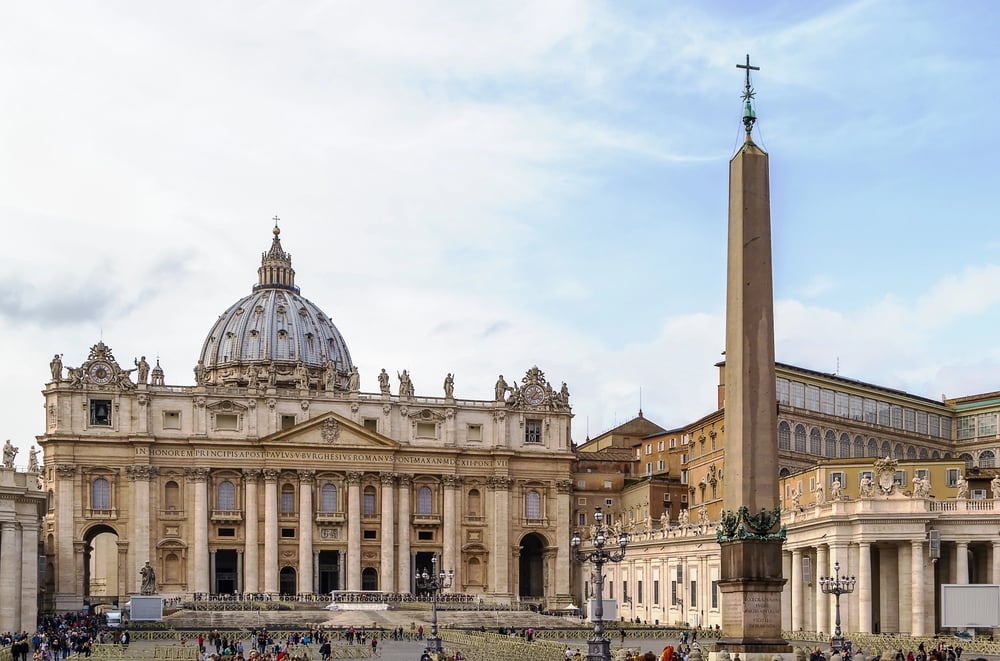
The basement vaults of Vatican City contain one of the world’s largest collections of stolen cultural artifacts, accumulated over centuries of missionary work, colonial partnerships, and strategic “acquisitions” during times of political upheaval. The Church has never conducted a full inventory of these holdings, and access remains restricted to a handful of scholars who must sign agreements preventing them from publishing detailed catalogs of what they’ve seen.
Items known to be in the collection include: pre-Columbian gold artifacts taken from South American indigenous communities, ancient Egyptian papyri acquired through questionable dealers during the 19th century, and medieval manuscripts that were “donated” by Jewish communities under duress. The Church’s position is that these items are better preserved in climate-controlled Vatican storage than they would be in their countries of origin — a paternalistic argument that sounds uncomfortably familiar to anyone who’s studied colonial history.
Recent popes have quietly returned some pieces to their home countries, but the process is slow and secretive. Most of the collection will likely never leave Vatican City, not because the Church has legal ownership (which is often dubious), but because admitting the full scope of the collection would create a diplomatic nightmare that could take decades to resolve.
Shakespeare’s Identity Crisis

William Shakespeare of Stratford-upon-Avon probably existed, but he almost certainly didn’t write the plays attributed to him. The man from Stratford left behind no personal letters, no books, no manuscripts, and no evidence that he could write anything beyond his own signature (which he apparently struggled with, based on the six surviving examples that show a shaky, inconsistent hand).
The plays attributed to Shakespeare demonstrate intimate knowledge of French and Italian court customs, advanced legal terminology, and classical literature that would have been inaccessible to a glove-maker’s son from a small English town. The author also shows familiarity with specific locations in Italy that weren’t described in any English travel accounts of the period, suggesting personal experience rather than secondhand research.
Edward de Vere, the 17th Earl of Oxford, fits the profile much better: university educated, fluent in multiple languages, traveled extensively in Italy, and known to have written plays (though none survive under his own name). The timing works perfectly — de Vere died in 1604, the same year Shakespeare’s productivity mysteriously declined.
The Stratford attribution stuck because it was politically safer than admitting that England’s greatest literary works were written by a nobleman who had fallen from royal favor.
The Tuskegee Experiment’s Full Scope

Everyone knows the U.S. Public Health Service deliberately left syphilis untreated in African American men from 1932 to 1972, but the experiment was actually much worse than the standard telling suggests. The researchers didn’t just withhold treatment — they actively prevented their subjects from receiving care elsewhere, going so far as to contact local doctors and draft boards to ensure the men wouldn’t be treated for their condition.
When penicillin became widely available in the 1940s as an effective cure for syphilis, researchers had a choice: end the study or continue watching people die from a now-treatable disease. They chose to continue, justifying it as necessary to document the “natural progression” of untreated syphilis.
For three more decades, men died from a disease that could have been cured with a standard antibiotic course.
The study finally ended in 1972 not because of internal ethical reviews, but because a Public Health Service researcher leaked the story to the press. The government response was to offer legal settlements to survivors and their families — payments that required signing agreements preventing them from discussing their experiences publicly.
Medical schools still teach the Tuskegee study as a historical cautionary tale, but they rarely mention that similar research was being conducted simultaneously on Indigenous populations, prison inmates, and mental health patients.
MK-Ultra’s Celebrity Connections
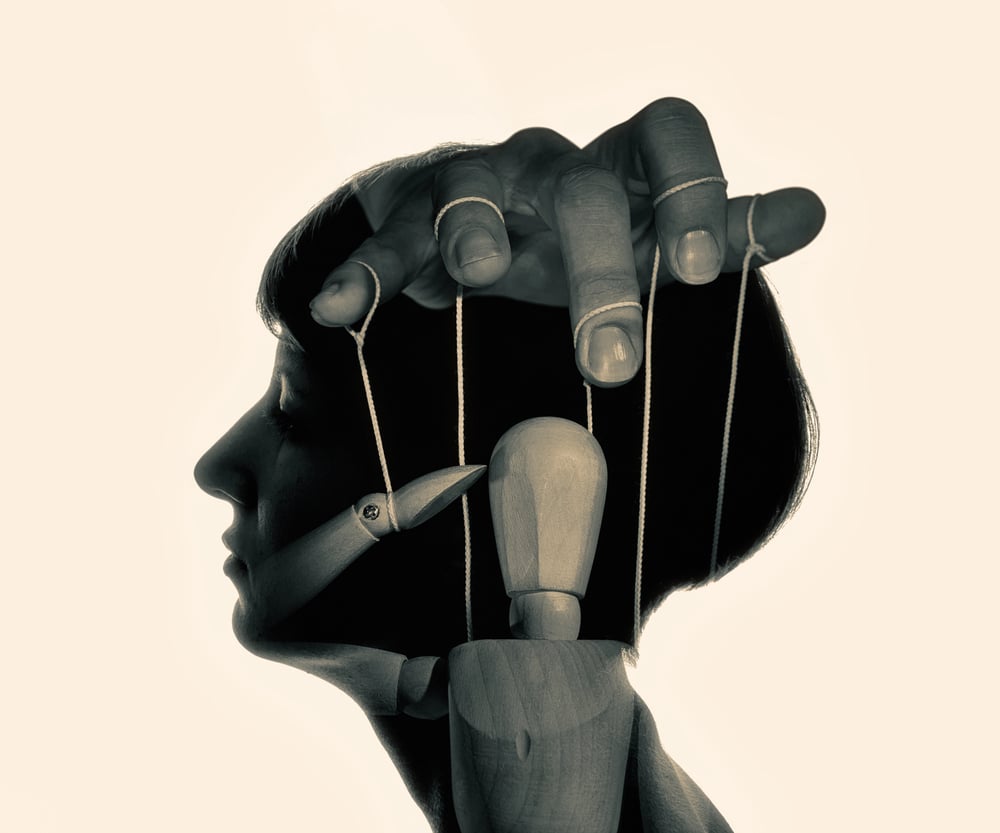
The CIA’s mind control experiments weren’t confined to psychiatric hospitals and university laboratories — they extended into Hollywood, the music industry, and popular culture with a reach that would sound like conspiracy theory if it weren’t documented in congressional hearings and declassified memos.
Ken Kesey volunteered for MK-Ultra experiments at Stanford starting in 1960, and wrote ‘One Flew Over the Cuckoo’s Nest’ during his participation in those experiments (novel published 1962), not after they ended, where he was dosed with LSD while researchers observed his psychological responses. The Grateful Dead’s early sound was directly influenced by their participation in CIA-funded acid tests organized by Kesey (who had been supplied with pure pharmaceutical LSD through the program).
The counterculture movement that defined the 1960s was, in part, an unintended consequence of government mind control research.
Hollywood wasn’t immune either: the CIA funded research into subliminal messaging and psychological manipulation through entertainment, partnering with major studios to test audience responses to embedded suggestions in films and television shows. The agency was particularly interested in whether movies could be used to influence political opinions and social behavior on a mass scale.
These programs continued well into the 1970s, ending not because of ethical concerns but because they proved ineffective at creating the kind of controllable behavioral modification the CIA had hoped to achieve.
The Radium Girls’ Corporate Cover-Up

In the 1920s, young women working in watch factories were told to lick their paintbrushes to maintain fine points for applying radium-based luminous paint to clock faces and instrument dials. The radium made their lips, teeth, and fingernails glow softly in the dark — a side effect their supervisors told them was harmless and even fashionable.
The companies knew radium was deadly. Internal memos from as early as 1922 show executives discussing the health risks of radium exposure, and the company’s own scientists wore protective equipment while handling the same materials the female workers were told to put in their mouths. When women began developing jaw necrosis, anemia, and bone fractures, company doctors diagnosed them with other ailments and suggested their symptoms were caused by moral failings or psychological problems.
Legal battles dragged on for years because the companies could afford better lawyers than dying factory workers. Even after some women won settlements, the companies continued the same practices at other facilities, simply moving operations to locations where workers were less likely to have access to legal representation.
The case established important legal precedents for corporate liability and worker safety, but most of the original radium girls died before seeing any compensation.
Project Blue Book’s Deliberate Misdirection

The U.S. Air Force’s official UFO investigation program from 1952 to 1969 wasn’t designed to study unidentified flying objects — it was created to discredit UFO reports and discourage public interest in aerial phenomena that might reveal classified military aircraft testing.
Internal documents show that Project Blue Book investigators were instructed to find conventional explanations for UFO sightings regardless of the evidence, and when conventional explanations weren’t plausible, they were told to attack the credibility of witnesses rather than acknowledge unexplained events. The goal was to reduce the percentage of “unknown” cases to under 5%, which they achieved through creative reinterpretation of witness accounts and selective omission of supporting evidence.
Many of the most compelling UFO reports from the 1950s and 1960s were actually sightings of experimental military aircraft — the U-2 spy plane, early stealth prototypes, and high-altitude reconnaissance vehicles that the Air Force couldn’t acknowledge publicly. Rather than simply saying “no comment,” they found it more effective to let people believe they’d seen extraterrestrial visitors.
The program’s final report concluded that UFOs posed no threat to national security and had no scientific value, but this conclusion was predetermined rather than evidence-based.
The Bone Trade’s Museum Connections
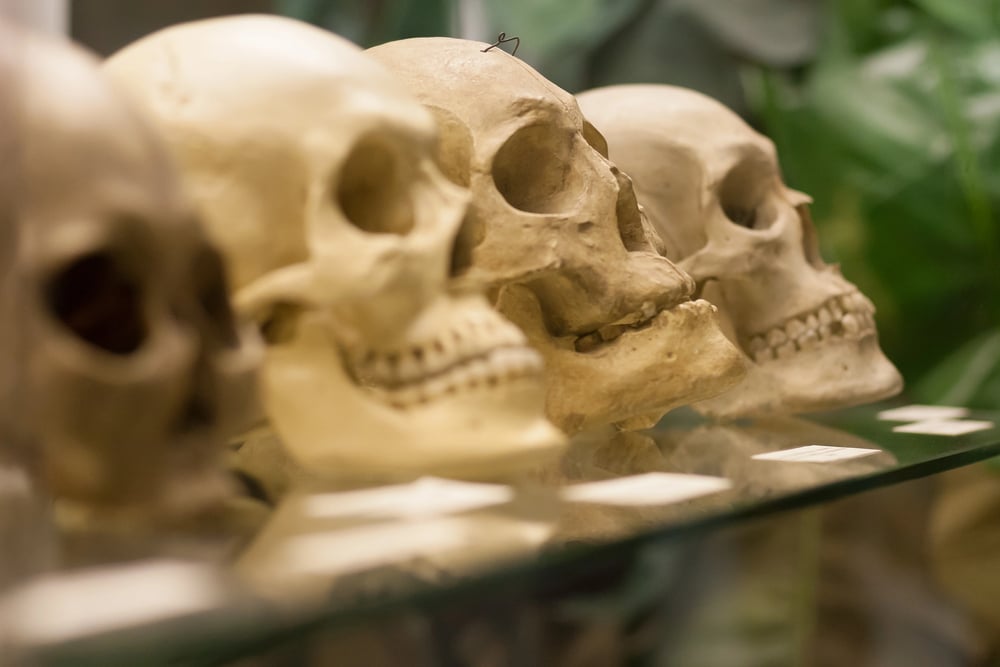
Major museums worldwide built their collections through a 19th and early 20th-century trade in human remains that would be considered grave robbing and cultural desecration today. The Smithsonian Institution alone holds the remains of approximately 30,000 individuals, many acquired through questionable means during the height of scientific racism.
Army surgeons were instructed to collect skulls from battlefields and Native American burial sites for shipment to Washington, where researchers used them to support theories about racial hierarchy and cranial capacity. Medical schools purchased bodies from “resurrection men” who robbed fresh graves, with few questions asked about consent or origin.
Colonial administrators shipped skeletons from Africa, Asia, and the Pacific to European museums as anthropological specimens.
This wasn’t fringe activity — it was considered legitimate scientific research, funded by governments and prestigious institutions. The remains were studied, measured, and classified according to racial theories that have since been thoroughly debunked, but the bones remain in museum storage rooms, often mislabeled or separated from any information about their origins.
Repatriation efforts began in the 1990s, but the process is slow and complicated by the fact that many remains can’t be traced to specific communities or cultures after more than a century in museum collections.
COINTELPRO’s Literary Targets

The FBI’s Counter Intelligence Program didn’t just target political activists and civil rights leaders — it systematically monitored, harassed, and attempted to destroy the careers of writers, journalists, and intellectuals whose work was considered subversive to American values.
James Baldwin’s FBI file runs to over 1,700 pages, documenting surveillance that began in 1963 and continued until his death in 1987. Agents attended his lectures, monitored his bank accounts, and attempted to prevent his books from being published or taught in universities.
The file reveals efforts to link Baldwin to communist organizations despite a complete lack of evidence for such connections.
Maya Angelou, Norman Mailer, and Kurt Vonnegut were subjected to similar scrutiny, with agents analyzing their work for anti-American sentiment and building cases for potential prosecution under sedition laws. The program extended to editors and publishers: agents pressured magazines to reject certain writers’ submissions and encouraged book publishers to cancel contracts for works deemed politically problematic.
The literary impact was profound but largely invisible: books that were never written because authors knew they were being watched, publications that were rejected for political rather than artistic reasons, and careers that were quietly strangled through bureaucratic pressure rather than open censorship.
The Bone Rooms of Harvard
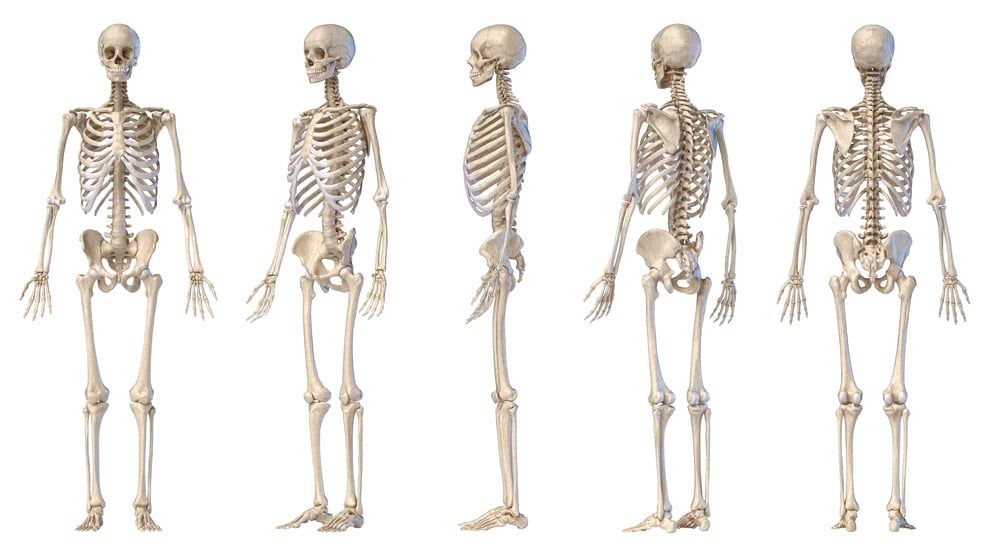
Harvard’s Peabody Museum houses one of the largest collections of human remains in the world, including thousands of Native American skulls and skeletons acquired through grave robbing, battlefield collection, and coercive “donations” from communities under federal pressure. The collection was assembled primarily by Samuel Morton and Louis Agassiz as part of 19th-century research into racial classification and hierarchies.
What makes Harvard’s collection particularly problematic is that many remains were acquired through systematic desecration of Native American burial sites, often with the cooperation of local authorities who viewed indigenous graves as archaeological resources rather than sacred resting places. Army officers, frontier physicians, and amateur collectors were encouraged to ship skulls and bones to Cambridge for scientific study.
The museum’s bone rooms weren’t opened to outside researchers until the 1980s, and what they found was appalling: remains stored in cardboard boxes and filing cabinets, often mislabeled or mixed with others, with little documentation about their origins or the circumstances of their acquisition. Many specimens showed evidence of violence — bullet pits, scalping marks, and other trauma suggesting they were taken from victims rather than people who died natural deaths.
Harvard has been quietly returning remains to tribal communities since 1990, but the process is complicated by the fact that much of the collection can’t be traced to specific tribes or geographic origins after more than a century of academic custody.
The Truth About Memory

Science has known since the 1970s that human memory doesn’t work like a recording device — it reconstructs events each time they’re recalled, blending actual experience with later information, expectations, and emotional associations. This means that the most vivid, confident memories are often the least reliable, because they’ve been recalled and reconstructed so many times that the original experience has been completely overwritten.
Eyewitness testimony, the foundation of criminal justice systems worldwide, is fundamentally unreliable. Studies show that confident witnesses are wrong as often as hesitant ones, that memory becomes less accurate over time regardless of how certain people feel about their recollections, and that questioning techniques used by police and lawyers can implant false details that witnesses will later swear they experienced firsthand.
The legal implications are staggering: thousands of people have been convicted based on eyewitness testimony that felt completely credible to both witnesses and juries but was factually wrong. DNA evidence has overturned hundreds of these convictions, but those cases represent only a tiny fraction of the wrongful convictions that occurred before genetic testing was available.
Courts continue to treat eyewitness testimony as reliable evidence because the alternative — admitting that human memory is fundamentally flawed — would undermine the entire adversarial legal system.
What We Choose to Remember

These secrets weren’t kept through elaborate conspiracies or shadowy cover-ups. They were kept through the much simpler mechanism of collective disinterest — the human tendency to prefer comfortable narratives over complicated truths.
We like our history clean and our heroes uncomplicated, even when the messy reality would teach us more valuable lessons.
The real secret isn’t what happened. The real secret is how easy it is to make inconvenient facts disappear simply by not talking about them for a generation or two.
More from Go2Tutors!

- The Romanov Crown Jewels and Their Tragic Fate
- 13 Historical Mysteries That Science Still Can’t Solve
- Famous Hoaxes That Fooled the World for Years
- 15 Child Stars with Tragic Adult Lives
- 16 Famous Jewelry Pieces in History
Like Go2Tutors’s content? Follow us on MSN.