Hobbies Proven to Make You Smarter
Your brain works like a muscle. Use it regularly and it grows stronger. Ignore it and it weakens.
The hobbies you choose matter more than you think. Some activities just scroll through your mind without leaving a trace.
Others rewire your neural pathways and sharpen your thinking in ways that last. Science backs this up.
Researchers have spent decades studying how different activities affect cognitive function. The results show that certain hobbies do more than pass the time—they actually boost your intelligence.
Learning a Musical Instrument

Pick up a guitar or sit at a piano, and your brain lights up in multiple areas at once. You’re reading notation, coordinating your hands, listening to pitch, and keeping rhythm.
This simultaneous activation strengthens connections between brain regions. Studies show musicians have better working memory and faster processing speeds.
The benefits show up in children and adults alike. Even starting later in life makes a difference.
The coordination required builds new neural pathways. Your brain learns to communicate with itself more efficiently.
This improved connectivity helps with problem-solving skills that extend far beyond music.
Reading Fiction Regularly

Fiction does something unique to your brain. When you read about characters, your mind simulates their experiences.
You’re essentially running social scenarios through your head, which builds empathy and emotional intelligence. The vocabulary expansion alone gives your brain a workout.
Each new word you encounter creates new neural connections. Your comprehension skills improve.
Your ability to understand complex ideas grows. Research shows regular readers perform better on cognitive tests.
They have stronger analytical thinking skills. The habit of reading trains your brain to focus for extended periods, which becomes valuable in other areas of life.
Playing Chess or Strategy Games

Chess forces you to think several moves ahead. You’re analyzing patterns, predicting outcomes, and adjusting your strategy based on your opponent’s choices.
This kind of planning exercises your prefrontal cortex—the part of your brain responsible for executive function. Strategy games build spatial reasoning and visual memory.
You learn to recognize patterns quickly. Your ability to evaluate multiple options simultaneously improves.
The game teaches you to think under pressure. You develop patience and learn to see beyond immediate gratification.
These skills transfer to real-world problem-solving.
Learning a New Language

Bilingual brains function differently. The constant switching between languages strengthens cognitive control.
Your brain becomes better at filtering irrelevant information and focusing on what matters. Language learning builds gray matter in areas responsible for memory and attention.
The effort of memorizing vocabulary and grammar rules gives your hippocampus a serious workout. Even adults who start learning a new language see cognitive benefits.
The process improves your understanding of your native language too. You become more aware of grammatical structures and word relationships.
This metalinguistic awareness makes you a clearer thinker overall.
Regular Physical Exercise

Exercise pumps blood to your brain, delivering oxygen and nutrients that keep neurons healthy. Aerobic activity stimulates the growth of new brain cells, particularly in the hippocampus.
The mental benefits show up quickly. People who exercise regularly perform better on memory tests.
They have faster reaction times. Their ability to learn new information improves.
Physical activity reduces inflammation and insulin resistance in the brain. It releases chemicals that promote neural health and growth.
The connection between body and mind runs deeper than most people realize.
Meditation and Mindfulness Practice

Meditation literally changes your brain structure. Regular practice increases gray matter density in areas associated with learning, memory, and emotional regulation.
The changes show up on brain scans.
The practice trains your attention. You learn to notice when your mind wanders and bring it back to focus.
This skill of catching yourself and redirecting attention becomes automatic over time. Studies show meditators have better working memory capacity.
They handle stress more effectively. Their ability to concentrate on demanding tasks improves.
The mental clarity that develops affects every aspect of thinking.
Writing and Journaling

Writing forces you to organize your thoughts. You can’t write coherently without first clarifying what you mean.
This process of translating thoughts into words sharpens your thinking. The act of writing by hand activates more brain regions than typing.
You’re engaging motor skills, visual processing, and language centers simultaneously. This multi-sensory experience creates stronger memories.
Regular writing improves your ability to articulate complex ideas. You become better at seeing connections between concepts.
The practice of putting thoughts into words makes you a clearer thinker in conversations too.
Playing Certain Video Games
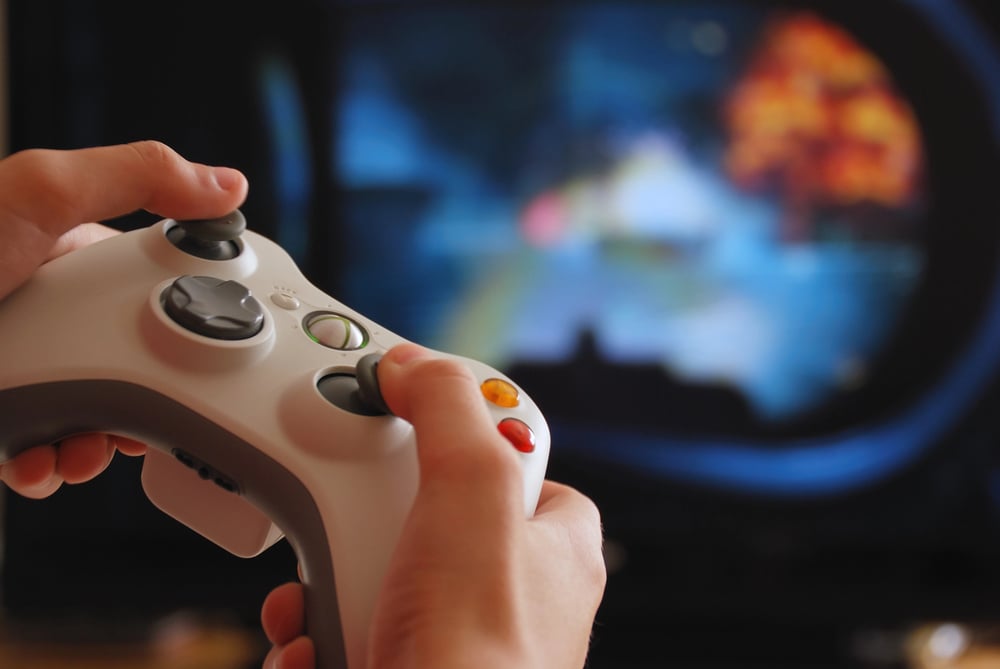
Not all video games rot your brain. Action games and puzzle games can actually enhance cognitive abilities.
Fast-paced games improve reaction times and hand-eye coordination. Strategy games build planning skills and resource management abilities.
Puzzle games enhance pattern recognition and spatial reasoning. The key is choosing games that challenge you mentally.
Research shows gamers develop better visual attention skills. They can track multiple objects simultaneously.
They make decisions faster without sacrificing accuracy. The cognitive training happens naturally through play.
Cooking from Scratch

Cooking engages multiple cognitive systems. You’re reading and following complex instructions.
You’re managing timing across different dishes. You’re making decisions about flavors and adjusting on the fly.
The multitasking required strengthens executive function. Your working memory gets a workout as you keep track of multiple cooking processes.
The sensory experience—smells, tastes, textures—creates rich neural connections. Cooking also builds creativity.
You learn to improvise when ingredients are missing. You develop an intuitive understanding of how flavors combine.
This kind of creative problem-solving transfers to other areas.
Dancing

Dance combines physical movement with mental processing. You’re learning choreography, matching movements to music, and coordinating your body in space.
Your brain has to fire on multiple cylinders at once. The memorization of dance sequences builds both short-term and long-term memory.
The spatial awareness required strengthens your parietal lobe. Social dancing adds another layer—you’re reading your partner’s cues and adjusting in real time.
Studies show dancers have better balance and coordination as they age. The cognitive benefits extend to general memory function.
The combination of physical and mental challenge makes dance particularly effective.
Gardening

Gardening requires planning and patience. You’re thinking about seasons, growth cycles, and the needs of different plants.
This kind of long-term thinking exercises your executive function. The problem-solving involved is constant.
Why is this plant dying? How can you improve soil quality? What grows best in this spot? Each question engages analytical thinking.
The sensory experience grounds you in the present moment. Working with soil and plants reduces stress, which indirectly improves cognitive function.
A calmer mind thinks more clearly.
Drawing and Painting

Art forces you to see the world differently. You’re not just looking at objects—you’re analyzing shapes, shadows, proportions, and relationships.
This kind of observation trains your brain to notice details. The hand-eye coordination required builds neural connections between visual and motor areas.
You’re constantly making decisions about color, composition, and technique. This creative problem-solving strengthens flexible thinking.
Art also improves memory. Artists develop better visual recall.
The practice of translating three-dimensional scenes onto two-dimensional surfaces exercises spatial reasoning in unique ways.
Solving Puzzles

Crosswords, sudoku, and logic puzzles all challenge your brain in different ways. Crosswords build vocabulary and verbal reasoning.
Sudoku strengthens pattern recognition and logical thinking. The satisfaction of solving a puzzle releases dopamine, which reinforces the neural pathways you just used.
Your brain literally rewards itself for the mental effort. This positive feedback loop encourages more complex thinking.
Regular puzzle solving maintains cognitive function as you age. The mental gymnastics keep your brain flexible.
The variety of puzzle types means you’re exercising different cognitive skills.
Photography

Snapping pics sharpens how you notice shapes, brightness, or timing. Because you keep judging what’s in front of you, choosing fast on the fly.
Which builds quicker thinking over time. The tech stuff – like how light hits the sensor, what the lens opening does, or how fast the shot is taken – makes you think step by step.
Instead of guessing, you figure things out to get the photo you want in your head. Not just rules though – your imagination plays a big part too.
Using know-how along with creative ideas keeps your whole mind busy. Snapping pictures boosts your recall.
Capturing moments lets you relive them clearer later. When you pick what to shoot on purpose, it pulls you into the moment – making everyday scenes stand out more.
You start noticing small stuff you’d usually miss.
The Compound Effect of Curiosity

The best move? Keep wondering. Smarts aren’t set in stone.
Your mind stays flexible no matter your age – ready to link up in fresh ways when faced with something new. The activities that boost your brain have one thing in common – they stretch you just past what feels easy.
Because they demand focus, repetition, also time. Since they get your reasoning differently than normal. Go for things you actually like.
Staying into it counts just as much as how good it is for your brain. When you care about what you do, it keeps feeding your thinking skills without feeling forced – just part of having fun.
More from Go2Tutors!

- The Romanov Crown Jewels and Their Tragic Fate
- 13 Historical Mysteries That Science Still Can’t Solve
- Famous Hoaxes That Fooled the World for Years
- 15 Child Stars with Tragic Adult Lives
- 16 Famous Jewelry Pieces in History
Like Go2Tutors’s content? Follow us on MSN.