Ice Cream Flavors That Defined Pop Culture Moments
Ice cream has always been more than dessert. It shows up at birthday parties, breakups, summer blockbusters, and political campaigns.
Certain flavors didn’t just sell well — they became shorthand for entire eras, movements, or moments in time that people still talk about decades later. Some of these connections are obvious.
Others are stranger than you’d expect.
Cherry Garcia and the Rock and Roll Scoop

— Photo by madvideos.gmail.com
Ben & J’s has a long history of naming flavors after cultural figures, but Cherry Garcia was the one that started it all. Named after Grateful Dead guitarist J. Garcia, it was reportedly the first ice cream flavor named after a rock star — and it arrived in 1987 at a time when the Dead’s following was a genuine cultural phenomenon.
The flavor outlived Garcia himself, who died in 1995, and remains one of Ben & J’s best sellers. Every time someone picks up a pint, there’s a small, indirect nod to tie-dye, touring culture, and a very particular strain of American counterculture.
Soft Serve and the Postwar Optimism of the 1950s

Soft serve didn’t have a single dramatic debut, but its rise through the 1950s is inseparable from the decade’s mood. Drive-ins were everywhere, car culture was exploding, and the idea of pulling up to a window and getting a swirl of ice cream in a cone felt like proof that modern life had delivered on its promises.
Dairy Queen was already established, but the soft serve boom of that era turned the format into an icon. It wasn’t just a food — it was a symbol of leisure, suburban comfort, and the particular kind of optimism that followed the war.
The Klondike Bar and the Question Everyone Answered

“What would you do for a Klondike Bar?” became one of the most repeated advertising questions in American television history. The commercials ran for decades starting in the late 1970s, and the chocolate-coated square of vanilla ice cream became famous less for its taste than for the cultural game the ads invited.
The campaign tapped into something genuinely funny about how much people will commit to small indulgences. The Klondike Bar became a punchline, a reference point, and eventually a meme — long after most people had stopped thinking about it as just a frozen snack.
Watergate Salad and the Scandal That Named a Dessert

Watergate Salad — a pale green mixture of pistachio pudding, whipped cream, crushed pineapple, and marshmallows — became fashionable in the early 1970s, right around the time the Watergate scandal was consuming American political life. Nobody agrees on the exact origin of the name, but the timing stuck.
It isn’t technically ice cream, but it gets served alongside it often enough, and its cultural footprint is undeniable. For a certain generation, the flavor of pistachio pudding is permanently tied to a very specific, very uncomfortable chapter of American history.
Spumoni and Italian-American Identity

Spumoni — the layered Italian ice cream combining chocolate, pistachio, and cherry with fruit and nuts pressed throughout — arrived in the United States with Italian immigrant communities in the late 19th and early 20th centuries. It wasn’t just a treat. It was a piece of home.
For decades, it was the dessert that showed up at Italian-American celebrations, bakeries, and Sunday dinners. The flavors themselves became associated with a particular cultural warmth.
As Italian-American identity became more visible in American pop culture through film and television, spumoni held its place as a quiet but persistent symbol of that heritage.
Dippin’ Dots and the Future That Never Quite Arrived

Dippin’ Dots launched in 1988 with the tagline “Ice Cream of the Future.” The beaded, cryogenically frozen pellets looked unlike anything else in the freezer case and became a staple of theme parks, malls, and sports stadiums throughout the 1990s.
The future-facing branding captured something real about the decade’s relationship with technology and novelty. Here was food that looked like it belonged on a space station.
Children were obsessed with it. And yet somehow, the future never fully arrived — Dippin’ Dots remained a novelty rather than a revolution, which is its own kind of cultural story.
Cookies and Cream and the Oreo Empire

When cookies and cream became a mainstream ice cream flavor in the early 1980s, it did something unusual: it turned an existing brand-name product into a flavor category. The Oreo cookie was already a cultural institution, but its translation into ice cream extended its reach into a completely different market.
The flavor became so dominant that it’s now difficult to imagine the ice cream aisle without it. For kids who grew up in the 1980s and 1990s, cookies and cream wasn’t just a flavor — it was the flavor, the one that ended arguments at birthday parties and defined what a “good” ice cream option looked like.
Chunky Monkey and the Rise of Premium Ice Cream Culture

Ben & J.’s introduced Chunky Monkey in 1988, and the flavor — banana ice cream with fudge chunks and walnuts — became one of the clearest markers of a shift in how Americans thought about ice cream. The premium pint market was establishing itself, and quirky flavor names were part of the pitch.
Before Ben & J.’s, ice cream was mostly sold in half-gallon containers with straightforward flavor names. The move toward smaller, pricier pints with personality-driven names changed the category permanently.
Chunky Monkey was one of the flavors that made the new format feel worth the extra cost.
Birthday Cake Flavor and the Instagram Era

Birthday cake as a standalone ice cream flavor is a relatively recent invention, and its rise tracks almost exactly with the growth of social media. The pastel colors, the sprinkles, the frosting-sweet flavor — all of it photographs beautifully and signals celebration without requiring an actual occasion.
Cold Stone Creamery and several other chains helped popularize it in the 2000s, but it exploded in the Instagram era when visual appeal became part of the product itself. Birthday cake flavor is one of the clearest examples of a food that was designed, at least partly, to be looked at.
Pumpkin Spice and the Seasonal Takeover
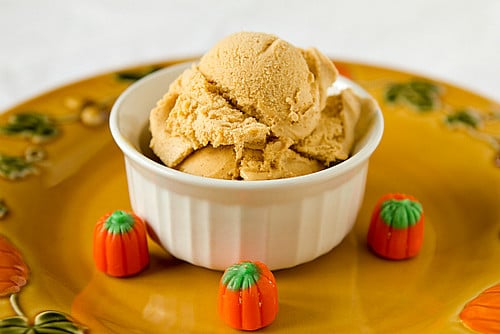
Pumpkin spice ice cream didn’t start the pumpkin spice phenomenon — that credit mostly goes to a certain coffee chain’s latte — but it became part of a cultural conversation that grew much larger than any single product.
By the mid-2010s, the annual arrival of pumpkin spice flavors across every food category had become a reliable cultural event, complete with commentary, backlash, and inevitable jokes. Ice cream played its part. The flavor became less about taste and more about participation — a sign that autumn had arrived and that the seasonal ritual could begin.
Ube and the Long-Overdue Spotlight

Ube — a purple yam used in Filipino desserts for generations — moved from Filipino bakeries and restaurants into mainstream American ice cream culture in the 2010s. Its vivid purple color made it immediately eye-catching on social media, but its rise also reflected something more significant: a growing interest in and respect for Filipino cuisine within the broader American food conversation.
For Filipino-Americans, seeing ube celebrated widely carried weight that went beyond food trends. The flavor’s moment wasn’t just a marketing success. It was a recognition.
Neapolitan and the Democratic Compromise

Few flavors have the cultural staying power of Neapolitan — the three-stripe combination of chocolate, vanilla, and strawberry packed side by side into a single container. It solved a specific and very human problem: families who couldn’t agree on a flavor.
Its origins trace back to Italian confectionery traditions, but its American version became a fixture of the mid-20th century household freezer. Neapolitan doesn’t appear in many prestige conversations about ice cream, but its presence across generations of family arguments, picnic tables, and paper cups makes it one of the most culturally embedded flavors in existence.
Matcha and the Wellness Aesthetic

Matcha ice cream has existed in Japan for a very long time, but its emergence in American and Western markets happened in waves — first through Japanese restaurants and grocery stores, then through a broader adoption driven partly by wellness culture and partly by aesthetics.
The deep green color, the bitter-sweet contrast, and the association with Japanese tea ceremony gave matcha a distinctive identity in a crowded market. It became a flavor that signaled something about the person eating it: a certain kind of worldliness, or at least an awareness of food culture beyond the obvious options.
The Cronut Craze and Hybrid Dessert Mania

One morning in 2013, the cronut – a mix of croissant and donut – appeared everywhere in New York’s food stories. Because of that, people started chasing strange new sweets just as fast in the world of frozen treats.
Inside a golden brioche roll, someone might find soft swirls of ice cream instead of butter. Stacked high like towers, these wild shakes showed up on sidewalks and subways alike.
Not taste alone shaped what sold best anymore – it was how the cold stuff sat in your hand.
Pictures mattered more than flavor back then.
Showy moments ruled instead of what it tasted like. Ice cream played a role on camera just as much as on the spoon.
Looks won out when it came to picking which kind would catch fire.
Where Flavor Goes From Here

Freezer shelves carry traces of every era. Surviving tastes rarely win flavor contests – instead, they cling to ideas beyond ice cream.
Maybe it’s a flash of childhood. Or laughter caught between bites.
Sometimes just a stubborn ad asking how far you’d go for cocoa-dipped cold sweetness. A taste that sticks might just be hiding in plain sight, needing only the right time to feel important.
More from Go2Tutors!

- The Romanov Crown Jewels and Their Tragic Fate
- 13 Historical Mysteries That Science Still Can’t Solve
- Famous Hoaxes That Fooled the World for Years
- 15 Child Stars with Tragic Adult Lives
- 16 Famous Jewelry Pieces in History
Like Go2Tutors’s content? Follow us on MSN.