Ice Skating Traditions Around the World
Ice skating means different things depending on where you grew up. For some people, it’s a weekend activity at an indoor rink.
For others, it’s transportation across frozen rivers or a cultural tradition passed down through generations. The way communities interact with ice tells you something about their history, their climate, and what they value.
These traditions didn’t develop in isolation. They evolved from practical needs, social customs, and the unique ways different cultures adapted to winter.
Some of these practices go back centuries. Others are relatively new but already feel essential to the places that practice them.
The Dutch Created Modern Ice Skating
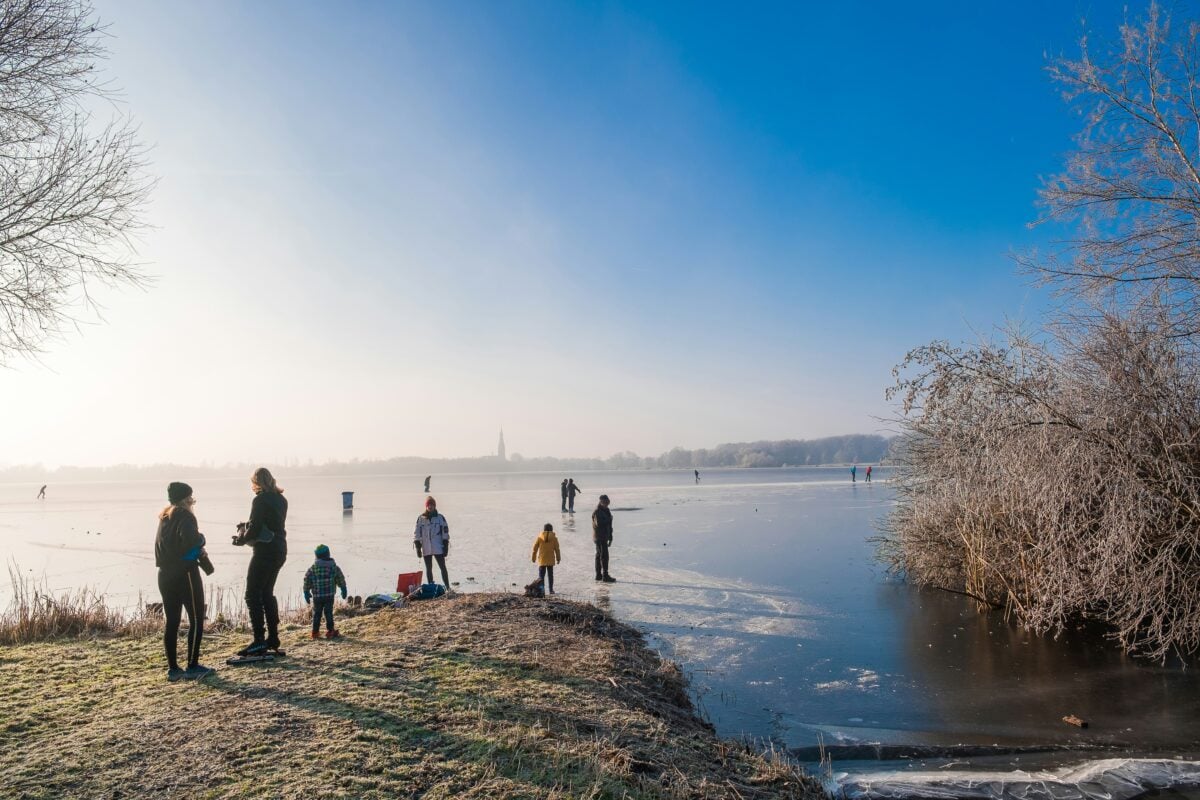
The Netherlands sits below sea level, crisscrossed by canals and waterways. When winter arrives, these waterways freeze into highways of ice.
The Dutch didn’t invent skating—people have strapped bones to their feet to glide across ice for thousands of years—but they perfected it. By the 13th century, the Dutch were using iron blades instead of bone.
They skated to work, to market, to visit neighbors. The entire society moved differently in winter. Speed skating became a practical skill before it became a sport.
The Dutch still hold the Elfstedentocht—the Eleven Cities Tour—when conditions permit. This 200-kilometer race through Friesland only happens when the ice is thick enough, which means some years it doesn’t happen at all.
When it does, the entire nation pays attention. Tens of thousands of skaters participate, and millions watch.
It’s not just a race. It’s a cultural event that connects modern Netherlands to its skating heritage.
Canadians Skate to Work on the Rideau Canal
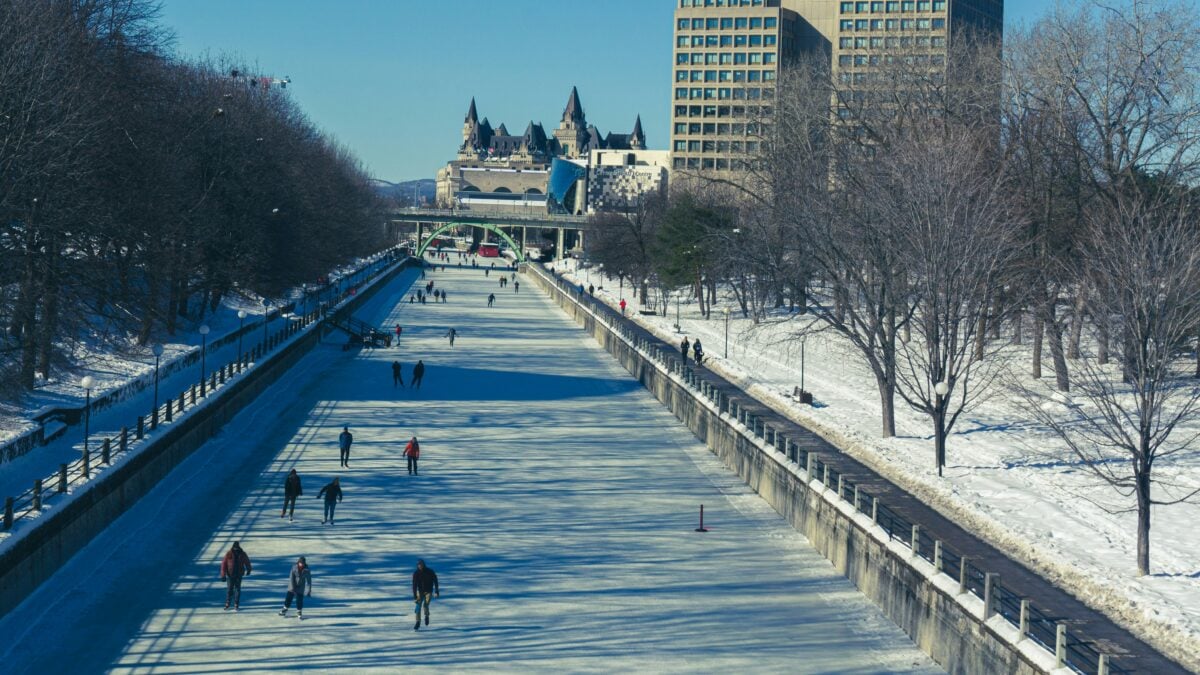
Ottawa transforms every winter. The Rideau Canal, which runs through the heart of the city, becomes the world’s largest naturally frozen skating rink. It stretches 7.8 kilometers, and when it’s open, thousands of people use it daily.
This isn’t a tourist attraction pretending to be practical. People actually commute on this ice. They skate to work carrying briefcases.
Parents pull children on sleds. Coffee vendors set up along the route.
The canal becomes a functional part of the city’s winter infrastructure. The tradition started in 1971, though the canal itself dates back to the 1820s.
What makes it special is how normalized it is. Skating to work doesn’t feel unusual in Ottawa—it feels like the sensible way to travel when you have a perfectly good frozen river running through your city.
Parks Canada maintains the ice, monitors its thickness, and keeps it clear of snow. When the ice is safe, the canal opens.
When it’s not, everyone goes back to regular commuting. The whole system depends on the weather, which makes every skating season feel slightly different.
Speed Skating Defines Norwegian Winter

Norway takes speed skating seriously. Not as recreation—as identity. When Norwegian speed skaters compete internationally, the entire country stops to watch.
Success on the ice matters in a way that’s hard to explain to outsiders. This intensity has roots in practical history.
Norwegians skated to get places, just like the Dutch. But Norway added competition earlier and more aggressively.
Speed skating clubs formed throughout the country, creating a culture where being fast on skates mattered. The tradition continues in neighborhoods across Norway.
Outdoor rinks appear every winter, and kids grow up racing each other. The best move is into formal training programs.
The national obsession with speed skating feeds itself—success creates interest, which creates more young skaters, which creates more success. Norwegian speed skaters hold more Olympic medals than almost any other nation.
That dominance didn’t happen by accident. It came from a culture that treats skating as essential rather than optional.
Bavarian Ice Stock Sport Predates Curling

In Bavaria, winter means ice stock sport. This game looks like curling but uses different equipment and rules.
Players slide heavy “stocks”—objects with handles on top and smooth bottoms—across ice toward a target. Teams compete to get their stocks closest to the mark.
The tradition goes back at least 500 years, possibly longer. Bavarian villages have been playing ice stock in winter for as long as anyone can remember.
The game requires frozen surfaces but not necessarily skating rinks. Lakes, ponds, and flooded fields all work fine.
Ice stock spread throughout the Alpine regions—Austria, Switzerland, and northern Italy. Each area developed local variations, but the basic concept stayed the same.
In Bavaria, it remains most popular. Every winter, leagues form and villages compete against each other.
The game combines precision, strategy, and just enough luck to stay interesting. Modern ice stock uses standardized equipment and official rules for competitions.
But in Bavarian villages, you’ll still find informal games that barely resemble the regulated version. Those traditional matches are what keep the custom alive.
Finnish Ice Swimming Follows Skating

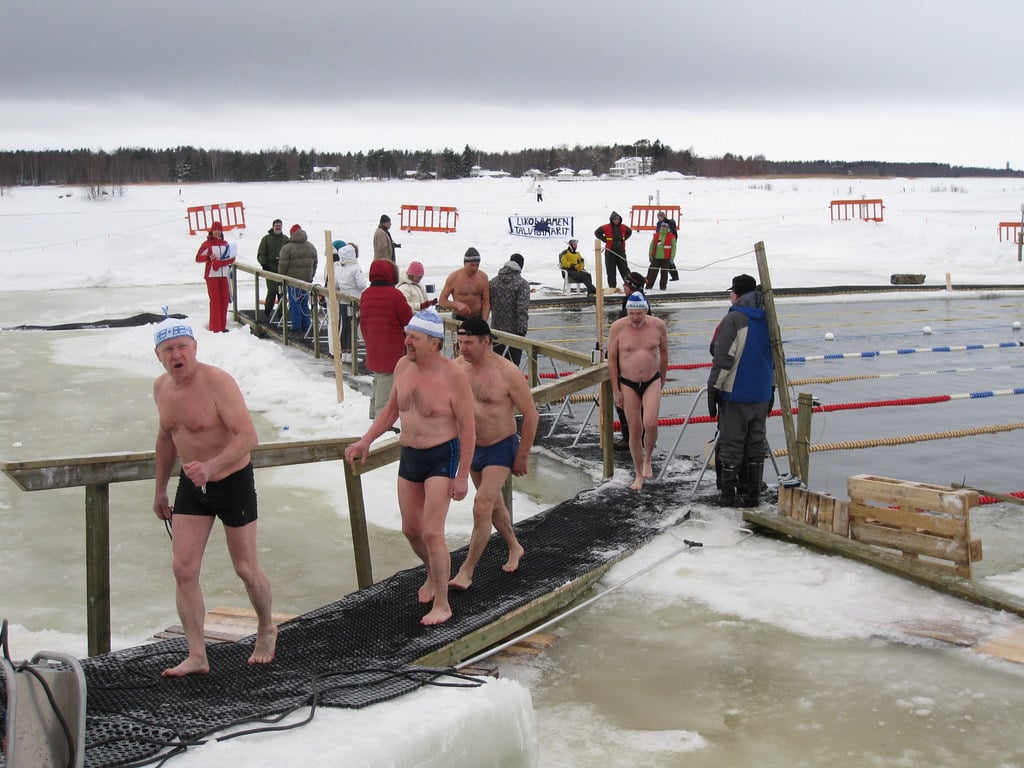
Finland has a peculiar tradition that pairs with skating: ice swimming. After skating on frozen lakes, Finns cut through the ice to create swimming areas.
Then they jump in. This sounds insane, but it’s remarkably common.
Dedicated ice swimmers—and there are thousands of them—maintain through winter. They drill access points in the ice, keep them clear, and swim in water that’s just above freezing.
Many Finns consider this a normal winter activity. The combination of skating and ice swimming creates a specific type of winter culture.
You exercise on the ice, get hot, then cool down by briefly immersing yourself in frigid water. Finns claim health benefits, though the real draw seems to be how it makes you feel alive in a way few other activities can match.
Ice swimming clubs exist throughout Finland. Members meet regularly at their designated spots, skate or exercise, then swim.
It’s social and physical at the same time. The tradition links back to sauna culture—Finns have been alternating between extreme heat and cold for centuries. Ice swimming just extends that practice to frozen lakes.
Mongolia’s Frozen Lakes Host Festivals
Mongolia’s winters are brutal. Temperatures drop to -40°C regularly. Lakes freeze solid for months.
Instead of avoiding these conditions, Mongolians celebrate them with ice festivals. These events happen on frozen lakes, usually in February or March when the ice is thickest.
Communities gather for skating races, ice games, and traditional sports adapted for frozen surfaces. Horses race across the ice.
Wrestlers compete on frozen ground. Kids play traditional games modified for winter conditions.
The festivals serve multiple purposes. They break up the monotony of harsh winters.
They bring isolated communities together. They teach children traditional skills in a setting that feels festive rather than educational.
And they reaffirm the cultural identity of communities that have adapted to extreme cold for generations. Ice skating at these festivals isn’t necessarily formal.
Many people still use basic equipment—metal blades attached to boots with straps. The point isn’t athletic performance.
It’s participating in a community event that connects you to your culture and your neighbors.
Japanese Outdoor Rinks Mix Tradition With Technology

Japan approaches ice skating differently than most places. The country has limited natural ice skating opportunities—winters in most regions don’t get cold enough for lakes to freeze reliably.
So Japan builds rinks instead, but does it in ways that feel distinctly Japanese. Outdoor winter rinks pop up in cities, but they’re often temporary installations designed to create specific atmospheres.
Tokyo’s Midtown Ice Rink, for example, combines modern lighting, music, and design to make skating feel like an experience rather than just exercise. But Japan also maintains older traditions.
In regions that do freeze, particularly in the mountains, communities practice traditional skating methods. Some areas still use primitive skates similar to what Dutch skaters used centuries ago.
These traditional practices exist alongside ultra-modern rinks, creating a strange mix of old and new. Japanese figure skating’s popularity has changed how people think about ice sports.
Success in international competitions made figure skating culturally significant. Now many Japanese children take skating lessons, not for practical reasons, but because figure skating represents artistic achievement.
The tradition is recent but growing fast.
Russian Figure Skating as Cultural Expectation

Russian figure skating operates at a level most countries don’t attempt. The training programs are intense, starting when skaters are very young.
The pressure to succeed is enormous. But the tradition comes from a deep cultural belief that figure skating matters.
This started during the Soviet era when athletic success demonstrated communist superiority. Figure skating, with its combination of athleticism and artistry, became a priority. The Soviet Union poured resources into training programs, creating a system that produced world-class skaters consistently.
That system still exists, though now it serves national pride rather than ideological competition. Russian coaches train skaters using methods that would be controversial elsewhere.
The results speak for themselves—Russian figure skaters dominate international competitions year after year. For young Russians, figure skating isn’t just a sport. It’s a potential path to recognition, financial security, and national importance.
Parents enroll children in skating programs hoping they’ll be the next Olympic champion. Most won’t make it, but the dream drives the entire system forward.
Sweden’s Natural Ice Skating Adventures

Sweden has a tradition called långfärdsskridsko—long-distance skating on natural ice. This isn’t skating at a rink or even on a single frozen lake.
It’s skating across Sweden’s archipelagos, moving between islands on frozen sea ice. The tradition requires specific conditions.
The ice needs to be thick enough to support weight but clear enough to see through. This happens during brief windows in winter when temperatures drop quickly without much snow.
Skaters call it “black ice”—perfectly transparent ice that looks like you’re gliding over dark water. Long-distance skaters cover huge distances, sometimes 30 or 40 kilometers in a day.
They bring safety equipment in case they fall through thin spots. They check ice thickness constantly.
The entire activity combines adventure, risk assessment, and winter beauty in ways that feel uniquely Scandinavian. Swedish skating clubs organize group expeditions where experienced skaters lead newcomers across the archipelago.
These trips aren’t races—they’re about experiencing winter landscapes in a way that’s only possible for a few weeks each year. The tradition connects modern Swedes to how their ancestors traveled in winter.
Korean Speed Skating Training Grounds
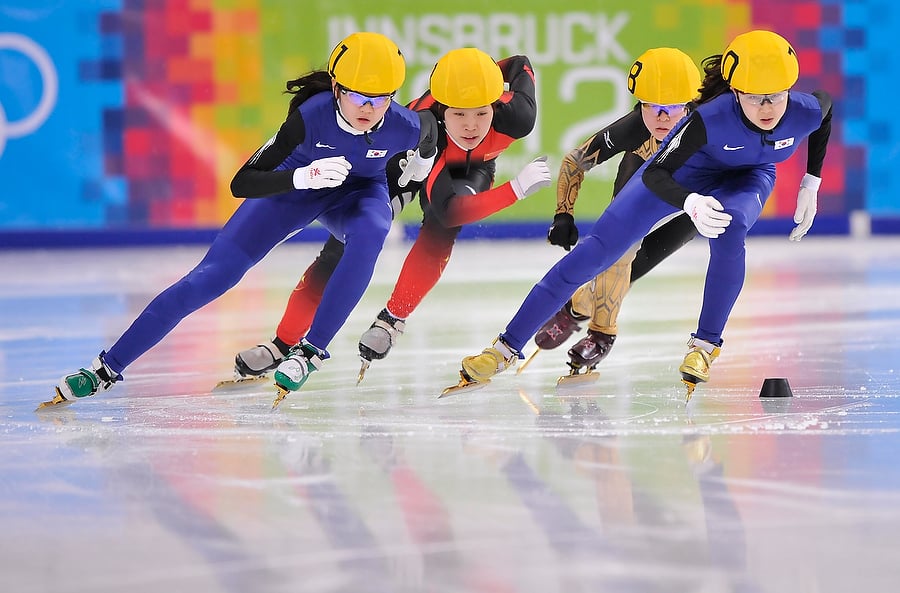
Photo by Wu Wei/Xinhua/IOC Hand out Photo
South Korea produces world-class speed skaters through a system that starts in childhood. The tradition isn’t ancient—it developed mostly in the late 20th century as Korea invested in winter sports.
But in a few decades, it became deeply embedded in Korean sports culture. Korea’s success in short-track speed skating changed the sport internationally.
Korean skaters didn’t just compete—they dominated. Multiple Olympic gold medals created national heroes and inspired a generation of children to take up skating.
The training facilities in Korea reflect how seriously the country takes speed skating. World-class indoor tracks, coaching programs, and systematic talent identification create pipelines that feed into elite competitions.
Korean speed skating isn’t casual or recreational. It’s a disciplined athletic pursuit backed by national infrastructure.
This tradition differs from Dutch or Norwegian speed skating because it’s newer and more deliberately constructed. Korea decided to become good at speed skating and built the systems to make it happen.
The tradition is real, but it’s engineered rather than evolved.
Czech Pond Hockey in Small Villages

The Czech Republic has a strong hockey culture, but the most authentic version happens on frozen ponds in small villages. This isn’t organized hockey with referees and stands. It’s an informal game that happens whenever the ice is good enough.
Village pond hockey in the Czech regions follows loose rules. Teams form spontaneously.
Goals are marked by boots or sticks. Games last until it gets dark or everyone’s too cold to continue.
The tradition connects to Czech hockey’s roots, before indoor rinks standardized the sport. Children learn hockey basics on these ponds before they ever play in organized leagues.
The informal environment teaches you to handle the puck on rough ice, to play in cold that numbs your hands, and to keep playing even when conditions aren’t perfect. Czech hockey’s toughness comes partially from these village pond traditions.
Modern Czech hockey still references this heritage. Professional players talk about learning on frozen ponds.
The image of outdoor village hockey represents authenticity in a way that indoor training facilities never can. The tradition persists because it symbolizes something important about how Czechs understand their relationship with winter sports.
Swiss Mountain Lake Skating

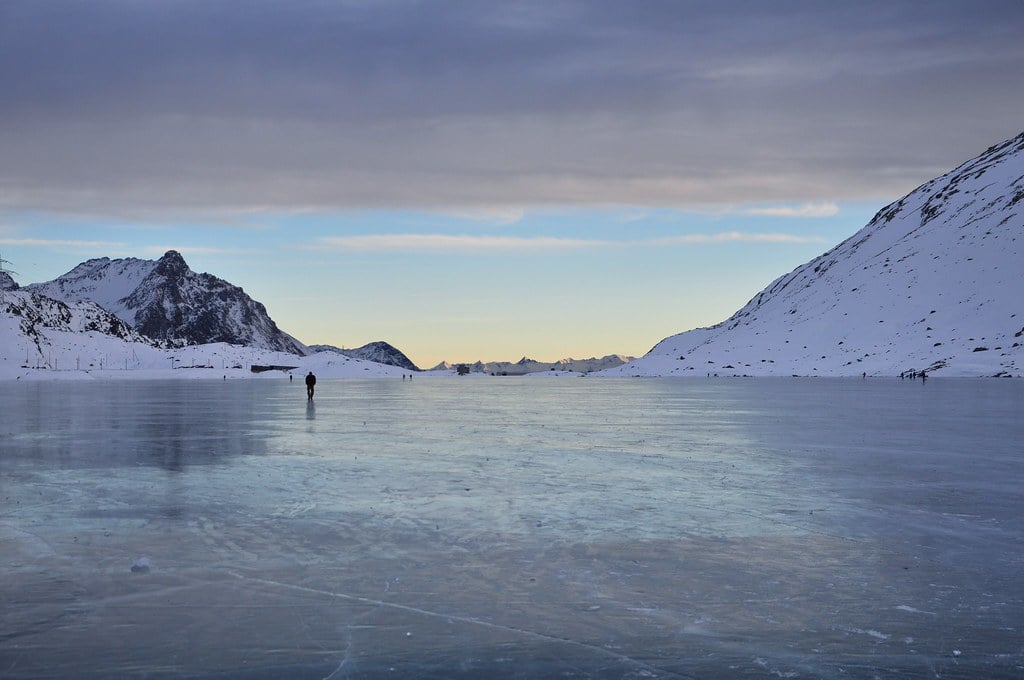
Frozen during colder months, Switzerland’s mountain lakes turn into open-air rinks tucked among alpine peaks. Skating here isn’t just play – it ties into village life, weaving community moments through shared winter routines.
Frozen thick, the mountain lake talks. News slips from house to house, pulling folks out with blades strapped tight.
Along the edge, flames rise – someone lit what someone else gathered. Cups pass hand to hand, steam curling into cold air.
No one stands apart; each face shows up for the quiet understanding that now, at last, winter means something. Not planned by committees or schedules.
Just neighbors showing up because the cold says it’s time. When ice thickens just right, someone notices – then others follow.
Learned by standing on shorelines year after year, not from maps or apps. New faces join sometimes, sure.
But those who’ve seen decades of frost shaping the water – they’re the ones who know how it truly works. Gliding across Swiss alpine lakes ties you directly to the land.
Not inside a rink shaped by planners. Out here, motion comes from thin ice over ancient water, framed by peaks older than memory. Because it won’t last – sunlight will reclaim the surface – you notice each moment more sharply.
Lasting structures rarely stir such quiet intensity.
Where Ice Connects Communities
Frozen paths become ways to move when snow covers the ground. In certain places, people race across ice for honor.
Movement on blades mixes with music under northern lights now and then. Cold months shape these routines in quiet villages and busy cities alike.
Rooted in location, each custom ties tightly to its people. Where there are no icy waterways, skating simply does not happen.
Without lakes nearby, pond hockey stays unrealized. Conditions shape what becomes routine.
Over time, those routines feed a group’s sense of who they are. Skating the Rideau feels like stepping into old footsteps.
Because folks before us glided right there too. Doing it ties your hands to time, almost without words.
A Bavarian ice stock match? Same thing – hands pushing stones just like grandparents once did.
That link hums quietly between everyone playing now. History stays alive when bodies repeat its moves.
Frozen lakes wake up when winter comes. Yet folks find warmth on ice through shared glides.
Skates touch cold wood, then move – smooth arcs form underfoot. Cold air bites, but laughter cuts sharper.
Together they circle, step by quiet step, season after season.
More from Go2Tutors!

- The Romanov Crown Jewels and Their Tragic Fate
- 13 Historical Mysteries That Science Still Can’t Solve
- Famous Hoaxes That Fooled the World for Years
- 15 Child Stars with Tragic Adult Lives
- 16 Famous Jewelry Pieces in History
Like Go2Tutors’s content? Follow us on MSN.