Incredible Stories Of People Living in Shopping Malls
Shopping malls weren’t designed as homes, but that hasn’t stopped some people from making them exactly that. These stories stretch from the desperate to the ingenious, from teenagers seeking adventure to adults finding unexpected sanctuary.
Some lived undetected for months, others were discovered within days, but all found something in these retail spaces that the outside world couldn’t provide.
The Art Student Who Painted Murals At Night

Tricia Chen spent four months living in a Providence mall after her college housing fell through. She’d discovered that the old Brookstone had a storage room the security guards never checked, and the food court dumpsters were restocked with barely-expired items every morning.
But Chen didn’t just survive — she turned the abandoned Spencer’s into her studio. Working between 2 and 5 AM, she painted elaborate murals on the security gate, transforming discount retail space into something that belonged in a gallery.
The mall management eventually found her work (and her makeshift bed behind the Orange Julius), but instead of pressing charges, they commissioned her to paint the children’s play area. Chen finished her degree and still works as a muralist today.
The mall kept her original Spencer’s mural until the building was demolished in 2019.
The Family That Weathered Hurricane Sandy Inside Macy’s

When Hurricane Sandy hit New Jersey in 2012, the Hendricks family found themselves stranded at the Garden State Plaza. Their car had broken down in the parking lot just as the storm reached its peak, and the mall manager made the decision to let them shelter inside rather than risk the journey home.
What started as an overnight emergency stretched into five days. The power went out on the second night, but the family had access to the camping section of Sporting Goods — sleeping bags, lanterns, even a camp stove the employees helped them set up in the customer service area.
Other stranded employees and a few shoppers formed an impromptu community, sharing food from the restaurants and playing board games from the toy store by candlelight. The Hendricks family still sends Christmas cards to the manager who let them stay.
Their youngest daughter, who was seven during Sandy, says it was the best week of her childhood.
The Maintenance Worker Who Lived In The Service Tunnels

Every large mall has a hidden infrastructure — service corridors, utility rooms, spaces the public never sees. David Park knew them better than anyone.
As a maintenance supervisor for West Edmonton Mall, he had master key access and an intimate understanding of every corner, every blind spot, every room that existed between the official spaces. When Park’s divorce left him financially devastated, he made a calculated decision: why pay rent when he already spent twelve hours a day at the mall anyway?
He moved a mattress into a storage room behind the Laura Secord chocolate shop, ran an extension cord to power a mini-fridge, and set up what amounted to a studio apartment in 200 square feet of retail real estate. The shower in the employee gym, meals from the food court, entertainment from the movie theater during his breaks.
Park lived this way for eight months before a new security system detected his after-hours movements. Management was so impressed by his ingenuity (and his spotless work record) that they helped him find affordable housing instead of firing him.
The Runaway Who Became The Mall’s Unofficial Mascot
Jenny Morrison was sixteen when she ran away from a group home in Phoenix and ended up living in the Metrocenter Mall. This wasn’t a temporary crash — Morrison developed a system that kept her undetected for nearly six months.
She rotated between three different bathroom stalls for sleeping, kept her clothes in a gym bag she stashed behind the arcade games, and survived on food court samples and the occasional shoplifted granola bar. But Morrison wasn’t just hiding.
She befriended the elderly mall walkers who came every morning, helped lost children find their parents, and became such a familiar presence that employees started treating her like part of the ecosystem. When security finally figured out she was living there, it was because concerned workers reported that “the helpful girl who’s always around” seemed to never leave.
The social worker who picked her up said Morrison had gained weight and seemed healthier than when she’d first disappeared. The mall walkers pooled money to help her get settled in a better placement.
The Couple Who Turned An Anchor Store Into A Love Nest

Abandoned anchor stores are retail graveyards — massive empty spaces that malls can’t fill and can’t afford to renovate. But Marcus and Lisa Chen saw potential where others saw decay.
When the Sears closed at their local mall in upstate New York, it left behind 40,000 square feet of empty retail space, complete with fitting rooms, employee break areas, and multiple entrances. The couple had been living in a cramped studio apartment (they’d moved back in together after Marcus lost his manufacturing job, and the relationship was strained by the close quarters and financial stress), so when they discovered the abandoned Sears space during an urban exploration adventure, it felt like finding a mansion.
They moved in gradually — first just camping gear for weekend stays, then a proper mattress, then a hot plate and mini-fridge powered by extension cords run from the operational part of the mall. The former fitting rooms became individual bedrooms and storage areas, and they set up a living area in what used to be the jewelry department, complete with chairs salvaged from other closed stores and a coffee table made from an old display case.
Security caught them after three months, not because they were careless, but because another urban explorer posted photos of their setup on Instagram with the location tagged. Mall management was more bewildered than angry — the couple had been meticulously clean and hadn’t damaged anything.
No charges were filed, and Marcus said the experience gave them enough breathing room to repair their relationship and save money for a proper apartment.
The Security Guard Who Never Left His Shift
Working mall security means long hours, low pay, and the kind of solitude that either drives you crazy or makes you philosophical. For Robert Kim, it led to an unusual form of efficiency: if he was spending twelve hours a day at the mall anyway, why maintain an apartment he barely used?
Kim’s transition from employee to resident happened gradually, the way most life changes actually do (not through dramatic decisions, but through small compromises that eventually become routine). First, he started sleeping in the security office during double shifts.
Then he brought a change of clothes and a toothbrush. Within six months, he’d moved his entire life into the 80-square-foot office, complete with a hot plate, a bar fridge, and a surprisingly comfortable setup considering the limitations.
Kim showered in the employee gym, ate at the food court, and spent his off hours walking the empty corridors like he was patrolling his own private estate. He lived this way for two years — until a new mall manager discovered the arrangement during a surprise inspection.
But Kim’s record was spotless, crime at the mall had dropped to nearly zero during his tenure, and his unusual living situation meant he could respond to emergencies instantly. Instead of firing him, they gave him a raise and helped him find proper housing nearby.
The Teenagers Who Built A Fort In Spencer’s
High school seniors Jake Morrison and Tyler Chen didn’t set out to live at the mall — they just wanted somewhere to hang out that wasn’t home, school, or Tyler’s basement. But when they discovered that the Spencer’s novelty store had a massive storage area hidden behind a false wall (left over from when the space had been split from a larger store), teenage logic took over.
Why hang out for a few hours when they could stay all night? Their setup was elaborate for seventeen-year-olds: sleeping bags, a battery-powered TV, snacks stockpiled from various food court raids, and enough energy drinks to power a small city.
They’d sneak in during closing time and leave before the stores opened, timing their exits with the early-morning mall walkers so they’d blend into the crowd. The adventure lasted two weeks — until Jake’s mother found the sleeping bag in his car and demanded an explanation.
But those two weeks have become legendary in their friend group, the kind of story that gets better every time it’s told. Jake now works in mall management (though at a different location), and he claims the experience taught him more about retail operations than any business class ever could.
The Artist Who Made The Disney Store Her Gallery

When the Disney Store closed at the Glendale Galleria, it left behind a space that still felt magical — high ceilings, theatrical lighting, and display cases that seemed designed for something more interesting than Mickey Mouse merchandise. Sarah Kim, a struggling installation artist, saw opportunity where others saw another retail casualty.
Kim didn’t just camp in the space — she transformed it. Using materials scavenged from other closed stores, she built elaborate sculptures that filled the former Disney Store with the kind of art you’d expect to see in a contemporary gallery, not a dead mall.
Her pieces incorporated old mannequins, discarded signage, and architectural elements from the mall itself, creating installations that were both commentary on consumer culture and genuinely beautiful art. She documented everything with a camera, posting photos online that went viral and eventually led to gallery representation.
The mall discovered her after six weeks (a maintenance worker spotted lights in the supposedly empty store), but by then her work had attracted enough attention that several galleries were competing to represent her. The mall management, recognizing the publicity value, let her finish her installation and even hosted an official opening night before she moved on to a proper studio space.
Three of her Disney Store pieces are now in permanent museum collections.
The Divorced Dad Who Made Visitation Work

Divorce logistics can turn the simplest activities into complex negotiations, especially when it involves long drives and awkward handoffs. For Michael Torres, whose ex-wife lived two hours away, weekend visitation with his eight-year-old daughter meant either expensive hotel rooms or exhausting round trips every few days.
The solution presented itself when Torres discovered that the Crossroads Mall had family restrooms spacious enough for a sleeping bag, 24-hour security that made the space safer than most budget motels, and enough entertainment to keep a kid happy for an entire weekend (the arcade, a small play area, multiple restaurants, and a movie theater all within walking distance). Torres set up what amounted to a weekend residence in the family bathroom of the old Montgomery Ward, complete with inflatable mattresses, a cooler for drinks, and a stash of games and books.
His daughter thought it was the best adventure ever — like camping, but with air conditioning and unlimited access to Orange Julius. They maintained this arrangement for three months of weekend visits, until Torres saved enough money for hotel rooms.
But his daughter still talks about their “mall camping” adventures as some of her favorite childhood memories. Torres says it taught him that being a good parent sometimes means getting creative with impossible circumstances.
The Grad Student Who Treated Brookstone As A Library
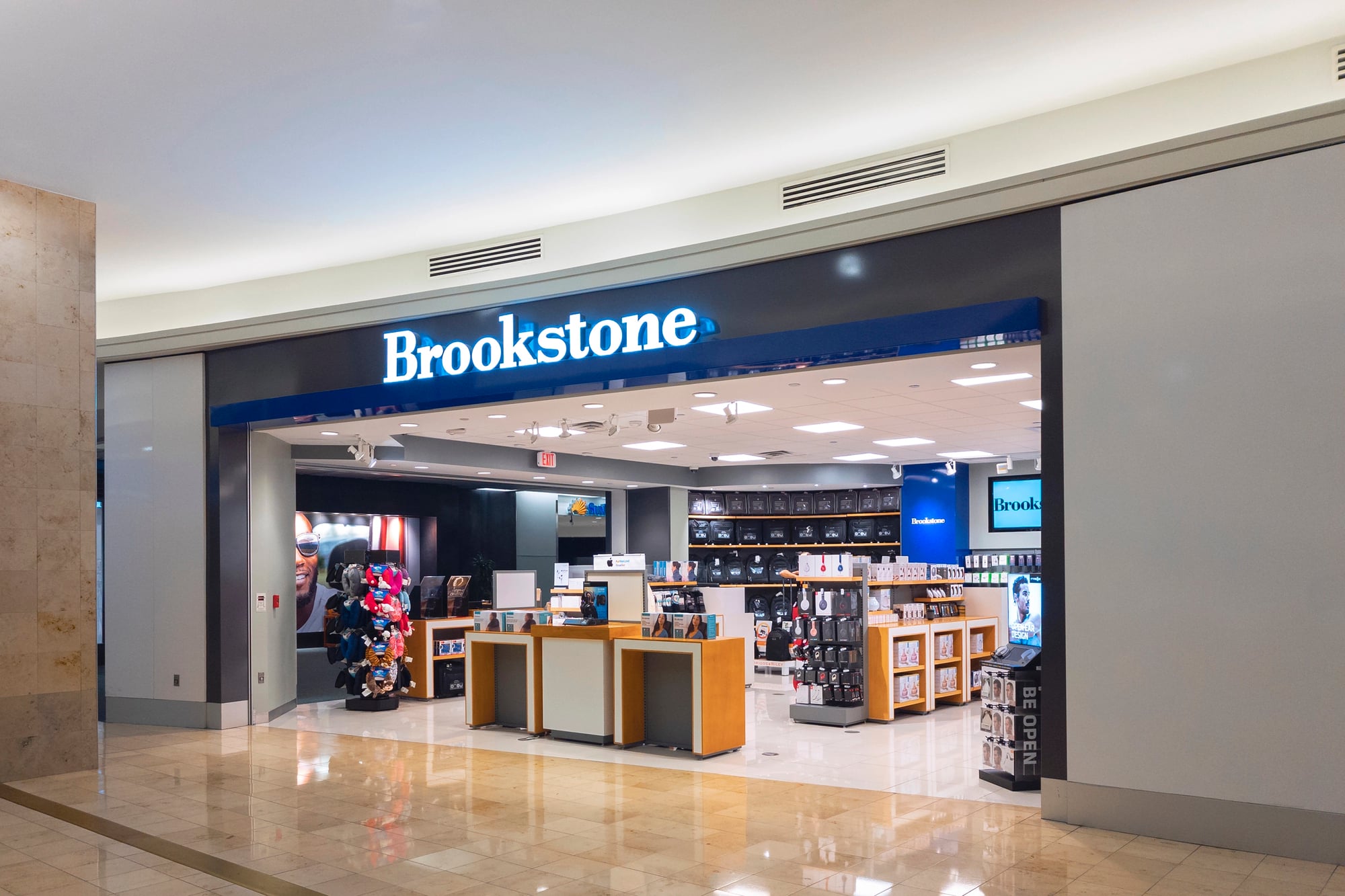
Graduate school has a way of grinding people down — the combination of academic pressure, financial stress, and social isolation can make even the most stable person question their life choices. For Anna Petrov, a doctoral candidate in art history, the problem was simpler but no less overwhelming: her studio apartment was too small and too distracting for the kind of focused work her dissertation required.
The abandoned Brookstone at her local mall became her accidental solution. The space was quiet, well-lit, and had the kind of neutral environment that helped her focus in ways her cluttered apartment never could.
Petrov started staying later and later, working on her laptop at a table made from an old display case, spreading research materials across the floor of what used to be the gadget demonstration area. Eventually, she was spending so much time there that it made sense to bring a sleeping bag and turn it into a live-in office.
The arrangement lasted four months — long enough for her to complete two chapters and develop a writing routine that actually worked. Security found her on a Sunday morning, surrounded by books and note cards, working on her laptop with the kind of focus that comes from finally finding the right environment.
The security guard was so impressed by her setup (and her dedication) that he helped her pack everything up and wished her luck with the dissertation. Petrov finished her degree six months later and now teaches at a small college.
She credits those months in Brookstone with saving both her academic career and her sanity.
The Retail Worker Who Inherited An Entire Store
Sometimes the most interesting mall residents are the ones who were never supposed to leave. When the RadioShack at Eastgate Mall closed in 2015, corporate somehow overlooked the fact that assistant manager David Park was still technically employed and still had keys to the store.
Park had worked at that RadioShack for twelve years, and the space felt more like home than his actual apartment ever had. So when corporate confusion left him in a strange limbo — officially laid off but never asked to return his keys or security codes — he made the practical decision to treat the space like the apartment it had always resembled.
RadioShack stores were never large, but they were efficiently designed: a back office that could accommodate a mattress, storage areas perfect for clothes and personal items, and enough leftover electronics inventory to keep him entertained for months. Park lived in the store for nearly a year, leaving during normal business hours so his presence wouldn’t attract attention, returning after the mall closed to what had become a 400-square-foot studio apartment.
The situation only ended when a corporate audit finally discovered the oversight. But Park’s story had a happy ending — the publicity from his unusual living situation led to job offers from three different electronics retailers, and he now manages a repair shop that he says feels almost as much like home as that old RadioShack.
The Photographer Who Documented Dead Malls From The Inside

Dead malls have become a subculture unto themselves — urban explorers, photographers, and nostalgic millennials drawn to these monuments to consumer culture’s rise and fall. But most visitors just pass through, snapping photos and leaving.
Lisa Martinez decided to stay. Martinez had been documenting abandoned retail spaces for an art project when she realized that living inside these spaces would give her access to moments and perspectives that day visitors could never capture.
She spent a month each in three different dying malls, setting up temporary residence in abandoned anchor stores and documenting the strange ecology of retail spaces in decline. Her photographs captured the interplay between decay and persistence — the stores that were still open, the employees who still came to work, the customers who still shopped in spaces that felt increasingly surreal.
The project became a book and a gallery exhibition, but Martinez says the real revelation was how peaceful these spaces became after hours. Without the fluorescent lights and background music, abandoned malls transformed into something almost cathedral-like — vast, quiet spaces perfect for the kind of contemplation that modern life rarely allows.
She was discovered by security at each location, but never arrested. Most security guards were curious about her project and a few even helped her access better vantage points for photographs.
The book won a photography award and is now used in urban planning courses as documentation of retail architecture’s evolution.
The Maintenance Crew That Became Accidental Residents
When the Sunrise Mall in California began its slow decline, the skeleton maintenance crew found themselves in an unusual situation: they were responsible for maintaining a space that was rapidly emptying but still technically operational. For supervisor Carlos Mendez and his two-person team, the solution was unconventional but logical — if they were spending most of their time at the mall anyway, why not make it official?
The crew converted an unused storage area into what amounted to a three-bedroom apartment, complete with beds, a kitchenette, and a living area furnished with items salvaged from closed stores. They maintained the space like the professionals they were — clean, organized, and efficiently designed.
The arrangement allowed them to respond immediately to maintenance emergencies and gave them a level of security presence that no hired guard service could match. They lived this way for eight months, until the mall was finally sold to developers.
But during that time, their unconventional living situation kept the remaining stores functional and safe in ways that traditional maintenance contracts never could have achieved. The mall’s final manager credited their dedication with keeping the property viable long enough to find a buyer who preserved some of the original structure instead of demolishing everything.
Mendez now runs his own maintenance company, and he still occasionally gets calls from mall managers dealing with unusual space management challenges.
When The Lights Go Out For The Last Time

The most profound thing about living in a shopping mall might be witnessing its transformation after hours — how these spaces designed for commerce and crowds become something entirely different in the dark. Every person who found temporary or long-term residence in retail spaces discovered the same thing: malls have a hidden life that emerges only when the stores close and the crowds disappear.
These stories share common threads not because the people involved were similar, but because the spaces themselves create certain possibilities. Shopping malls offer the infrastructure of daily life — food, shelter, climate control, security — wrapped in the familiar comfort of consumer culture.
For people caught between circumstances, whether temporary or long-term, these retail environments provided exactly what was needed: a place to exist while figuring out what comes next.
More from Go2Tutors!

- The Romanov Crown Jewels and Their Tragic Fate
- 13 Historical Mysteries That Science Still Can’t Solve
- Famous Hoaxes That Fooled the World for Years
- 15 Child Stars with Tragic Adult Lives
- 16 Famous Jewelry Pieces in History
Like Go2Tutors’s content? Follow us on MSN.