Incredibly Unique Trees from Around the World
There’s something almost mystical about encountering a tree that defies everything you thought you knew about how trees should look, grow, or behave. These living sculptures have been quietly reshaping landscapes and challenging expectations for centuries, sometimes millennia.
Each one tells a story that’s part botanical marvel, part geographical accident, and part pure stubborn determination to exist in ways that seem impossible.
Socotra Dragon Tree
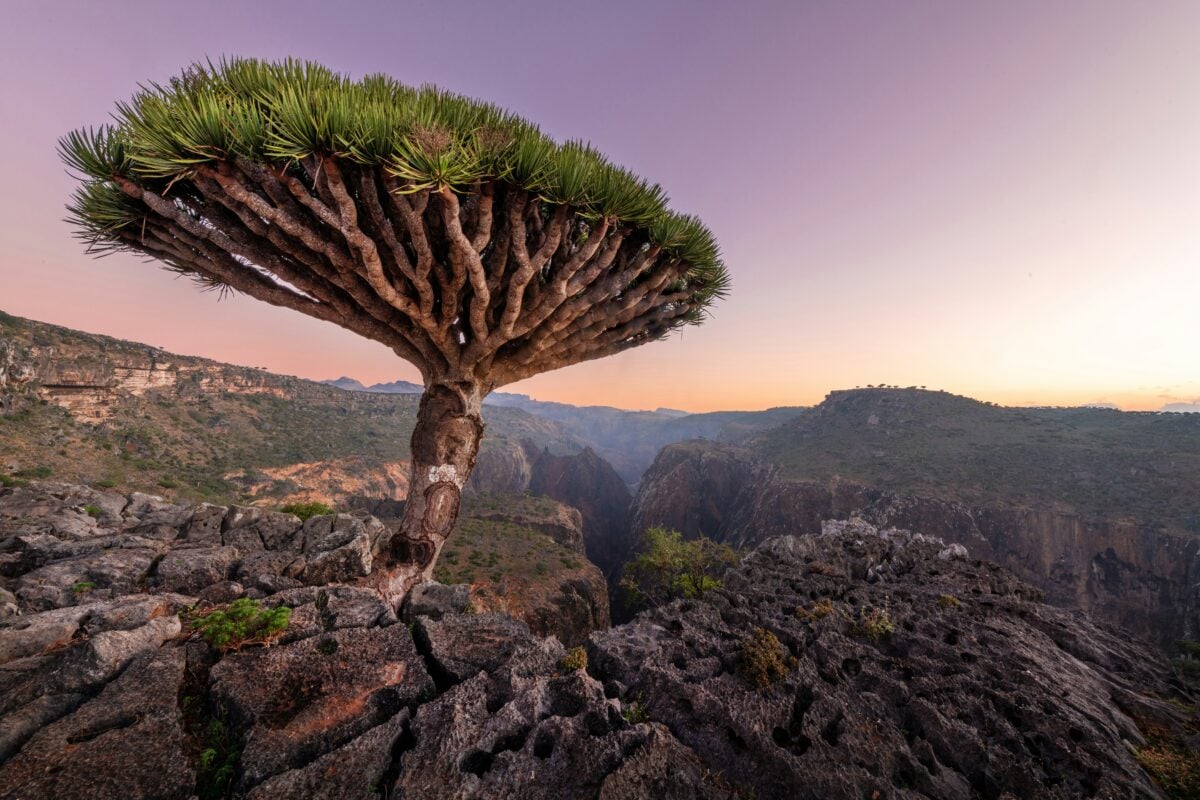
Dragon’s blood trees don’t apologize for looking alien. Their umbrella-shaped crowns perch on thick trunks like massive green mushrooms scattered across Yemen’s Socotra Island.
When you cut the bark, dark red resin bleeds out — hence the name The trees grow this way for a reason.
The umbrella crown captures every drop of moisture from the rare fog that drifts across this desert island.
Baobab Trees
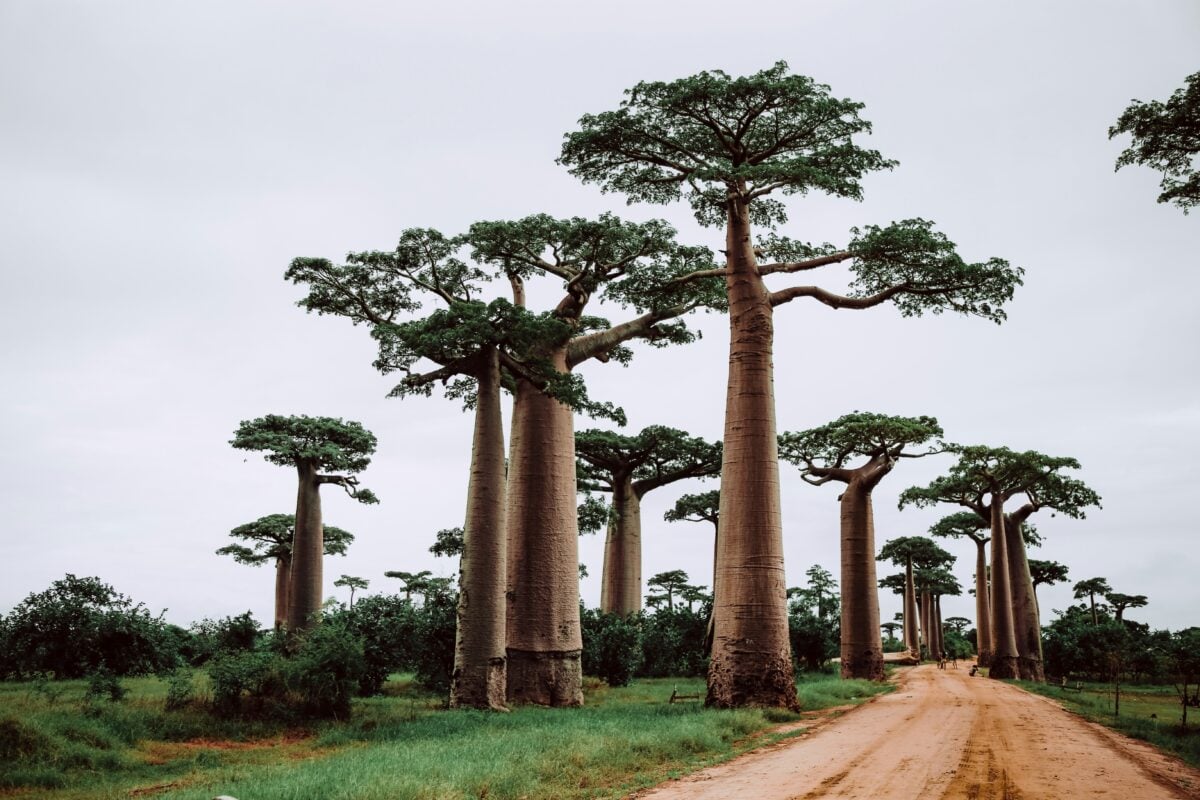
The baobab looks like someone planted it upside down and forgot to flip it back over — branches reaching skyward like gnarled roots, trunk swollen to cartoonish proportions. But this apparent mistake (which local legends attribute to the gods planting the tree backwards in a fit of anger) is actually a masterclass in desert survival, since the massive trunk stores thousands of gallons of water during the brief rainy seasons, and the sparse, root-like branches minimize water loss through evaporation.
And the timing of their leafless period means they photograph like ancient sentinels against the African sky for most of the year, which explains why they’ve become the unofficial symbol of Madagascar, where six of the world’s eight baobab species are found nowhere else on Earth The oldest baobabs have been standing for over 2,000 years.
Some are so enormous that people have carved rooms inside living trunks — bars, chapels, even small houses. The trees tolerate this intrusion with typical baobab indifference.
Rainbow Eucalyptus
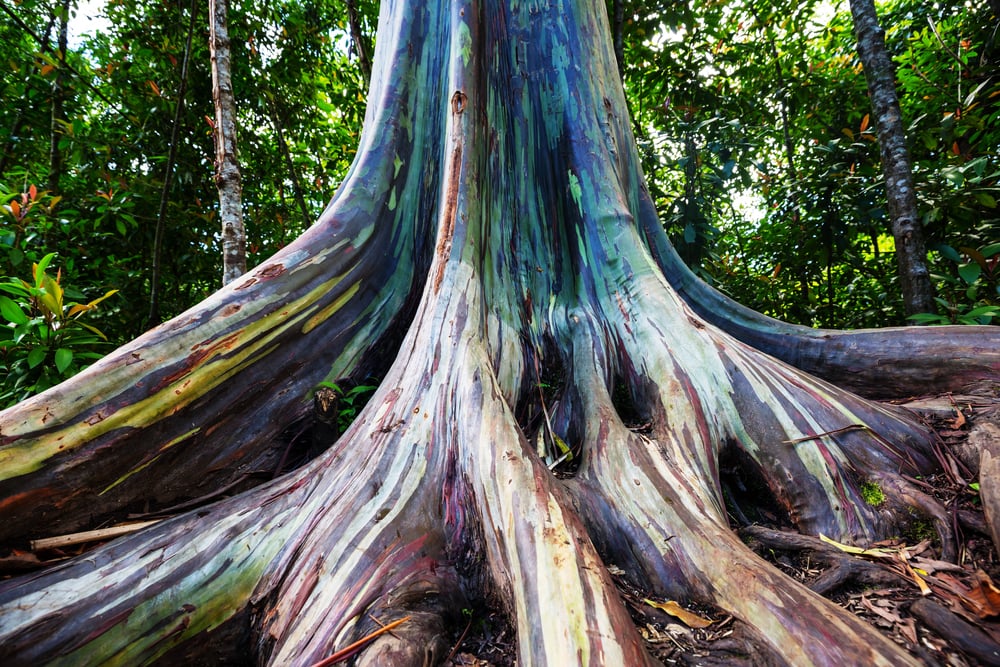
Every few months, rainbow eucalyptus trees shed strips of bark like a snake molting. What’s revealed underneath looks like someone took a paintbrush to the trunk — bright green patches aging to blue, then purple, orange, and finally maroon.
The effect happens naturally. Different patches of bark shed at different times, creating a patchwork of colors that shifts throughout the year.
These trees grow fast in their native Philippines, but the color show is worth the wait anywhere they’ll survive.
Bottle Trees
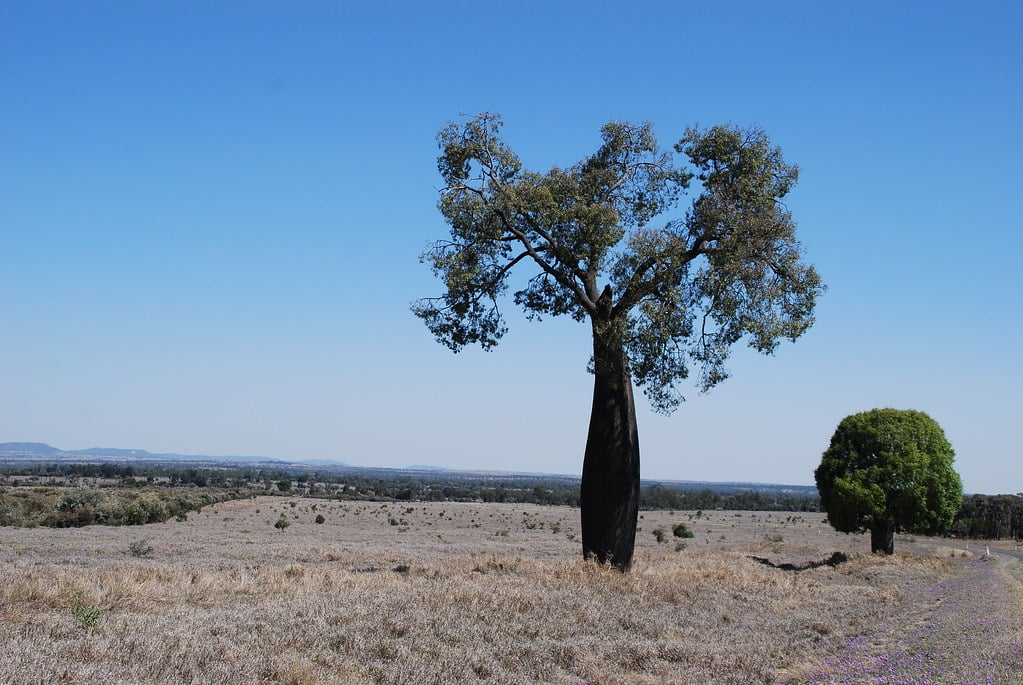
Queensland bottle trees store their own emergency water supply in plain sight. The trunk balloons out in the middle, giving the whole tree the silhouette of a massive wine bottle buried neck-deep in the earth.
Aboriginal Australians knew to tap these natural reservoirs during droughts. The trees can hold hundreds of gallons in their swollen trunks, making them living water towers in the Australian outback.
Japanese Maple Trees
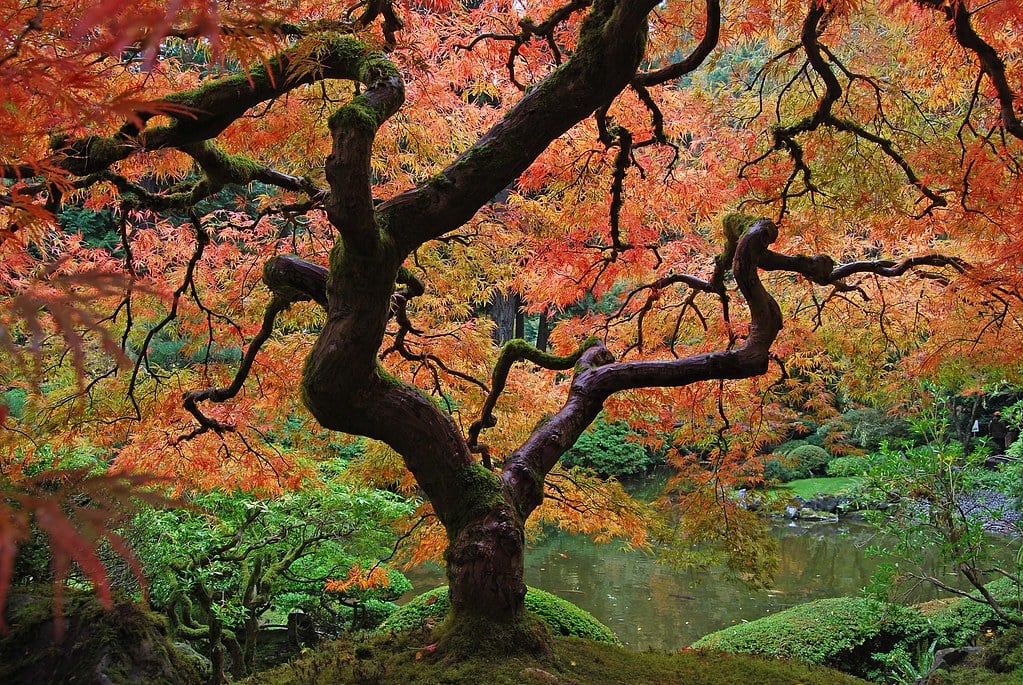
There’s something almost too perfect about Japanese maples, as if someone spent centuries fine-tuning them for autumn — which, in a sense, someone did. These trees have been cultivated and shaped by Japanese gardeners for over a thousand years, bred not just for their flame-red fall colors but for the particular way their delicate, star-shaped leaves catch light and cast shadows.
The branches grow with a natural architecture that seems to understand negative space, creating gaps that frame views and invite contemplation rather than simply filling space like most trees do And yet the most striking thing about them isn’t their famous autumn fire, but their winter skeletons — the way their bare branches create precise, calligraphic lines against snow or gray sky.
Like good handwriting, they’re beautiful even when they’re saying nothing.
Quiver Trees
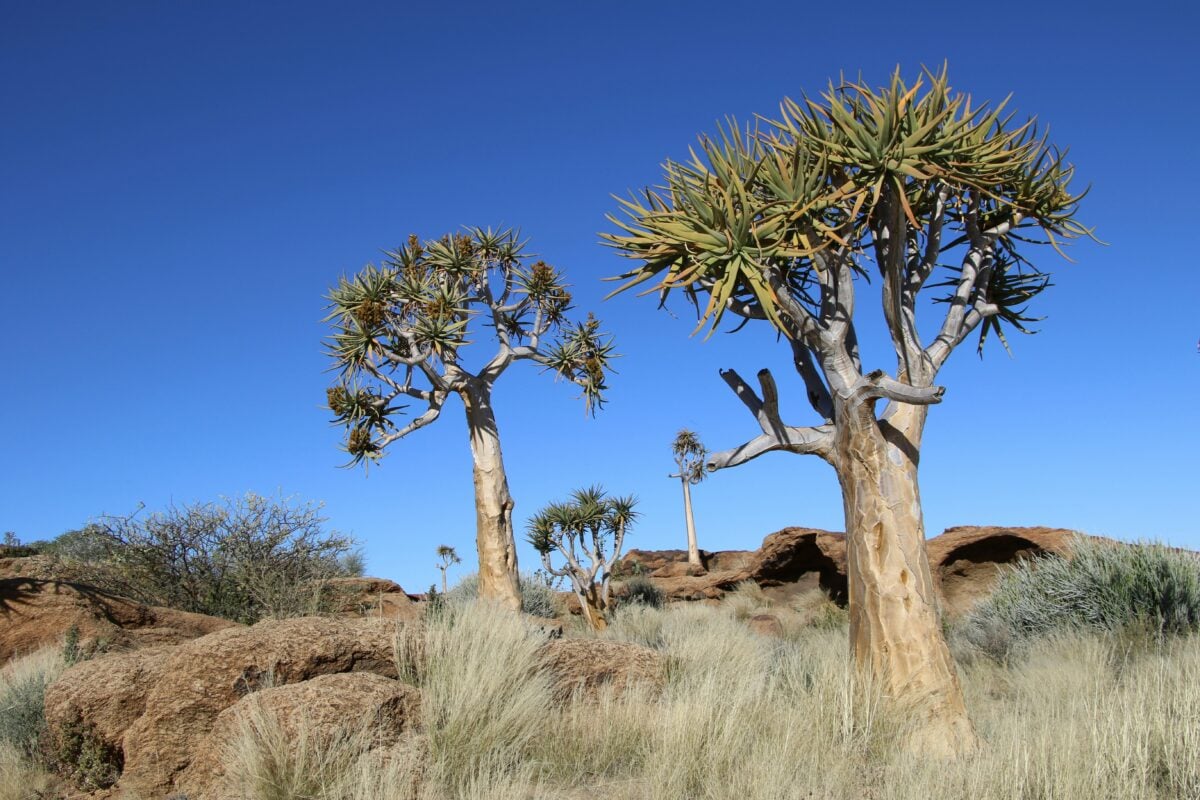
Quiver trees aren’t actually trees — they’re massive aloes that decided to grow up instead of out. The thick, smooth trunks rise from the Kalahari Desert like prehistoric clubs, topped with crowns of succulent leaves that look sharp enough to cut glass.
Bushmen traditionally used the hollow branches to make quivers for their arrows. The trees can live for 300 years, growing incredibly slowly in one of Earth’s harshest environments.
They bloom once a year with bright yellow flowers that seem wildly optimistic given their surroundings.
Banyan Trees
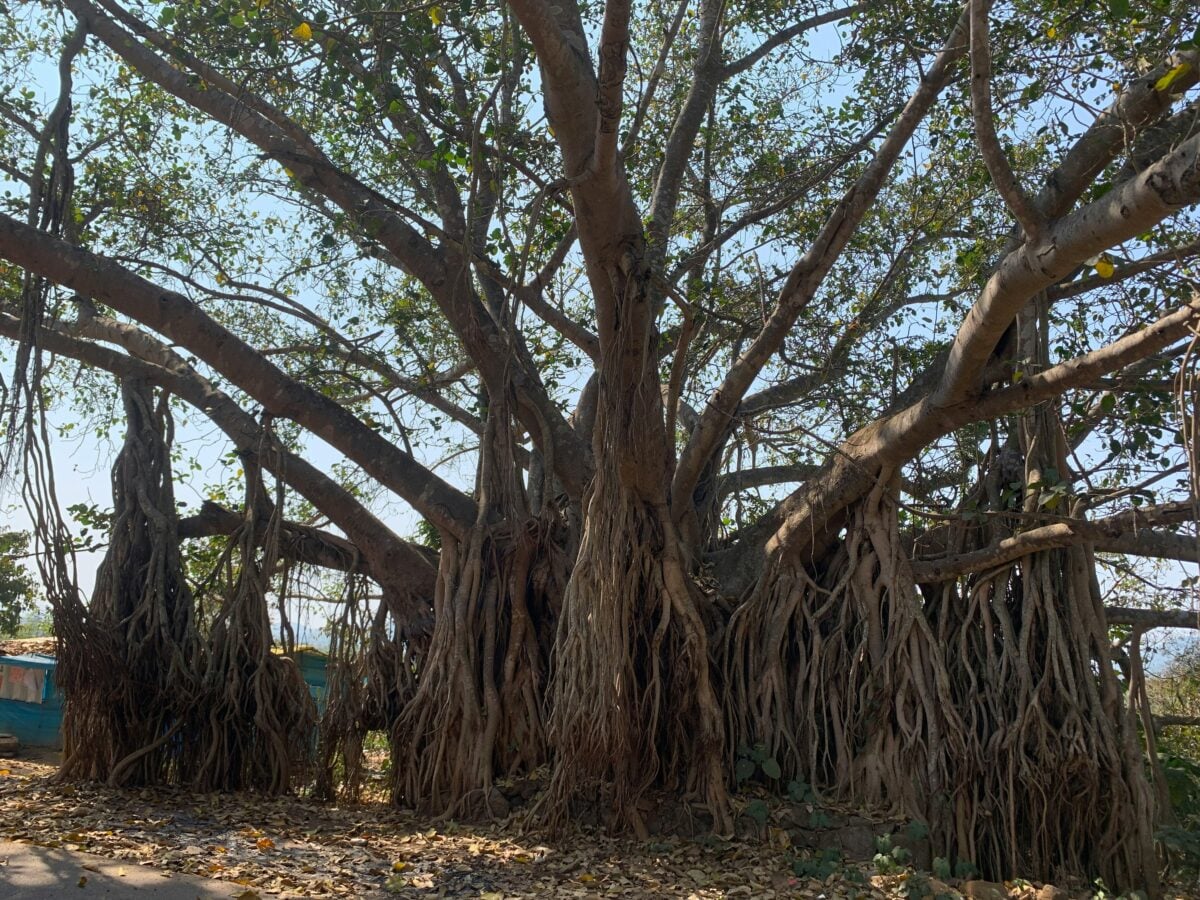
A single banyan tree can become its own forest (and frequently does, which is both impressive and slightly aggressive of it, considering how it muscles out every other plant in the vicinity by dropping aerial roots that thicken into new trunks, expanding outward in concentric circles until one tree covers several acres). The process is methodical: branches extend, drop roots, establish new support columns, then extend again, like a living cathedral that builds itself new pillars whenever it needs to expand the nave.
Some banyans are so large they’ve been mistaken for groves of separate trees. The Great Banyan in India covers over four acres and is technically a single organism, though it has over 3,000 aerial roots that have thickened into trunk-like supports.
Walking underneath feels like being inside a vast, living building.
Traveler’s Tree
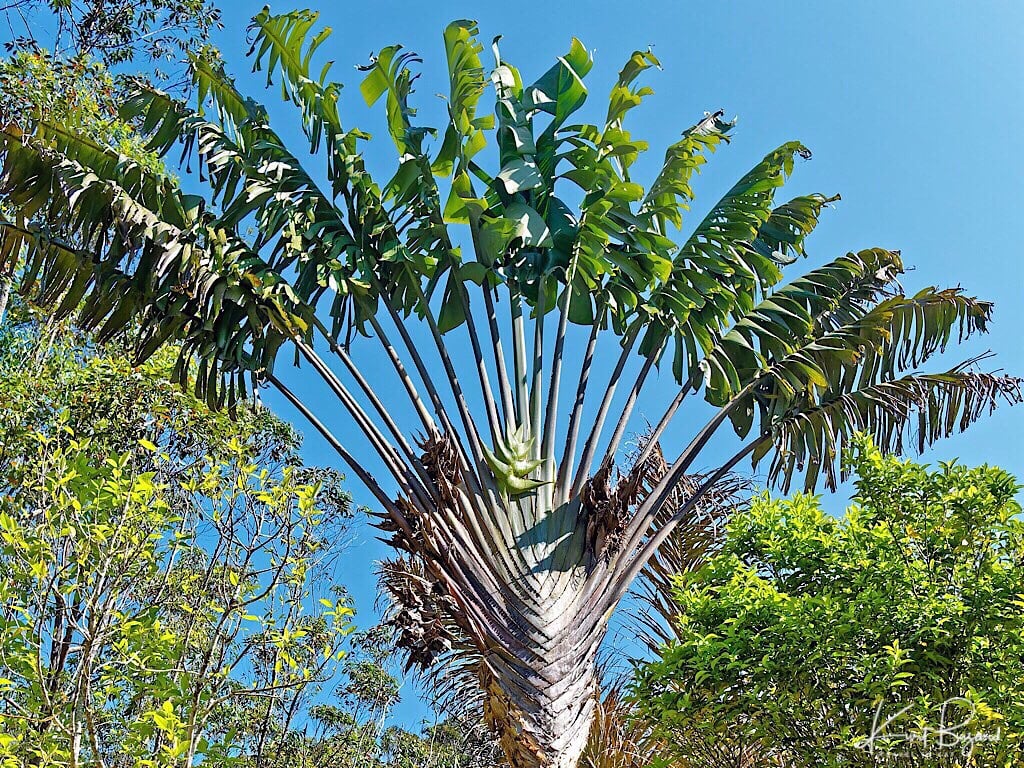
Madagascar’s traveler’s tree grows its leaves in a perfect fan, like a peacock made of foliage. The arrangement isn’t just for show — it’s a water collection system.
Rain runs down the leaves into the base of each leaf stem, where it collects in natural reservoirs. Thirsty travelers can tap these leaf bases for fresh water, hence the name.
The tree also grows with a predictable east-west orientation, making it a natural compass for anyone lost in Madagascar’s forests.
Welwitschia
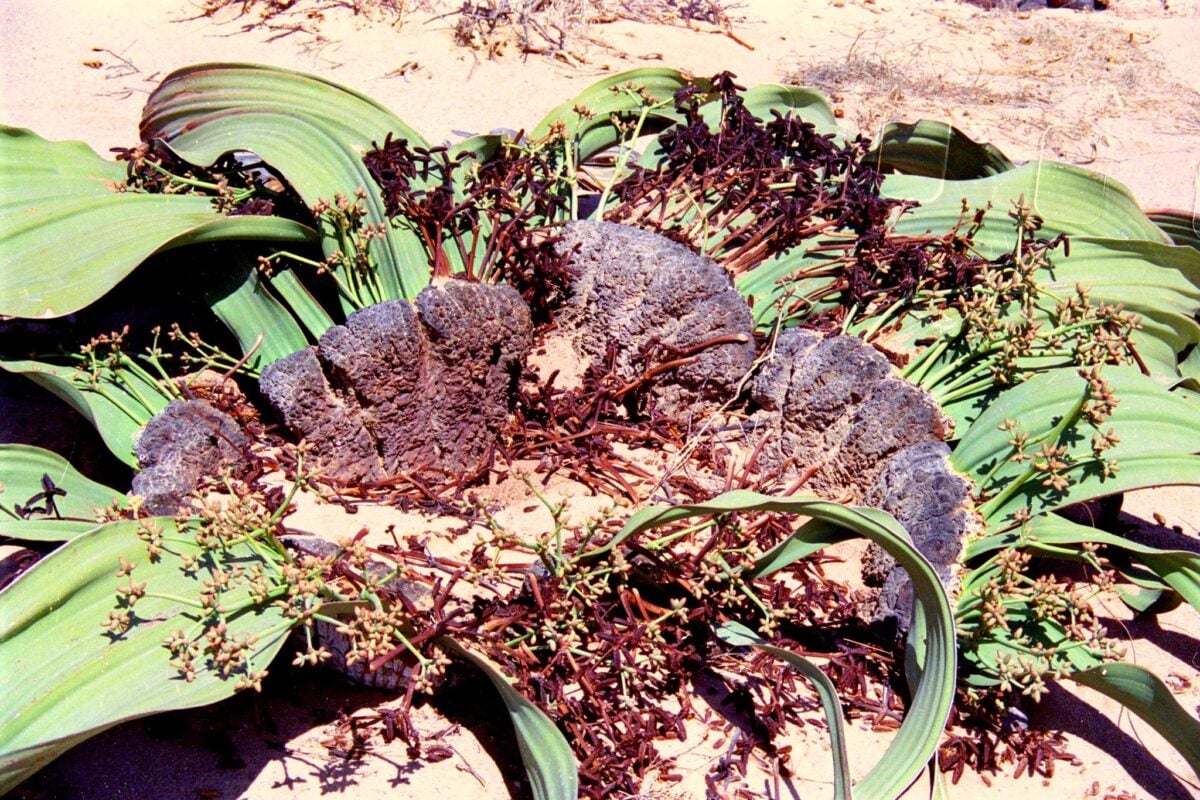
Welwitschia plants look like they’re dying, have been dying for centuries, and will continue dying for centuries more without actually succumbing. These desert survivors from Namibia grow only two leaves — ever — but those leaves keep growing for the plant’s entire lifespan, which can exceed 1,500 years.
The leaves get shredded by desert winds into long, twisted ribbons that pile around the plant’s base like ancient leather scraps. Some specimens are thought to be over 2,000 years old, making them among the oldest living things on Earth.
Singing Ringing Tree
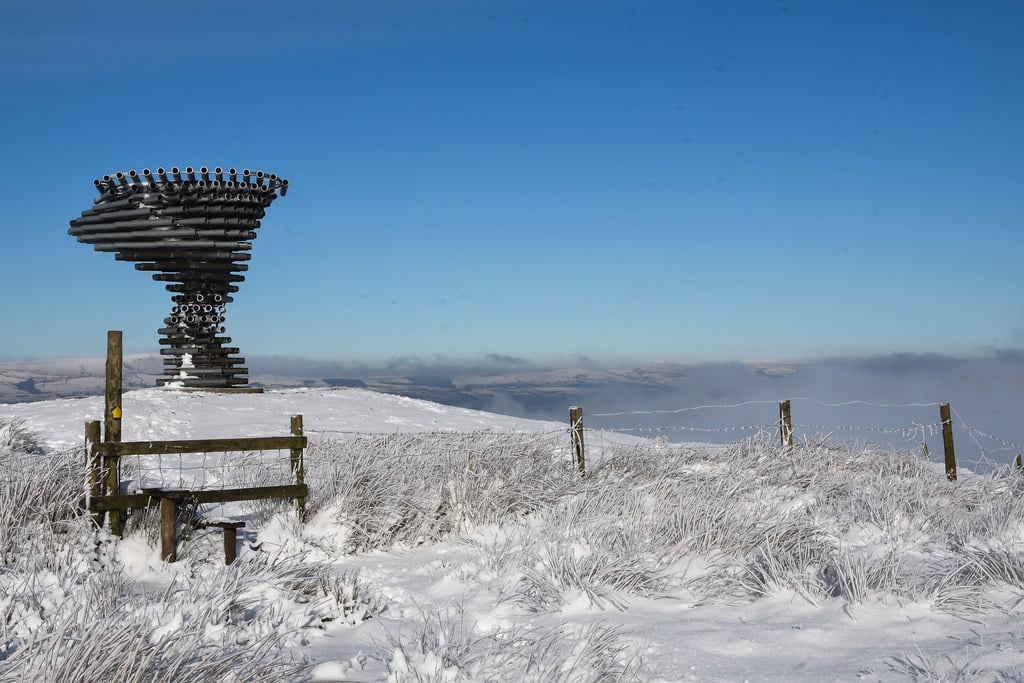
The Singing Ringing Tree isn’t technically alive — it’s a sculpture made of galvanized steel pipes arranged in the shape of a tree on a hill in Lancashire, England. But wind passing through the pipes creates haunting musical tones that change with weather conditions and wind direction.
The “tree” has become a pilgrimage site for people seeking an otherworldly experience. On windy days, it produces sounds ranging from low humming to high, ethereal whistles that can be heard from miles away.
Moreton Bay Fig Trees
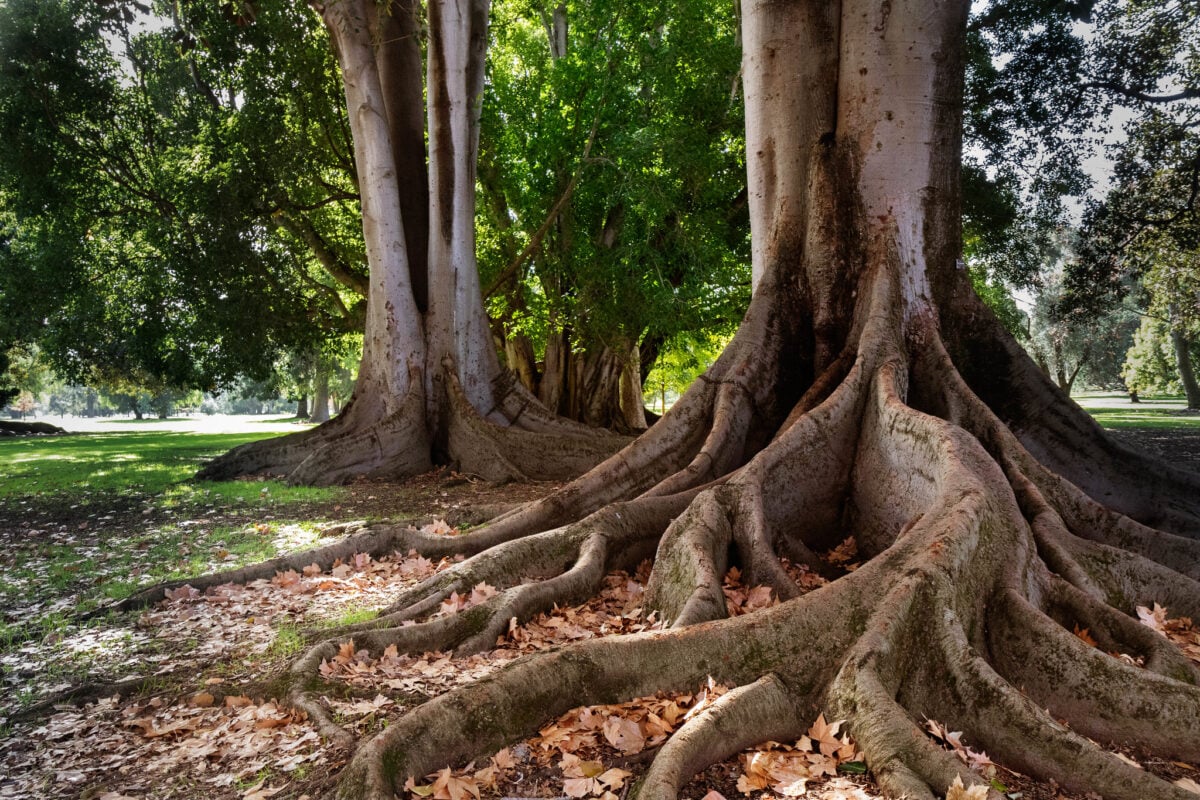
Moreton Bay figs don’t just grow — they establish territory. These Australian natives start life as small seeds, often deposited by birds in the crotch of other trees. Then they slowly strangle their host while sending down aerial roots that become massive buttresses.
Mature specimens can span over 150 feet and create natural amphitheaters underneath their canopies. Their root systems are so extensive and aggressive that they’re both beloved as shade trees and feared as foundation destroyers in urban areas.
Boswellia Trees

Frankincense trees grow directly out of rock faces in Oman and Somalia, their bulbous trunks emerging from cliff walls like botanical gargoyles. The trees produce the aromatic resin that’s been traded for over 5,000 years — frankincense was literally worth its weight in gold in ancient times.
These trees survive by sending roots deep into rock crevices to find water. They look almost sculptural, as if someone carved them from the living stone of the mountains where they grow.
General Sherman Giant Sequoia
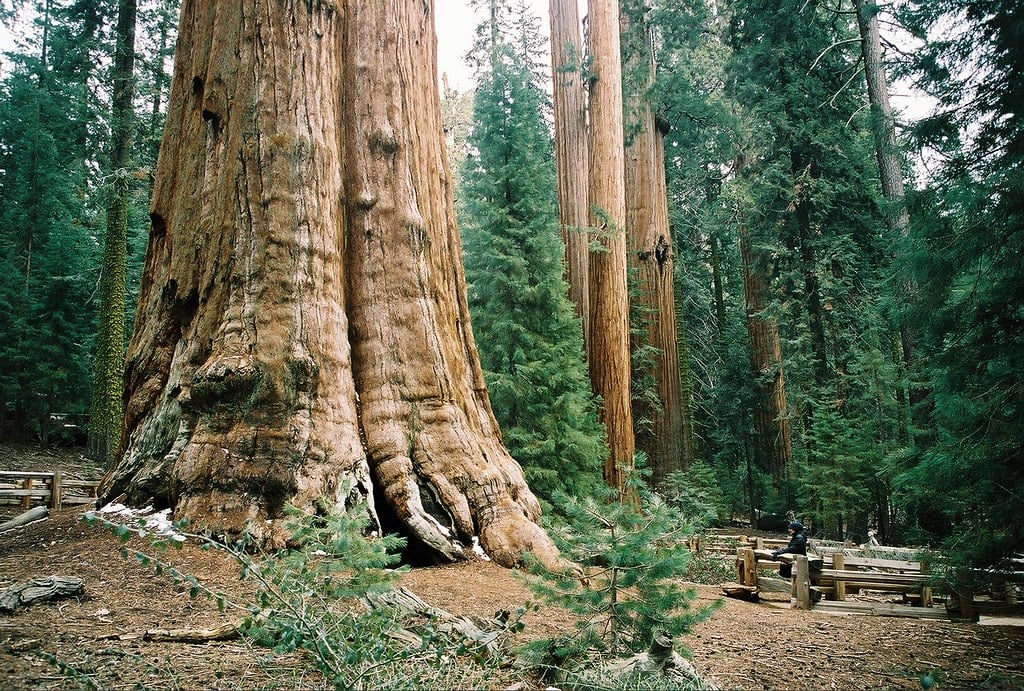
General Sherman isn’t the tallest tree on Earth, but it is the largest living thing by volume. This giant sequoia in California’s Sequoia National Park contains enough wood to build a small village.
The trunk alone weighs an estimated 1,200 tons Standing next to General Sherman recalibrates your sense of scale.
The base is over 100 feet in circumference. The tree is roughly 2,200 years old and still growing, adding the equivalent of a 60-foot tree’s worth of wood each year.
Living in Their Shadow
These trees remind us that nature rarely settles for ordinary when extraordinary is possible. Each one found its own solution to the challenge of being a tree — some store water, others collect it, a few just refuse to die despite impossible odds.
They’ve been quietly redefining what’s possible long before humans showed up to name and categorize them. Perhaps that’s the real lesson: the most remarkable things often happen when nobody’s watching, growing slowly and persistently until they become impossible to ignore.
More from Go2Tutors!

- The Romanov Crown Jewels and Their Tragic Fate
- 13 Historical Mysteries That Science Still Can’t Solve
- Famous Hoaxes That Fooled the World for Years
- 15 Child Stars with Tragic Adult Lives
- 16 Famous Jewelry Pieces in History
Like Go2Tutors’s content? Follow us on MSN.