Interesting Facts About Ancient Rome
Ancient Rome stands as one of history’s most fascinating civilizations, leaving behind a legacy that still shapes our world today. From groundbreaking engineering to bizarre daily customs, the Romans were a people of contradictions—simultaneously sophisticated and strange, innovative and superstitious.
Their empire lasted over a thousand years, and during that time, they created marvels that continue to astound us while also engaging in practices that would raise eyebrows in any modern setting.
Here is a list of interesting facts about ancient Rome.
Rome Was the First Million-Person City

Rome became the first city in the world to reach a population of one million people, achieved during the 2nd century BC. This massive population came from three different continents—Europe, Asia, and Africa—making ancient Rome incredibly diverse for its time.
The next European city to hit this milestone wouldn’t come along until Victorian London in the 19th century, roughly 2,000 years later. Managing a city of this size without modern technology was an extraordinary feat that required sophisticated urban planning, extensive food supply networks, and complex infrastructure systems.
Ancient Romans Used Urine as Laundry Detergent
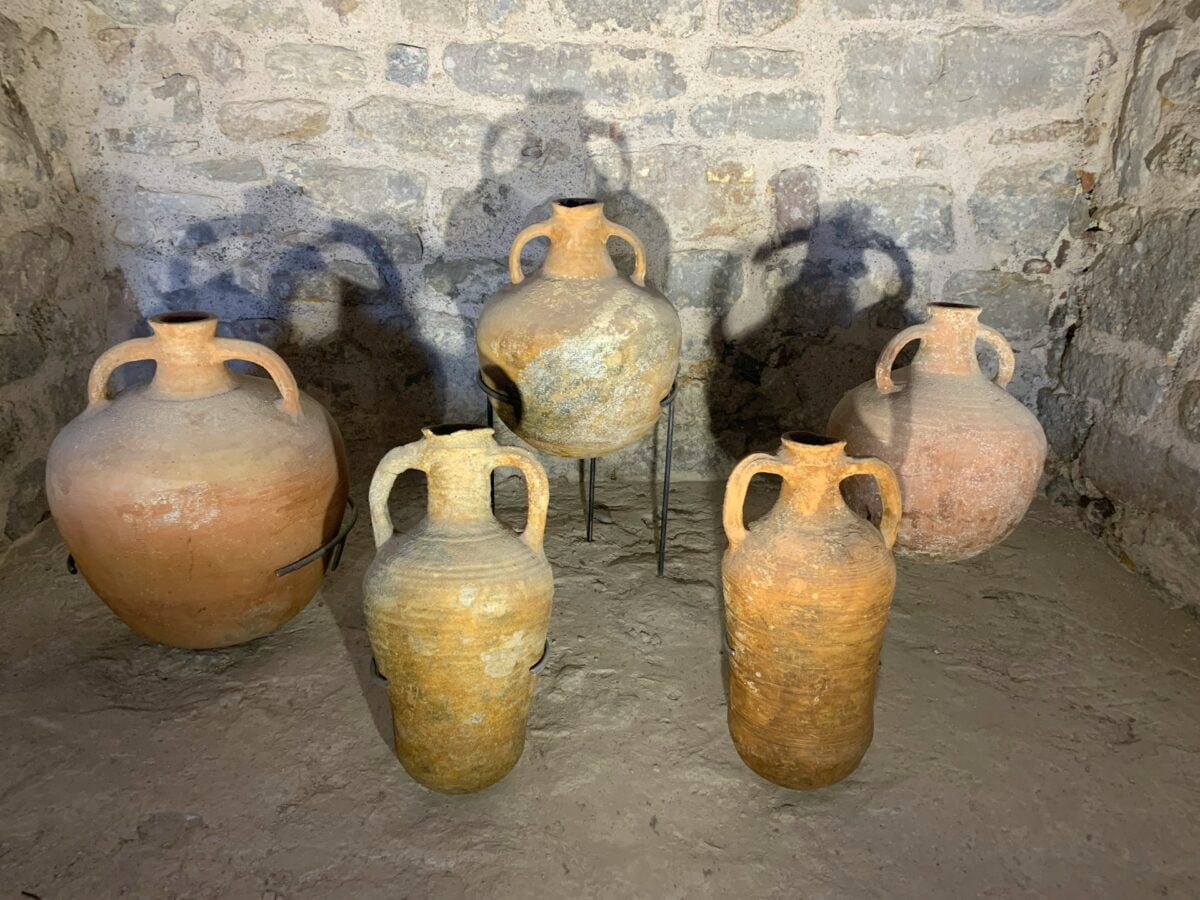
Perhaps one of the strangest facts about Roman life involves their laundry practices. Romans collected urine from public urinals placed at street corners and used it to clean clothes, particularly the prized white togas that symbolized Roman citizenship.
The urine would decompose into ammonia, which acts as a powerful cleaning agent that breaks down oils and grease. Workers called fullers would actually step into large vats filled with urine and dirty clothes, stomping on the garments like human washing machines.
This business became so lucrative that Emperor Vespasian imposed a tax on urine collection, leading to his famous saying ‘Pecunia non olet’—money does not stink.
The Colosseum Could Hold Naval Battles

Romans sometimes filled the Colosseum with water and staged naval battles inside the massive amphitheater. Special drains allowed water to be pumped in and released, transforming the arena into a temporary lake where ships could maneuver and engage in combat.
These spectacles, called naumachiae, recreated famous historical sea battles for entertainment. However, these events were rarely held because the water caused serious structural damage to the building.
The engineering required to make the Colosseum watertight and then drain it afterward showcases the remarkable technical abilities of Roman architects.
Roman Concrete Was Superior to Modern Concrete
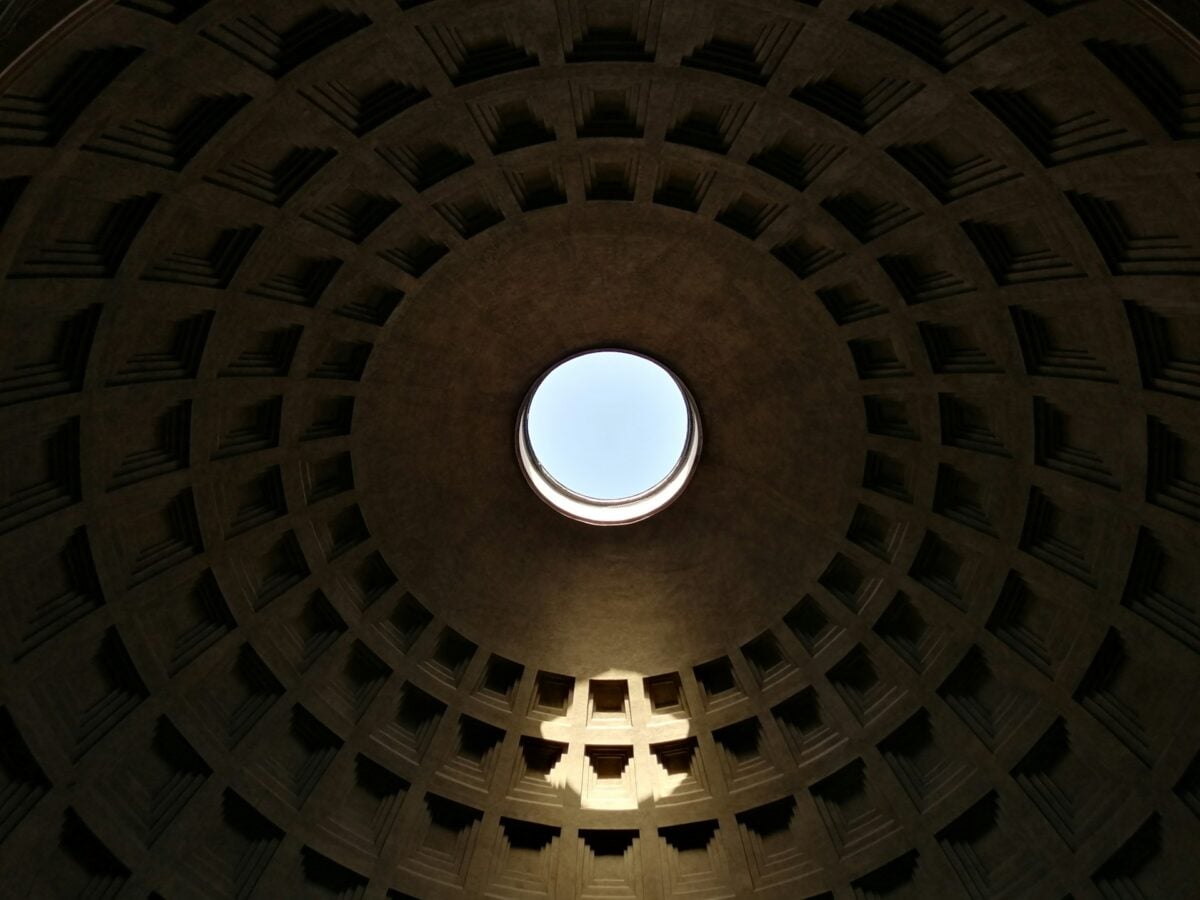
Ancient Roman concrete has withstood attacks by the elements for over 2,000 years, which is considerably longer than the lifetime of most modern concrete structures. Researchers analyzing pieces of Roman concrete that had been submerged in the Mediterranean Sea for millennia found it was more durable and environmentally friendly than its modern equivalent.
The secret lay in their specific mixture and the chemical reactions that occurred over time, actually making the concrete stronger as it aged. After the fall of the Roman Empire, the technology to make this superior concrete was lost for 1,000 years.
Chariot Racing Was More Popular Than Gladiators

While gladiator fights grab most of the attention in movies, chariot racing was actually the most popular sport in ancient Rome, with racing teams forming something like political street gangs complete with devoted fans. The Circus Maximus could seat around 150,000 spectators, and later estimates suggest it may have held up to 250,000 people.
There were four racing teams—blue, green, red, and white—and fans were so passionate they occasionally rioted. The races were dangerous and often fatal, but drivers could become incredibly wealthy.
One famous charioteer reportedly earned the equivalent of 15 billion dollars over a 24-year career.
Romans Built a Shopping Mall Nearly 2,000 Years Ago
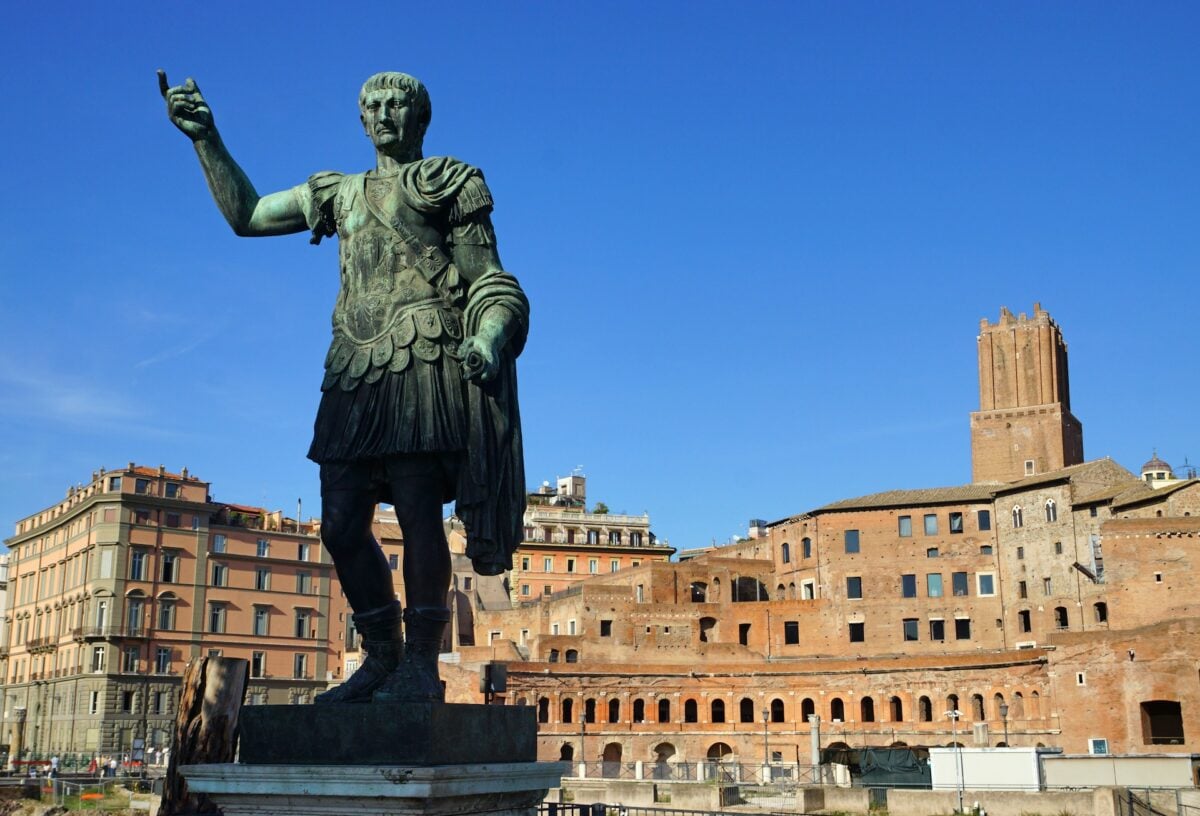
The first shopping mall was built in Rome between 107 and 110 AD by Emperor Trajan, featuring more than 150 shops that sold a wide variety of goods and groceries. Trajan’s Market was a massive complex that included multiple levels, residential apartments, and small shops at the front.
Products came from all across the Roman Empire, including fruits, vegetables, fish, wine, oil, and various spices. The structure still stands today as a testament to Roman engineering and their understanding of commercial architecture.
Purple Togas Were Illegal for Commoners

The color purple was reserved exclusively for the Emperor and very high-ranking Romans, and wearing a purple toga was considered treason for anyone else. This law existed because purple dye was insanely expensive to produce.
To make enough purple dye for one toga, ten thousand mollusks had to be crushed, making the dye worth roughly the same as gold pound for pound. The Romans wanted to distinguish social classes visually, and this ban on purple clothing was a prime example of their sumptuary laws designed to prevent lower classes from appearing above their station.
Not All Gladiators Were Slaves
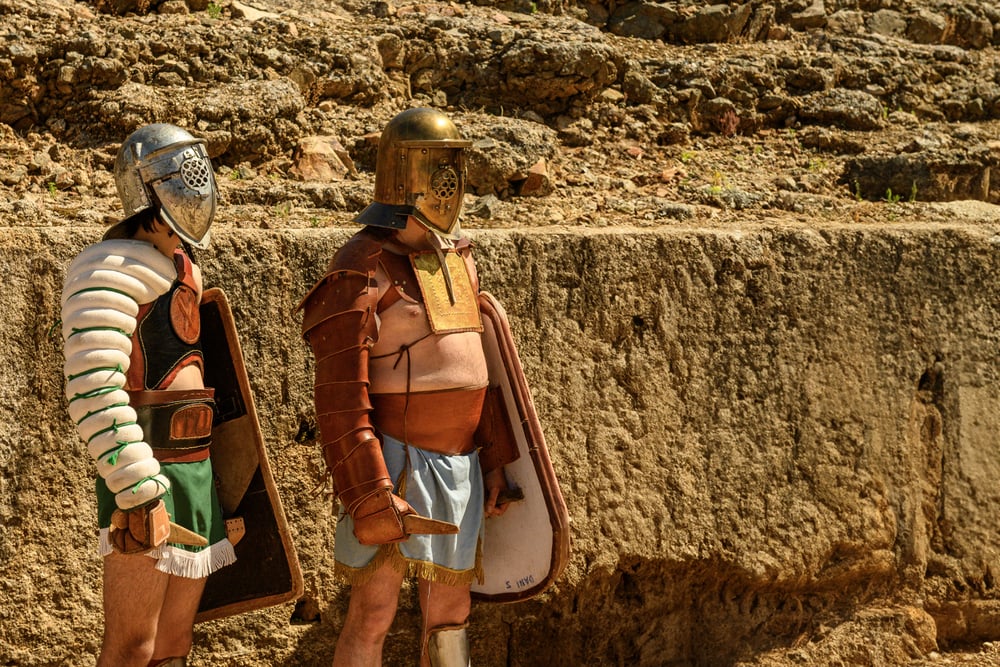
While most early gladiators were enslaved people and criminals, by the 1st century AD, many free men began voluntarily signing contracts with gladiator schools hoping to win glory and prize money. Some were even upper-class patricians, knights, and senators eager to demonstrate their warrior abilities.
Successful gladiators became celebrities and enjoyed fame, wealth, and the attention of Roman society women. Graffiti from Pompeii describes one fighter who ‘catches the girls at night in his net’ and another who is ‘the delight of all the girls’.
Rome Had the First Organized Fire Brigade

Ancient Rome had the first organized fire brigade, known as the Vigiles, which not only fought fires but also functioned as an early police force. This was a necessary innovation given the crowded conditions and frequent fires in the city.
Two devastating fires during the reigns of Emperors Nero and Domitian destroyed large parts of the city, highlighting the constant danger. The Vigiles represented an early understanding of the need for organized emergency services in densely populated urban areas.
Most Romans Lived in Crowded Apartment Buildings

Most people in Rome lived in cramped apartment buildings called insulae that rose five to seven stories high. These buildings were often poorly constructed and prone to collapse or fire.
Only wealthier Romans enjoyed the luxury of private homes called domus, which featured dining rooms and open-air courtyards with pools at the center. The contrast between rich and poor housing in Rome was stark, with the majority of the population packed into dangerous, uncomfortable conditions while the elite enjoyed spacious, beautifully decorated residences.
Romans Created a Massive Road Network
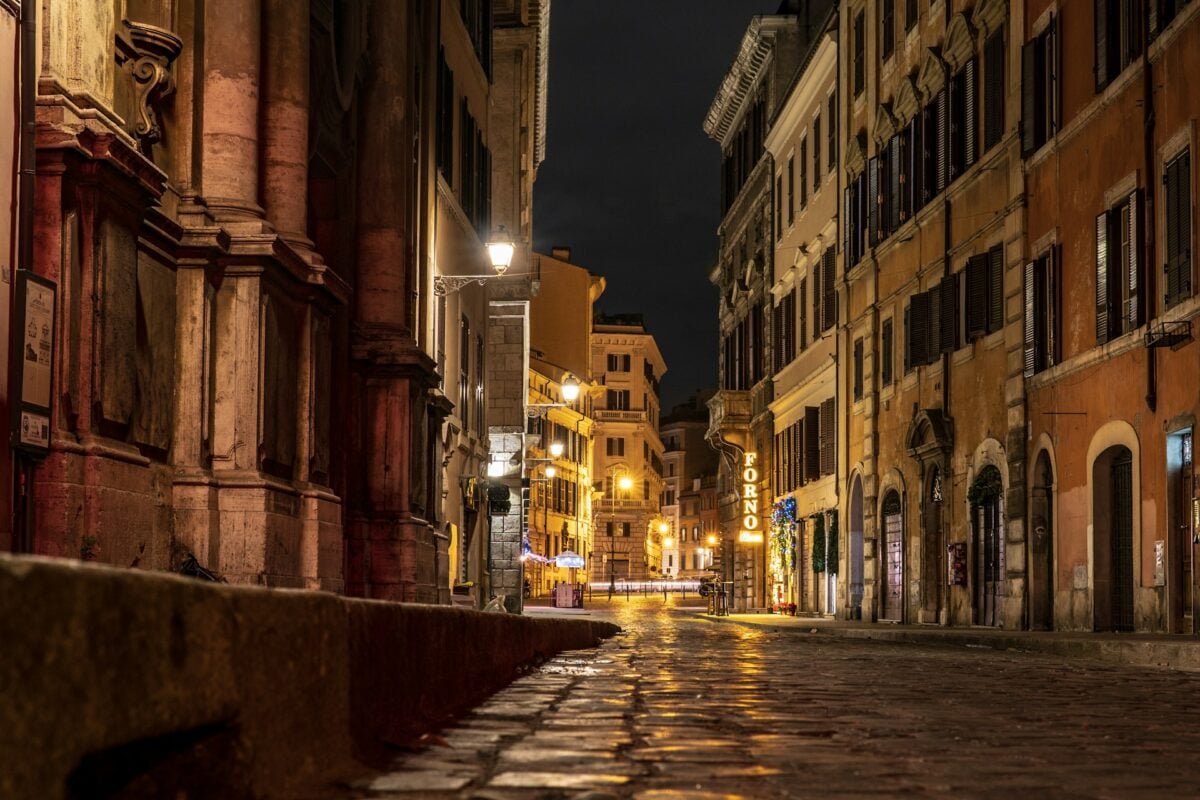
By the early fourth century, the Romans had built a road network of 53,000 miles. Each Roman mile was about 4,800 feet and marked by a milestone, giving birth to the saying ‘All roads lead to Rome’.
These roads weren’t just dirt paths but sophisticated engineered highways with drainage systems, foundation layers, and paved surfaces. The network connected the entire empire and facilitated trade, military movement, and communication.
Many of these ancient routes still form the basis for modern European roads.
Public Toilets Were Social Gathering Spots
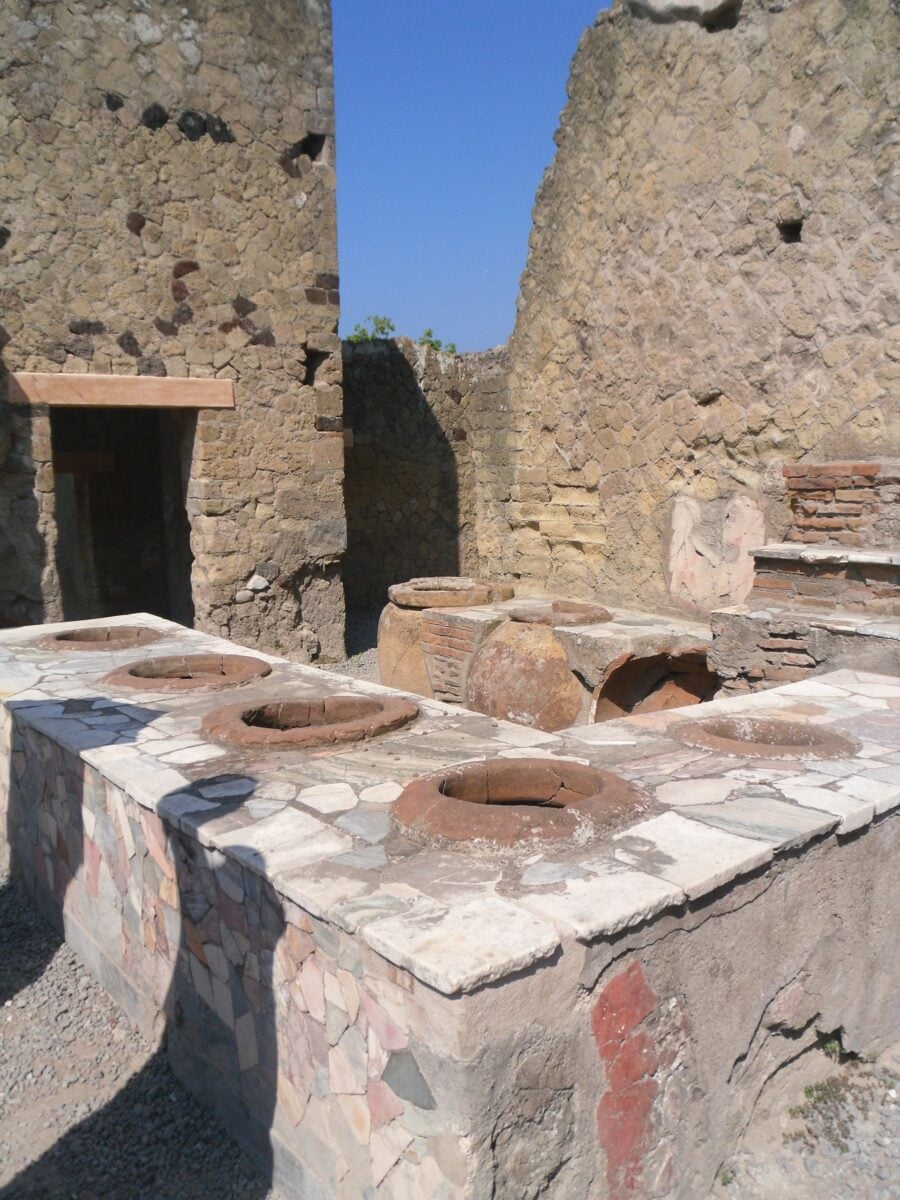
Rome was home to over 140 communal public toilets where people socialized while conducting their business, but archaeological evidence shows these facilities were crawling with parasites like roundworms, fleas, lice, and cockroaches. These toilets predated toilet paper by millennia, and each facility housed only one shared sponge on a stick called a tersorium that everyone used.
The toilets were connected to impressive sewage systems that wouldn’t be matched for centuries, but the facilities themselves were rarely cleaned and posed serious health hazards.
Lead Pollution May Have Affected Roman Intelligence

Scientists studying ice cores found that Rome produced between 3 and 4 kilotons of atmospheric lead pollution annually during the Pax Romana period, likely causing cognitive declines averaging 2.5 to 3 IQ points across the empire. This pollution came from industrial-scale silver smelting operations.
Romans also used lead extensively in water pipes, cookware, and even as a sweetener in wine, with tap water containing up to 100 times more lead than local spring water. While some historians once believed lead poisoning contributed to Rome’s fall, the levels were likely not high enough to be the primary cause.
Rome’s History Spanned Three Government Types

Rome’s history can be broken down into three periods: the regal period from the city’s beginnings when kings ruled, the Republic from 509 to 27 BC when elected officials governed, and the Imperial period from 27 BC to 476 AD when emperors held power. This evolution from monarchy to republic to empire influenced political thought for millennia afterward.
The Roman Republic’s system of checks and balances, with its elected consuls and senate, directly inspired the founders of the United States government and other modern democracies.
The Legend of Romulus and Remus

According to Roman legend, twin brothers Romulus and Remus were abandoned as babies and raised by a she-wolf before Romulus killed Remus and founded Rome in 753 BC. While this makes for a dramatic origin story, historians believe the name Romulus was probably invented to fit the city’s name rather than the other way around.
Nevertheless, this founding myth became central to Roman identity and culture, with the image of the she-wolf nursing the twins becoming one of the most enduring symbols of the city.
An Empire That Shaped the Modern World

The Roman Empire’s influence reaches far beyond its ruins and ancient writings. Their innovations in government, engineering, and urban planning created blueprints that societies still follow today.
From the concrete in our buildings to the roads we travel, from democratic principles to legal concepts, Rome’s fingerprints are everywhere. What makes these facts particularly striking is how the Romans combined genuine brilliance with practices that seem bizarre or even repulsive by today’s standards, reminding us that even the greatest civilizations are products of their time.
More from Go2Tutors!

- The Romanov Crown Jewels and Their Tragic Fate
- 17 Halloween Costumes Once Considered Taboo
- Famous Hoaxes That Fooled the World for Years
- 15 Child Stars with Tragic Adult Lives
- 16 Famous Jewelry Pieces in History
Like Go2Tutors’s content? Follow us on MSN.



