Inventions Credited to the Wrong Person
A tale of beginnings always grabs attention. Picture someone working late, alone, building what nobody thought possible.
Out they come, holding a discovery that shifts how things work. Fame follows fast.
Yet names we know might not be the ones who dreamed it first. Credit slips through fingers when there is no cash to back a claim.
At times, they just didn’t know the right people. Other moments, plainly put, a person who had access and opportunity claimed work that belonged to another.
The Telephone: Antonio Meucci’s Lost Invention

Bell shows up in school books everywhere credited with creating the phone. Yet a man from Italy, Antonio Meuci, built a machine that sent voices much sooner.
His public test happened in New York back in 1860. The gadget went by the name “teletrofono.”
Back in 1871, Meucci submitted a patent caveat yet found himself unable to pay the full cost or keep up with the small yearly renewal. His protection lapsed by 1874, opening space for Bell, who claimed the invention just twenty-four months after that.
They once worked near one another, sharing lab space – Bell could see what Meucci was building. A lawsuit followed, though money ran short on Meucci’s side when facing off against well-funded lawyers; he passed away nearly two decades later while matters still hung in the air.
Recognition came much later – not until 2002 – when Congress agreed through official wording: Meucci played a real part in making the phone.
The Light Bulb: A Crowded Field Before Edison

Thomas Edison patented his incandescent light bulb in 1879 and built an empire around it. What the history books usually skip is that dozens of inventors had been working on electric lighting for decades before Edison entered the picture.
English chemist Humphry Davy created the first electric arc lamp in 1802. Joseph Swan, a British physicist, demonstrated a working incandescent lamp in Newcastle in late 1878 and early 1879—around the same time as Edison’s breakthrough.
Swan actually sued Edison for patent infringement in Britain and won. The settlement forced Edison to make Swan a partner, and they formed a joint company called Ediswan.
Edison’s real achievement wasn’t inventing the light bulb. It was commercializing it, building power stations, and creating an entire electrical system.
But “invented” remains the word attached to his name.
The Radio: Tesla’s Stolen Patent

Guglielmo Marconi won the Nobel Prize in 1909 for his work on wireless telegraphy and is widely credited as the inventor of radio. Nikola Tesla would have disagreed.
Tesla demonstrated radio transmission in 1893 and received U.S. patents for his radio technology in 1900. When Marconi filed his own American patent applications, they were initially rejected because Tesla’s patents had priority.
Then something strange happened. In 1904, the U.S. Patent Office reversed course and awarded Marconi the patent instead.
Tesla lacked the funds to fight back effectively. The Supreme Court finally reinstated Tesla’s radio patents in 1943—just months after Tesla died, penniless and largely forgotten, in a New York hotel room.
Monopoly: The Woman Parker Brothers Forgot

For decades, every Monopoly box included a story about Charles Darrow, an unemployed salesman who invented the game during the Great Depression and became a millionaire. It made for a perfect American Dream narrative.
The only problem was that it wasn’t true.
Elizabeth Magie, a progressive activist, created “The Landlord’s Game” in 1903 and patented it in 1904. She designed it as a teaching tool to illustrate the dangers of monopolies and land concentration.
The game spread through Quaker communities and college economics departments, evolving as players made their own versions. Darrow learned to play at a dinner party in 1932, copied it, and sold it to Parker Brothers as his own creation.
When Parker Brothers discovered Magie’s patent, they bought her out for $500 with no royalties. Darrow became the first millionaire game designer.
Magie died in obscurity, her contribution erased from official company history until researchers uncovered the truth in the 1970s.
LEGO Bricks: Copied From Kiddicraft

The LEGO brick is one of the most recognized toys in the world. The company fiercely protects its designs through litigation.
But the interlocking plastic brick wasn’t invented in Denmark.
Hilary Fisher Page, a British toy designer, patented his “Self-Locking Building Bricks” in 1947 under his company Kiddicraft. When Ole Kirk Christiansen of LEGO examined a sample brick from the supplier of his new plastic injection molding machine, he recognized its potential and produced his own version in 1949.
The early LEGO bricks were essentially copies of Page’s design, right down to the window and door inserts. Page never learned about LEGO’s success—he died in 1957, apparently without knowing his design had been copied.
LEGO later purchased Kiddicraft’s intellectual property in 1981, conveniently before a lawsuit against Tyco for copying LEGO bricks.
The Laser: Gordon Gould’s 30-Year Battle

In November 1957, a Columbia University graduate student named Gordon Gould wrote down his ideas for using focused light to create an intense beam. He coined the term “laser” and had his notebook notarized at a local candy store.
Based on bad legal advice, he believed he needed a working model before filing a patent.
While Gould waited, Charles Townes and Arthur Schawlow filed their own patent application and published their research. Gould’s application was rejected.
What followed was one of the longest patent battles in American history. Gould finally won his first significant patent in 1977—twenty years after his original notebook entry.
By 1988, he had secured patents covering most of the laser industry and earned millions in royalties. Townes and Schawlow won the Nobel Prize.
Questions about who actually invented the laser remain contested to this day.
The Movie Projector: Edison’s Name Game

Thomas Edison’s Vitascope projected moving pictures onto screens across America starting in 1896. Audiences marveled at what they assumed was another Edison invention.
But Edison didn’t invent it.
Charles Francis Jenkins and Thomas Armat developed the Phantoscope, a functional movie projector they demonstrated publicly in Atlanta in 1895. After the partners had a falling out, Armat sold the device to Edison’s company.
Edison agreed to manufacture and market it on one condition: it would bear his name and be presented as an Edison invention. The Vitascope became famous.
Jenkins and Armat became footnotes.
Tennessee Whiskey: Nathan “Nearest” Green’s Forgotten Craft

Jack Daniel’s is the most famous American whiskey brand. Its founder, Jack Daniel, learned to distill whiskey from a preacher named Dan Call—according to decades of company history.
The actual teacher was an enslaved man named Nathan “Nearest” Green.
Green was renowned throughout Lincoln County, Tennessee, as a master distiller. He taught the young Jack Daniel everything about whiskey making, including the charcoal filtering process that defines Tennessee whiskey—a technique food historians trace to West African water purification methods.
After emancipation, Green became the first master distiller at Jack Daniel’s Distillery. His sons and grandsons worked there for generations.
For more than 150 years, his contribution went unacknowledged. Only in 2016, after researcher Fawn Weaver documented Green’s story, did the company formally recognize him as its first master distiller.
The Digital Music Player: Kane Kramer’s Too-Early Invention

In 1979, a 23-year-old British inventor named Kane Kramer designed something remarkable: a credit card-sized device with a screen and buttons that could store and play digital music. He called it the IXI and filed patents in 1981.
The technology of 1979 limited his device to 3.5 minutes of music—not exactly practical. Kramer struggled to find investors, and in 1988, unable to afford the £60,000 renewal fee, he let his patents lapse.
Twenty-two years later, Apple’s iPod became a cultural phenomenon. When Apple faced a patent lawsuit from another company in 2006, they called Kramer to testify that his work represented “prior art” predating the competitor’s claims.
Apple acknowledged Kramer’s pioneering work. They did not pay him for it.
The Sewing Machine: A Chain of Copied Ideas
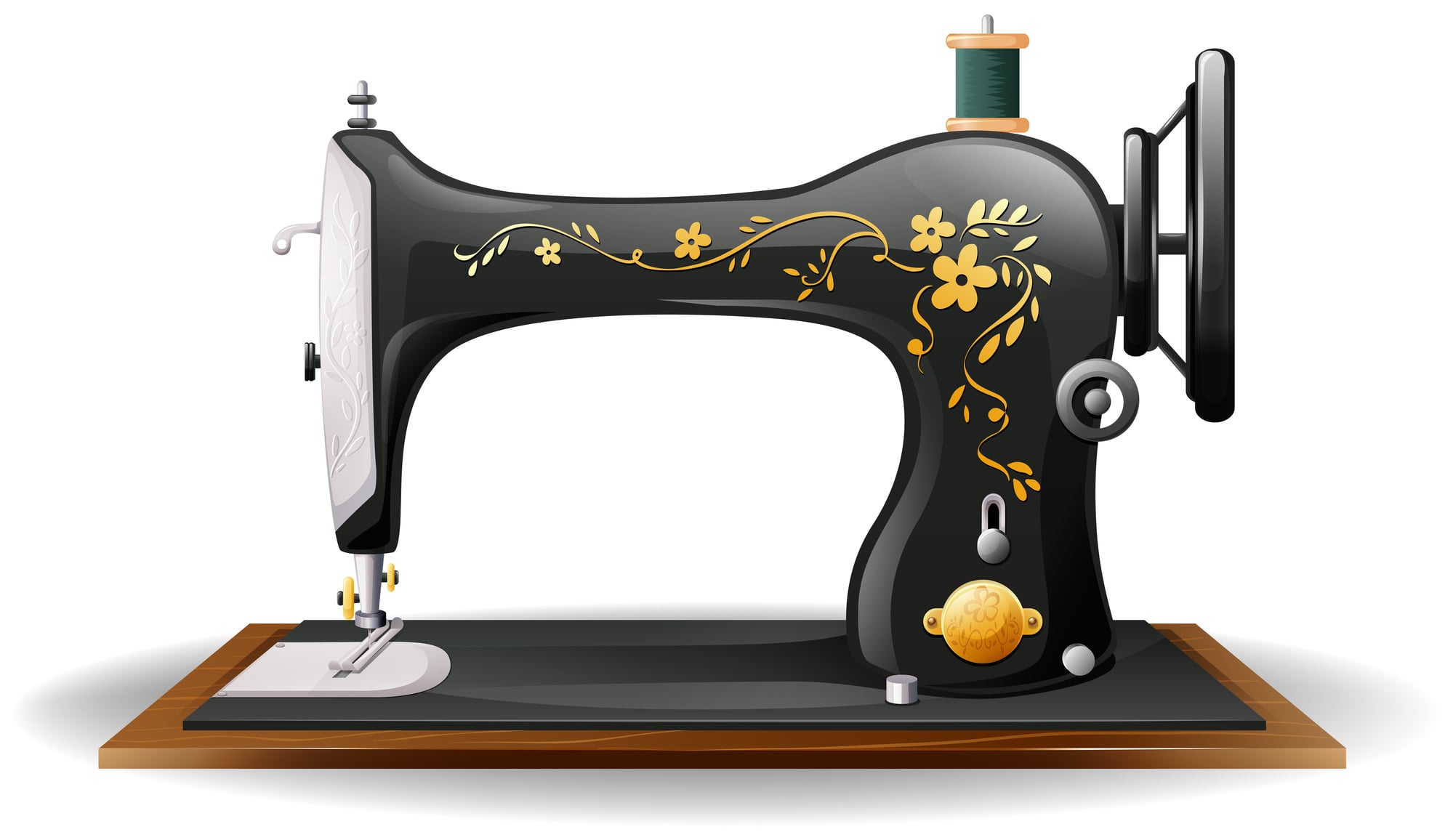
Isaac Singer’s name became synonymous with sewing machines, building one of the most valuable brands of the 19th century. But Singer was more businessman than inventor.
Elias Howe patented a lockstitch sewing machine in 1846. When Singer started producing machines using the same mechanism, Howe sued and won.
Singer paid royalties but kept his name on the product. Howe himself faced accusations of copying earlier designs from inventor John Fisher.
The sewing machine represents a case where multiple people worked on similar technology, but marketing muscle determined who got remembered.
The Telescope: Before Galileo Looked Up
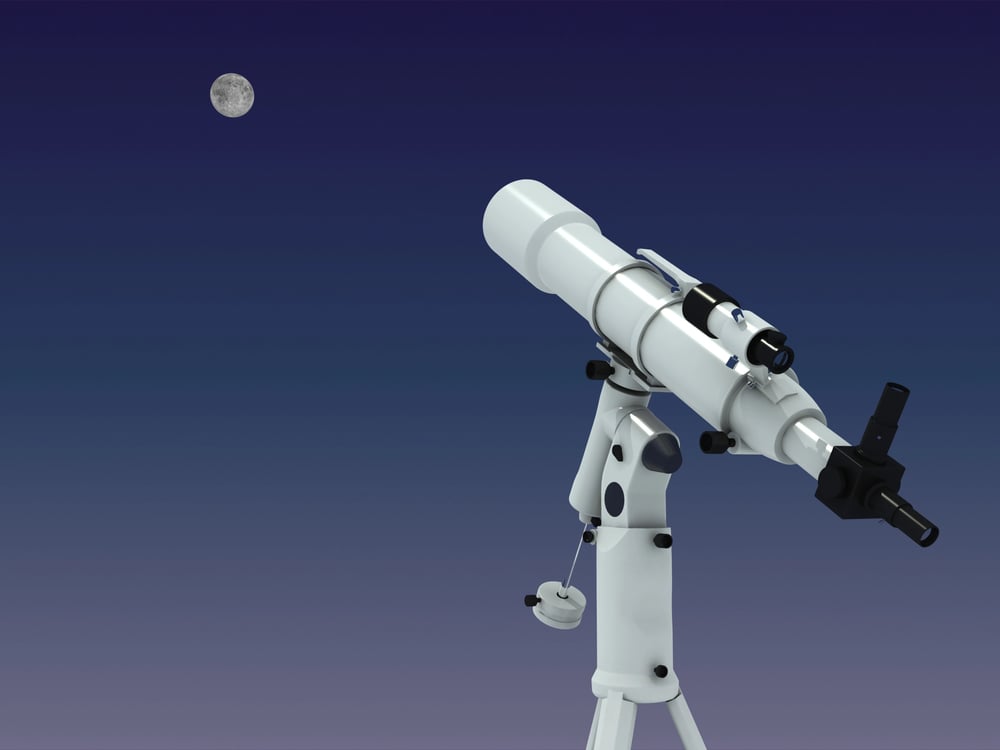
Galileo Galilei transformed astronomy with his telescope observations, discovering Jupiter’s moons and mountains on Earth’s moon. His name became permanently attached to the telescope itself.
But he didn’t invent it.
Dutch eyeglass maker Hans Lippershey applied for a patent on a telescope in 1608, a year before Galileo built his first version. Lippershey’s patent was denied because the device was considered too easy to copy.
Galileo heard about the “perspective glass” being made in the Netherlands and built his own improved version. His scientific achievements with the instrument were genuine and groundbreaking.
The invention itself belonged to someone else.
When Credit Goes Astray

One thing shows up again and again across these tales. Money trouble kept creators from guarding what they built.
Words spoken – or not – along with rank in society, shaped whose voice mattered. Often, it wasn’t talent but sharper legal help, tighter networks, or looser morals that let someone claim success.
Names like Edison, Bell, Marconi, Galileo stick in our minds. These individuals were not always imposters.
Improvement was real, sometimes turning clumsy ideas into working tools. Yet the image of one brilliant mind creating alone?
That hides how things truly move forward. Progress piles up, piece by slow piece.
A dead end for someone might spark a path for another. Who exactly started it all?
Rarely clear. Instead, there’s a tangled line of giving and taking, reaching so far back no single name fits neatly at the start.
More from Go2Tutors!

- The Romanov Crown Jewels and Their Tragic Fate
- 13 Historical Mysteries That Science Still Can’t Solve
- Famous Hoaxes That Fooled the World for Years
- 15 Child Stars with Tragic Adult Lives
- 16 Famous Jewelry Pieces in History
Like Go2Tutors’s content? Follow us on MSN.



