Largest Predators Discovered From The Ice Age
The Ice Age wasn’t just about woolly mammoths trudging through snow-covered landscapes. Hidden beneath layers of ancient sediment and frozen permafrost, paleontologists have uncovered evidence of predators so massive they make today’s apex hunters look like house cats.
These discoveries reshape our understanding of prehistoric ecosystems and reveal a world where survival meant outrunning, outfighting, or outsmarting creatures that could crush bones with a single bite.
Recent excavations across multiple continents have yielded fossils of predators that dominated their territories with sheer size and brutal efficiency. From cave systems in Europe to tar pits in North America, each discovery adds another piece of the puzzle of Ice Age predation.
The scale of these finds suggests that gigantism among predators was far more common than previously thought.
Short-Faced Bear
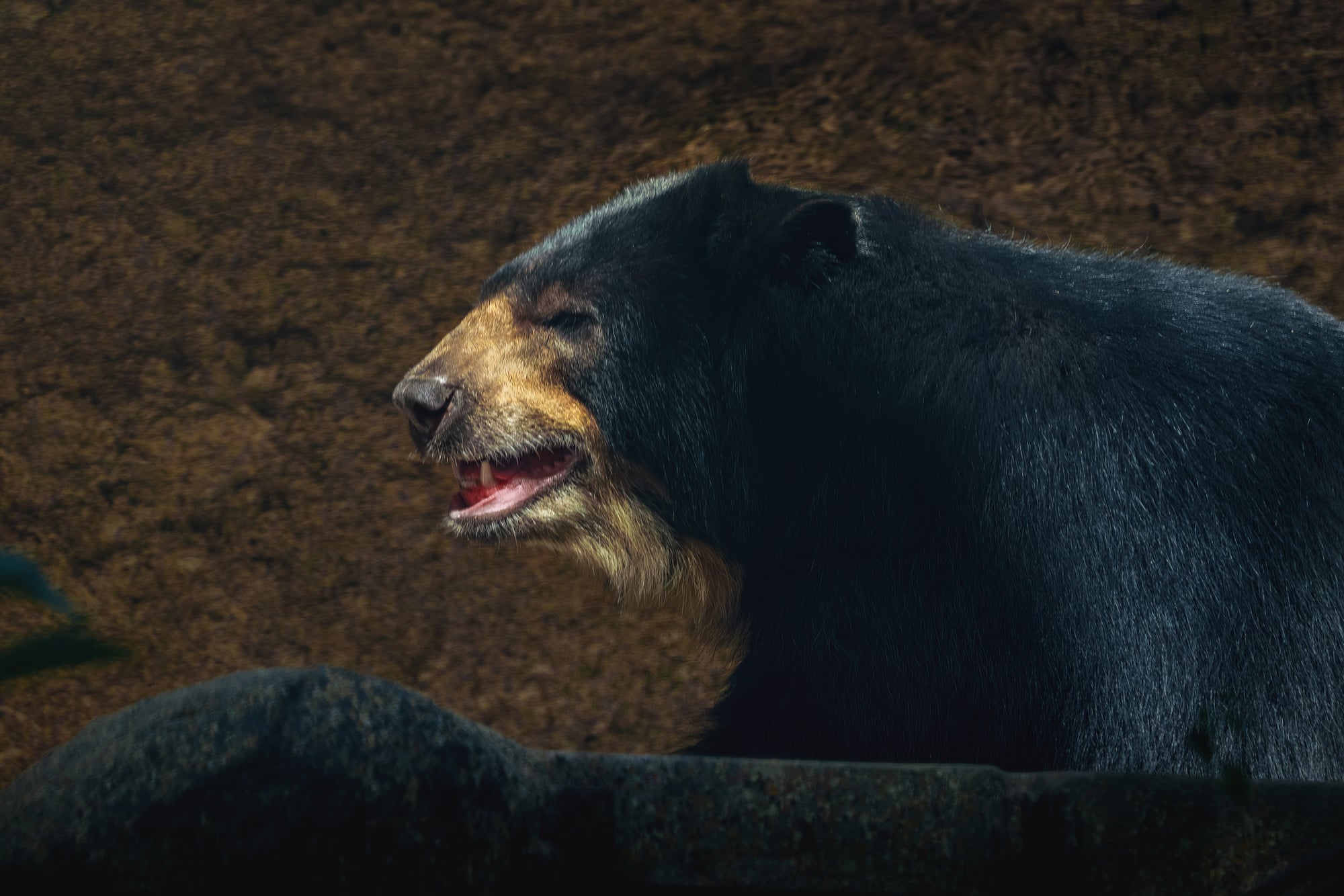
The short-faced bear stood twelve feet tall on its hind legs. Modern grizzlies reach about nine feet.
That three-foot difference changes everything when it comes to intimidation and hunting capability. Arctodus simus weighed up to 1,500 pounds and possessed longer legs than any bear species alive today.
Those legs weren’t built for climbing trees or fishing in streams — they were built for running down prey across open terrain. The short-faced bear could maintain speeds that would exhaust most large mammals of its era.
American Cheetah
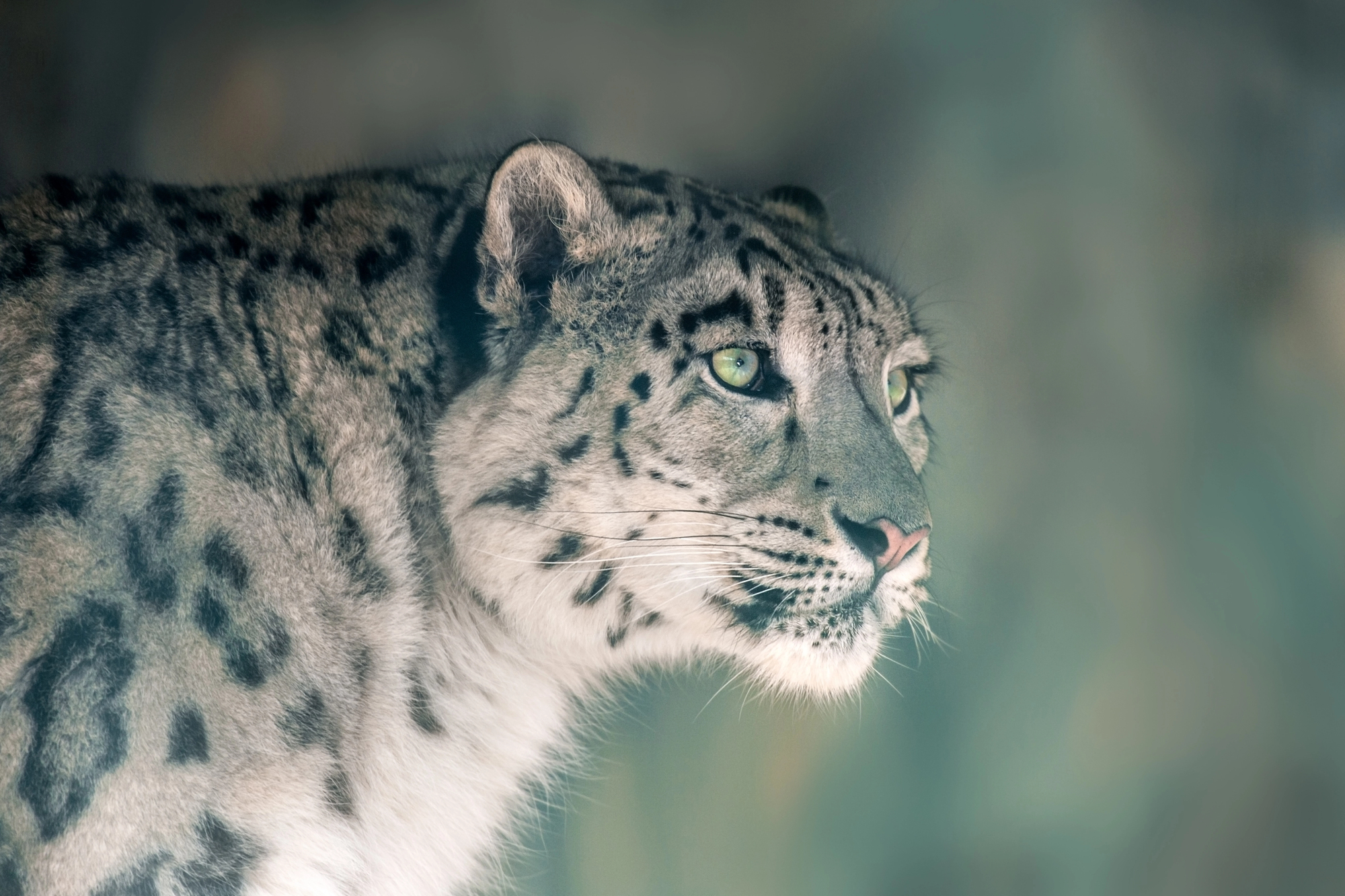
North America once had its own version of high-speed pursuit predation, though calling it a cheetah creates some confusion since Miracinonyx trumani was more closely related to cougars than to African cheetahs (which is interesting, considering how evolution tends to arrive at similar solutions for similar problems, but that’s beside the point).
These cats were built for speed in a way that modern American predators simply aren’t — longer legs, more flexible spines, and a body structure that prioritized acceleration over the raw power that characterizes modern mountain lions.
And yet the real surprise isn’t the physical adaptations. It’s that North America supported enough fast prey to make such specialization worthwhile. So much of what we think we know about prehistoric ecosystems gets turned sideways when you consider that pronghorn antelope — those creatures that can hit 60 mph and seem almost comically over-engineered for escaping modern predators — were actually perfectly calibrated for their original predator.
They weren’t running from wolves or bears. They were running from American cheetahs.
Saber-Toothed Cat
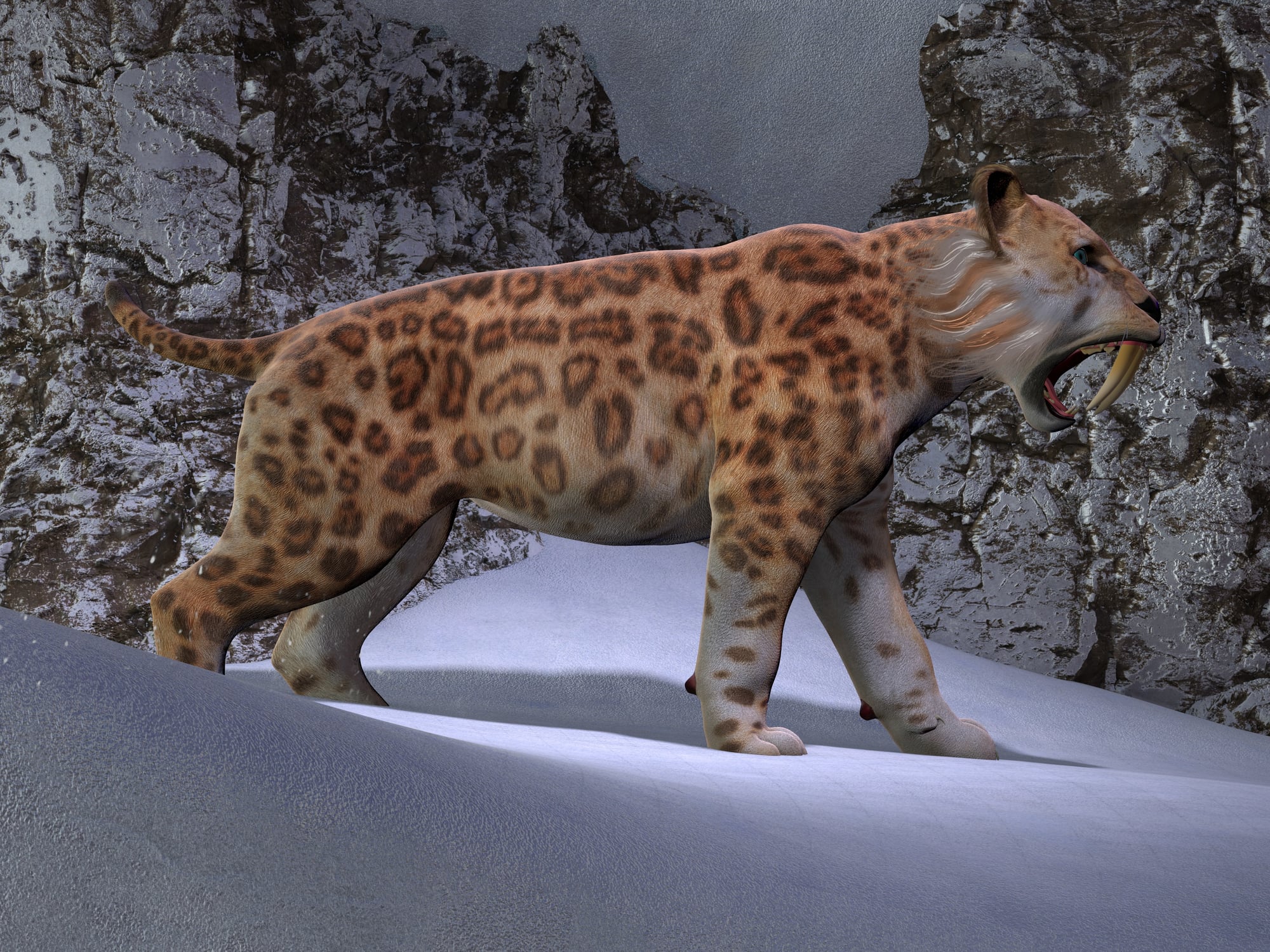
Picture a linebacker with switchblades for teeth, and the mental image still falls short of what Smilodon fatalis brought to Ice Age hunting grounds. Those famous canine teeth weren’t just for show — they were precision instruments designed to deliver a killing bite that could penetrate thick hide and reach vital organs with surgical accuracy.
The muscular build of saber-toothed cats tells a different story than their modern relatives. Where leopards and tigers rely on speed and agility, Smilodon was built like a wrestler.
Powerful shoulders, massive neck muscles, and forelimbs that could pin down struggling prey while those blade-like teeth found their mark. This wasn’t a chase predator — it was an ambush specialist that ended fights quickly.
Cave Lion
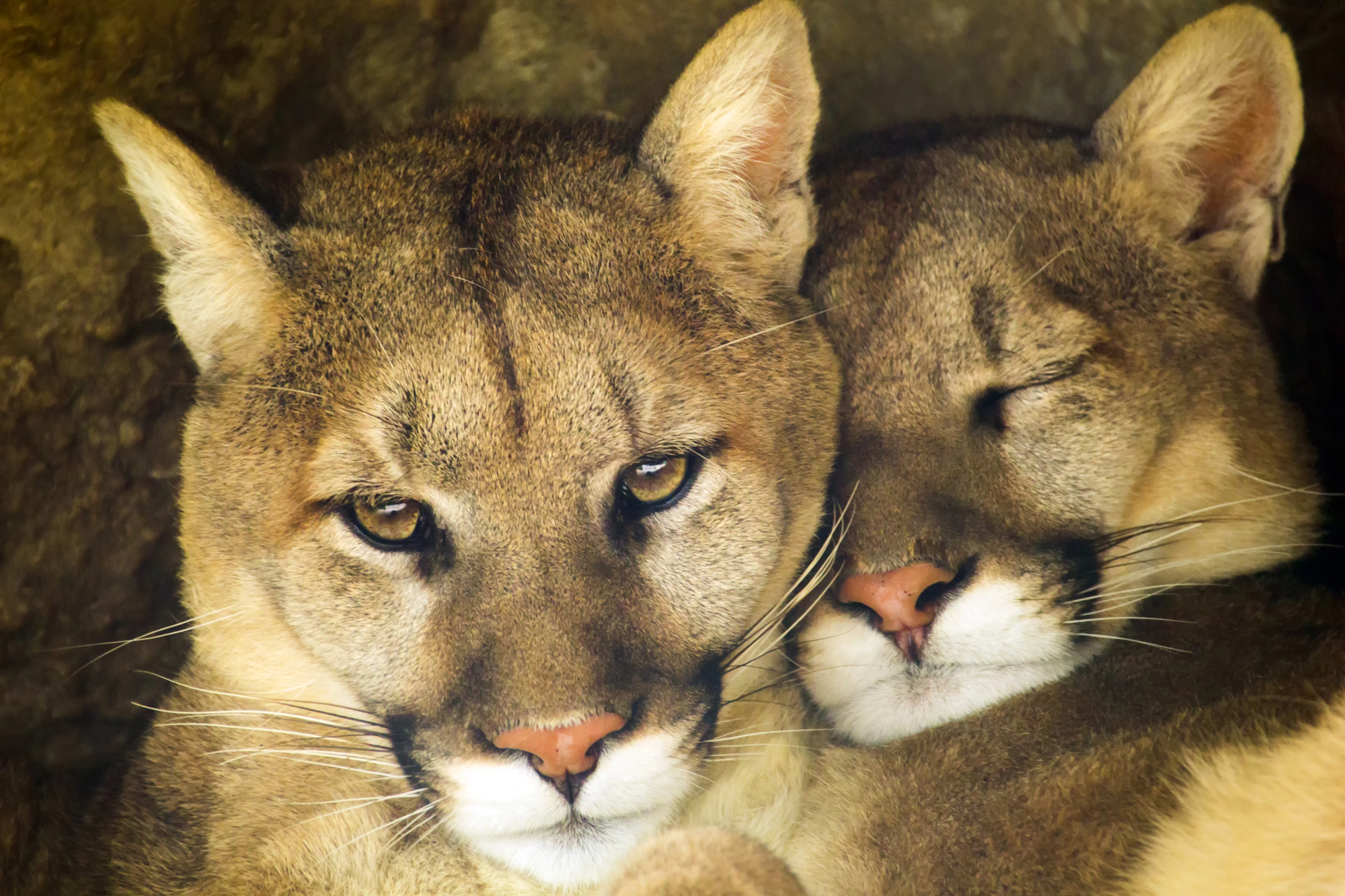
Cave lions earned their reputation through size alone. Panthera spelaea stood larger than any lion species that followed, with some individuals reaching lengths of over ten feet from nose to tail.
But here’s what sets them apart from their African descendants: they thrived in environments that would challenge modern big cats. European caves from the Pleistocene era contain evidence of organized hunting behaviors that suggest these lions operated in coordinated groups.
The bone accumulations found in these sites indicate prey preferences that included young mammoths, rhinoceros calves, and adult deer species. Cave lions didn’t just survive the Ice Age — they mastered it through cooperative hunting strategies that allowed them to take down prey much larger than themselves.
Dire Wolf
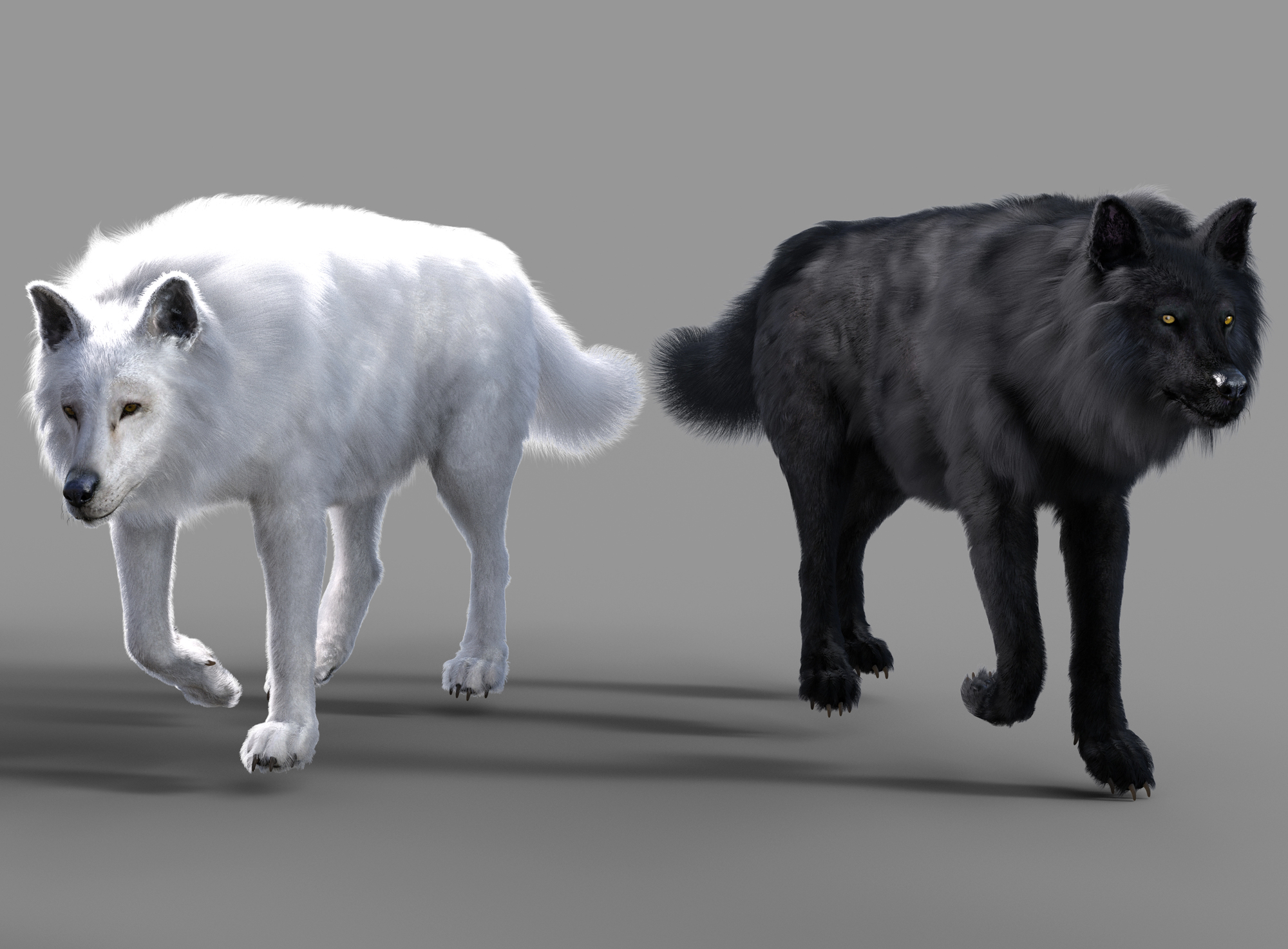
Think of dire wolves as the bulldozers of Ice Age predation — built heavy, built strong, and absolutely relentless once they locked onto a target. Canis dirus carried 25% more body weight than modern gray wolves.
The skull alone was significantly larger and more robust, housing jaw muscles that could generate bite forces exceeding 1,500 pounds per square inch, which puts them in the same category as modern hyenas when it comes to bone-crushing capability.
The teeth tell the whole story: broader, thicker, designed for gripping and crushing rather than slicing. What’s remarkable isn’t just the adaptations — it’s how they specialized in megafauna hunting.
The La Brea tar pits in California have yielded thousands of dire wolf specimens, more than any other predator species at the site. That concentration suggests either highly successful hunting or frequent poor decisions around natural traps.
Giant Beaver
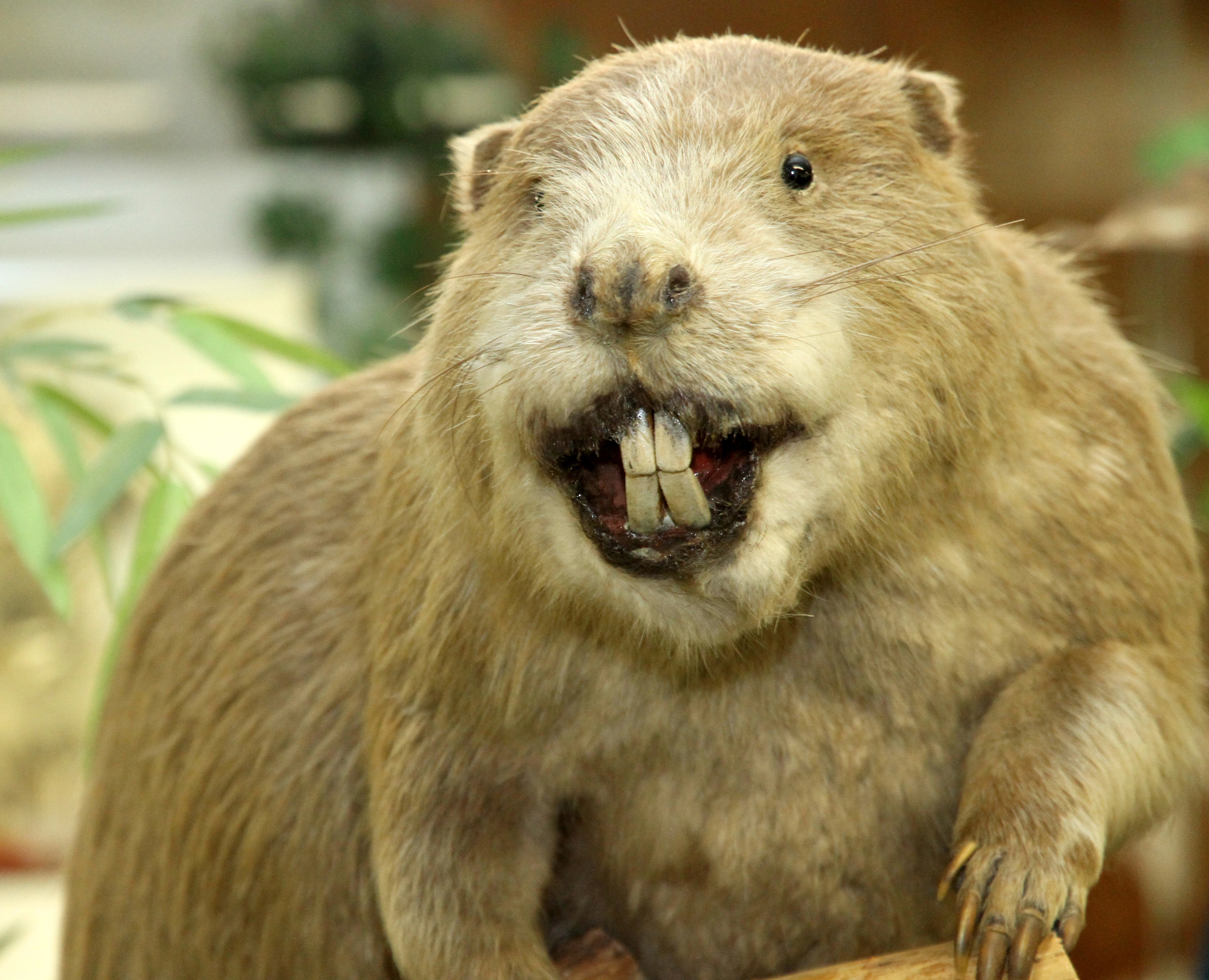
Castoroides ohioensis redefined what it meant to be a beaver, reaching sizes that approached modern black bears. Eight-foot-long rodents with prominent front teeth and powerful jaw muscles created a unique ecological niche that disappeared with the Ice Age.
These weren’t dam-building engineers like modern beavers. Giant beavers lived in wetlands and fed on aquatic vegetation, but their size made them formidable against predators.
Their robust skull structure and massive incisors suggest defensive capabilities capable of inflicting serious damage. While not traditional predators, they influenced predator-prey dynamics across their range.
Megalania
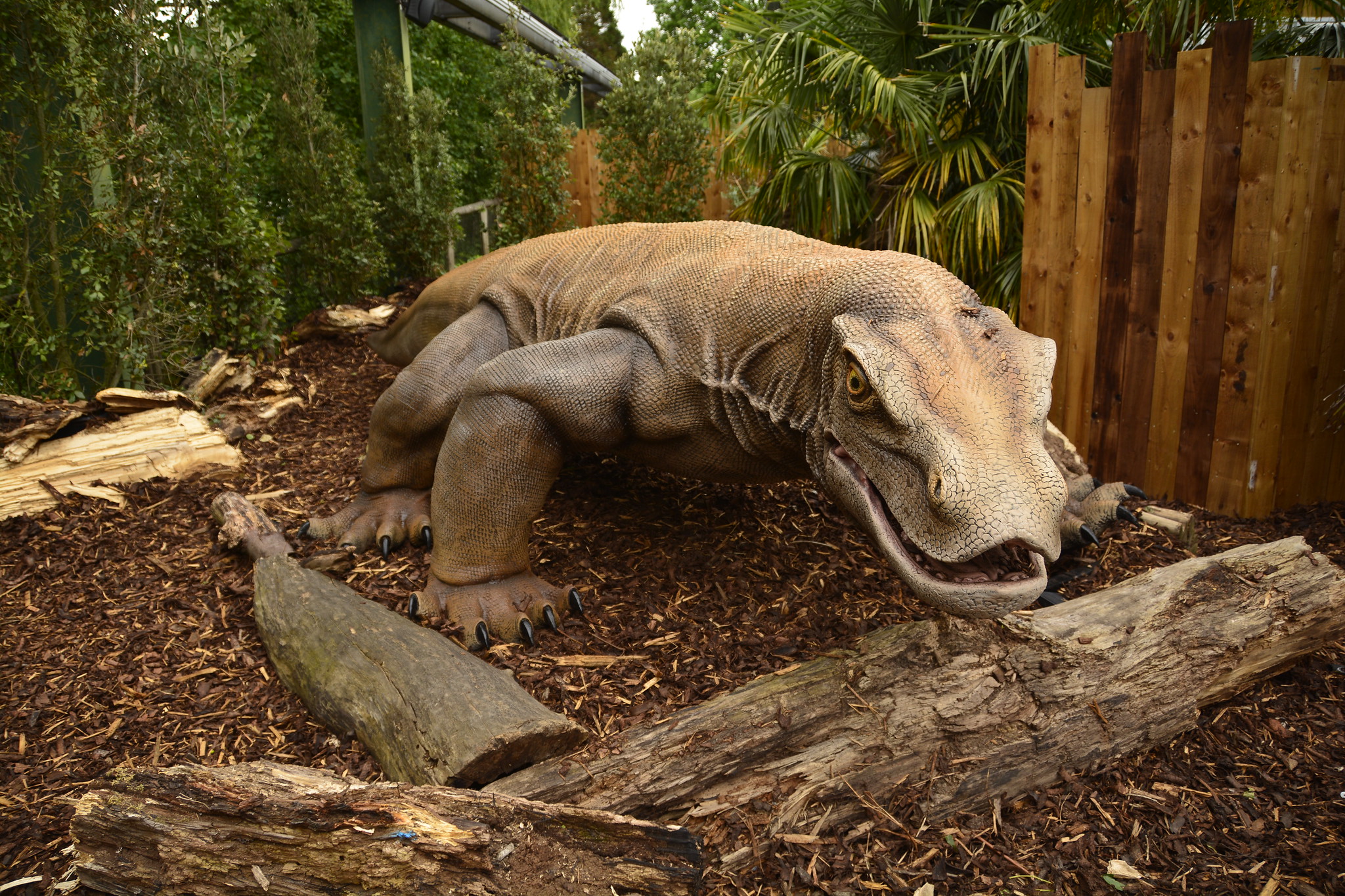
Australia’s contribution to Ice Age gigantism came in the form of a monitor lizard that measured up to 23 feet in length. Megalania prisca represents the largest terrestrial lizard ever discovered.
Like its modern relatives, Megalania likely possessed a venomous bite that could incapacitate large prey through tissue damage and blood loss.
The Australian megafauna included giant kangaroos, massive wombats, and flightless birds — all potential prey items for a lizard of this scale. Its disappearance coincides with human arrival and climate shifts.
Terror Birds
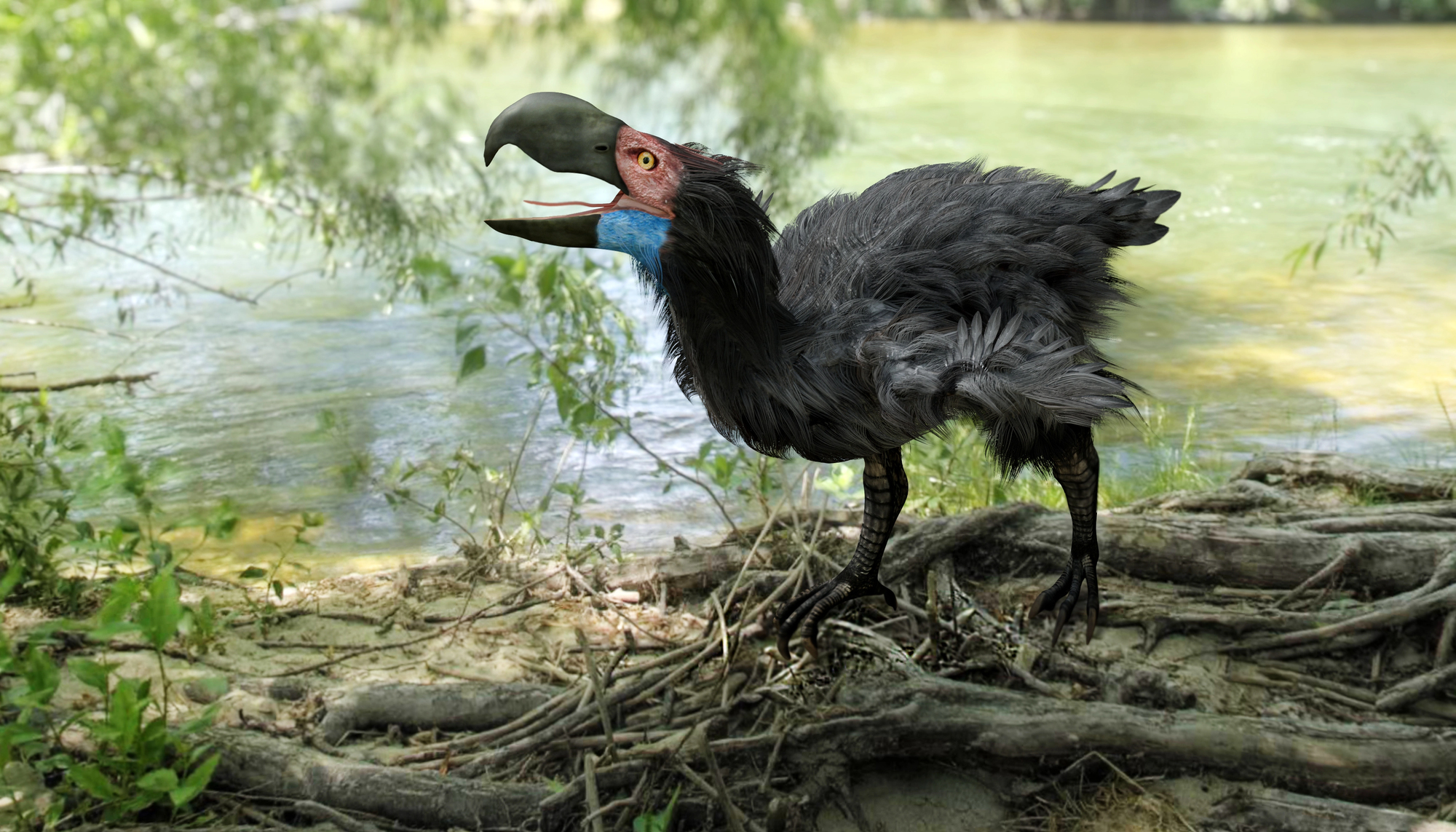
South America produced some of the most intimidating predators of the Cenozoic era, and terror birds like Titanis walleri represent the pinnacle of avian predation. Standing around six feet tall with crushing beaks, these flightless birds dominated through speed and power.
Terror birds possessed strong leg muscles for pursuit hunting and skull structures built to withstand impact forces. Their hunting style involved running down prey and striking the head and neck.
These weren’t scavengers — they were active apex predators capable of killing animals larger than themselves.
Marsupial Lion
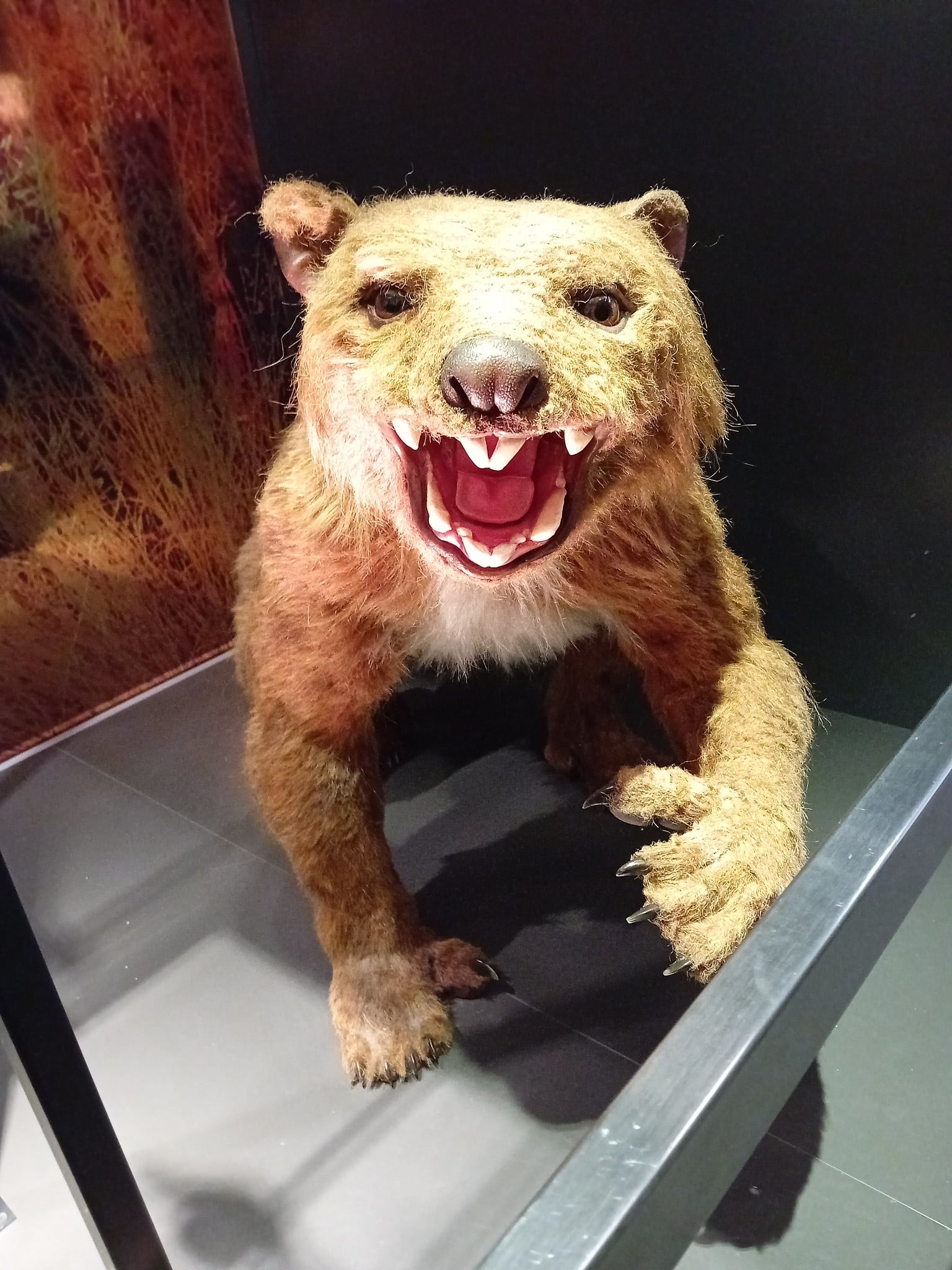
Thylacoleo carnifex earned its species name through genuinely carnivorous dental adaptations, rare among marsupials. Australia’s marsupial lion possessed the strongest bite force relative to body size of any mammalian predator, living or extinct.
Retractable claws and powerful forelimbs suggest climbing abilities rivaling modern big cats. Marsupial lions likely used ambush tactics combined with crushing bite strength to take down giant kangaroos and other large prey.
Amphicyon (Bear Dogs)
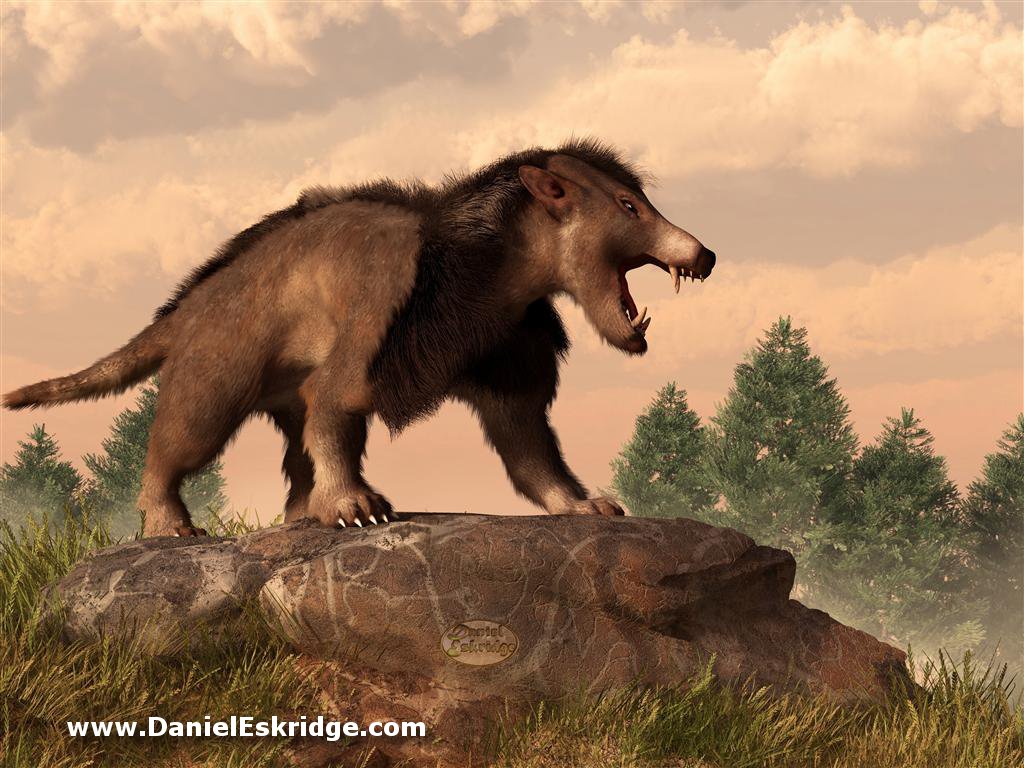
Bear dogs represent a family of predators combining canid hunting behavior with bear-like size and power. Amphicyon ingens reached grizzly bear proportions while retaining pack-hunting tendencies.
Their robust build and powerful jaws made them highly versatile predators across multiple environments. Fossil evidence suggests ecological flexibility that allowed them to fill roles now occupied by both wolves and bears.
Giant Otter
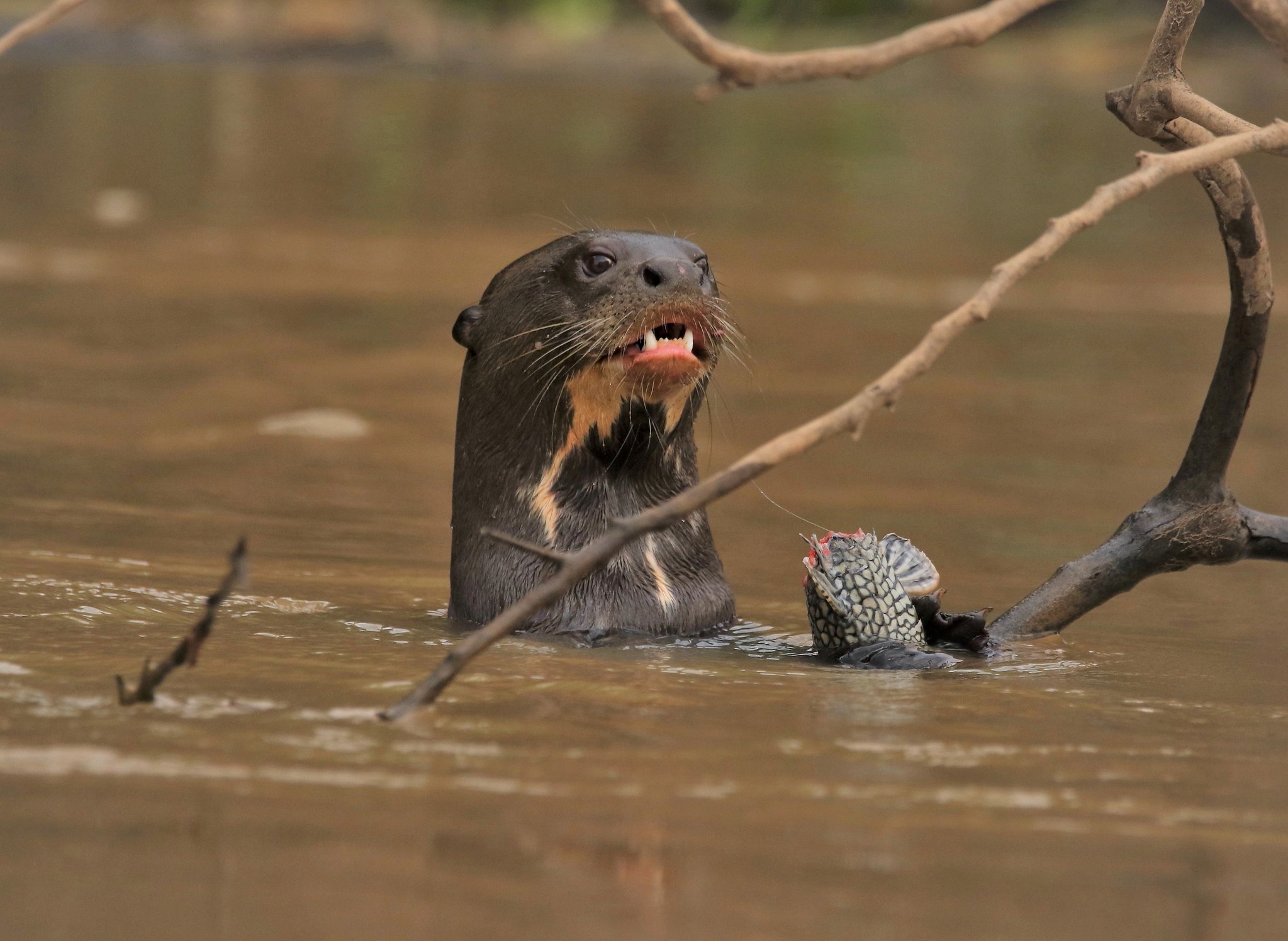
Pteronura brevirostris reached lengths of up to ten feet during the Pleistocene, making them apex predators in South American river systems. These were not gentle fish-eaters but cooperative hunters.
Modern giant otters demonstrate pack behavior that likely mirrors their Ice Age ancestors. Groups coordinate attacks on large prey such as caimans and massive fish species.
Cave Hyena
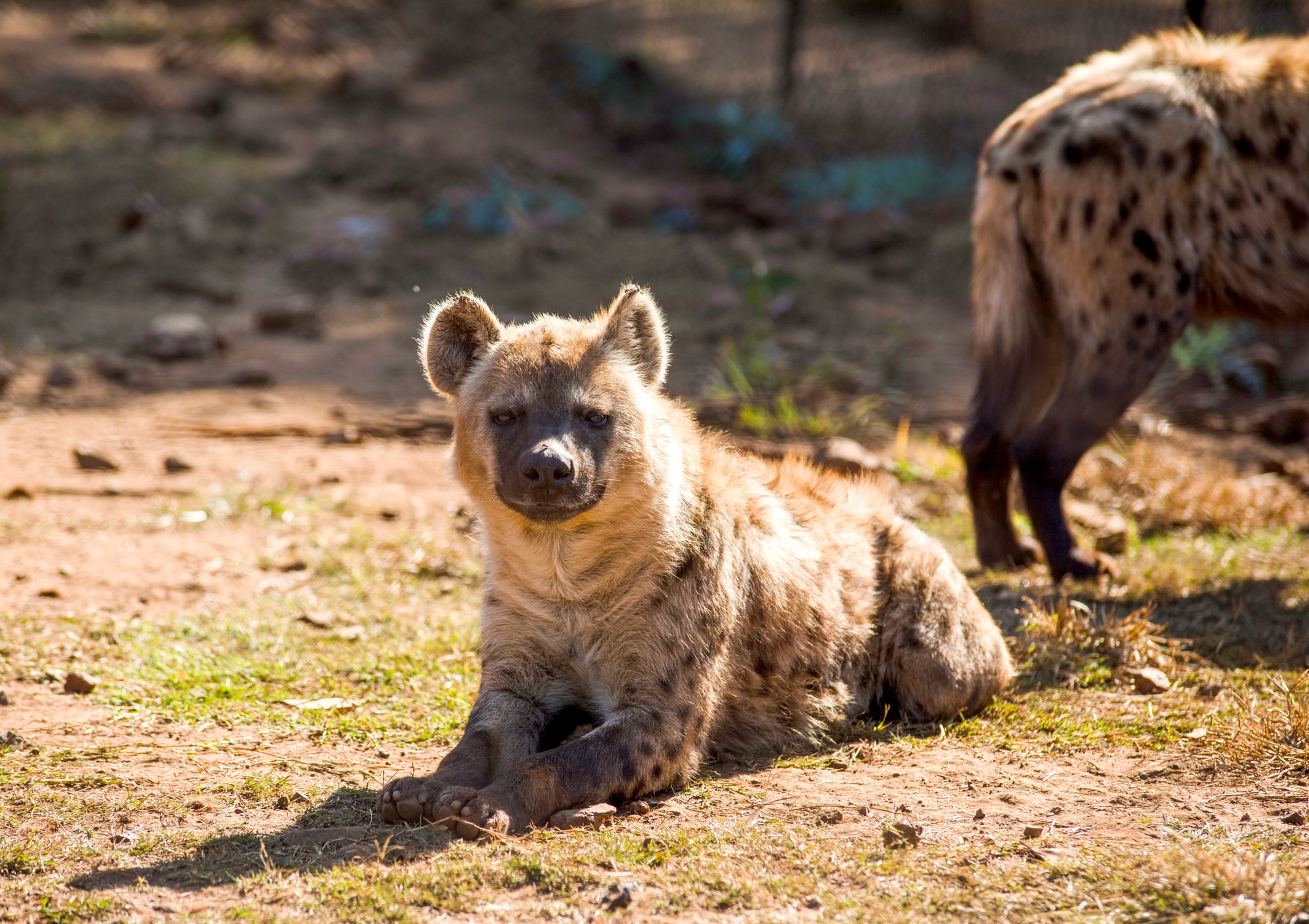
Crocuta crocuta spelaea adapted spotted hyenas to colder Ice Age climates. These cave hyenas combined bone-crushing bite strength with flexible hunting and scavenging behavior.
Evidence from European caves shows competition with early humans for shelter and resources. Their survival into later Ice Age periods suggests strong adaptability.
Giant Short-Faced Kangaroo
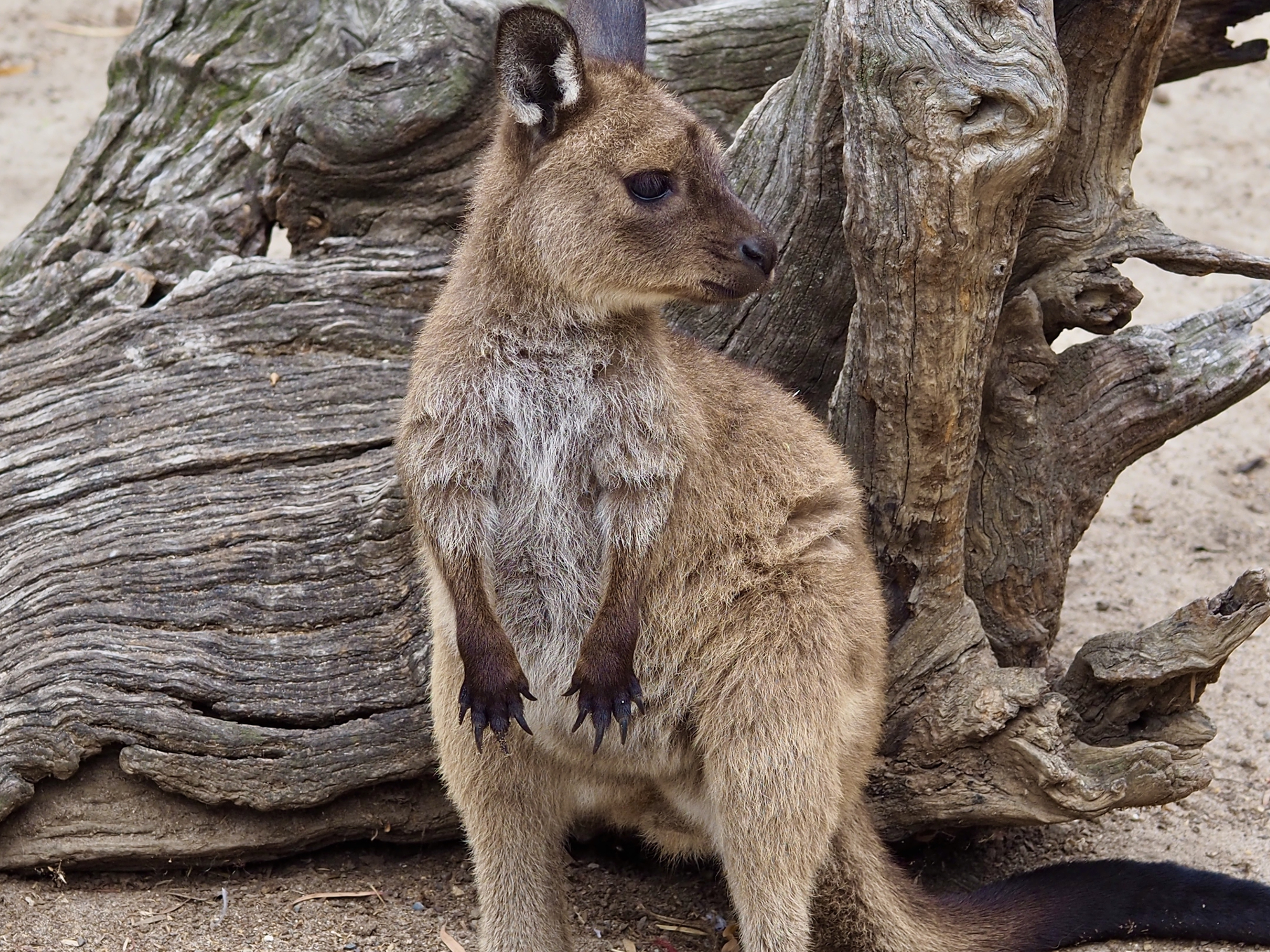
Procoptodon goliah stood over six feet tall and weighed up to 500 pounds. While primarily herbivorous, its size and strength made it extremely dangerous.
Massive claws and powerful legs could seriously injure predators. In Australian ecosystems, it functioned as both prey and potential threat depending on circumstances.
Echoes Across Time

The discovery of these Ice Age predators reveals ecosystems far more complex and violent than once assumed. These environments supported extraordinary diversity at the top of the food chain.
Their extinction marked one of the most significant ecological shifts in recent history. Climate change and human expansion both contributed to the collapse of these predator networks.
Modern ecosystems still carry their legacy, but represent a diminished version of that ancient world of giants.
More from Go2Tutors!

- The Romanov Crown Jewels and Their Tragic Fate
- 13 Historical Mysteries That Science Still Can’t Solve
- Famous Hoaxes That Fooled the World for Years
- 15 Child Stars with Tragic Adult Lives
- 16 Famous Jewelry Pieces in History
Like Go2Tutors’s content? Follow us on MSN.