Luxury Empires That Collapsed Overnight
The luxury world operates on an illusion of permanence.
Brands with decades or even centuries of history project an image of invincibility, their names synonymous with quality, prestige, and reliability.
Then one day, without warning, the doors close.
The websites go dark.
Employees arrive at work to find locks changed.
What seemed rock-solid yesterday becomes a cautionary tale today, leaving customers stranded, suppliers unpaid, and thousands jobless.
These aren’t gradual declines that give people time to adjust.
These are sudden, catastrophic failures that catch almost everyone off guard.
The collapse of a luxury empire rarely happens as quickly as it appears.
Beneath the surface, problems have usually been festering for months or years.
But when the end finally comes, it arrives with shocking speed.
Here’s a closer look at some of the most dramatic falls from grace in recent memory.
Barneys New York

For over 90 years, Barneys represented the pinnacle of luxury retail in Manhattan.
The store started as a discount men’s clothier in 1923 when Barney Pressman pawned his wife’s engagement ring for $500 to open a 500-square-foot shop on Seventh Avenue.
His son Fred transformed it into a luxury destination in the 1960s, and by 1993, Barneys opened a stunning 230,000-square-foot flagship on Madison Avenue designed by Peter Marino.
The store became a cultural touchstone, appearing regularly in shows like ‘Will and Grace’ and being referenced as the ultimate shopping destination.
But that Madison Avenue location ultimately became the company’s undoing.
In January 2019, rent jumped from roughly $16 million to about $30 million annually, nearly wiping out the company’s earnings before interest, taxes, depreciation, and amortization.
The landlord, Ashkenazy Acquisition, had negotiated the right to raise rent back in 2001 when it purchased the property.
Barneys fought the increase but lost an arbitration decision in July 2019.
On August 6, 2019, Barneys filed for Chapter 11 bankruptcy protection.
Within months, the company was sold to Authentic Brands Group for $271.4 million and liquidated entirely.
Fifteen stores closed, including locations in Chicago, Las Vegas, and Seattle.
The flagship remained open for another year before shuttering.
All 2,300 employees lost their jobs.
Today, a small Barneys shop-in-shop exists within Saks Fifth Avenue, but the independent luxury department store is gone forever.
High rent, online competition, and changing consumer habits converged into a perfect storm that a 96-year-old institution couldn’t survive.
Thomas Cook

The collapse of Thomas Cook in September 2019 wasn’t just a business failure.
It was a logistical nightmare that triggered the largest peacetime repatriation in British history.
The company traced its roots to 1841 when Baptist missionary Thomas Cook organized railway excursions for temperance movement members.
Over 178 years, it grew into a global travel giant employing 21,000 people in 16 countries and serving nearly 20 million travelers annually.
The warning signs had been visible for years.
Thomas Cook carried £1.6 billion in debt while facing increased online competition, changing consumer preferences, and a series of external shocks.
Terrorist attacks in popular destinations like Tunisia scared away travelers.
The 2018 European heat wave disrupted bookings.
Brexit uncertainty weakened the pound and dampened British consumer confidence.
High fuel costs ate into margins.
The company’s business model felt increasingly outdated as travelers booked flights and hotels separately online rather than purchasing package deals through high street travel agencies.
In the early hours of September 23, 2019, after last-ditch rescue negotiations with Chinese conglomerate Fosun failed, Thomas Cook ceased operations immediately.
Over 600,000 people were suddenly stranded overseas, including 150,000 British nationals.
The UK Civil Aviation Authority launched Operation Matterhorn, chartering over 130 aircraft to bring people home.
The operation required coordination across dozens of countries and cost over £100 million.
Hotels demanded immediate payment.
Suppliers faced massive losses.
The ripple effects devastated tourism sectors across Greece, Spain, Turkey, and the Canary Islands.
Forever 21
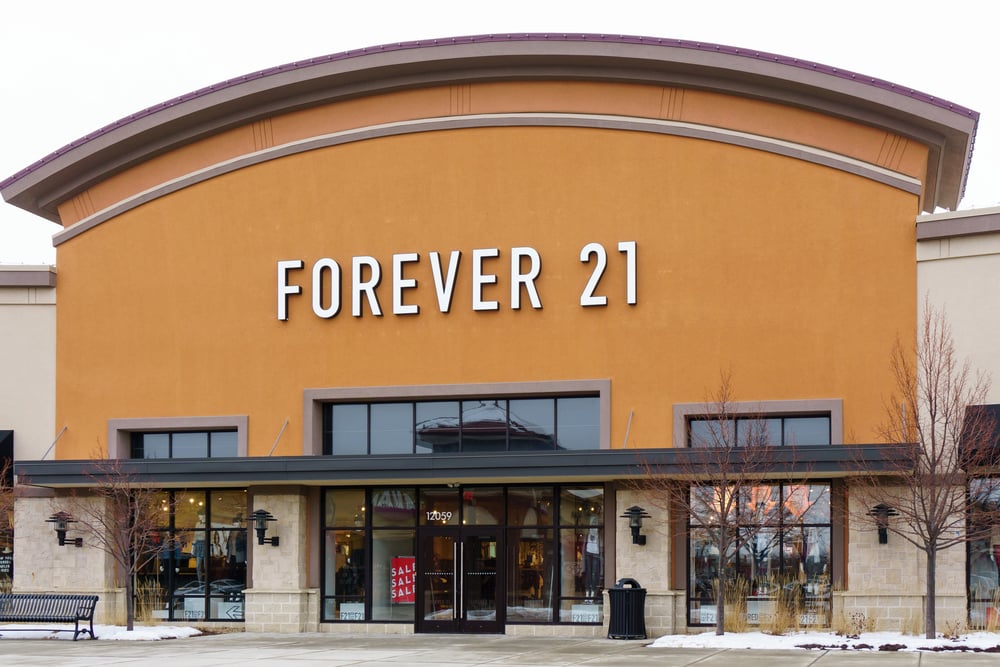
Forever 21 seemed to embody fast fashion success.
The mall staple offered trendy clothing at rock-bottom prices, capturing the hearts of teenagers and young adults throughout the 2000s.
But what worked in that decade didn’t translate to the next.
The company first filed for bankruptcy in 2019, emerging under new ownership from Authentic Brands Group and mall landlord Simon Property Group.
That restructuring clearly didn’t solve the underlying problems.
In March 2025, Forever 21 filed for bankruptcy protection for the second time in six years.
This time, liquidation sales started immediately.
Red and yellow signs plastered store windows as the company prepared to wind down U.S. operations entirely.
The collapse illustrated a harsh reality about retail.
When your entire business model depends on offering the cheapest possible fashion, you have no cushion when costs rise or consumer preferences shift.
Forever 21 couldn’t compete with even cheaper online alternatives or adapt quickly enough to changing tastes.
The brand discovery that ‘forever’ isn’t actually very long at all.
Ralph & Russo
British luxury fashion house Ralph & Russo dressed royalty and celebrities, creating elaborate haute couture gowns that commanded six-figure price tags.
The brand operated boutiques in prestigious locations including Harrods in London, Paris, Dubai, Monte Carlo, Miami, and New York.
Its designs appeared on red carpets worldwide.
Everything looked glamorous from the outside.
Behind the scenes, financial troubles mounted.
In March 2021, the company filed for insolvency and was purchased by U.S. entrepreneurs Tai Lopez and Alex Mehr for £3.5 million.
That rescue proved temporary.
On April 14, 2025, Ralph & Russo filed its intention to appoint administrators for the second time in just three years.
The filing gave the company 10 days of protection from creditor claims while seeking a buyer.
No buyer materialized.
The haute couture house closed entirely, joining a growing list of luxury brands that discovered prestige alone doesn’t pay the bills.
Y/Project

Paris-based fashion house Y/Project represented cutting-edge design in luxury fashion.
Creative director Glenn Martens built a devoted following among fashion insiders and celebrities who appreciated the brand’s avant-garde aesthetic.
Collections featured deconstructed silhouettes, unexpected proportions, and innovative techniques that pushed boundaries.
Fashion critics praised the work.
Celebrities wore it to major events.
Everything pointed toward long-term success.
Then in early 2025, Y/Project announced it was closing after 14 years.
Despite the creative acclaim and celebrity following, the business couldn’t sustain itself financially.
The statement was brief and matter-of-fact.
After attempting to find new ownership and failing, the brand simply stopped operations.
The closure highlighted a brutal truth about luxury fashion.
Critical praise and celebrity endorsement don’t automatically translate to commercial viability.
Even brands dressing Hollywood and royalty can fail if the business fundamentals aren’t sound.
Neiman Marcus
Department stores have faced existential threats for over a decade, but Neiman Marcus seemed like it might survive through its focus on true luxury rather than mid-market fashion.
The Dallas-based retailer catered to wealthy customers willing to spend thousands on designer pieces.
For years, that strategy worked.
In May 2020, amid pandemic-related store closures, Neiman Marcus filed for Chapter 11 bankruptcy protection.
The company carried $5 billion in debt from various ownership changes and struggled to adapt its business model.
Despite reporting positive sales growth in some quarters, the accumulated losses proved insurmountable.
The company emerged from bankruptcy in September 2020 under new ownership from firms including Pimco and Davidson Kempner Capital Management, but the restructuring involved significant store closures and job losses.
The bankruptcy demonstrated that even luxury retailers serving affluent customers weren’t immune to the forces reshaping retail.
The Pattern

These collapses share common threads.
Most of these companies carried substantial debt, often accumulated through leveraged buyouts by private equity firms or hedge funds.
Toys ‘R’ Us, RadioShack, Sports Authority, Gymboree, Charlotte Russe, and The Limited all followed similar paths.
Investors loaded companies with debt, extracted value, then left struggling businesses unable to adapt when market conditions changed.
Rising costs created mounting pressure.
Rent increases devastated Barneys.
Fuel costs squeezed Thomas Cook.
Tariffs and supply chain disruptions hit clothing retailers.
Meanwhile, online competition intensified across every sector.
Amazon and specialized e-commerce sites offered convenience and often lower prices without the overhead of maintaining physical locations.
Traditional business models stopped working, but pivoting proved difficult or impossible for companies saddled with debt and legacy operations.
Consumer behavior shifted dramatically.
Younger shoppers valued experiences over possessions, spent less on clothing, and when they did buy, increasingly chose sustainable or ethically made items over fast fashion.
The Instagram economy meant trends moved faster than ever, but people also became more conscious about waste.
Luxury brands that couldn’t adapt their messaging and offerings lost relevance.
What Happens Next

When luxury empires collapse, the human cost extends far beyond shareholders and executives.
Thousands of employees lose jobs, often with minimal notice or severance.
Suppliers face unpaid invoices that can threaten their own survival.
Customers with gift cards, pending orders, or warranty claims find themselves out of luck.
The bankruptcy process prioritizes secured creditors while everyone else scrambles for scraps.
Some brands get second lives under new ownership.
Barneys exists as a shop-in-shop.
Thomas Cook’s name was purchased by Fosun and relaunched as a smaller online operation.
But these resurrections bear little resemblance to the original companies.
They’re licensing deals using recognizable names, not continuations of the business that collapsed.
The Fragility Beneath the Facade

Luxury brands spend enormous resources cultivating images of permanence and stability.
Their marketing emphasizes heritage, craftsmanship, and timeless quality.
They want customers to believe these companies will endure forever, that purchasing from them represents a safe investment in lasting value.
The reality proves far more fragile.
Thomas Cook survived 178 years before collapsing in a matter of hours.
Barneys lasted 96 years, then disappeared within months of filing bankruptcy.
These weren’t scrappy startups that failed to find market fit.
They were established institutions with generations of customer loyalty.
Their sudden demise revealed an uncomfortable truth about modern business.
No amount of history or prestige guarantees survival when debt loads become unsustainable, market forces shift, and the underlying business model breaks.
The luxury world’s illusion of permanence is just that, an illusion that can shatter overnight.
More from Go2Tutors!

- The Romanov Crown Jewels and Their Tragic Fate
- 13 Historical Mysteries That Science Still Can’t Solve
- Famous Hoaxes That Fooled the World for Years
- 15 Child Stars with Tragic Adult Lives
- 16 Famous Jewelry Pieces in History
Like Go2Tutors’s content? Follow us on MSN.