Major Secrets Hidden within Museum Masterpieces
Walk into any major museum and you’re surrounded by masterpieces that generations of art lovers have studied and admired.
Beneath those familiar surfaces lie secrets that remained hidden for centuries.
Modern technology has given researchers the ability to see through paint layers.
It reveals earlier versions, abandoned compositions, and hidden messages that artists never intended anyone to discover.
X-ray machines, infrared imaging, and advanced scanning techniques have turned art conservation into something resembling detective work.
What these discoveries reveal about artistic process, economic hardship, and creative evolution continues to reshape our understanding of the world’s most famous paintings.
Let’s explore some of the most fascinating secrets that technology has uncovered beneath the surface of museum masterpieces.
Picasso painted over his poverty

Researchers examining Picasso’s ‘The Old Guitarist’ found three complete figures hidden beneath the blue-toned surface.
X-rays revealed a young woman with an outstretched arm, an older woman with a bent head, and a mother nursing a child.
The ghostly woman’s face remains partially visible behind the guitarist’s neck.
It creates an eerie double image that anyone can spot if they look closely enough.
Picasso painted this work in 1903 during his Blue Period when he was desperately poor and couldn’t afford fresh canvases.
In 2019, scientists used a neural network trained on other Blue Period works to reconstruct the hidden painting in full color.
It brought to life a composition Picasso had buried over a century ago.
Van Gogh’s hidden farmer
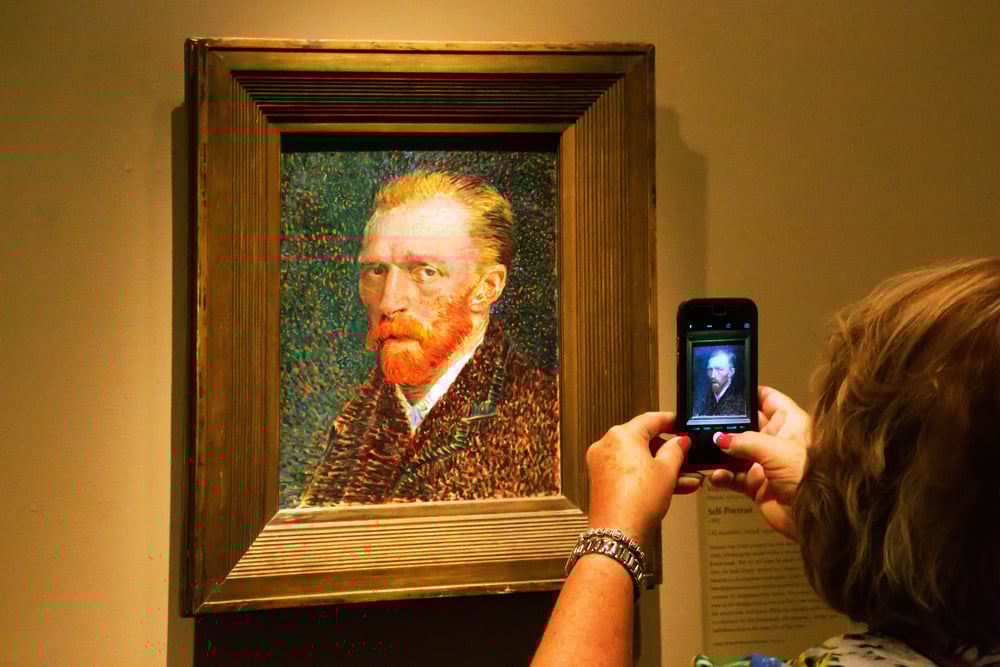
Scientists using powerful X-rays at a synchrotron accelerator discovered a portrait hidden beneath Van Gogh’s ‘Patch of Grass.’
The concealed image shows a Dutch farming woman from his very early career.
It was painted years before the landscape that now covers it.
Researchers also found what appears to be one of Van Gogh’s earliest self-portraits hiding under another painting.
Like Picasso, Van Gogh couldn’t afford to buy new canvases regularly.
He routinely painted over his own work when he needed a fresh surface.
Around 15 percent of his paintings at the Van Gogh Museum in Amsterdam conceal earlier compositions.
These buried works would now be worth millions.
Van Gogh considered them failures or simply needed the canvas space more than he valued what was already there.
Rembrandt hid beneath Rembrandt
For decades, researchers suspected something lurked beneath Rembrandt’s ‘Old Man in Military Costume’ because one section appeared unusually dense in early X-rays from 1968.
Rembrandt used the same lead-based paints for both layers, making it nearly impossible to distinguish between them with older technology.
Advanced macro X-ray fluorescence analysis finally revealed a portrait of a younger man with vermilion flushed cheeks and a green cloak.
The master had a habit of reusing canvases throughout his career.
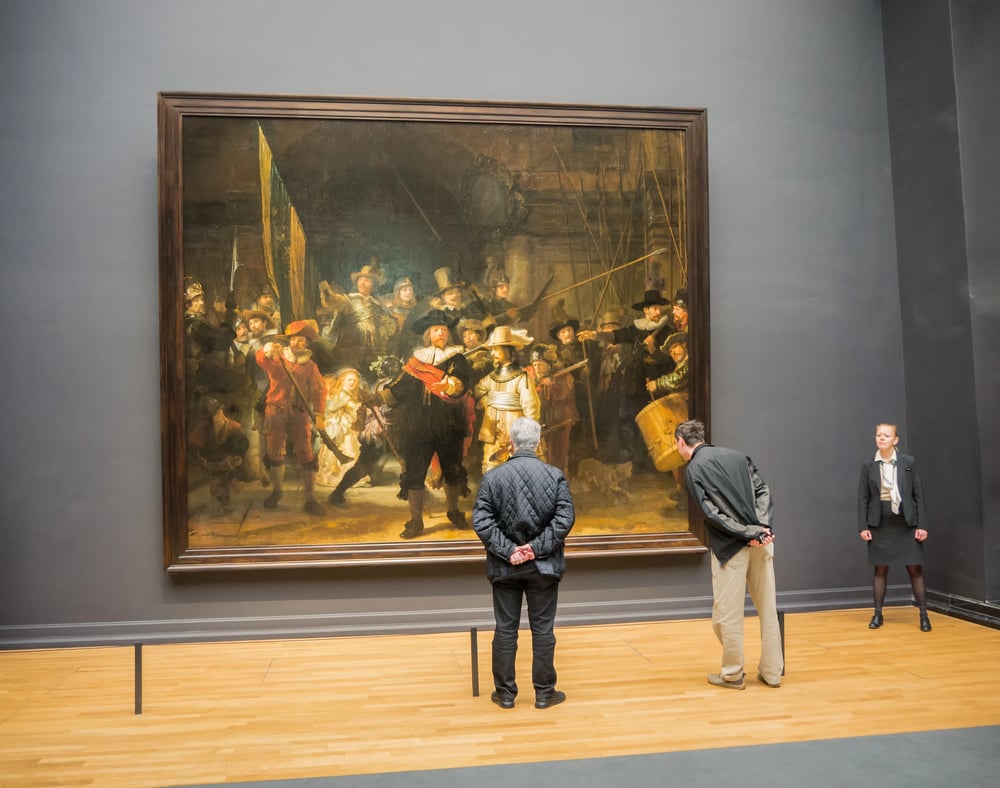
In ‘The Night Watch,’ Rembrandt also included a subtle self-portrait.
If you examine the guard wearing a chinstrap in the center of the painting, you can spot what appears to be Rembrandt’s own eye peering out from over the soldier’s shoulder.
Degas covered his favorite model
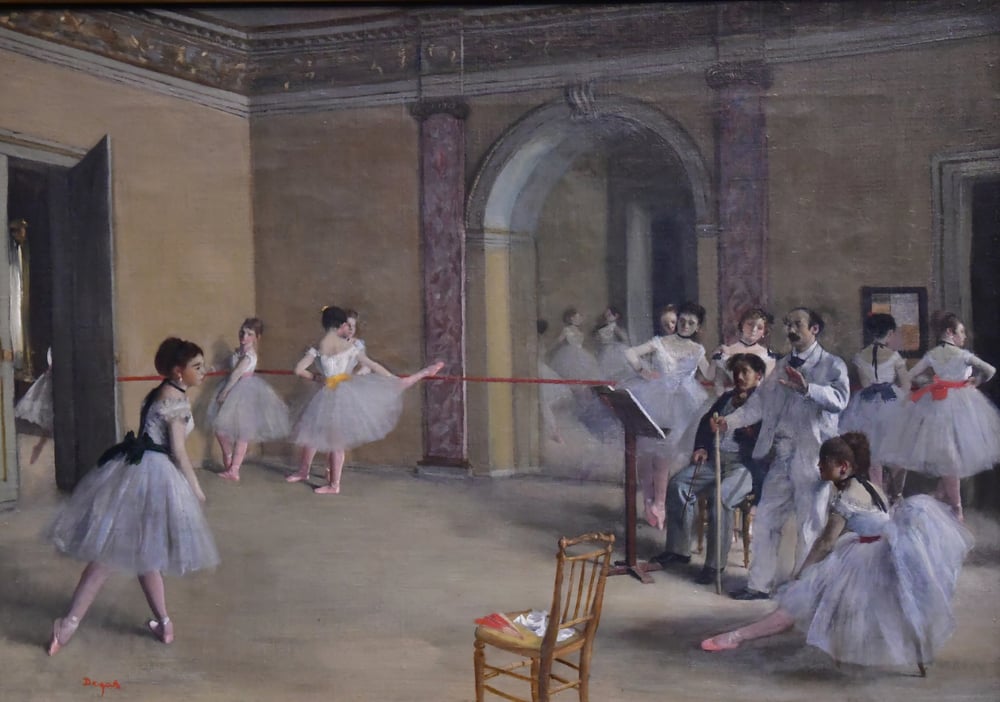
Edgar Degas painted ‘Portrait of a Woman’ in 1876 directly over an earlier portrait of Emma Dobigny, a popular model who sat for him and other artists frequently.
The original work was never meant to be seen again.
Degas used such thin paint layers that Emma’s face eventually started showing through the surface.
Critics were complaining about the discoloration as early as 1922.
In 2016, researchers at the Australian Synchrotron facility used X-ray fluorescence to recreate the hidden portrait in complete detail.
The face was flipped upside down when Degas reused the canvas.
It explains why the ghostly image looks so strange to anyone examining the finished work.
Poverty forced many artists to make difficult choices.
Degas apparently decided the new portrait mattered more than preserving Emma’s image.
Caravaggio painted himself into wine
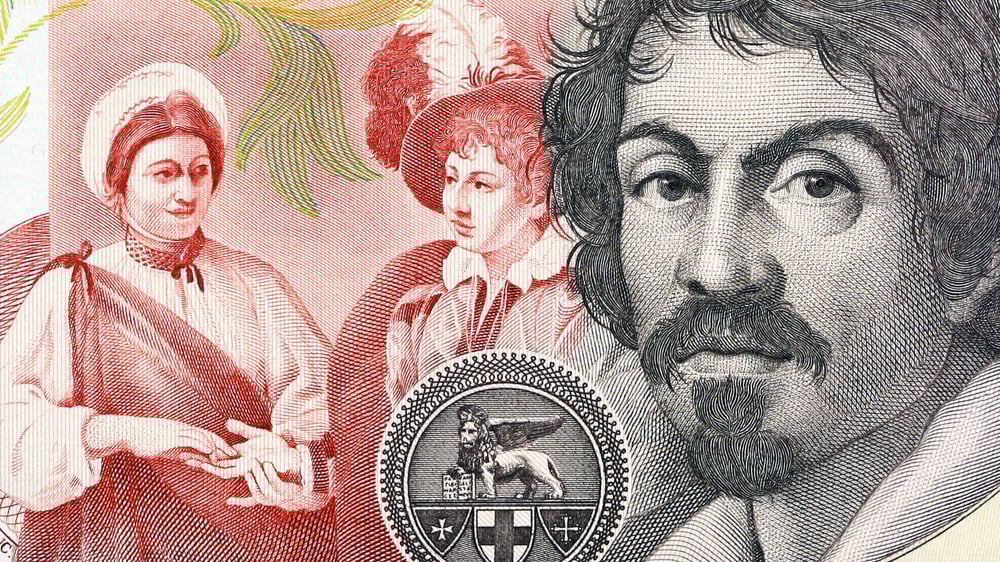
Art historians discovered a tiny self-portrait hidden in Caravaggio’s ‘Bacchus’ using reflectography technology in 2009.
At the bottom left of the painting, trapped inside the glass carafe of wine, sits a small figure with his arm pointing toward the canvas.
Experts believe it shows Caravaggio himself at age 25 with dark curly hair.
The artist was notorious for his hard drinking and wild lifestyle.
Hiding himself inside wine felt like an appropriately symbolic gesture.
Caravaggio fled Rome in 1605 after getting into serious trouble for various crimes.
His tendency to leave secret signatures makes the discovery even more intriguing.
The tiny reflection transforms a portrait of the Greek god of wine into something more personal and self-referential.
It was a private joke that remained invisible for over 400 years.
Van Eyck witnessed his own painting
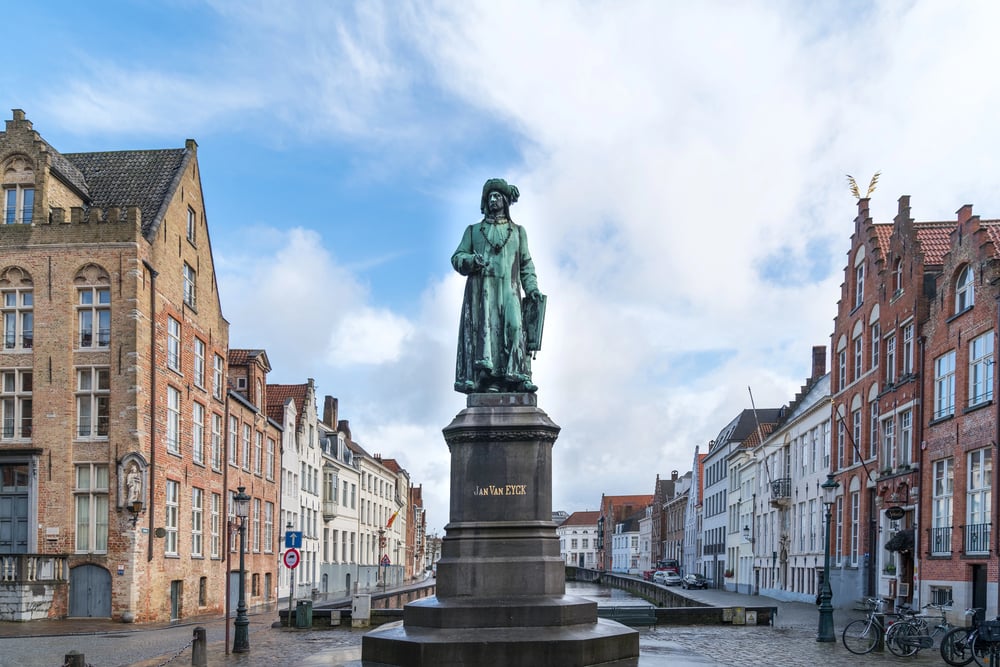
Jan van Eyck’s 1434 ‘Arnolfini Portrait’ contains one of art history’s most famous hidden details.
On the wall behind the two main figures, van Eyck wrote in Latin: ‘Jan van Eyck was here 1434.’
The painting also features a convex mirror in the center background.
If you examine the reflection closely, you can see two additional figures standing where the viewer would be positioned.
One of them is probably van Eyck himself, dressed in blue.
The mirror was impossibly large for the time period since craftsmen couldn’t actually make convex mirrors that size in the 15th century.
Van Eyck’s signature and mirror reflection weren’t just about ego.
They established the artist as a witness to the scene.
It possibly suggests the painting documented an actual legal ceremony or contract rather than just a portrait sitting.
Da Vinci changed his mind repeatedly
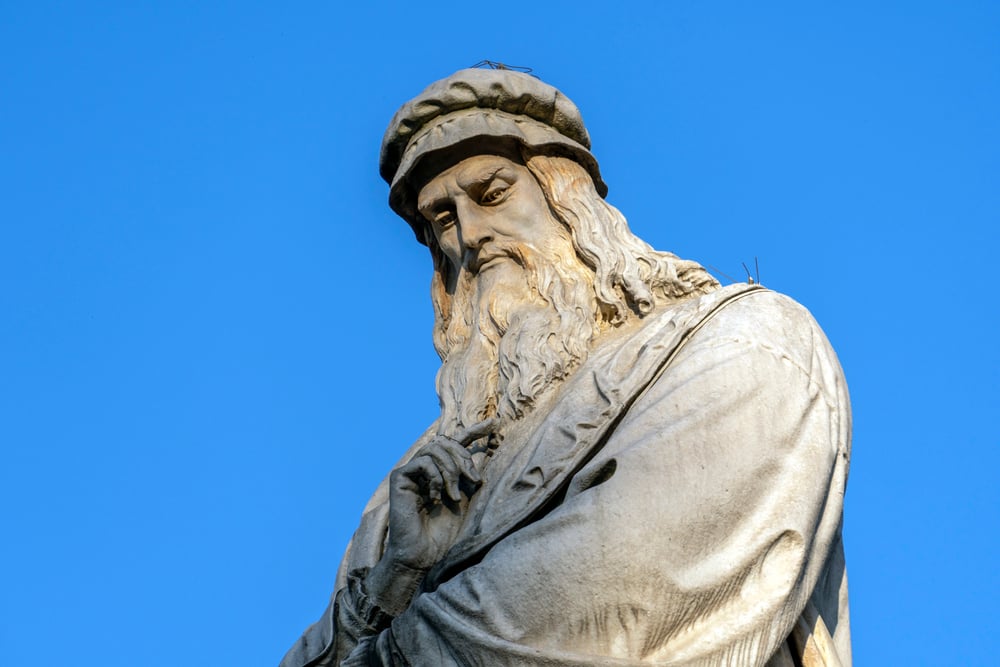
French engineer Pascal Cotte spent over a decade analyzing Leonardo da Vinci’s paintings using Layer Amplification Method, a technique that projects intense light onto paintings and measures the reflections.
His study of ‘The Lady with an Ermine’ revealed that da Vinci reworked the composition twice before settling on the final version.
The lady’s forearm changed positions.
The symbolic ermine was only added in the third version of the work.
Da Vinci’s ‘Mona Lisa’ showed even more dramatic changes.
Cotte claimed to find a different woman beneath the famous portrait, one looking off to the side rather than directly at viewers and without that enigmatic smile.
Many art historians remain skeptical of these specific claims.
They argue the layers show continuous evolution rather than completely different subjects.
Still, the debate has reignited questions about who Leonardo actually painted.
A hidden whale solved a century-old mystery
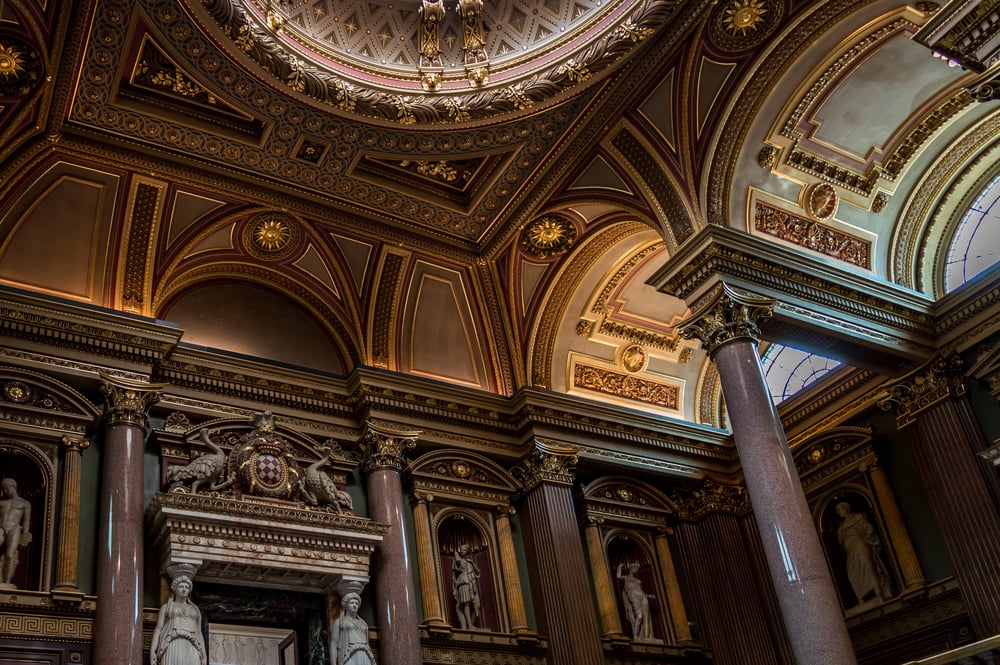
A painting called ‘A Beach Scene’ hung in Cambridge’s Fitzwilliam Museum showing a group of people staring at apparently nothing.
For over a century, viewers couldn’t understand why the figures seemed so fixated on empty sand.
In 2014, conservator Shan Kuange removed a coat of yellow varnish during restoration work and discovered a beached whale that someone had painted over.
The crude overpaint covering the creature was likely added because someone in the 18th or 19th century found a dead animal offensive or inappropriate for polite society.
The discovery completely solved the mystery and restored the painting’s original meaning.
It serves as a reminder that later generations sometimes altered artworks to match their own sensibilities.
They erased details that made perfect sense in the original context.
Edvard Munch insulted himself
Art historians had long known that Edvard Munch’s 1893 ‘The Scream’ contained a barely visible inscription in pencil on the top left corner.
In Norwegian, it reads ‘Can only have been painted by a madman.’
For years, people debated whether a vandal had written it or whether Munch himself was responsible.
Researchers used infrared technology to analyze the handwriting and compared it to Munch’s other writings from that period.
Museum curator Mai Britt Guleng explained that the handwriting matched Munch’s style perfectly.
When the painting was first shown in Norway in 1895, critics and the public questioned Munch’s mental state, which deeply insulted him.
He apparently responded by adding the penciled message himself, either in bitter agreement or dark sarcasm.
A vandal likely would have written much bigger, Guleng noted.
Vermeer might have used optical tricks
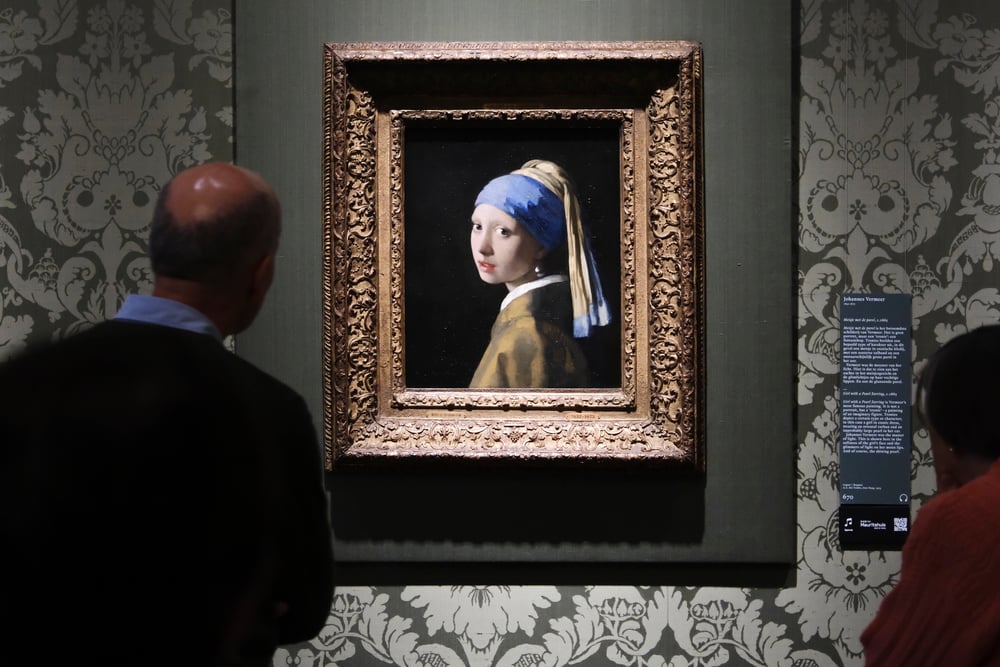
The mysterious Dutch master Johannes Vermeer has long been suspected of using camera obscura or other optical devices to achieve the photographic quality in his paintings.
His compositions show perspective and light behavior that would have been nearly impossible to capture by eye alone in the 17th century.
Some paintings contain slightly blurred areas that mimic how camera lenses render out-of-focus objects, a phenomenon that wouldn’t occur naturally in paintings made purely by observation.
While no definitive proof exists that Vermeer used these tools, the technical precision in works like ‘The Music Lesson’ suggests he understood optics at a level far beyond his contemporaries.
Whether this should be considered cheating or innovation remains hotly debated among art historians and working artists.
Botticelli cataloged an entire forest
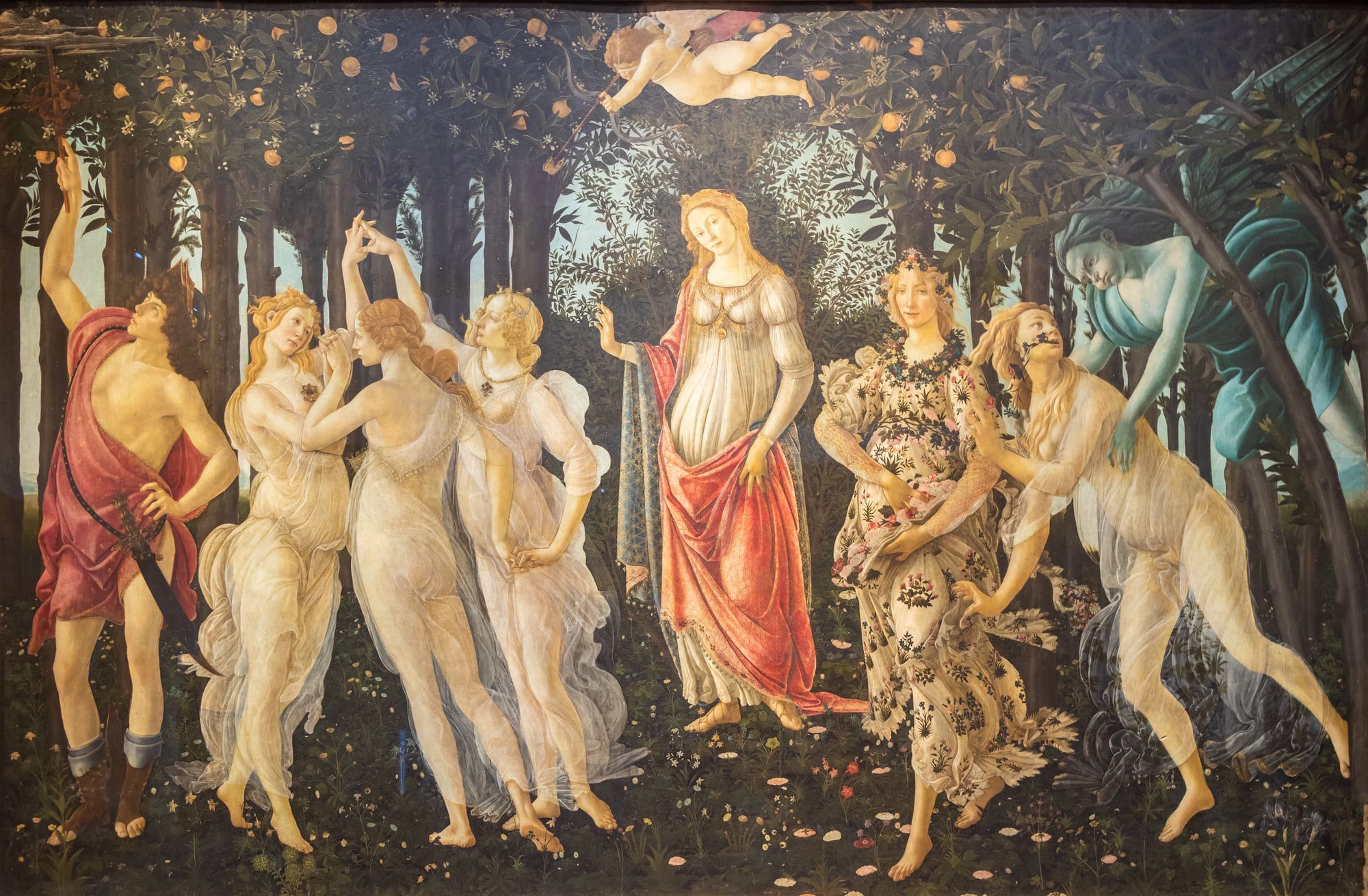
Sandro Botticelli’s ‘La Primavera’ from 1481-82 was radical for 15th century Florence because it showed pagan gods and goddesses rather than Christian subjects.
Experts have identified 500 individual plants from over 200 species scattered throughout the painting.
They represent the entire flora of springtime Tuscany.
The meticulous botanical detail marks a turning point in European art.
Depicting nature for its own sake became acceptable rather than just background scenery for religious messages.
Botticelli filled his canvas with such dense foliage that new plant species keep getting identified centuries later.
The painting celebrates the natural world as something worth studying and preserving.
It is not merely decorative elements supporting a moral lesson.
Technology keeps revealing more
These discoveries demonstrate that masterpieces rarely arrive in their final form without struggle, revision, or compromise.
Artists changed their minds, covered mistakes, recycled expensive canvases, and embedded meanings that viewers centuries later are still deciphering.
Every new imaging technology reveals additional secrets, suggesting countless discoveries remain buried in paintings we thought we understood completely.
Museums continue re-examining their collections with advanced equipment, and each finding adds complexity to our understanding of artistic genius.
The paintings themselves haven’t changed since the day their creators signed them.
Our ability to see beneath their surfaces keeps transforming what we know about the people who made them and the difficult circumstances under which they worked.
More from Go2Tutors!

- The Romanov Crown Jewels and Their Tragic Fate
- 17 Halloween Costumes Once Considered Taboo
- Famous Hoaxes That Fooled the World for Years
- 15 Child Stars with Tragic Adult Lives
- 16 Famous Jewelry Pieces in History
Like Go2Tutors’s content? Follow us on MSN.