Math Formulas You Must Memorize
Math tests have a way of arriving faster than expected. You sit down, pencil in hand, and suddenly that formula you understood perfectly last week vanishes from memory.
Memorizing key formulas removes this stress and speeds up problem-solving considerably. Some formulas appear so frequently across different math courses that having them ready saves time and mental energy for the harder parts of each problem.
The Quadratic Formula

This formula solves any equation in the form ax² + bx + c = 0. You’ll use it throughout algebra, precalculus, and beyond.
x = (-b ± √(b² – 4ac)) / 2a
The plus-minus symbol means you get two solutions. Most quadratic problems in standardized tests require this formula, so write it on scratch paper at the start of any timed exam.
Area of a Circle
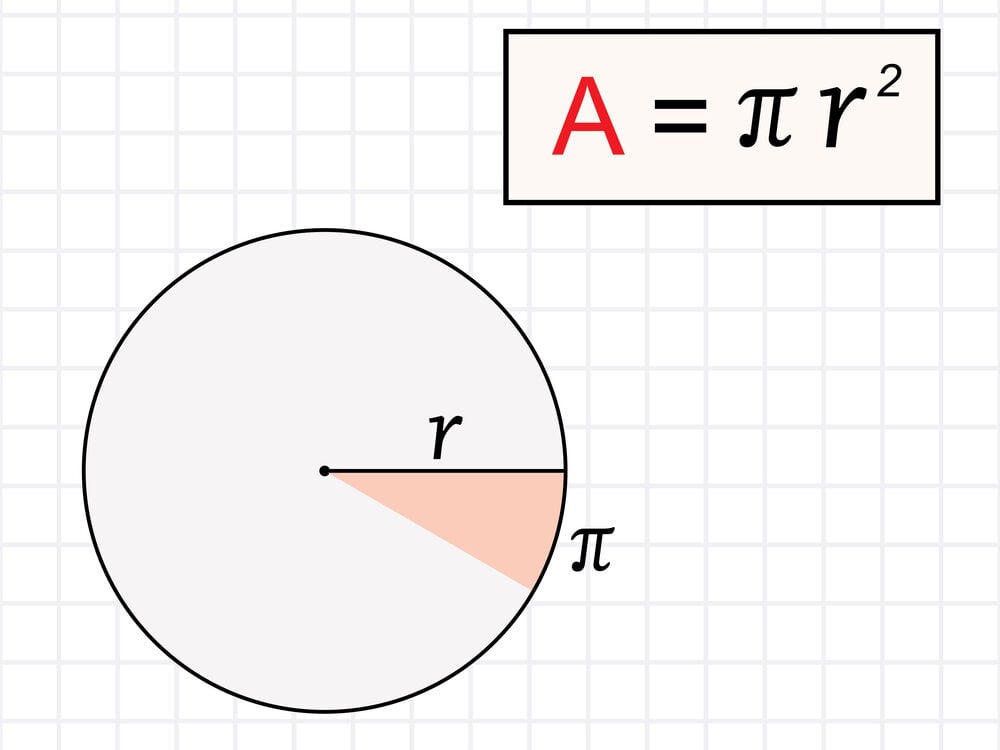
A = πr²
This one seems simple until you realize how often circles appear in geometry problems. The radius gets squared, then multiplied by pi.
Many students accidentally multiply by 2πr instead, which gives you circumference rather than area.
Pythagorean Theorem

a² + b² = c²
Right triangles show up everywhere. The two shorter sides (a and b) when squared and added together equal the longest side (c) squared.
This formula helps you find distances, heights, and missing side lengths in countless geometry and trigonometry problems.
Slope Formula
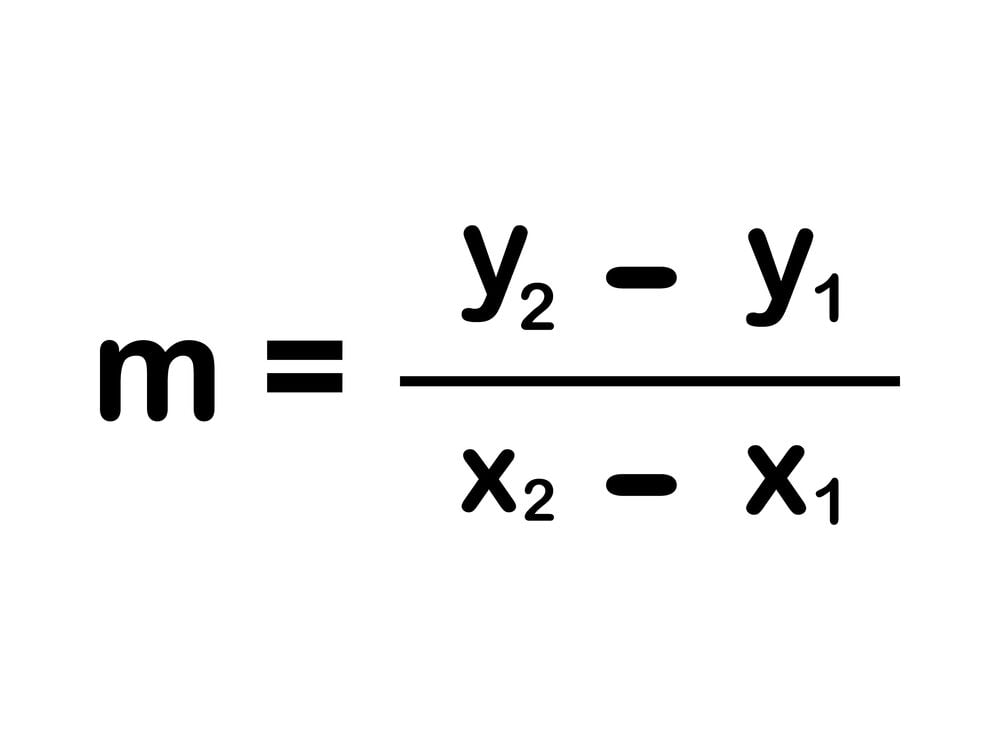
m = (y₂ – y₁) / (x₂ – x₁)
Two points on a line give you enough information to find its slope. The vertical change divided by the horizontal change tells you how steep the line runs.
Watch the order—mixing up your points leads to sign errors.
Distance Formula
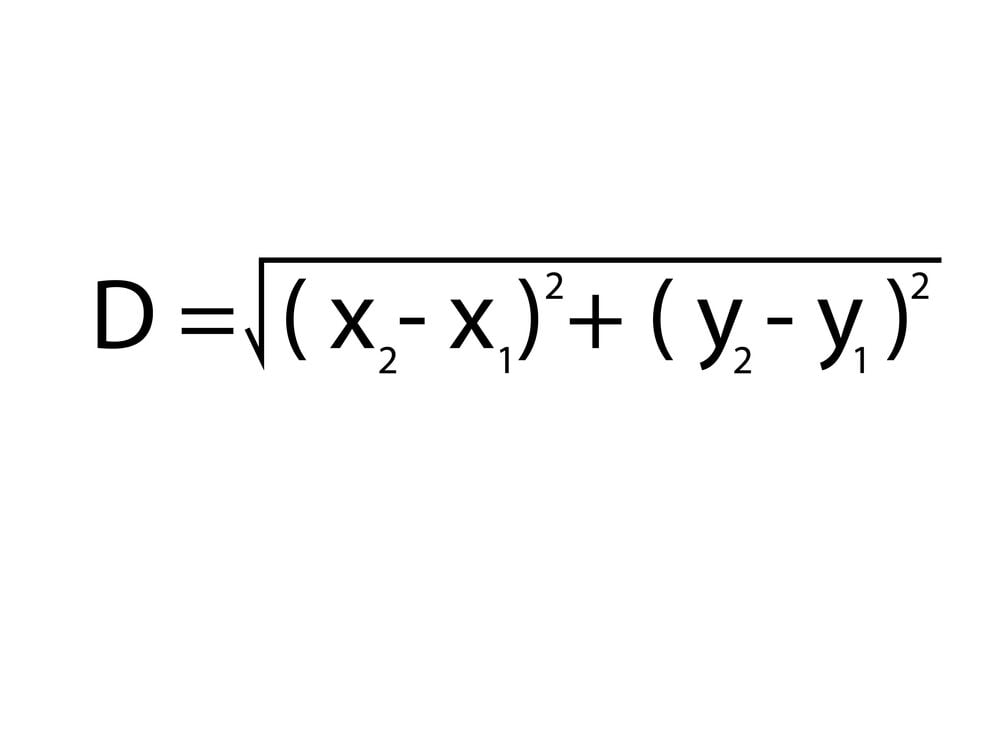
d = √((x₂ – x₁)² + (y₂ – y₁)²)
Finding the distance between two points comes up in coordinate geometry constantly. This formula extends the Pythagorean theorem into the coordinate plane.
You can also think of it as measuring the length of a line segment when you know both endpoints.
Basic Trigonometric Ratios
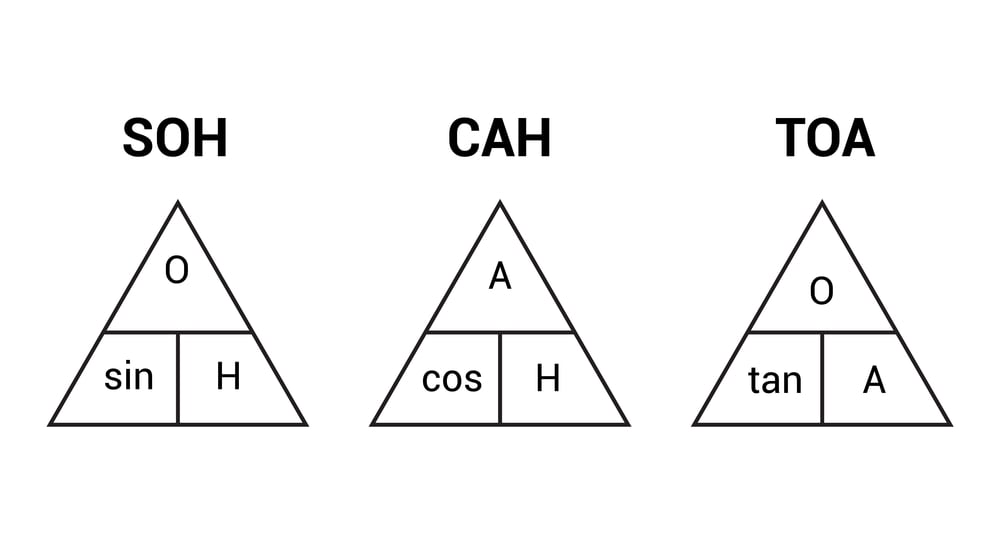
sin θ = opposite / hypotenuse cos θ = adjacent / hypotenuse
tan θ = opposite / adjacent
These three ratios form the foundation of trigonometry. The acronym SOHCAHTOA helps many students remember which ratio uses which sides.
Once you have these memorized, solving right triangle problems becomes straightforward.
Area of a Triangle
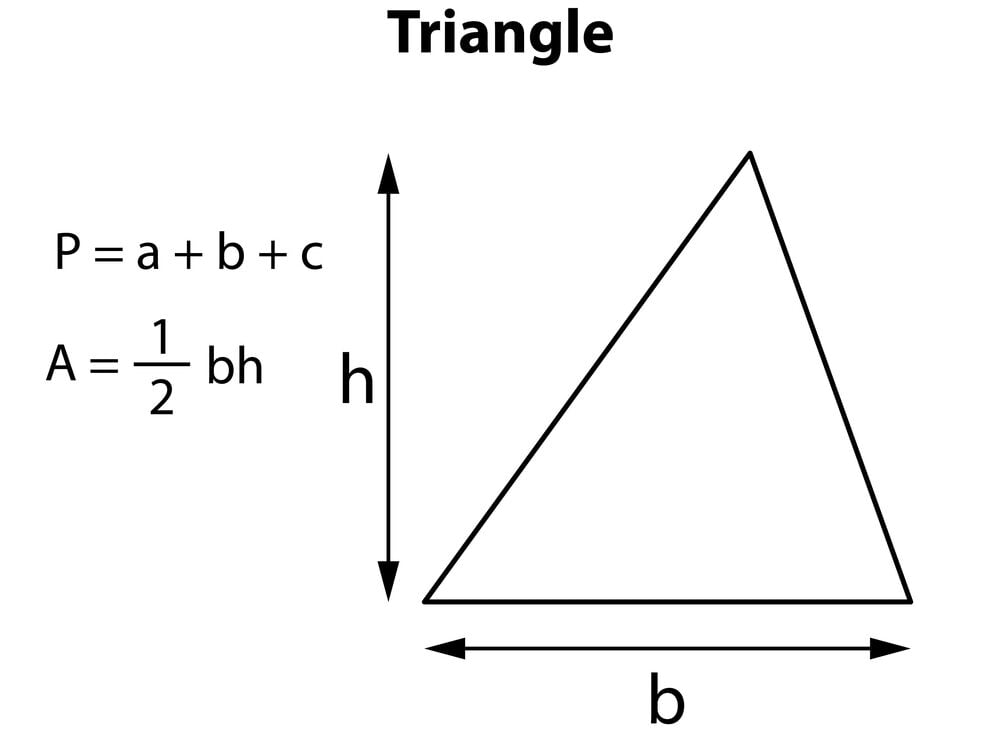
A = ½bh
Base times height divided by two. This works for any triangle when you know the base and the perpendicular height to that base.
Some textbooks write it as (bh)/2 or 0.5bh, but all three versions mean the same thing.
Volume of a Cylinder

V = πr²h
The circular base area (πr²) multiplied by the height gives you volume. Cylinders appear in word problems about containers, pipes, and storage tanks.
Missing this formula during a test costs points on problems that should take less than a minute.
The Law of Cosines
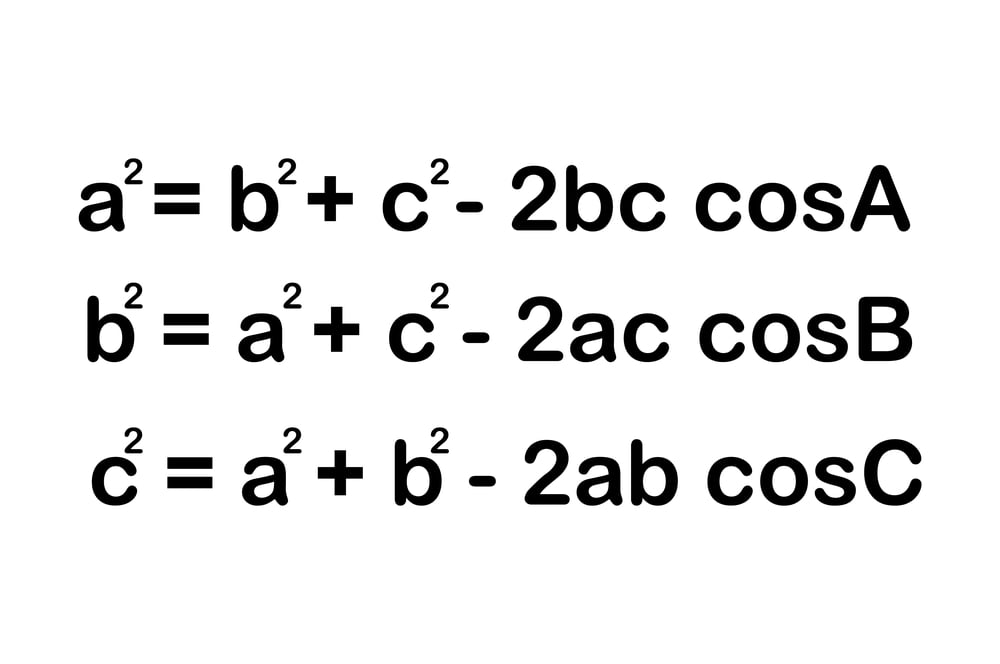
c² = a² + b² – 2ab cos C
When you have a triangle that isn’t a right triangle, this formula finds missing sides or angles. It looks like the Pythagorean theorem with an extra term.
The angle C sits opposite the side c. This formula handles oblique triangles that the basic trig ratios can’t solve.
Circumference of a Circle

C = 2πr or C = πd
The distance around a circle equals two times pi times the radius. Or you can use pi times the diameter since the diameter equals twice the radius.
Both versions work—pick whichever matches the information given in your problem.
Sum of Interior Angles

Sum = (n – 2) × 180°
Polygons have interior angles that always add up to a predictable total. The number of sides (n) minus two, multiplied by 180 degrees, gives you that sum.
A triangle has 180°, a quadrilateral has 360°, a pentagon has 540°, and so on.
Compound Interest Formula

A = P(1 + r/n)^(nt)
Financial math problems use this formula to calculate growth over time. P represents the principal (starting amount), r is the annual interest rate as a decimal, n is how many times per year the interest compounds, and t is the number of years.
The parentheses matter—calculate what’s inside them first.
Midpoint Formula

Midpoint = ((x₁ + x₂)/2, (y₁ + y₂)/2)
The point exactly halfway between two other points sits at the average of their x-coordinates and the average of their y-coordinates. Coordinate geometry loves testing whether you can find midpoints quickly.
Standard Deviation (Sample)

s = √(Σ(x – x̄)² / (n-1))
Statistics requires measuring how spread out your data is. Take each value, subtract the mean, square the result, add all those squares together, divide by n-1, then take the square root.
This formula shows up on any statistics test or data analysis problem.
Surface Area of a Sphere

SA = 4πr²
The surface area of a sphere is 4πr² – quite unlike the volume, since that’s (4/3)πr³ instead. People confuse them on tests way more than you’d expect, mainly because they look kinda similar at first glance.
How Memory Serves Calculation

Formulas slip away if you don’t use them, yet going over them builds solid reference points in your head. Since you’ve learned the formula well, spotting a familiar problem happens fast – this leaves room to work out reasoning and plan moves.
Speed matters just like correct answers when taking tests. With key formulas at hand, you avoid digging through memories, giving you extra minutes to crack questions.
The key formulas depend on what your classes focus on. Instead of stats, a calc student must learn unique equations. Yet some basics show up across topics – year after year, exam after exam.
More from Go2Tutors!

- The Romanov Crown Jewels and Their Tragic Fate
- 13 Historical Mysteries That Science Still Can’t Solve
- Famous Hoaxes That Fooled the World for Years
- 15 Child Stars with Tragic Adult Lives
- 16 Famous Jewelry Pieces in History
Like Go2Tutors’s content? Follow us on MSN.