Most Iconic Movie Posters Ever Created
Movie posters aren’t just advertisements slapped together to fill theater lobbies.
They’re mini works of art that capture the essence of a film in a single image, and when done right, they become just as memorable as the movies themselves.
The best posters manage to tease what’s coming without giving everything away, creating anticipation that makes you want to buy a ticket immediately.
From the golden age of Hollywood to modern blockbusters, certain posters have transcended their marketing purpose to become cultural touchstones.
Here are some iconic movie posters ever created.
Jaws

Roger Kastel’s poster for Spielberg’s 1975 thriller is pure nightmare fuel.
A massive shark rises from the depths toward an unsuspecting swimmer on the surface, and even though the actual film barely shows the shark, this image burned itself into the collective consciousness.
The poster works because it’s simple and terrifying—just you, open water, and something enormous coming your way.
This design helped turn Jaws into the first summer blockbuster and made an entire generation think twice before going to the beach.
Star Wars

Tom Jung’s original 1977 poster took inspiration from pulp artist Frank Frazetta, featuring Luke Skywalker holding his lightsaber high like a fantasy hero wielding a sword.
Princess Leia strikes a dramatic pose beside him while Darth Vader looms large in the background.
The poster promised epic space adventure in a style that felt more like a swashbuckling fantasy than hard science fiction, which turned out to be exactly what the film delivered.
The Godfather

The iconic image of Marlon Brando’s hand holding puppet strings above the title tells you everything about power and control in one glance.
The 1972 poster uses stark contrast and minimal design to convey the weight of Coppola’s crime saga.
That hand represents the don’s manipulation of his criminal empire, but it also hints at how both Vito and Michael Corleone became puppets of fate themselves, bound to a legacy they couldn’t escape.
E.T. the Extra-Terrestrial

The silhouette of Elliott’s bike flying across the moon became one of cinema’s most recognizable images.
John Alvin’s design for Spielberg’s 1982 film captures pure wonder and adventure, promising something magical without revealing too much about the alien visitor.
Interestingly, there was an earlier poster showing E.T.’s glowing finger touching Elliott’s in a nod to Michelangelo’s ‘The Creation of Adam,’ but this flying bike image eventually became the definitive representation of the film.
Psycho

Saul Bass strikes again with this 1960 Hitchcock classic.
The poster features fragmented text and stark black-and-white imagery that mirrors the film’s shocking narrative structure.
Bass deliberately avoided showing the infamous shower scene, instead creating an atmosphere of unease through typography and negative space.
The design influenced countless horror posters that followed, including Wes Craven’s Scream decades later.
The Exorcist

Father Merrin standing in a shaft of light outside the MacNeil house remains one of horror’s most atmospheric images.
The 1973 poster, inspired by René Magritte’s painting ‘The Empire of Light,’ creates an eerie contrast between the warm glow from the bedroom window and the surrounding darkness.
In a film packed with disturbing visuals, this moment of calm before the spiritual battle perfectly captures the movie’s gothic tone and the epic struggle between good and evil.
Breakfast at Tiffany’s
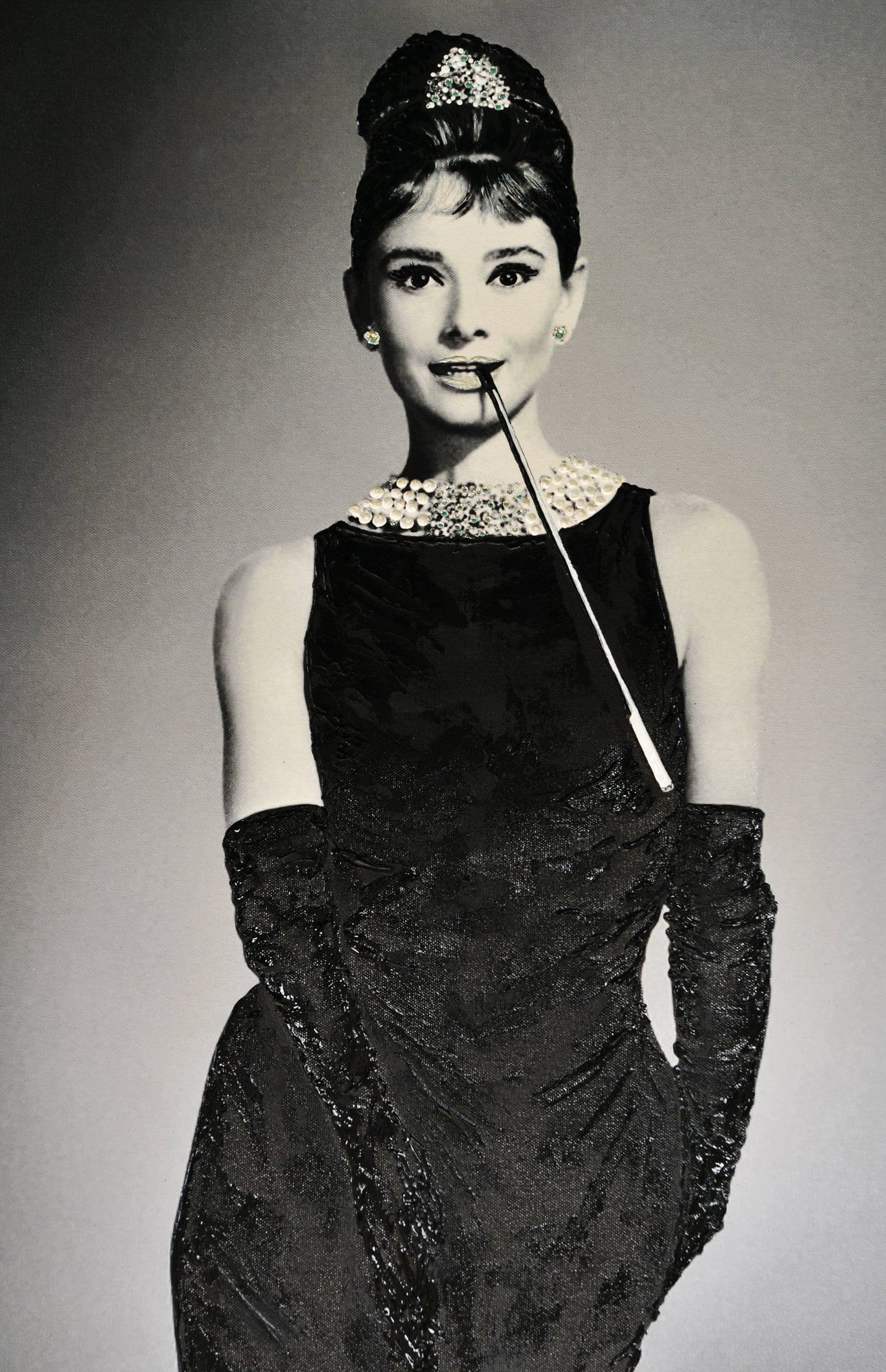
Audrey Hepburn in her little black dress, long gloves, pearl necklace, and nicotine holder became the definition of elegance.
The 1961 poster uses a bright frame of pink, orange, lime, and blue that somehow enhances rather than diminishes Holly Golightly’s sophistication.
This image turned into a cultural phenomenon beyond the film itself, with that Givenchy dress becoming one of the most famous costumes in cinema history.
Alien

The glowing green egg cracking in space with the tagline ‘In space no one can hear you scream’ is brilliantly simple.
Ridley Scott’s 1979 sci-fi horror didn’t actually feature an egg quite like this, but the poster perfectly captures the film’s sense of isolation and unknown terror.
That green glow against the black void tells you everything about the kind of dread waiting in the depths of space.
Pulp Fiction

Quentin Tarantino’s 1994 crime film got a poster that matched its pulp fiction roots—designed to look like a worn magazine cover from the mid-20th century.
Despite having a star-studded cast including John Travolta, Samuel L. Jackson, and Bruce Willis, the poster features only Uma Thurman as Mia Wallace, lying on a bed with nicotine.
The frayed, vintage aesthetic perfectly captured the film’s postmodern style and became a defining image of 1990s cinema.
American Beauty

Sometimes less says more.
The 1999 poster shows just a bare midriff with a hand delicately holding a rose against skin, and somehow that minimal composition became unforgettable.
It hints at the film’s themes of desire, beauty, and suburban dysfunction without revealing anything concrete about the plot.
The simplicity makes it work—tasteful enough to intrigue without giving away the darkness lurking beneath the surface of Alan’s script.
Metropolis

Fritz Lang’s 1927 silent film featured a poster design that looked decades ahead of its time.
The art deco robot woman—the Maschinenmensch—stands against a futuristic cityscape that perfectly teases the film’s urban dystopian vision.
This German expressionist masterpiece influenced everything from Blade Runner to Star Wars, and the poster’s geometric style still looks modern nearly a century later.
The Silence of the Lambs

The death’s head hawkmoth positioned over Clarice Starling’s mouth is genuinely haunting.
Look closer at that moth, and you’ll notice the tiny figures forming a skull pattern on its back—a detail that adds another layer of unease.
The 1991 poster for Jonathan Demme’s psychological thriller became instantly iconic, representing the only horror film to ever win the Academy Award for Best Picture.
Jurassic Park

The T. rex skeleton against a black background with that bold red and yellow logo tells you exactly what kind of movie this is while keeping you curious about how it’ll unfold.
The 1993 poster’s tagline—’An Adventure 65 Million Years in the Making’—positions Spielberg’s dinosaur thriller as the culmination of all history.
It’s bold but effective, turning extinct creatures into the must-see event of the summer.
Raiders of the Lost Ark
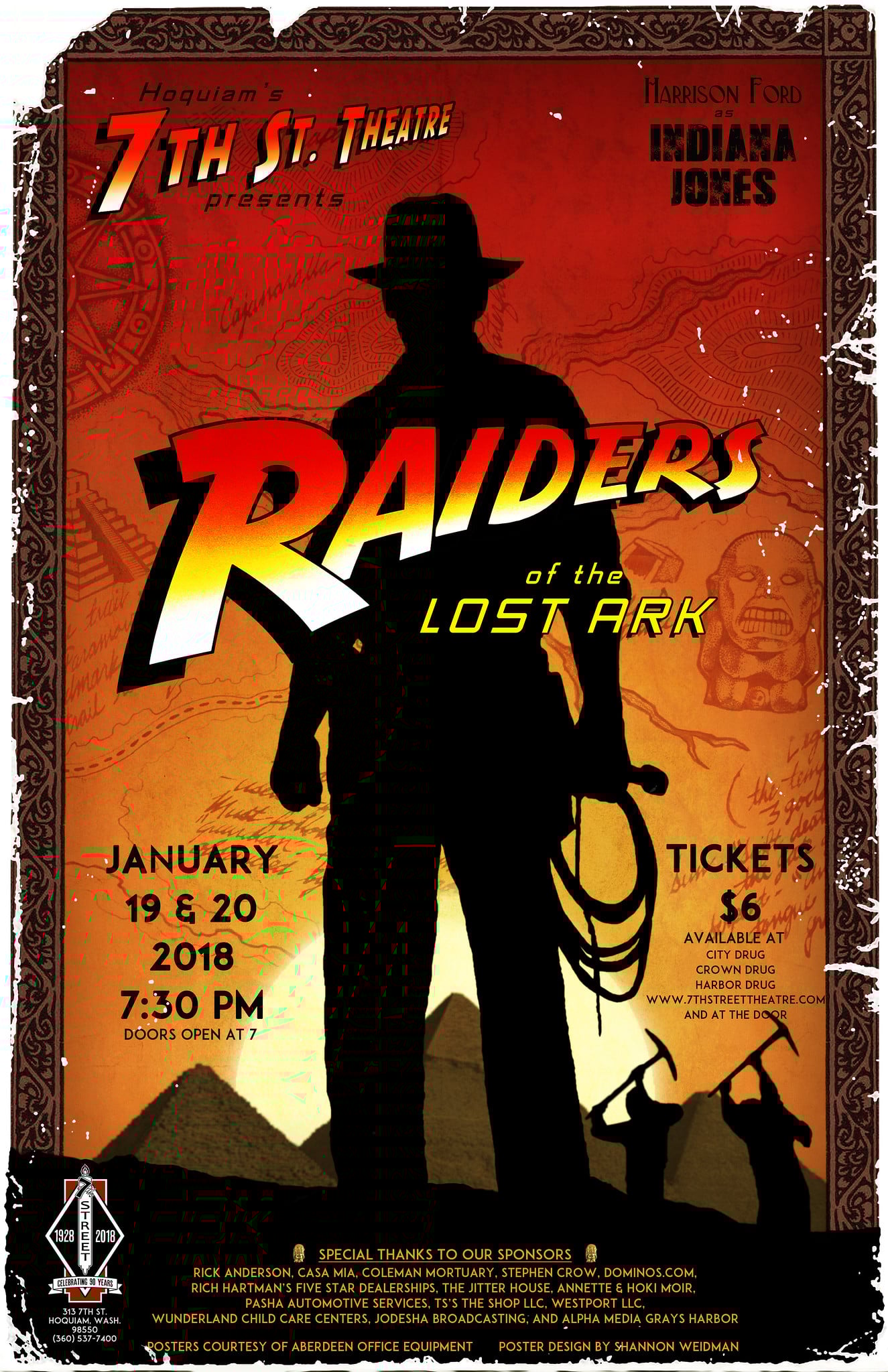
The original 1981 one-sheet promised ‘The Return of the Great Adventure,’ and boy, did it deliver.
The poster shows Indiana Jones with his whip and fedora against a background of flames and ancient imagery, selling pure escapist entertainment.
Richard Amsel’s artwork captured the serial adventure spirit Spielberg and Lucas were channeling, making audiences eager to follow Harrison Ford’s archaeologist into danger.
Where Great Films Live Forever

These posters prove that movie marketing can be genuine artistry.
Designers like Saul Bass, John Alvin, and Drew Struzan understood that a great poster doesn’t just advertise a film—it becomes part of cinema history itself.
Today’s posters often rely on floating heads and Photoshopped celebrity faces, but these classics remind us what’s possible when designers get creative freedom.
They’re images that stuck with us long after we left the theater, turning into bedroom decorations, cultural references, and valuable collector’s items that sometimes sell for six figures at auction.
More from Go2Tutors!

- The Romanov Crown Jewels and Their Tragic Fate
- 17 Halloween Costumes Once Considered Taboo
- Famous Hoaxes That Fooled the World for Years
- 15 Child Stars with Tragic Adult Lives
- 16 Famous Jewelry Pieces in History
Like Go2Tutors’s content? Follow us on MSN.