Most Polluted Cities in the World
Air pollution doesn’t respect borders or wealth. It settles over cities regardless of whether they’re centers of ancient culture or modern finance.
The reality is that millions of people wake up each day to skies they can’t quite see through and air that burns their lungs. Some cities have it worse than others.
Much worse.
Delhi’s Toxic Winter
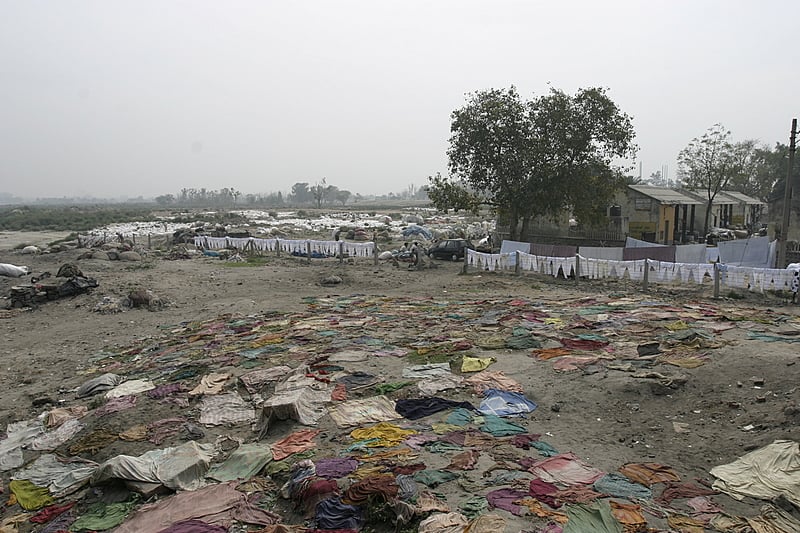
Delhi sits at the top of nearly every pollution ranking you’ll find. The Indian capital’s air quality reaches dangerous levels every year, particularly during the winter months when temperatures drop and pollution gets trapped close to the ground.
More than 32 million people breathe this air daily. The PM2.5 concentration hit 108.3 micrograms per cubic meter in 2024. That’s over 20 times higher than what health organizations consider safe.
Children walk to school through thick smog. Office workers cover their faces with masks that barely help.
Hospital emergency rooms fill with people struggling to breathe. The pollution comes from everywhere at once.
Farmers in surrounding regions burn crop stubble after harvest. Millions of vehicles clog the streets.
Coal power plants run continuously. Construction sites kick up dust.
And when Diwali festivities arrive, firecrackers add another layer of particulates to the air that’s already choking the city. The government implements emergency measures each winter.
They close schools. They ban construction.
They restrict vehicles. But the pollution keeps coming back, year after year, like an unwelcome guest who won’t leave.
Lahore’s Persistent Haze

Cross the border into Pakistan and you’ll find Lahore dealing with similar problems. This city of 14 million people has seen its pollution levels climb steadily over the past few years.
The annual average reached 102.1 micrograms per cubic meter in 2024, up from previous years. Every winter, a thick blanket of smog settles over the city and stays for months.
You can barely see buildings a block away. The sun becomes a pale disk in the sky, its light struggling to penetrate the pollution layer.
Vehicle emissions account for 83% of Lahore’s air pollution problem. That’s an overwhelming majority coming from cars, trucks, motorcycles, and buses that pack the streets.
Add to that the brick kilns operating throughout the region and the seasonal crop burning, and you get air quality that health experts call hazardous.
Beijing’s Industrial Legacy

Beijing’s pollution story is different but no less serious. The Chinese capital’s annual PM2.5 concentration was 30.9 micrograms per cubic meter in 2024.
That’s actually an improvement from years past, but it’s still more than six times what the World Health Organization recommends. The city’s pollution comes primarily from industrial activity and vehicle emissions.
During winter, seasonal weather patterns trap pollutants close to ground level, making bad air even worse. The phenomenon, called thermal inversion, acts like a lid on a pot, keeping pollution from dispersing.
Beijing has made progress. The government shut down coal-fired power plants within city limits.
They restricted vehicle use. They relocated heavy industries.
But with a massive population and continued economic growth, keeping the air clean remains an ongoing battle.
Dhaka’s Multiple Sources
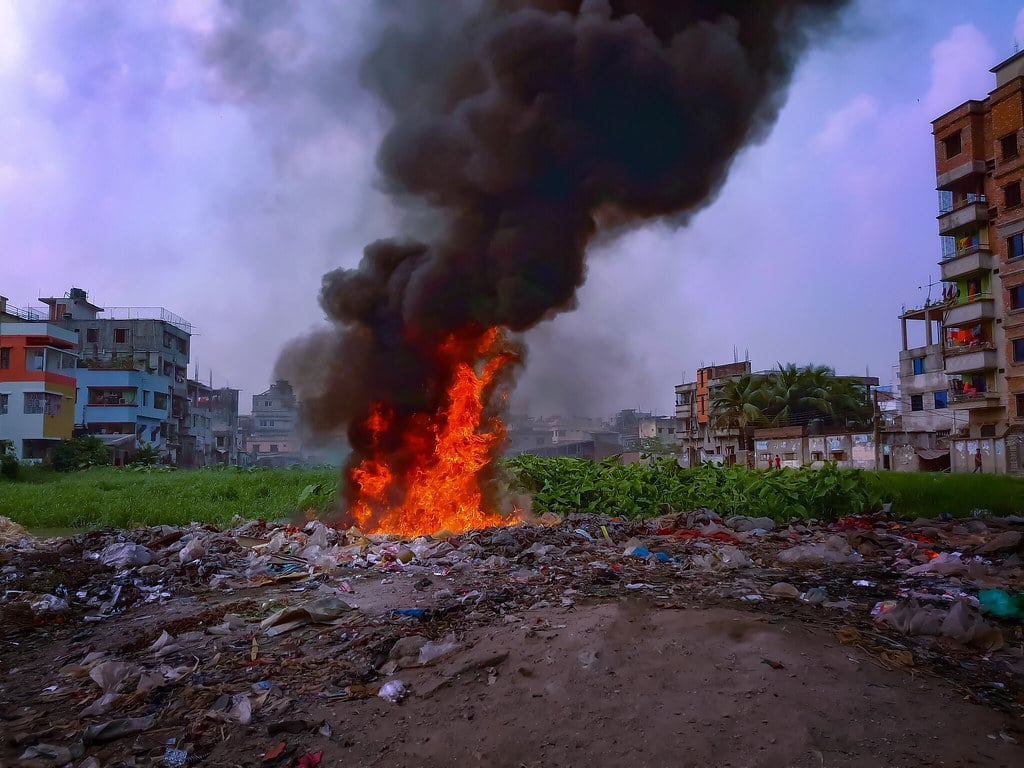
Bangladesh’s capital city faces air quality challenges that seem to come from every direction. Dhaka recorded an average PM2.5 concentration of 78 micrograms per cubic meter in 2024.
That’s 15 times higher than safe levels. The pollution originates from vehicle exhaust, construction dust, industrial emissions, and household cooking.
But one source stands out: brick kilns. Bangladesh has roughly 1,200 brick kilns operating, and about 790 of them are illegal.
These kilns burn low-quality coal and wood, pumping massive amounts of particulate matter into the air. The government has started demolishing illegal kilns and requiring cleaner technology for approved ones.
But with rapid urbanization and a growing population, new pollution sources keep appearing. Unmanaged waste sites smolder. Plastic gets burned in open pits.
Roadways crumble and create dust clouds.
Karachi’s Coastal Pollution

Pakistan’s largest city and main port faces unique pollution challenges. Karachi’s coastal location doesn’t protect it from dangerous air quality.
The city deals with industrial emissions, vehicle exhaust, and dust from construction projects that never seem to stop. The port itself contributes significantly.
Ships idle while waiting to dock. Trucks line up to move cargo.
Industrial facilities process goods for export. All of this activity happens near residential neighborhoods where millions of people live.
Kinshasa’s Sharp Increase

Kinshasa, the capital of the Democratic Republic of Congo, saw its pollution levels spike dramatically in 2024. The city’s PM2.5 concentration jumped from 15.5 micrograms per cubic meter in 2023 to 58.2 in 2024.
That’s nearly a fourfold increase in just one year. The causes are familiar: indoor cooking with wood and charcoal, forest fires, agricultural burning, and industrial activity.
But what makes Kinshasa’s situation particularly concerning is the lack of monitoring. The city needs more air quality stations to understand the full scope of the problem.
Without data, you can’t develop effective solutions.
Cairo’s Ancient Air

Egypt’s sprawling capital combines ancient history with modern pollution problems. Cairo consistently ranks among the world’s most polluted cities, though exact measurements vary depending on monitoring locations and seasonal factors.
The city’s pollution comes from the usual suspects: heavy traffic, industrial facilities, and construction dust. But Cairo also deals with sand and dust storms that blow in from the surrounding desert, adding natural particulates to the human-made pollution already in the air.
Kolkata’s Dense Population

India’s third-largest city faces pollution challenges similar to Delhi but on a slightly smaller scale. Kolkata’s dense population and active port make it a pollution hotspot in eastern India.
The city’s air quality deteriorates during winter when weather patterns trap pollution near ground level. Vehicle emissions, industrial activity, and construction dust all contribute to dangerous PM2.5 levels.
The nearby coal-fired power plants add another layer of particulates to the mix.
Tashkent’s Energy Problem

Central Asia’s largest city has long struggled with air pollution. Tashkent’s AQI frequently reaches unhealthy levels, particularly during winter months when heating demands surge.
Coal and fuel oil-fired power plants supply much of the city’s energy, and their emissions settle over residential areas. Vehicle traffic has increased as the city grows.
Green spaces have shrunk as construction expands. All of these factors combine to create persistent air quality problems that affect millions of residents.
Hanoi’s Traffic Congestion

Vietnam’s capital recorded an AQI of 142 in late 2024, placing it among the world’s most polluted cities. The pollution comes primarily from traffic congestion that clogs the city’s streets throughout the day.
Motorbikes dominate Hanoi’s transportation landscape. Millions of them.
They weave through traffic, idling at intersections, burning fuel inefficiently. Industrial facilities on the city’s outskirts add to the problem.
Seasonal weather patterns trap it all close to ground level, creating the perfect conditions for dangerous air quality.
Wuhan’s Industrial Base
This Chinese city’s heavy manufacturing sector makes it a significant pollution source. Wuhan’s AQI fluctuates between unhealthy for sensitive groups and outright unhealthy, depending on weather conditions and industrial activity levels.
Vehicle emissions compound the problem. As China’s economy has grown, car ownership has exploded.
More vehicles mean more exhaust, more traffic congestion, and more pollution settling over residential neighborhoods.
Dubai’s Desert Challenge

Dubai’s pollution problem looks different from most other cities on this list. The city’s modern infrastructure and environmental standards don’t protect it from air quality issues.
Dubai’s AQI reached 112 in 2024, driven largely by dust storms, construction activity, and vehicle emissions. The desert climate poses unique challenges.
Sand and dust naturally occur in the air. But rapid urban expansion creates additional particulate matter through construction projects that never seem to end.
The heat also affects air quality, creating conditions where pollutants linger rather than disperse.
N’Djamena’s Isolated Struggle

Out here, the tale takes an unusual turn. Ranking among the world’s twenty dirtiest urban skies, N’Djamena stands out.
Across Chad, toxic air hits harder than anywhere else on the landmass. It’s hard to grasp how bad the air really is in N’Djamena when there are so few checks on it.
Not like wealthier areas, where sensors track pollutants across towns and cities. When numbers can’t be trusted, finding ways to cut down smoke and fumes hits a wall fast.
Where the Air Still Clears

Out here, where smoke hangs heavy, you start seeing patterns in how places grow. Not every region burns the same kind of fuel.
Choices shape the air people breathe. Most dirty cities? They cluster across one continent.
Look at the top twenty – nineteen sit in Asia. Step closer.
Over half fill just one country’s map. India holds thirteen on that list.
This changes nothing by chance. Driven by choices, industry pushes profit while nature takes a backseat.
Fast city growth outruns sewers, roads, and power lines – basic needs lag behind. Burning coal fills the air; cars pour smoke because rules are weak or missing.
Breathing matters more than most realize, especially when clean options fade quietly. Kids raised here often struggle with weaker lungs before they even grow tall.
Grown ups face stubborn coughs that never seem to leave. Their hearts strain under unseen pressure. Years of life slip away without warning.
Meanwhile, smoke stacks whisper fumes into mornings, then evenings, repeating cycles like old habits nobody questions.
More from Go2Tutors!

- 16 Historical Figures Who Were Nothing Like You Think
- 12 Things Sold in the 80s That Are Now Illegal
- 15 VHS Tapes That Could Be Worth Thousands
- 17 Historical “What Ifs” That Would Have Changed Everything
- 18 TV Shows That Vanished Without a Finale
Like Go2Tutors’s content? Follow us on MSN.



