Most Powerful Military Jets of the Cold War
High above, the race between nations played out through steel wings cutting through thin air. Not just competition drove this era, instead fear mixed with ambition lit the fuse.
Jets climbed higher because standing still meant falling behind. One breakthrough led to another, then another after that.
Power is measured in how fast you moved, how high you flew, what weapons you carried, whether your eyes – radar scanning far off – saw enemies first. Each machine built was thought to be unmatched until the next appeared.
Flying fast, these planes served a purpose beyond speed – built to show power, meant to prevent wars before they started. Though few faced enemy fighters in battle, simply being ready changed how nations prepared their defenses.
Flying fast through history, these warplanes shaped decades of tension between global powers. Not just machines but symbols of an age where speed meant survival.
Each jet carried more than fuel – it bore the weight of strategy, fear, and innovation. From secret test runs to open skies, they pushed limits without asking permission.
Some roared higher, others struck farther, all changed how battles were fought. Power wasn’t only in weapons but in presence – seen, feared, remembered.
F-15 Eagle
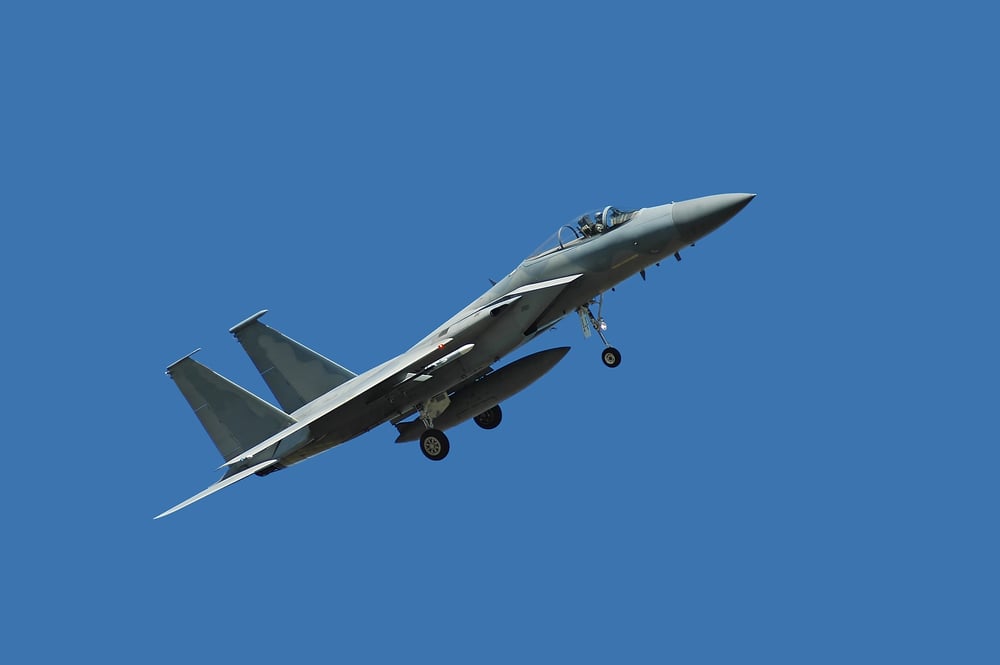
The F-15 Eagle was designed with one clear goal: air superiority. Introduced in the 1970s, it combined speed, maneuverability, and advanced radar systems to dominate aerial combat.
Its twin-engine design allowed it to climb rapidly and maintain control even in demanding conditions. What set the F-15 apart was its combat record and versatility.
It could engage multiple targets simultaneously while maintaining situational awareness. Its design proved so effective that it remains in service decades later, a rare achievement for a Cold War aircraft.
MiG-25 Foxbat
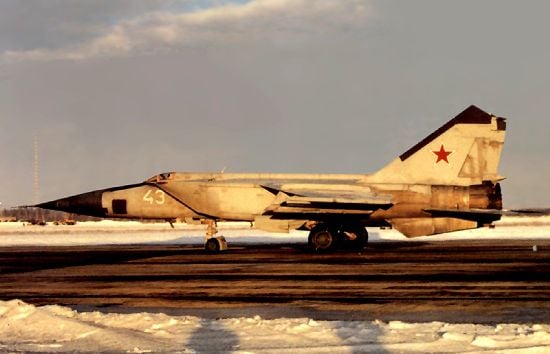
The MiG-25 was built for speed and altitude, capable of reaching speeds over Mach 3. Developed by the Soviet Union, it was initially designed to intercept high-altitude threats, including reconnaissance aircraft.
Its sheer performance created concern in the West, prompting rapid responses in aircraft development. While not as agile as some fighters, its raw speed and climb rate made it one of the most formidable interceptors of its time.
SR-71 Blackbird

The SR-71 Blackbird pushed the limits of aviation technology. Capable of flying above 85,000 feet at speeds exceeding Mach 3, it was designed for reconnaissance rather than combat.
Its power came from its ability to outrun threats rather than engage them. Advanced materials and engineering allowed it to operate in conditions that few aircraft could endure, making it one of the most iconic jets of the era.
F-14 Tomcat

The F-14 Tomcat became a symbol of naval air power. With its variable-sweep wings and long-range missile capability, it was designed to protect aircraft carriers from distant threats.
Its radar system could track multiple targets at long range, giving it a strategic advantage in interception missions. The combination of speed, range, and firepower made it a key asset for the U.S. Navy.
MiG-31 Foxhound

The MiG-31 evolved from the MiG-25, improving on its predecessor with better avionics and multi-target engagement capability. It was designed to intercept fast-moving threats, including cruise missiles.
Its radar system allowed it to detect and engage targets over long distances, making it a cornerstone of Soviet air defense. The aircraft’s ability to operate in harsh conditions added to its effectiveness.
F-4 Phantom II

The F-4 Phantom II served as a versatile workhorse for the United States and its allies. Capable of both air-to-air and ground attack missions, it played a major role in multiple conflicts during the Cold War.
Its power came from adaptability. While not the most advanced in any single category, it performed consistently across a wide range of roles, making it one of the most widely used jets of the era.
Su-27 Flanker

The Su-27 was designed to counter advanced Western fighters like the F-15. It combined long range with exceptional maneuverability, allowing it to compete at both distance and in close combat.
Its aerodynamic design gave it an edge in dogfights, while its range allowed it to operate over vast areas. The Su-27 became a foundation for several later aircraft, extending its influence beyond the Cold War.
F-111 Aardvark

The F-111 Aardvark introduced variable-sweep wings and terrain-following radar, allowing it to fly at high speed at low altitudes. This made it highly effective for precision strikes.
Its ability to operate in adverse weather and avoid detection gave it a unique role. It demonstrated how technology could redefine mission profiles during the Cold War.
MiG-29 Fulcrum

The MiG-29 was built for agility and close-range combat. Introduced in the 1980s, it featured advanced aerodynamics and helmet-mounted targeting systems.
Its design emphasized maneuverability, allowing it to perform tight turns and rapid changes in direction. This made it particularly effective in dogfighting scenarios.
B-52 Stratofortress
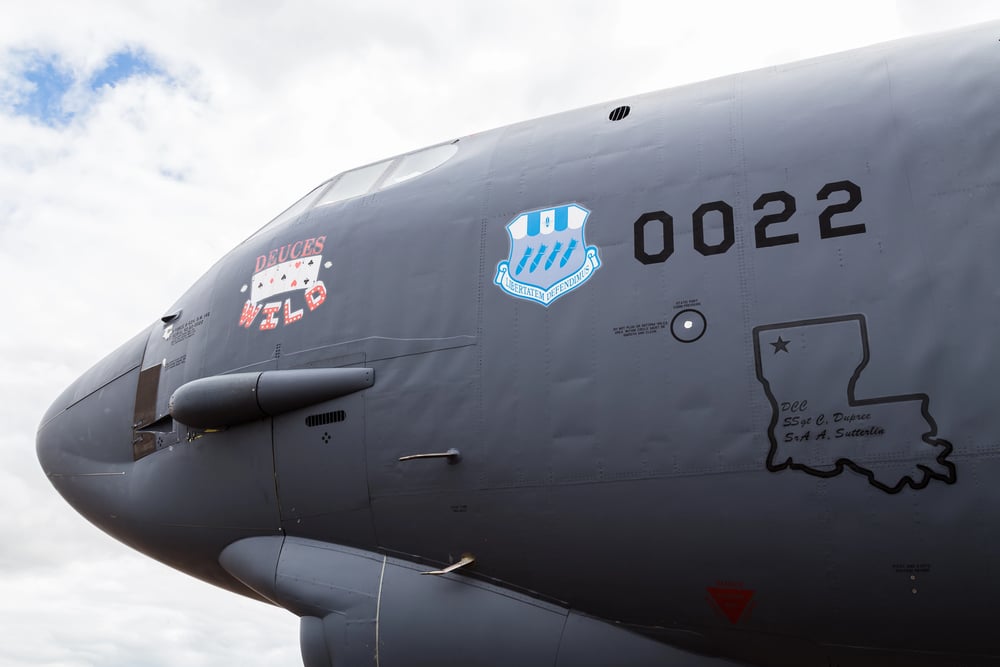
The B-52 Stratofortress represented long-range striking power. Capable of carrying large payloads over intercontinental distances, it played a central role in nuclear deterrence.
Its endurance and payload capacity made it a cornerstone of U.S. strategy. Despite its age, it remains in service, highlighting the strength of its original design.
Tu-95 Bear

The Tu-95 was the Soviet counterpart to the B-52, known for its distinctive propeller-driven engines. Despite its unconventional design, it offered impressive range and payload capacity.
Its presence served as a constant reminder of long-range strike capability. The aircraft remains in use today, a testament to its durability.
F-16 Fighting Falcon

The F-16 Fighting Falcon introduced a new approach to fighter design, focusing on agility and pilot control. Its fly-by-wire system allowed for precise handling and improved performance.
Compact and versatile, it became one of the most widely used fighters in the world. Its influence extended well beyond the Cold War.
Su-24 Fencer

The Su-24 was designed for low-level attack missions, similar in concept to the F-111. It featured variable-sweep wings and advanced navigation systems.
Its strength lay in its ability to penetrate defenses and deliver payloads with accuracy. It played a key role in Soviet strike capabilities.
Mirage III

The Dassault Mirage III brought delta-wing design into the spotlight. Known for its speed and simplicity, it became widely exported and used in various conflicts.
Its performance at high speeds made it effective in interception roles. The Mirage III demonstrated how design efficiency could translate into global success.
A-10 Thunderbolt II

The A-10 Thunderbolt II was built for durability and firepower. Designed to support ground forces, it could withstand significant damage while delivering precise attacks.
Its distinctive design and powerful cannon made it highly effective in its role. It proved that survivability and specialization could be just as important as speed.
Why These Jets Still Matter

Still flying high in quiet forms, old Cold War planes shape how we build jets now. Though hidden at times, their legacy pulses through key tools made back then.
Radar that sees farther came from those years, along with controls run by wires guided only by computers. Hitting targets with tight accuracy also started there, living on in what fills skies today.
What really stands out is how those jets came from a moment when speed shaped invention. Every new feature played into a broader plan, one where even small tech leads changed who held power worldwide.
Out there beyond glass cases and yellowed pages, their mark still moves. What you see overhead now began long ago – driven less by peace than rivalry, trial after trial, a need to stay ahead.
More from Go2Tutors!

- The Romanov Crown Jewels and Their Tragic Fate
- 13 Historical Mysteries That Science Still Can’t Solve
- Famous Hoaxes That Fooled the World for Years
- 15 Child Stars with Tragic Adult Lives
- 16 Famous Jewelry Pieces in History
Like Go2Tutors’s content? Follow us on MSN.



