Most Powerful Telescopes in Use
Looking deeper into space means looking further back in time. Light takes years to travel between stars, millennia to cross galaxies, and billions of years to reach us from the edges of the observable universe.
The telescopes we build determine how far back we can see, how much detail we can capture, and what mysteries we can actually solve. These instruments represent the cutting edge of what humanity can observe.
Some sit on remote mountaintops. Others orbit in space.
A few combine signals from multiple locations to create virtual telescopes the size of Earth itself. Here are the most powerful telescopes currently in operation.
James Webb Space Telescope
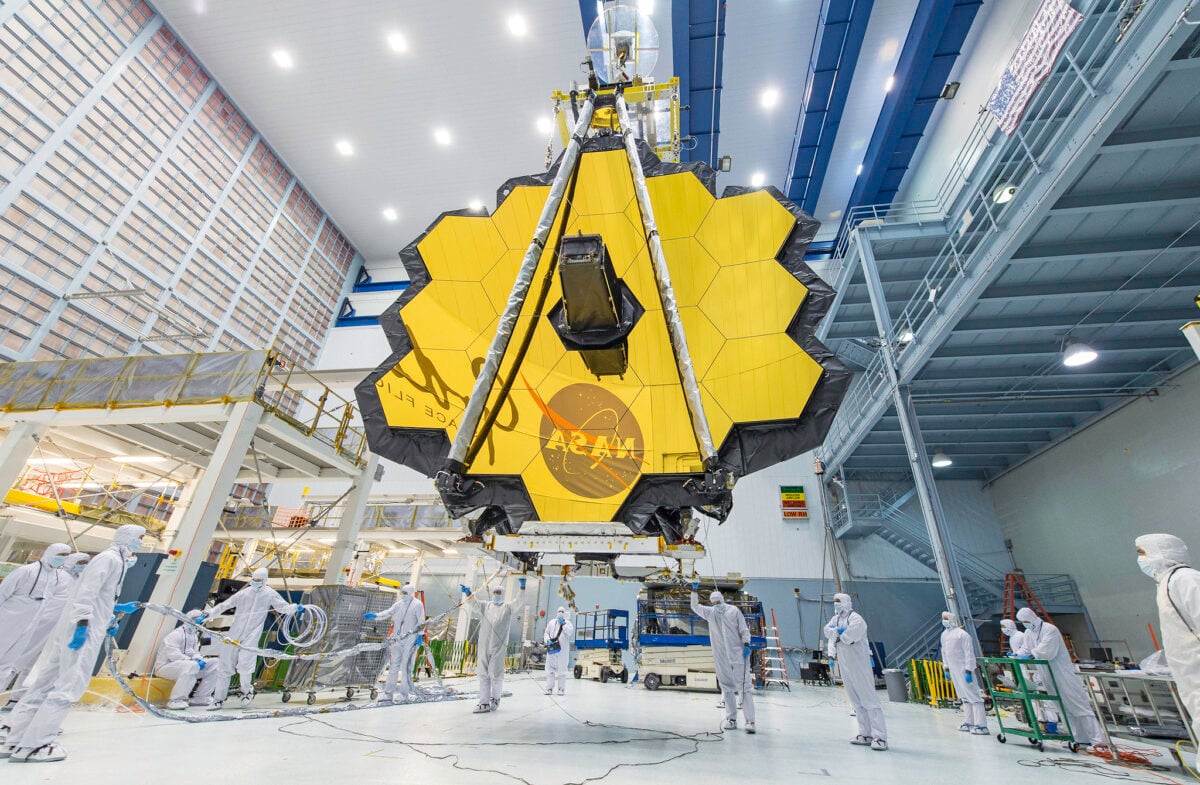
Webb launched in December 2021 and started science operations in July 2022. It’s the most powerful space telescope ever built.
The primary mirror measures 6.5 meters across, nearly three times larger than Hubble’s. But size alone doesn’t explain its capabilities.
Webb observes in infrared wavelengths. This allows it to see through cosmic dust that blocks visible light.
It can detect the first galaxies that formed after the Big Bang, study the atmospheres of exoplanets, and peer into stellar nurseries where new stars are being born. The infrared capability is what makes it more powerful than Hubble for many observations, despite Hubble’s continued importance for visible-light astronomy.
The telescope sits at the second Lagrange point, about a million miles from Earth. A massive sunshield the size of a tennis court keeps the instruments at minus 370 degrees Fahrenheit.
That extreme cold is necessary for infrared observations. Any heat would create interference, like trying to see stars while standing next to a bonfire.
Webb has already returned images that changed our understanding of early galaxy formation. Galaxies that were supposed to be small and irregular appear large and structured.
Stars that shouldn’t exist yet are clearly visible. The data keeps challenging existing theories, which is exactly what a telescope should do.
Extremely Large Telescope
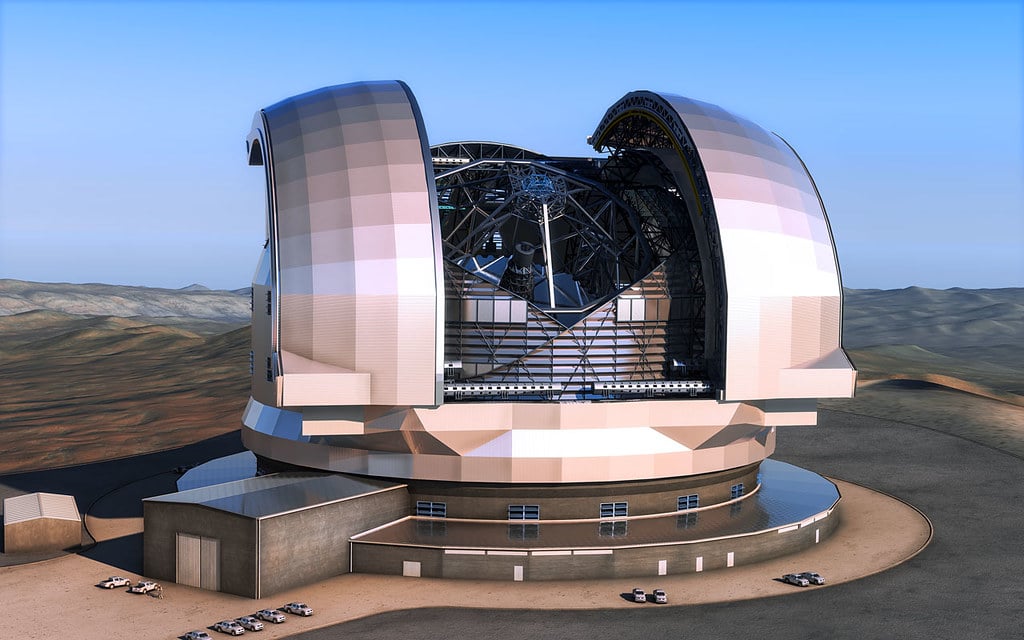
The ELT is under construction in Chile’s Atacama Desert. When completed around 2028, it will have a 39-meter primary mirror made of 798 individual segments.
That makes it the largest optical telescope ever attempted. The mirror will collect 13 times more light than the largest telescopes operating today.
More light means seeing fainter objects and capturing more detail. The ELT will be able to directly image Earth-sized planets around nearby stars, study the acceleration of the universe’s expansion, and potentially detect biosignatures in exoplanet atmospheres.
Adaptive optics systems will correct for atmospheric distortion in real time. The atmosphere makes stars twinkle, which looks pretty but ruins detailed observations.
The ELT will use deformable mirrors that change shape thousands of times per second, compensating for atmospheric turbulence. The result will be images sharper than Hubble’s, despite being on the ground.
Construction is already underway. The dome is being built, mirror segments are being manufactured, and the mountain was literally flattened to create a level platform.
The project involves 15 countries and costs over a billion euros. But the science return should justify the investment.
Atacama Large Millimeter Array
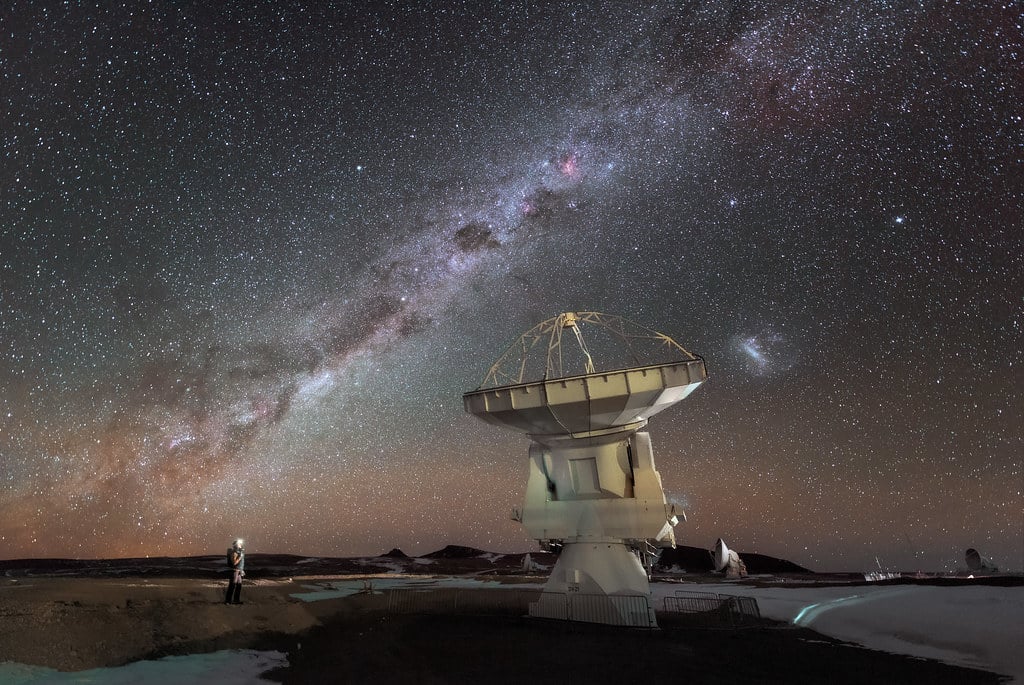
ALMA consists of 66 radio antennas spread across Chile’s Atacama Desert at 16,400 feet. The antennas work together as a single telescope, combining their signals to create images with resolution far beyond what any individual antenna could achieve.
The array observes millimeter and submillimeter wavelengths, which reveal cold gas and dust in space. This is the material that forms stars and planets.
ALMA has captured the clearest images ever of protoplanetary disks—the swirling material around young stars where planets form. You can see gaps in the disks where planets are actively condensing.
The high altitude matters. Water vapor in the atmosphere absorbs the wavelengths that ALMA studies.
By building at an extreme elevation where the air is thin and dry, ALMA minimizes atmospheric interference. The site is so high that workers need oxygen tanks.
Construction crews worked in shifts because staying up there too long causes altitude problems. ALMA discovered complex organic molecules in interstellar space, imaged a black pit’s shadow in combination with other telescopes, and helped measure distances to distant galaxies with unprecedented precision.
The array cost $1.4 billion to build and required international cooperation between Europe, North America, and East Asia.
Thirty Meter Telescope
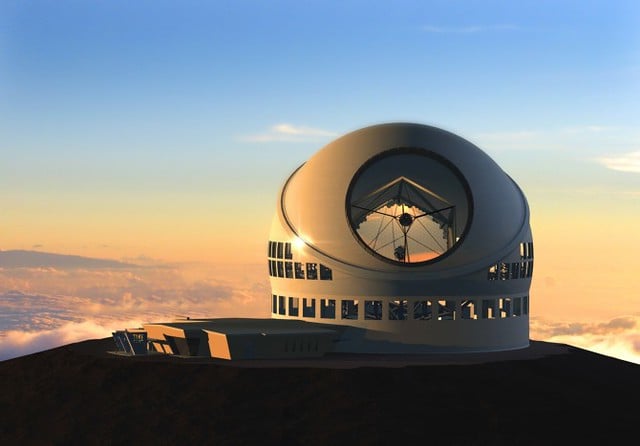
TMT is planned for Mauna Kea in Hawaii, though construction has faced significant delays due to protests from Native Hawaiian groups who consider the mountain sacred. If built, the telescope will have a 30-meter segmented mirror, making it one of the three extremely large telescopes planned for this decade.
The scientific goals include studying the first stars and galaxies, understanding dark matter and dark energy, and characterizing exoplanet atmospheres. The larger aperture captures more light, revealing fainter objects and more detail than current telescopes can see.
The political and cultural situation complicates things. Mauna Kea already hosts 13 telescopes.
Adding another one, especially such a large one, has generated opposition. Some astronomers now question whether the site will ever be viable.
Alternative locations in the Canary Islands have been discussed, but that would delay the project further and increase costs. The technical design is ready.
The mirror segments are being manufactured. The adaptive optics systems are being tested.
But the telescope sits in limbo, waiting for the resolution of issues that have nothing to do with science. It’s a reminder that building powerful telescopes requires more than engineering skill.
Hubble Space Telescope
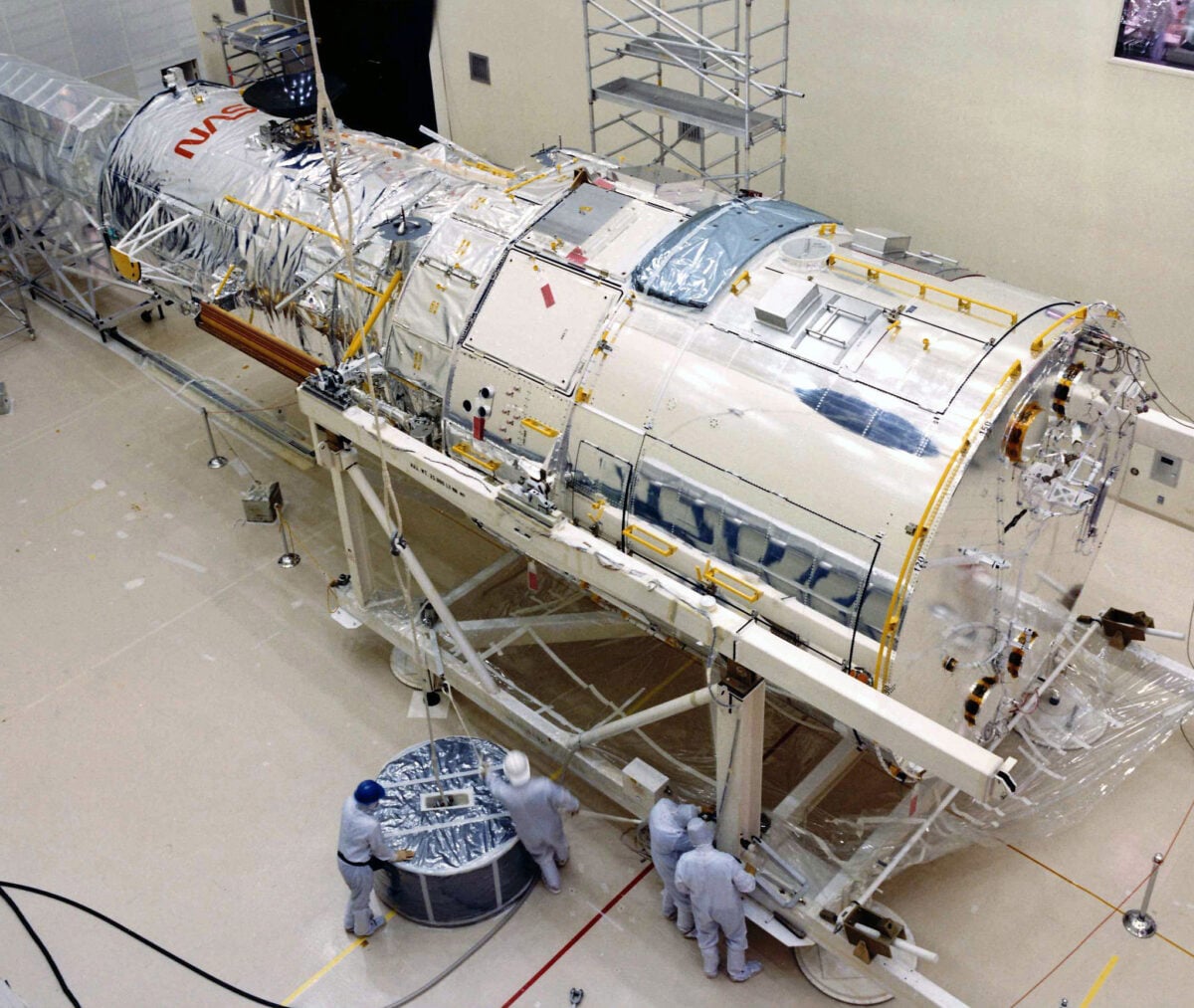
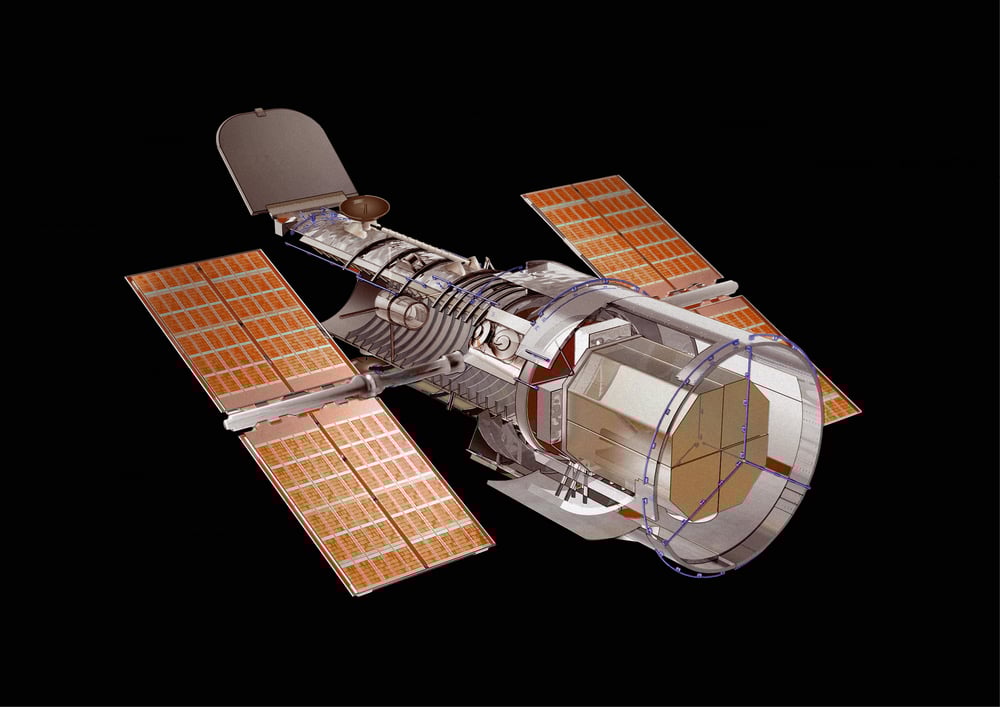
Hubble launched in 1990 and is still operating despite being over 30 years old. The telescope has a 2.4-meter mirror and observes primarily in visible and ultraviolet wavelengths.
It’s nowhere near the size of modern ground-based telescopes, but being in space eliminates atmospheric interference. Hubble revolutionized astronomy.
It measured the expansion rate of the universe, discovered dark energy, captured deep field images showing thousands of distant galaxies, studied the atmospheres of exoplanets, and provided the most iconic space images ever taken. Nearly every astronomy textbook published in the last 30 years includes Hubble images.
The telescope has been serviced multiple times by astronauts who replaced instruments, upgraded systems, and fixed problems. The last servicing mission was in 2009.
Since then, Hubble has been slowly degrading. Gyroscopes fail, instruments age, and solar panels lose efficiency.
But it keeps working, still producing valuable science. Webb didn’t replace Hubble—they complement each other.
Hubble sees visible light that Webb can’t detect. Many observations benefit from data from both telescopes.
Eventually Hubble will fail completely. When that happens, a significant capability will be lost.
No visible-light space telescope is planned to replace it.
Square Kilometre Array

SKA is under construction across Australia and South Africa. When completed, it will be the world’s largest radio telescope, consisting of thousands of antennas spread over thousands of kilometers.
The total collecting area will equal one square kilometer, hence the name. Radio telescopes observe the longest wavelengths in the electromagnetic spectrum.
They can see through dust clouds, detect cold hydrogen gas throughout the universe, study pulsars and the great abyss, and potentially detect radio signals from extraterrestrial civilizations. SKA will be 50 times more sensitive than existing radio telescopes.
The array design uses two types of antennas. Australia will host mid-frequency dishes, while South Africa will have low-frequency aperture arrays.
The different antenna types cover different parts of the radio spectrum. Together, they provide complete coverage of radio wavelengths relevant to astronomy.
Construction started in 2021 and will continue through the 2020s. The project involves 16 countries and costs roughly $2 billion.
Once operational, SKA will generate more data per day than the entire internet. Processing that data requires purpose-built supercomputers.
Gran Telescopio Canarias
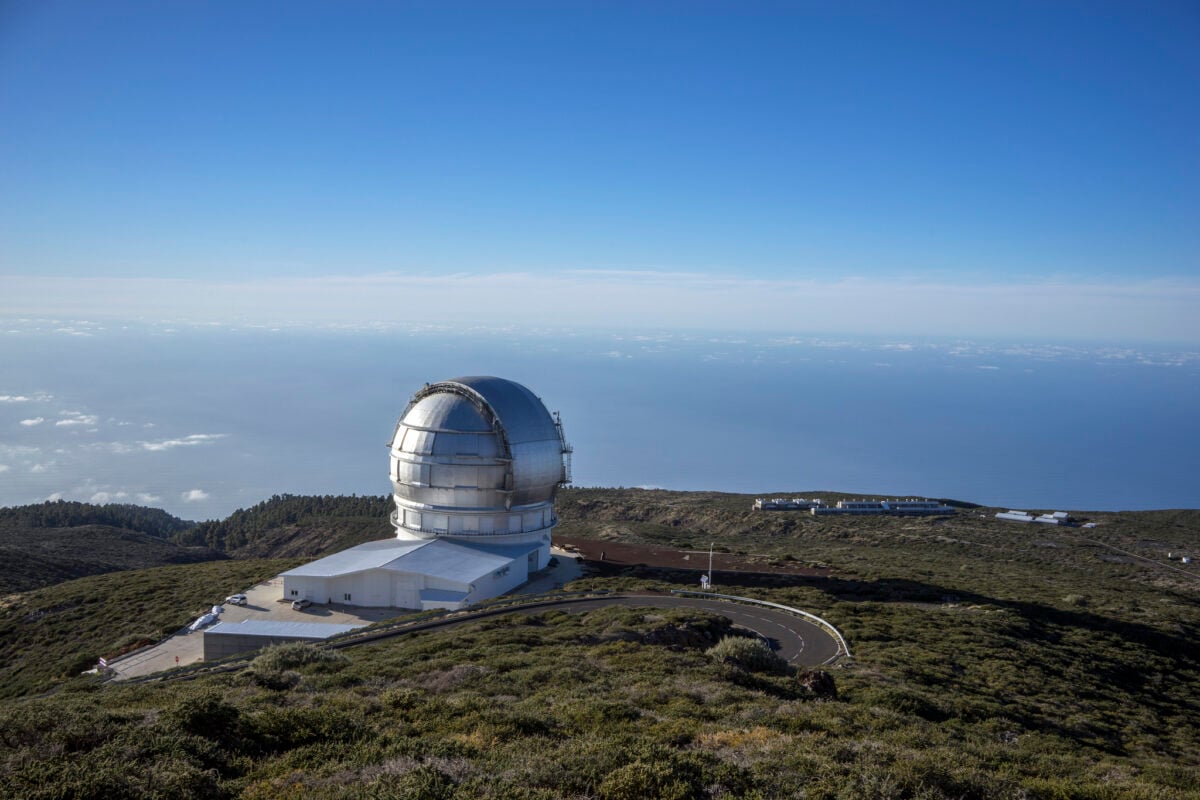
GTC sits on La Palma in the Canary Islands. It’s the largest single-aperture optical telescope currently operating, with a 10.4-meter segmented mirror.
The telescope started operations in 2009 and has produced important discoveries despite being overshadowed by newer instruments. The location offers excellent observing conditions.
La Palma is far from major cities, sits above the clouds at 7,900 feet, and has stable atmospheric conditions. The island hosts several major telescopes, creating a center for European astronomy.
GTC specializes in spectroscopy—splitting light into its component wavelengths to determine composition, temperature, velocity, and other properties of distant objects. The telescope has studied the most distant supernovae, characterized exoplanet atmospheres, and measured the masses of distant galaxies.
The instrument isn’t as well-known as Hubble or Webb, but it represents the workhorse category of telescope. Not the largest, not the most advanced, but consistently productive.
Most astronomy doesn’t come from headline-grabbing observations. It comes from the steady accumulation of data from telescopes like GTC.
Keck Observatory
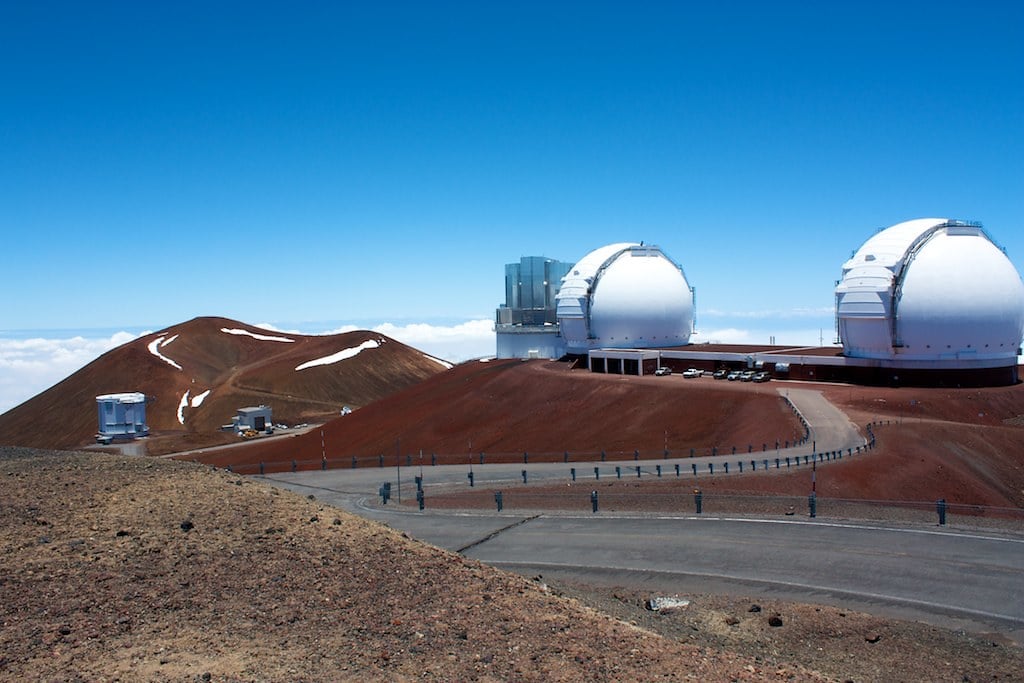
The twin Keck telescopes sit atop Mauna Kea in Hawaii. Each has a 10-meter segmented mirror.
They started operations in the 1990s and remain among the most scientifically productive telescopes in the world. Keck pioneered the segmented mirror design that larger telescopes now use.
A single mirror blank larger than 8 meters becomes impractical to manufacture and support. Segmented mirrors use dozens of smaller hexagonal mirrors aligned to act as one surface.
Actuators continuously adjust each segment to maintain perfect alignment. The telescopes can work together as an interferometer, combining their light to achieve higher resolution than either alone.
This technique helped image the supermassive black pit at the center of our galaxy. Keck also discovered many of the first exoplanets and helped measure the acceleration of the universe’s expansion.
Adaptive optics at Keck produces some of the sharpest ground-based images possible. The system uses a laser to create an artificial star in the upper atmosphere.
By measuring how atmospheric turbulence distorts this artificial star, the system can correct for that distortion in real time. The result is images that rival space telescopes for sharpness.
Very Large Telescope
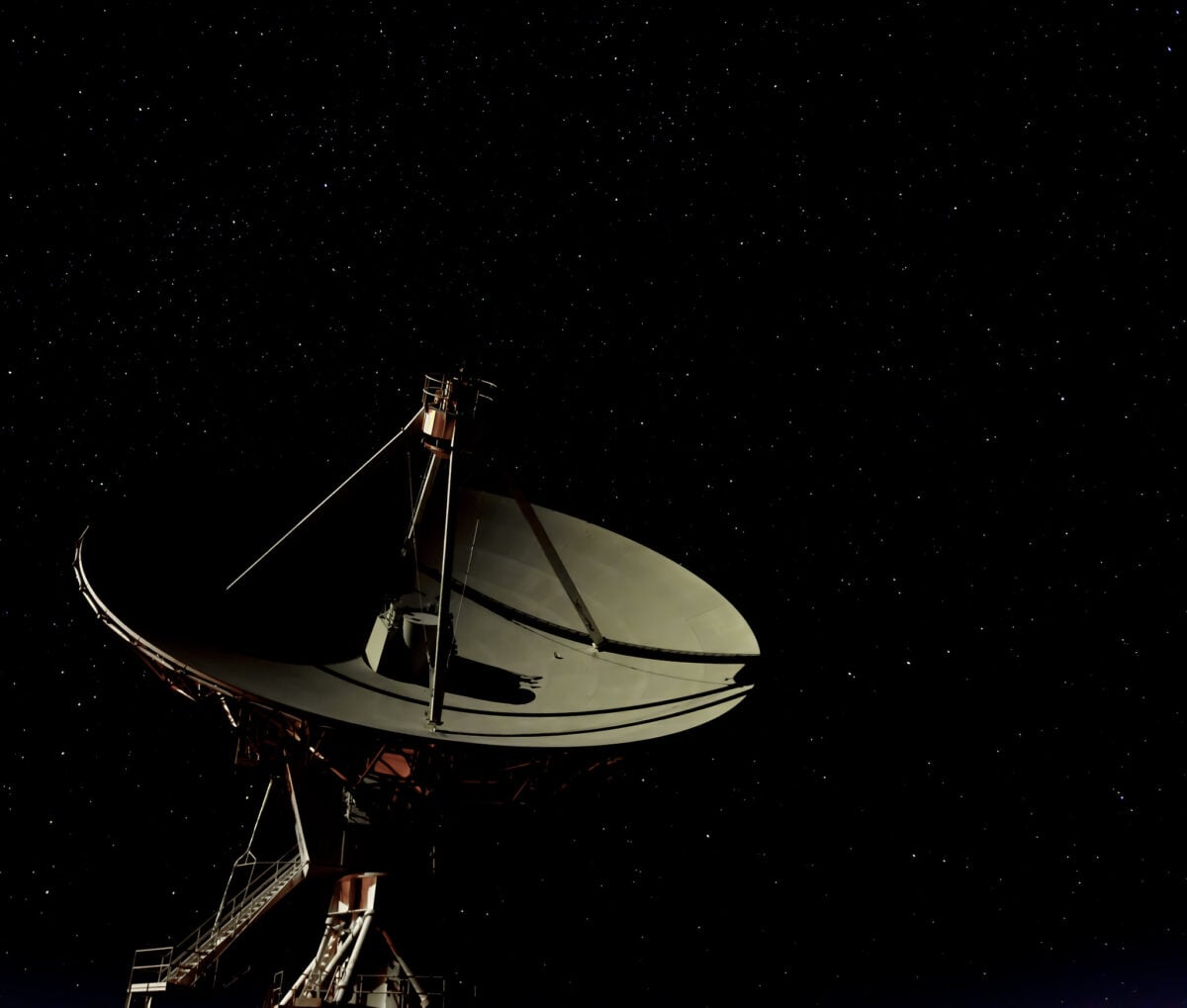
VLT consists of four 8.2-meter telescopes and four smaller auxiliary telescopes in Chile’s Atacama Desert. Like Keck, the telescopes can work independently or combine their light as an interferometer.
The facility is operated by the European Southern Observatory. VLT captured the first direct image of an exoplanet in 2004.
It tracked stars orbiting the supermassive great abyss at our galaxy’s center, confirming Einstein’s predictions about gravity. It discovered the most distant gamma-ray burst ever detected.
The telescopes have been operating since the late 1990s and remain highly productive. The site sits at 8,600 feet elevation in one of the driest places on Earth.
Some nights, the relative humidity drops below 10 percent. The lack of water vapor makes for excellent infrared observations.
Clear skies are available over 340 nights per year. VLT will eventually work alongside the ELT when that telescope completes construction.
The same site will host both instruments, creating a synergy where VLT can identify targets for the ELT to study in detail. Observatories often work this way—survey telescopes find interesting objects, then larger telescopes follow up.
Subaru Telescope
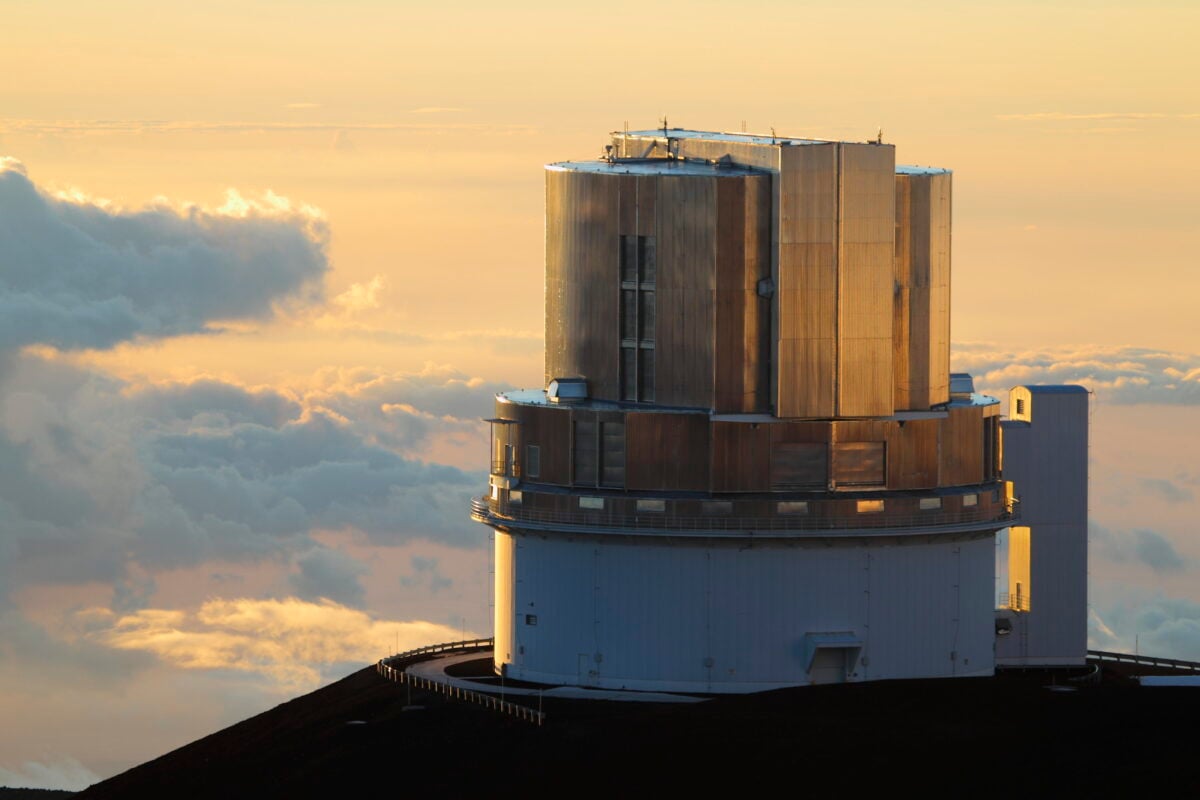
Subaru is an 8.2-meter telescope on Mauna Kea in Hawaii, operated by Japan. The name means “Pleiades” in Japanese and also references the Subaru automotive company that helped fund it.
The telescope has a single-piece mirror, one of the largest ever successfully cast. The telescope specializes in wide-field imaging.
Most large telescopes have narrow fields of view—they see small patches of sky in great detail. Subaru sacrifices some detail for breadth, allowing it to survey larger areas efficiently.
This makes it ideal for finding rare objects that only appear in certain parts of the sky. Subaru discovered many trans-Neptunian objects in the outer solar system.
It maps the structure of distant galaxies. It searches for supernovae and tracks near-Earth asteroids.
The wide field of view means Subaru can do science that other telescopes can’t, despite having a similar mirror size. The instrument represents a different philosophy in telescope design.
Bigger isn’t always better. Sometimes you need coverage more than depth.
Subaru fills that niche effectively.
Event Horizon Telescope
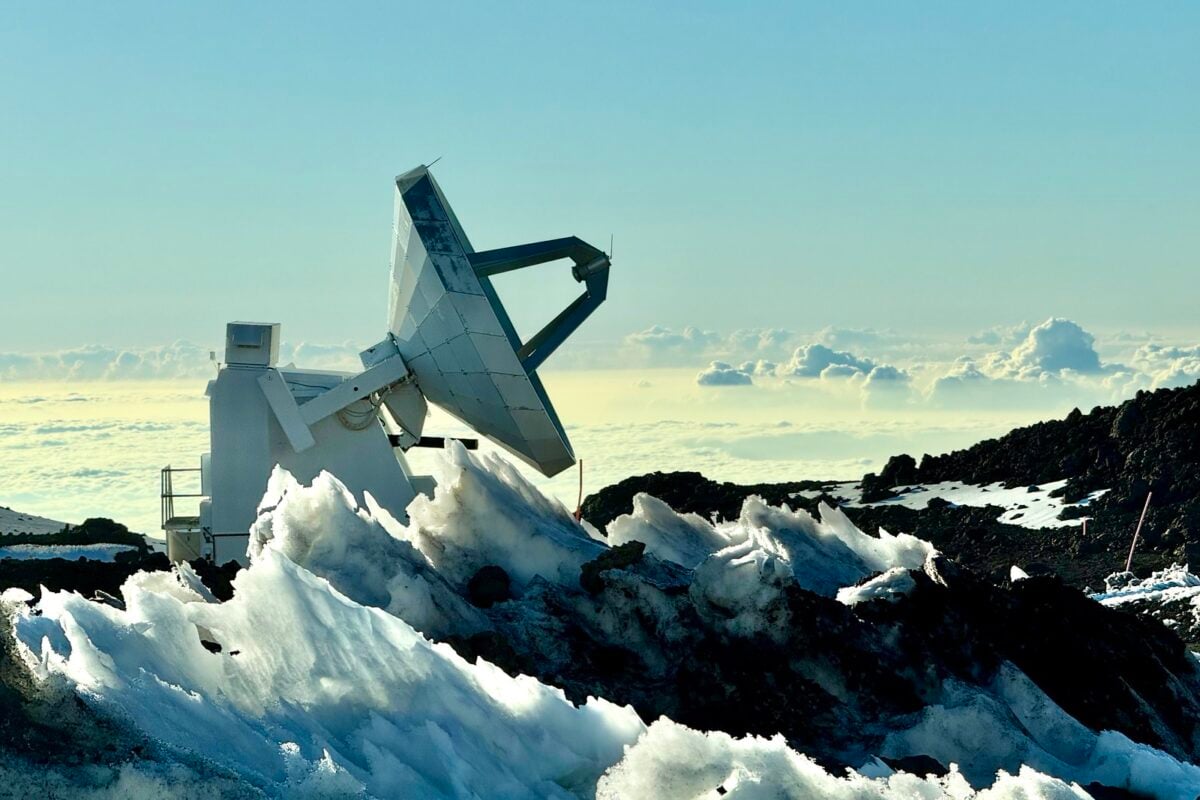
EHT isn’t a single telescope but a network of radio telescopes spread across the planet. By combining data from multiple observatories, EHT creates a virtual telescope as large as Earth itself.
This technique, called very long baseline interferometry, achieves a resolution impossible for any single instrument. EHT captured the first image of a black pit’s shadow in 2019.
The target was M87*, the supermassive great abyss at the center of galaxy M87. The image showed the distinctive silhouette predicted by Einstein’s equations—a dark shadow surrounded by a bright ring of superheated gas.
The project required precise synchronization between observatories using atomic clocks. Each site recorded terabytes of data that had to be shipped on hard drives to processing centers.
The correlation and image reconstruction took months. The result was eight participating observatories on four continents producing one image that confirmed general relativity in the strongest gravitational field ever tested.
EHT has since imaged Sagittarius A*, the black pit at our own galaxy’s center. That target is much closer but also more variable, making the imaging even more challenging.
The network continues to expand as more telescopes join the array.
Gemini Observatory
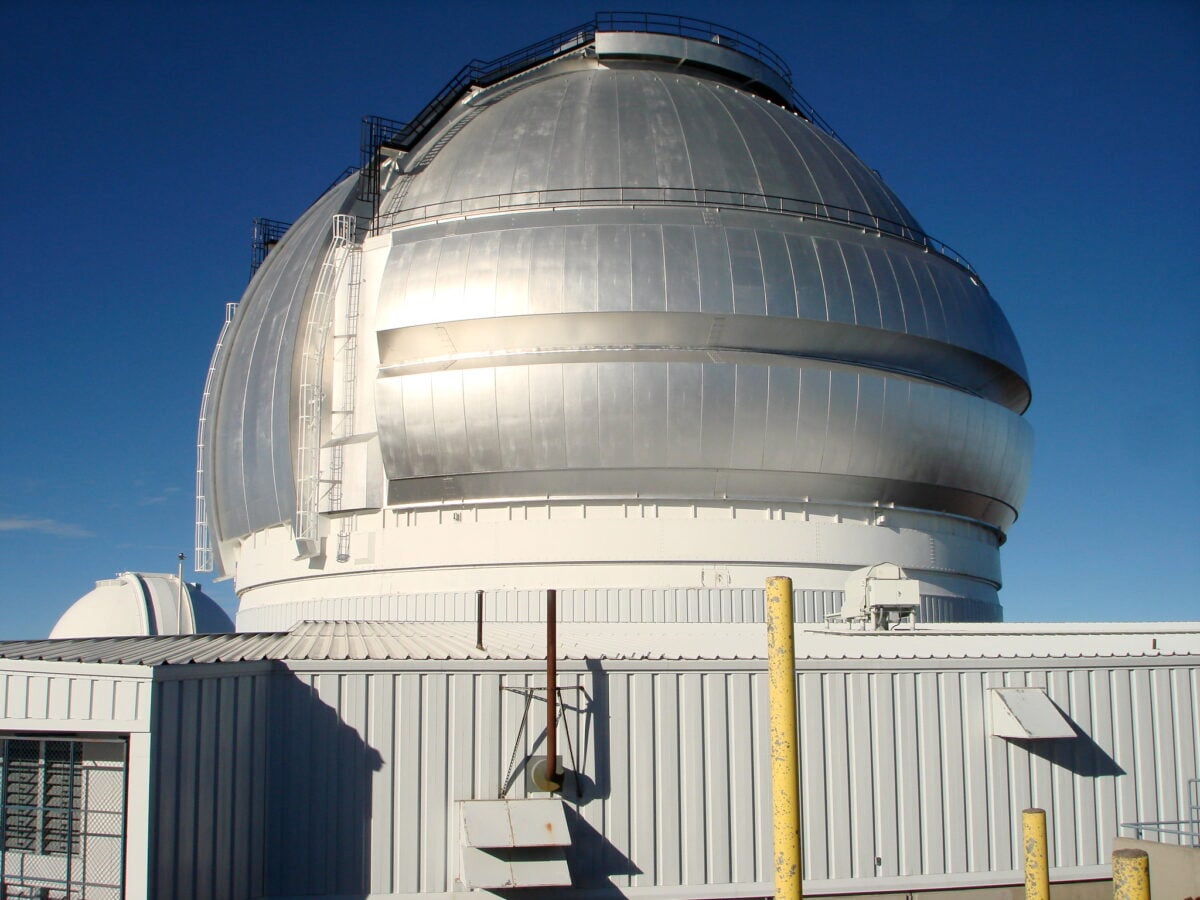
Gemini consists of two 8.1-meter telescopes—one in Hawaii, one in Chile. This gives astronomers access to both hemispheres of the sky from excellent observing sites.
The telescopes are nearly identical, operated as a single facility by an international partnership. The northern telescope on Mauna Kea started operations in 1999.
The southern telescope in Chile opened in 2000. Together they provide complete sky coverage and allow objects to be observed from either hemisphere depending on weather and scheduling.
Gemini specializes in infrared observations. The telescopes have sophisticated adaptive optics systems and instruments designed for wavelengths longer than visible light.
This makes them particularly good at studying dusty regions where stars form, cool brown dwarfs, and distant galaxies obscured by cosmic dust.
The dual-hemisphere approach offers practical advantages. If the weather is bad in Hawaii, observations can shift to Chile.
If an object is low on the horizon from one site, it might be perfectly placed from the other. The flexibility increases efficiency and allows more science to be done.
Vera C. Rubin Observatory
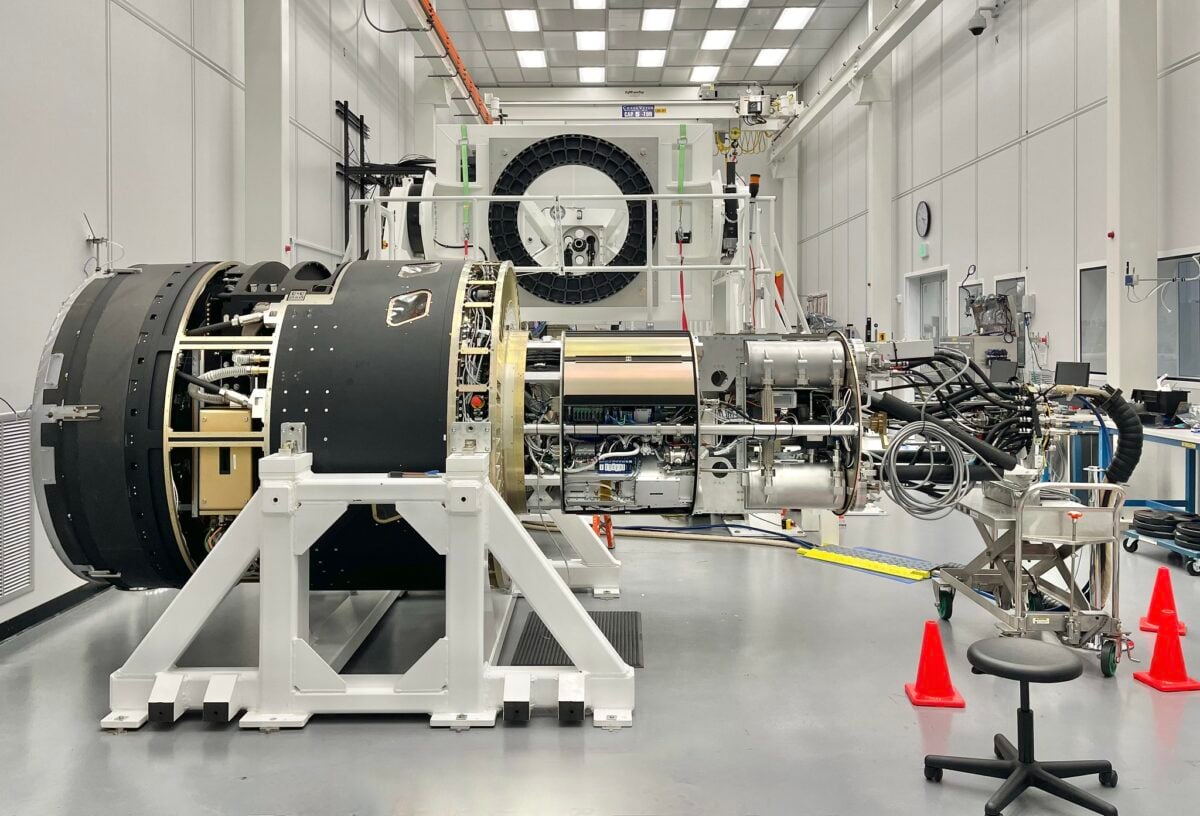
The Rubin Observatory is completing construction in Chile. When operational in 2025, it will conduct the largest astronomical survey ever attempted.
The telescope has an 8.4-meter primary mirror, but the key innovation is the camera—a 3.2-gigapixel monster that can photograph the entire visible sky every few nights. The Legacy Survey of Space and Time will map the sky repeatedly over ten years.
By comparing images taken at different times, astronomers can find anything that moves, changes brightness, or appears and disappears. This includes asteroids, supernovae, variable stars, and transient events that only last hours or days.
The data volume will be staggering. Rubin will generate 20 terabytes of data per night. Processing and distributing this data to astronomers worldwide requires infrastructure on par with particle physics experiments.
The survey is designed to be open—anyone can access the data and search for discoveries. Rubin will likely find more asteroids than all previous surveys combined.
It should discover thousands of supernovae per year. It will track millions of variable stars and create a movie of the changing universe.
The science enabled by this single facility spans nearly every area of astronomy.
What Makes a Telescope Powerful
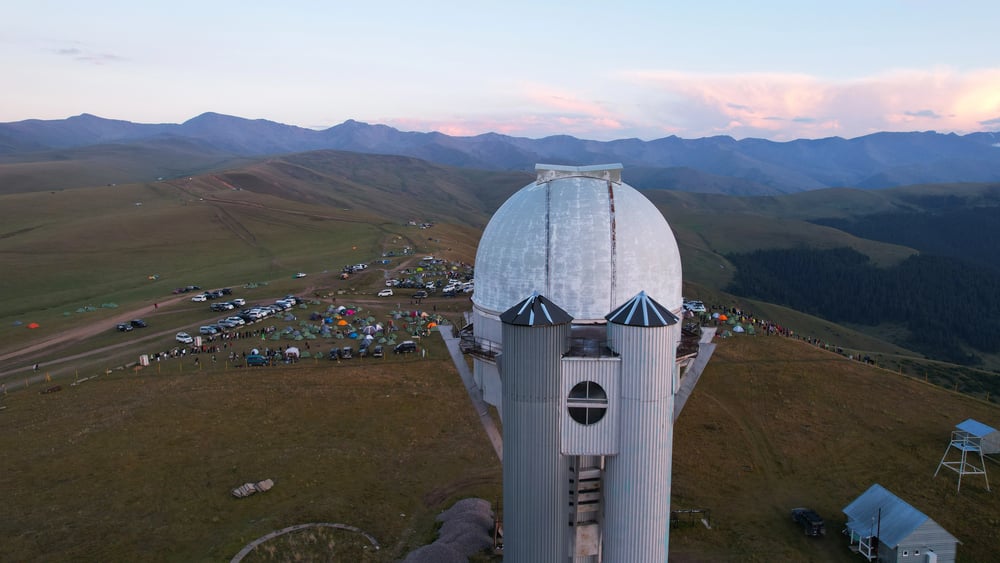
Power means different things depending on what you want to observe. For detecting faint objects, the light-collecting area matters most.
Larger mirrors gather more photons, revealing dimmer sources. For resolving fine detail, aperture and image quality determine performance.
For surveying large areas, the field of view becomes critical. Location matters as much as hardware.
Space telescopes avoid atmospheric interference but cost orders of magnitude more to build and maintain. Ground-based telescopes can be much larger but must deal with atmospheric distortion, weather, and light pollution.
High-altitude desert sites offer the best compromise—minimal atmosphere, low humidity, clear skies. Wavelength specialization defines capabilities.
Visible-light telescopes can’t see what infrared telescopes detect. Radio telescopes observe phenomena invisible to optical instruments.
Ultraviolet and X-ray observations require space because Earth’s atmosphere blocks those wavelengths. Comprehensive understanding requires observations across the entire electromagnetic spectrum.
The View Gets Clearer
Out beyond what older scopes could catch, new ones always push further. Galileo’s small glass tube found moons circling Jupiter.
Then came the big 100-inch machine on Mount Wilson – it proved spirals were far-off island universes. Later, Hubble peeled back space to show endless webs of bright islands scattered through darkness.
Now Webb peers into time itself, catching light from galaxies born just after everything began.
One step ahead, future tools reach deeper into space. Faint glimmers appear clearer through giant scopes now being built.
Instead of waiting, astronomers turn to new eyes in orbit targeting light beyond what Webb detects. Signals once too weak suddenly stand out as radio networks scan the heavens like never before.
Seeing gets harder after a certain point. Because the cosmos is ancient, yet light travels at a fixed pace, our view stops somewhere.
Galaxies appear as if they were just hundreds of millions of years ago. Newer scopes may spot the earliest suns ever born.
Past that moment though, everything fades into darkness. Telescopes do more than collect data.
Questions shape their purpose. Origins pull at curiosity – what birthed everything seen? Life elsewhere stays uncertain, a quiet guess hanging in silence.
Ingredients of space remain half-known, scattered across dark stretches. Final moments of existence stay unwritten, far beyond today.
What we’re really asking goes beyond labs and textbooks. These inquiries touch everyone, everywhere.
Telescopes happen to be our tools for collecting what we need to know.
More from Go2Tutors!

- The Romanov Crown Jewels and Their Tragic Fate
- 13 Historical Mysteries That Science Still Can’t Solve
- Famous Hoaxes That Fooled the World for Years
- 15 Child Stars with Tragic Adult Lives
- 16 Famous Jewelry Pieces in History
Like Go2Tutors’s content? Follow us on MSN.