Most Valuable Fossils Discovered
Fossils have always fascinated people, but in recent years they’ve become something else entirely: big-ticket auction items that rival fine art in price. What was once the domain of museums and academic institutions has turned into a playground for wealthy collectors willing to shell out millions for a piece of prehistoric history.
The prices these ancient remains command can be staggering, with some specimens selling for more than most people will earn in several lifetimes. Here is a list of the most valuable fossils ever discovered and sold.
Apex the Stegosaurus

The crown jewel of fossil sales is Apex, a Stegosaurus skeleton that shattered records in July 2024 when it sold for $44.6 million at Sotheby’s in New York. Commercial paleontologist Jason Cooper discovered this 150-million-year-old specimen on his property near the town of Dinosaur, Colorado, in 2022. Standing 11 feet tall and stretching nearly 27 feet from nose to tail, Apex contains 254 of an estimated 319 bone elements, making it one of the most complete Stegosaurus skeletons ever found.
The final price was more than 11 times its low estimate of $4 million. The specimen was purchased by billionaire hedge fund manager Ken Griffin, who has since loaned it to the American Museum of Natural History.
Stan the T. rex
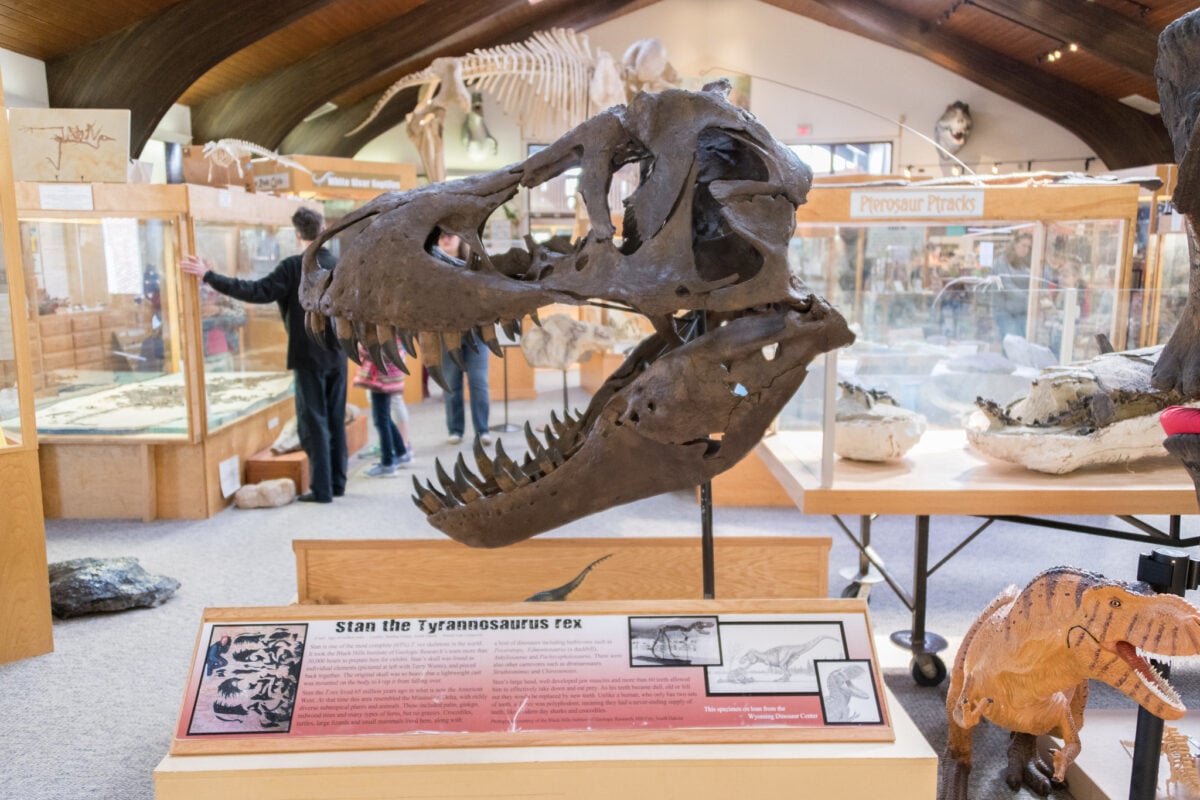
Before Apex took the crown, Stan held the record as the most expensive fossil ever sold, fetching $31.8 million at Christie’s in 2020. Named after amateur paleontologist Stan Sacrison who discovered it in South Dakota in 1987, this T. rex skeleton is one of the best preserved examples in the world.
Based on its 40-foot length and 13-foot height, scientists estimate Stan weighed nearly 8 tons, about the weight of two adult elephants. The skeleton remained a mystery for two years after the sale until trade records revealed it had been exported to the United Arab Emirates, where it awaits display at the Abu Dhabi Natural History Museum.
Juvenile Ceratosaurus

In July 2025, a juvenile Ceratosaurus fossil became the third most expensive fossil ever sold, bringing in $30.5 million at Sotheby’s after a six-minute bidding war between six different bidders. This specimen is particularly rare because only three other Ceratosaurus fossils are known to exist, and this is the only juvenile among them.
Standing just over 6 feet tall and nearly 11 feet long, the fossil contains 139 original bone elements, including a nearly complete skull with 57 bone elements. The specimen was uncovered in 1996 at the Bone Cabin Quarry in Wyoming and had been displayed at the Museum of Ancient Life in Utah from 2000 to 2024.
Montana Dueling T. rex Pair

In 2018, a pair of Tyrannosaurus rex skeletons discovered in Montana sold for $14 million in a private transaction brokered with a Middle Eastern buyer. These specimens, excavated from the Hell Creek Formation, were remarkably preserved, with one skeleton approximately 75 percent complete and the other nearly 65 percent complete.
The discovery of two T. rex fossils together is extremely rare, making this sale particularly notable among collectors. These dueling giants represent one of the few instances where multiple large predators were found in close proximity, potentially suggesting territorial disputes or scavenging behavior.
Hector the Deinonychus
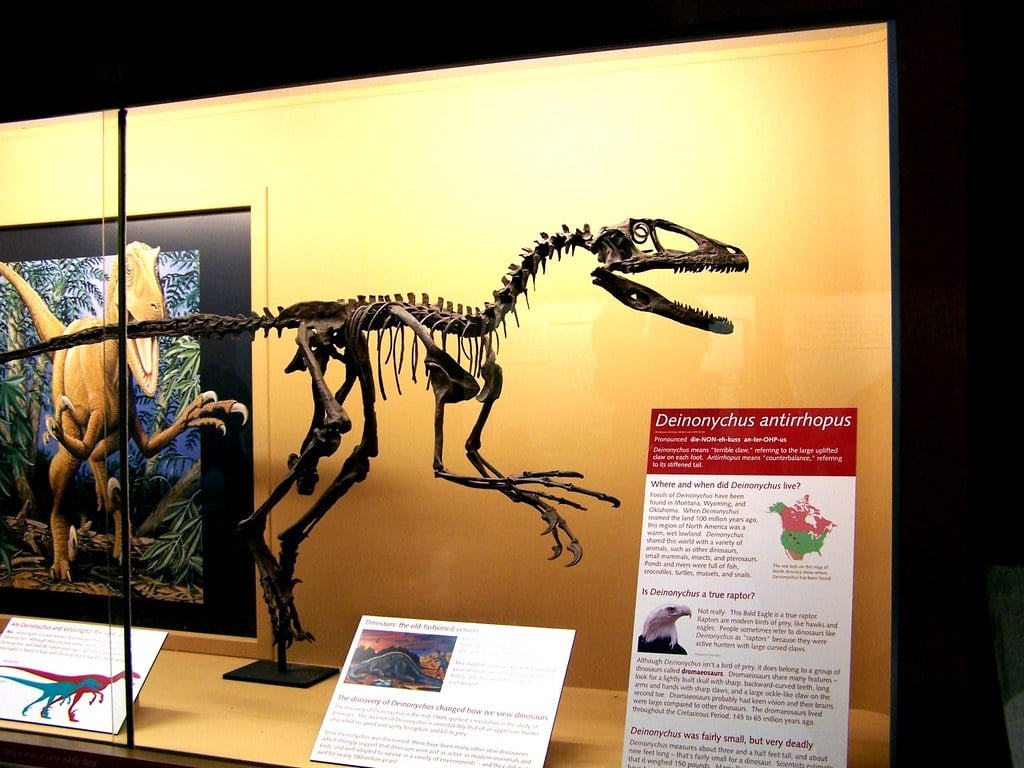
A Deinonychus skeleton nicknamed Hector sold for $12.4 million at Christie’s in May 2022, absolutely crushing its presale estimate of $4 million to $6 million. This 10-foot-long skeleton includes 126 fossilized bones dating to between 115 million and 108 million years ago during the Cretaceous period.
American paleontologist Barnum Brown discovered the first Deinonychus fossils in 1931, and later descriptions of the animal so impressed Michael Crichton that he rebranded the dinosaur as Velociraptor in his Jurassic Park novels because he thought the name sounded more dramatic. The specimen was unearthed in Montana’s Wolf Canyon in 2015 by self-taught paleontologists Jack and Roberta Owen.
Sue the T. rex

Sue made history in 1997 as the first dinosaur ever sold at auction, bringing $8.4 million at Sotheby’s. Named after Sue Hendrickson who discovered the fossil in 1990, this T. rex is remarkable because it was 90 percent complete.
The 67-million-year-old fossil was found on the Cheyenne River Indian Reservation and, after a legal battle, the landowner consigned it to auction. The Chicago Field Museum purchased Sue with help from sponsors like McDonald’s and Disney, and it became the centerpiece of their collection.
The sale marked the beginning of dinosaurs as collectible commodities in the auction world.
Big John the Triceratops

Big John, the largest Triceratops skeleton ever discovered, sold at the Drouot auction house in Paris for 6.6 million euros (approximately $7.7 million) in October 2021. The final price reached was well above the expected sale price of 1.2 to 1.5 million euros.
The skeleton is over 60 percent complete with a skull that is 75 percent complete, standing 3 meters high and 8 meters long. Big John has a keyhole-shaped traumatic wound on its right squamosal bone, possibly the result of a fight with another Triceratops.
The specimen was discovered in South Dakota’s Hell Creek Formation in 2014 by paleontologist Walter Stein.
Vulcan the Apatosaurus

A 70-foot-long Apatosaurus skeleton named Vulcan recently became the biggest dinosaur fossil ever sold when it was acquired for around $6.4 million at an auction in France in November 2024. The near-complete skeleton consists of exactly 300 bones, of which roughly 80 percent are authentic, and weighs more than 22 tons.
Private collectors unearthed the fossils at an unnamed site in Wyoming between 2018 and 2021, and the remains date to the late Jurassic period. The anonymous buyer who won the auction promised to put the skeleton on public display and make it accessible to scientists for study.
Gorgosaurus Skeleton

A Gorgosaurus skeleton sold for $6.1 million at Sotheby’s in 2022. The sale was notable because it represented the first specimen of its kind to go up for private auction, as most Gorgosaurus fossils reside in museums.
Gorgosaurus is a tyrannosaurid belonging to the same wider group as T. rex that lived during the Late Cretaceous period and was a large, bipedal predator that could reach up to around 30 feet in length. The auction sparked debate within the scientific community about whether such rare specimens should be available for private ownership.
Dueling Dinosaurs

One of the most extraordinary fossil discoveries, the Dueling Dinosaurs, sold in 2020 for approximately $6 million in a private sale facilitated by Bonhams auction house. This remarkable specimen features a Tyrannosaurus rex and a Triceratops apparently locked in combat, preserved together as they may have died millions of years ago on a Montana ranch.
The fossils show exceptional preservation, with the Triceratops bearing what appears to be T. rex tooth marks, suggesting these animals may have been caught in their final confrontation when they were buried. After failed attempts to sell at higher prices, the North Carolina Museum of Natural Sciences eventually acquired the specimens, ensuring public access for viewing and research.
Allosaurus Pair

In December 2024, Christie’s sold a pair of Allosaurus skeletons, one juvenile and one adult, for a combined total of £8.1 million (about $10.2 million), surpassing their collective estimate. The fact that the juvenile skeleton was found near its adult counterpart suggests that allosauruses were social creatures rather than lone hunters.
The Allosaurus lived from 155 to 144 million years ago during the Late Jurassic Period and was an apex predator competing with the Tyrannosaurus rex. Both specimens were excavated, reconstructed, and sold by Interprospekt, a Swiss-German company specializing in natural history excavations.
Stegosaurus Skeleton

A Stegosaurus skeleton sold at Christie’s in December 2024 for £4.2 million (about $5.3 million), when it was expected to bring in between £3 million and £5 million. Contrary to what its imposing back plates might suggest, the Stegosaurus was a herbivore that fed on mosses, ferns, horsetails, conifers, and fruit, which it ground down with small stones deposited inside its stomach.
The specimen was aged between 145 and 157 million years old and was part of the same auction that featured the Allosaurus pair.
Allosaurus in Running Position

In 2020, a nearly complete Allosaurus skeleton discovered in Wyoming’s Morrison Formation sold for just over $3.5 million at a Parisian auction. This 150-million-year-old predator from the late Jurassic period stood approximately 10 feet tall and measured 33 feet long, with most of its original bone structure intact, including its curved teeth and clawed hands.
What made this specimen particularly remarkable was how it was assembled in a running position, ready to attack. Several major museums attempted to acquire the specimen but were outbid by a private collector.
Fighting Dinosaurs

In 2011, a remarkable fossil pair known as the Fighting Dinosaurs sold for approximately $2.75 million to a private collector. This extraordinary specimen features a Velociraptor and Protoceratops caught in what appears to be mortal combat, preserved in the midst of their struggle approximately 80 million years ago in what is now Mongolia’s Gobi Desert.
The Velociraptor’s sickle claw is positioned near the Protoceratops’ neck, while the Protoceratops appears to have the predator’s right arm clamped in its beak, evidence suggesting these animals were fighting when they were suddenly buried, possibly by a collapsing sand dune.
Cera the Juvenile Triceratops

Phillips entered the dinosaur auction game with Cera, a juvenile Triceratops skeleton given an estimate of $2.5 million to $3.5 million for a November 2025 sale. Named after the character in the classic children’s film The Land Before Time, Cera was discovered nearly a decade ago in the South Dakota section of the Hell Creek Formation.
It died at the age of four, making it the first juvenile Triceratops ever uncovered, and measures just 14 feet in length, roughly half the size of a fully grown adult. The specimen is considered well-preserved and boasts two-thirds of the original skeleton including key parts of its skull, vertebral column, and leg bones.
Velociraptor Skeleton

A nearly complete Velociraptor skeleton fetched $2.2 million at auction. Known for its role in popular culture, this predator’s skeleton is particularly valuable due to its remarkable preservation, which allows for detailed study of its hunting strategies and physical characteristics.
Velociraptors, though smaller than often depicted in movies, are fascinating creatures from the Late Cretaceous period. The skeleton’s completeness enhances its scientific value, allowing researchers to study its bone structure and movement in detail.
Woolly Mammoth Skeleton (Lyon)
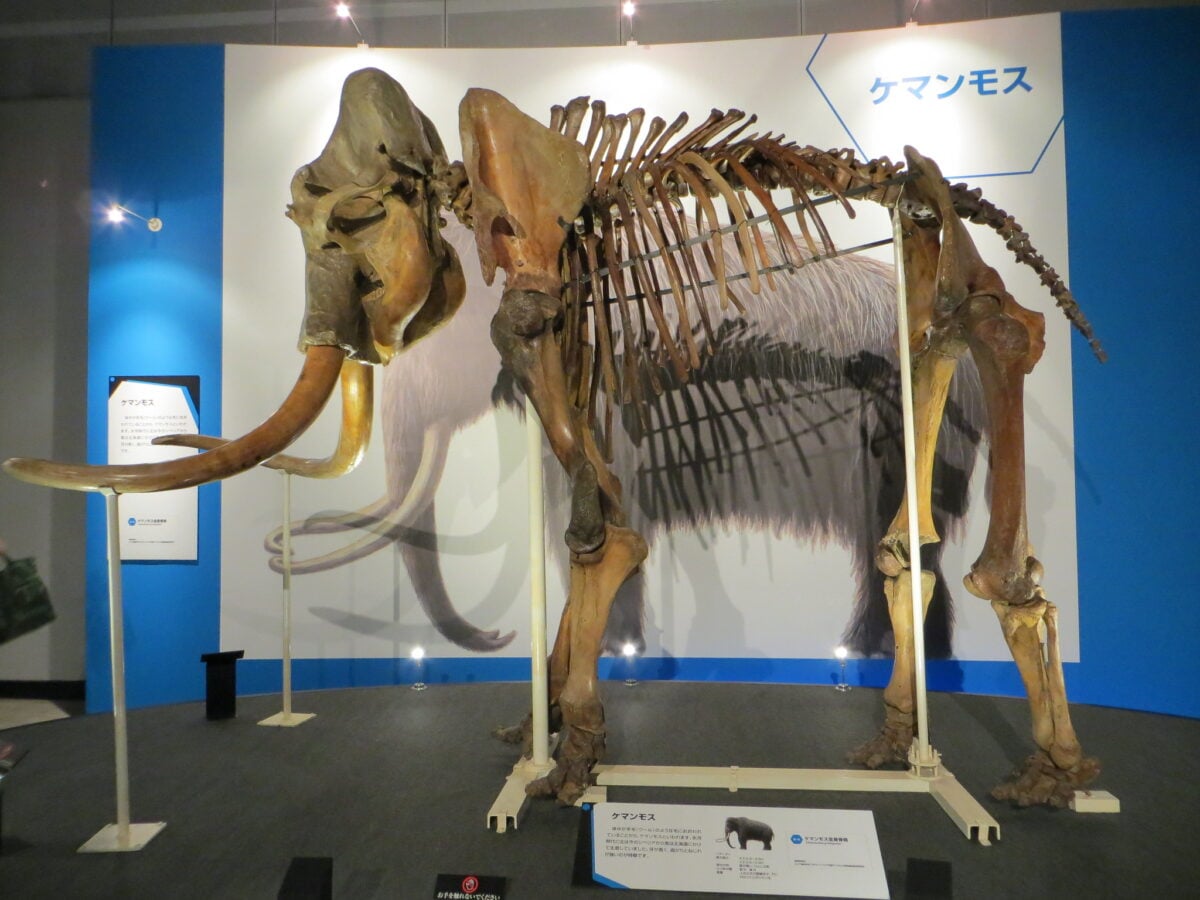
The most intact woolly mammoth skeleton ever found was sold in December 2017 at a mammoth price of about $645,000 at the Aguttes auction house in Lyon. The prehistoric set of bones was discovered in Siberia about a decade ago by a professional hunter and had an estimated value of $530,000.
The nearly complete skeleton was sold to Soprema CEO Pierre-Etienne Bindschelder, who stated they planned to display it in the lobby of the firm. The skeleton measures 10 feet in height and has two tusks that each measure more than 9 feet in length with a combined weight of 353 pounds.
Woolly Mammoth Skeleton (Britain)

A woolly mammoth skeleton, complete with tusks, was sold for nearly $300,000 at Summers Place Auctions in Billinghurst, West Sussex, in November 2014. The skeleton, nicknamed Monty, had been part of a private collection in Eastern Europe for decades but was only recently assembled and mounted for sale.
The creature is thought to have lived 30,000 to 50,000 years ago, stands 11 feet 6 inches in height, measures 18 feet in length, and weighs up to 6 tons. The specimen was sold to an unidentified private collector in a telephone bid.
Where Ancient Meets Modern

The fossil auction market has exploded over the past few decades, transforming these scientific treasures into investment vehicles for the ultra-wealthy. What started with Sue the T. rex selling for a then-shocking $8.4 million in 1997 has escalated to Apex’s record-breaking $44.6 million in 2024.
This trend worries many paleontologists who fear that scientifically important specimens will disappear into private collections, unavailable for research or public education. While some buyers do loan their purchases to museums, the fundamental tension between commercial fossil hunting and academic science continues to grow as prices climb ever higher.
More from Go2Tutors!

- The Romanov Crown Jewels and Their Tragic Fate
- 13 Historical Mysteries That Science Still Can’t Solve
- Famous Hoaxes That Fooled the World for Years
- 15 Child Stars with Tragic Adult Lives
- 16 Famous Jewelry Pieces in History
Like Go2Tutors’s content? Follow us on MSN.