Myths That Inspired Everyday Phrases
You probably say things every day without realizing you’re referencing ancient gods, monsters, and heroes. Language carries history in strange ways.
A Greek myth about a nymph becomes a word you use to describe someone who talks too much. A Roman goddess gives you a way to describe breakfast food.
These connections run deep, and once you notice them, they’re everywhere.
The Echo Chamber

Echo was a nymph who made a terrible mistake. She distracted Hera with long conversations while Zeus sneaked off to meet other women.
When Hera figured out the scheme, she cursed Echo to only repeat the last words she heard. The nymph fell in love with Narcissus, but she could only repeat his words back to him.
He rejected her, and she faded away until nothing remained but her voice. Now when you describe a room where sound bounces back, or a situation where people just repeat each other’s ideas without adding anything new, you’re remembering Echo.
The phrase “echo chamber” has taken on new meaning in the age of social media, but the root goes back to that cursed nymph in the woods.
Caught Between Scylla and Charybdis

Odysseus faced an impossible choice. On one side of a narrow strait lived Scylla, a monster with six heads.
On the other side lurked Charybdis, a whirlpool that swallowed ships whole. He had to sail between them, knowing he’d lose men no matter which danger he sailed closer to.
The phrase “between Scylla and Charybdis” means facing two equally bad options. Most people now say “between a rock and a hard place,” but the meaning stays the same.
You’re stuck, and either direction brings trouble.
The Midas Touch

King Midas loved gold more than anything. When Dionysus granted him a wish, Midas asked that everything he touched turn to gold.
It seemed perfect until he tried to eat. His food became gold.
His drink became gold. When he hugged his daughter, she became a golden statue.
Today, having “the Midas touch” means you’re successful at making money. Everything you invest in turns to profit.
But the original story warns about getting exactly what you wish for. Midas begged Dionysus to take the gift back, and the god took pity on him.
An Achilles Heel

Thetis wanted to make her son immortal. She dipped baby Achilles into the River Styx, which should have made him invincible.
But she held him by the heel, and the water never touched that spot. Years later, during the Trojan War, an arrow struck Achilles in that exact heel, and the greatest warrior of Greece died from the wound.
When you mention someone’s “Achilles heel,” you’re pointing to their one weakness in an otherwise strong position. Everyone has that vulnerable spot, that one thing that can bring them down despite all their strengths.
Opening Pandora’s Box

Zeus gave Pandora a box and told her never to open it. Curiosity got the better of her.
When she lifted the lid, all the evils of the world flew out—disease, death, envy, hatred, pain. She slammed it shut, but too late.
Only one thing remained inside: hope. The phrase “opening Pandora’s box” describes unleashing problems you can’t control or take back.
You start something that seems small, but it spirals into chaos. Some versions of the myth say Pandora had a jar, not a box, but the meaning transferred either way.
Under the Aegis

Zeus owned a shield called the aegis, which made him basically untouchable in battle. He sometimes lent it to Athena, his daughter.
The shield became a symbol of protection and authority that no one could challenge. When something happens “under the aegis” of an organization or person, it’s under their protection or sponsorship.
A research project might continue under the aegis of a university. A program might operate under the aegis of the government.
The phrase carries that sense of powerful backing, the kind that comes from the king of the gods himself.
A Herculean Task

Hercules had to complete twelve labors as punishment for killing his family in a fit of madness. These weren’t ordinary chores.
He had to slay the Nemean Lion, clean the Augean stables in a single day, and capture the three-headed dog Cerberus from the underworld. Each task seemed impossible, but he completed them all.
Calling something a “Herculean task” means it requires extraordinary strength or effort. You might use it when facing a huge work project, a difficult home renovation, or any challenge that feels overwhelming.
The word connects to Hercules’ name—Heracles in Greek—and those legendary labors.
Following Your Muse

The Muses were nine goddesses who inspired different forms of art and knowledge. Calliope inspired epic poetry.
Terpsichore inspired dance. Erato inspired love poetry.
Artists, writers, and thinkers would pray to the Muses for inspiration before starting their work. When you talk about your “muse,” you mean the source of your creative inspiration.
It might be a person, a place, or an abstract feeling. The word “museum” comes from the same root—a temple dedicated to the Muses, a place where art and knowledge live.
A Trojan Horse

The Greeks couldn’t break through Troy’s walls, so they tried deception. They built a giant wooden horse, hid soldiers inside, and pretended to sail away.
The Trojans dragged the horse inside their city as a trophy. That night, the Greek soldiers climbed out and opened the gates for their army.
A “Trojan horse” now means any trick that looks like a gift but hides danger inside. Computer viruses that disguise themselves as helpful programs get this name.
Any strategy that gains access through deception can be called a Trojan horse.
Titanic Effort

The Titans were the generation of gods before the Olympians. They were massive and powerful, and they ruled until Zeus and his siblings overthrew them.
The war between the Titans and the Olympians shook the world. Something “titanic” is huge and powerful.
A “titanic effort” means you’re putting enormous energy into something. The word scaled up over time—the ship Titanic took the name to suggest its massive size, though that ship’s fate added ironic weight to the word.
The Narcissist Next Door

Narcissus was so beautiful that everyone who saw him fell in love. But he only loved himself. When he saw his reflection in a pool of water, he couldn’t look away.
He stayed there, staring at his own image, until he died and transformed into a flower. Calling someone a “narcissist” means they’re obsessed with themselves.
They can’t see beyond their own needs and appearance. Psychology took the term and turned it into a diagnosis, but the ancient story captures the essential problem—self-love that excludes everyone else.
Caught in a Tantalus Situation

Tantalus committed crimes against the gods that were so offensive they created a special punishment for him. They placed him in a pool of water beneath a fruit tree.
Whenever he bent down to drink, the water receded. Whenever he reached for fruit, the branches moved out of reach.
He spent eternity almost satisfying his hunger and thirst, but never quite getting there. The word “tantalize” comes from his name.
When something tantalizes you, it’s just out of reach but close enough to drive you crazy. A tempting dessert you can’t have.
A job you almost got. That feeling of being so close yet unable to touch what you want—that’s Tantalus, still reaching for that fruit.
The Atlas of the World

Atlas fought against Zeus in the war between the Titans and Olympians. As punishment for backing the losing side, Zeus forced Atlas to hold up the sky for eternity.
He stands at the edge of the world, shoulders bearing the weight of the heavens. The first collections of maps took his name because they often showed an image of Atlas carrying a sphere on their covers.
Now any book of maps is an atlas, whether it shows a picture of the Titan or not. The name also gave us the Atlantic Ocean—the sea at the edge of the world where Atlas stood.
Beware the Siren Song
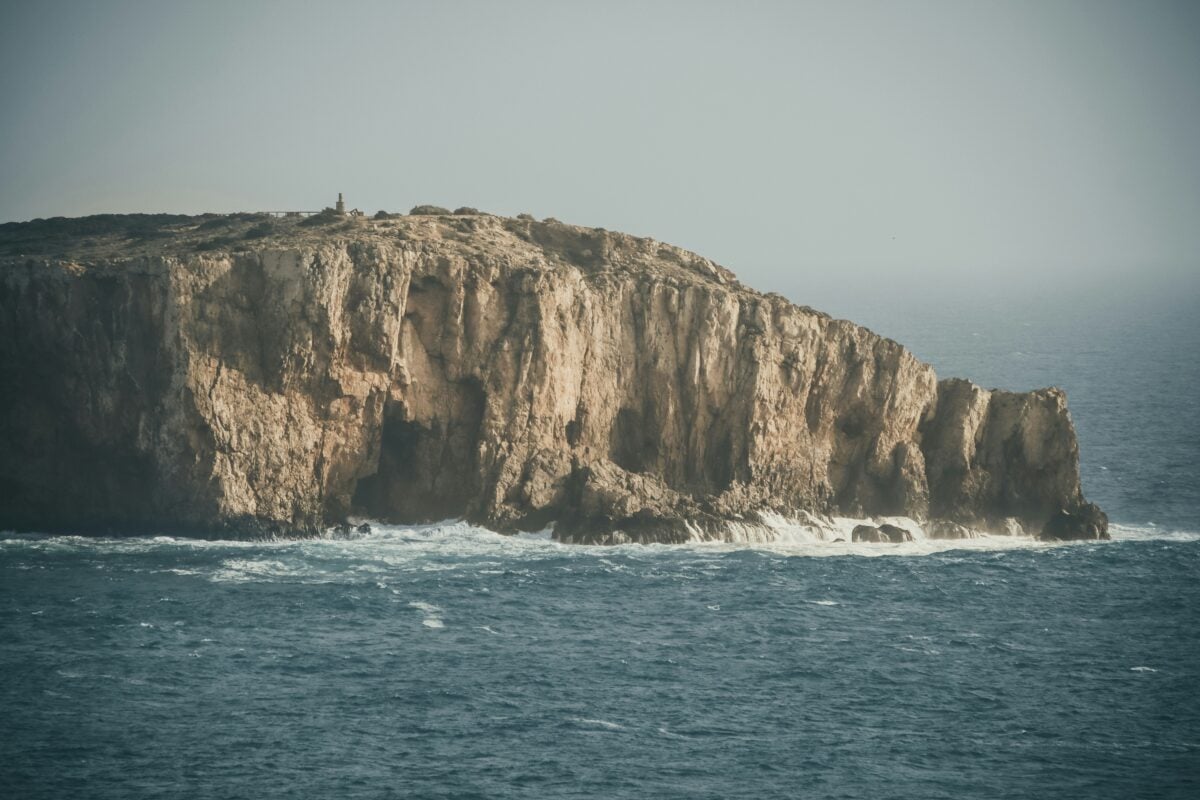
The Sirens stayed on jagged cliffs, singing in ways that pulled sailors in – no one could look away. Ships would veer close, smash into stone, then sink beneath the waves.
To listen and survive, Odysseus made his men bind him tight to the ship’s pole while they stuffed their ears with soft wax. Their hearing shut out sound; his didn’t – but the cords held firm whenever he strained toward the noise.
A tempting trap hiding behind a pretty face – that’s what a siren song really is. Might show up as a shaky romance, a sketchy opportunity, or any flashy choice with hidden downsides.
This idea actually led to calling ambulance noises “sirens” – loud alerts meant to pull focus fast, even if the cause isn’t the same.
Words That Outlast the Gods

These expressions last since they reflect real parts of life. Myths shift through the years – gods lose faith, yet words remain handy.
Knowing Zeus isn’t required to get what Achilles’ heel points to. Believing in Titans?
Not necessary when calling something a massive struggle. Language keeps what’s useful, tosses out the rest.
Those old tales described feelings like envy, desire, failing, or striving so well that we stuck with them even once temples faded away. Each time you say someone has a golden touch – or caution against unleashing trouble – you’re breathing life into ancient ideas.
It’s the very speech people shaped ages back, only swapped into today’s scenes. Sure, the gods aren’t worshipped anymore – but their names still hang around.
More from Go2Tutors!

- 16 Historical Figures Who Were Nothing Like You Think
- 12 Things Sold in the 80s That Are Now Illegal
- 15 VHS Tapes That Could Be Worth Thousands
- 17 Historical “What Ifs” That Would Have Changed Everything
- 18 TV Shows That Vanished Without a Finale
Like Go2Tutors’s content? Follow us on MSN.



