Natural Formations That Defy Logic
When you look at certain places on Earth, your brain struggles to make sense of what your eyes are seeing. These aren’t man-made structures or digital tricks.
They’re real formations that nature created over thousands or millions of years, and they look impossible. Some of these places bend the usual rules.
Water flows upward. Rocks stack in ways that seem to violate physics.
Perfectly geometric shapes appear where you’d expect chaos. And the explanations, when scientists finally piece them together, often sound just as strange as the formations themselves.
The Stones That Stand Without Support

In the Chiricahua Mountains of Arizona, massive boulders balance on impossibly small bases. Some weigh several tons but rest on points no wider than a dinner plate.
They look like they should topple with the slightest breeze, but they’ve stood this way for ages. The formation happened through a process called differential erosion.
Volcanic rock cooled in vertical and horizontal cracks, creating a grid pattern. Over millions of years, softer rock eroded away faster than the harder sections.
What remains are these precarious towers that somehow maintain their balance. Park rangers have documented the same balanced rocks in photos spanning decades.
They haven’t moved. They don’t tip.
And standing beneath one makes you deeply uncomfortable in a way that’s hard to explain.
Perfectly Hexagonal Basalt Columns

The Giant’s Causeway in Northern Ireland looks like it was carved by a geometric obsessive. Roughly 40,000 interlocking basalt columns fit together in mostly hexagonal shapes, creating what appears to be an intentionally designed pathway into the sea.
Ancient Irish mythology claimed giants built it. The scientific explanation involves rapidly cooling lava contracting and cracking in the most efficient pattern possible—which happens to be hexagonal.
It’s the same reason honeycomb takes that shape. But knowing the reason doesn’t make it look any less artificial.
The precision of the angles, the uniformity of the shapes, and the sheer scale of the formation all suggest deliberate construction. Your brain refuses to accept that molten rock could organize itself perfectly.
Similar formations exist in Iceland, Scotland, and other volcanic regions. Every time, they trigger the same cognitive dissonance.
Lightning That Never Stops

Above Lake Maracaibo in Venezuela, a lightning storm happens almost every night in the exact same spot. The Catatumbo Lightning appears up to 297 nights per year, flashing up to 280 times per hour.
Sailors have used it as a natural lighthouse for centuries. The phenomenon results from a perfect atmospheric mixing bowl.
Warm Caribbean air collides with cool mountain air from the Andes. The lake’s shape and surrounding terrain trap this collision in place.
The result is the most reliable lightning show on Earth, concentrated in one location. The storms last for hours, sometimes all night.
Thunder rumbles constantly. Lightning strikes hundreds of times an hour, illuminating the same stretch of sky again and again.
To locals, it becomes background noise. To visitors, it feels like watching nature malfunction.
The lightning stopped completely for six weeks in 2010, the first recorded break in centuries. Scientists worried the phenomenon had ended forever.
Then it resumed its nightly performance, and continues today.
The Mountain That Looks Like a Tree Stump
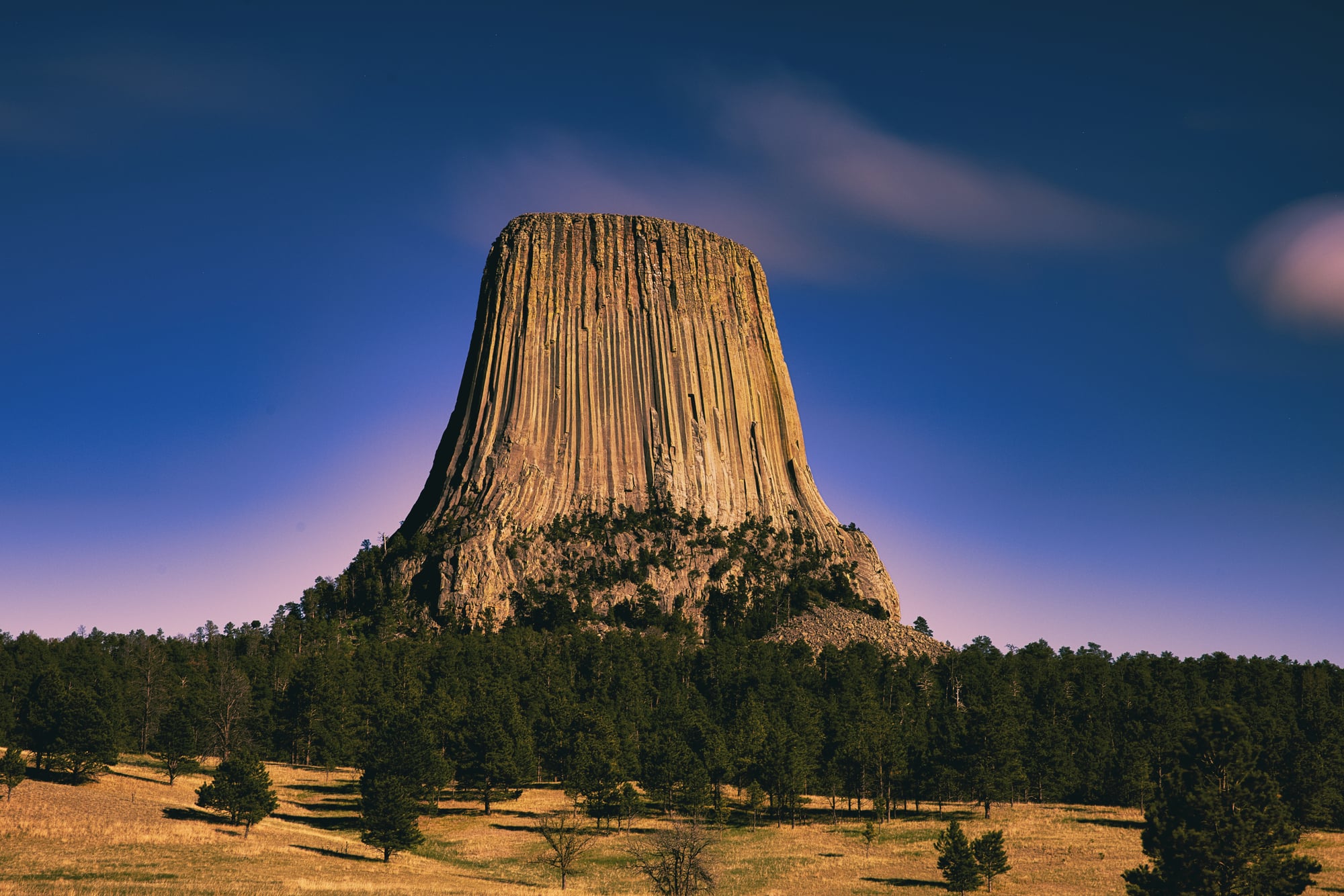
Devils Tower in Wyoming rises 1,267 feet from the surrounding plains. Its vertical columns and flat top make it look exactly like a massive tree stump—so much so that fringe theories claiming it’s a fossilized ancient tree refuse to die.
It’s not a tree stump. It’s an igneous intrusion, formed when magma pushed up through sedimentary rock but never reached the surface.
The softer rock around it eroded away over millions of years, leaving this resistant core standing alone. The vertical grooves running down its sides formed as the molten rock cooled and contracted.
They’re so regular and parallel that they enhance the cut-tree-stump appearance. The formation has been sacred to multiple Native American tribes for centuries, and it’s not hard to see why.
Climbers who scale it report that the closer you get, the less sense it makes. The geometric precision of those columns, the flatness of the summit, the isolation of the structure—everything about it seems deliberately placed.
Rocks That Move on Their Own

In Death Valley’s Racetrack Playa, stones weighing up to 700 pounds leave trails across the dry lakebed. The tracks can stretch for hundreds of meters, complete with turns and direction changes.
No human or animal moves them. The rocks just slide across the cracked earth, leaving clear evidence of their journey.
For decades, this baffled scientists. Theories ranged from magnetic fields to alien activity.
The actual explanation, finally confirmed in 2014, sounds almost as weird as the mystery itself. On rare winter nights, a thin sheet of ice forms on the playa’s surface.
When the ice breaks up and floats on a thin layer of water, strong winds push these ice sheets. The rocks, frozen into the ice, get dragged along.
By morning, the water has evaporated, and only the tracks remain. You can visit the playa and see the trails.
Fresh ones appear every few years. And even with the explanation, watching a 700-pound rock slide across flat ground defies your intuition about how the world works.
The Beach That Disappears and Returns
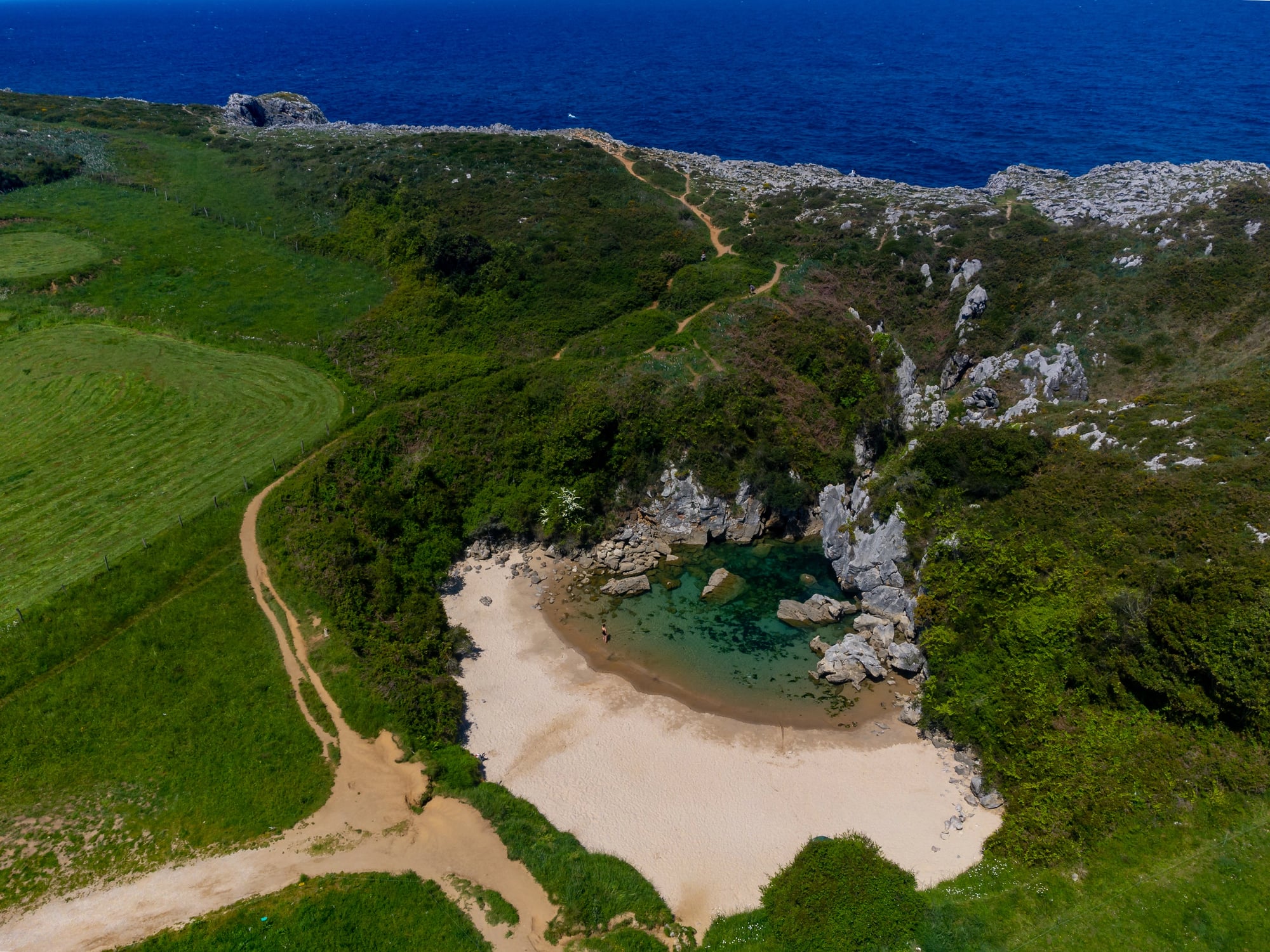
Playa de Gulpiyuri in Spain sits 100 meters inland from the ocean. It’s a fully functional beach with sand, saltwater, and tides—except there’s no visible connection to the sea.
The water appears, rises and falls with the tides, then drains away, all while surrounded by meadows and rocks. Underground tunnels carved by seawater over millennia connect this inland beach to the Cantabrian Sea.
The tunnels allow tidal water to flow in and out, creating a beach that exists in what should be landlocked terrain. The beach measures only 40 meters across, making it one of the world’s smallest.
But its existence in the middle of greenery, with no apparent water source, creates a scene that photographs like a glitch in reality.
Underwater Circles No Larger Than a Dinner Table

Off the coast of Japan, divers discovered intricate circular patterns on the seafloor. These geometric designs span about two meters in diameter and feature perfect symmetry with radiating ridges creating complex mandalas in the sand.
The artist turned out to be a pufferfish. Male white-spotted pufferfish create these elaborate structures to attract mates, spending days or weeks swimming in precise patterns to build their underwater crop circles.
The ridges and grooves serve a function—they affect water flow and help protect eggs. But the precision staggers the mind.
A fish roughly five inches long creates a design 40 times its size with mathematical accuracy. The symmetry, the spacing, the consistency—it all looks too intentional for a creature with a brain the size of a pea.
Scientists only discovered this behavior in 1995. The pufferfish had been creating these circles for who knows how long, building and rebuilding their underwater art galleries with no audience until humans finally dove deep enough to notice.
The Waterfall That Flows Upward
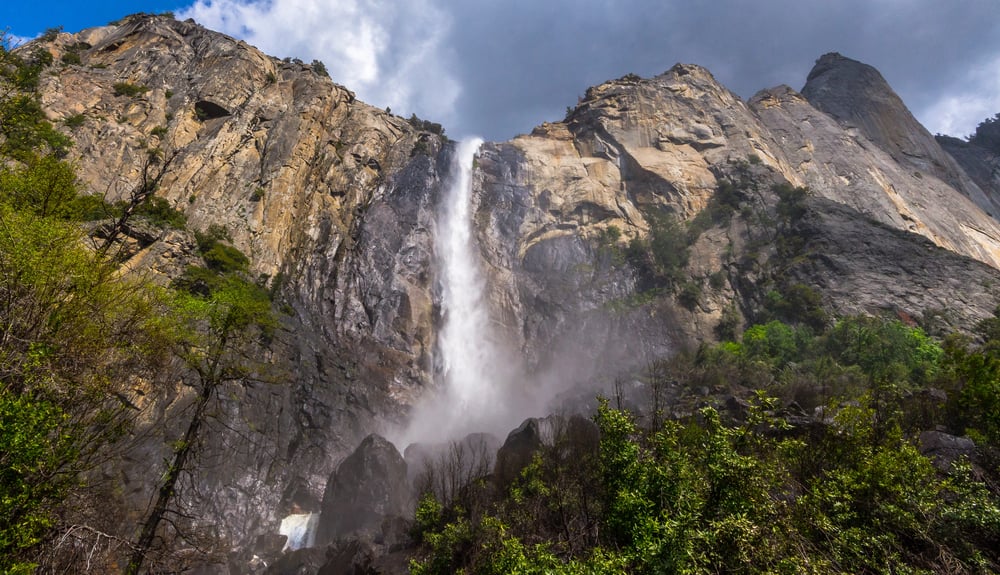
Waipuhia Falls in Hawaii behaves like water has forgotten its own rules. During strong winds, the waterfall flows upward instead of down.
The water leaves its usual downward path, rises into the air, and disperses as mist before ever reaching the pool below. This happens when wind speeds exceed the water’s downward velocity.
The valley’s shape creates a wind tunnel effect. Strong northeasterly trade winds catch the falling water and push it back up the cliff.
The result looks like someone played video footage in reverse. You can watch it live from the Pali Highway on Oahu.
The water leaves the edge, starts falling, then reverses course and flies upward. Other waterfalls in high-wind locations show similar behavior, but Waipuhia does it often enough that locals know when to expect the phenomenon.
The Sound of Singing Sand

In various deserts worldwide, sand dunes produce deep, resonant sounds when the sand slides down their slopes. The sound ranges from a low hum to a roar that can reach 115 decibels and last for several minutes.
Some dunes sing regularly. Others perform only under specific conditions.
The mechanism involves sand grains of uniform size, shape, and moisture content sliding past each other in just the right way. As billions of grains move in synchronization, they create vibrations that resonate through the dune itself.
The dune acts as a natural amplifier. But here’s what makes it truly strange: the frequency of these sounds often falls within a very narrow range, sometimes producing what sounds like a musical note.
Ancient travelers thought the dunes were haunted. Modern scientists understand physics but still find themselves unsettled by a landscape that hums.
Eternal Flames That Burn Without Fuel

Behind Chestnut Ridge Park in New York, a small waterfall hides an eternal flame. The flame burns in a grotto behind the cascade, fed by natural gas seeping through cracks in the shale rock.
Water flows over the burning gas, creating a scene that shouldn’t exist according to everything you know about fire. The gas comes from ancient organic material trapped in the shale.
Heat and pressure converted it to methane, which seeps upward and ignites. Similar eternal flames exist worldwide, but this one sits directly behind flowing water, visible through the cascade.
Visitors can watch the waterfall flow while flames dance in the grotto. The flame sometimes goes out, but hikers with lighters can rekindle it.
The gas never stops flowing. The water never stops falling.
And the contradiction never stops looking impossible.
Stones That Grow and Reproduce

In Romania, trovants appear to grow and even reproduce. These spherical rocks increase in size after heavy rains, sometimes doubling their diameter over a few decades.
When cut open, they reveal rings like tree trunks, and they occasionally spawn smaller rocks around their base. The explanation involves highly porous minerals that absorb water and expand, though this doesn’t fully account for all observed behaviors.
The rings form from layers of cemented sand and minerals deposited over time. The “reproduction” happens when water pressure causes material to bulge out and eventually separate.
But watching it happen—seeing rocks that genuinely seem to grow and produce offspring—creates a weird moment where you have to recalibrate what counts as living versus non-living. They’re not alive, but they behave in ways that blur the line more than most geological formations.
Museums display trovants of various sizes, all collected from the same region. The growth process continues even after removal from their original location, as long as they’re exposed to water.
The Cave of Giant Crystals
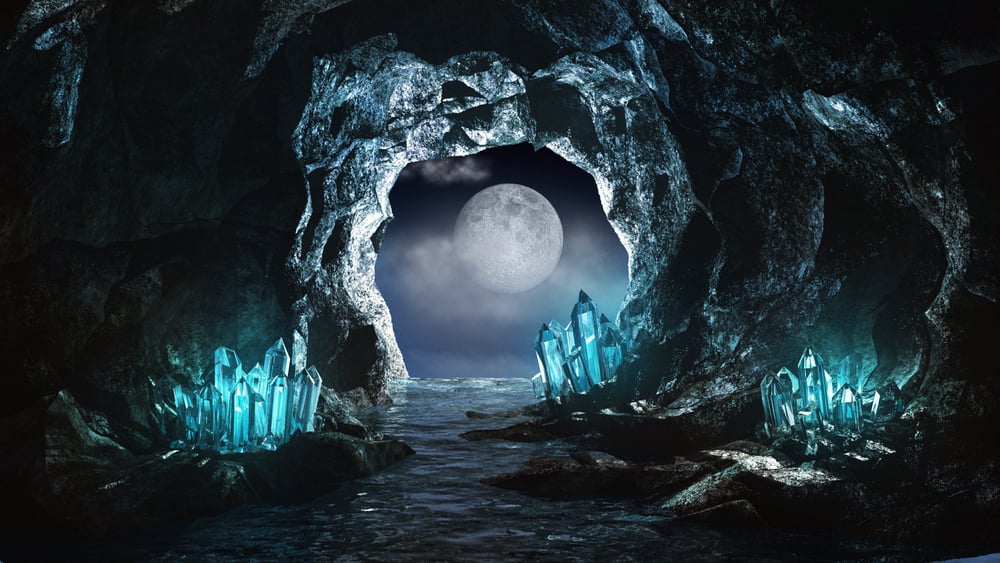
Deep beneath Naica, Mexico, the Cave of Crystals contains selenite crystals up to 39 feet long and weighing 55 tons. They’re some of the largest natural crystals ever discovered.
The cave looks like a science fiction movie set, except it’s completely real and completely natural. The crystals grew in a magma chamber filled with mineral-rich water.
The temperature remained stable at around 136°F for at least 500,000 years. This allowed the crystals to grow continuously to extraordinary sizes.
The cave remained flooded until mining operations pumped out the water in 2000. Humans can only survive in the cave for about ten minutes even with protective equipment.
The heat and humidity make longer exposure fatal. The crystals themselves are selenite, a form of gypsum, transparent and smooth.
They cross the cave in every direction, creating a forest of enormous crystalline beams. The mining company has since reflooded the cave to preserve it.
The crystals will continue growing in the dark, hidden from human eyes, slowly adding to their already impossible size.
Where Everything Falls Silent
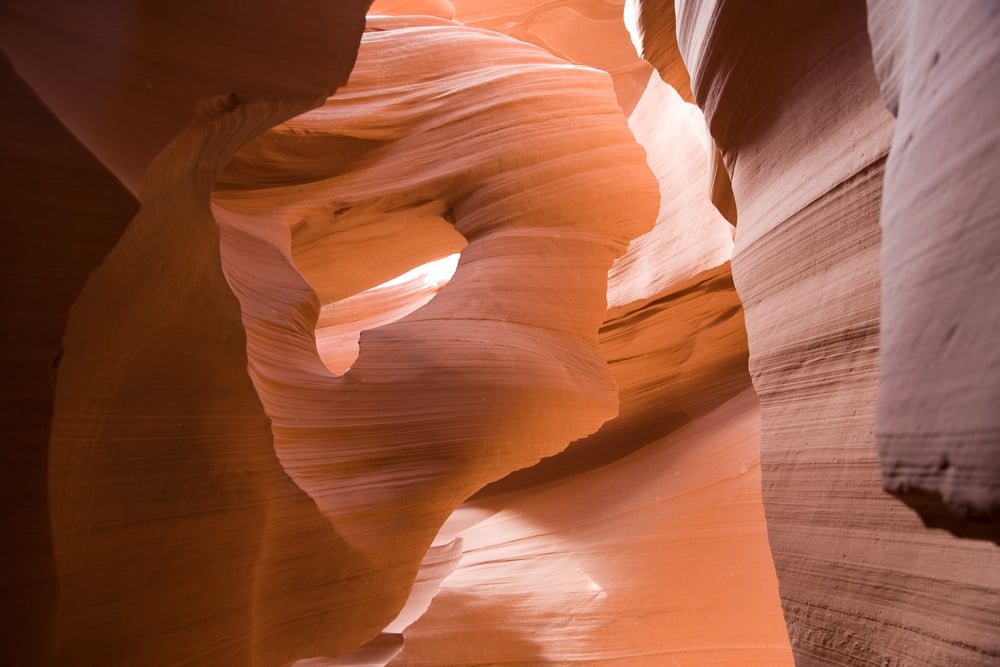
When you stand in certain places on Earth, sound behaves differently. Everything falls silent in ways that feel unnatural.
Your footsteps make no echo. Your voice dies immediately instead of resonating.
The absence of normal acoustic feedback makes you question whether your ears are working correctly. These places exist because of specific geological or geographical features.
Some canyons absorb sound instead of reflecting it. Certain rock formations create acoustic dead zones.
Snow can muffle sound so completely that the world feels like it’s wrapped in cotton. The human brain expects sound to bounce.
We navigate partly by unconscious acoustic feedback. When that feedback disappears, the experience becomes deeply disorienting.
You can shout and hear your voice vanish as if the air swallowed it. These silent places don’t advertise themselves.
They’re not tourist attractions. But when you stumble into one, you know immediately that something fundamental has changed about how the world works.
When Patterns Emerge From Chaos

Nature doesn’t think or plan, yet it creates order that looks designed. The hexagonal columns, the geometric sand circles, the perfectly balanced rocks—they all emerged from simple physical and chemical processes following basic rules.
But the results look anything but simple. This tension sits at the heart of why these formations feel so strange.
Your brain recognizes patterns and assumes intelligence behind them. When you learn that wind, water, time, and basic physics created these impossibilities, it doesn’t resolve the cognitive dissonance.
It just adds another layer to the mystery. The world contains thousands of these places.
They’re scattered across every continent, hidden in deserts and mountains and oceans. Some attract crowds.
Others remain virtually unknown. But they all share this quality of making you doubt what you’re seeing, even as you stand right in front of them.
Understanding science doesn’t diminish the wonder. If anything, it amplifies it.
These formations are proof that reality needs no imagination to create the impossible.
More from Go2Tutors!

- The Romanov Crown Jewels and Their Tragic Fate
- 13 Historical Mysteries That Science Still Can’t Solve
- Famous Hoaxes That Fooled the World for Years
- 15 Child Stars with Tragic Adult Lives
- 16 Famous Jewelry Pieces in History
Like Go2Tutors’s content? Follow us on MSN.



