Obscure Features on Your Car You Never Thought to Use
Most people buy a car, figure out the basics, and then never look at the owner’s manual again. That’s fair.
Life is busy, and as long as the thing starts and stops on command, that feels like enough. But modern cars — and even older ones — are packed with small features that most owners quietly ignore.
Some of these save time. Some prevent accidents. A few are just genuinely useful in ways you’d never expect until the exact moment you need them.
The Arrow Next To Your Fuel Gauge

You’ve probably seen a small arrow sitting right next to the fuel pump icon on your dashboard. Most people assume it’s just part of the logo.
It’s not. That arrow points to the side of your car where the fuel cap lives.
It exists specifically for rental cars and borrowed vehicles, so you don’t have to pull up to the pump and guess. Now you’ll never need to do the awkward reverse-out-and-try-again dance at the gas station again.
The Visor Extension Flap

Your sun visor does more than block direct light from the front. Pull it down and then slide it sideways — toward the window — and a small extension panel unfolds.
Most drivers have never noticed it. That panel is designed to block low-angle sun coming through the side window while you’re still keeping the main visor down.
It’s a two-piece system that works together, and if you’ve ever squinted your way through a morning commute with the sun hitting you from the side, you know exactly how useful this is.
The Trunk’s 12V Power Outlet

A lot of cars have a 12-volt power socket — sometimes called a cig lighter port — in the trunk or cargo area. It’s easy to miss because it’s usually tucked into the sidewall or covered with a small plastic cap.
This outlet is useful for powering a portable air compressor when a tire goes flat, running a cooler on a road trip, or charging equipment during camping or tailgating.
Check yours. There’s a decent chance it’s been sitting there untouched since the car left the factory.
Child Safety Locks On Rear Doors
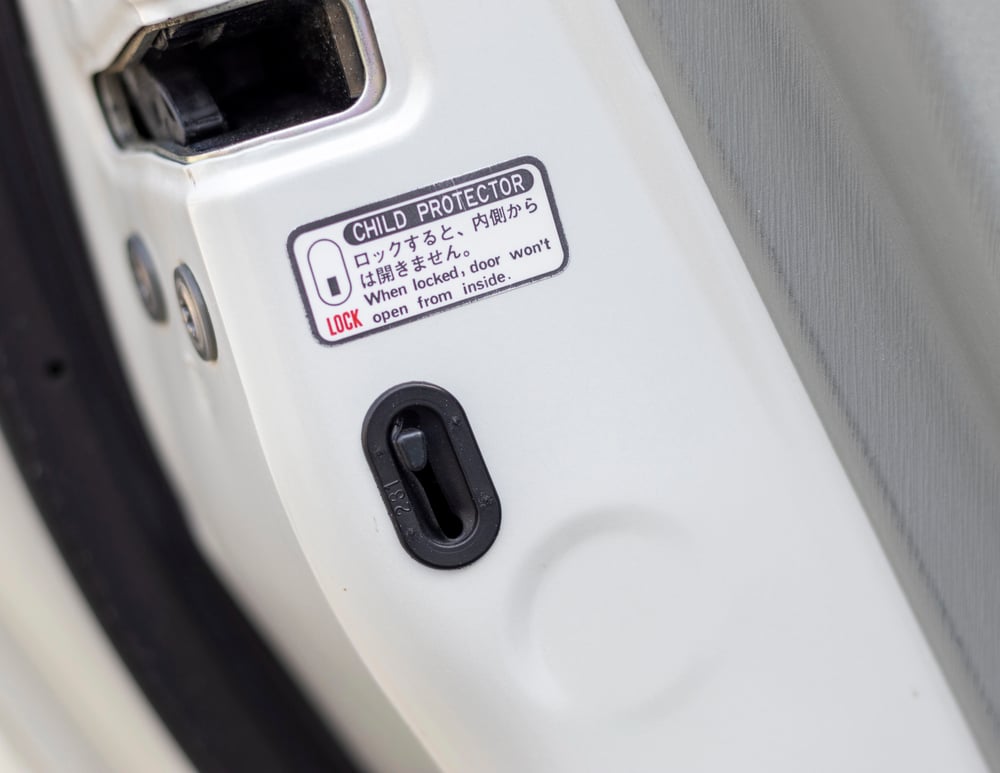
These are small levers or switches built into the edge of the rear door — only accessible when the door is open. Flipping them prevents the door from being opened from the inside.
They’re not just for kids. If you regularly carry a dog in the back seat, this feature stops them from accidentally nudging the door open while you’re moving.
It’s also worth knowing where these are in case a passenger notices their door “isn’t working” and thinks something is broken. It’s usually just this.
The Auto-Dimming Rearview Mirror

Many cars come with a rearview mirror that automatically darkens when it detects headlights behind you at night. It prevents that blinding glare from trailing vehicles during night driving.
The catch is that some versions have a small button that enables or disables the function, and it’s easy to accidentally switch it off.
If your rearview mirror has a small sensor at the front and a button at the bottom, check that auto-dimming is actually turned on. A lot of drivers live with the blinding headlights problem without realising the solution is already in the car.
Hill Hold Assist

On cars with an automatic transmission — and especially those with a manual — hill hold assist temporarily keeps the brakes applied after you release the brake pedal. This gives you a second or two to move your foot to the accelerator without the car rolling backward on a slope.
It’s not a feature you enable. It works automatically.
But many drivers don’t know it exists and end up fighting the car on hills when the car is actually trying to help them. If you’ve ever driven a hill and thought “that felt steadier than expected,” this is probably why.
The Rear Window Defogger Grid

The thin horizontal lines on your rear window aren’t just embedded wires — they’re a grid that heats up to clear condensation and frost. Most people know this part.
What they don’t know is that those same lines can conduct a very weak current that some older tire pressure monitors and radio antennas use.
More practically, be careful what you stick to the rear window. Stickers placed directly over the lines can interrupt the heating grid and leave streaks of fog that never clear. The lines matter more than they look.
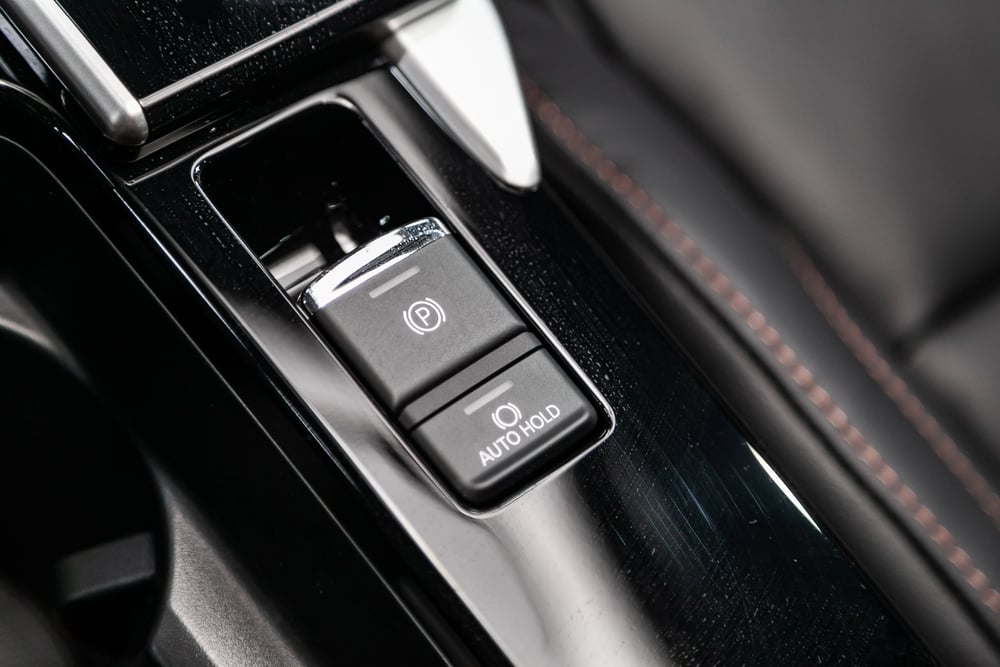
Auto-Hold

Distinct from hill hold assist, auto-hold keeps the brakes fully applied when you come to a stop — even after you release the brake pedal. You stay stationary until you press the accelerator.
It’s particularly useful in traffic when you’re stopping and starting repeatedly, because it removes the need to keep your foot on the brake at every red light.
Many cars have this as a button near the centre console, usually labeled “AUTO HOLD” or with a P inside a circle. It’s switched off by default on some models, so owners never discover it unless they start pressing buttons.
Ventilated Seats

Heated seats get a lot of attention. Ventilated seats — also called cooled seats — get far less, partly because they’re only available on certain trims and partly because the effect is subtler.
Instead of active cooling, most ventilated seats draw air through the seat cushion to reduce heat buildup and moisture.
On a hot day, the difference between a standard seat and a ventilated one after the car has been sitting in the sun is significant. If your car has a seat controls panel with a snowflake or fan icon, try it. It works better than most people expect.
HomeLink Or Built-In Garage Door Opener

Many cars have a row of small buttons built into the overhead console or sun visor. These are programmable to control garage doors, home security gate systems, and some home automation devices.
They’re trained by holding the button and pressing your existing remote simultaneously until the light flashes.
Some owners buy third-party remote clippers and attach them to the visor, not realising the car already has this built in. Check the overhead console near the map lights before you add anything to the keyring.
The Brake Override System
Modern cars with electronic throttle control include a feature that automatically applies the brakes and cuts engine power if you press both the accelerator and brake at the same time. This was introduced after incidents where unintended acceleration became an issue.
The result is that if you’re ever in a situation where the car seems to be accelerating against your will, pressing the brake firmly will override the throttle.
This isn’t something you configure — it runs in the background. But knowing it exists is useful.
Lane Departure Warning Vs. Lane Keeping Assist

One might think these functions are alike, yet they work in completely different ways. When you cross a lane marking without using a turn signal, the system warns you – often with a chirp or a shake of the wheel.
Instead of just notifying, another version gently guides the vehicle back where it belongs.
Some vehicles include both systems, though people often mix them up – or forget they’re turned off altogether. Take time to explore the driver aids section in your car’s controls; understanding each setting matters more than expected.
Cargo Net Hooks With Floor Loops

Hidden near the base of many car trunks, tiny loops stick out from the carpeted floor. Running beside them, metal clips edge the walls at regular intervals.
Built to anchor things, these spots work with stretchy ropes or mesh covers to lock down boxes, suitcases, tools.
Few actually use them, unaware they connect straight to strong parts beneath the shell. Those wall-mounted brackets especially surprise drivers – they pull tight without bending under heavy loads. A forgotten web tucked inside some cubby? That flat piece fits right here, made just for this spot.
The Secret Part Of Your Key Fob

Most key fobs hide a real metal key inside, one that slips or jumps out when pressed. You might be aware it’s there, somewhere in the back of your mind, yet it doesn’t feel real until the moment arrives.
When the battery fails or the signal cuts off, getting into the vehicle becomes urgent. That tiny piece of steel fits right into the driver’s side lock.
After stepping in, starting the engine is still possible – look near the steering wheel for a narrow opening. Sometimes placing the entire fob flat onto the center console works just as well. Flip through the handbook – each model does it differently. Rain tapping on the roof while you’re stuck outside? That’s too late to start reading.
The Quiet Stuff That Gets You Home

Hidden details live inside cars, put there by engineers who are obsessed over rare moments. A dark roadside breakdown.
Glare bouncing off glass at dusk. That awkward tilt in a parking spot.
Each tiny feature exists because it once felt necessary. Some will never fit your life.
Others might one day. The ones showing up out of nowhere? They’re just like spotting cash tucked deep in a winter jacket you forgot about.
All along, the vehicle carried what was missing.
More from Go2Tutors!

- The Romanov Crown Jewels and Their Tragic Fate
- 13 Historical Mysteries That Science Still Can’t Solve
- Famous Hoaxes That Fooled the World for Years
- 15 Child Stars with Tragic Adult Lives
- 16 Famous Jewelry Pieces in History
Like Go2Tutors’s content? Follow us on MSN.



