Old-School Tools Our Grandparents Couldn’t Live Without
There’s something almost magical about walking through an old farmhouse or garage and discovering tools that haven’t been touched in decades. These weren’t collectibles or conversation pieces back then — they were everyday necessities that kept households running and families fed.
Each one tells a story of self-reliance, of making do with what you had, and of the quiet satisfaction that comes from fixing things instead of throwing them away. While technology has certainly made life easier in many ways, there’s wisdom embedded in these simple instruments that modern convenience sometimes overlooks.
Cast Iron Skillet
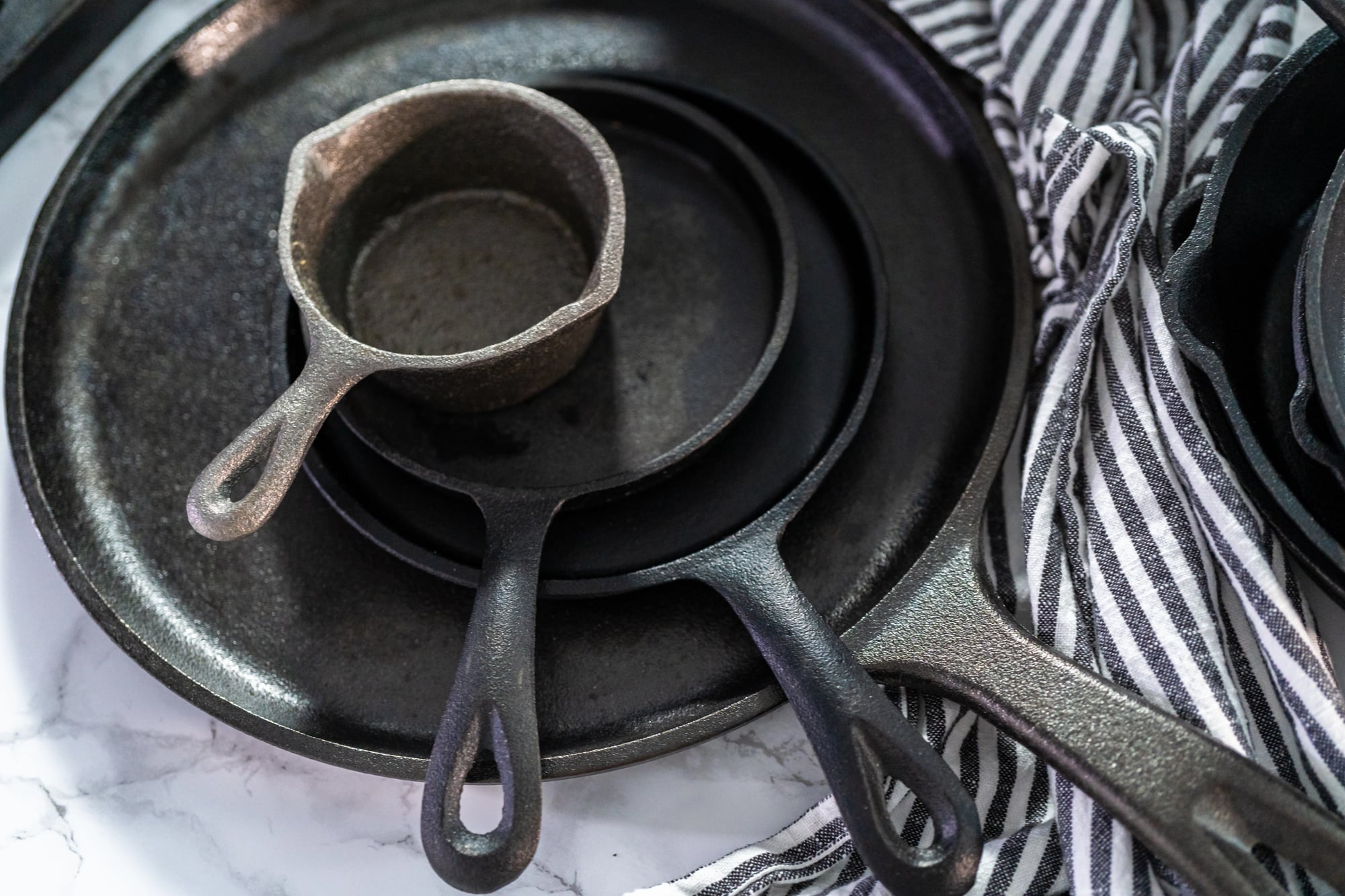
Cast iron doesn’t forgive carelessness. Leave it wet, it rusts.
Heat it wrong, food sticks. But treat it right and it becomes something close to indestructible.
Your grandmother knew this. She seasoned her skillet until it developed a surface slicker than any non-stick coating.
That skillet fried eggs, baked cornbread, and went straight from stovetop to oven without missing a beat. No coating to chip off, no worries about scratching the surface.
Pressure Cooker
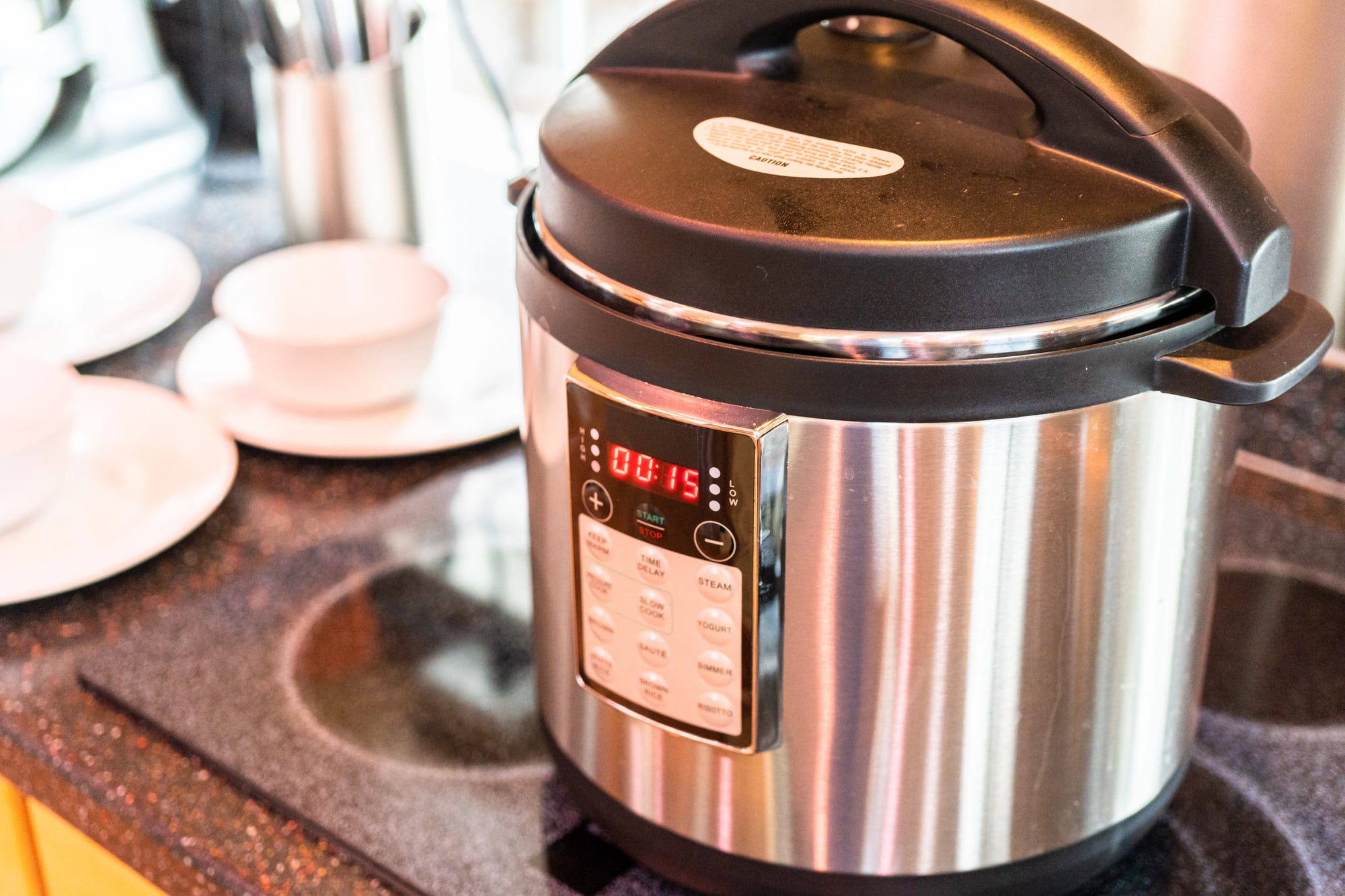
The pressure cooker was the original meal prep solution, though it required nerves of steel and perfect timing — because when something went wrong (and occasionally it did), the results could be spectacular in all the wrong ways.
But when your grandmother needed to transform a tough cut of meat into something tender enough to cut with a fork, or when she wanted to get dinner on the table in half the usual time, she reached for that heavy pot with the locking lid and the little weight that danced and hissed on top like a mechanical heartbeat.
The whole process felt like managing a small, contained explosion, which in many ways it was: steam building pressure, temperature rising beyond what any regular pot could achieve, breaking down fibers and reducing cooking times from hours to minutes.
And yet (despite the occasional kitchen disaster story passed down through families) these contraptions worked with remarkable consistency, turning the toughest roasts into falling-apart tender meals and cooking beans that would otherwise require overnight soaking in a fraction of the time.
Wringer Washer
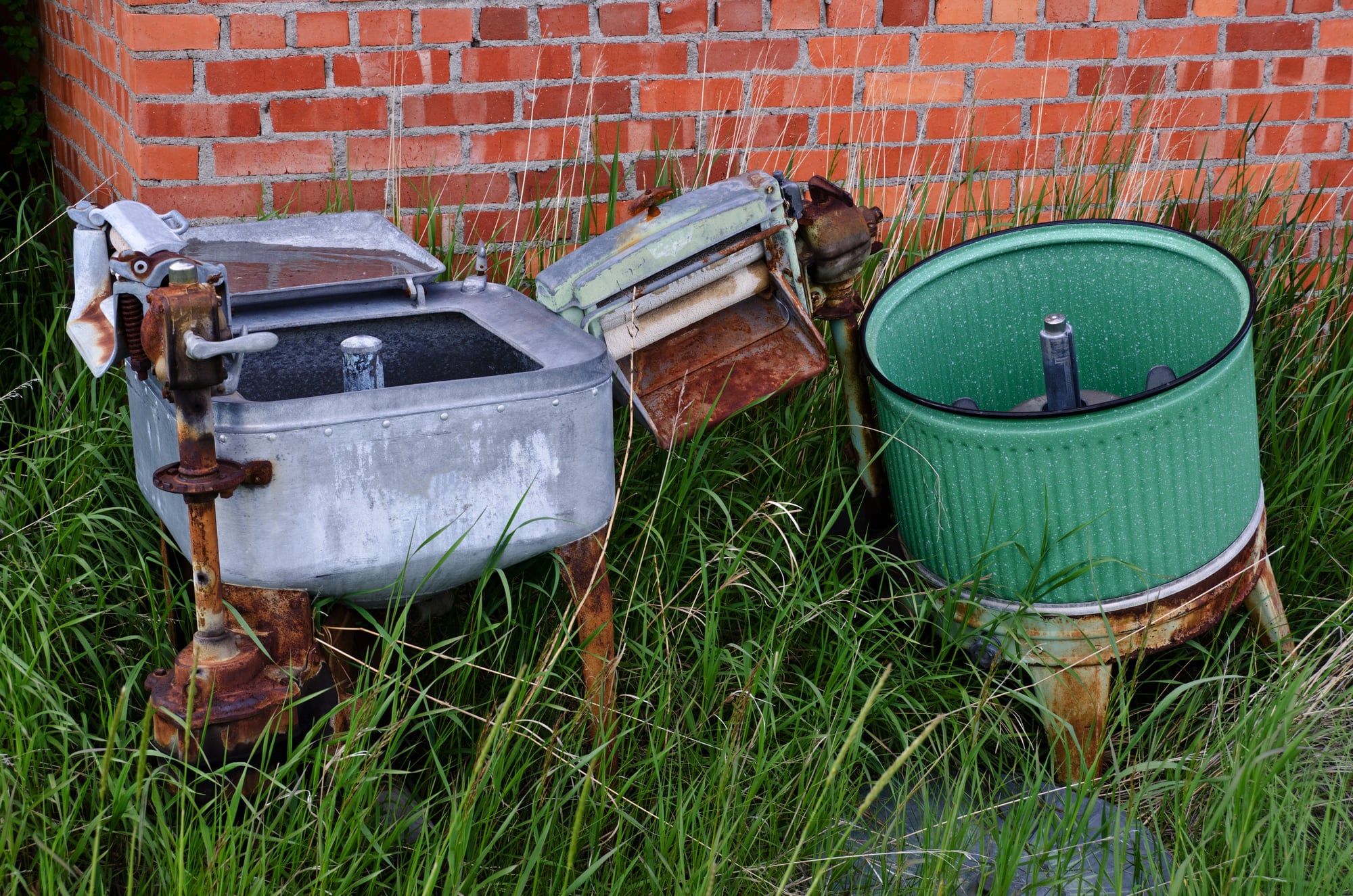
Laundry day meant something entirely different when clothes had to earn their cleanliness. The wringer washer demanded attention, timing, and a healthy respect for those two rollers that could grab fabric — or fingers — without warning.
But it got the job done. Hot, soapy water agitated dirt loose while you fed each piece through the wringer, watching water squeeze out in steady streams.
No gentle cycles or delicate settings. Just water, soap, and mechanical determination.
Manual Can Opener

The triangular can opener that required actual effort deserves more credit than it gets. Sure, it left jagged edges and sometimes slipped at the worst possible moment, but it never needed batteries or broke down at dinner time.
That little piece of stamped metal opened everything from tomatoes to peaches to condensed milk.
No moving parts to wear out, no gears to jam. Just leverage, pressure, and the satisfaction of puncturing that seal with your own strength.
Which is saying something in a world where even salt shakers have become unnecessarily complicated.
Hand-Crank Egg Beater
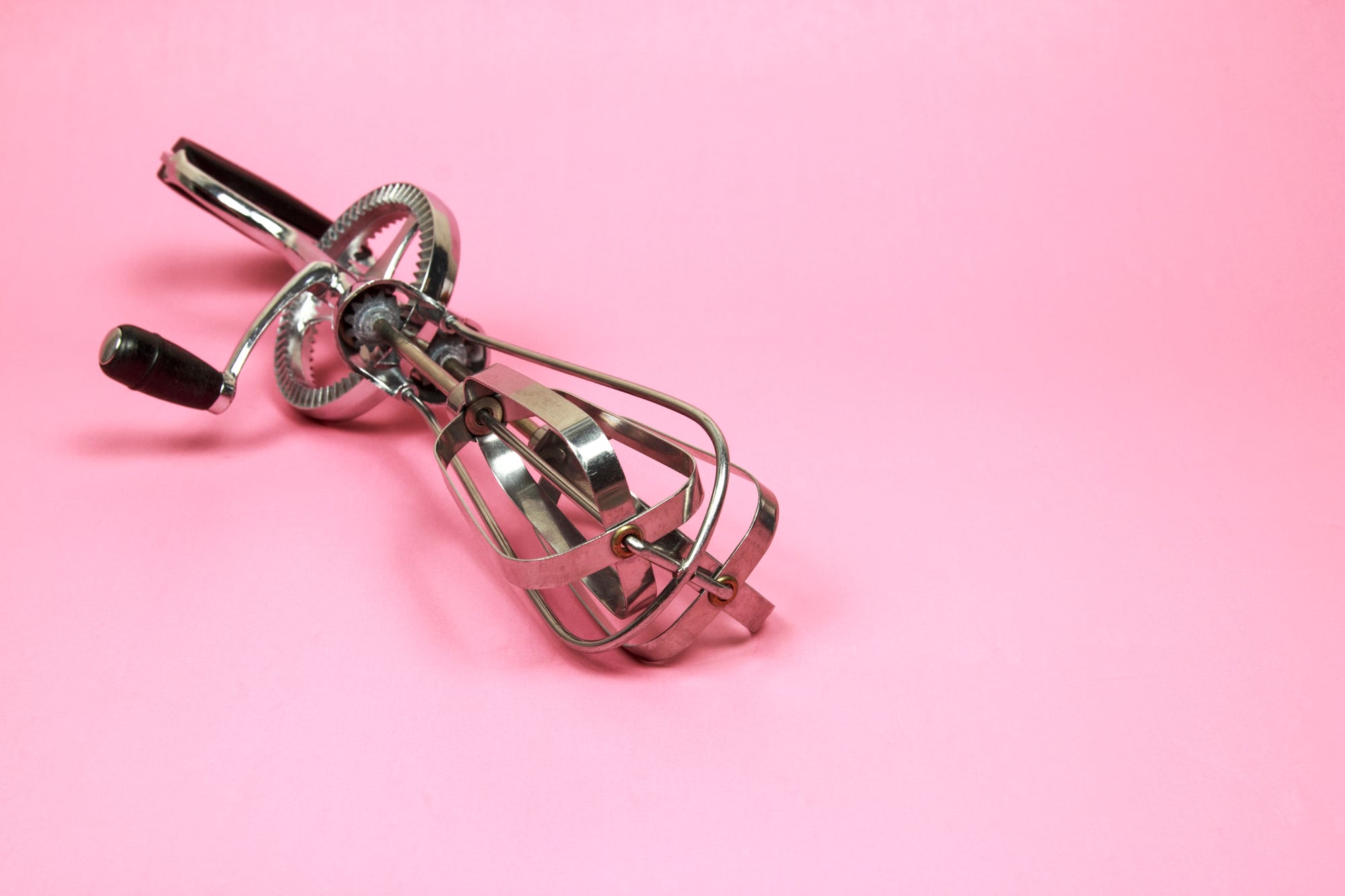
Watch someone use a rotary egg beater and you’re seeing muscle memory at work — the rhythm becomes automatic, the motion smooth and efficient despite the obvious effort involved.
The wire whips spin faster than any hand could move them individually, creating the kind of sustained, consistent action that transforms egg whites into peaks and cream into something worth putting on pie.
There’s a particular sound these beaters make when they hit their stride: a steady whirring punctuated by the occasional scrape against the bowl’s sides, like a small motor that runs on elbow grease instead of electricity.
And the curious thing is how meditative the process becomes once you find that rhythm — your arm keeps the steady circular motion while your wrist provides the smaller adjustments, the whole operation settling into something that feels more like a craft than a chore.
The eggs don’t care whether they’re beaten by hand or machine, but something about doing it yourself makes the final result feel more intentional, more connected to the actual process of cooking rather than just the end result.
Ice Tongs

Ice came in blocks back then, delivered by men who understood leverage and timing. Ice tongs were the tool that made the whole system work.
Those metal arms gripped frozen blocks without slipping, allowing precise placement in iceboxes and drinks.
The teeth bit into ice with authority. No fumbling with slippery cubes or wondering if the grip would hold.
Just mechanical advantage applied to a simple problem.
Button Hook

Getting dressed used to require tools, and the button hook stands as perhaps the most elegant solution to a daily frustration that modern clothing has largely eliminated.
Tiny buttons demanded tiny pits, and human fingers — even nimble ones — weren’t always up to the task of threading one through the other dozens of times each morning.
The button hook changed the physics of the problem entirely, turning a pinching motion into a pulling one, letting the metal curve do what fingertips couldn’t quite manage.
There’s something almost surgical about watching someone skilled with a button hook work their way up a row of buttons, each one sliding through its opening with mechanical precision rather than the fumbling and forcing that fingers often required.
Meat Grinder
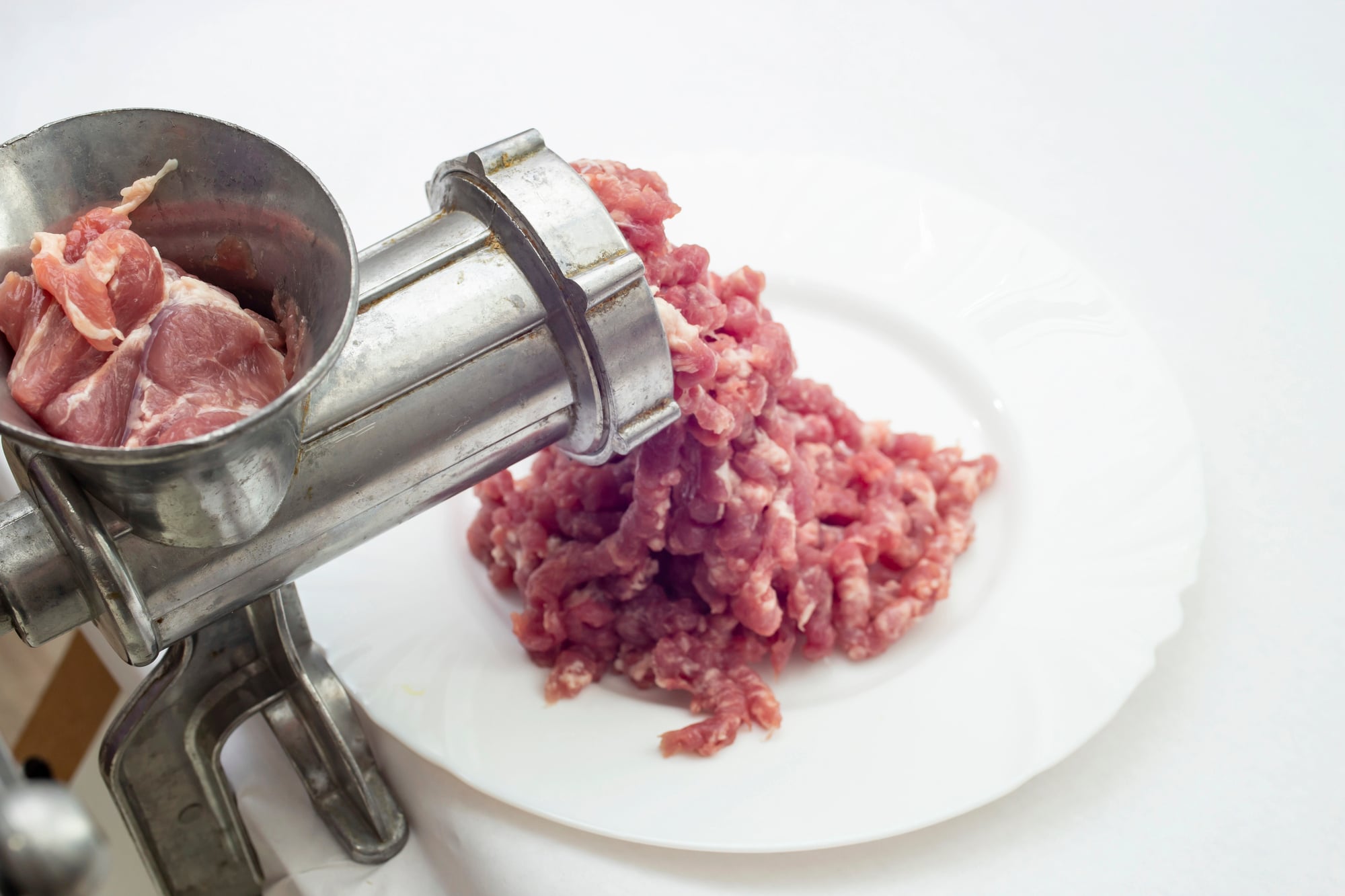
Fresh ground meat was worth the effort when the alternative was trusting someone else’s standards. The cast iron meat grinder clamped to the kitchen table and turned dinner preparation into a deliberate process.
You fed chunks of beef or pork into the hopper and turned the crank steadily, watching ribbons of ground meat emerge from the other end.
No wondering what went into the mix or how long it had been sitting around. Just muscle, fat, and whatever seasonings made sense.
The control was complete, and so was the responsibility.
Darning Egg
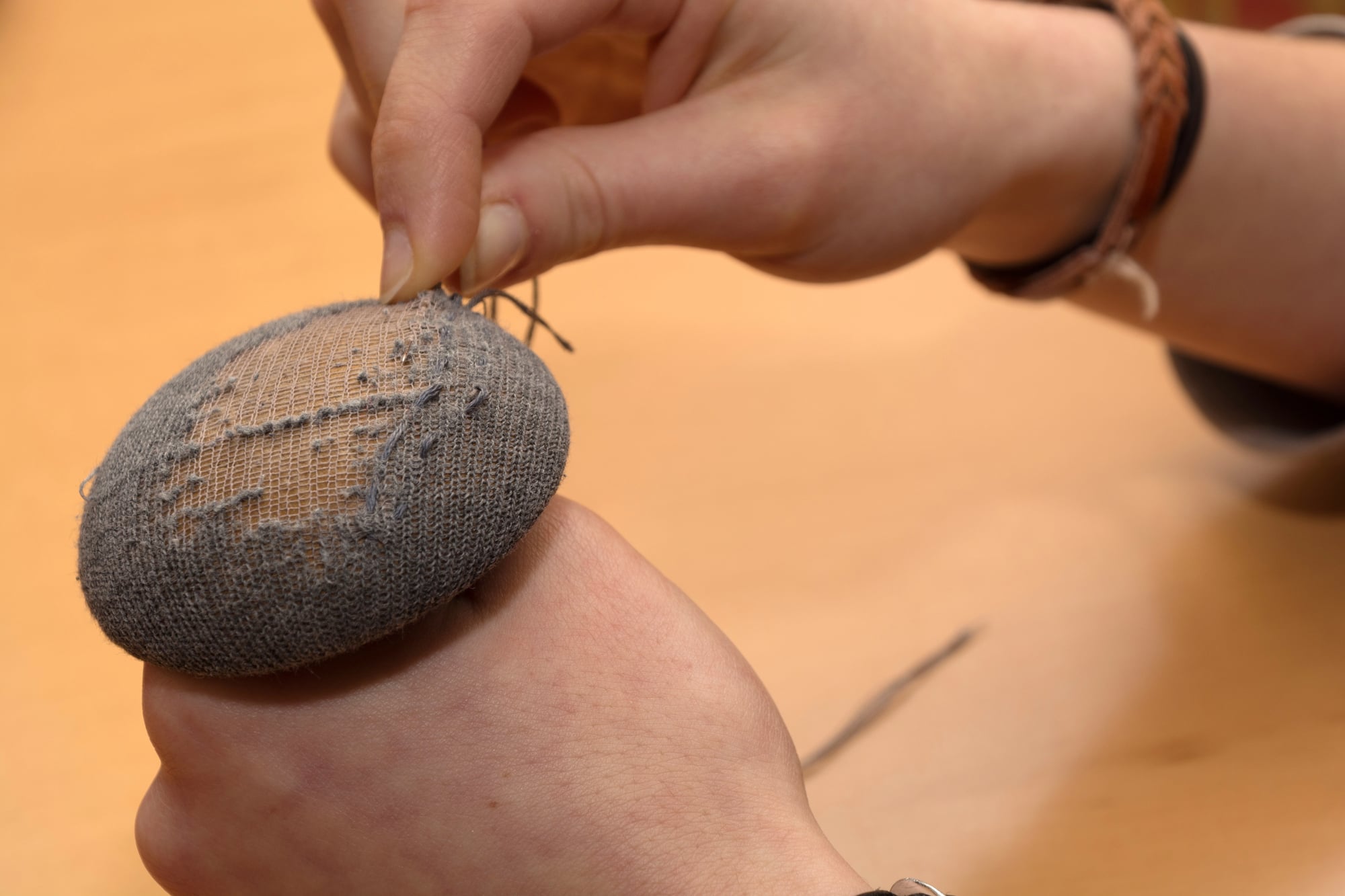
The darning egg represents everything modern consumer culture has abandoned: the radical idea that things with openings don’t automatically become garbage.
This smooth wooden oval slipped inside socks and stockings, providing the firm backing needed to weave new threads across worn spots and actual tears, creating patches that were often stronger than the original fabric.
The process required patience that feels almost quaint now — threading the needle, creating a grid of parallel lines running one direction, then weaving perpendicular threads over and under until the tear disappeared beneath a tight mesh of new material.
But there was something deeply satisfying about rescuing a sock that had given good service, about refusing to let a small failure doom the entire garment.
The darning egg made this possible by turning a floppy, impossible-to-work-with piece of fabric into something taut and manageable, transforming mending from frustration into craft.
Ice Pick

Ice picks were single-purpose tools that did their job with brutal efficiency. When ice came in solid blocks instead of convenient cubes, you needed something sharp and strong enough to break it down to usable sizes.
The pointed steel spike concentrated all your force into one small area, letting you chip and split ice exactly where you wanted it to crack.
No finesse required, just aim and leverage.
The wooden handle gave you grip and control while keeping your hand safely away from the business end.
Washboard
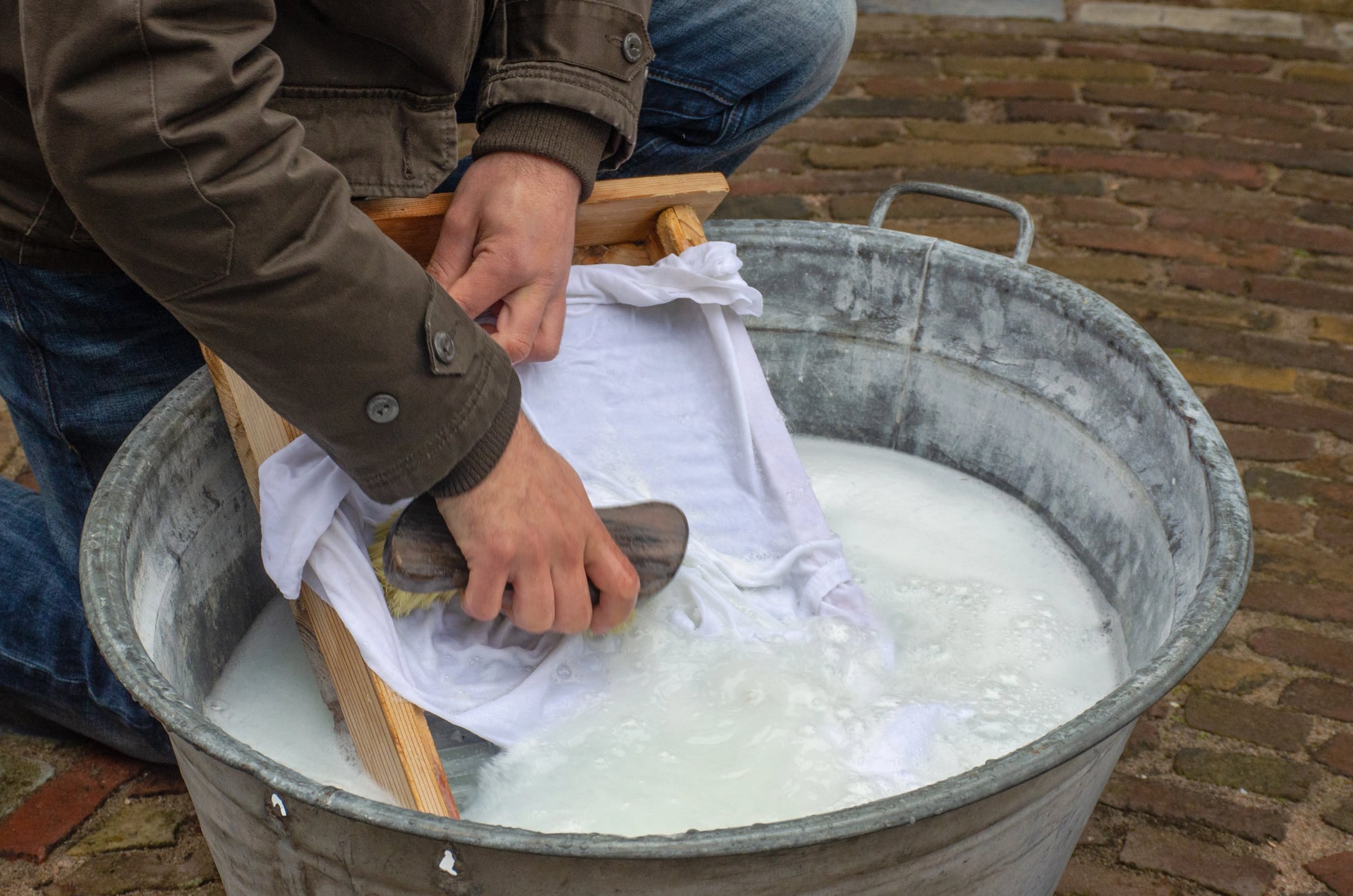
Laundry before machines meant accepting that clean clothes required genuine effort, and the washboard turned that effort into something systematic rather than haphazard.
The ridged metal surface provided just enough texture to work dirt loose when fabric was rubbed against it, while the wooden frame kept everything at the right angle for efficiency rather than exhaustion.
You worked each piece individually — collar, cuffs, any spots that looked suspicious — scrubbing soap into the fibers until the water ran clear instead of gray.
The rhythm became automatic after a while: dip, soap, scrub, rinse, check, repeat.
It was honest work that produced honest results, the kind where you could see exactly what you’d accomplished by the difference between the dirty water you started with and the clean clothes you ended up with.
And while nobody would choose a washboard over a washing machine given the option, there was something satisfying about the directness of it all: dirt plus soap plus elbow grease equals clean clothes, with no mysterious cycles or programming required.
Wood Stove

Wood stoves taught patience and planning in ways that modern heating never will. You couldn’t just adjust a thermostat and walk away.
Fire needed attention, fuel, and respect.
But they provided more than heat. The flat top cooked meals while warming the house.
The oven baked bread with steady, even temperatures. Hot water lived in the reservoir on the side.
One well-built stove served multiple purposes and never needed repairs that required calling a technician.
Butter Churn
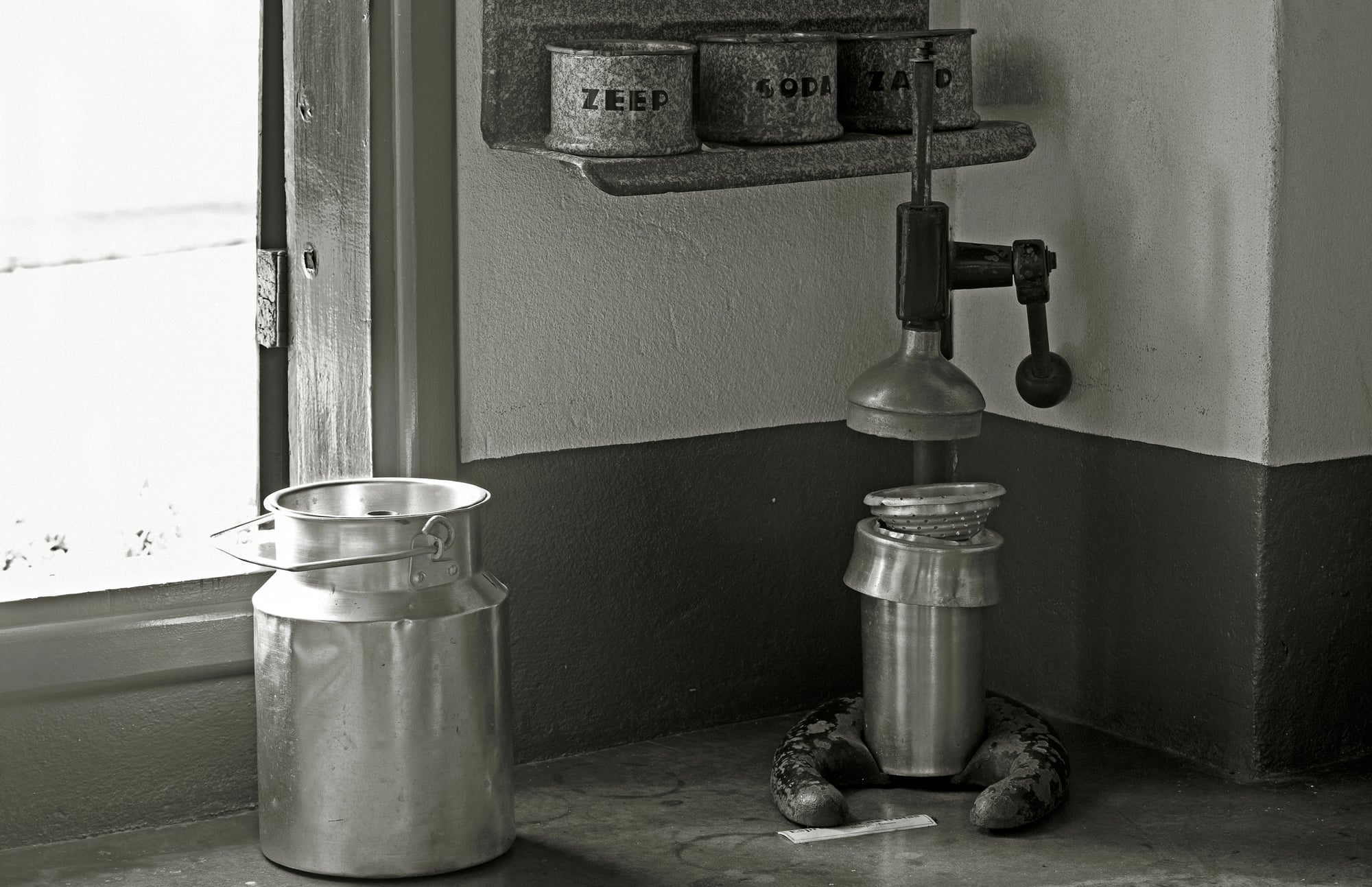
The butter churn stands as perhaps the most honest piece of kitchen equipment ever invented — it promised nothing more than the transformation of cream into butter, and it delivered exactly that, provided you were willing to supply the motion it couldn’t generate itself.
The tall wooden cylinder with its long-handled plunger required a specific rhythm: steady strokes that kept the cream agitated without splashing it everywhere, a pace sustainable over the twenty or thirty minutes the process typically took.
There was no shortcut, no way to rush the chemistry of fat globules clumping together and separating from buttermilk, no substitute for the repetitive motion that gradually changed the sound inside the churn from liquid sloshing to something more solid and chunky.
And then, almost suddenly, you’d feel the difference in resistance, hear the change in tone, and know that cream had become something else entirely — rich, yellow butter that tasted nothing like the pale, uniform blocks that would later fill grocery store shelves.
Apple Peeler
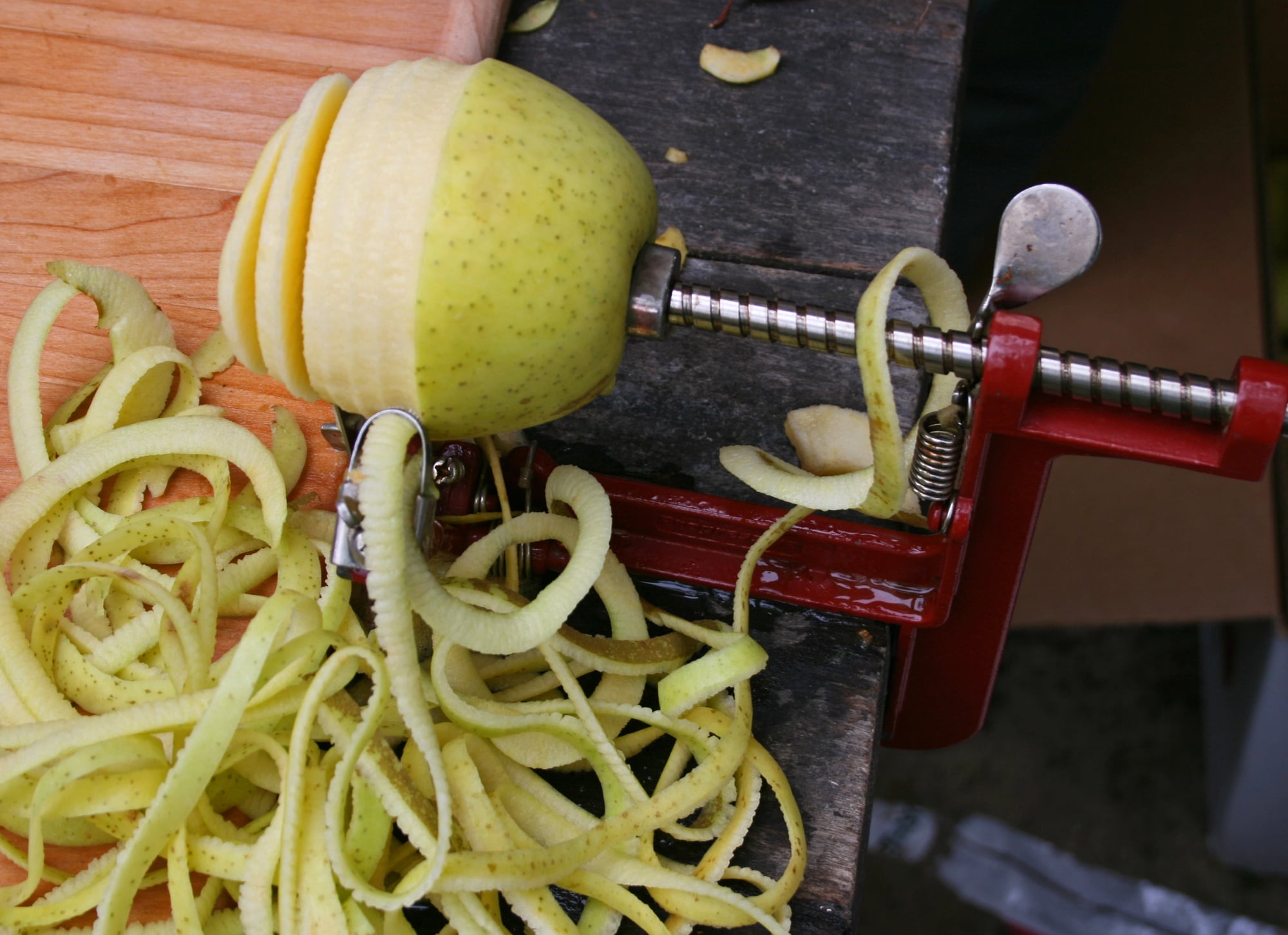
Apple season meant bushels of fruit and hours of preparation, but the apple peeler turned tedious work into something almost mechanical. The cast iron device clamped to a table and held each apple steady while a hand crank turned it against a sharp blade.
One continuous ribbon of peel spiraled off while the apple rotated, leaving behind fruit ready for pies, sauce, or drying.
The efficiency was remarkable — dozens of apples processed in the time it would take to peel a few by hand.
The tool paid for itself in saved time and consistent results.
When Things Were Built To Last

These tools share something that feels increasingly rare: they were designed to work, not to be replaced. Cast iron that lasted generations, wooden handles worn smooth by decades of use, metal parts that could be sharpened rather than discarded.
Each one represents a different relationship with objects — not as disposable conveniences, but as partners in the ongoing project of keeping a household running.
They required skill to use well, but they rewarded that skill with reliability and results that you could see, taste, and depend on.
More from Go2Tutors!

- The Romanov Crown Jewels and Their Tragic Fate
- 13 Historical Mysteries That Science Still Can’t Solve
- Famous Hoaxes That Fooled the World for Years
- 15 Child Stars with Tragic Adult Lives
- 16 Famous Jewelry Pieces in History
Like Go2Tutors’s content? Follow us on MSN.