Photos Of 15 Most Bizarre Deep Sea Creatures Ever Discovered
The deep ocean keeps its secrets well. Beyond the reach of sunlight, in crushing darkness and unimaginable pressure, evolution has taken some truly wild turns.
Scientists estimate we’ve explored less than five percent of our oceans, which means the creatures we’ve managed to photograph represent just a tiny glimpse of what’s really down there. These aren’t the graceful dolphins or colorful tropical fish that decorate marine biology textbooks.
These are the ocean’s strangest inventions—animals so bizarre they seem designed by committee, crafted from nightmares, or assembled from spare parts left over from other species.
Blobfish

The blobfish wins ugly contests it never entered. Out of water, this creature looks like a deflated balloon animal that someone forgot to finish.
But here’s the thing most people miss: the blobfish actually looks normal at its home depth of 2,000 to 4,000 feet below the surface. Without the crushing pressure of the deep ocean to hold its body together, the blobfish becomes a gelatinous mess when brought to the surface.
It’s less “world’s ugliest animal” and more “victim of rapid decompression.”
Vampire Squid
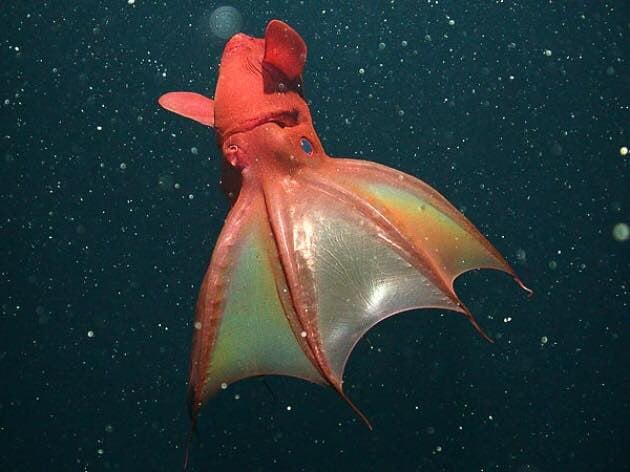
Don’t let the name fool you—vampire squids don’t sip blood (and they’re not technically squids either, despite what marine biologists decided to call them, which is saying something about the confidence level in taxonomic naming conventions). When threatened, this creature turns itself inside out like a gothic magic trick, revealing spines that make it look like a floating medieval weapon.
The transformation happens in seconds, and the result is genuinely unsettling even to researchers who’ve seen it dozens of times. The vampire squid also shoots bioluminescent mucus at predators, because apparently looking terrifying wasn’t enough of a defense mechanism.
Fair enough.
Anglerfish

Picture a streetlight designed by someone who’d only heard streetlights described secondhand, then given teeth and dropped into the deepest parts of the ocean. That’s an anglerfish.
The bioluminescent lure dangling from its head (which is actually a modified dorsal fin, if you want to get technical about it) works exactly like you’d expect: smaller fish swim toward what they think is food and become food instead.
But the real strangeness lies in anglerfish reproduction. Male anglerfish are tiny compared to females—so tiny that when they find a mate, they bite onto her and gradually fuse with her body, becoming nothing more than a sperm-producing appendage.
Romance is dead, and apparently so is the male anglerfish’s independence. The female can carry multiple males this way, like living jewelry that serves a biological function.
And yet the system works. Evolution has no interest in conventional relationship dynamics.
Giant Isopod

Some creatures look like they were designed by committee, and the giant isopod feels like the committee included someone’s eccentric uncle who insisted on making a pill bug the size of a football. These deep-sea scavengers can grow over a foot long, which transforms something that would be unremarkable in your garden into something that belongs in a science fiction movie (or someone’s nightmares, depending on how you feel about arthropods).
Giant isopods can survive without food for years—one in captivity didn’t eat for five years straight before finally dying, though whether from starvation or sheer stubbornness remains unclear. They move slowly across the ocean floor like armored vacuum cleaners, eating whatever dead things drift down from above.
It’s not glamorous work, but someone has to do it, and giant isopods seem oddly suited for the job.
Gulper Eel

The gulper eel can unhinge its jaw and expand its throat to swallow prey larger than its own body. This isn’t a slight exaggeration for dramatic effect—it can literally swallow fish that outweigh it.
The entire front third of its body is essentially one enormous mouth attached to a stomach, like someone designed a fishing net but forgot to tell it that it was supposed to be an eel instead.
When threatened, gulper eels inflate like balloons and emit clouds of bioluminescent particles. So they’re part vacuum cleaner, part magician’s disappearing act.
The deep ocean apparently rewards this kind of versatility.
Barreleye Fish

Transparent heads are not common in the animal kingdom. The barreleye fish has one anyway.
Its tubular eyes sit inside its see-through skull like organic periscopes, and they can rotate to look upward through the fish’s own forehead—which is exactly as strange as it sounds.
For decades, scientists thought the eyes were fixed in place because every specimen they caught had a damaged head (turns out nets aren’t gentle on transparent skulls). It wasn’t until researchers managed to observe living barreleyes that they realized the eyes could move.
The fish spends most of its time looking up through its transparent head, watching for the silhouettes of prey against the faint light filtering down from above. And yet this bizarre arrangement works perfectly for its hunting strategy.
Japanese Spider Crab
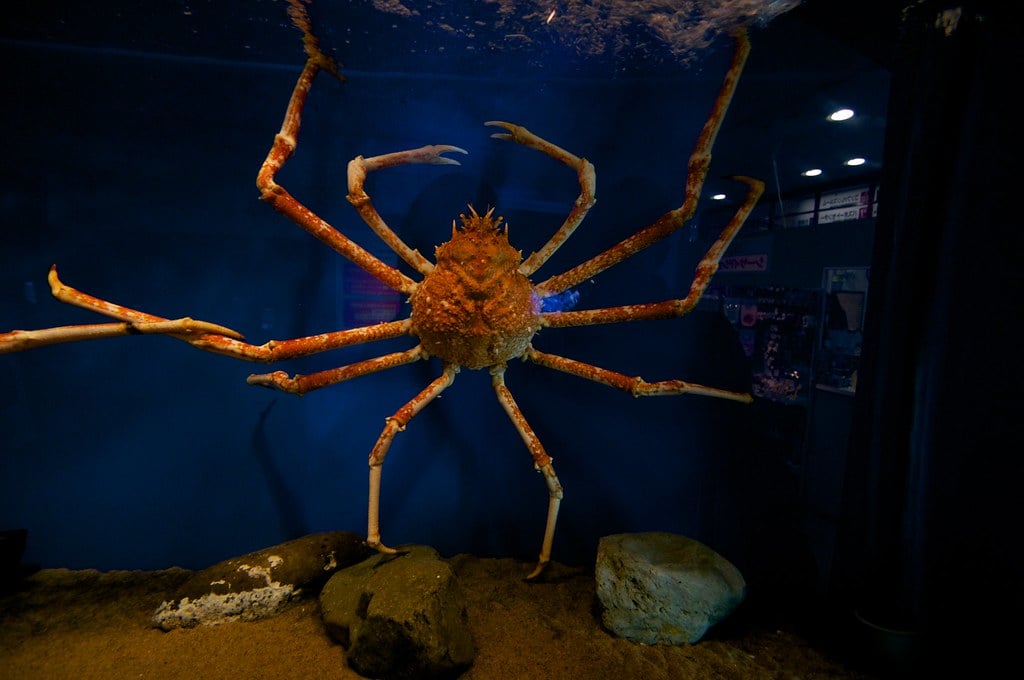
Imagine a spider that decided to get serious about leg day and never stopped. Japanese spider crabs can have leg spans reaching 12 feet across, which makes them look like they wandered out of a kaiju movie and decided to settle on the ocean floor.
Despite their intimidating size, they’re actually gentle scavengers that move slowly across the seafloor picking up bits of dead plants and animals. These crabs can live for over 100 years, which means some of the individuals researchers encounter today were crawling around the ocean floor before anyone had ever seen a barreleye fish or photographed a blobfish.
They molt their entire exoskeleton as they grow, a process that becomes increasingly risky as they get larger—imagine trying to crawl out of a suit of armor that weighs as much as you do.
Frilled Shark

The frilled shark looks like it got lost on its way to the Jurassic period and never found its way home. With 300 needle-sharp teeth arranged in 25 rows and a primitive body plan that hasn’t changed much in 80 million years, it’s essentially a living fossil that happens to be an apex predator (which is the kind of combination that makes marine biologists both excited and slightly nervous when they encounter one).
Frilled sharks hunt by coiling their body like a spring and then striking at prey with surprising speed. The attack happens so quickly that high-speed cameras are needed to capture the full sequence.
But what makes them truly unsettling is how they move through the water—less like a fish and more like a sea serpent that learned to swim. Even researchers who study deep-sea creatures admit that encountering a frilled shark never quite feels routine.
And the eyes. Those primitive, almost reptilian eyes seem to look right through you, as if they’re calculating something you’d rather not know about.
Goblin Shark
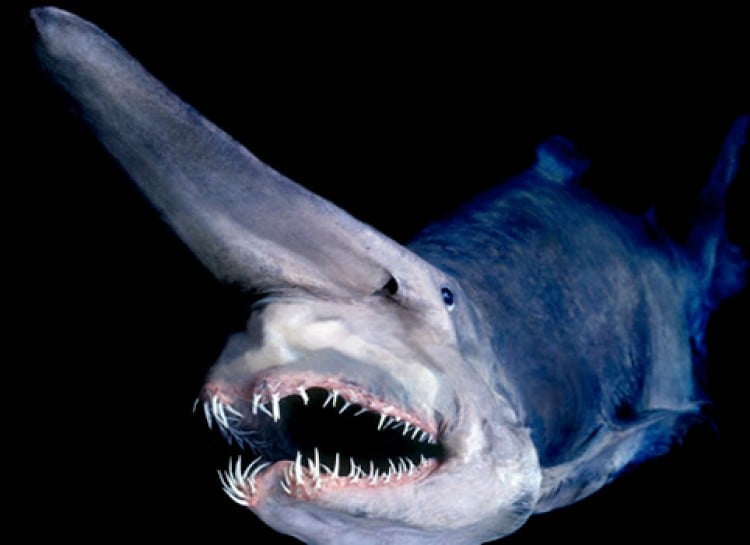
Goblin sharks have retractable jaws. Not slightly extendable like many fish, but fully retractable jaws that shoot out of their mouth like a biological trap door.
When hunting, the goblin shark’s jaw can extend nearly to the tip of its long, flattened snout, grab prey, and retract back into the mouth in a fraction of a second. The transformation is jarring even when you’re expecting it.
One moment you’re looking at a somewhat unusual-looking shark, and the next moment its entire face has reorganized itself into something that belongs in an alien horror movie. The jaw extension happens so quickly that prey doesn’t have time to react—which is probably the point, though it doesn’t make the mechanism any less disturbing to witness.
Dumbo Octopus
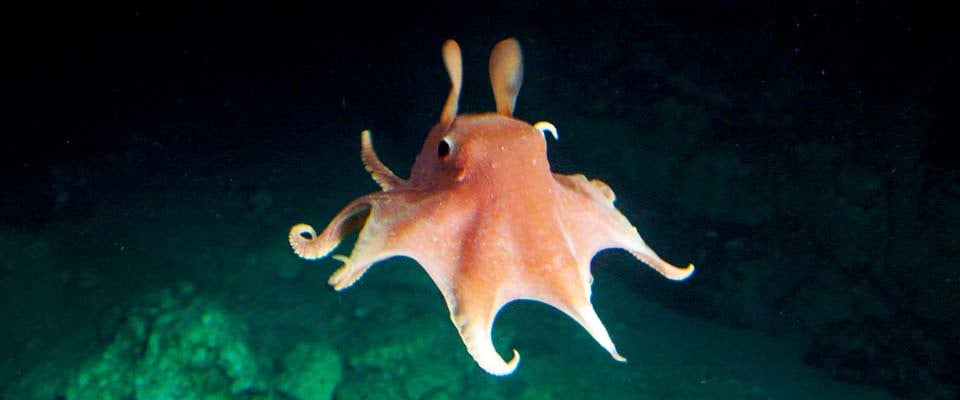
Not every deep-sea creature looks like it was assembled from nightmares. The dumbo octopus has ear-like fins that make it look almost cute, if you can get past the fact that it’s an octopus living in crushing darkness thousands of feet below the surface.
These fins flutter as it moves through the water, giving it the appearance of flying rather than swimming. Dumbo octopuses are the deepest-living octopuses known to science, found at depths up to 23,000 feet.
At those depths, the pressure is over 680 times greater than at sea level, which would instantly crush most surface creatures. Yet dumbo octopuses seem perfectly comfortable, drifting through the water column like they’re floating through space.
They’re also remarkably small for deep-sea creatures—most are only about 8 inches long, making them look like toys that somehow learned to survive in the most hostile environment on the planet.
Fangtooth Fish
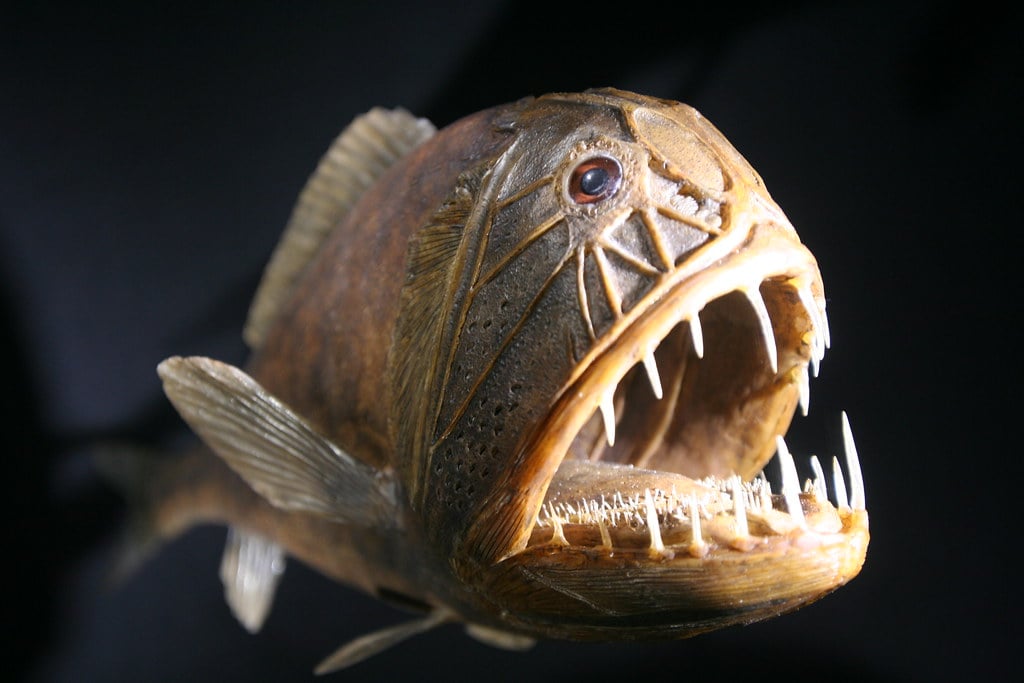
The fangtooth fish has teeth so large relative to its body size that it can’t fully close its mouth. The fangs are proportionally the largest teeth of any fish in the ocean, and they’re so long that the fish has special sockets in its skull where the lower teeth fit when the mouth closes—otherwise, the fangs would pierce its own brain.
Despite having a mouth full of weapons, fangtooth fish are only about 6 inches long and spend their time hunting tiny crustaceans and smaller fish. It’s like watching a pocket-sized dragon hunt for crumbs, except the dragon lives in complete darkness and has to deal with pressure that would instantly kill most other creatures.
The oversized teeth make sense when you realize that in the deep ocean, you can’t afford to let any potential meal escape—even if it means carrying around teeth that are almost too big for your own head.
Giant Tube Worms

Giant tube worms don’t have mouths, stomachs, or any way to process food the way most animals do. Instead, they house colonies of bacteria in specialized organs, and these bacteria convert chemicals from hydrothermal vents into energy that feeds the worm.
It’s a completely different approach to staying alive—less eating and more hosting an internal chemical factory. These worms can grow up to 8 feet long and live clustered around hydrothermal vents in what look like underwater forests made of flexible chimneys.
The water around these vents is hot enough to melt lead, filled with toxic chemicals, and under crushing pressure, yet giant tube worms thrive there. They’ve essentially figured out how to live off the Earth’s internal chemistry, turning poison into food and scalding water into a comfortable neighborhood.
Chimera Fish
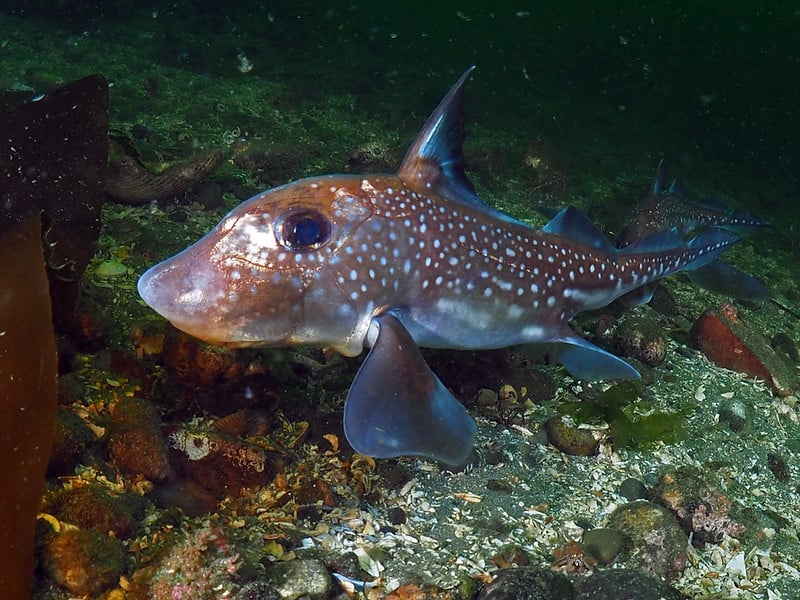
Chimera fish look like someone tried to build a shark from memory and got most of the details wrong. They have cartilaginous skeletons like sharks, but their skin is smooth instead of covered in denticles, their tails are long and whip-like, and many species have a venomous spine in front of their dorsal fin (just in case being a deep-sea cartilaginous fish wasn’t challenging enough for potential predators).
The most unsettling feature is their eyes—large, reflective, and set in a face that doesn’t quite look like any other fish. Chimeras are also called “ghost sharks,” which is accurate in the sense that encountering one feels like meeting something that shouldn’t exist but clearly does.
They’ve been around for nearly 400 million years, which means they were ancient when the first dinosaurs appeared, yet they’ve remained relatively unchanged because their body plan works perfectly for their deep-sea lifestyle. And chimeras lay eggs in leathery cases that can take over a year to hatch, which requires a level of patience that most species can’t afford in the deep ocean’s competitive environment.
Stargazer Fish

Stargazer fish bury themselves in the ocean floor with only their eyes and mouth exposed, waiting for prey to swim overhead. This ambush strategy is common enough, but stargazers took it a step further: some species can generate electric shocks up to 50 volts to stun prey and discourage predators.
So they’re part fish, part living electric fence. The combination of camouflage, ambush tactics, and bioelectricity makes stargazers remarkably effective hunters despite spending most of their time motionless and buried in sediment.
They also have upward-facing mouths (hence the name) that can create powerful suction to pull prey down into the sand—which means swimming over a hidden stargazer can result in being simultaneously shocked, grabbed, and buried before you realize what happened.
Hatchetfish
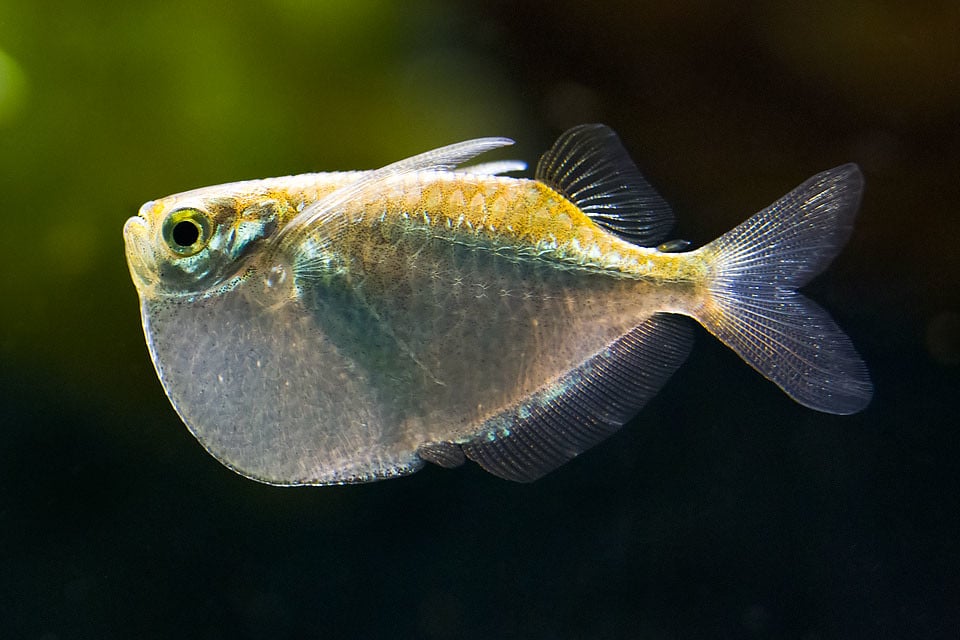
Hatchetfish have light-producing organs along their undersides that create a form of camouflage called counterillumination. By matching the faint light filtering down from above, they become nearly invisible to predators looking up from below.
It’s active camouflage that requires constant adjustment as light conditions change, like having a cloaking device that needs to be manually tuned throughout the day. But hatchetfish also have tubular eyes that point upward, similar to barreleye fish, allowing them to spot the silhouettes of prey against the dim surface light while remaining hidden themselves.
So they’re simultaneously predator and prey, hunter and hunted, visible and invisible depending on which direction you’re looking from. The deep ocean rewards this kind of versatility, even when it results in fish that look more like small, swimming spacecraft than anything most people would recognize as aquatic life.
Wonders That Defy Imagination
The deep ocean operates by different rules than the world we know. Down there, in perpetual darkness and crushing pressure, evolution has had free rein to experiment with designs that would seem impossible anywhere else.
These creatures represent solutions to problems most of us can’t even imagine—how to find food in a desert of water, how to reproduce when potential mates are separated by miles of empty ocean, how to survive in an environment that would instantly kill most surface life.
Each photograph of these bizarre deep-sea dwellers represents years of technological development, careful planning, and no small amount of luck. The images capture moments that few humans will ever witness directly, glimpses of a world that exists in parallel to our own but operates by completely different principles.
And somewhere in the unexplored depths, creatures even stranger than these continue their ancient routines, waiting to surprise the next generation of researchers brave enough to venture into the ocean’s deepest secrets.
More from Go2Tutors!

- The Romanov Crown Jewels and Their Tragic Fate
- 13 Historical Mysteries That Science Still Can’t Solve
- Famous Hoaxes That Fooled the World for Years
- 15 Child Stars with Tragic Adult Lives
- 16 Famous Jewelry Pieces in History
Like Go2Tutors’s content? Follow us on MSN.