Photos Of Hidden Underwater Statues You Can Only See By Diving
There’s something haunting about art that lives where humans can’t easily go. Underwater sculptures exist in a world of silence and filtered light, accessible only to those willing to strap on tanks and descend into the blue.
These aren’t tourist attractions with gift shops and parking lots — they’re hidden treasures that reward the bold with experiences most people will never have.
The ocean has become an unlikely gallery, hosting installations that challenge everything we think we know about where art belongs. Some were placed deliberately as artificial reefs, others commemorate tragedy or celebrate life beneath the waves.
All of them share one thing: they can only be truly appreciated by those willing to leave the surface world behind.
Christ Of The Abyss
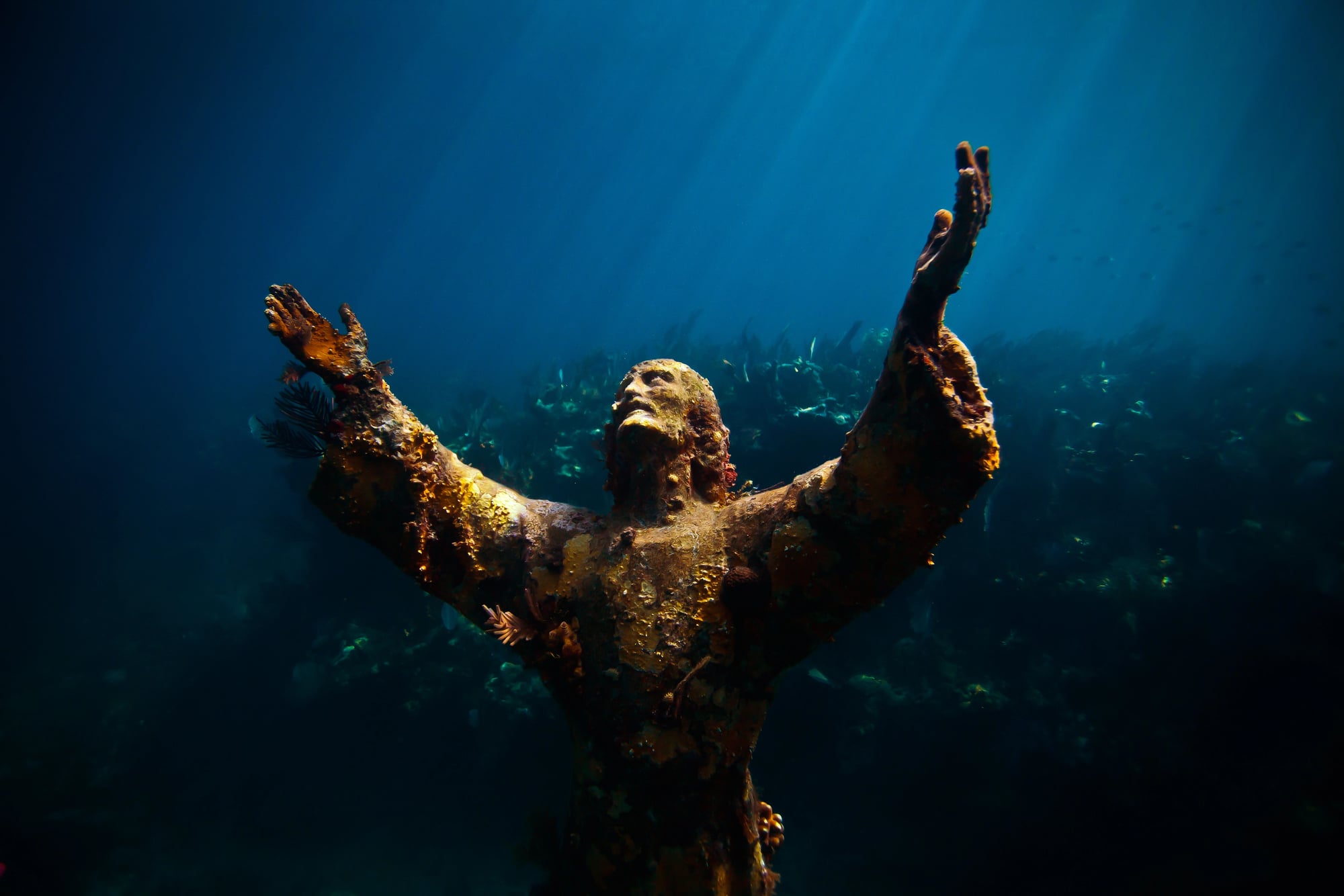
The original underwater Christ statue rests 50 feet down in the Mediterranean Sea off the Italian Riviera. Sculptor Guido Galletti created the statue at the initiative of diver Duilio Marcante, who placed it in 1954 to honor Dario Gonzatti, the first Italian diver to use scuba equipment, who died in those waters.
The bronze figure stands eight feet tall with arms raised toward the surface. Decades of marine growth have transformed it into something both sacred and otherworldly — coral formations bloom across the outstretched hands while schools of fish weave between the flowing robes.
Molinere Underwater Sculpture Park
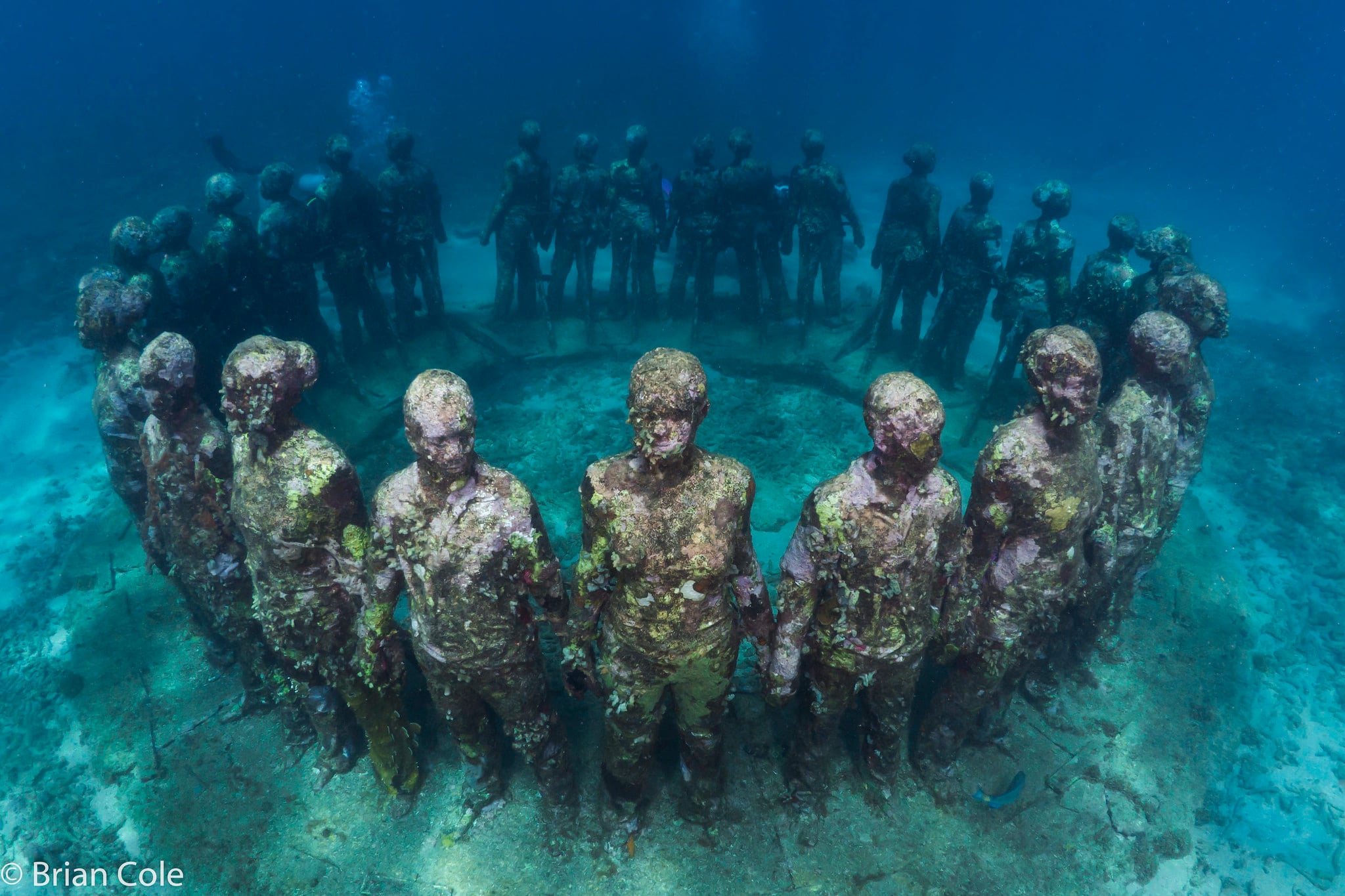
Jason deCaires Taylor created an entire underwater world off the coast of Grenada, where over 80 life-sized figures populate the seafloor at depths ranging from 15 to 25 feet. The sculptures (made from pH-neutral materials that encourage coral growth) have been submerged since 2007, and the transformation has been remarkable — what began as stark cement figures now pulse with marine life, their faces obscured by soft corals and their bodies serving as nurseries for juvenile fish.
But here’s the thing about visiting this underwater gallery: it changes every time.
And not just because the light shifts or the current moves differently, but because the sculptures themselves are evolving, becoming something new with each passing season as the reef claims them piece by piece.
So when divers return months later, they’re not seeing the same art — they’re witnessing a collaboration between human creativity and oceanic persistence that no land-based museum could replicate.
MUSA Cancun
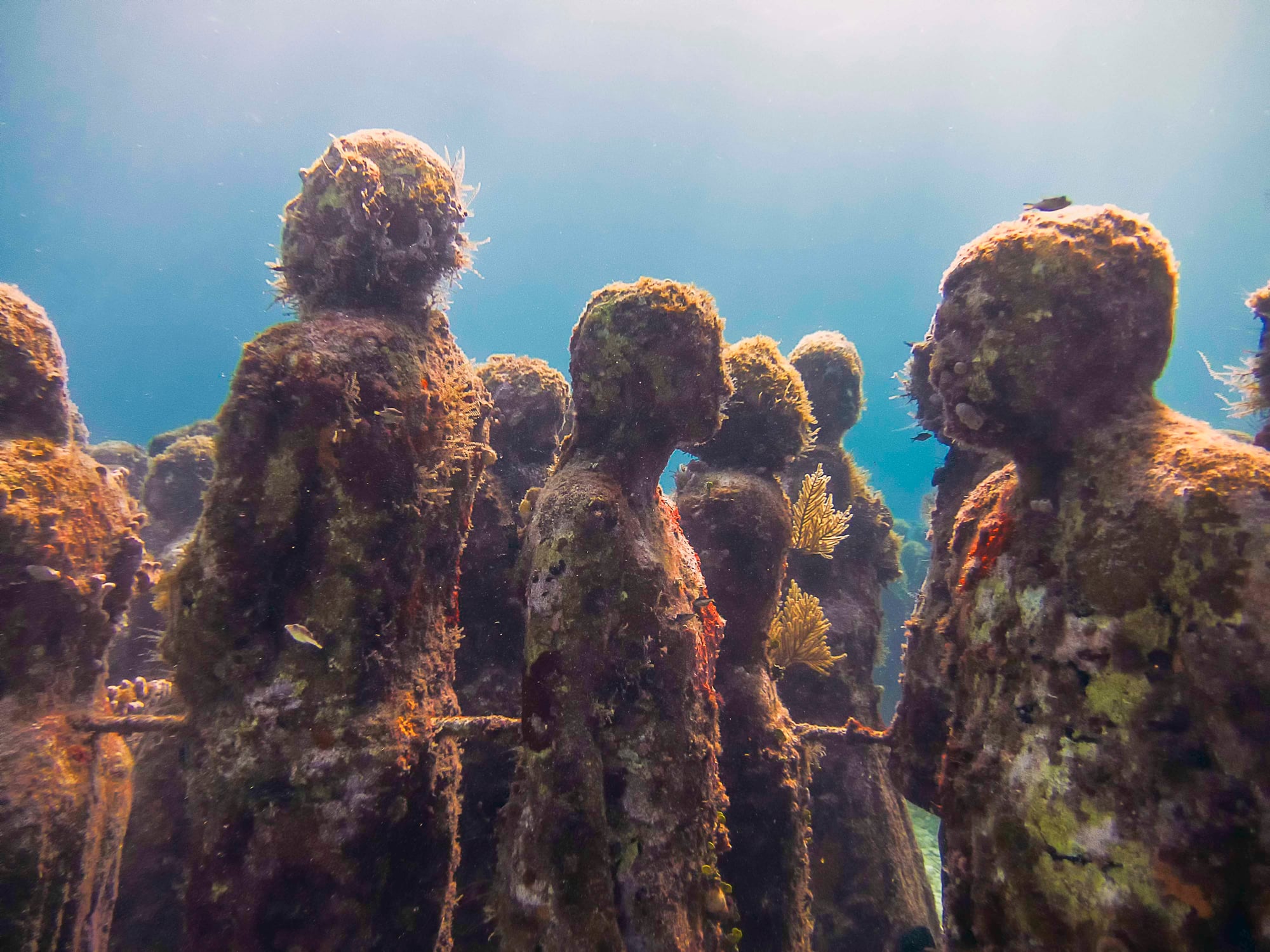
The Underwater Museum of Art in Cancun houses over 500 sculptures across two different sites, but it’s the deeper installations at Manchones Reef that offer the most otherworldly experience. At 30 feet down, massive installations like “The Silent Evolution” — 400 individual human figures — create an eerily beautiful tableau.
Each sculpture tells a story through marine encrustation. Some figures bloom with purple sea fans, others disappear beneath blankets of algae.
The museum functions as both art installation and active reef restoration project, which means the art succeeds by gradually becoming something else entirely.
There’s a strange intimacy to swimming among these silent figures, each one frozen in a gesture or expression that the ocean has spent years slowly erasing and redefining.
Underwater Military Museum
Most people visit Florida’s waters for the coral reefs and shipwrecks, but 30 feet down off Key Largo sits something else entirely: a collection of military vehicles that have been transformed into artificial reef structures. The centerpiece is a massive M60 Patton tank, its gun barrel now home to grouper and its treads buried in sand and coral growth.
The installation serves a dual purpose — providing habitat for marine life while creating an unexpectedly moving memorial to military service. Divers report an almost surreal experience swimming through what was once machinery of war, now peaceful and overgrown with sea life.
Neptune Memorial Reef
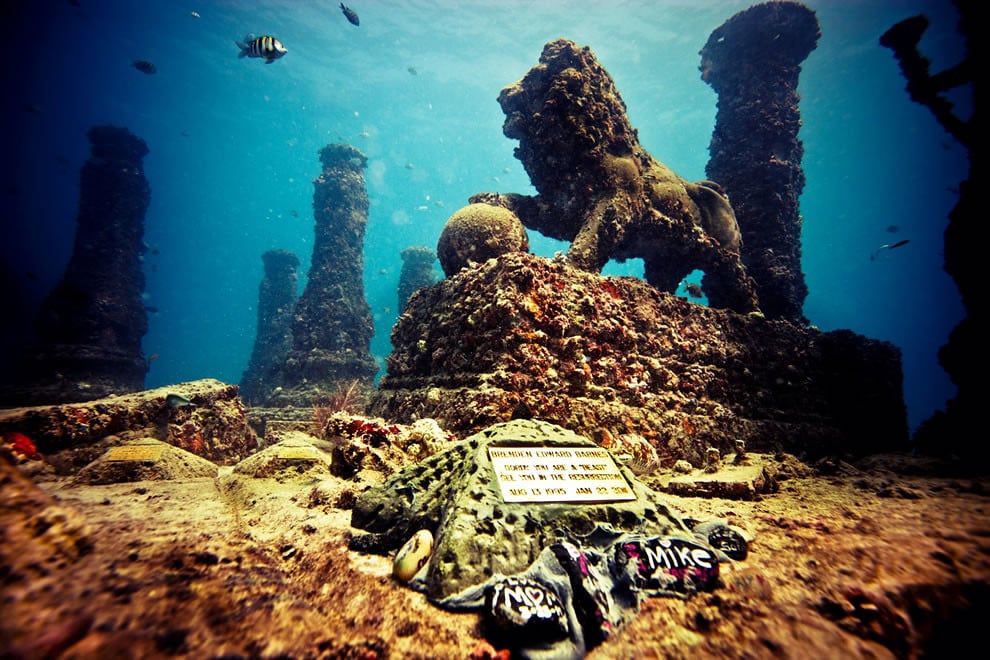
Twenty-five feet beneath the waters off Key Biscayne lies what might be the most ambitious underwater art project ever attempted (though calling it just “art” seems insufficient — it’s part cemetery, part ancient city, part living reef). The Neptune Memorial Reef spans 16 acres of ocean floor, designed to mimic the lost city of Atlantis with columns, roads, and statuary that house cremated remains while serving as habitat for marine life.
The scale becomes apparent only when swimming through it: massive lion statues guard entrance gates, while roads wide enough for several divers lead between elaborate structures.
And yet for all its grandeur, the reef maintains an intimacy that comes from knowing this isn’t just decoration — it’s a resting place where families have chosen to inter their loved ones among the coral and fish.
So each column and archway carries both artistic weight and personal meaning, creating a space that functions simultaneously as memorial, habitat, and cathedral.
Cancun’s Silent Evolution
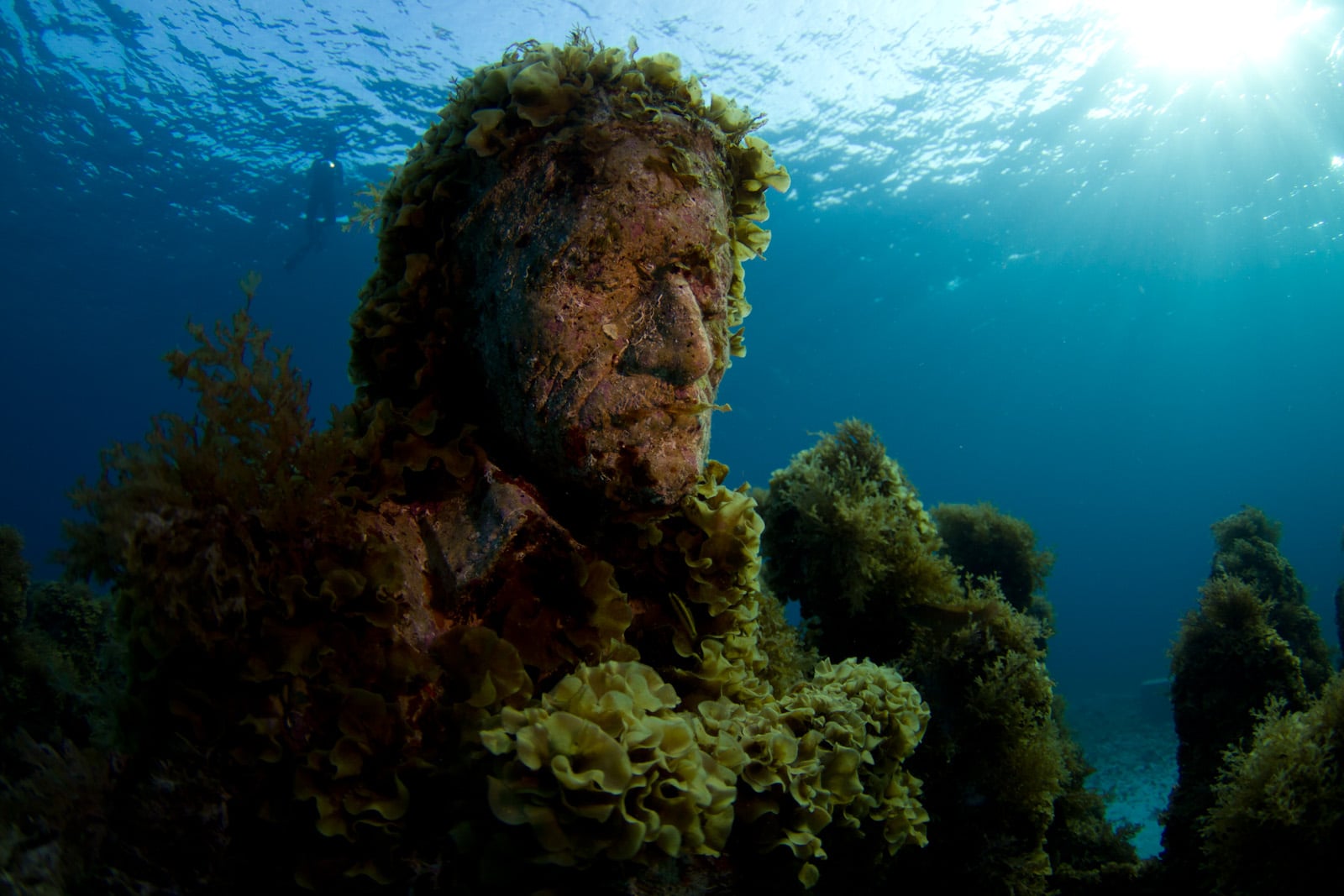
The individual figures in this installation weren’t cast from random models — they were molded from real people in the local community, which creates an unsettling recognition when diving among them. These aren’t generic human forms but specific faces and bodies, now serving as hosts for coral polyps and algae.
The figures stand in neat rows like an underwater congregation, each one developing its own unique patina of marine growth. Some faces remain clearly visible beneath their coating of sea life, while others have become abstract forms where only the suggestion of humanity remains.
Casa En El Agua
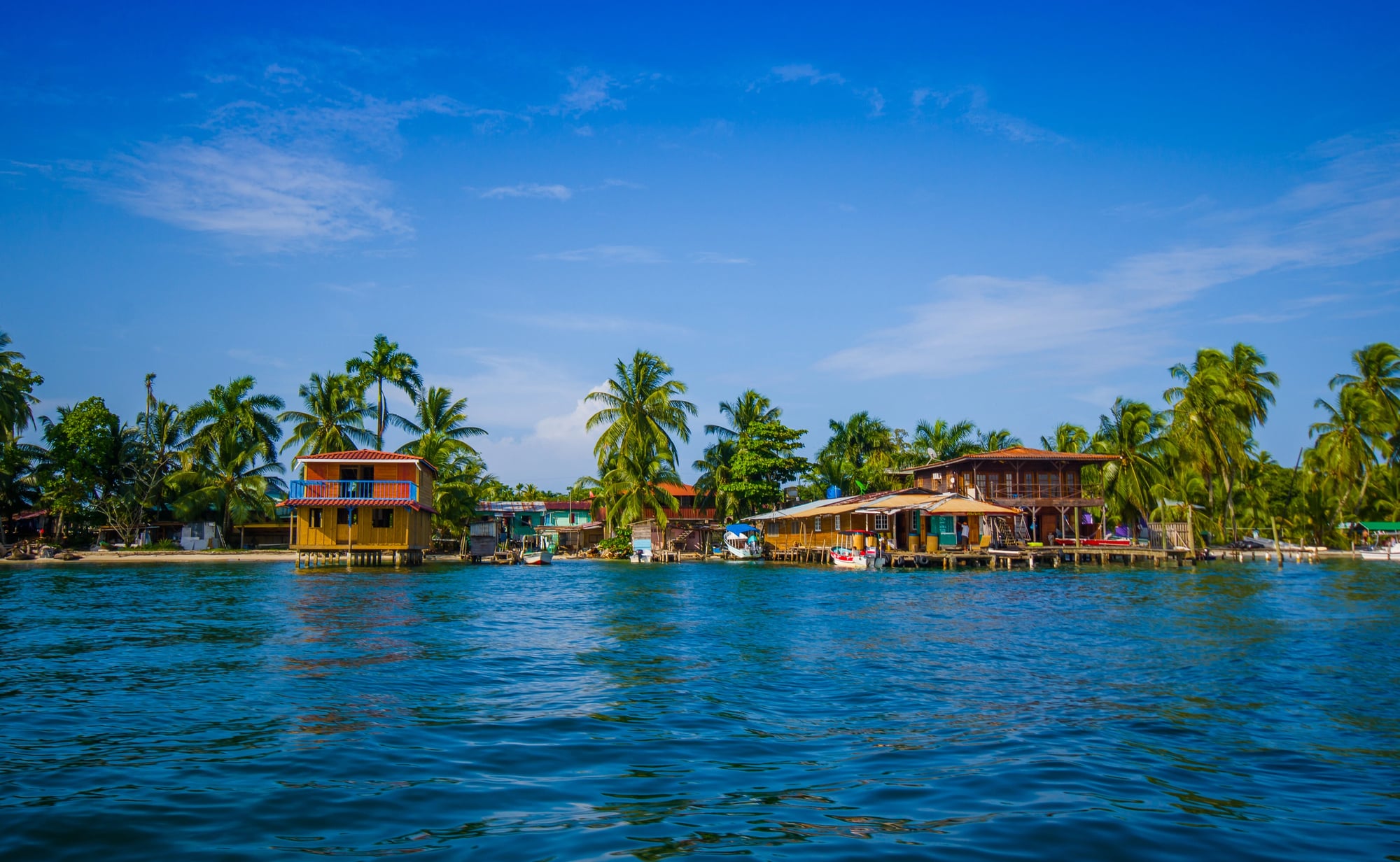
Off the coast of Colombia, this underwater house installation challenges expectations about domestic space. The structure includes recognizable furniture — chairs, tables, even a bed — all positioned as if someone simply decided to move their living room to the ocean floor.
Fish swim through doorways and windows while divers can “sit” at the dining table or “sleep” in the bed. The absurdity creates a dreamlike quality that feels both playful and profound, questioning our assumptions about where life happens and how space can be inhabited.
Ayia Napa Sculpture Park
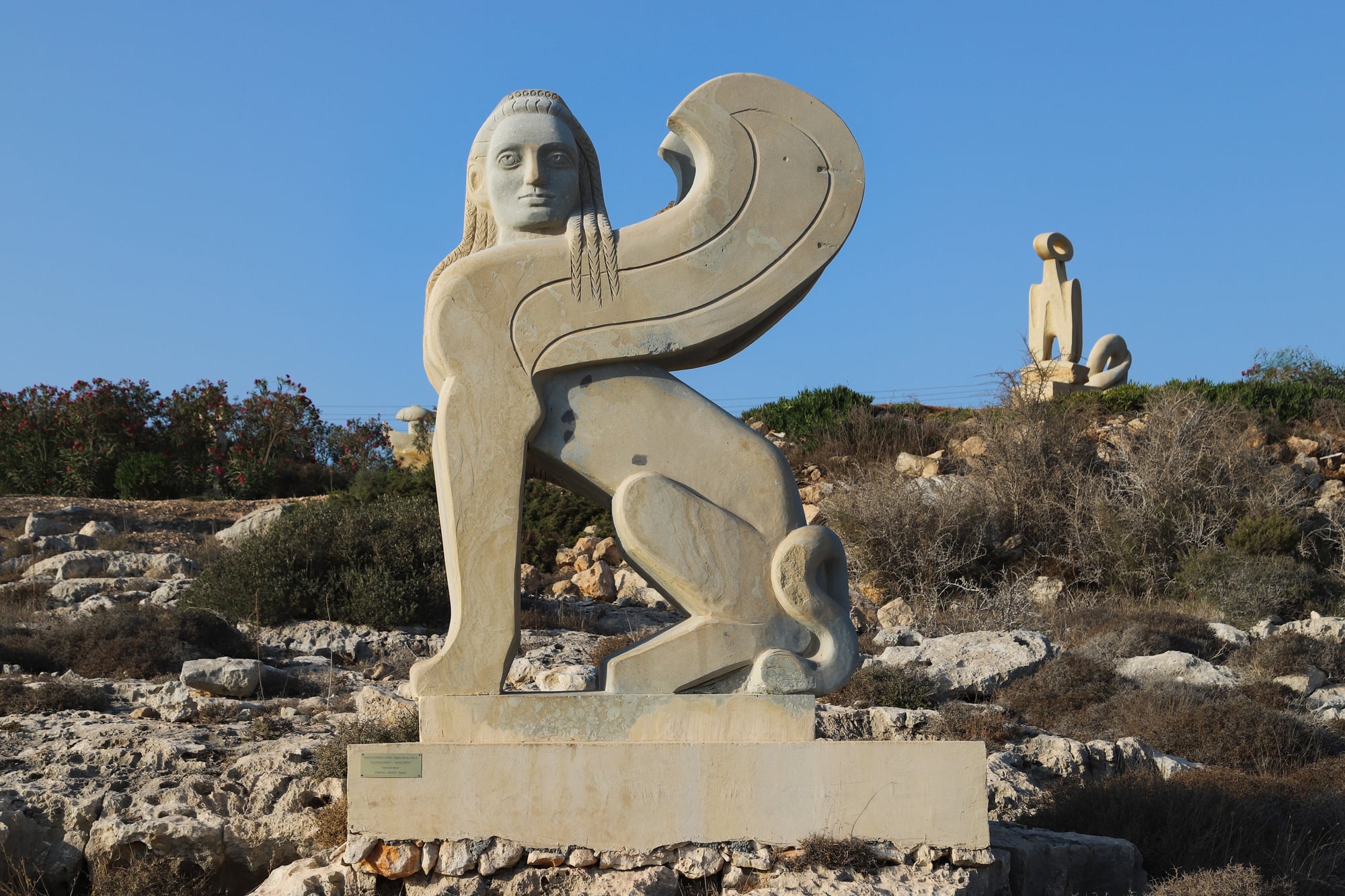
Cyprus hosts an underwater sculpture park where classical and contemporary figures coexist on the Mediterranean seafloor. The installation includes both ancient-inspired statuary and modern abstract pieces, creating a timeline of human artistic expression beneath the waves.
The Mediterranean’s clear water and stable conditions have preserved these sculptures with remarkable clarity. Unlike installations in tropical waters where rapid coral growth quickly transforms the art, these pieces maintain their original forms while developing only subtle marine encrustations.
Lanzarote’s Museo Atlántico

This is the first underwater museum in Europe, and it doesn’t hold back. The centerpiece installation, “Crossing the Rubicon,” features a group of 35 human figures walking toward a wall, while nearby, “The Raft of Lampedusa” addresses refugee crises with haunting directness.
The political nature of many sculptures creates an unusual diving experience — this isn’t just art appreciation but social commentary delivered in one of the most remote gallery spaces on Earth. The weight of the subject matter, combined with the alien environment of the underwater world, produces an emotional impact that would be impossible to replicate on land.
Grenada’s Vicissitudes
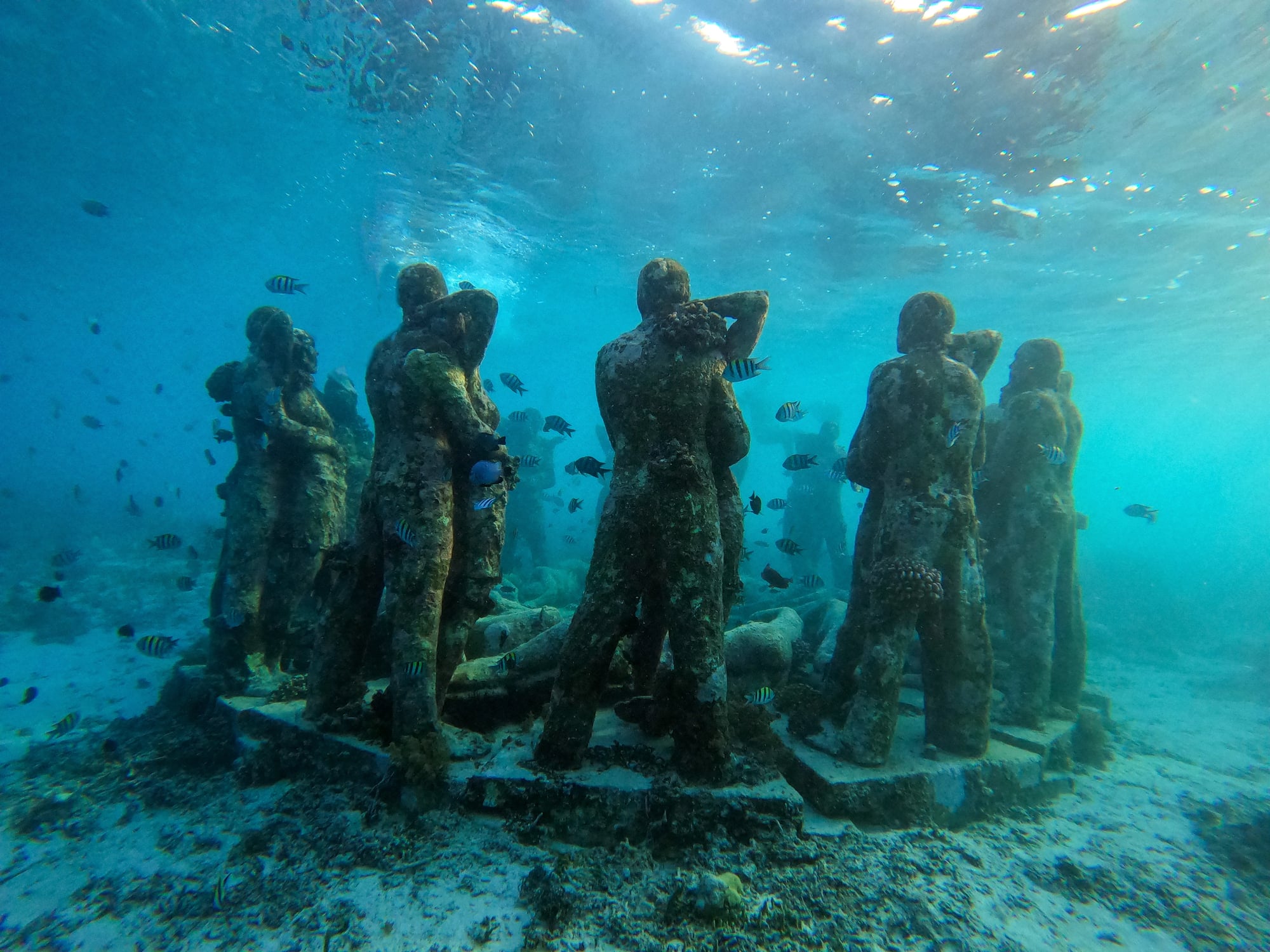
Perhaps no single underwater sculpture captures attention quite like “Vicissitudes” — a circle of children holding hands on the ocean floor. The piece has become almost mythical among divers, partly because of its haunting beauty and partly because of how dramatically it has changed over the years.
What began as clearly defined figures of children has evolved into something more abstract and mysterious. Marine growth has softened their features and merged some of the figures together, creating a sculpture that seems to move and shift even in the still water.
The circle remains intact, but the individuals have become something else — part human, part reef, part dream.
Bahamas’ Ocean Atlas
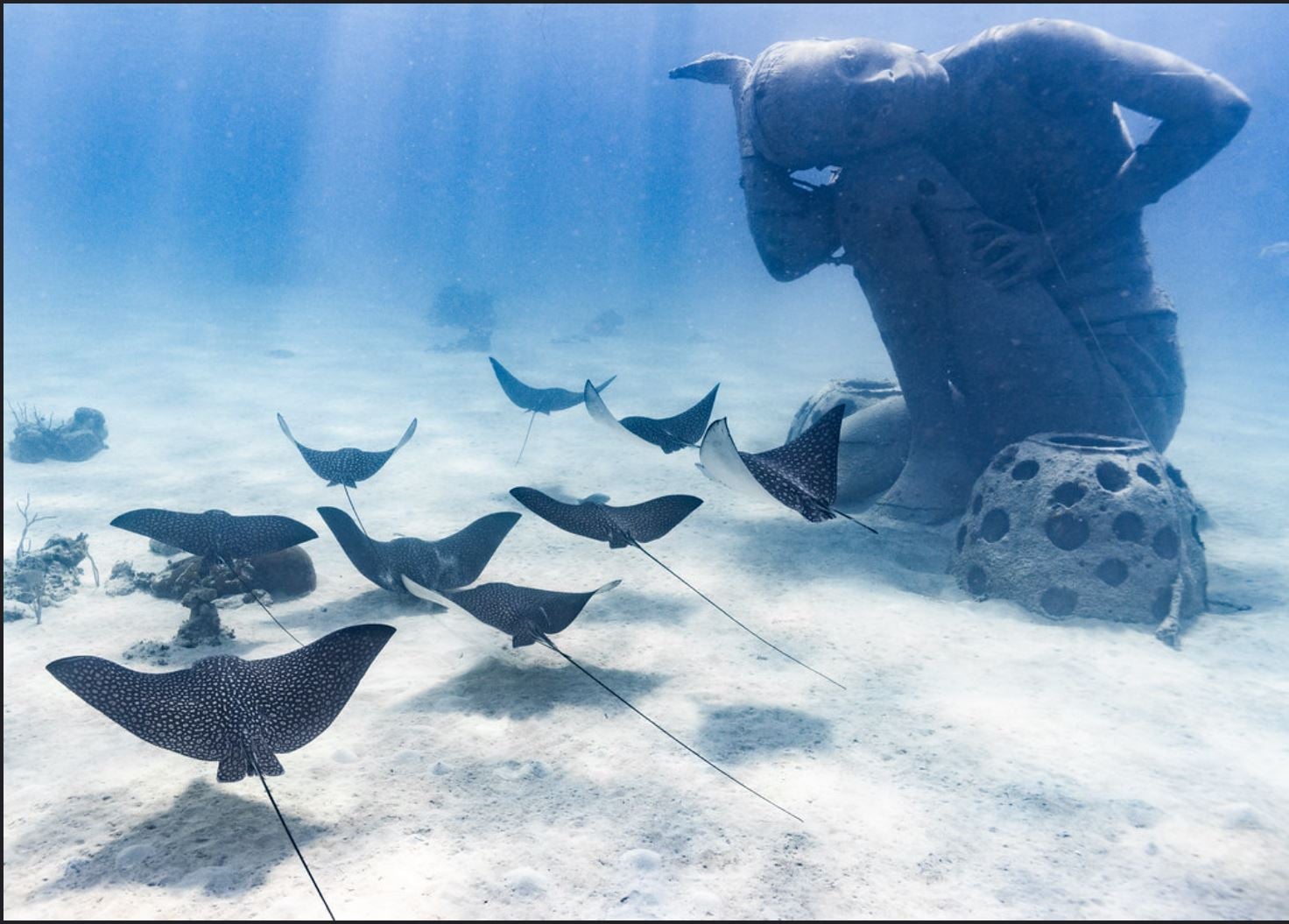
Standing 18 feet tall on the ocean floor near Nassau, “Ocean Atlas” ranks as one of the largest underwater sculptures ever created. The figure of a young girl appears to carry the weight of the ocean on her shoulders — a direct reference to the mythical Atlas but reimagined for an underwater world.
The scale only becomes apparent when divers approach and realize they’re swimming alongside a giant. The sculpture’s size creates its own ecosystem, with different species inhabiting various levels from the sandy base to the outstretched arms near the surface.
Mexico’s Silent Evolution Installation
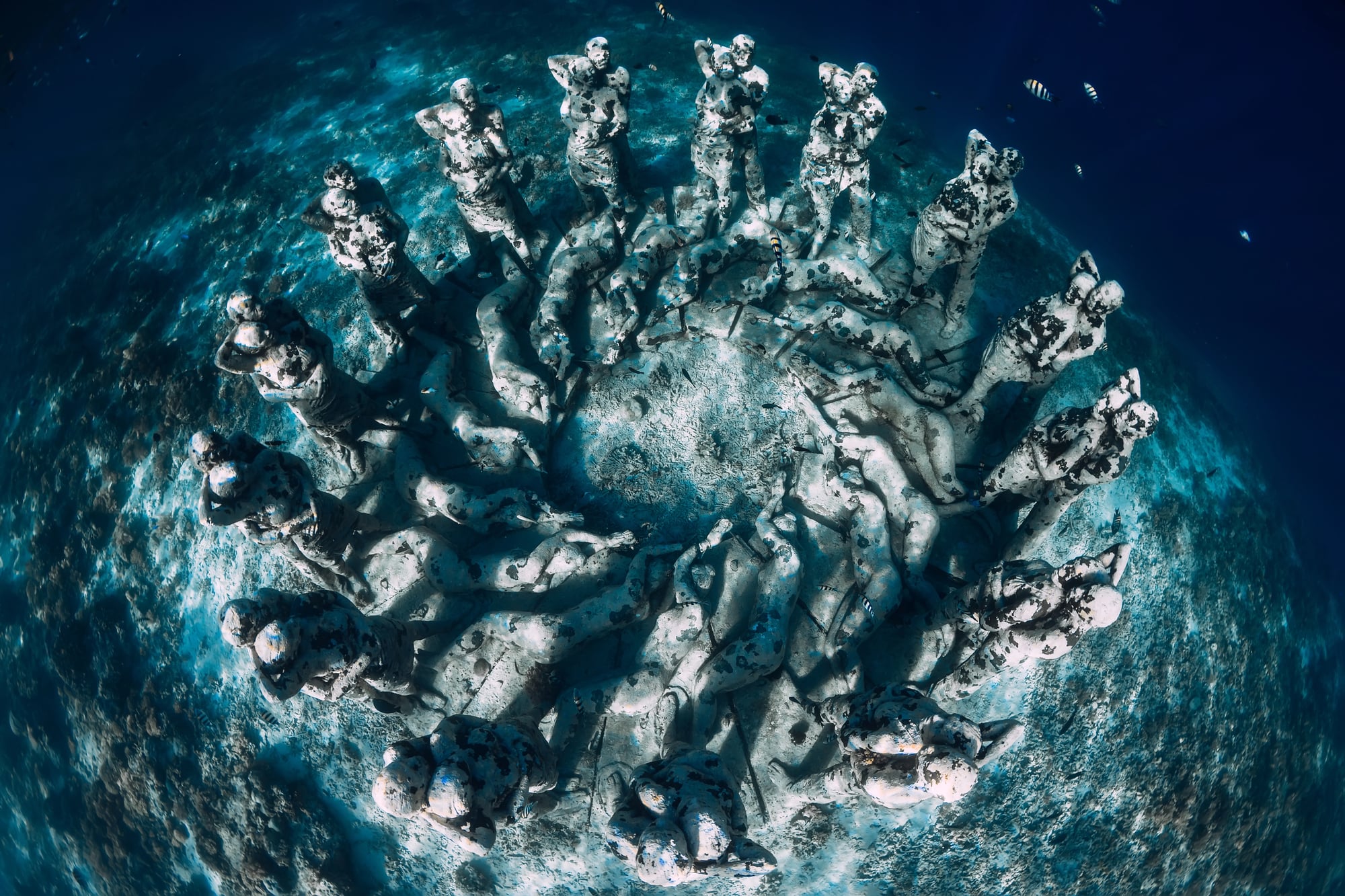
While MUSA gets most of the attention, Mexico’s coast hosts several other underwater installations that often go unnoticed. These smaller collections of figures and abstract forms populate shallow reef areas, creating intimate gallery spaces where divers can spend entire tank exploring just a few sculptures.
The Mexican installations tend to be more experimental in their approach, with some sculptures designed to be touched and interacted with rather than simply observed. This creates a more tactile art experience that’s impossible in traditional museums.
Beyond The Surface
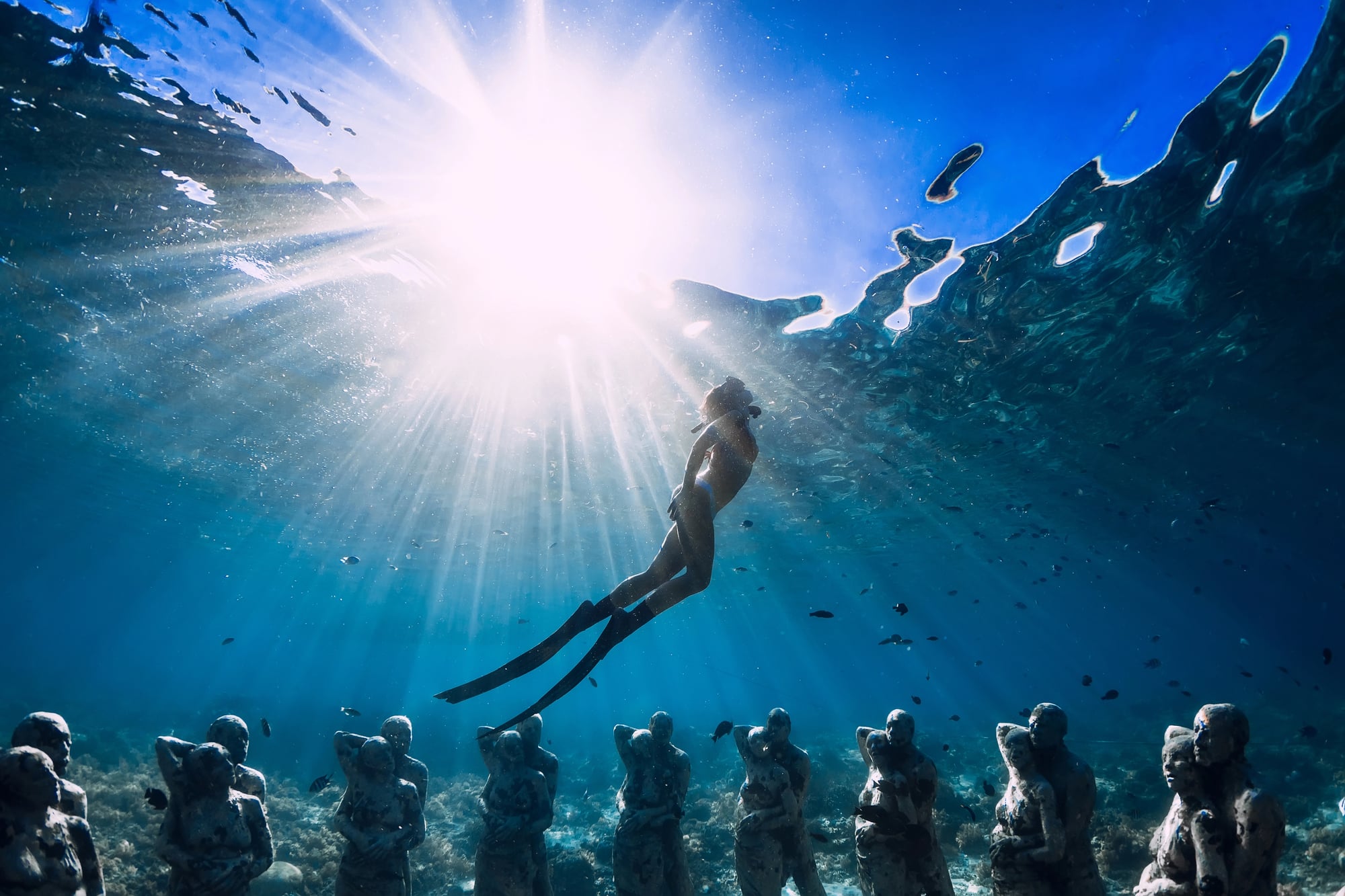
Swimming among these underwater galleries changes something fundamental about how art works. There’s no crowd to navigate, no rope barriers, no closing time.
Just the sound of your own breathing and the slow dance of marine life around sculptures that exist solely for those willing to enter their world.
These installations prove that some experiences can’t be democratized or made accessible to everyone — and that’s exactly what makes them powerful.
They reward commitment with wonder, effort with beauty, and courage with memories that surface dwellers will never possess.
More from Go2Tutors!

- The Romanov Crown Jewels and Their Tragic Fate
- 13 Historical Mysteries That Science Still Can’t Solve
- Famous Hoaxes That Fooled the World for Years
- 15 Child Stars with Tragic Adult Lives
- 16 Famous Jewelry Pieces in History
Like Go2Tutors’s content? Follow us on MSN.



